About this sheet
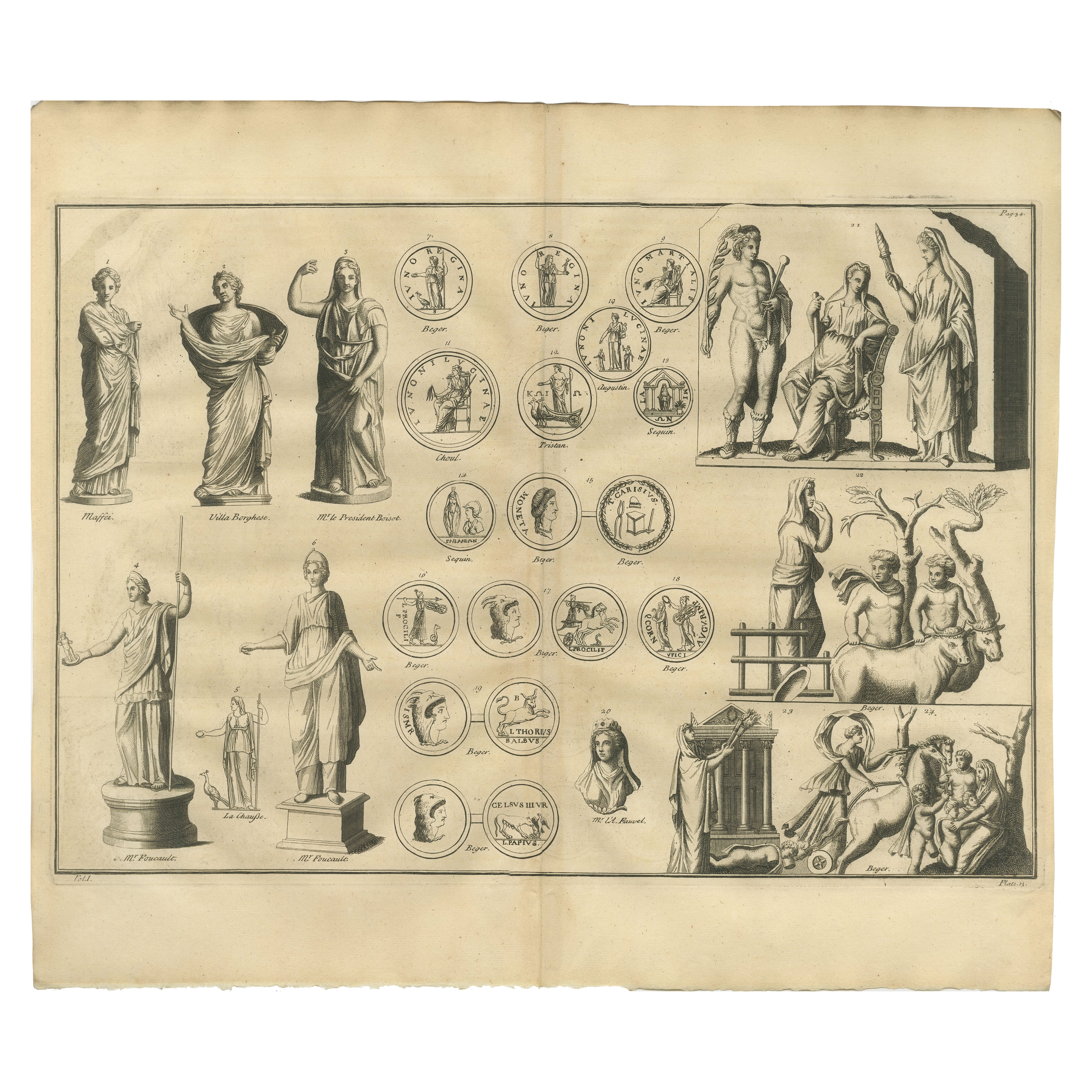
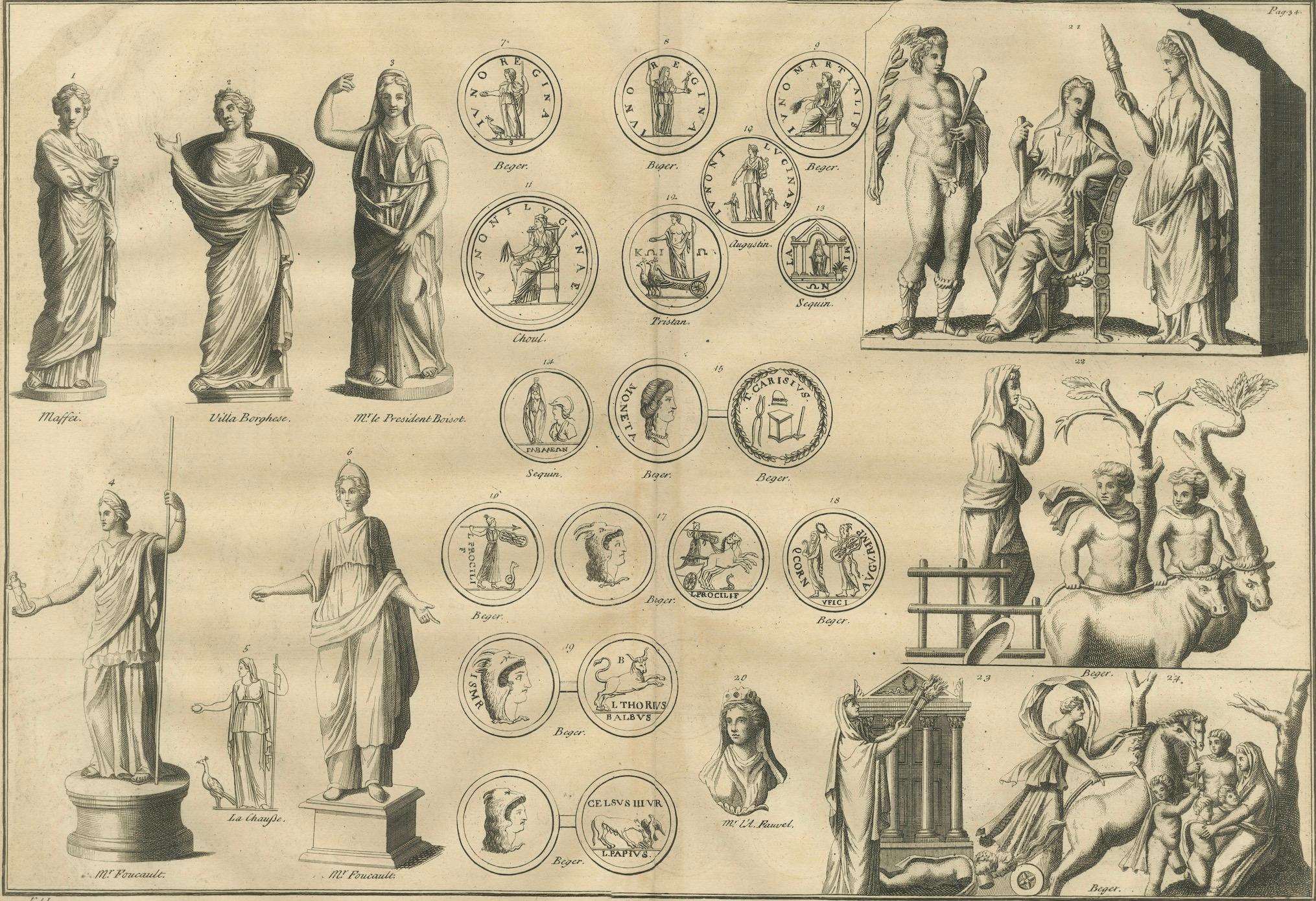
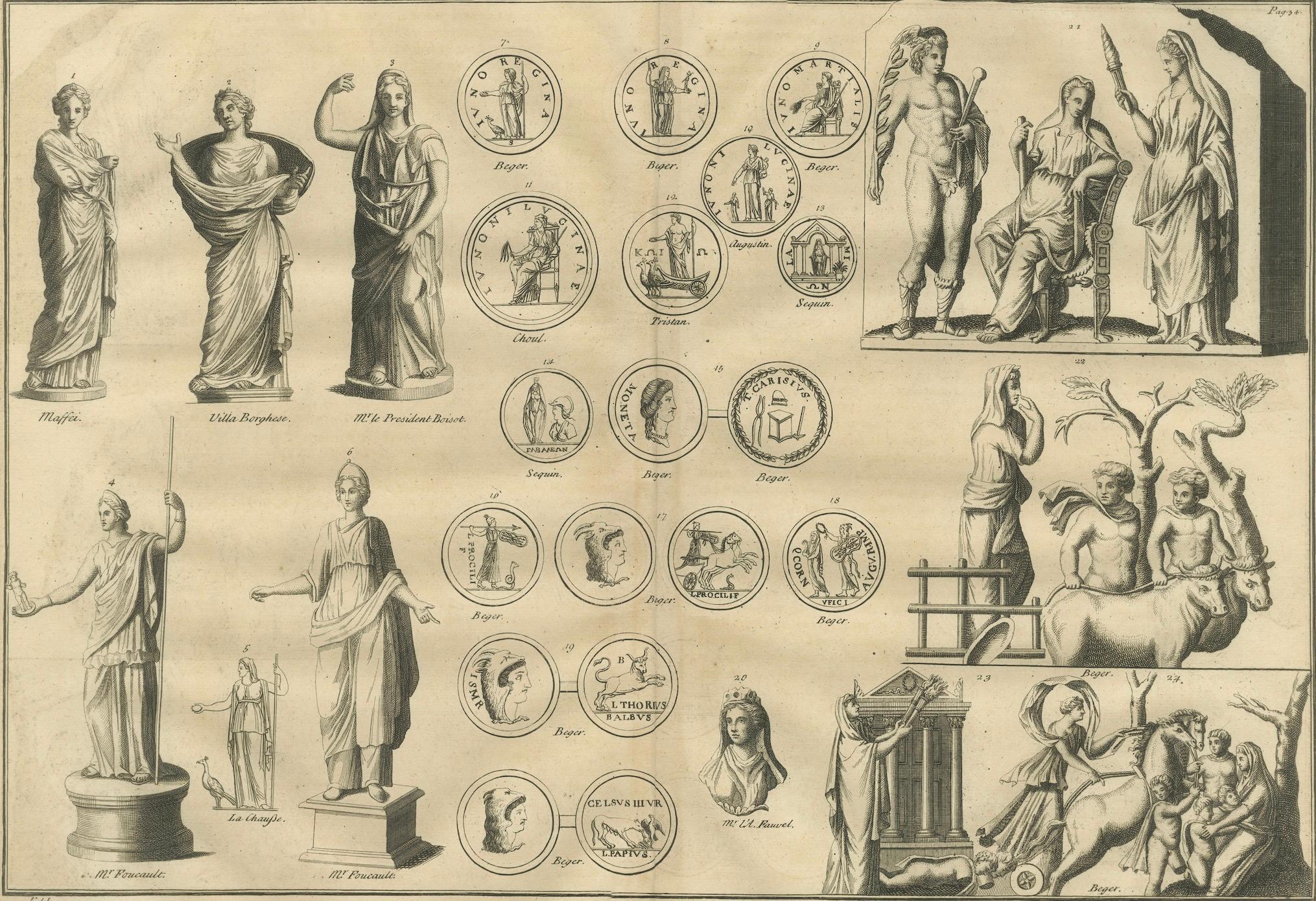
Roman Goddesses, Allegorical Statues and Coins, Composite Engraving, 1721
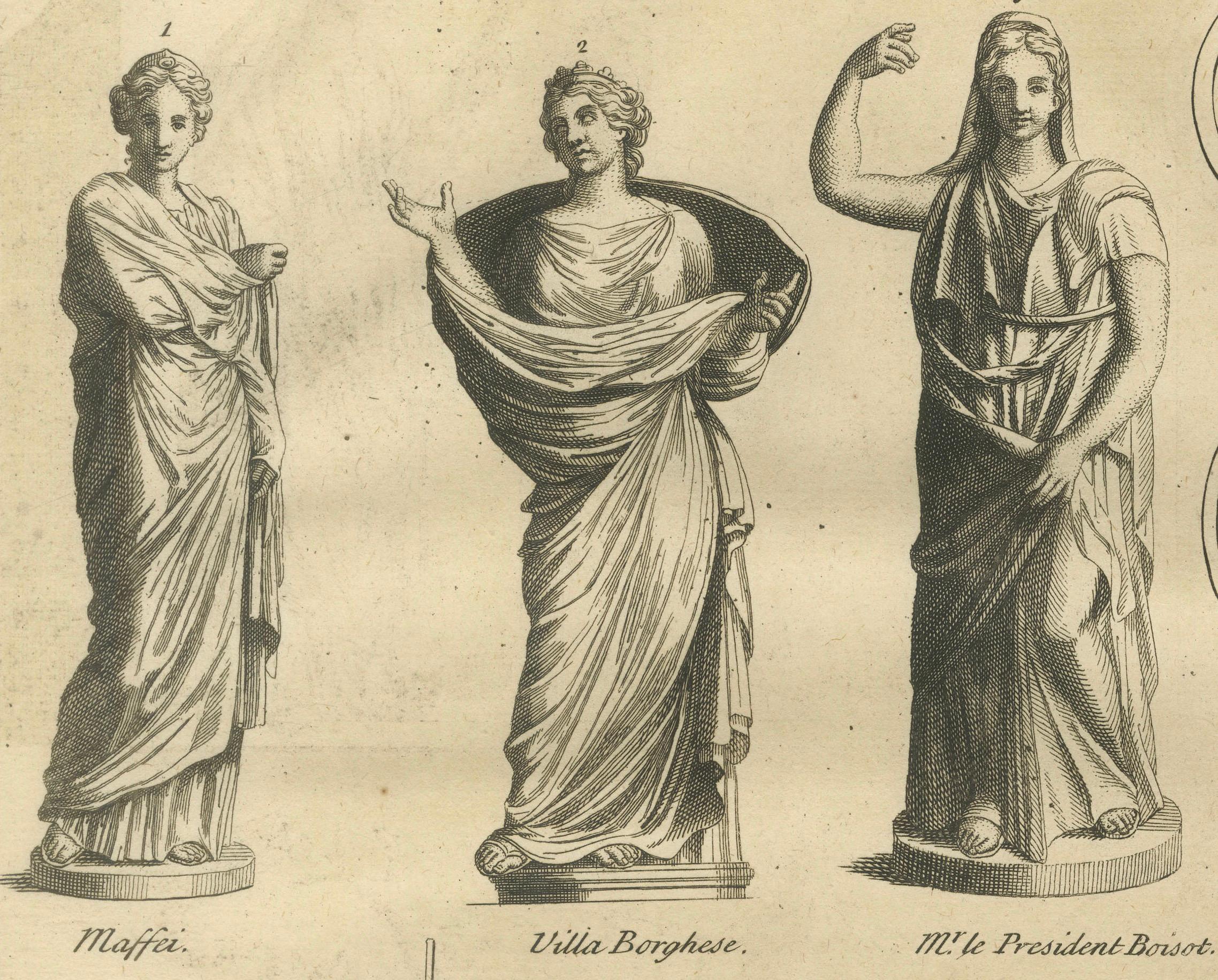
This large and finely engraved composite plate originates from the first English edition of Bernard de Montfaucon’s monumental antiquarian publication *Antiquity Explained and Represented in Sculptures*, published in London in 1721. The sheet presents a wide-ranging visual survey of Roman sculpture and iconography, with particular emphasis on female deities, allegorical figures, and associated numismatic evidence.
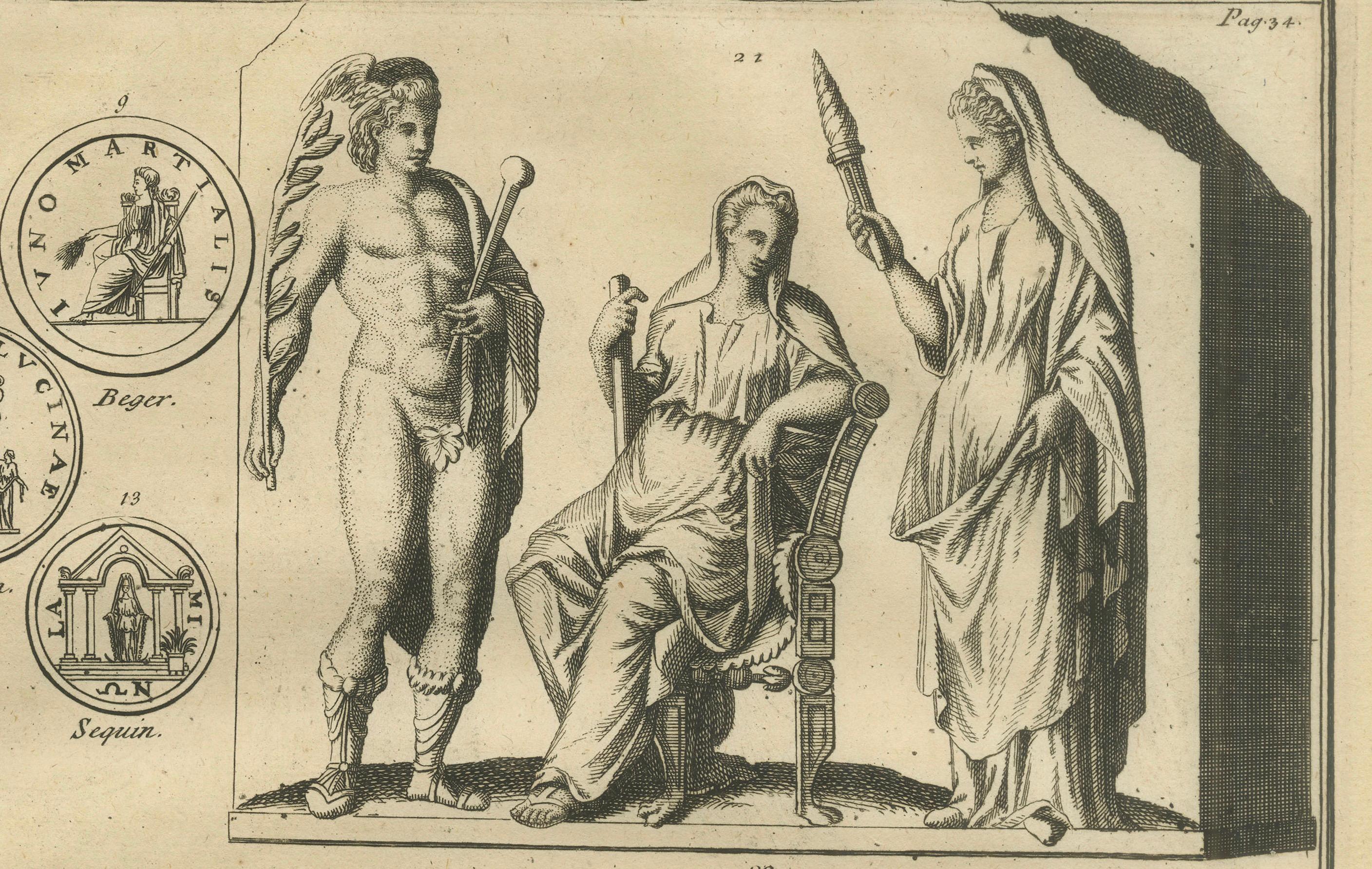
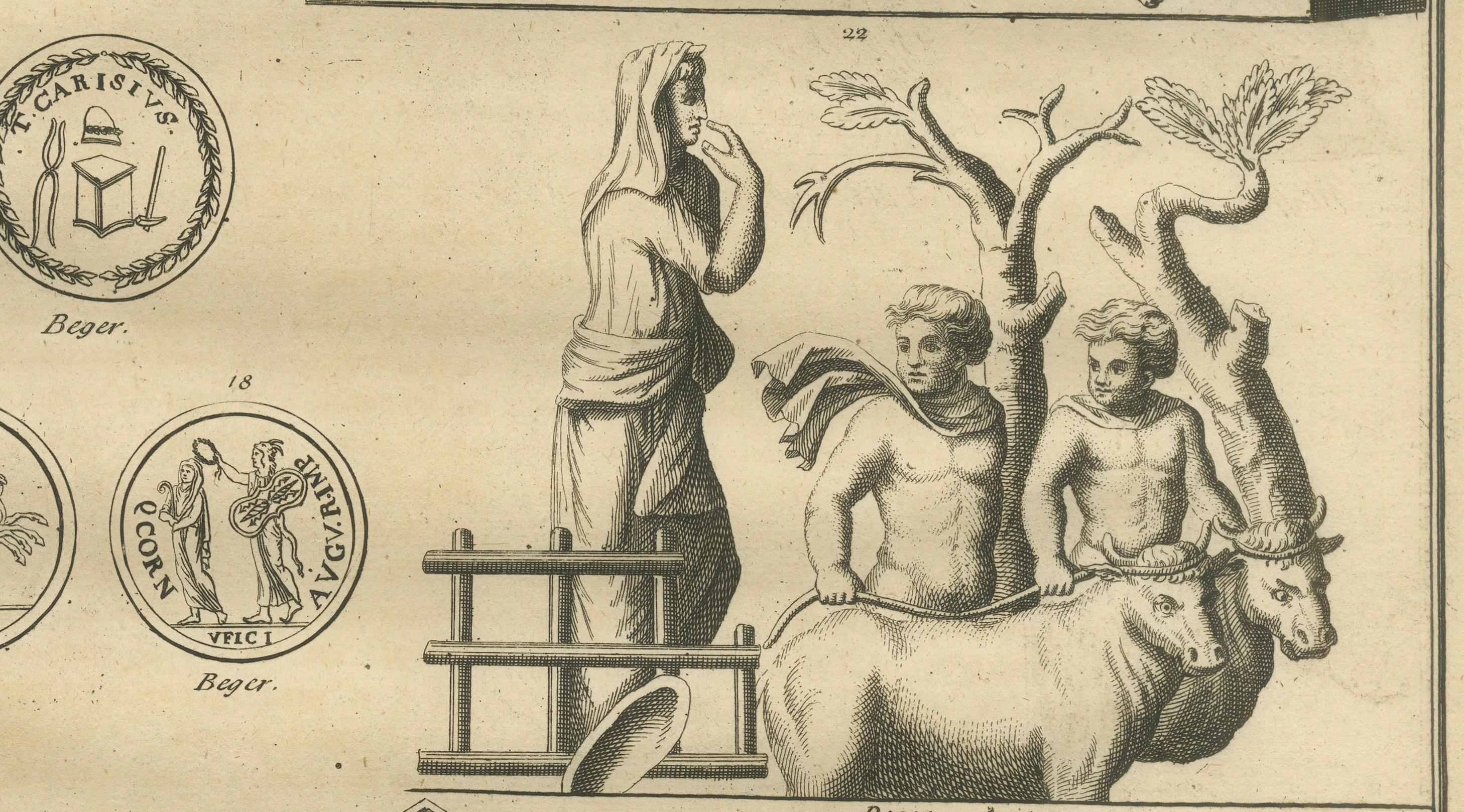
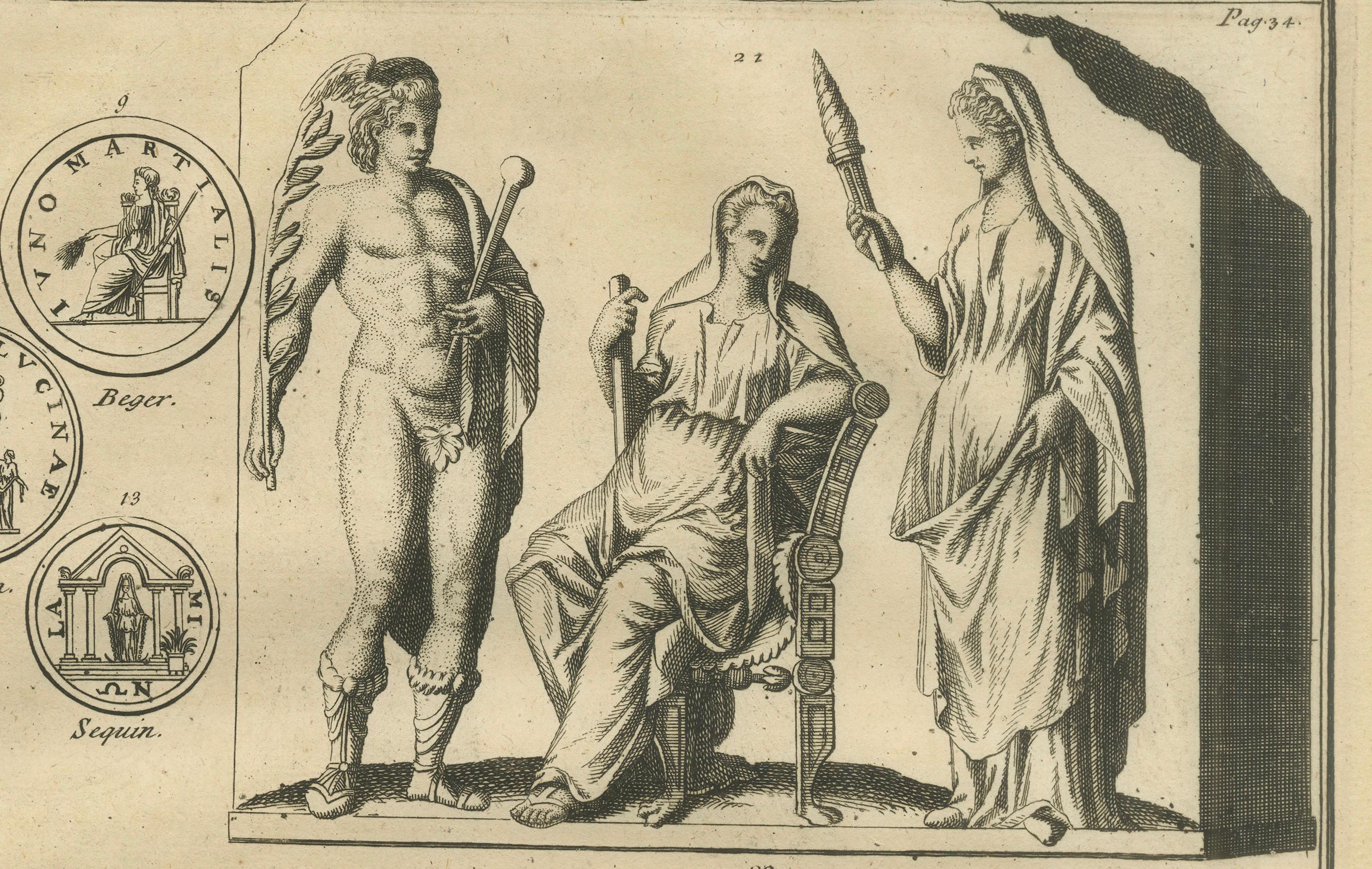
The composition brings together standing and seated statues of goddesses and personifications, rendered in classical drapery and contrapposto, alongside an extensive series of Roman coins and medallions illustrating temples, portraits, and symbolic attributes. These sculptural figures are complemented by narrative scenes at the right, showing mythological and ritual moments that add movement and visual rhythm to the plate. The careful balance between monumental statuary and smaller circular studies reflects the early 18th-century antiquarian method of comparing sculpture, relief, and coinage to reconstruct the visual language of ancient Rome.
Although printed in England, the artistic and scholarly foundation of the imagery lies in Italian antiquarian tradition, closely associated with the work of Giovanni Pietro Bellori and the study of Roman collections. Plates of this type were intended for scholars, artists, and architects, but today they are equally valued for their decorative quality, making them well suited to libraries, studies, hotels, and classically inspired interiors where a richly detailed yet harmonious composition is desired.
This engraving comes from the same 1721 volume as the other plates in this Montfaucon series and represents an authentic early English issue of one of the foundational works of classical archaeology.
Condition report:
Good overall condition. A vertical center fold is present, as issued, typical for wide plates from this publication. Light, even age toning and minor edge wear consistent with early 18th-century paper. Plate impression remains strong and clear. No significant tears, losses, or restorations observed.
Framing tips:
This wide plate benefits from a generous off-white or soft ivory mat to organize the dense imagery and enhance readability. A dark walnut, mahogany, or black frame emphasizes the classical and scholarly character, while a slimmer frame suits contemporary interiors with neoclassical accents.
Technique: Engraving
Maker: Bernard de Montfaucon, France (published London, 1721)
Technique: Engraving
Maker: Bernard de Montfaucon, France (published London, 1721)