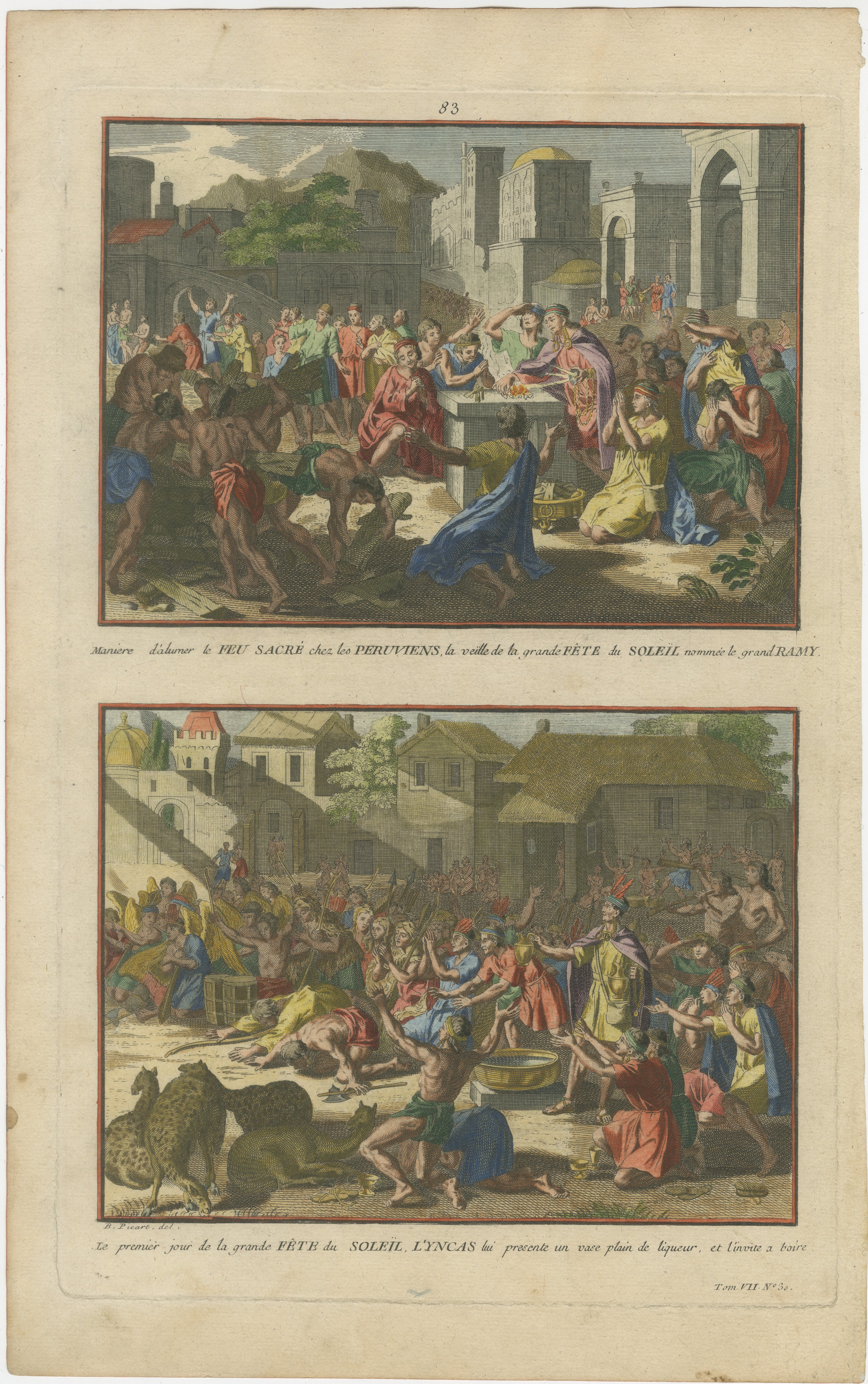
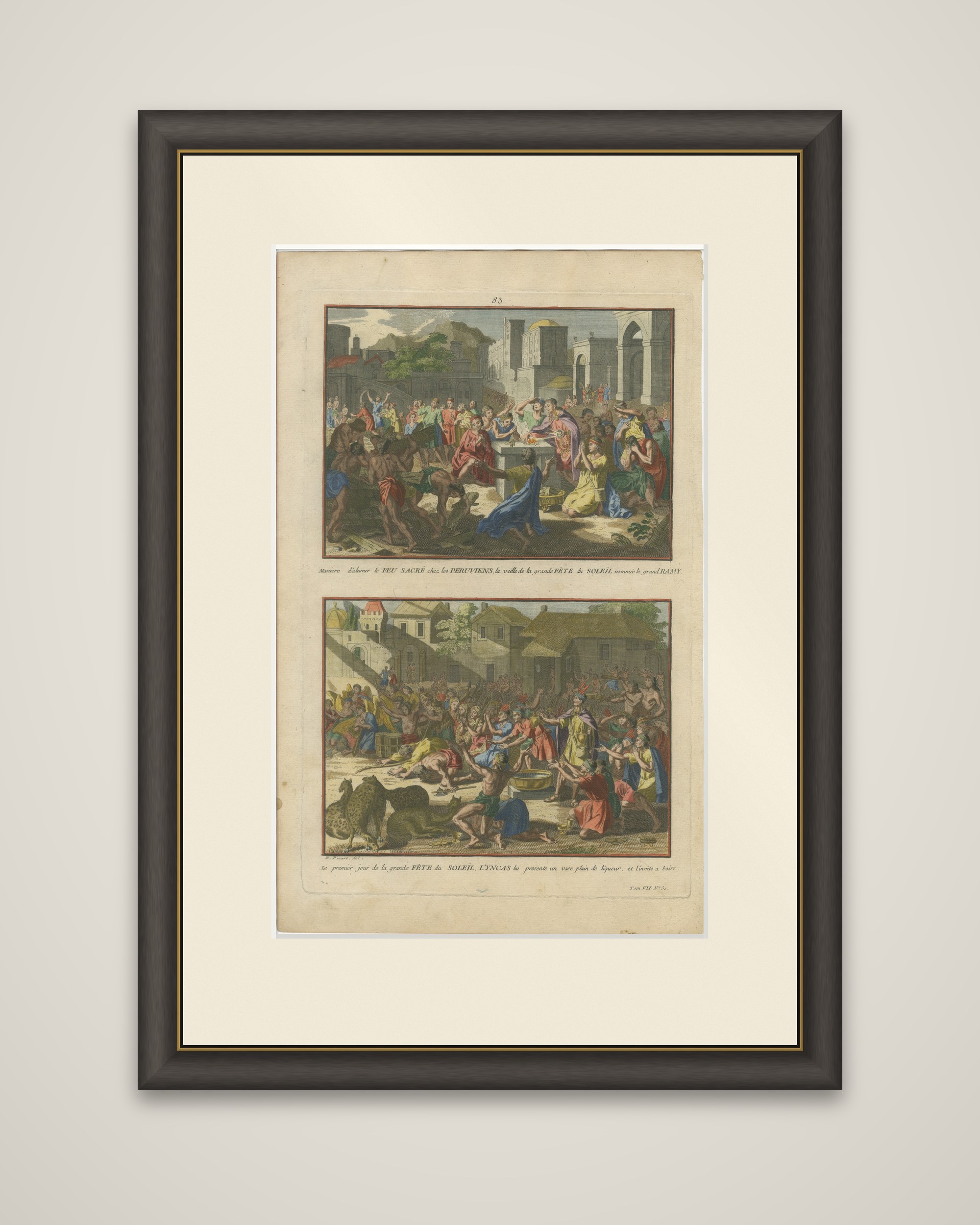
Original Antique Hand-Colored Engraving of the Inca Sun Festival, Peru, c.1777
€ 475
Original antique · The actual sheet photographed · Certificate of authenticity on request · Sold unframed · Worldwide shipping from € 15 (rates)
Date
1777
Sheet size
38.1 × 24.4 cm (15.0 × 9.6 in)
Condition
Good
Reference
BG-14303-38
What the condition grades mean
Excellent
Bright and clean, with no faults worth mentioning.
Very good
Only light signs of age, such as faint toning.
Good
Normal signs of age for a sheet of this period: toning, some foxing, small marks or neat old repairs.
Fair
Clear faults such as staining, tears or repairs, priced to match.
Every fault we see is written in the condition note, and the whole sheet is shown uncropped in the photos.
Condition
Good condition considering its age. Original hand coloring. General age-related toning, occasional light foxing and minor handling wear. Please review the images for further condition details.
About this sheet
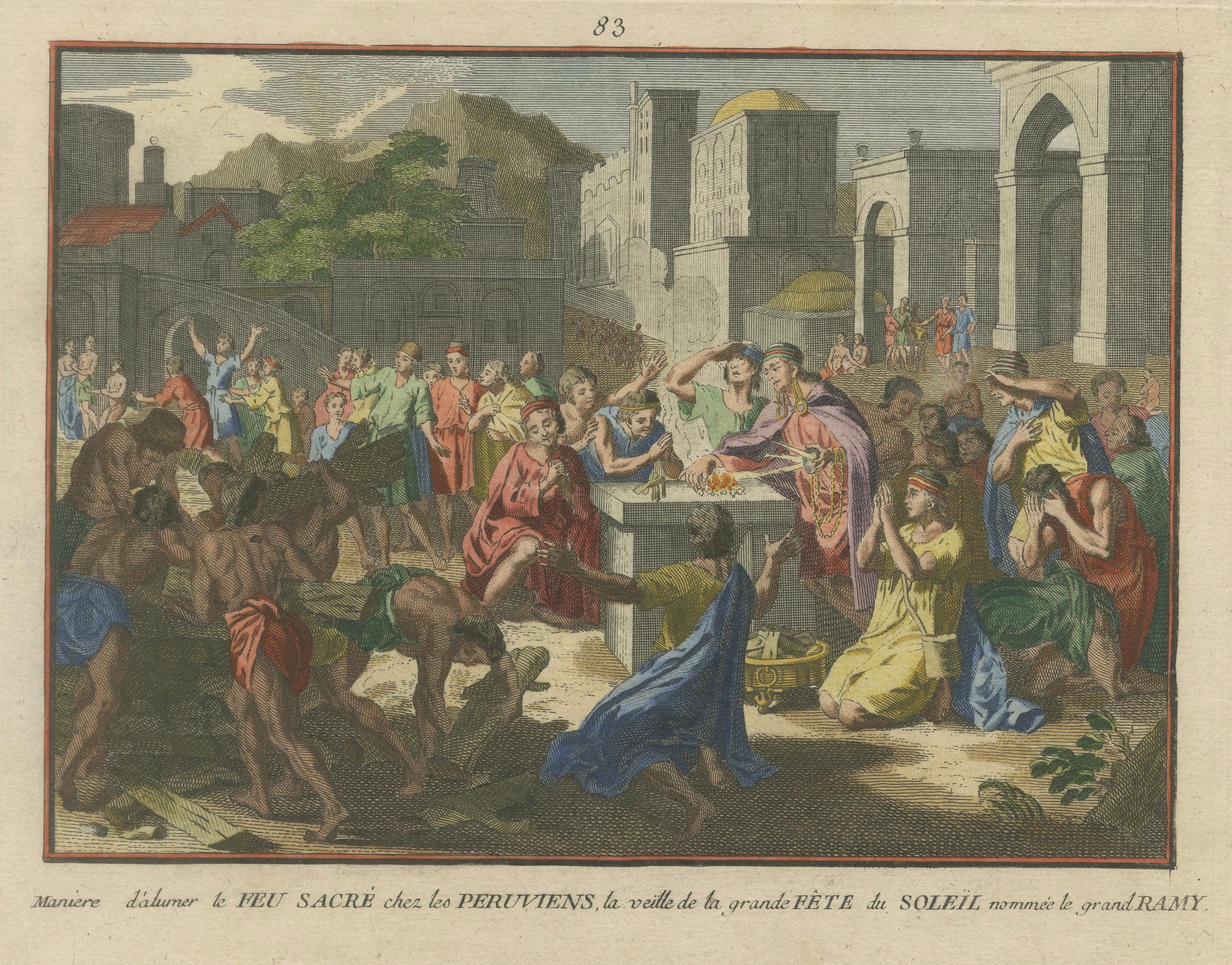
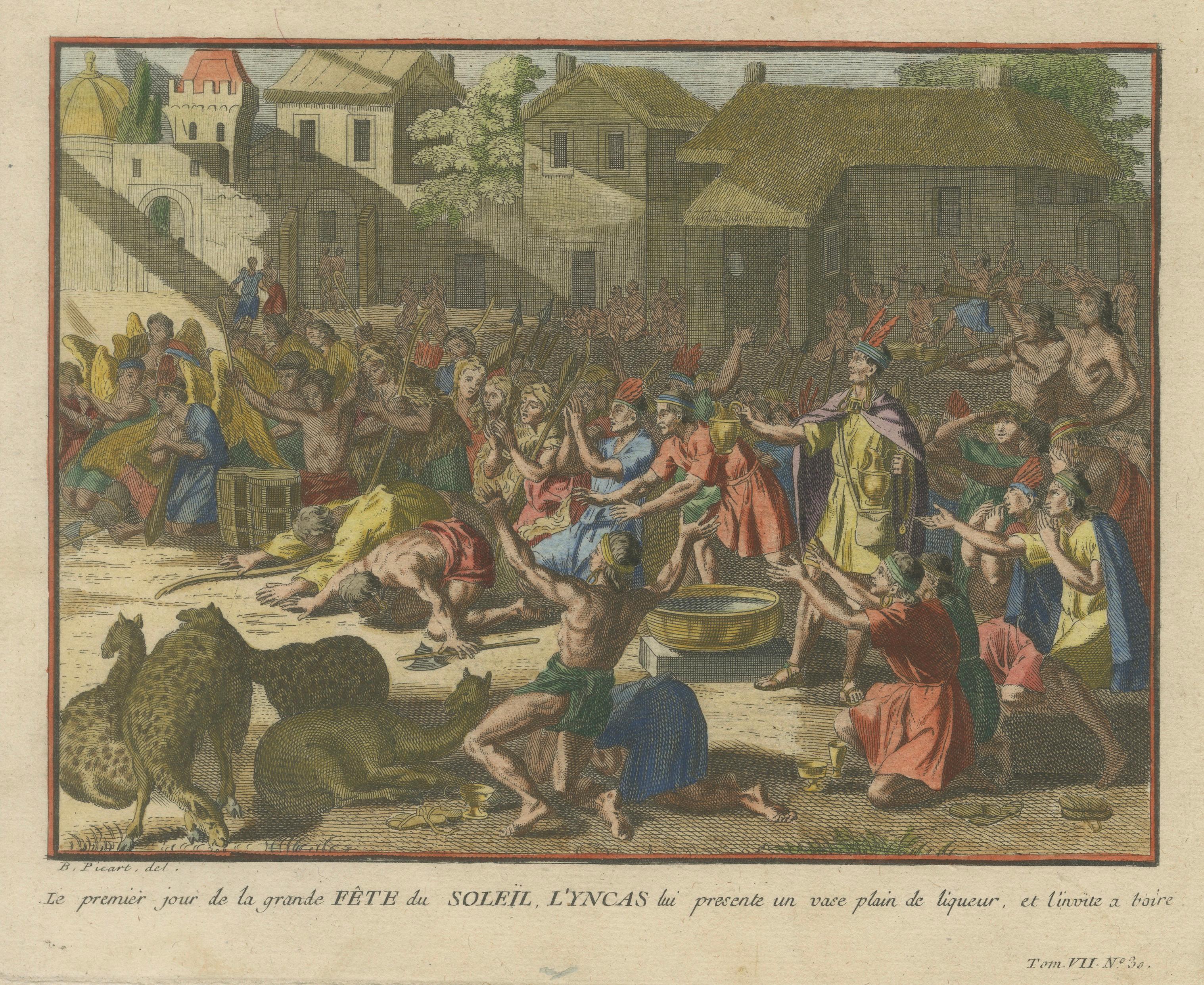
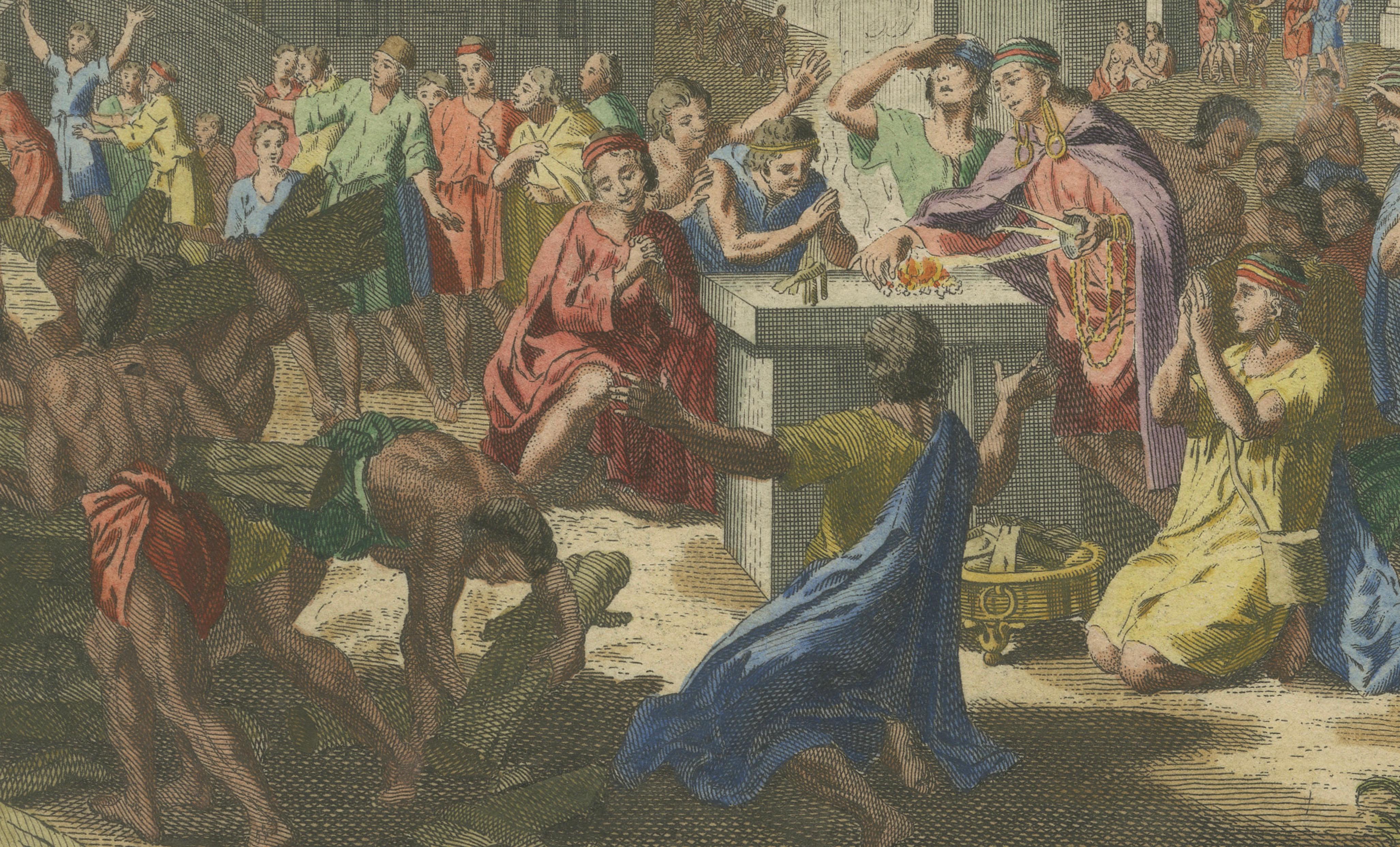
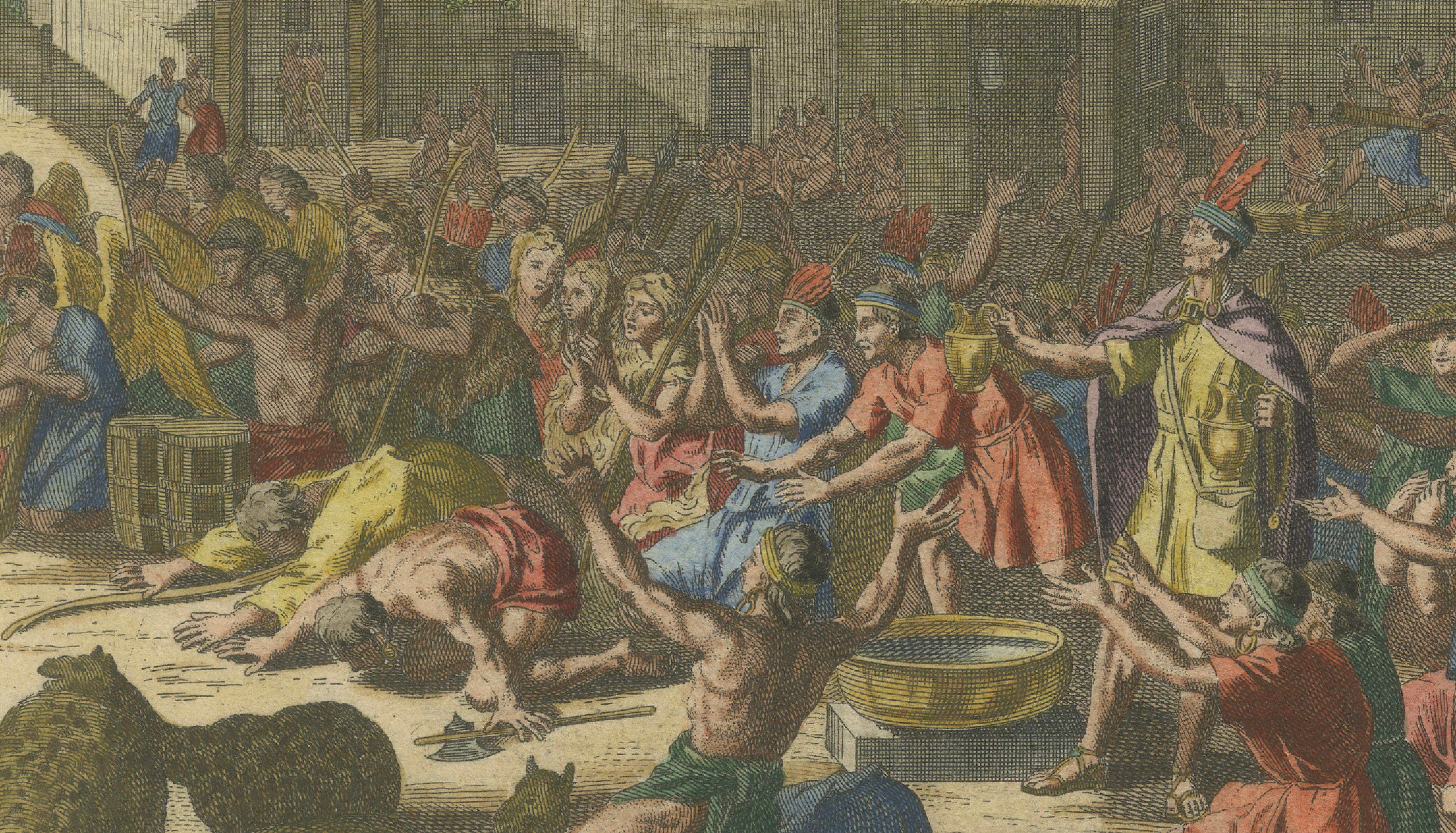
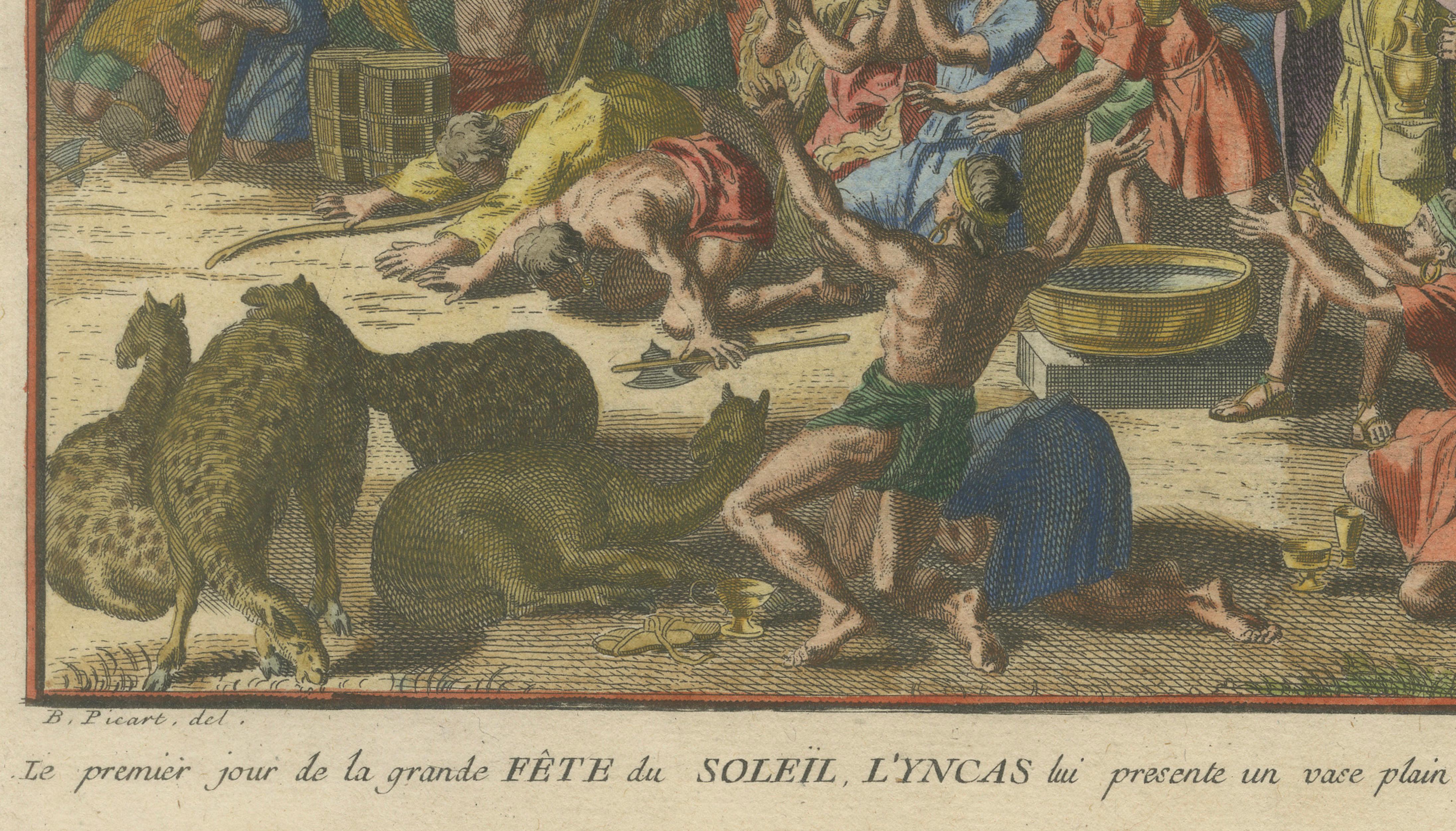
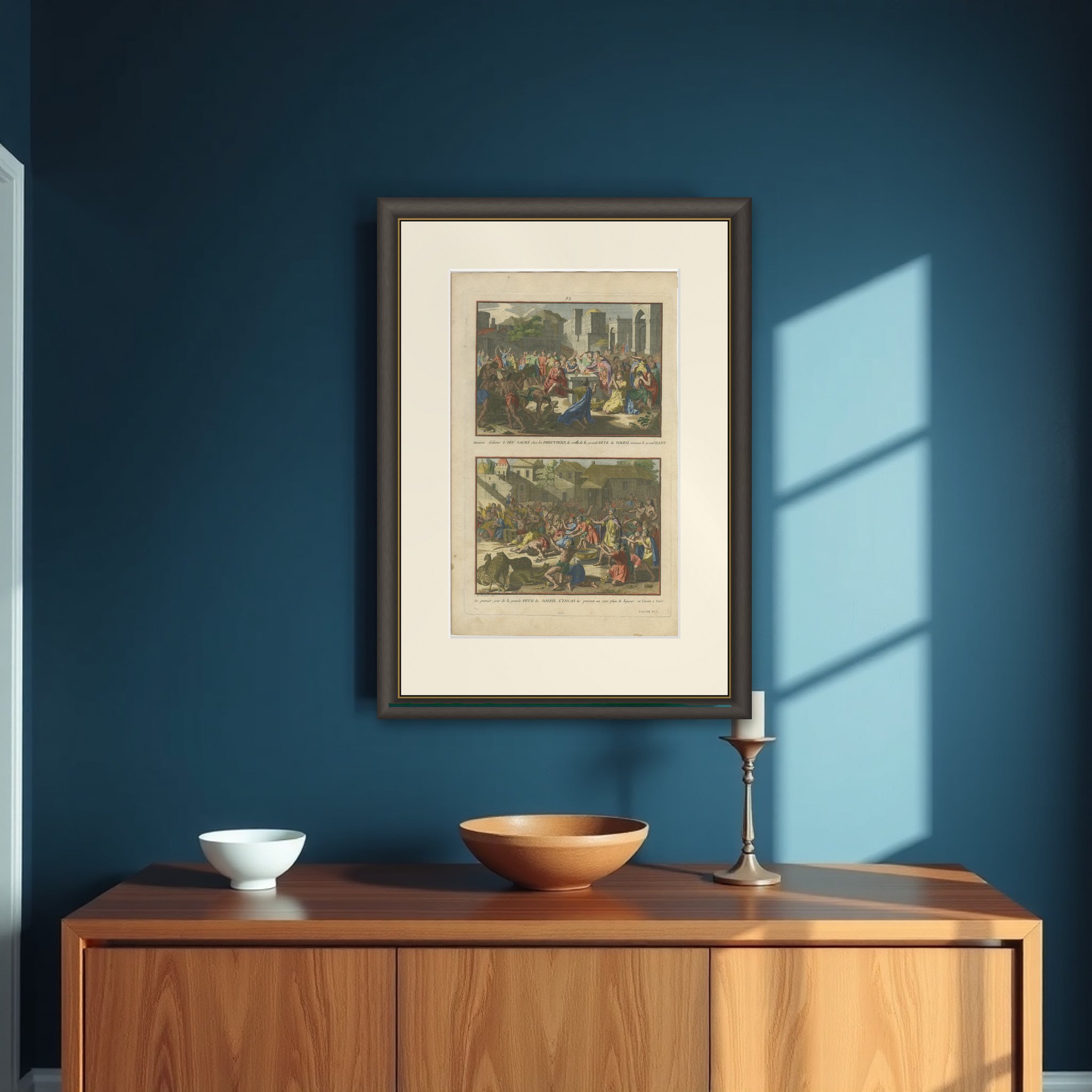
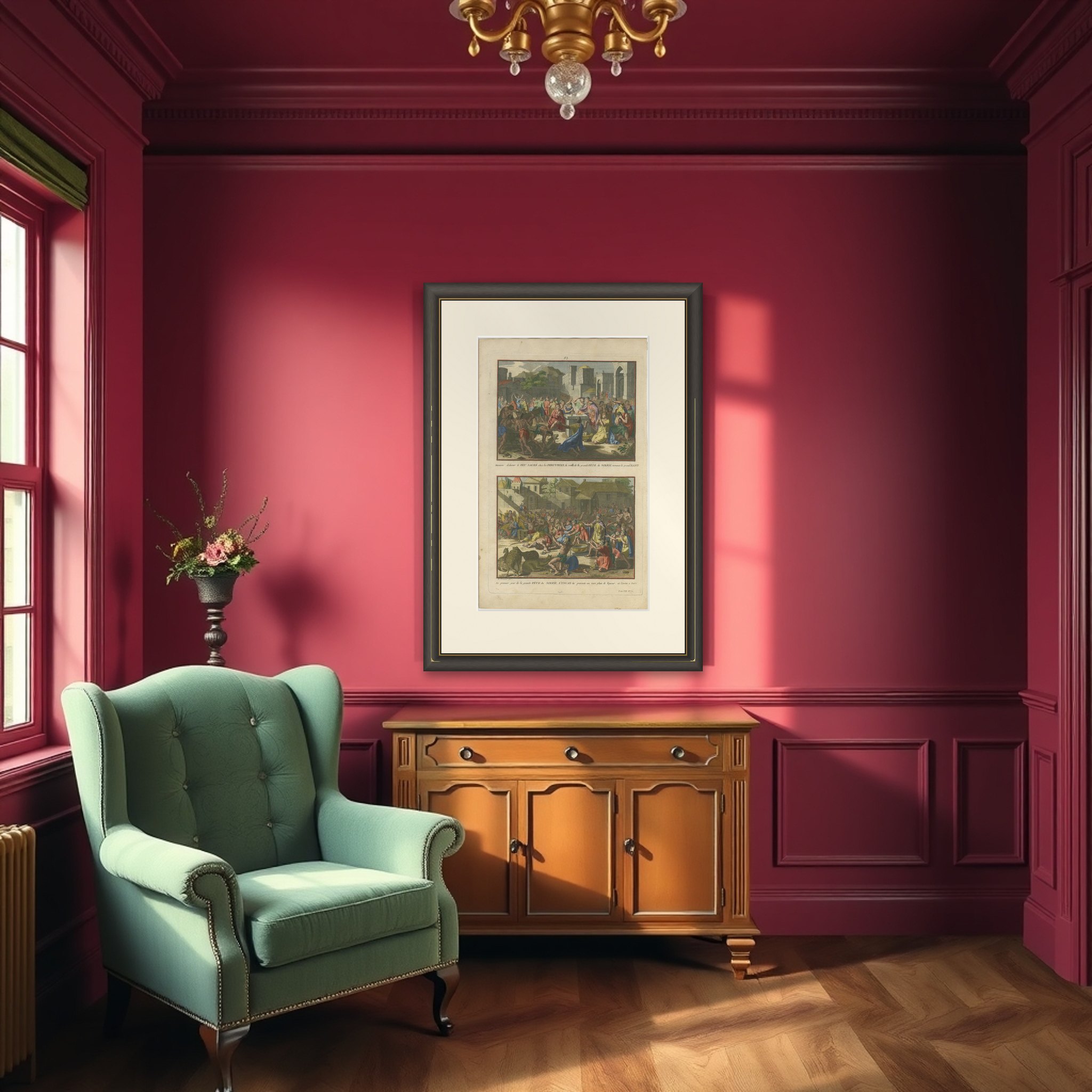
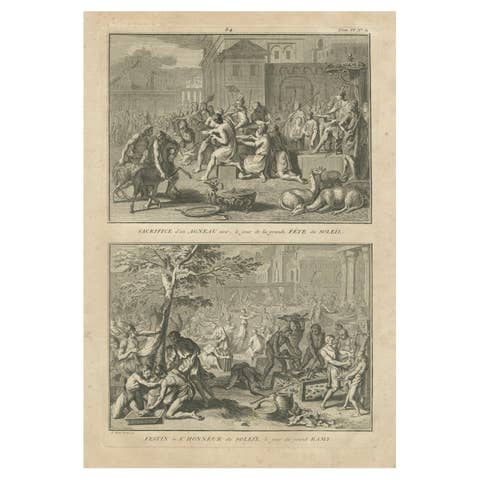
Two scenes from the Inca Festival of the Sun, an original hand-colored copperplate engraving drawn by Bernard Picart and published in Paris about 1777 in Abbé Prévost's Histoire Générale des Voyages. A plate number is engraved at the top, and a French caption is engraved beneath each scene.
The upper scene, captioned "Maniere d'allumer le feu sacré chez les Peruviens la veille de la grande Fête du Soleil nommée le grand Ramy", shows a crowd gathered around an altar in a walled city square. Priests and nobles in colored robes bend over the altar, attendants at the left stoop at work, and a domed building and arches rise behind. The lower scene, captioned "Le premier jour de la grande Fête du Soleil, l'Yncas lui présente un vase plein de liqueur et l'invite à boire", is a crowded ceremony in a courtyard. The Inca in a purple cloak stands at the center with an attendant, a vessel and spotted animals lie in the foreground, and musicians and nobles press around.
The festival, known as Raymi, was one of the great annual ceremonies of the Inca religious calendar, and Picart's compositions follow the European accounts of the time rather than direct observation. Prévost's Histoire Générale des Voyages was a major illustrated survey of travel writing.