About this sheet
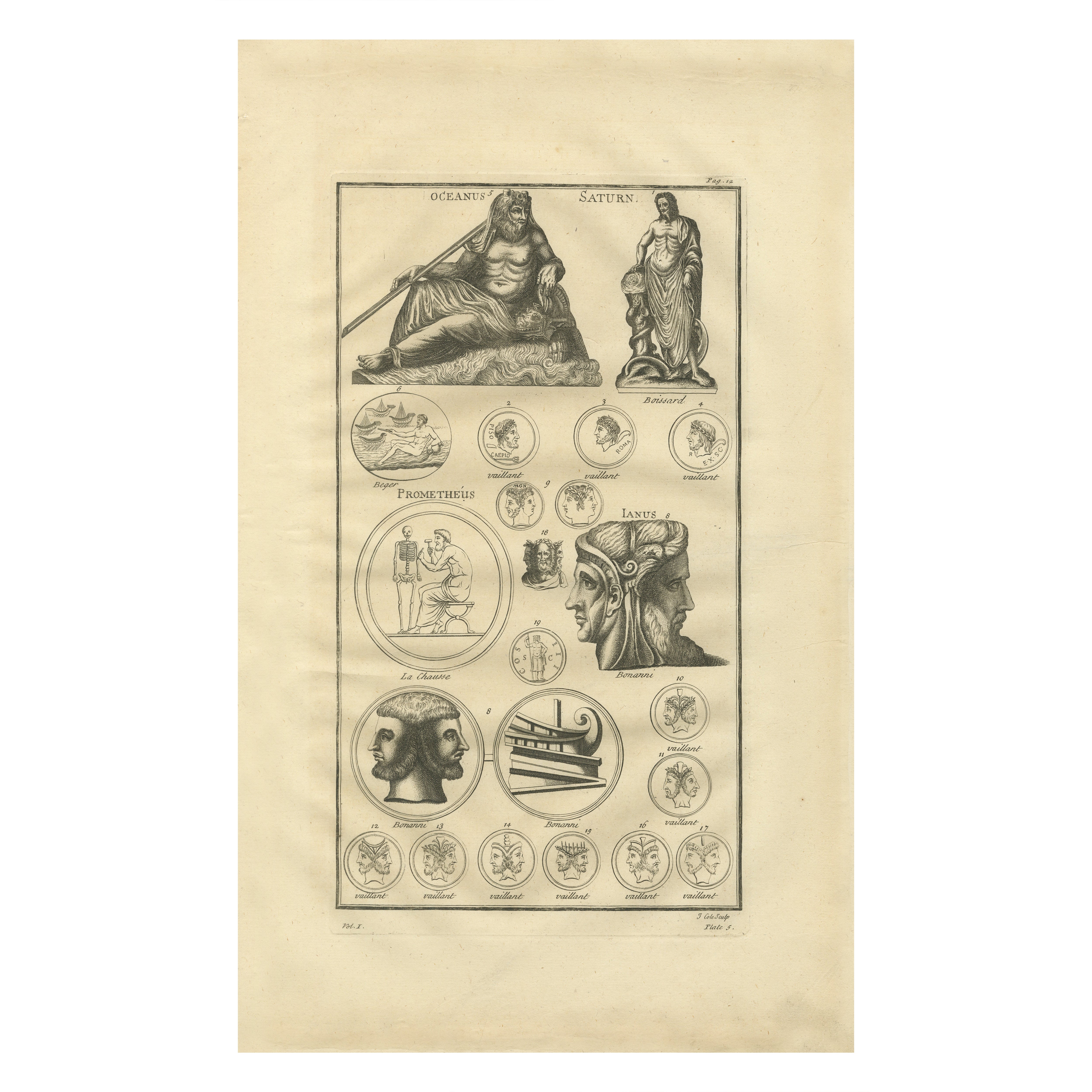
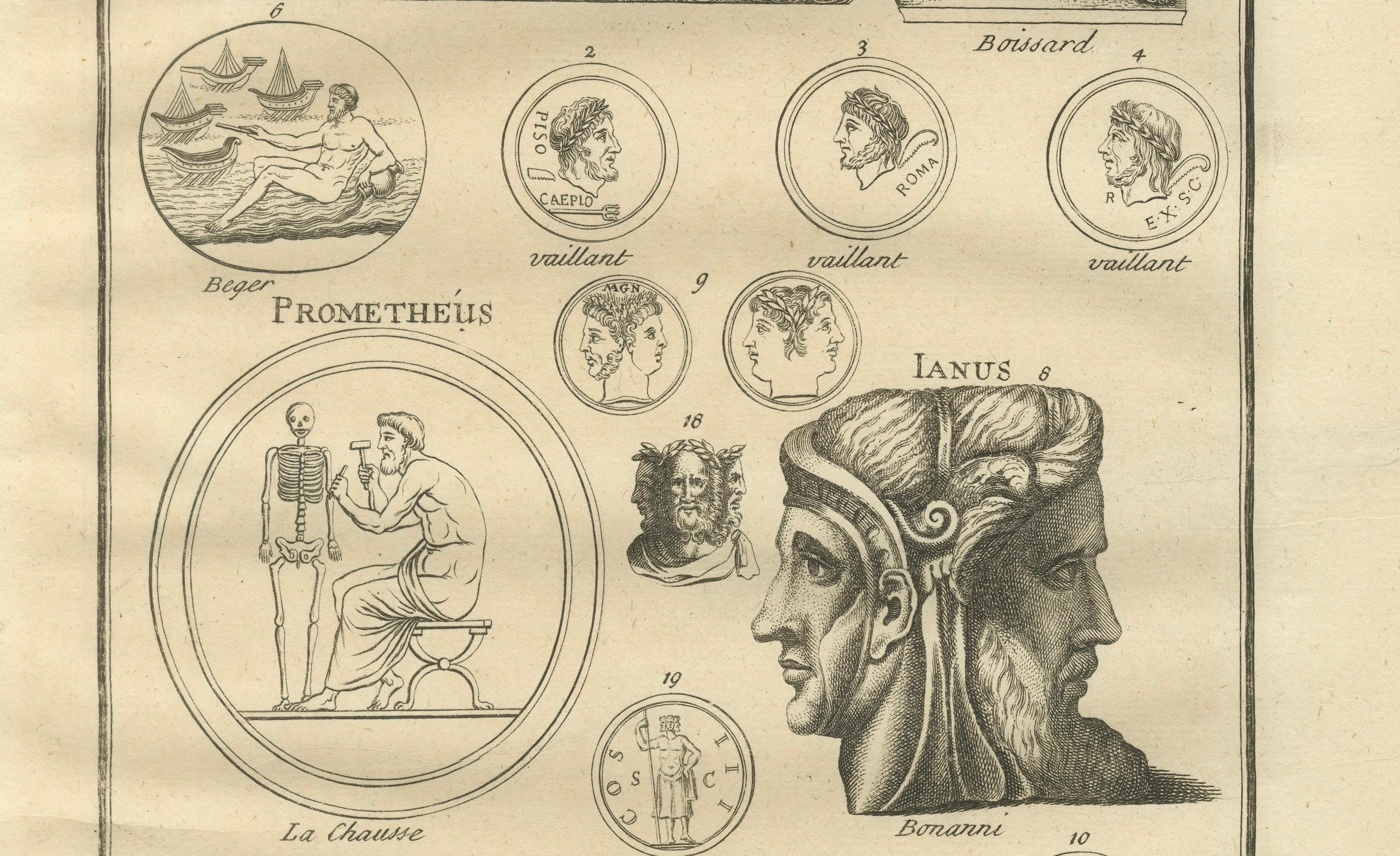
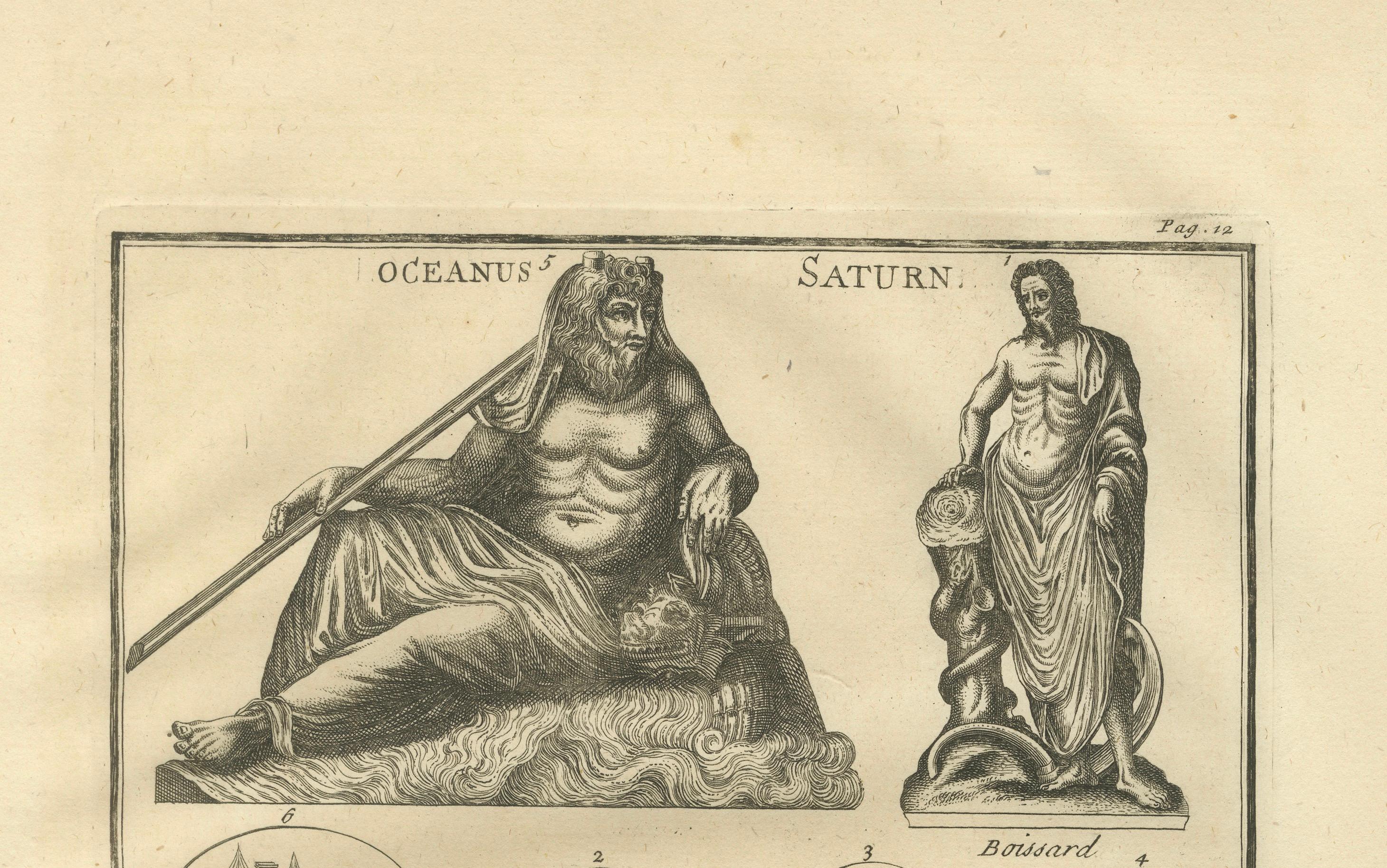
Oceanus, Saturn, Prometheus and Janus – Roman Mythology Engraving, c.1721
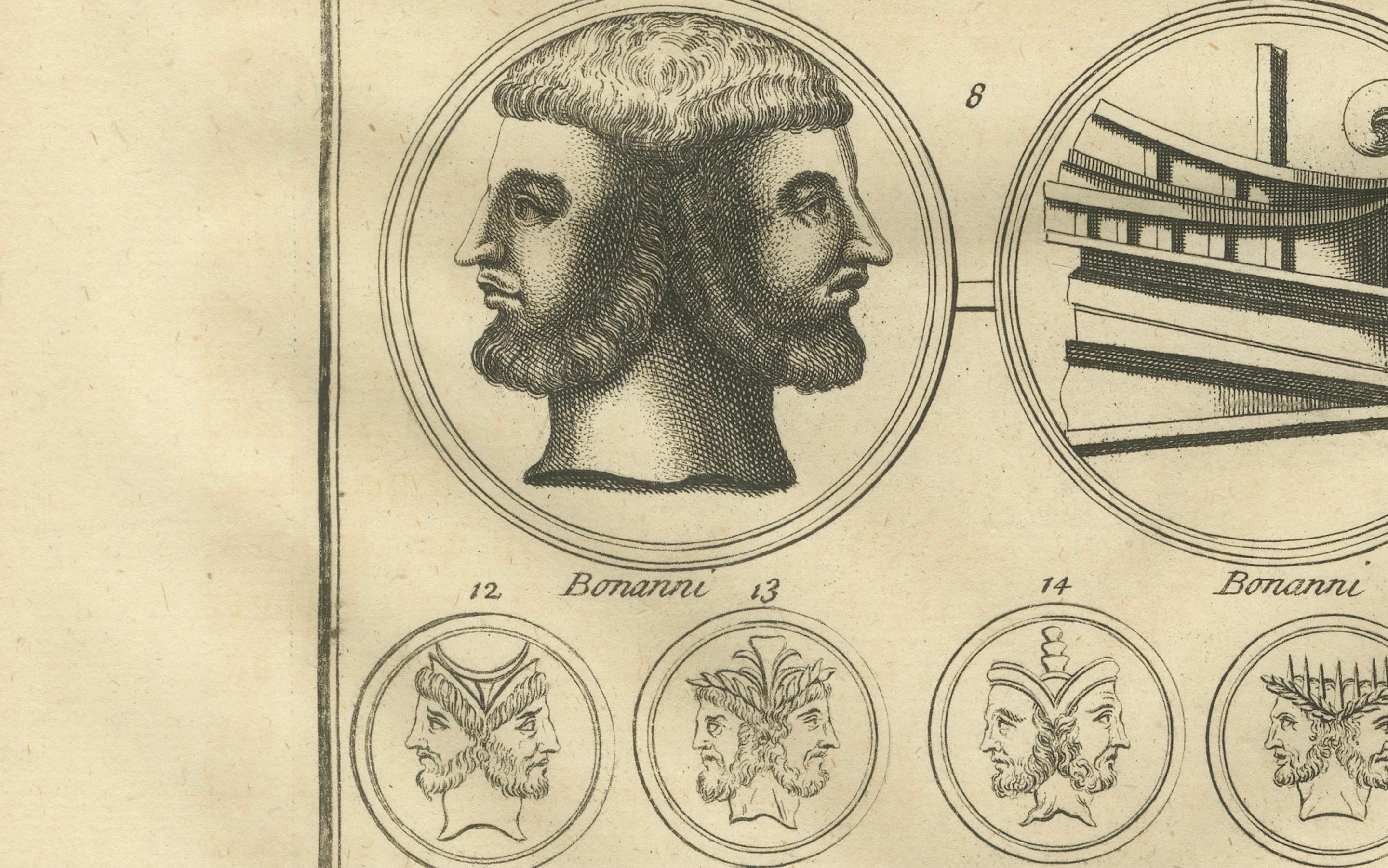
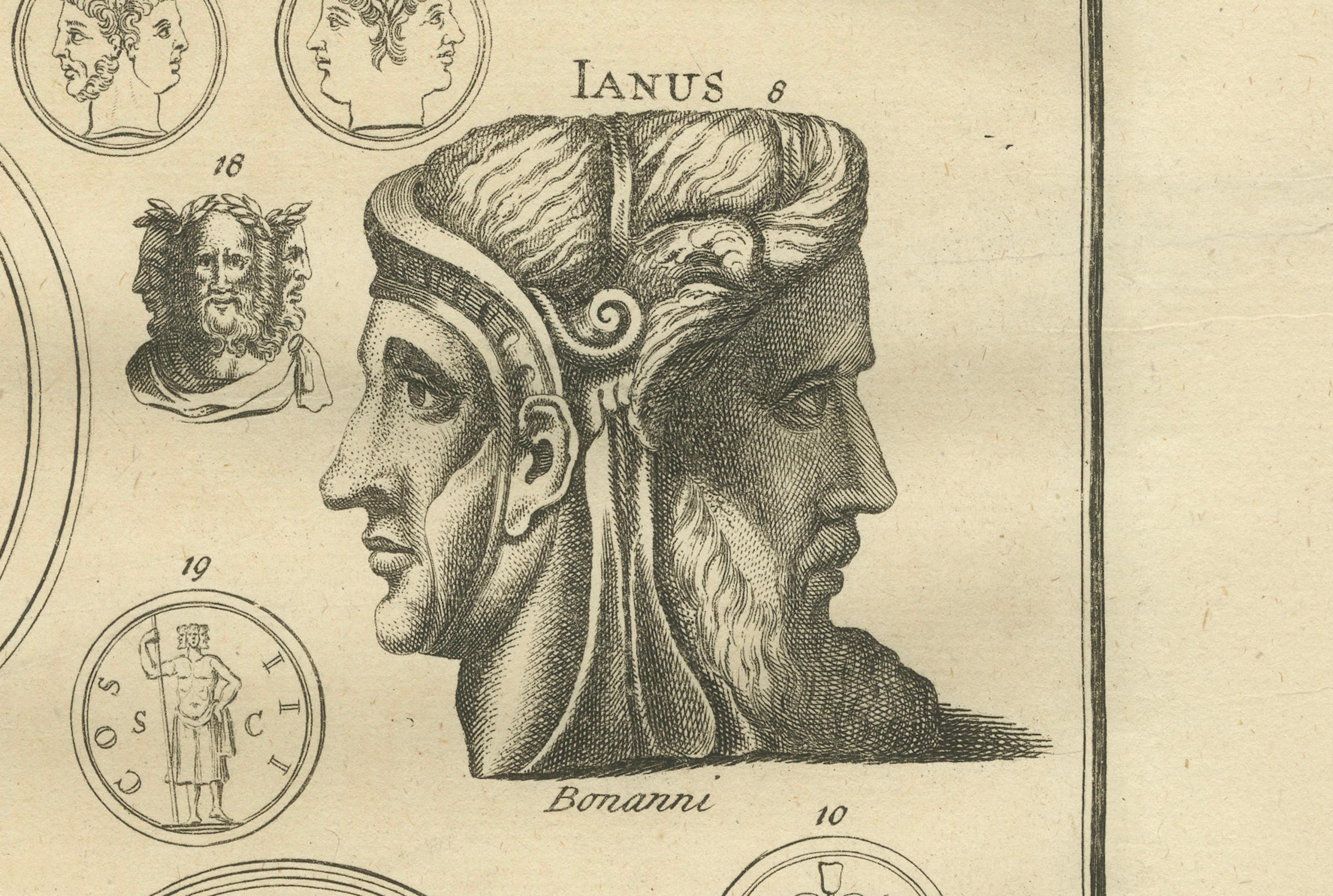
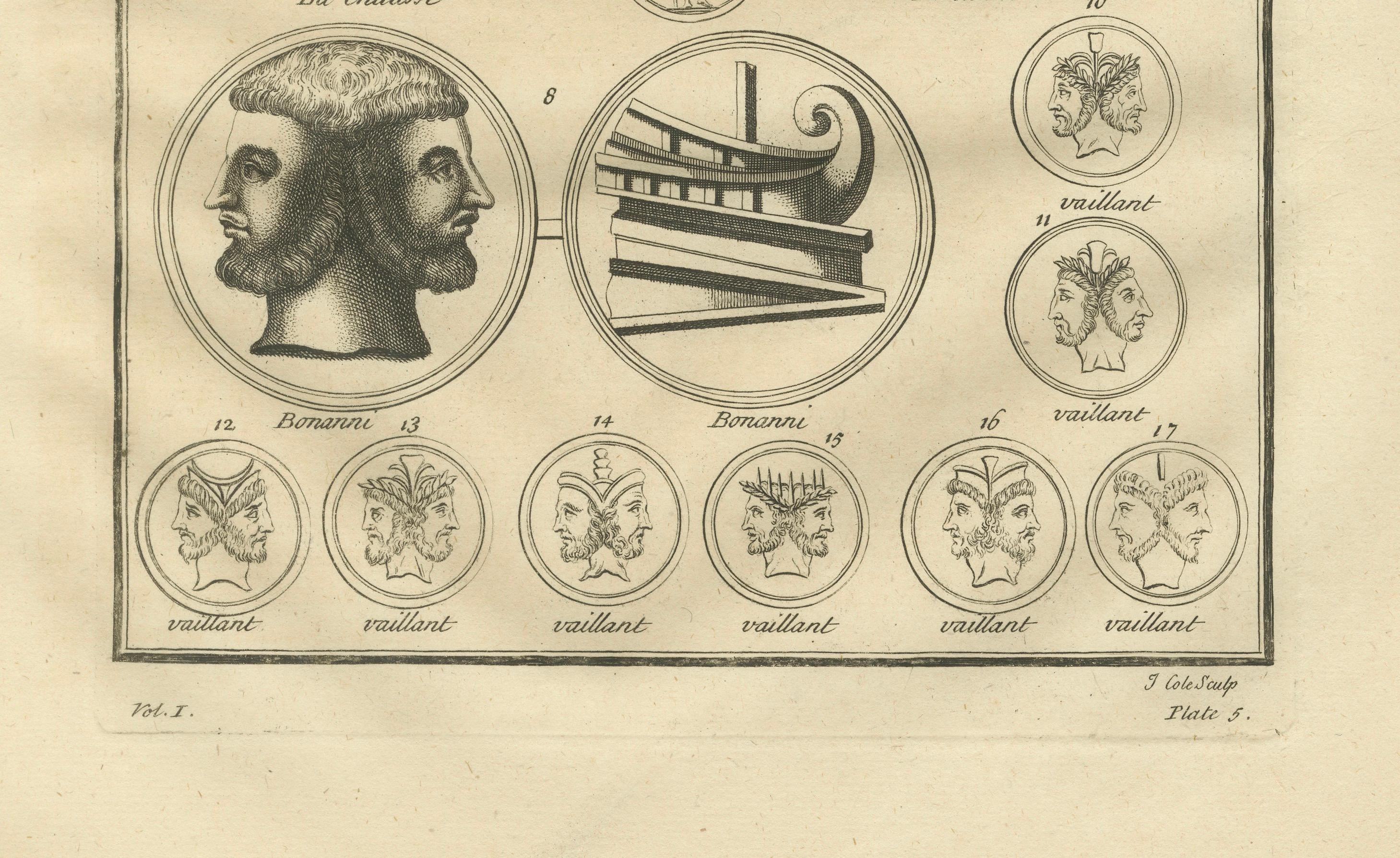
This impressive early-18th-century engraving presents a learned overview of major Roman mythological figures, drawn from celebrated antique sculptures, reliefs, and ancient coins. At the top of the composition appear monumental representations of Oceanus, shown as a reclining river god with flowing beard and oar, and Saturn, depicted as a standing, bearded deity associated with time and abundance. Below, the plate develops into a scholarly comparative display: Prometheus appears in a roundel scene examining the human skeleton, while Janus, the double-faced god of beginnings and transitions, is shown both as a sculptural bust and through multiple numismatic portraits.
The arrangement reflects the antiquarian method of the early Enlightenment, combining sculpture, relief, and coin imagery to illustrate how these deities were understood and represented in Roman antiquity. Each element is carefully labeled, emphasizing the educational intent of the plate rather than narrative storytelling. The contrast between large sculptural figures and smaller medallions gives the sheet a strong visual rhythm and makes it particularly appealing as a standalone work.
This engraving originates from Bernard de Montfaucon’s influential study of classical antiquity, a cornerstone publication for scholars, artists, and collectors in the 18th century. Plates like this were widely consulted by architects, sculptors, and designers and remain highly desirable today for their clarity, balance, and intellectual depth. The subject matter, focused on male deities and philosophical themes, gives the print a distinctly timeless and contemplative character, well suited to libraries, studies, and refined interiors.
Condition report:
Good condition for its age. Light, even age toning to the paper, with a visible central fold as issued. Minor handling marks and faint creases at the margins. Plate mark clearly visible.
Framing tips:
This plate works beautifully with a simple black or dark walnut frame and an off-white or light ivory mat. A slightly wider mat enhances the scholarly, museum-style presentation and emphasizes the engraved detail.
Technique: Engraving
Maker: Bernard de Montfaucon, France, early 18th century