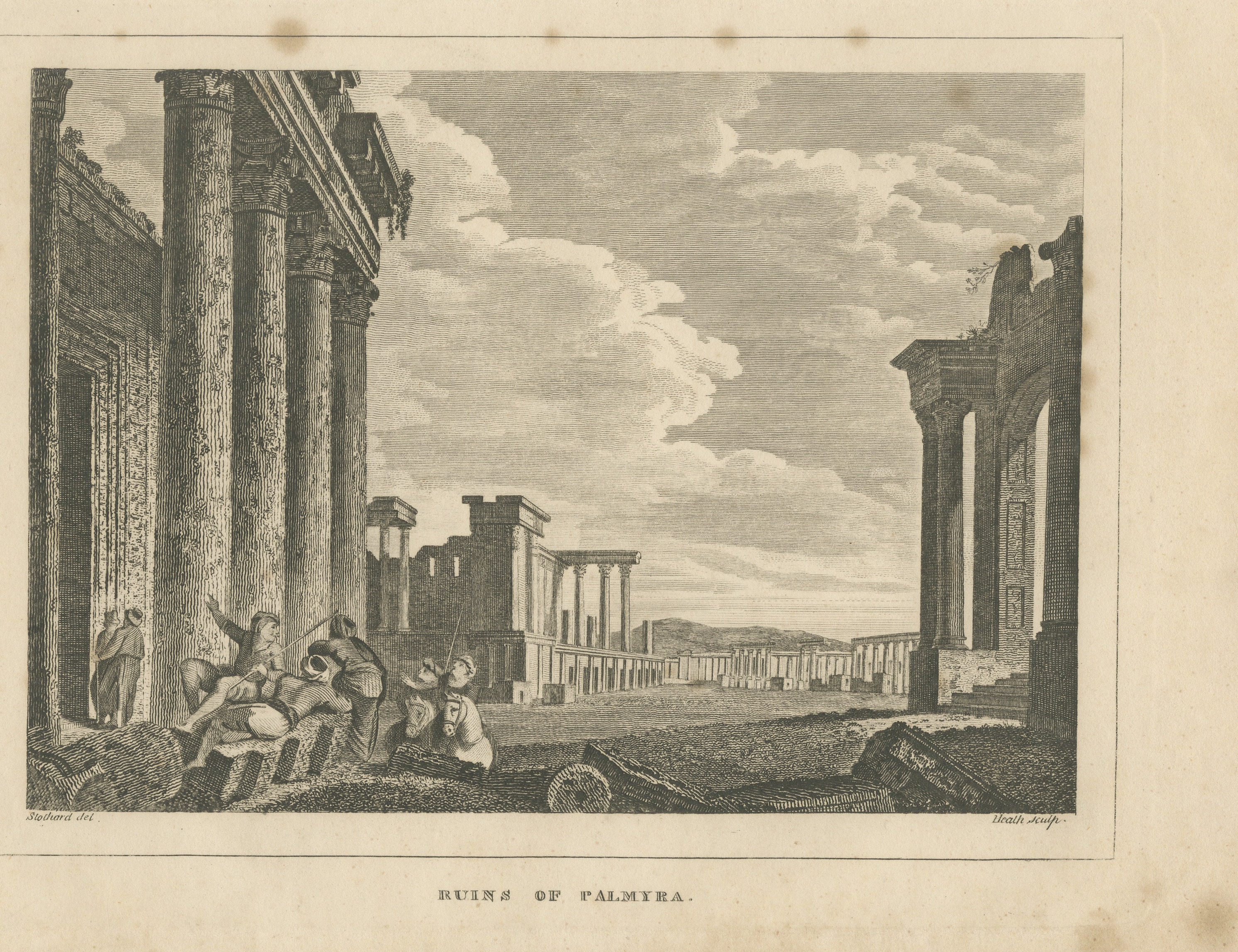
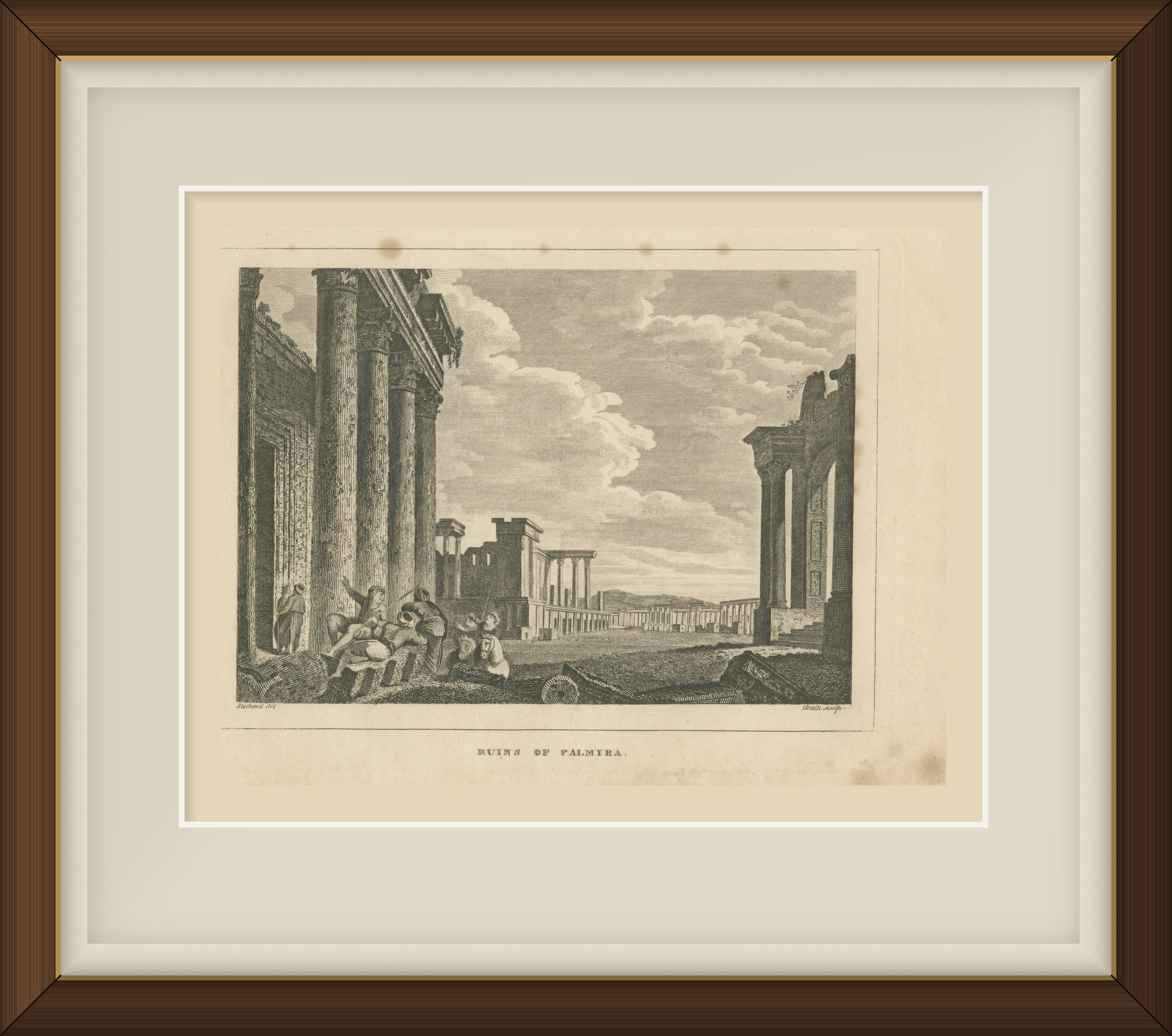
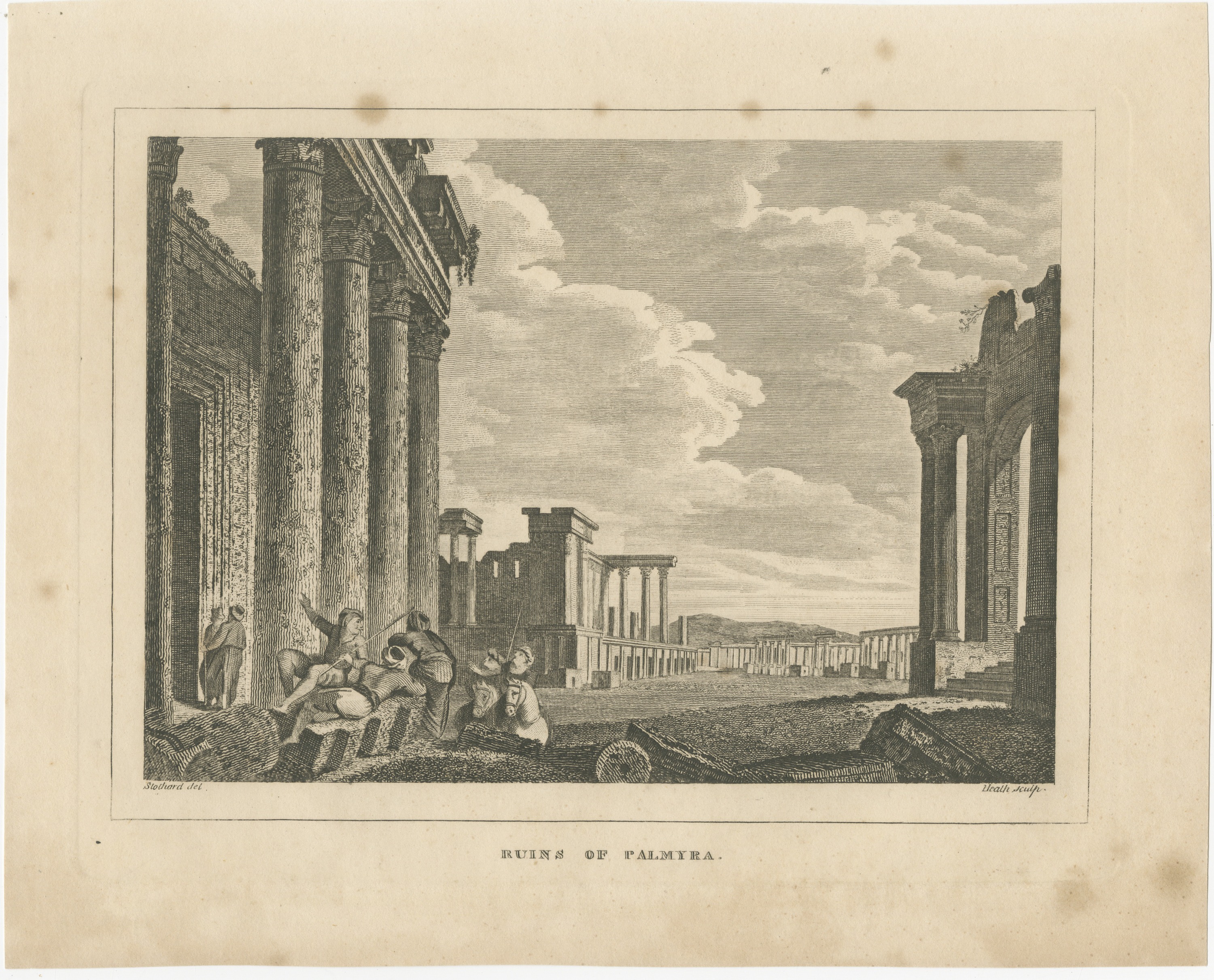
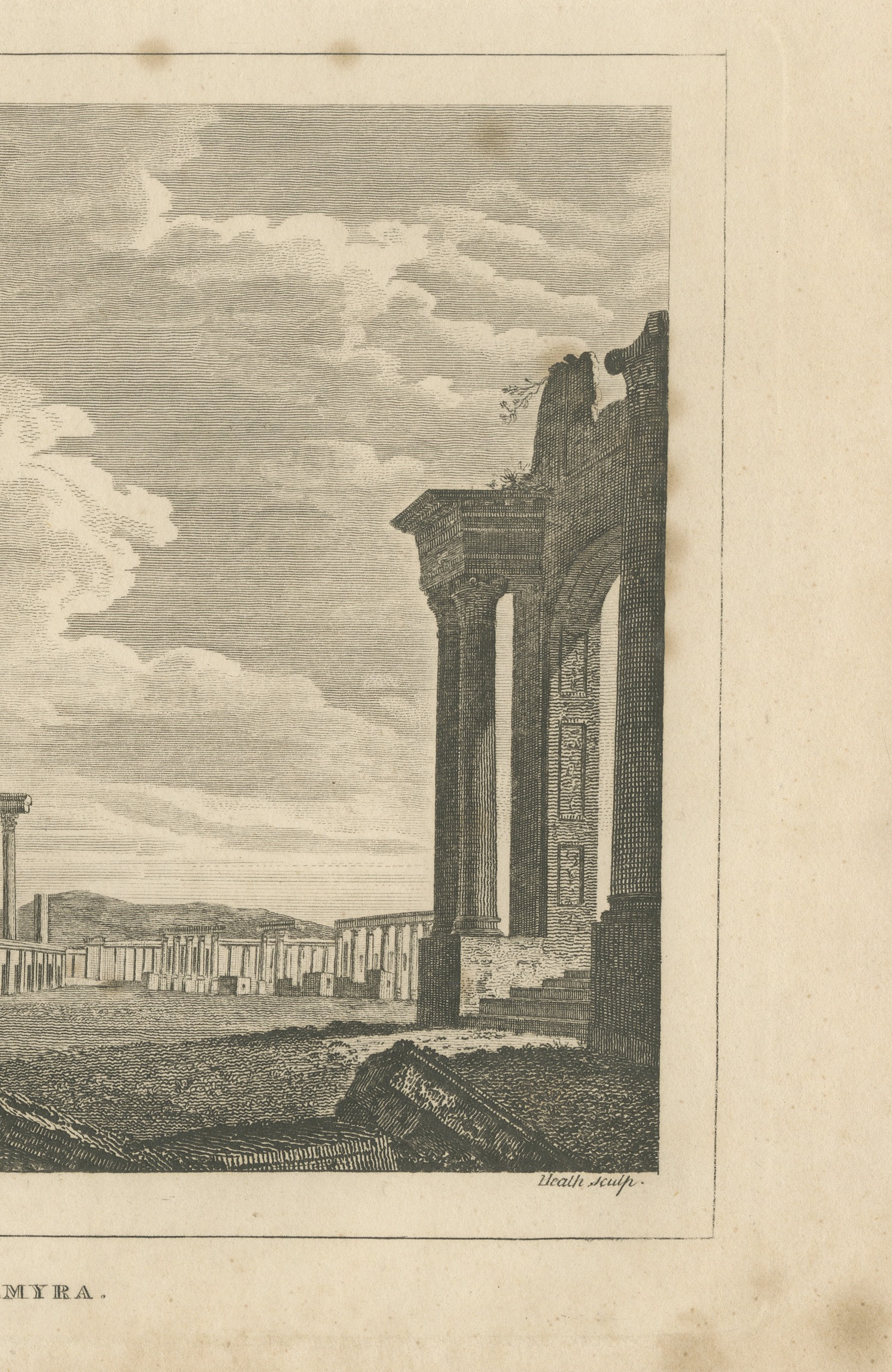
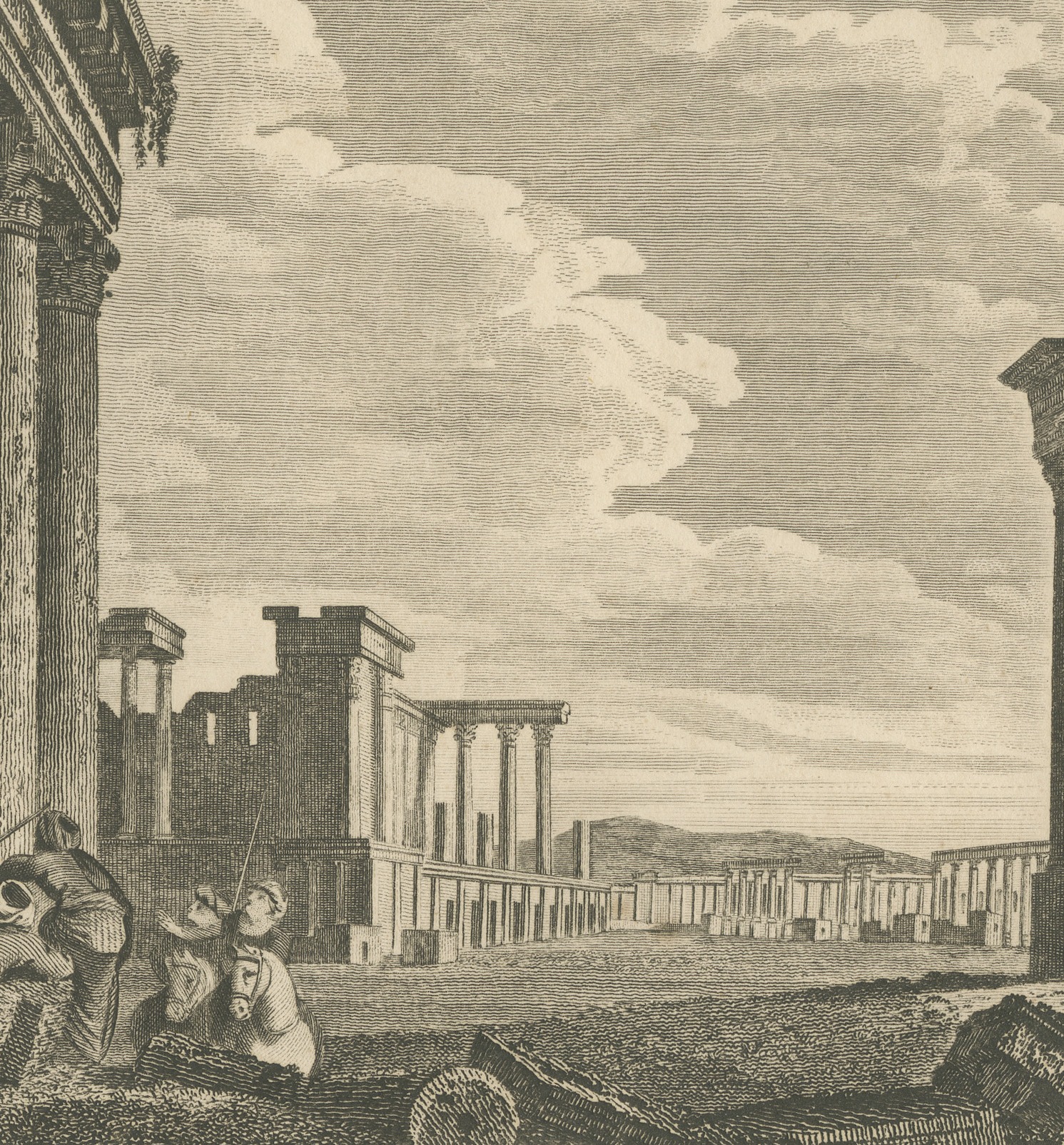
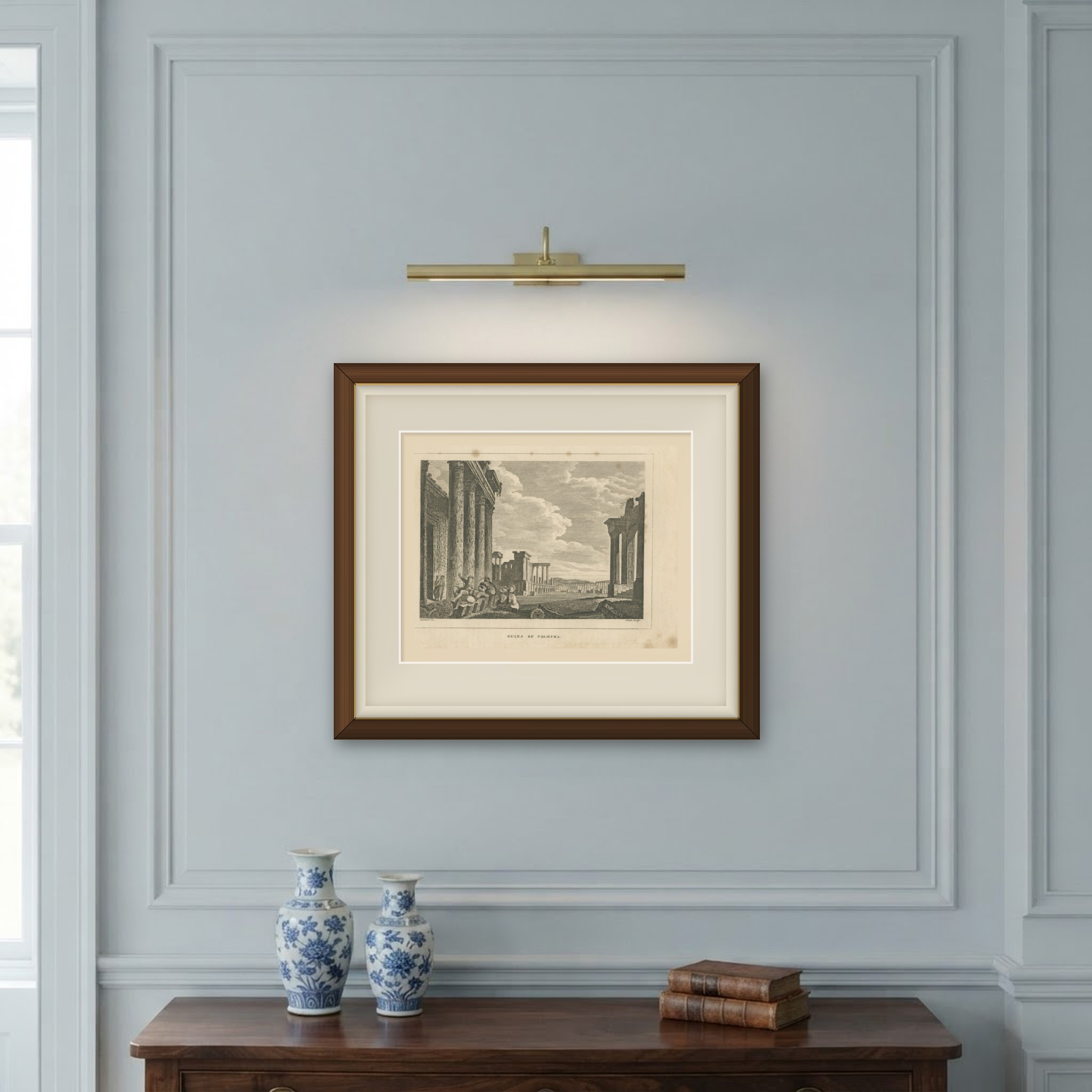
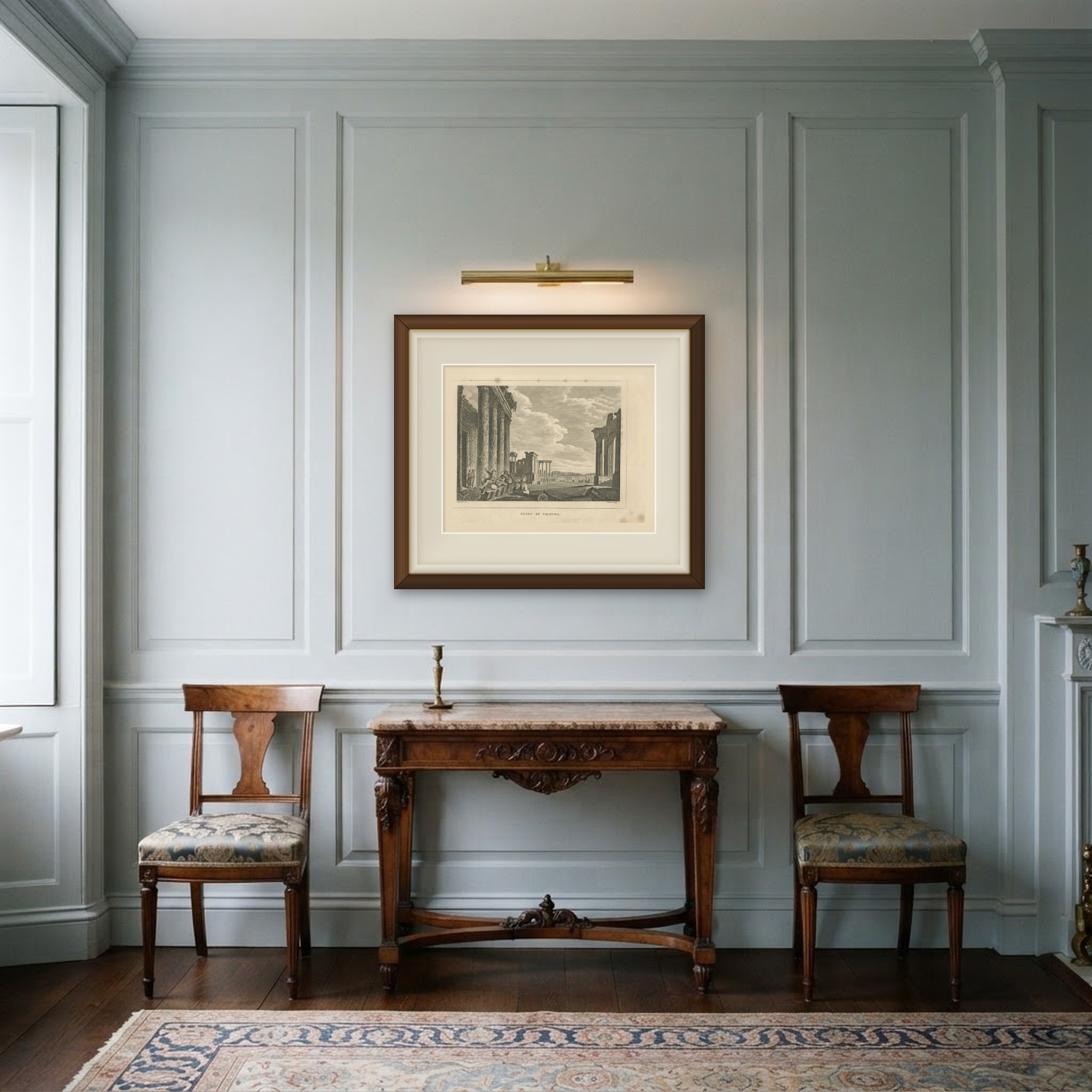
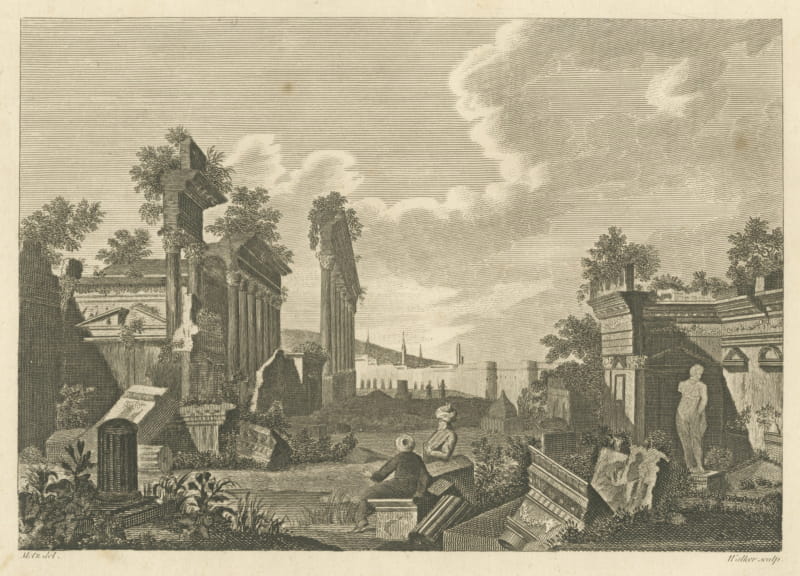
Ruins of Palmyra, Syria, Colonnade after Stothard, Copper Engraving, circa 1782
€ 210
Original antique · The actual sheet photographed · Certificate of authenticity on request · Sold unframed · Worldwide shipping from € 15 (rates)
Date
circa 1782
Mapmaker / artist
Stothard (draftsman), Heath (engraver)
Publisher
Not named on the sheet
Technique
Copper engraving
Coloring
Uncolored
Condition
Good
Reference
BG-14391-38
What the condition grades mean
Excellent
Bright and clean, with no faults worth mentioning.
Very good
Only light signs of age, such as faint toning.
Good
Normal signs of age for a sheet of this period: toning, some foxing, small marks or neat old repairs.
Fair
Clear faults such as staining, tears or repairs, priced to match.
Every fault we see is written in the condition note, and the whole sheet is shown uncropped in the photos.
Condition
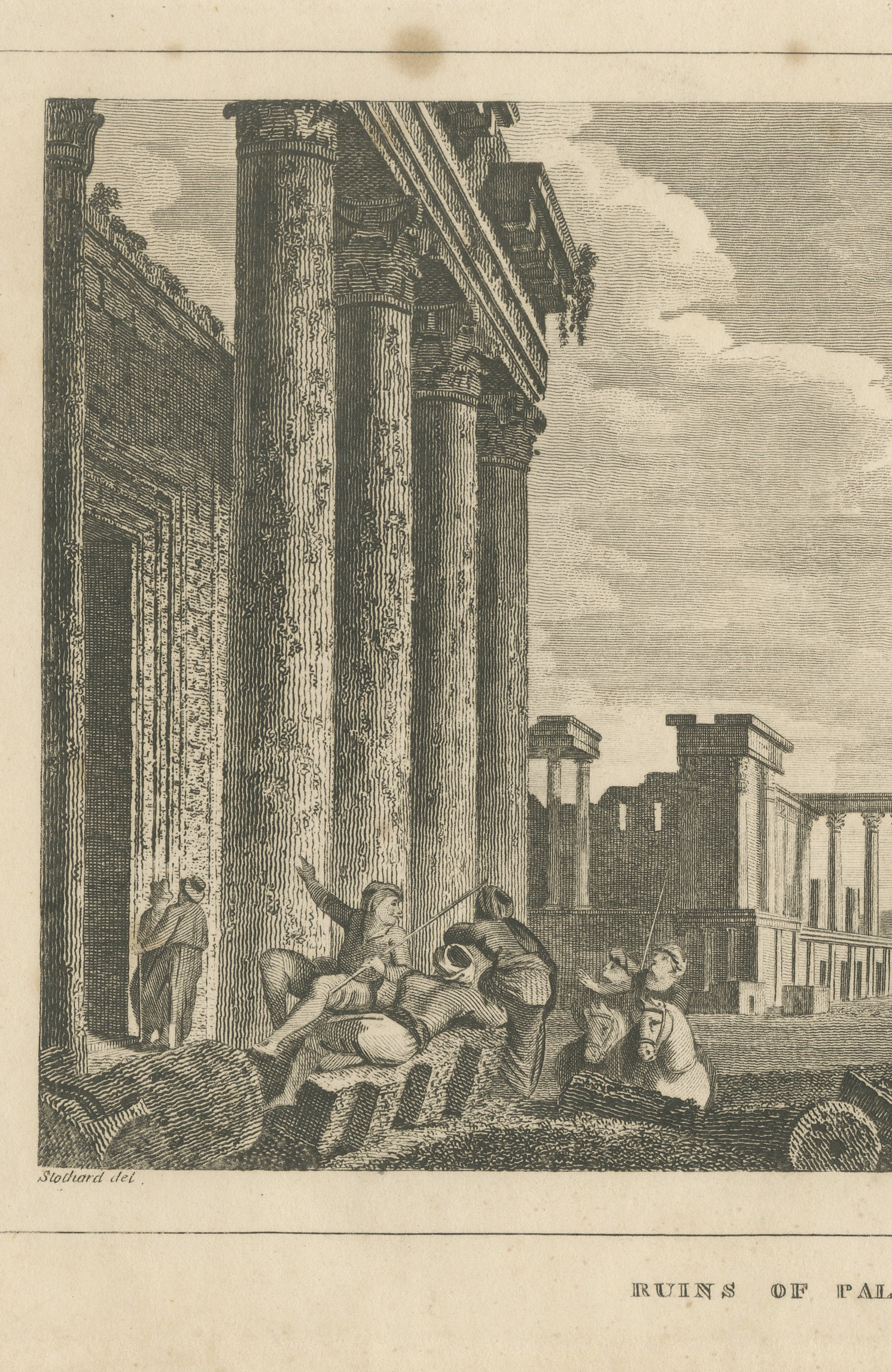
Good condition for its age. Toning with several light stains in the upper margin and lower right margin, and a small dark spot in the lower left margin. Please review the images for further condition details.
About this sheet
A finely engraved eighteenth century view lettered "Ruins of Palmyra", with the credits "Stothard del." at lower left and "Heath sculp." at lower right, for the London painter and book illustrator Thomas Stothard, who drew the design, and the engraver James Heath. The same plate was published by Harrison and Co. in London in 1782.
The view looks down a ruined street of the ancient desert city. At the left a row of tall fluted Corinthian columns still carries its heavy entablature beside a temple wall with a deep doorway. In the shade at their foot a group of travelers in robes and turbans rests among fallen blocks, one pointing toward the ruins, while a saddled horse stands by. Beyond, a long colonnade and the broken walls of further temples stretch away across the plain toward low hills, and at the right a great arch with a ruined upper story frames the street. A wide sky of drifting cloud fills the upper half of the plate.
Palmyra, the oasis city of Queen Zenobia in the Syrian desert, grew rich on the caravan trade between Rome and the East. Its ruins became famous in Europe after the publication of Robert Wood's The Ruins of Palmyra in 1753, which made the city a byword for vanished grandeur and inspired architects, painters and poets throughout the later eighteenth century. Stothard and Heath, who worked together on many illustrated books of the 1780s, give the scene a romantic, almost theatrical quality, with the travelers dwarfed by the columns.
The print is a crisp line engraving with good contrast between the sunlit columns and the shaded ground, printed on laid paper with ample margins. It will appeal to collectors of classical ruins and of views of the Near East, and it would look handsome framed in a study or library.
Condition: Good condition for its age. Toning with several light stains in the upper margin and lower right margin, and a small dark spot in the lower left margin. Please review the images for further condition details.
This is an original antique print, not a modern reproduction. This item is sold unframed. Any framed or interior images are shown for presentation and inspiration only, unless the listing explicitly states that the item is sold framed.