About this sheet
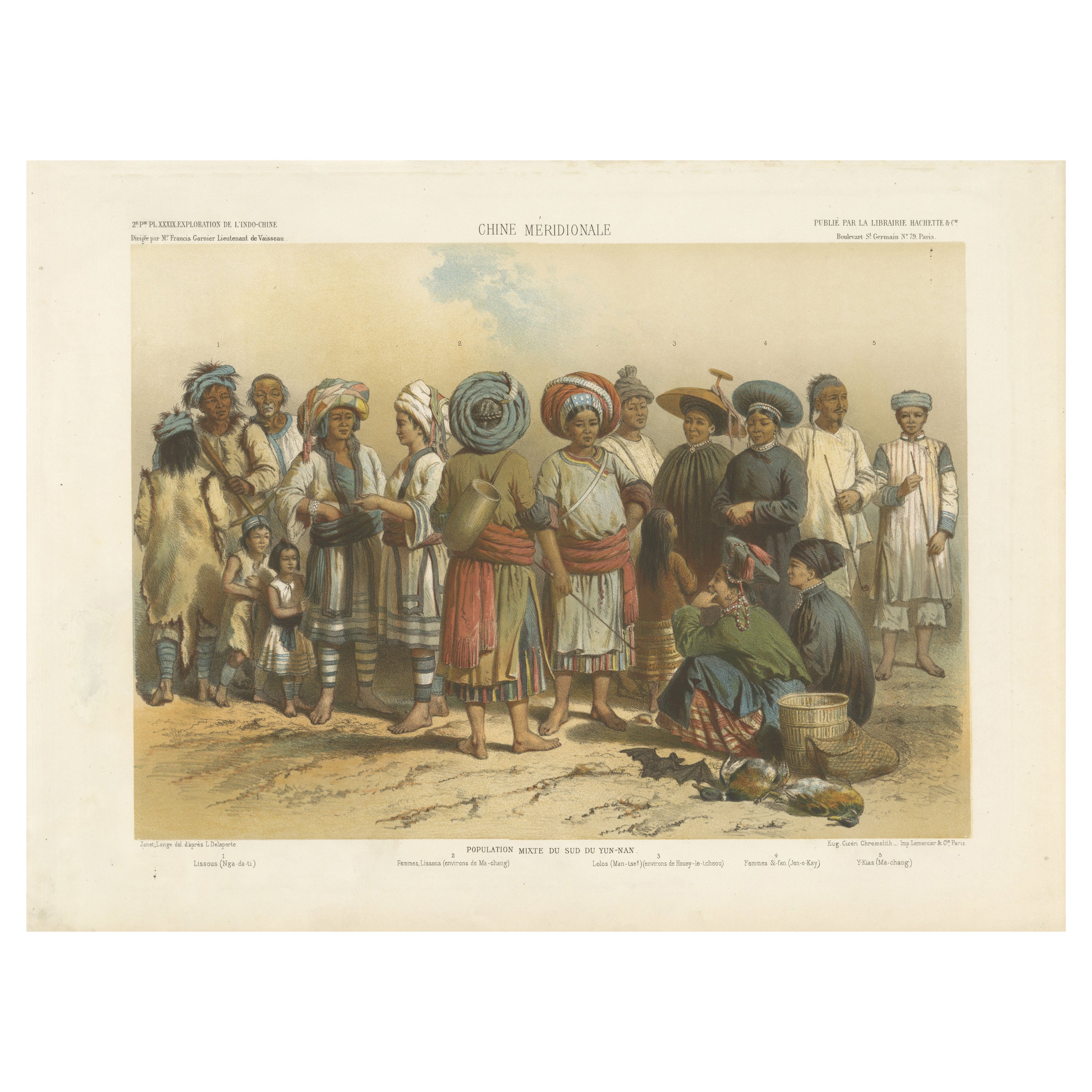
Mixed Populations of Southern Yunnan – A Plate from the French Exploration of Indochina (1866–1868)
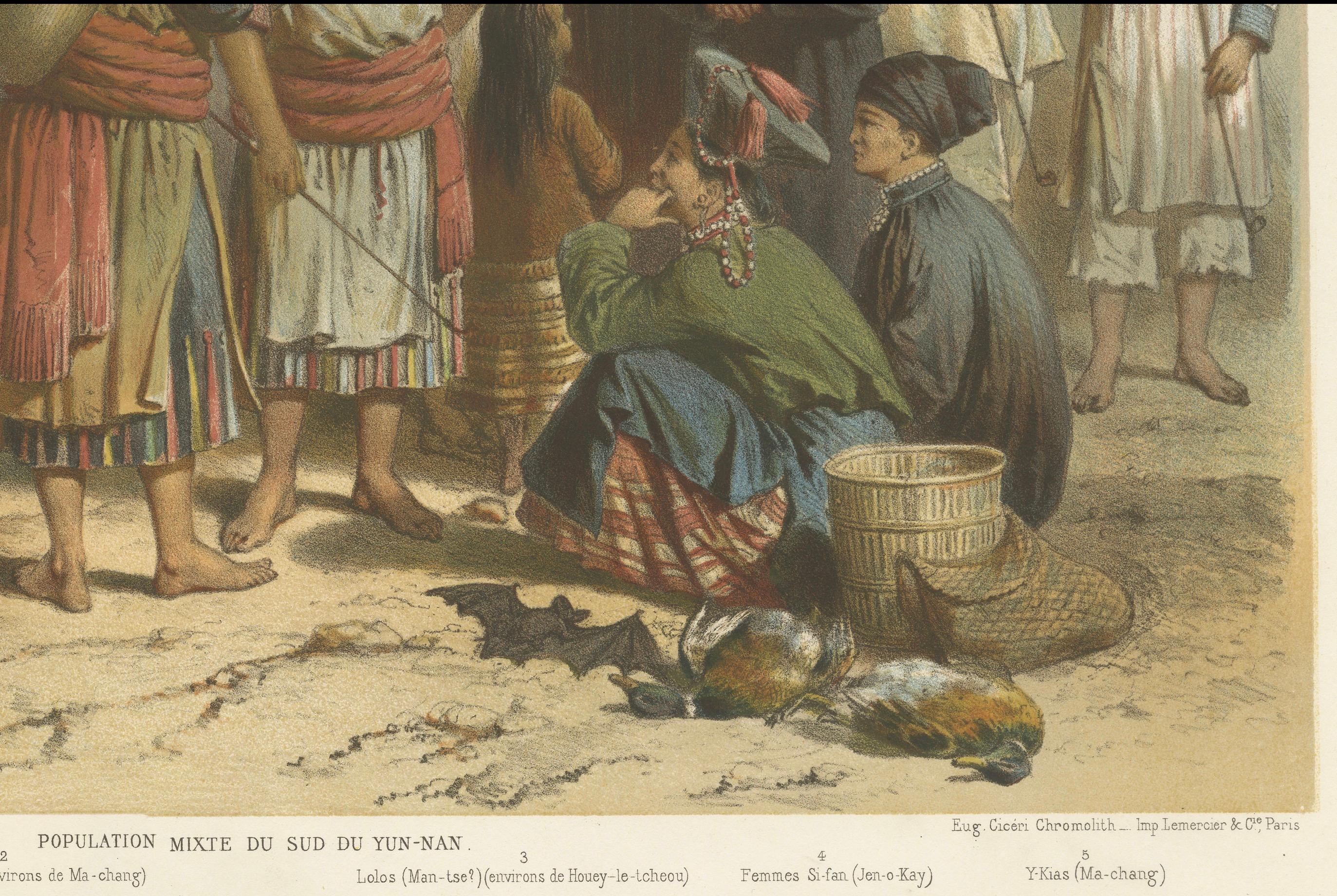
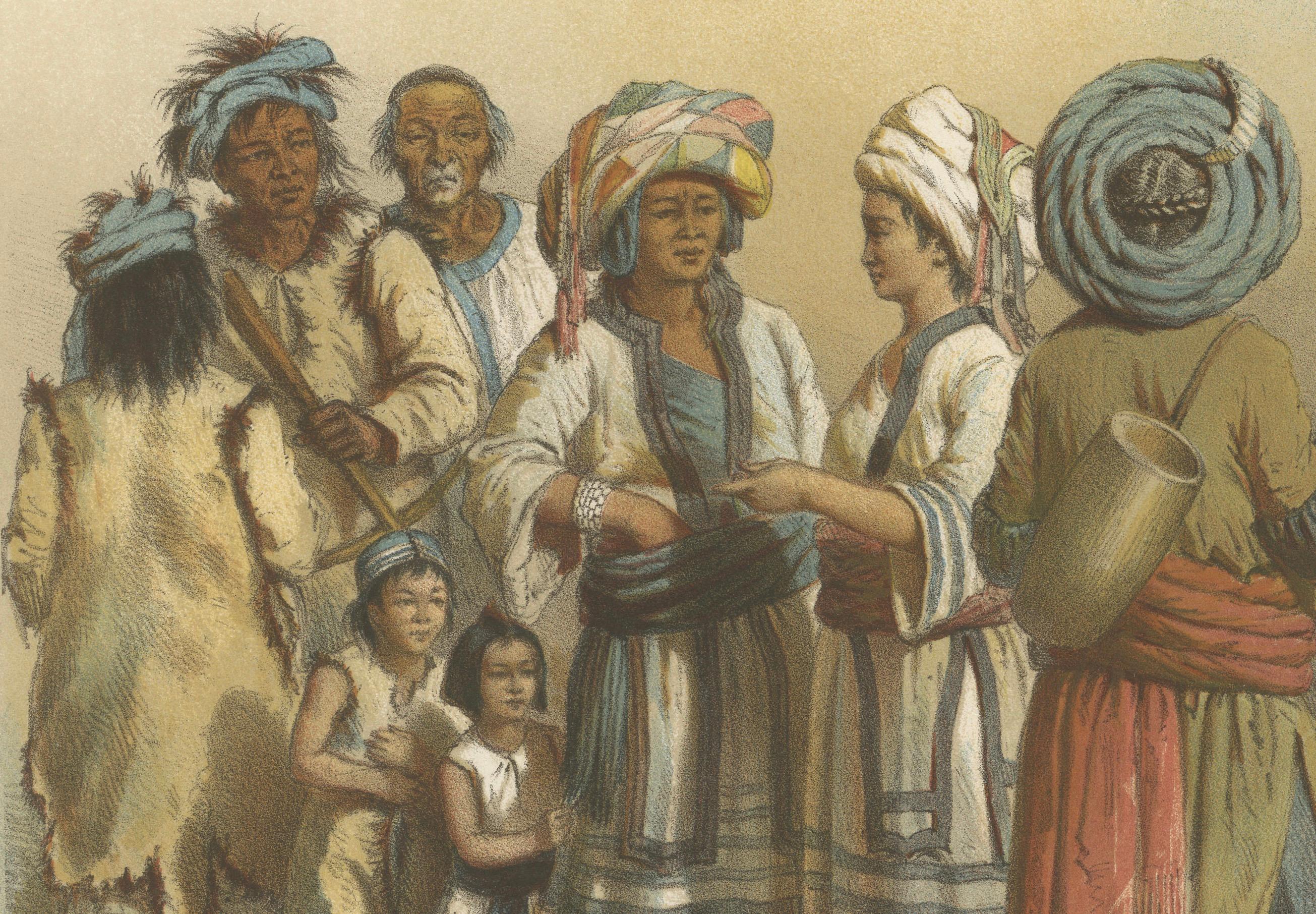
This vibrant lithograph, part of the monumental 'Voyage d'exploration en Indo-Chine,' depicts a group of diverse ethnic communities in the southern Yunnan region of China. Created under the direction of Francis Garnier, a French lieutenant and explorer, the illustration vividly portrays the traditional attire and unique cultural characteristics of the various groups. Among the figures, we see representatives of the Lolos (Yi people), the Lissous (Lisu people), and other distinct groups from the region, showcasing a variety of headdresses, garments, and everyday interactions. The subtle use of color and detail captures the texture of their clothing and accessories, providing a window into 19th-century southern Chinese ethnic diversity.
This work comes from the series published in 1873, which documented Garnier’s travels and his team’s observations of the landscapes, peoples, and customs of Indochina. The plate serves as both an anthropological and artistic masterpiece, reflecting the scientific and colonial interests of the time.
The lithograph illustrates a variety of ethnic communities from southern Yunnan, each represented with their distinct traditional attire. The detailed grouping reflects the diverse cultural mosaic of the region, many of whom continue to exist today under modern ethnic classifications. Below are descriptions of the groups depicted:
1. Lolos (now referred to as Yi people): The Yi are one of China's largest officially recognized ethnic groups, originating from the mountainous regions of Yunnan, Sichuan, and Guizhou provinces. They are depicted wearing layered tunics with patterned fabrics and elaborate headdresses, which are culturally significant and reflect their regional identity.
2. Lissous (now referred to as Lisu people): The Lisu people are a Tibeto-Burman ethnic group residing in southwestern China, particularly in Yunnan, as well as in Myanmar and Thailand. Their clothing often includes vibrant stripes and woven patterns, which symbolize their tribal traditions.
3. Chinese Han communities: Han individuals are also depicted, reflecting their interactions and coexistence with minority groups in the region. Their attire is simple and practical, in contrast to the ornate costumes of the minority groups.
4. Others (possibly Aka or Jino): Other groups, such as the Aka (Hani) and Jino, may also be represented, originating from areas in Yunnan known for their agricultural practices and distinct cultures.
The plate offers a snapshot of life in 19th-century Yunnan, where these communities, separated by language, dress, and traditions, coexisted within the region’s rich cultural tapestry.
Condition report: Minor surface dirt; sheet approximately 360 x 490 mm (14 1/8 x 19 1/4 in); vibrant colors remain intact, with slight age toning along the edges. Original lithograph printed in color; overall well-preserved.