About this sheet
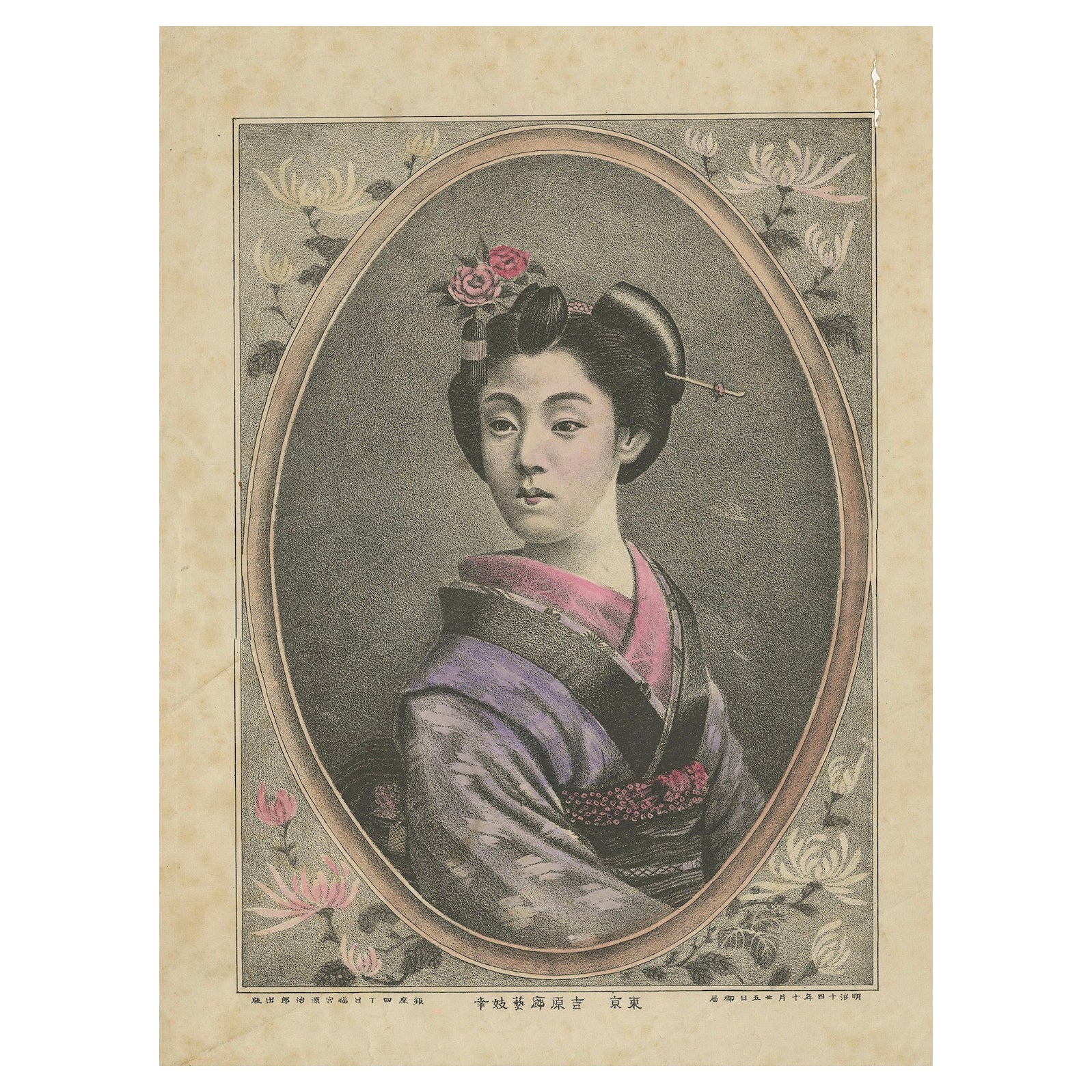
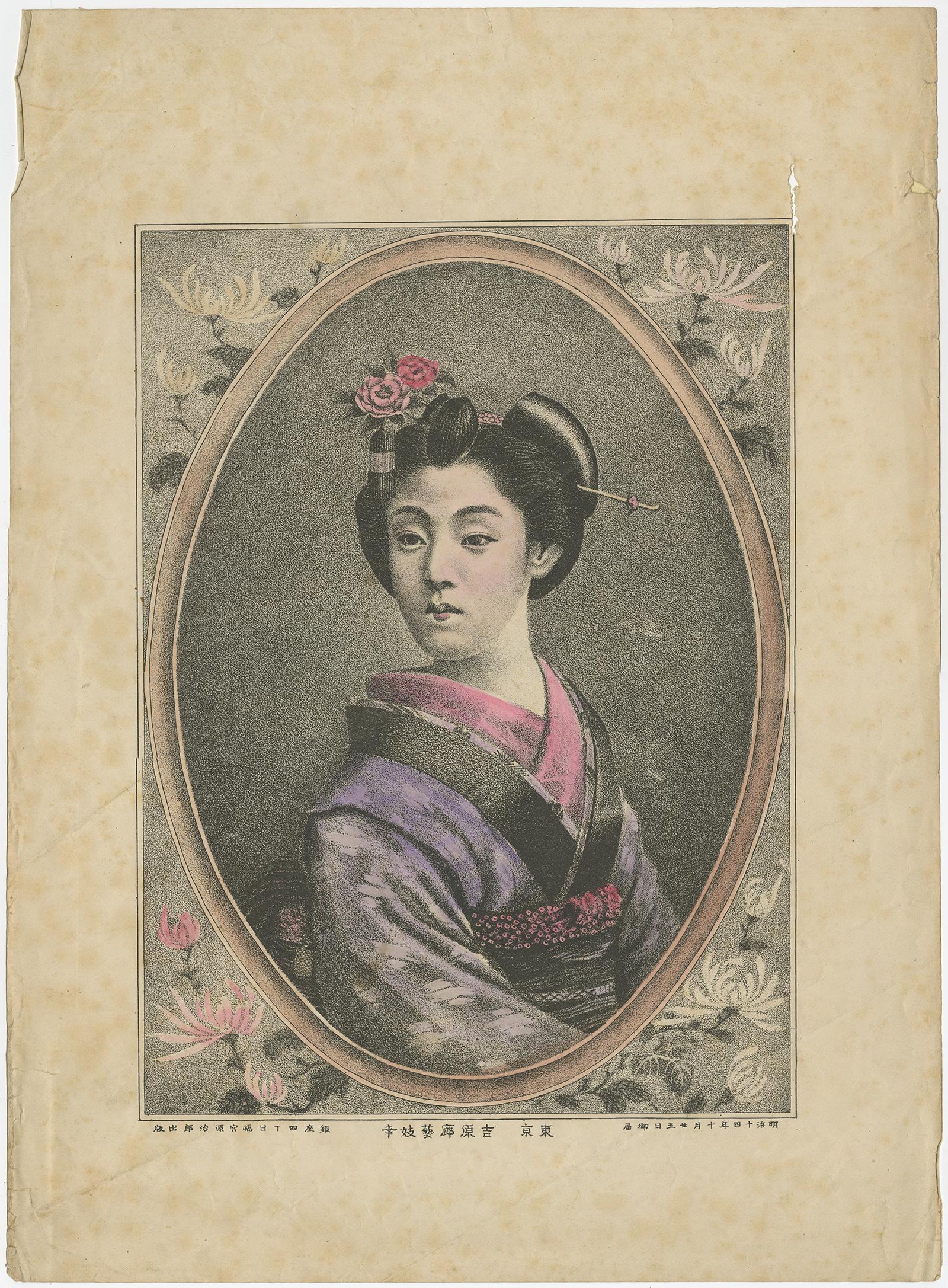
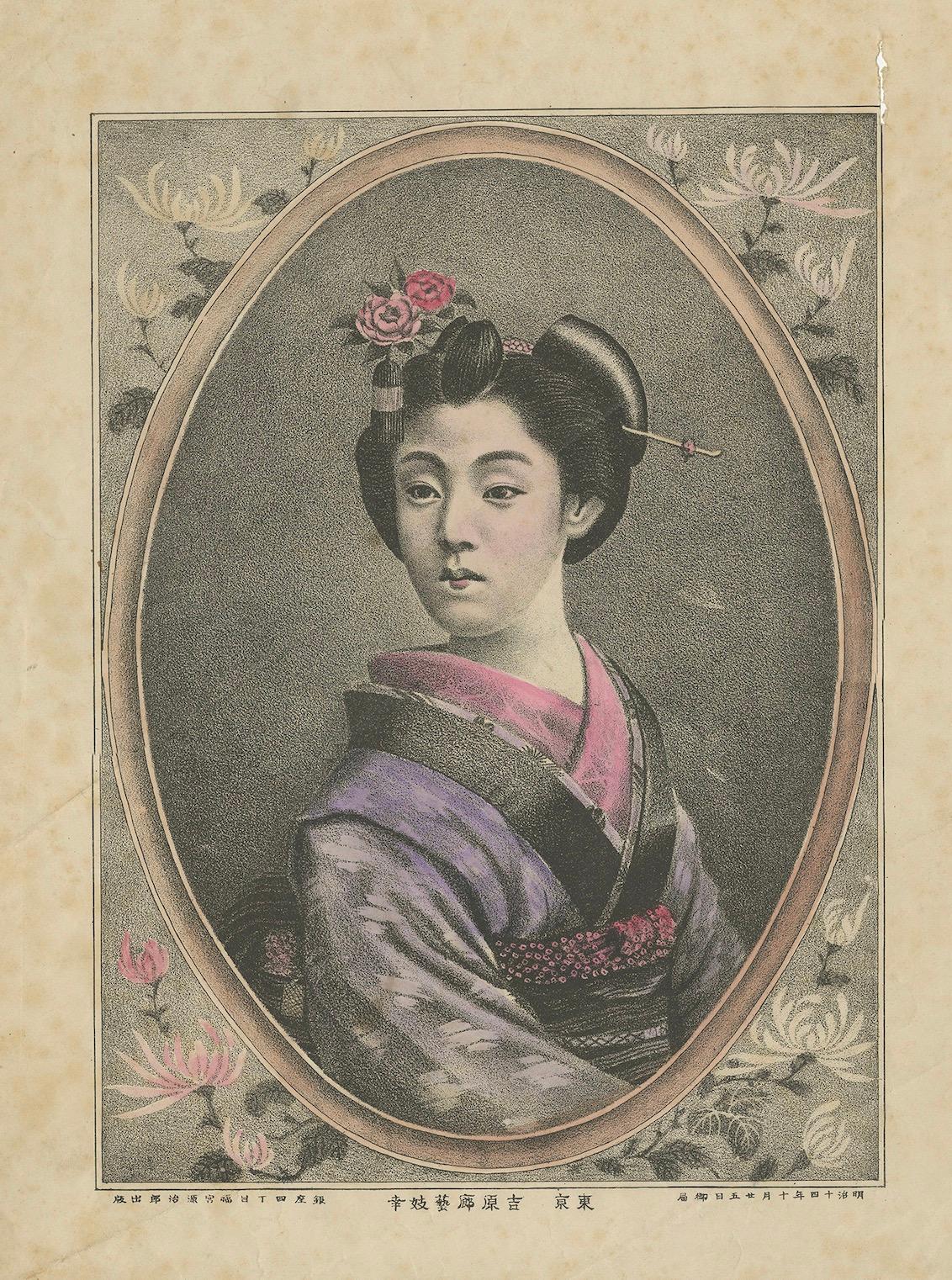
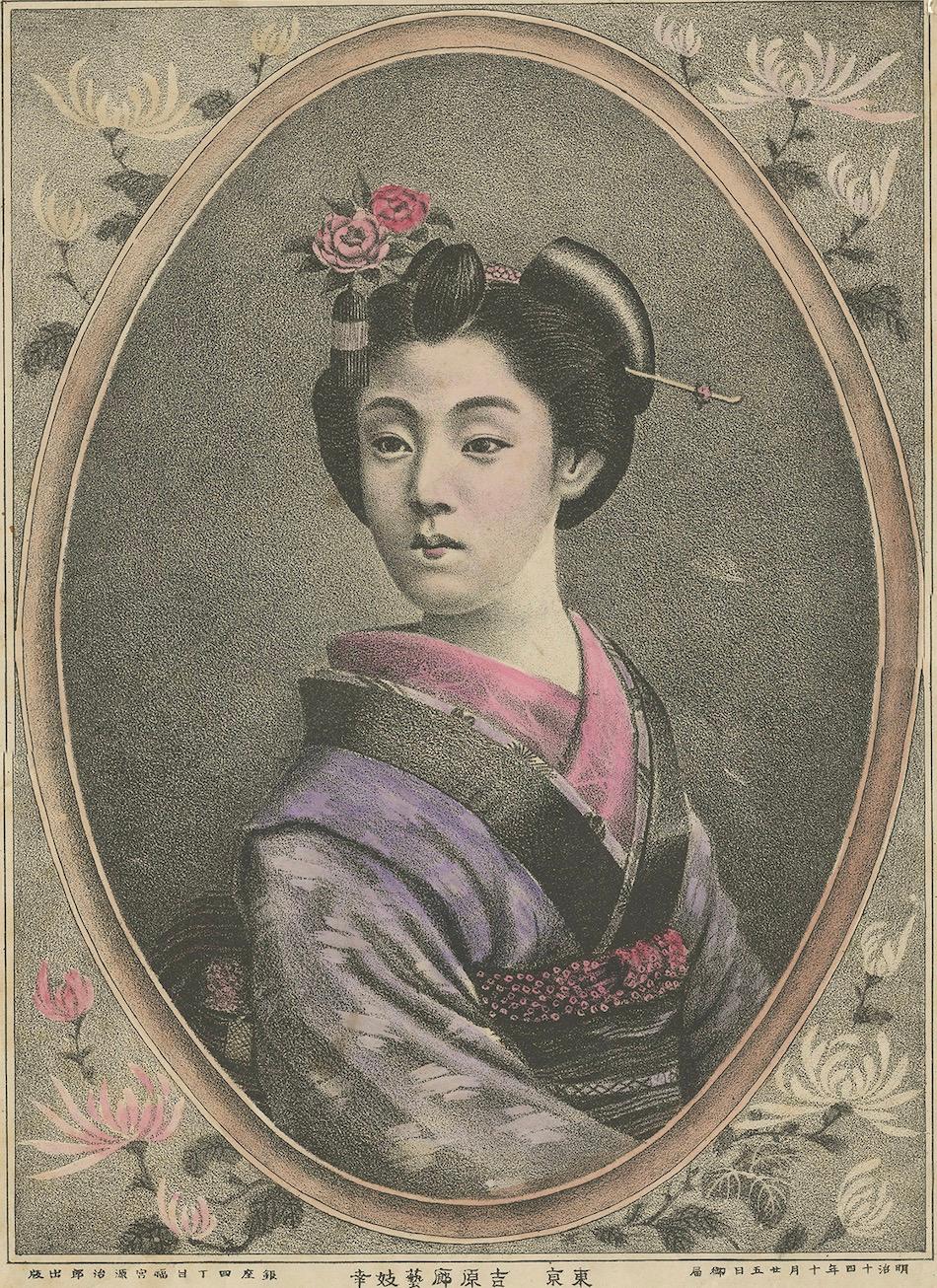
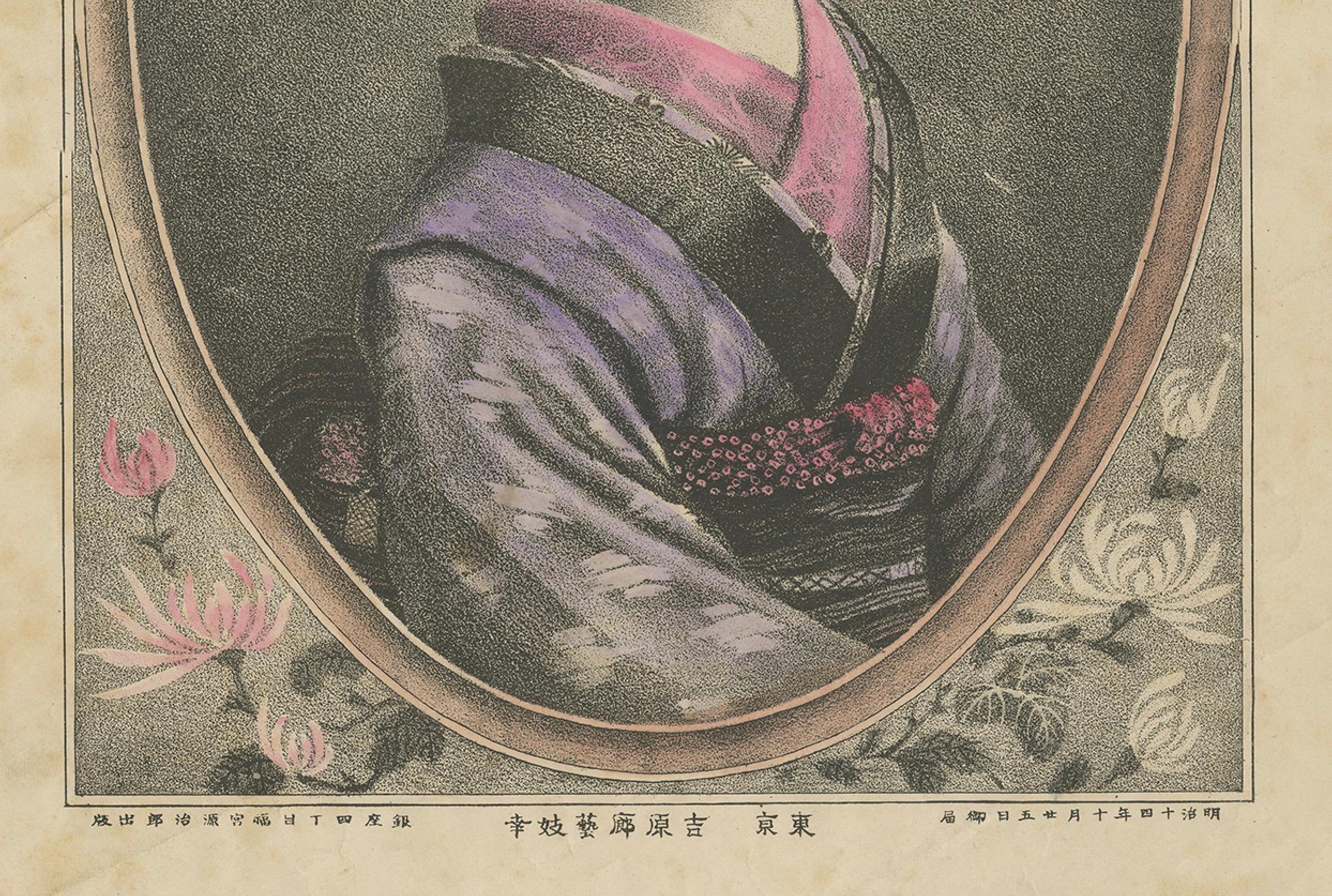
This is an original antique lithograph of a Japanese woman, likely from the Meiji period (1868-1912), as suggested by the style of the kimono and hair accessories. The print shows a detailed portrait of a young woman with delicate facial features, dressed in a traditional 'furisode' kimono, which is a long-sleeved kimono worn by young, unmarried women.
The woman is adorned with an elaborate hairstyle, accessorized with decorative flowers and a hairpin (kanzashi), indicating her elevated social status or ceremonial importance. Her kimono features soft pastel colors, primarily in shades of purple and pink, contrasted with a darker obi (sash) tied around her waist. The lithograph has a decorative oval frame, surrounded by floral motifs in the background.
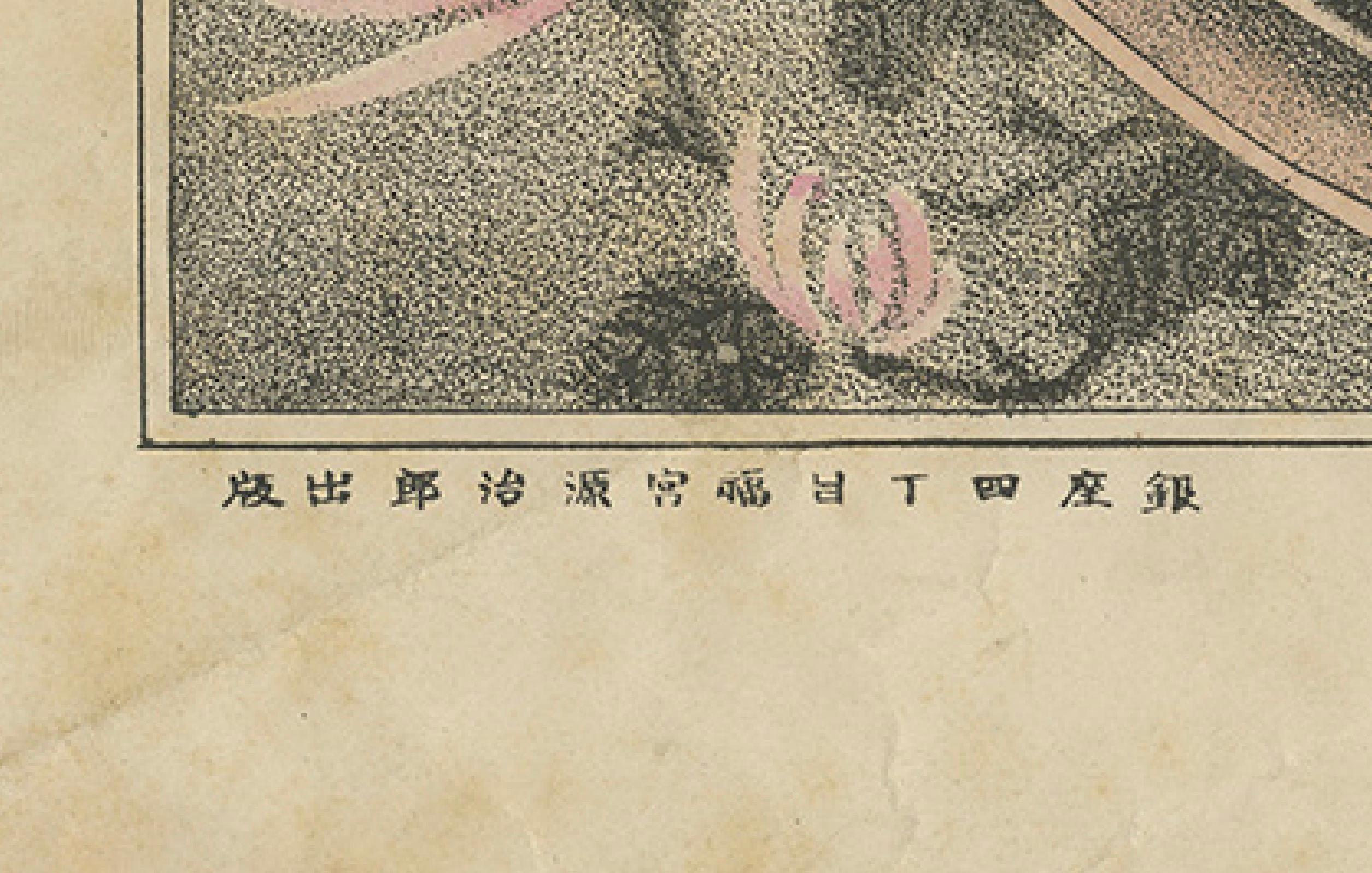
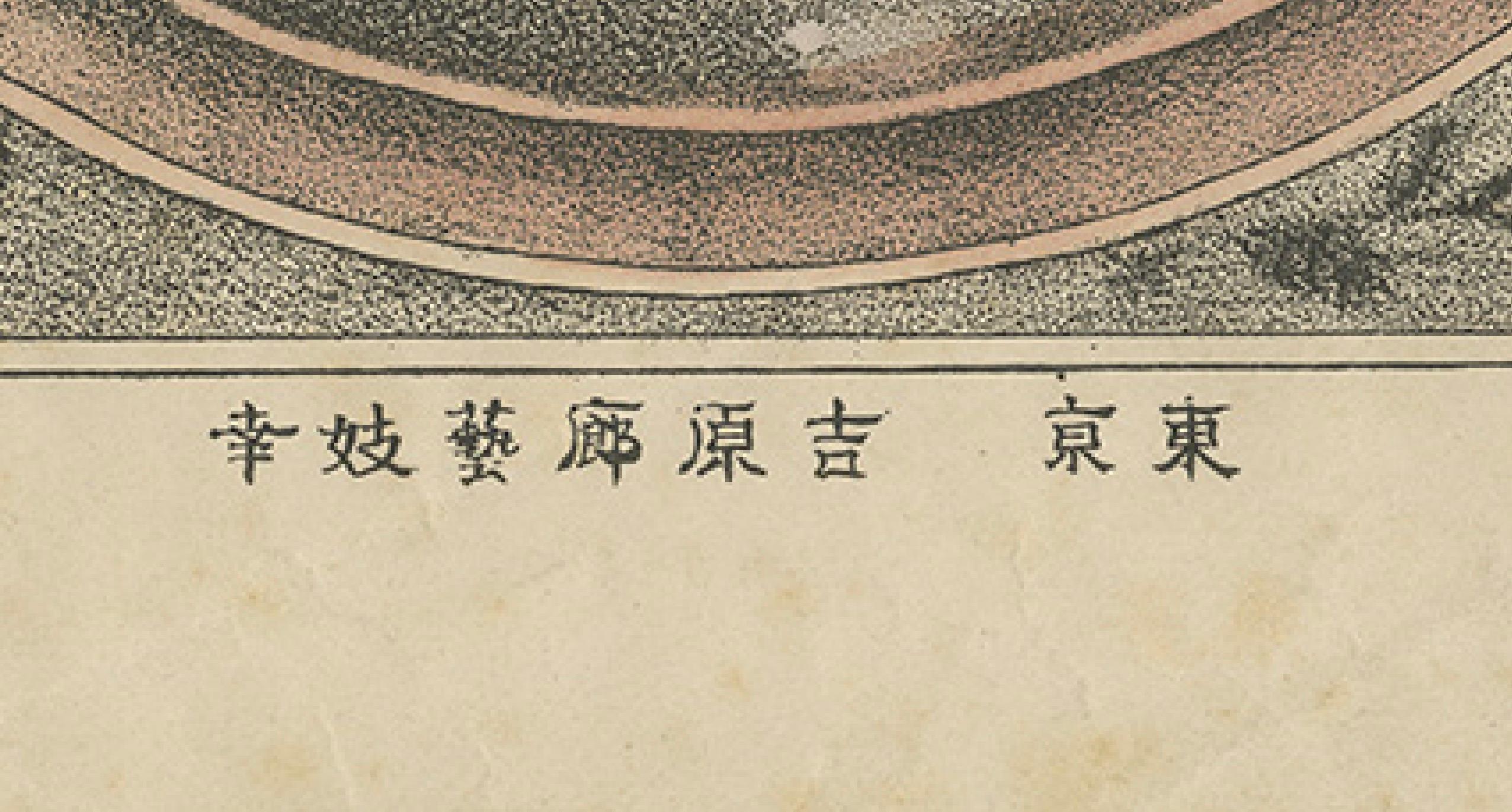
The condition of the print shows signs of age with some yellowing and wear along the edges, which is common for antique prints. The Japanese characters at the bottom likely reference the name of the woman, the artist, or the publishing house. This piece is an example of the high-quality lithographic techniques used in Japan during the late 19th and early 20th centuries to produce portraits that blend traditional Japanese aesthetics with Western printing methods.
This lithograph would have likely been produced for the domestic or international market as part of a series illustrating Japanese beauty and culture.
Here’s a rough breakdown and attempt at translating the Japanese text:
Here is the transcription of the Japanese text from the bottom of the image:
Left side:
塩出 郎 治 源 宮 螢
Right side:
幸奴 蔵 源 吉 京 東
Left Side:
- 塩出 (Shioide) – This could be a surname.
- 郎治 (Rouji) – Likely a given name, possibly "Roji" or "Rouji."
- 源宮 (Genmiya) – This could be a name of a place or person, where 'gen' (源) means 'source' or "origin" and 'miya' (宮) means "shrine" or "palace."
- 螢 (Hotaru) – Means "firefly," but in this context, it might be part of a personal or artistic name.
Right Side:
- 幸奴 (Kōnu or Yukinu) – Likely a name; 'kou' (幸) means "happiness" or "fortune," and 'nu' (奴) means "servant" or "woman."
- 蔵源 (Zougen or Kuramoto) – Possibly another name, where 'zou' (蔵) means "storehouse" or "treasure," and 'gen' (源) means "source."
- 吉 (Kichi or Yoshi) – This character means "good fortune" or "luck" and could be part of a person's name.
- 京東 (Kyōtō) – Likely referencing "Kyoto" (京), the famous historical city, with 東 meaning "east," potentially referring to the eastern part of the city.
Possible Interpretation:
- The left side might contain the name of the publisher or lithographer, while the right side likely includes the artist's or subject's name and a reference to Kyoto.
Combined Translation:
- The text could refer to the print being produced by a certain individual (Shioide Roji) and might describe the subject or a related individual named "Kōnu Genzou" (or similar) from Kyoto.
For a more precise translation and context, a professional familiar with historical Japanese texts and names would provide a clearer understanding.
This lithograph appears to be hand-colored. The subtle variations in color, particularly in the kimono and the floral decorations, suggest that the image was originally printed as a black-and-white lithograph and then individually colored by hand. This was a common practice in the 19th century to add vibrancy and uniqueness to prints, especially for portraits and decorative artwork. Hand-coloring gives each print slight differences, making them more unique, even within the same edition. The uneven application and blending of the colors in the image indicate that it was likely colored by hand rather than mass-produced through a fully mechanical process.