About this sheet
Antique China Honan Canal Canton Print – Thomas Allom Steel Engraving, 1843
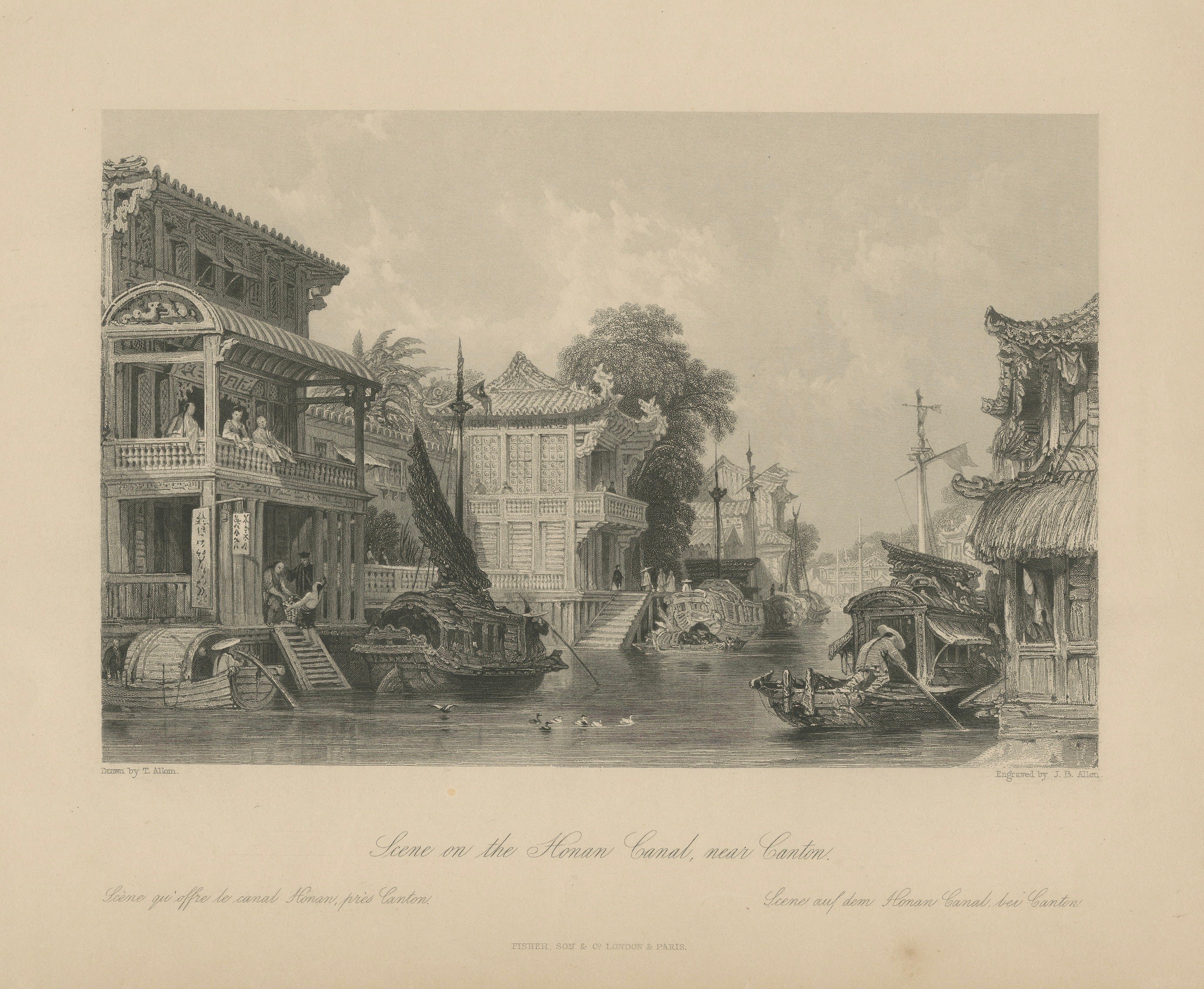
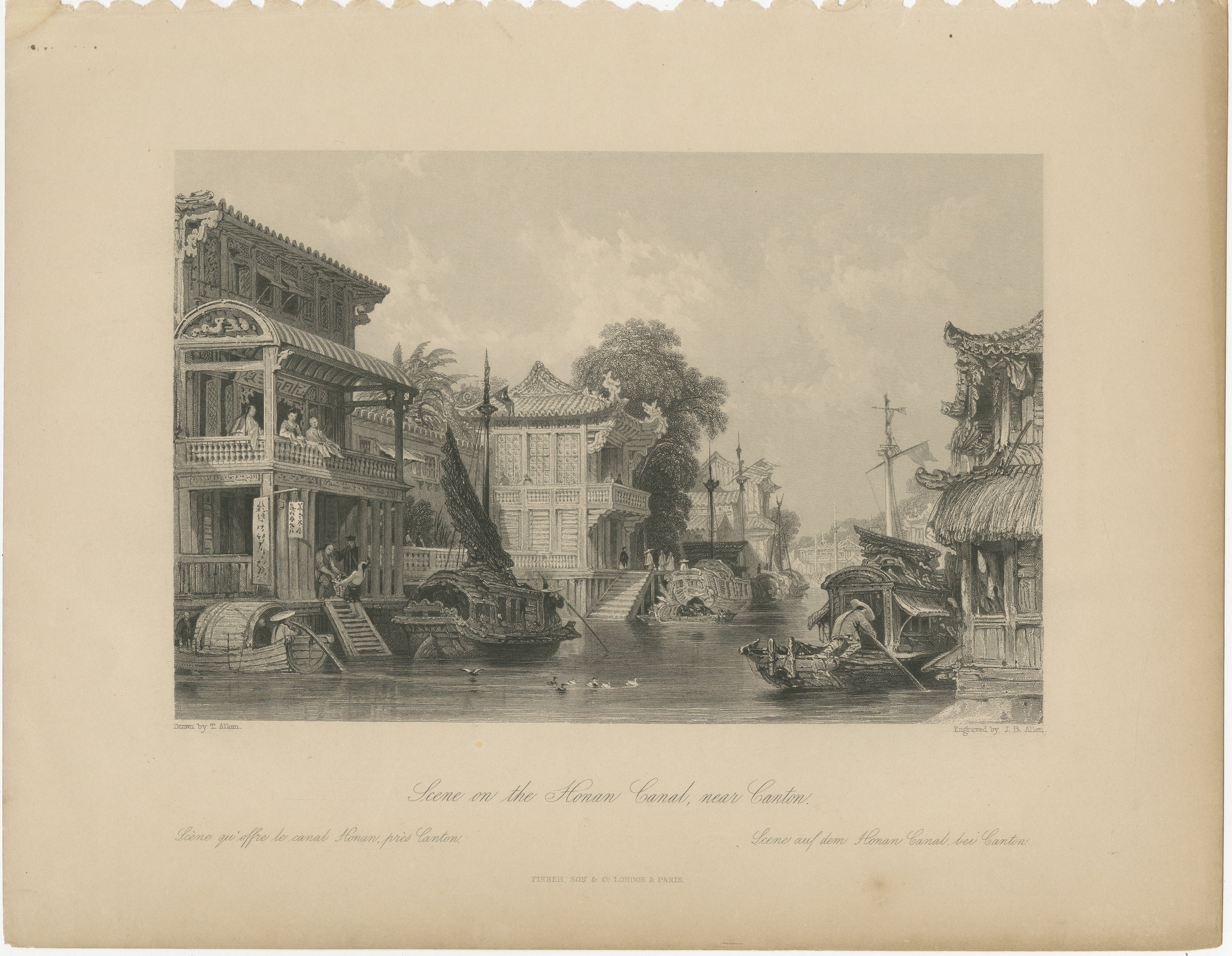
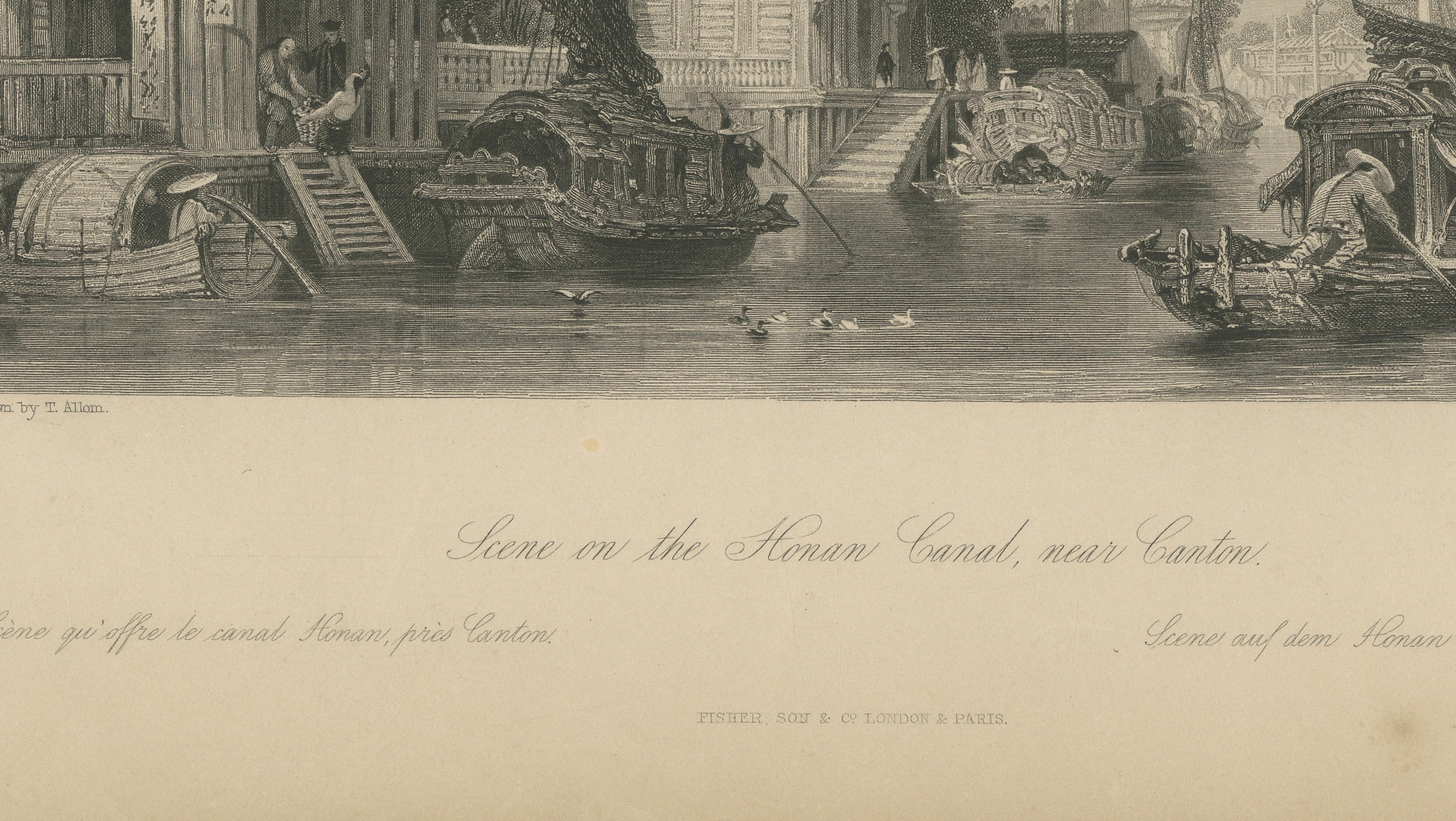
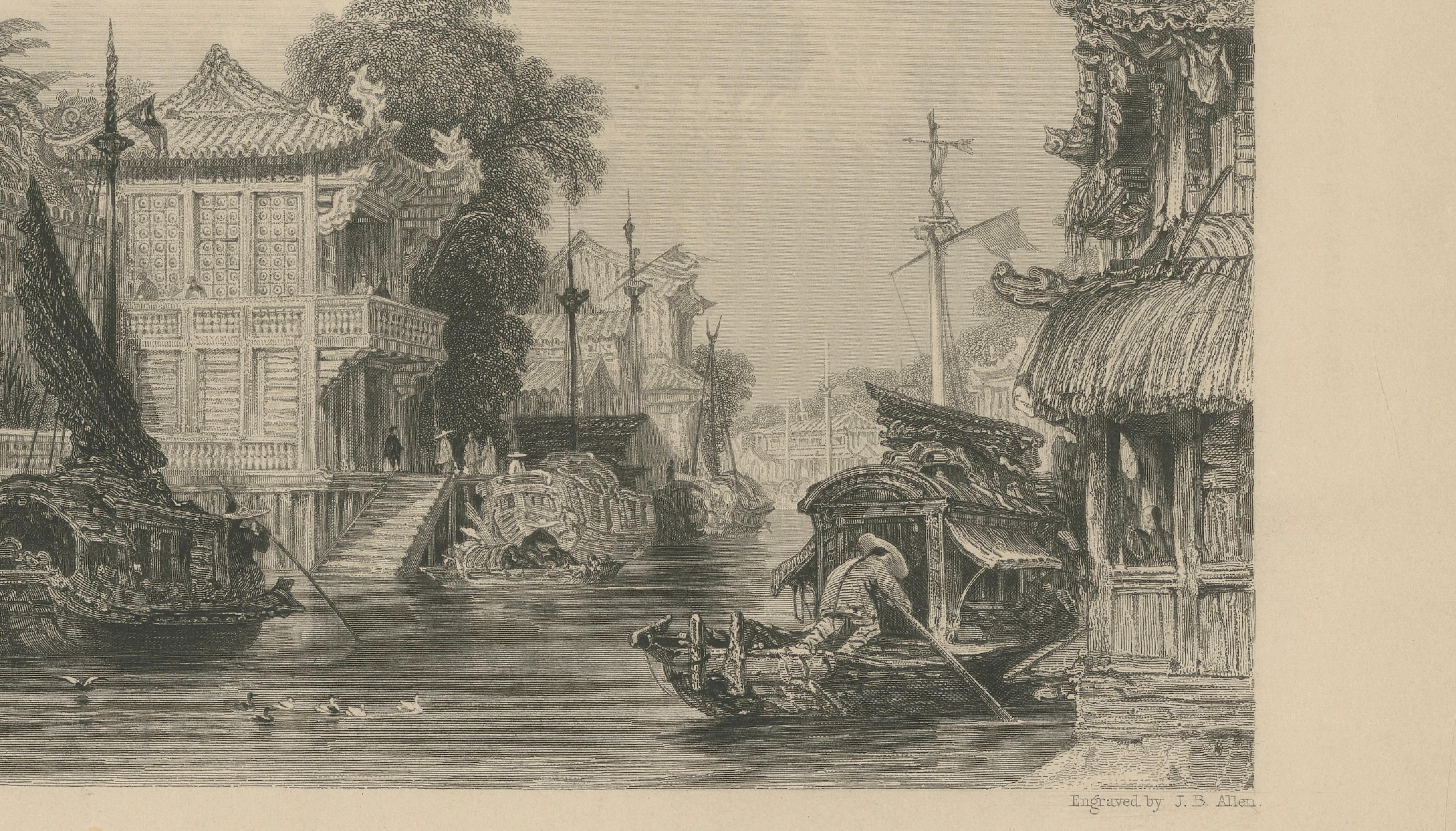
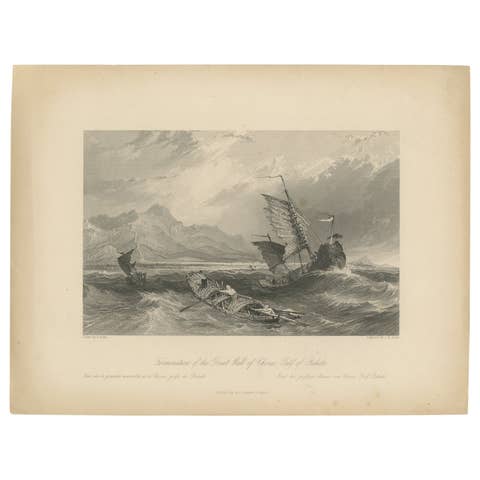
This elegant antique print titled Scene on the Honan Canal, near Canton was drawn by the English architectural artist Thomas Allom and engraved by J. B. Allen. The print was published by Fisher, Son & Co. as part of the famous illustrated work China, in a Series of Views, Displaying the Scenery, Architecture, and Social Habits, of that Ancient Empire, issued between 1843 and 1845.
The engraving presents a picturesque view of daily life along the Honan Canal near Canton (modern Guangzhou), one of the bustling waterways that formed the commercial lifeline of southern China during the Qing dynasty. In the 19th century Canton was one of the most important ports in the world, serving as the principal gateway for trade between China and the West.
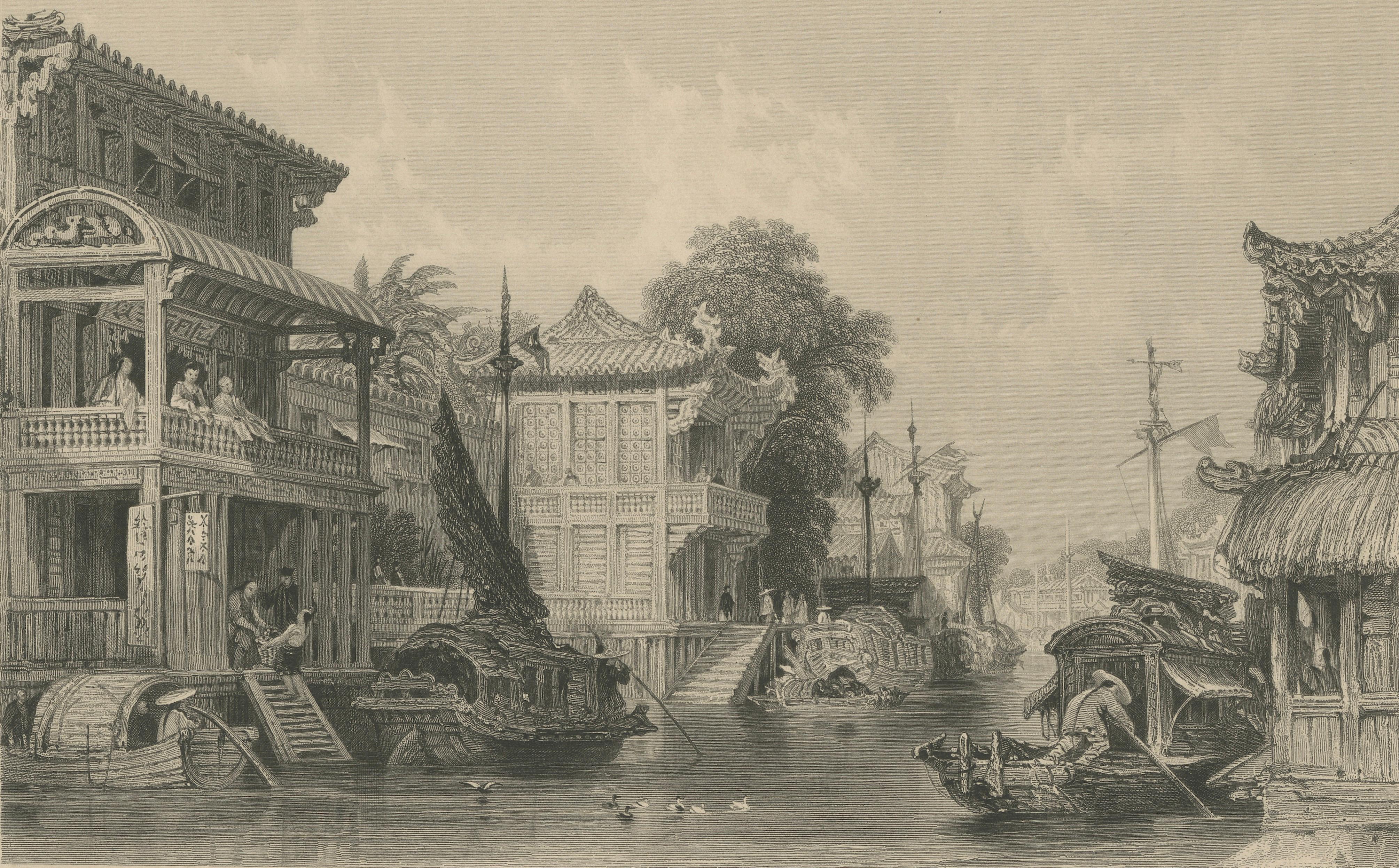
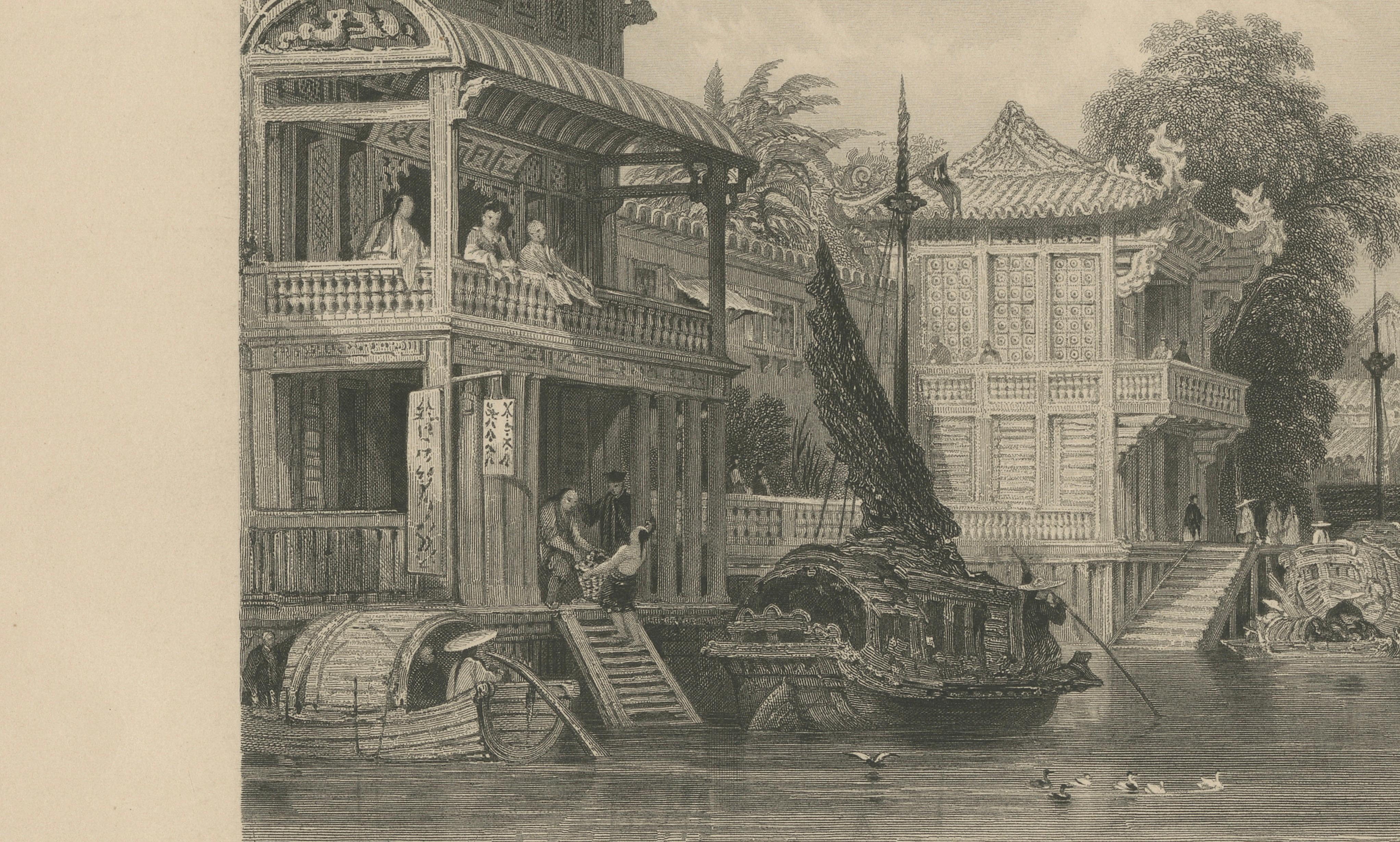
Allom’s composition captures a lively canal-side scene filled with architectural and cultural detail. Traditional Chinese houses with elaborate wooden balconies and curved tiled roofs line the water’s edge. Ornamental gateways and pavilions rise above the canal banks, while carved bridges and terraced steps descend directly to the water. Several boats and small sampans glide along the canal, their occupants engaged in everyday activities. One boatman poles his craft through the calm water while others rest beside elaborately decorated houseboats moored along the banks.
The architecture illustrated here reflects the refined urban character of Canton during the late Qing period. Buildings feature distinctive projecting roofs, decorative latticework, and painted panels typical of southern Chinese design. These canal-front structures often functioned both as residences and commercial spaces, illustrating the close relationship between water transport and urban life.
Thomas Allom was one of the most accomplished architectural illustrators of the Victorian era and a founding member of the Royal Institute of British Architects. Although he never traveled extensively in China himself, his engravings were based on sketches, travel accounts, and earlier visual references collected by British merchants and diplomats active in the region. The resulting series introduced European audiences to scenes of Chinese landscapes, cities, and daily life at a time when the country remained largely mysterious to the West.
The print is executed as a finely detailed steel engraving, a technique widely used in the mid-19th century for illustrated travel books. Steel plates allowed engravers to produce extremely precise lines and subtle tonal effects while printing large editions. The delicate linework in this engraving beautifully captures the calm water, intricate buildings, and atmospheric sky of the canal scene.
Today, prints from Allom’s China series are admired both as decorative works of art and as visual documents of early Western impressions of Chinese cities and landscapes before photography became common.
Condition:
Good antique condition. Light overall age toning to the sheet with minor spotting in the margins. The top edge shows irregular paper remnants from the original binding. The plate impression remains visible.
Framing tips
This print displays beautifully in a dark walnut, ebonized, or lacquered frame with a warm ivory mat. Because the engraving contains extremely fine architectural detail, museum glass will enhance clarity and protect the paper. A wide mat emphasizes the elegant proportions of the original sheet and gives the piece a refined gallery presence.
Technique: steel engraving
Maker: Thomas Allom, England, 1843