About this sheet
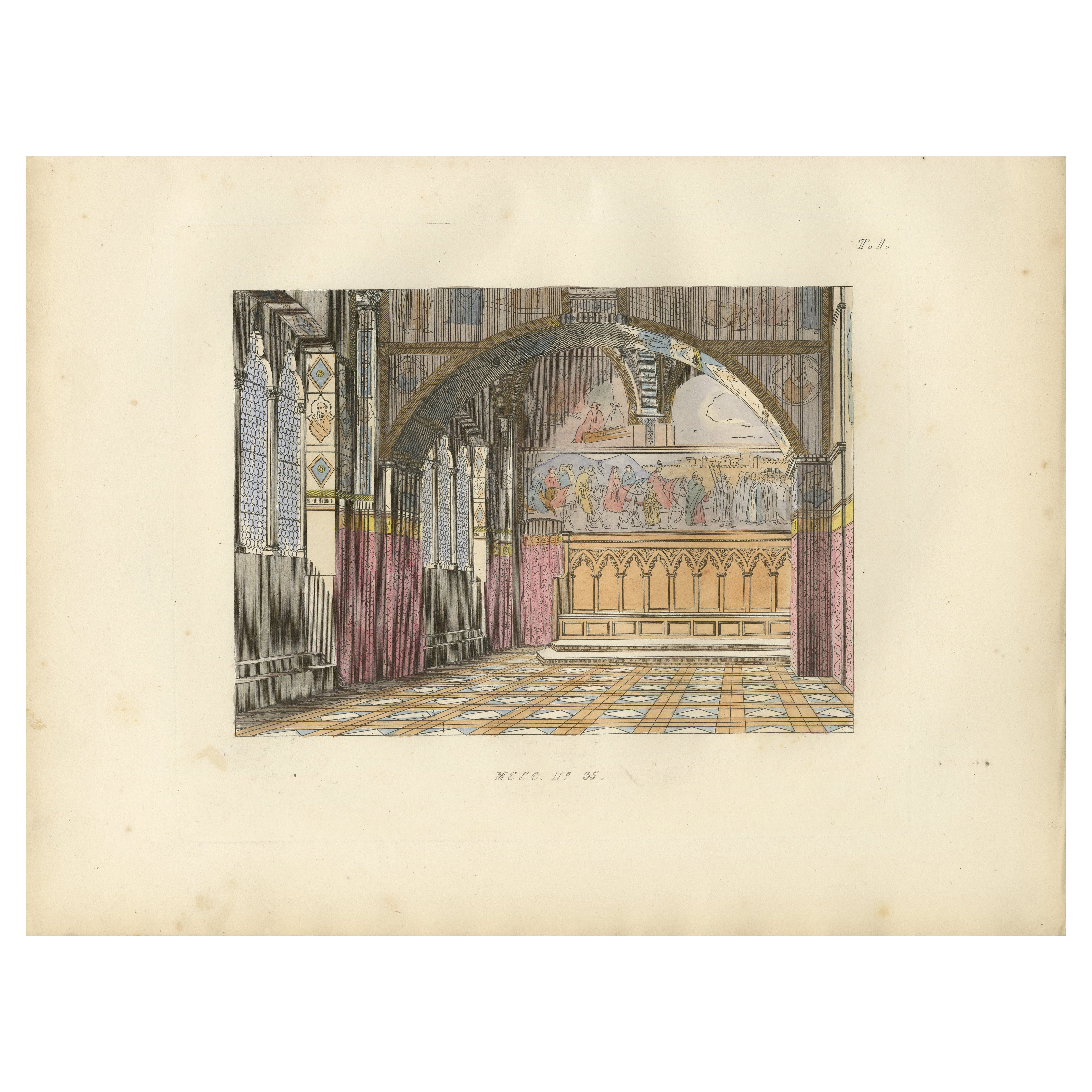
Tribunal di Balia Interior with Gothic Vaulting and Frescoed Wall Frieze
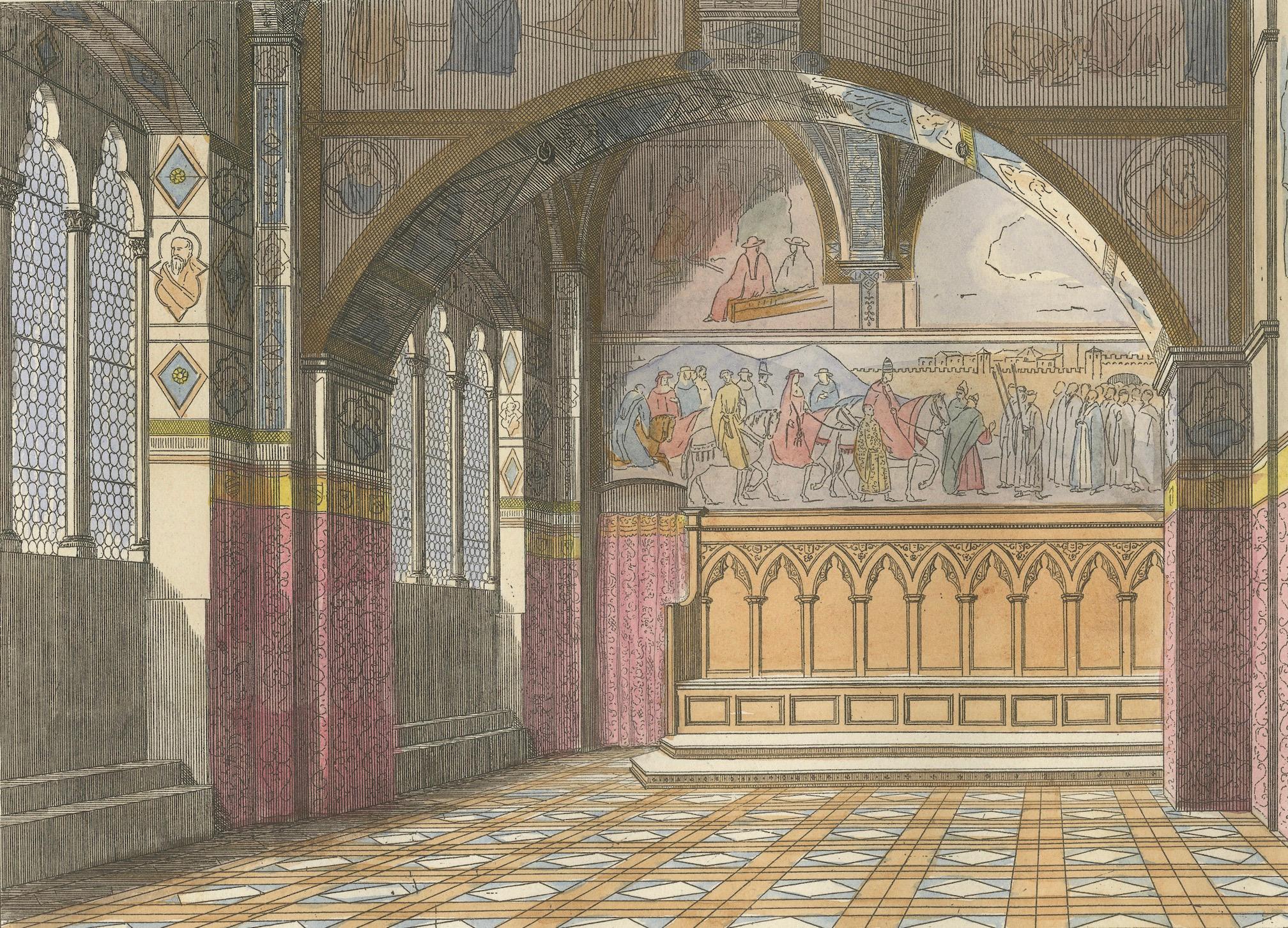
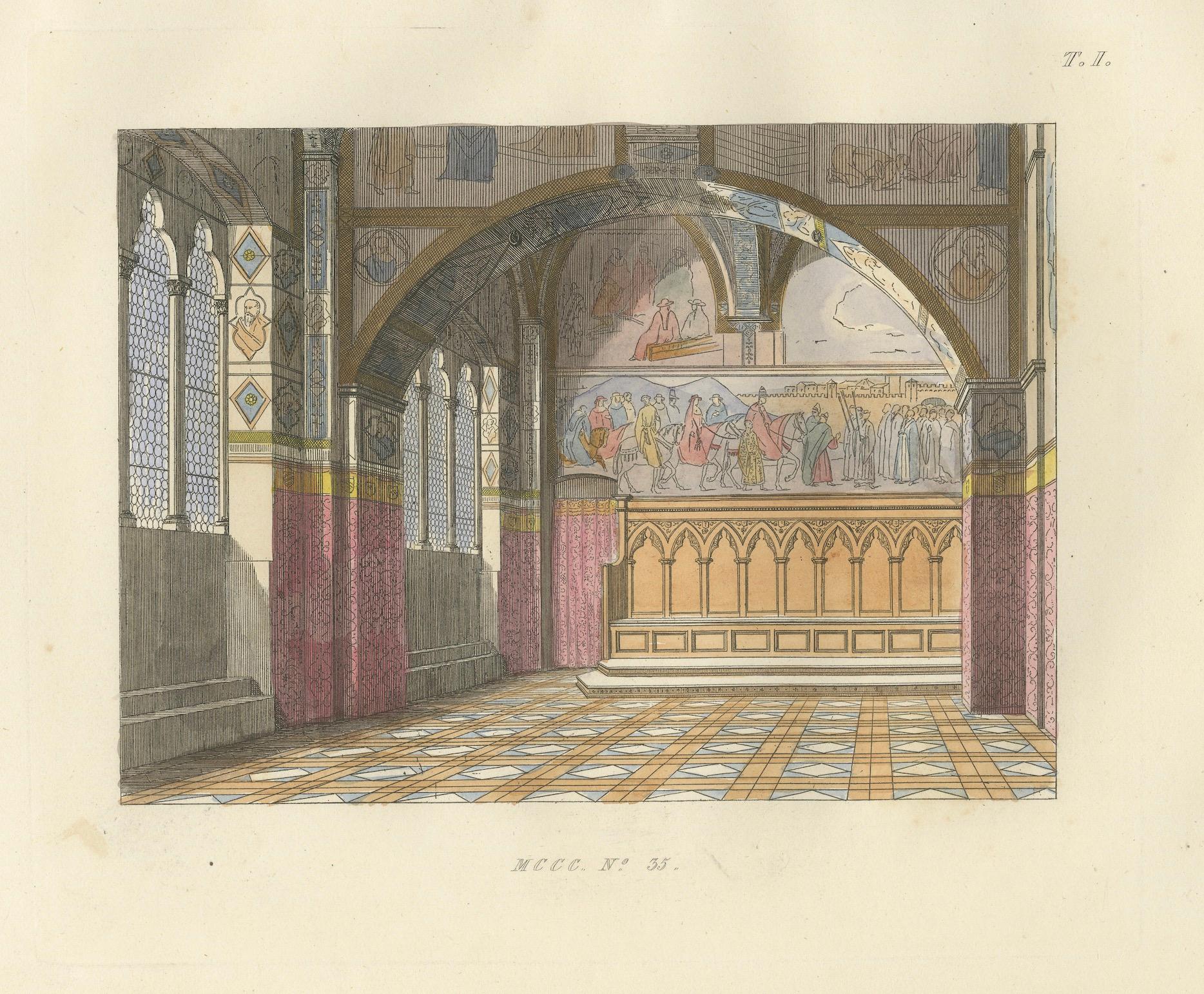
This exquisite hand-colored lithograph, titled "Tribunal di Balia," is plate number 35 from the 1845 publication *Costumes Historiques des XIIIe, XIVe et XVe Siècles*, designed by Paul Mercuri and accompanied by historical commentary by Camille Bonnard. It offers a masterfully rendered view of the historic courtroom chamber of the Balia, the governing council of Siena, Italy—an institution known for its powerful role in civic administration during the 14th century.
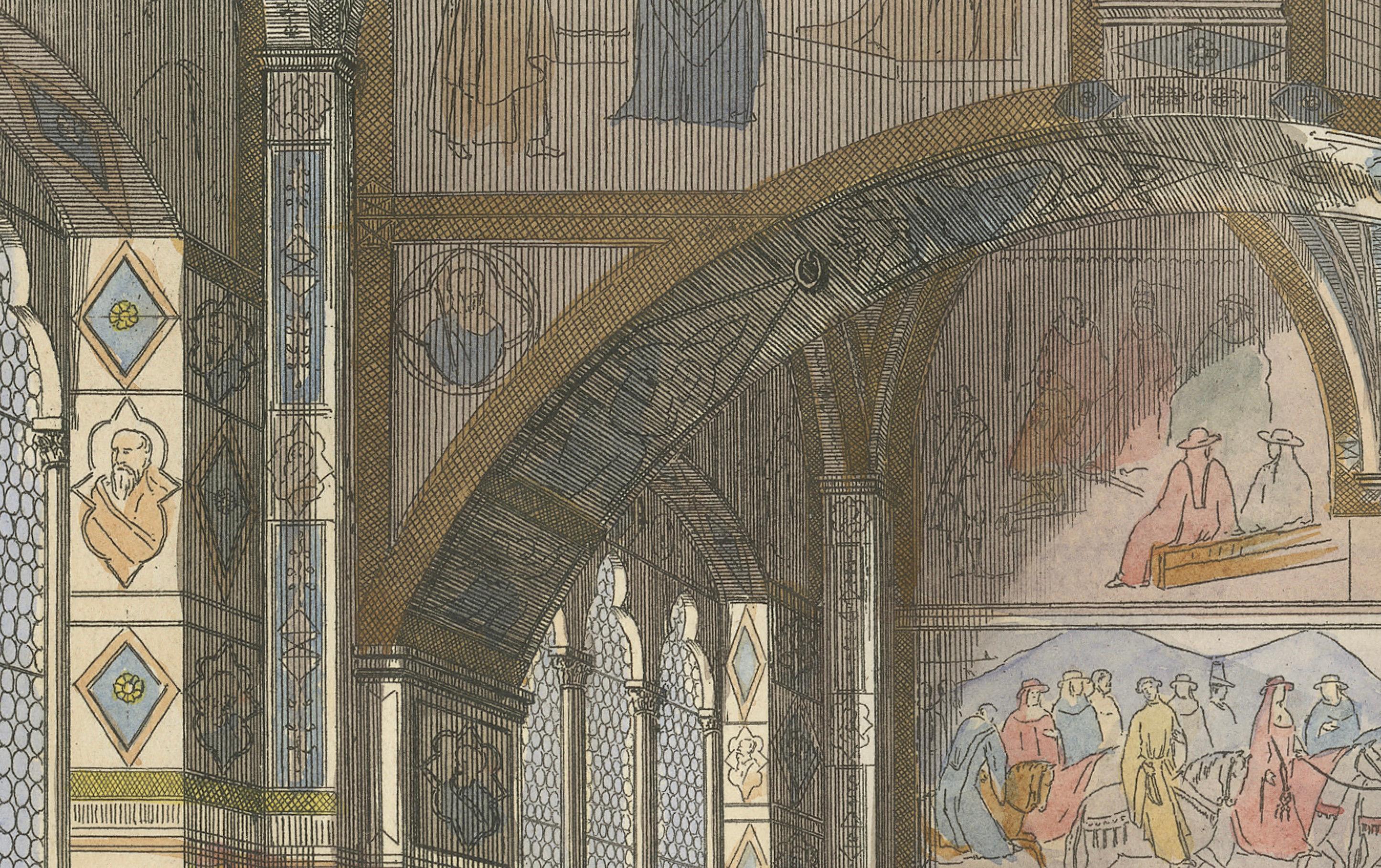
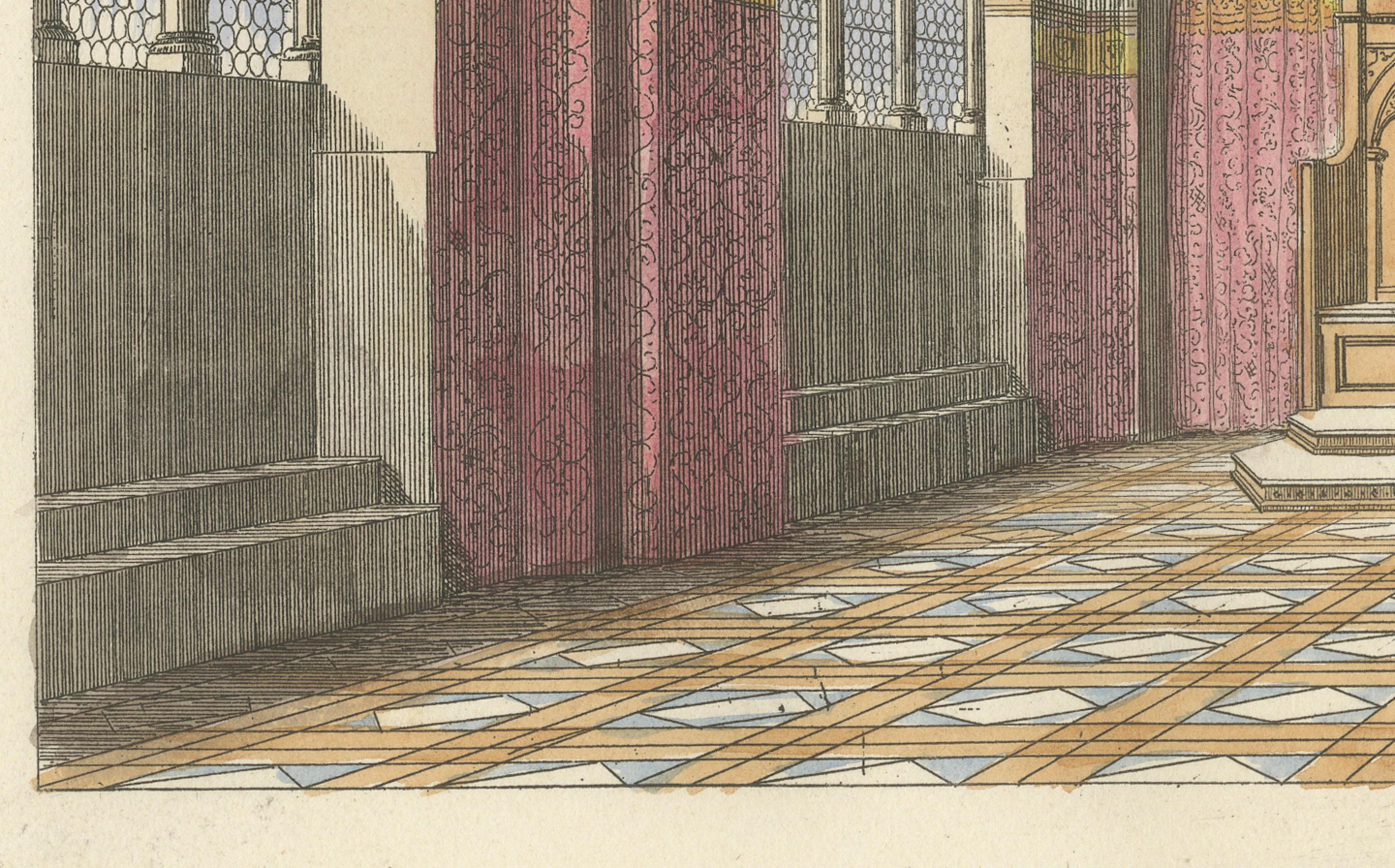
The image presents a serene yet majestic interior, rendered in precise perspective. The viewer is drawn into the hall by a meticulously tiled floor, patterned in alternating tones of ochre, white, and grey-blue, creating a rhythm that guides the eye toward the far wall. Along the left side, tall Gothic windows with delicately latticed glazing admit light, filtered through the refined architecture of clustered columns and pointed arches. The lower walls are clad in wooden panelling, while the upper portions are richly decorated with geometric wall designs in red, gold, and cream, capped by painted friezes.
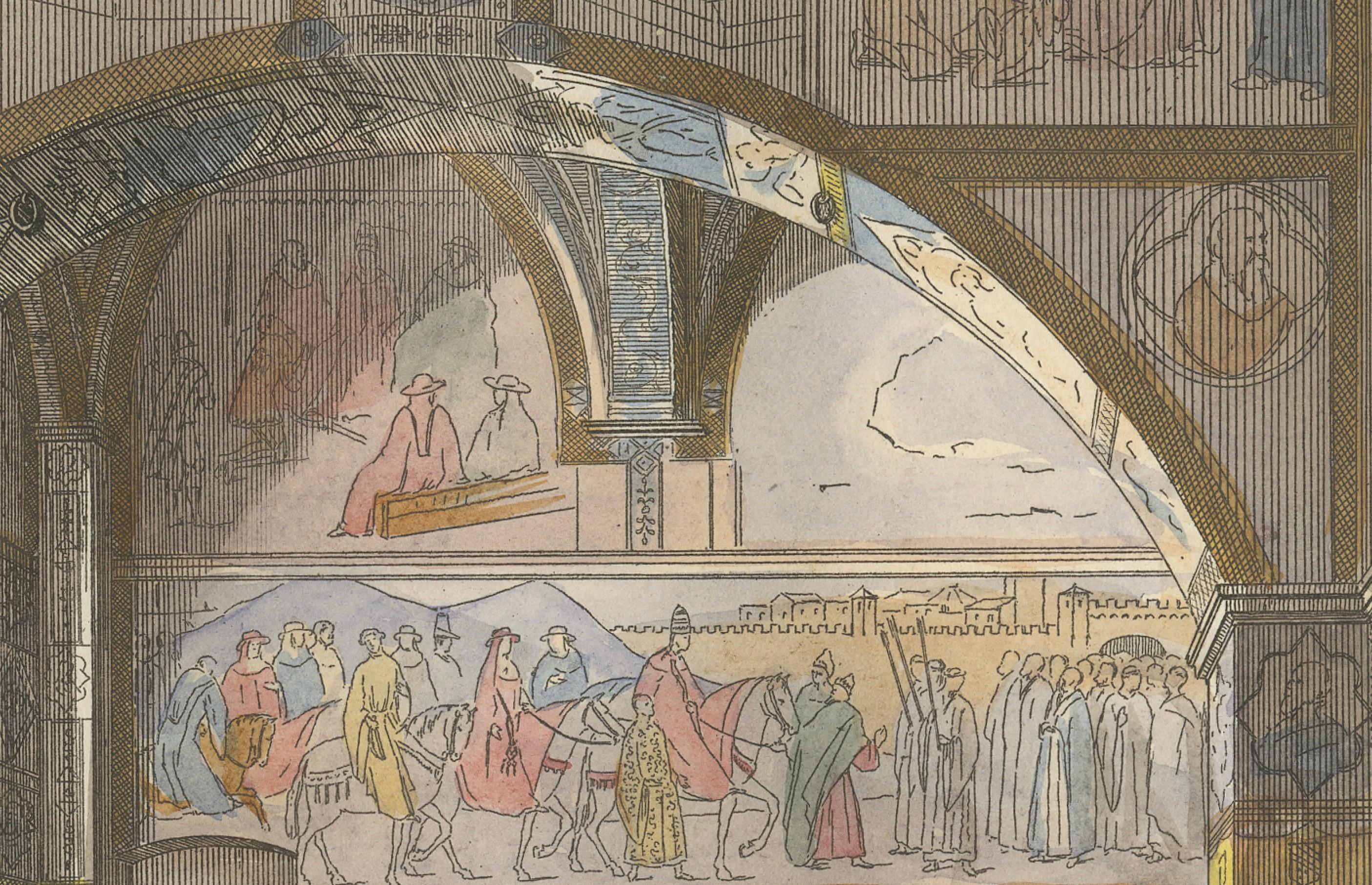
The right-hand wall, beneath soaring arches, features the focal element of the composition: a raised wooden tribunal bench or altar-like structure with Gothic tracery and panels. Above this, a long horizontal fresco frieze unfolds, populated by a stately procession of medieval figures. The fresco, likely based on an original from the Palazzo Pubblico in Siena, depicts a civic or religious ceremony, with groups of officials, townspeople, and clergy shown in flowing garments, illustrating the dignified ritual of governance or public address. Smaller painted scenes occupy the vaulted ceiling areas above, emphasizing the importance of decorative storytelling in civic interiors of the time.
This print is a testament to the architectural and artistic refinement of late medieval Italy. It captures the ceremonial solemnity and stylistic grandeur of a room where decisions affecting the life of an entire city were once made. It is both a historical document and a work of decorative beauty, appealing to collectors of architectural prints, medieval history, and Italian civic art.
Condition:
Very good condition. Strong hand-coloring, clear impression. Minor age-toning and faint foxing in the margins, not affecting the image. Paper is stable and well-preserved.
Framing Tips:
Frame this print in a medium to dark wood or antique gilt frame with a generous ivory or parchment-colored mat. The architectural lines and historic subject make it ideal for a study, hallway, or library, especially when paired with other Italian Renaissance or medieval civic scenes. Use museum glass to preserve detail and prevent glare.