About this sheet
Podestà’s Palace, Florentine Enforcer, and Cosimo de’ Medici the Elder, 1845
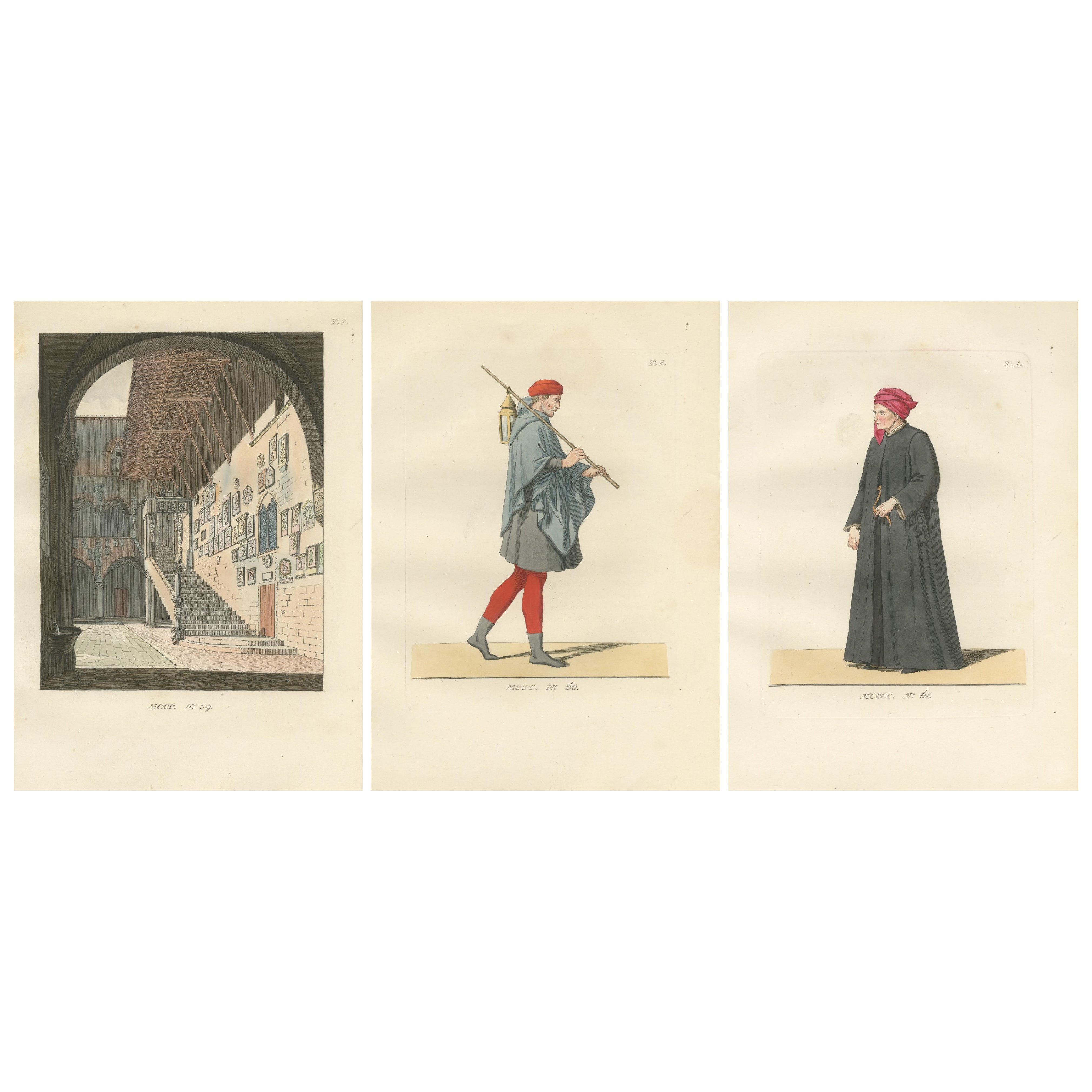
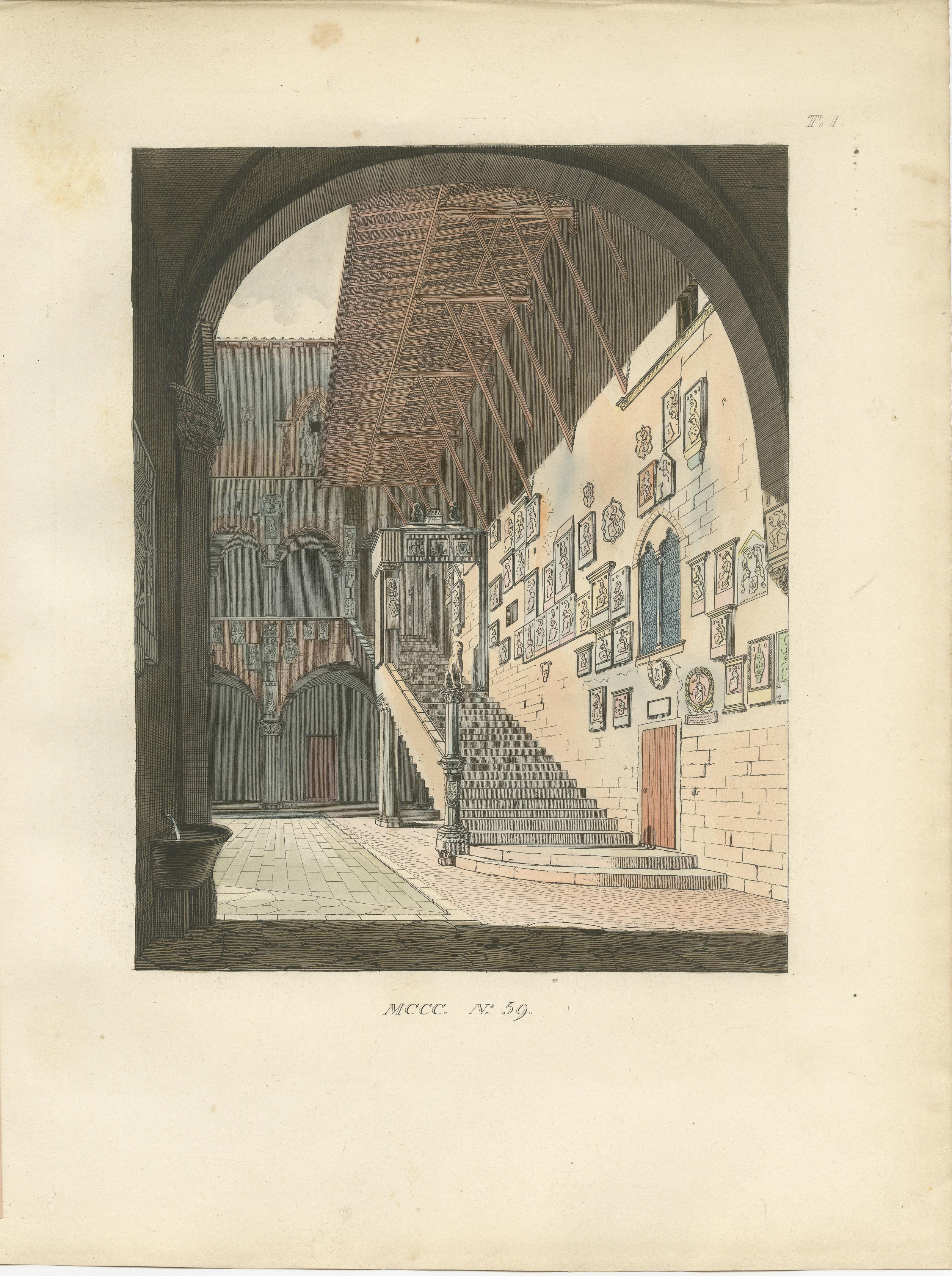
This evocative set of three hand-colored prints captures both architectural and human elements of Renaissance Florence, offering an insightful blend of place, civic order, and historical legacy. Together, they form a visual tableau that tells the story of power, governance, and enduring influence in the Italian city-state tradition.
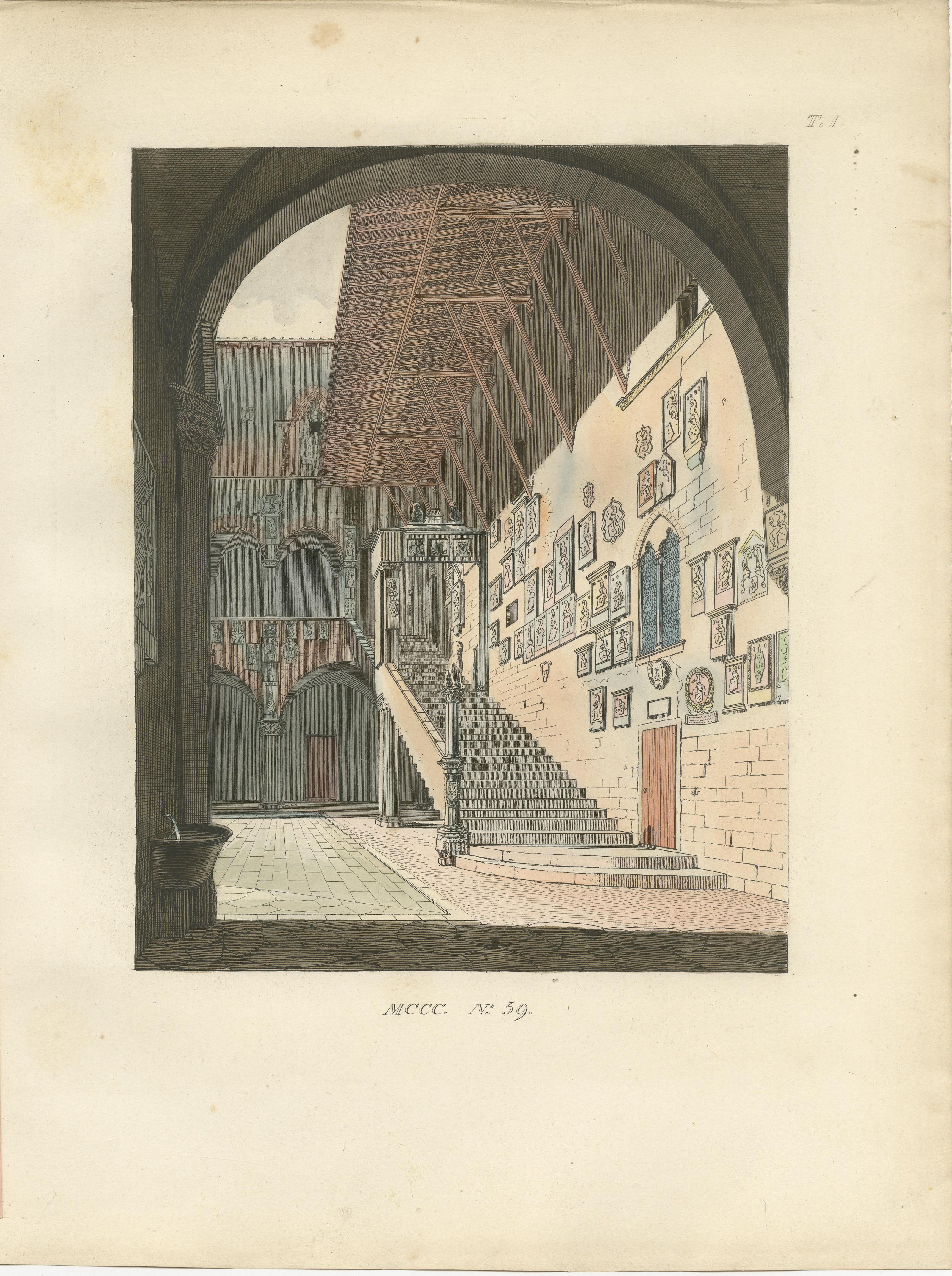
Plate No.59 presents the Palais du Podestat, or the Palace of the Podestà, a significant Florentine civic building that housed judicial and executive authorities. The image, viewed through a dramatic archway, reveals a grand staircase leading to an upper gallery adorned with coats of arms, bas-reliefs, and busts. This detailed interior scene captures the weight of Florentine civic symbolism and the architectural elegance of a building deeply embedded in the city’s republican heritage. The fine linework and perspective lend the scene both historical gravity and aesthetic balance.
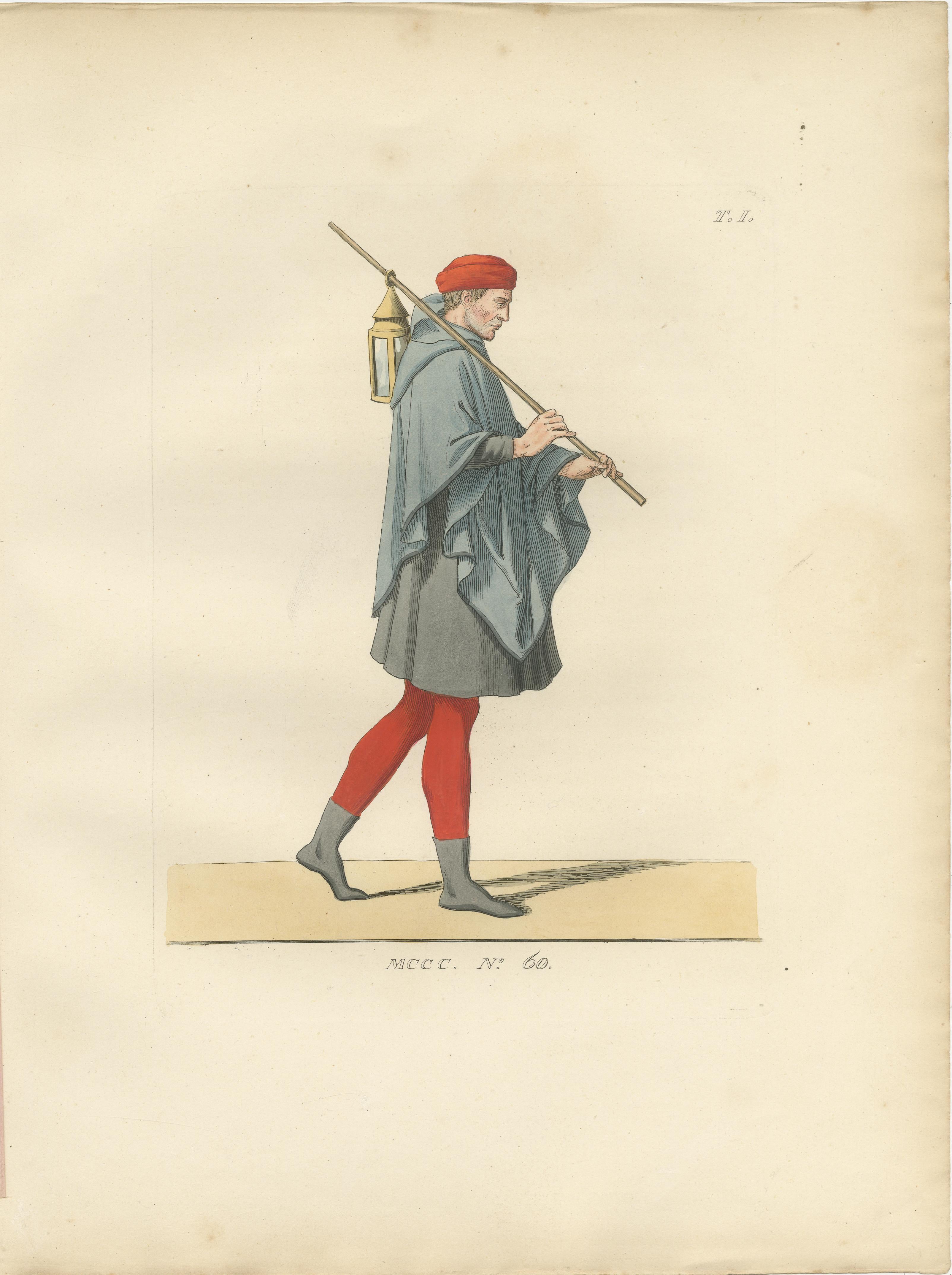
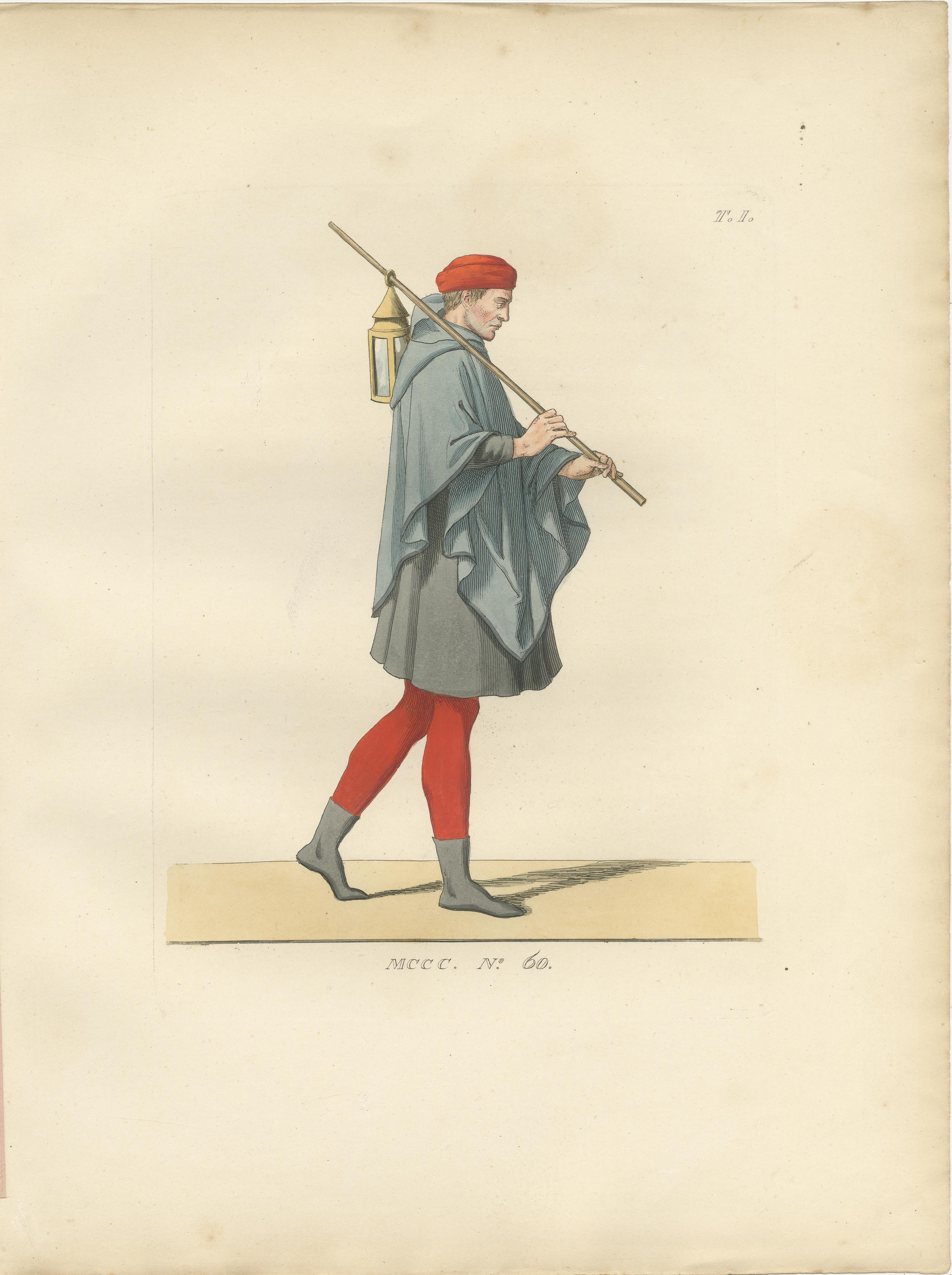
Plate No.60 features a *Sbire*, a footsoldier or low-ranking law enforcer of the Florentine Republic. Clad in a layered grey-blue cape and tunic with vivid red stockings and a red cap, he marches in profile with a lantern on his back and a staff in hand. The outfit suggests readiness and mobility—ideal for patrolling the tight alleys and darkened quarters of the city. This figure gives life to the everyday civil enforcement that maintained public order and carried out official commands.
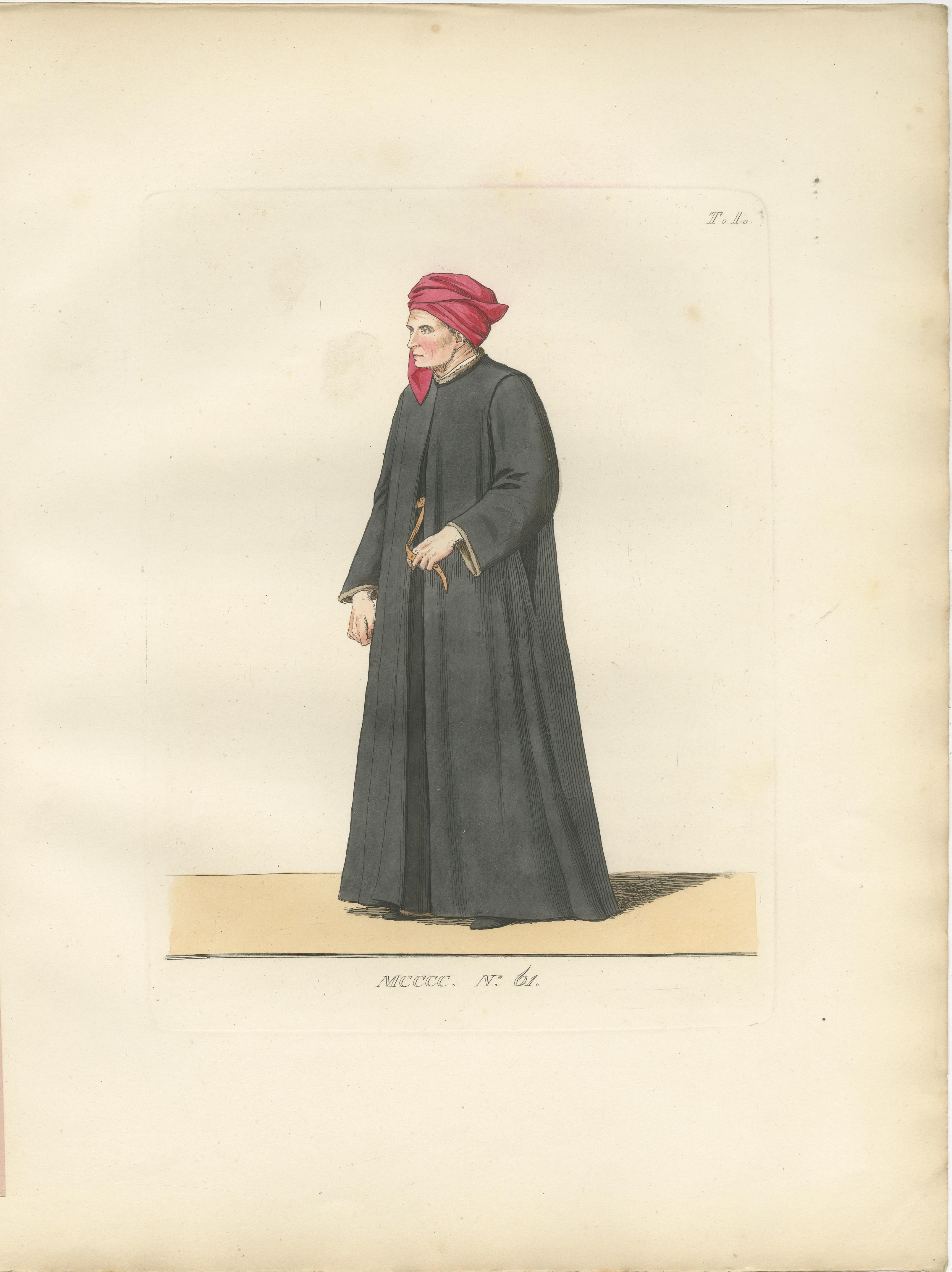
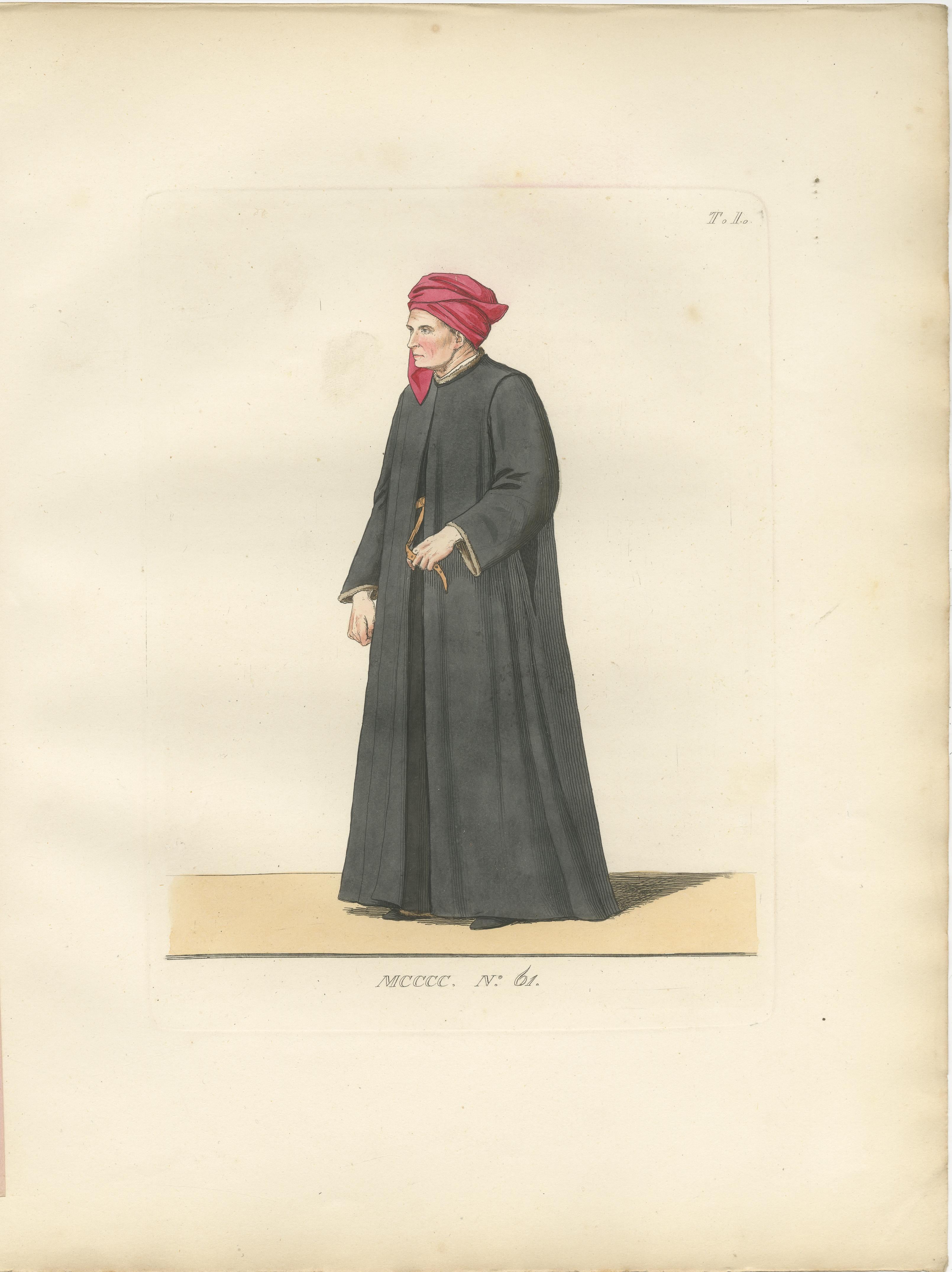
Plate No.61 is perhaps the most culturally significant, depicting *Côme le Père de la Patrie*, or Cosimo de’ Medici the Elder. Known as the “Father of the Fatherland,” Cosimo is shown in his later years, wrapped in a long black robe with a red turban and scarf—a garb associated with wisdom and humility. He holds a cane, reinforcing his elder statesman persona. Cosimo was not a ruler by title, but through patronage, diplomacy, and banking acumen, he shaped Florence’s cultural and political trajectory. This image is a portrait of quiet but commanding authority.
As a trio, the set juxtaposes institutional architecture, civic enforcement, and the legacy of dynastic leadership. It appeals strongly to those interested in Florentine history, Medici patronage, and the interplay of space, power, and attire.
Condition:
All three prints are in very good antique condition. Slight foxing in the margins, but imagery and color remain strong and well-preserved.
Framing Tips:
To highlight the narrative arc from place to person, arrange the prints left to right: the palace, the sbire, then Cosimo. Use a warm white or parchment-toned mat with consistent spacing. A simple frame in walnut or burnished gold works well for historical subjects. Consider floating the architectural plate slightly larger to emphasize its spatial quality. Use museum-grade glass to protect the color and paper from light damage.