The Government House in Perth, Western Australia - Illustrated London News, 1864
€ 205
One of a kind: this is the sheet in the photographs. Ships from Langweer, the Netherlands.
Date
1864
Sheet size
28.4 × 40.2 cm (11.2 × 15.8 in)
Reference
BG-13812-38
Condition
very good, given age. Due to the printing the text on the rear of the print shows on the front. . General age-related toning and/or occasional minor defects from handling. Please study scan carefully.
About this sheet
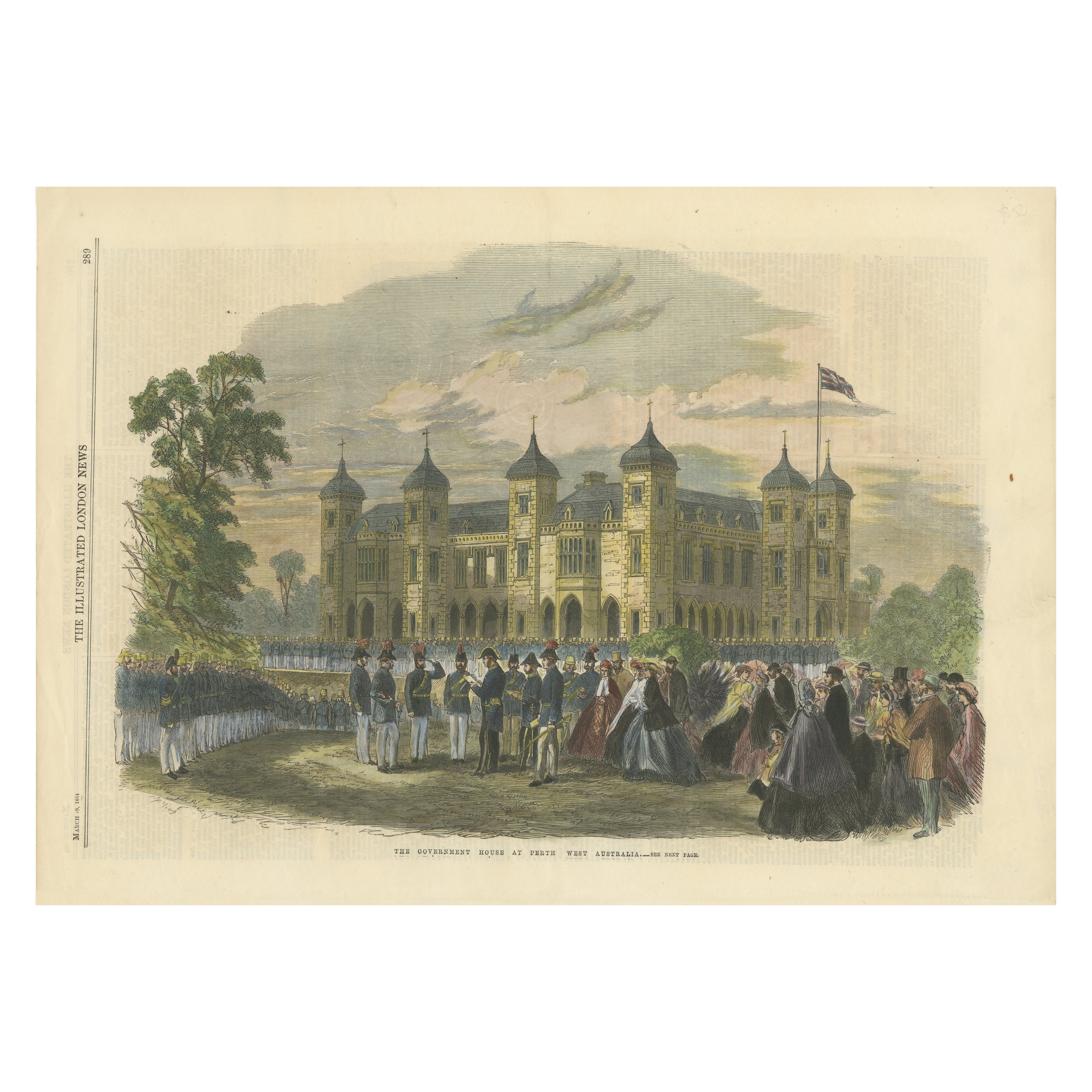
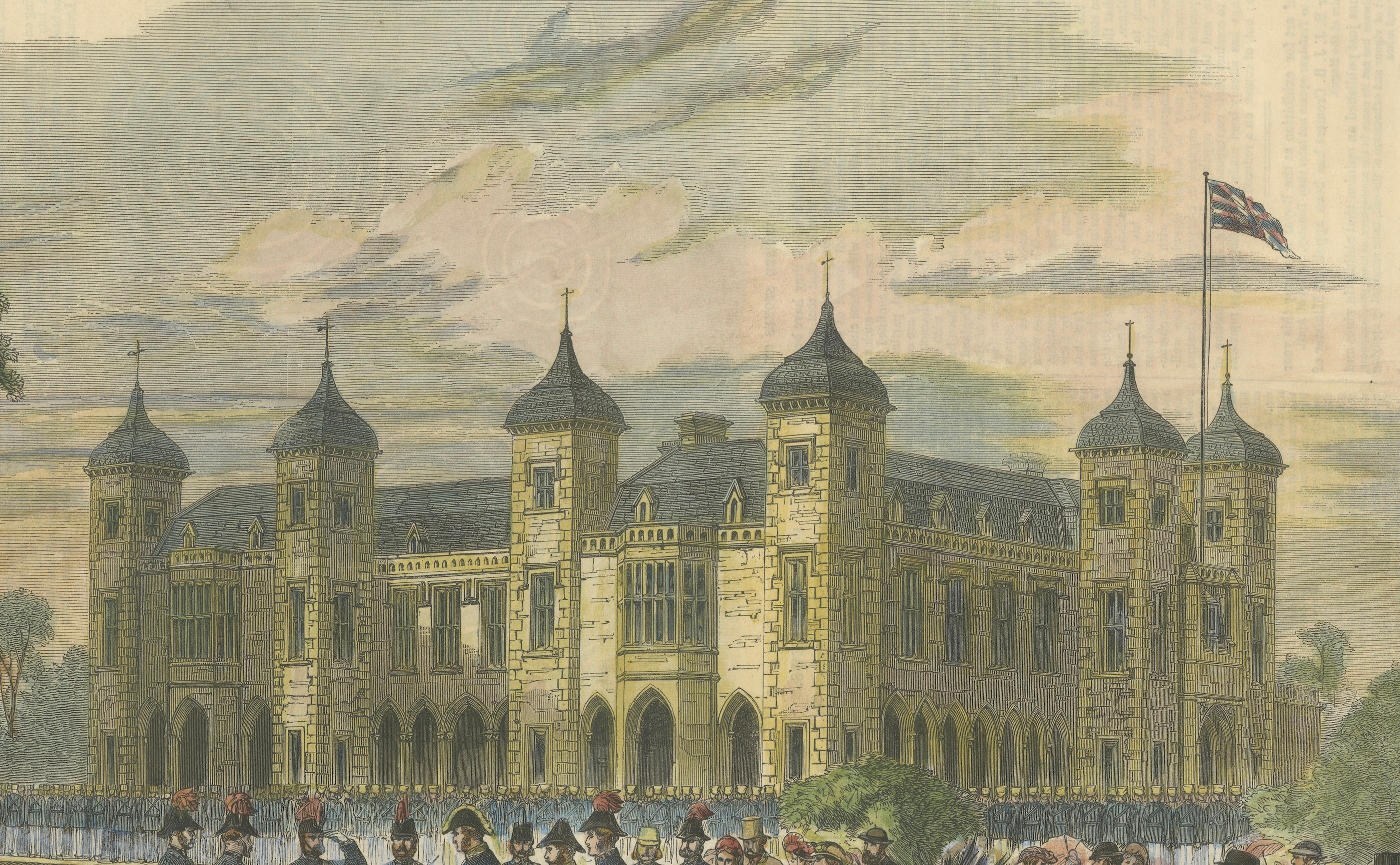
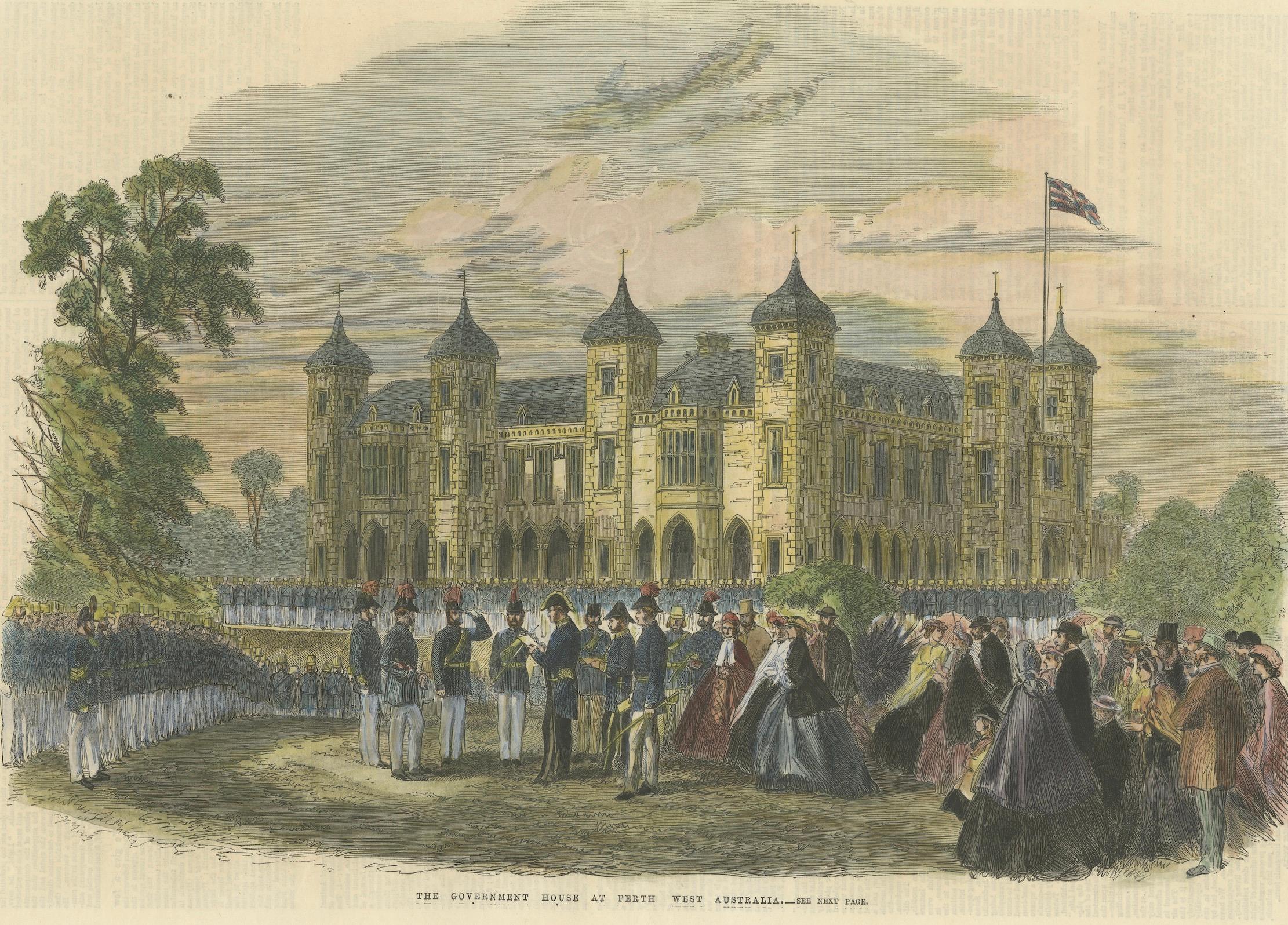
It was completed in 1864, and this engraving reflects its significance shortly after its construction. This hand-colored wood engraving, published in The Illustrated London News in 1864, showcases the newly completed Government House in Perth, Western Australia. The illustration highlights the architectural grandeur of this Gothic Revival landmark, a symbol of colonial authority and British influence in 19th-century Australia.
The centerpiece of the scene is the Government House itself, featuring its distinctive crenellated parapets, intricate stonework, and imposing towers. Completed in the same year as this engraving, the building was designed to reflect the prestige and power of the British administration in Western Australia. The Union Jack flying prominently above further underscores the ties to the British Empire.
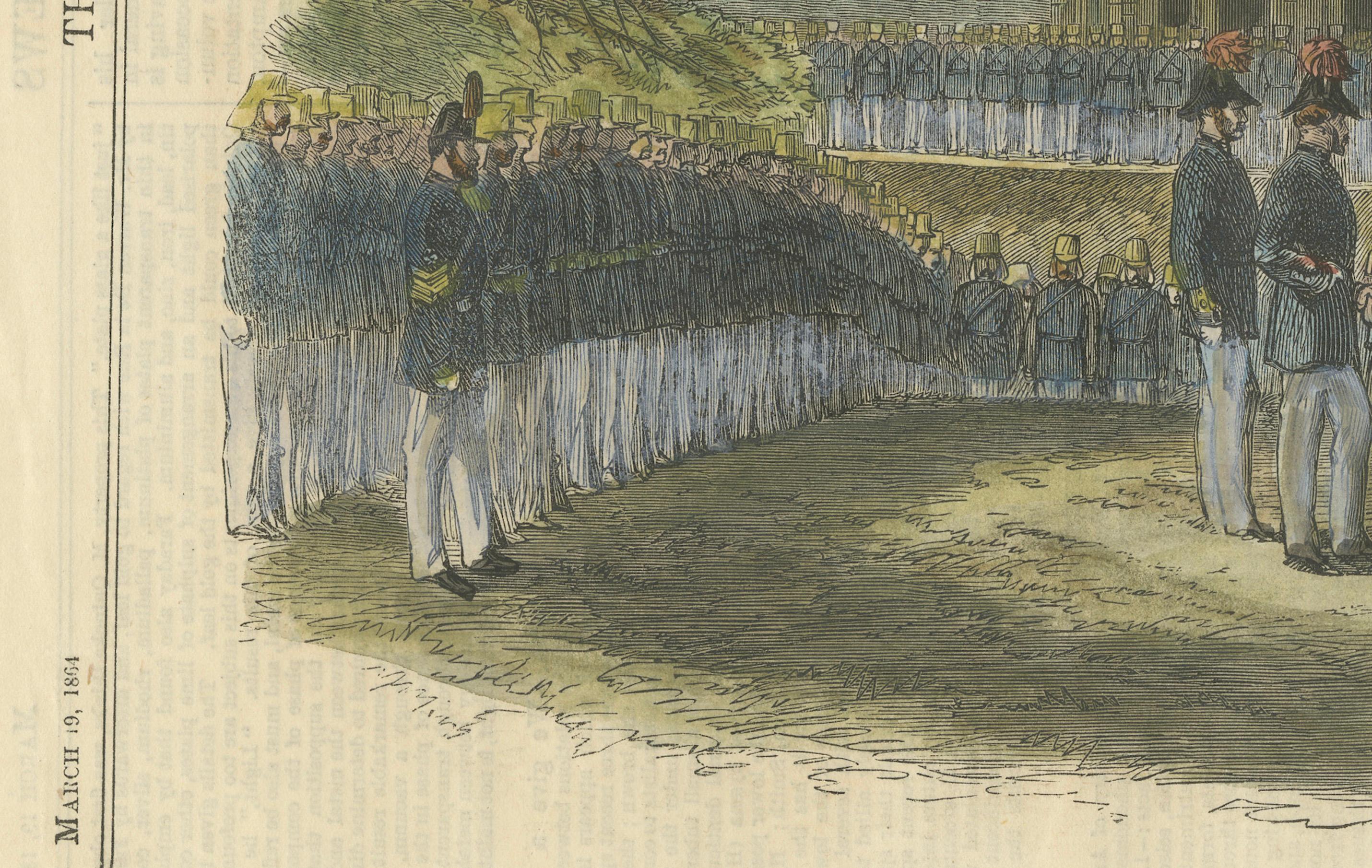
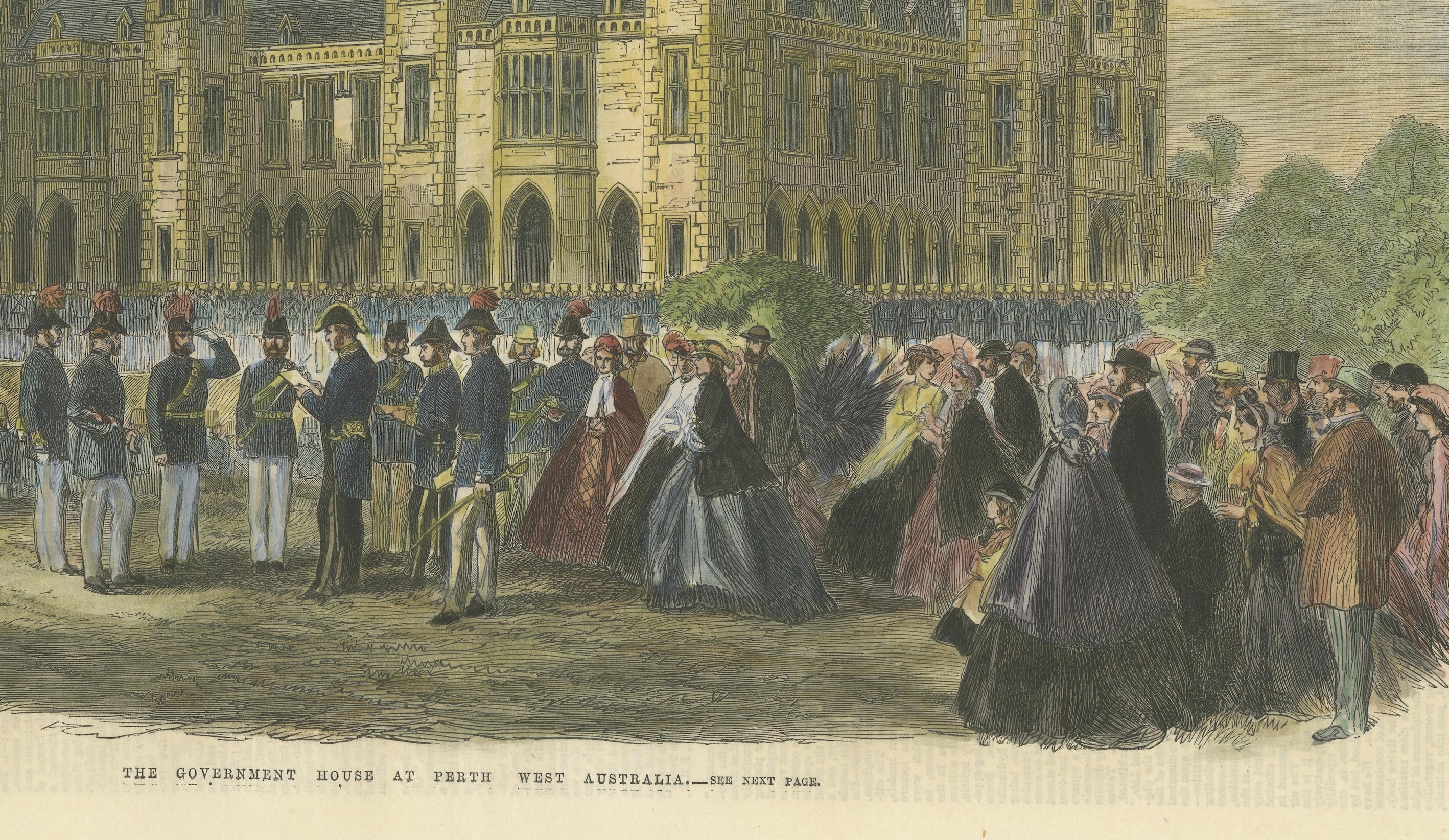
In the foreground, a formal event is depicted, with soldiers standing in regimented formation, adding a ceremonial tone to the illustration. Elegantly dressed figures in Victorian attire mingle, illustrating the cultural and social norms of the era. The gathering highlights the building's importance as a venue for official ceremonies, celebrations, and governance.
The hand-colored details bring this historical moment to life, with the golden sandstone of the Government House standing in striking contrast to the lush greenery of the surroundings. The finely dressed crowd adds a dynamic layer, portraying the blending of European traditions with the unique environment of Western Australia.
This print not only celebrates a significant architectural achievement but also provides a glimpse into the social and political life of colonial Perth during the mid-19th century. It is a valuable piece for collectors of Australian history, Victorian-era illustrations, or those interested in colonial architecture.
On the reverse text and an image depicting the Incised stones on the Cheviot Hills of Northumberland.