About this sheet
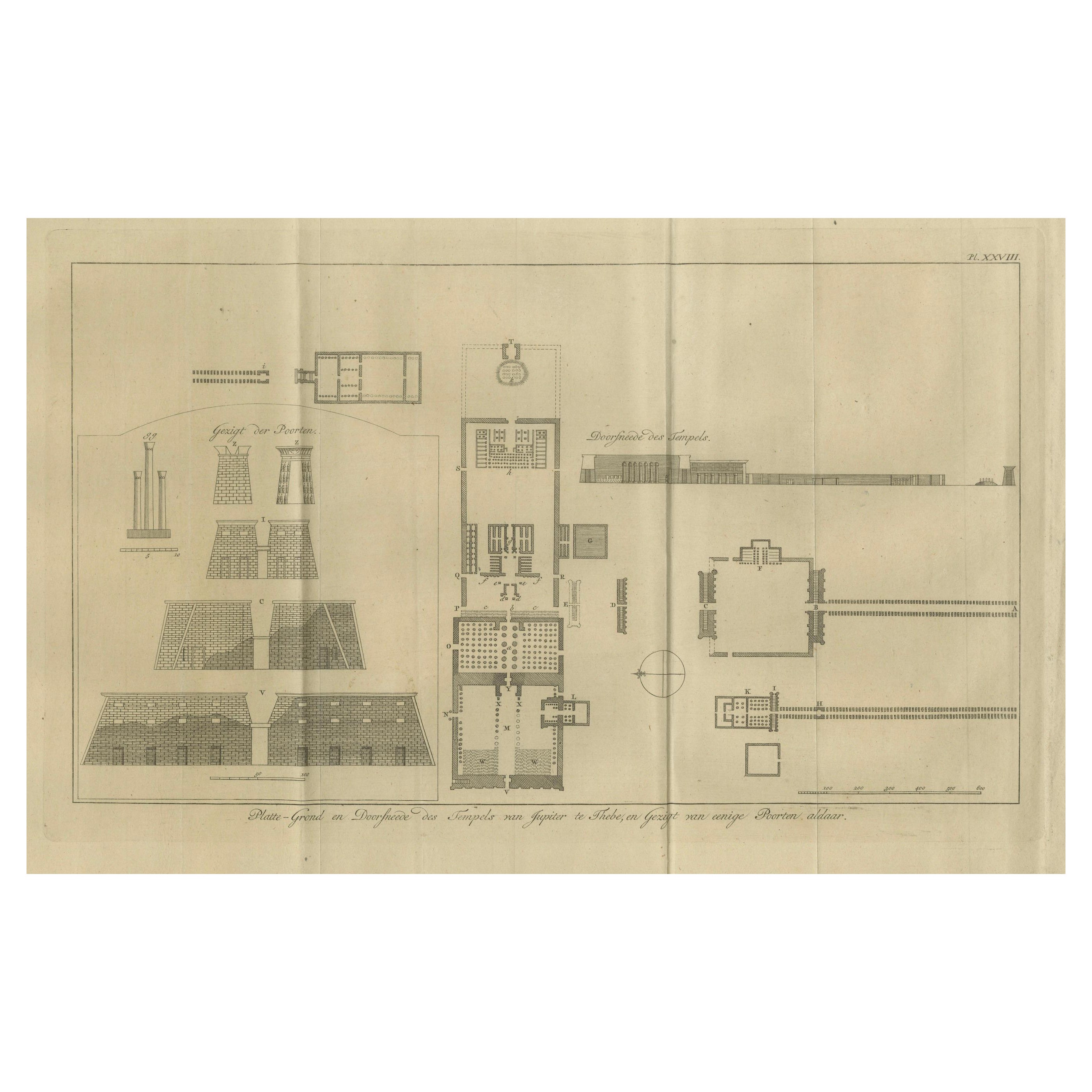
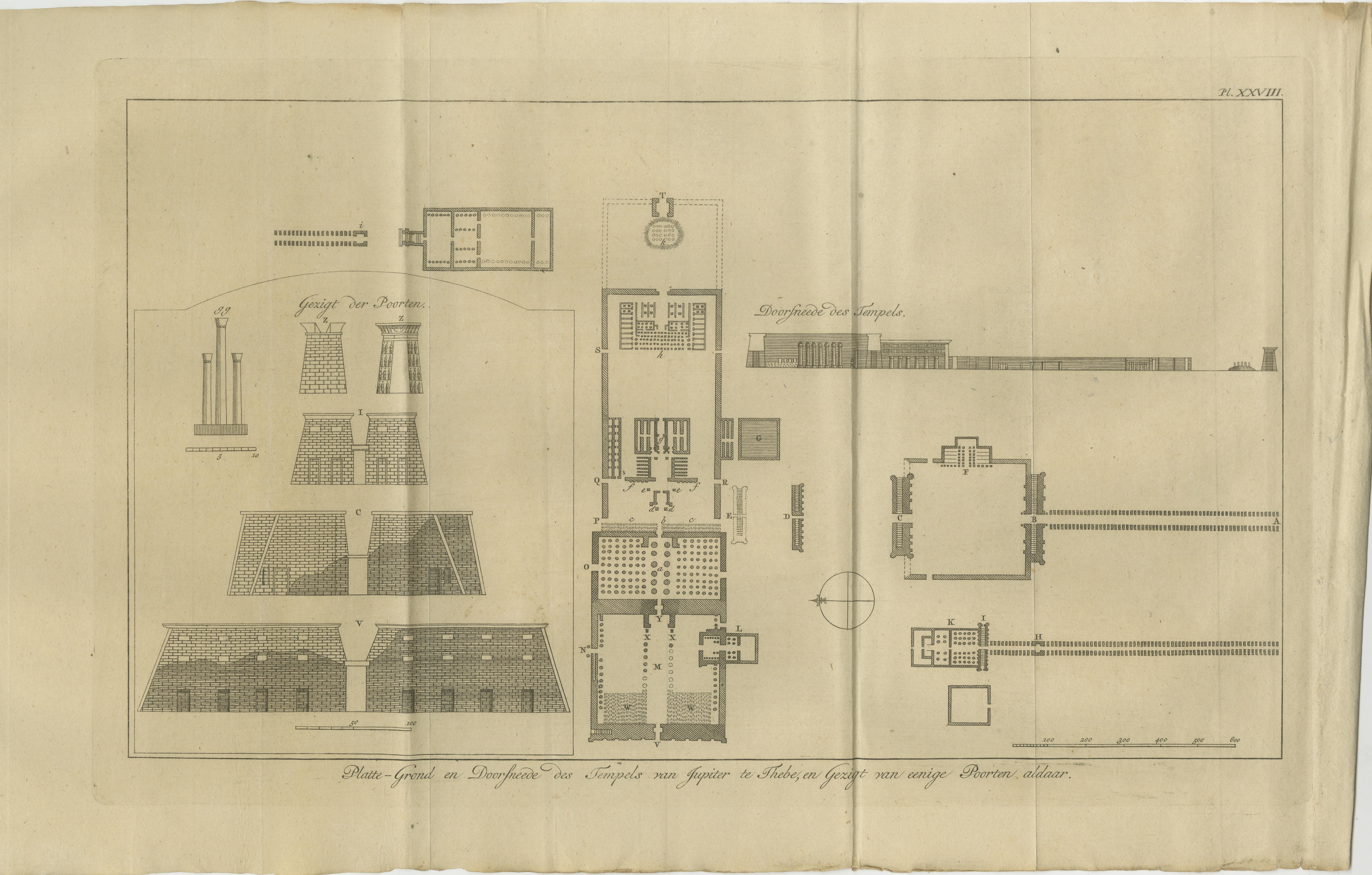
Temple of Jupiter in Thebes – Floor Plan and Gate Elevations, circa 1710
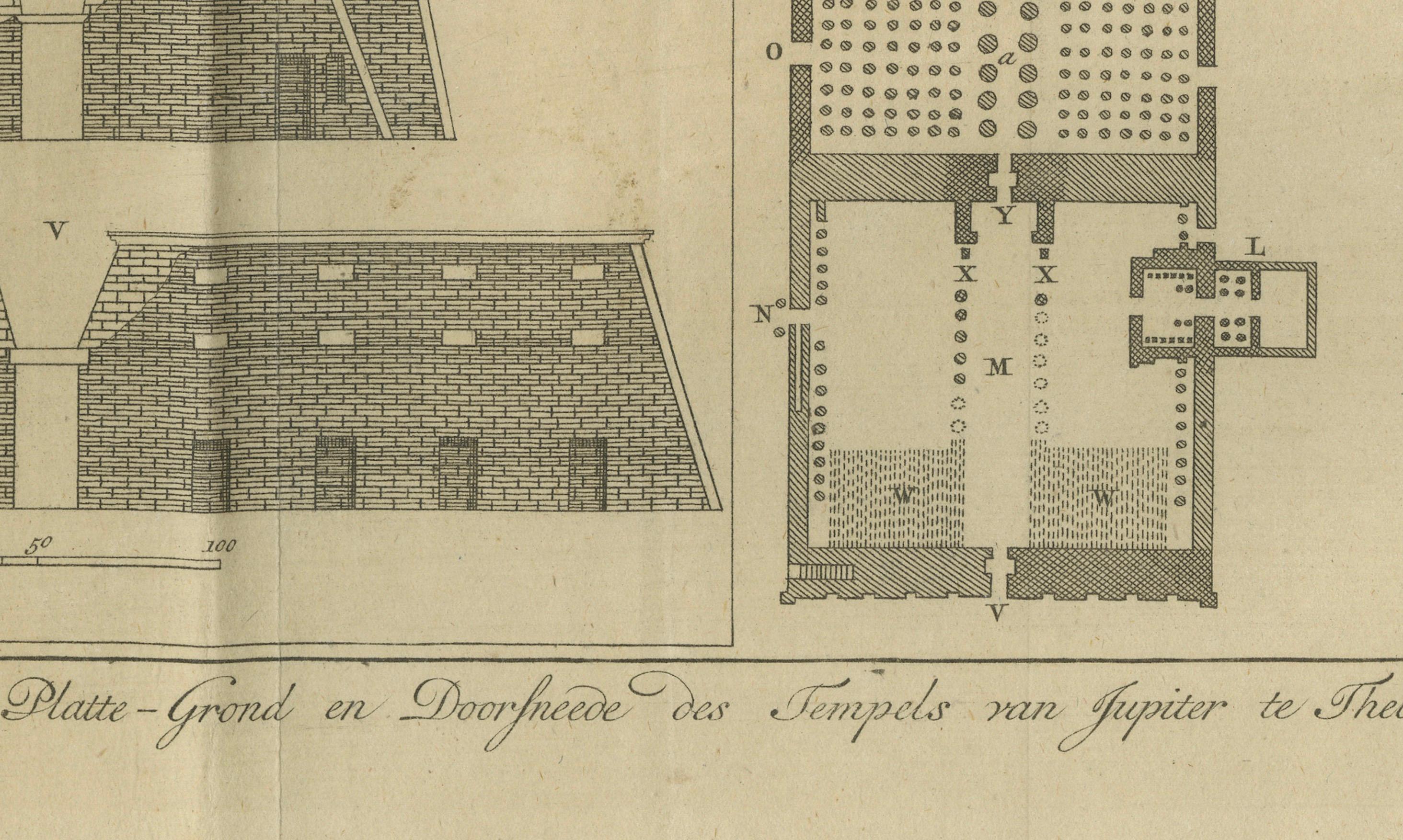
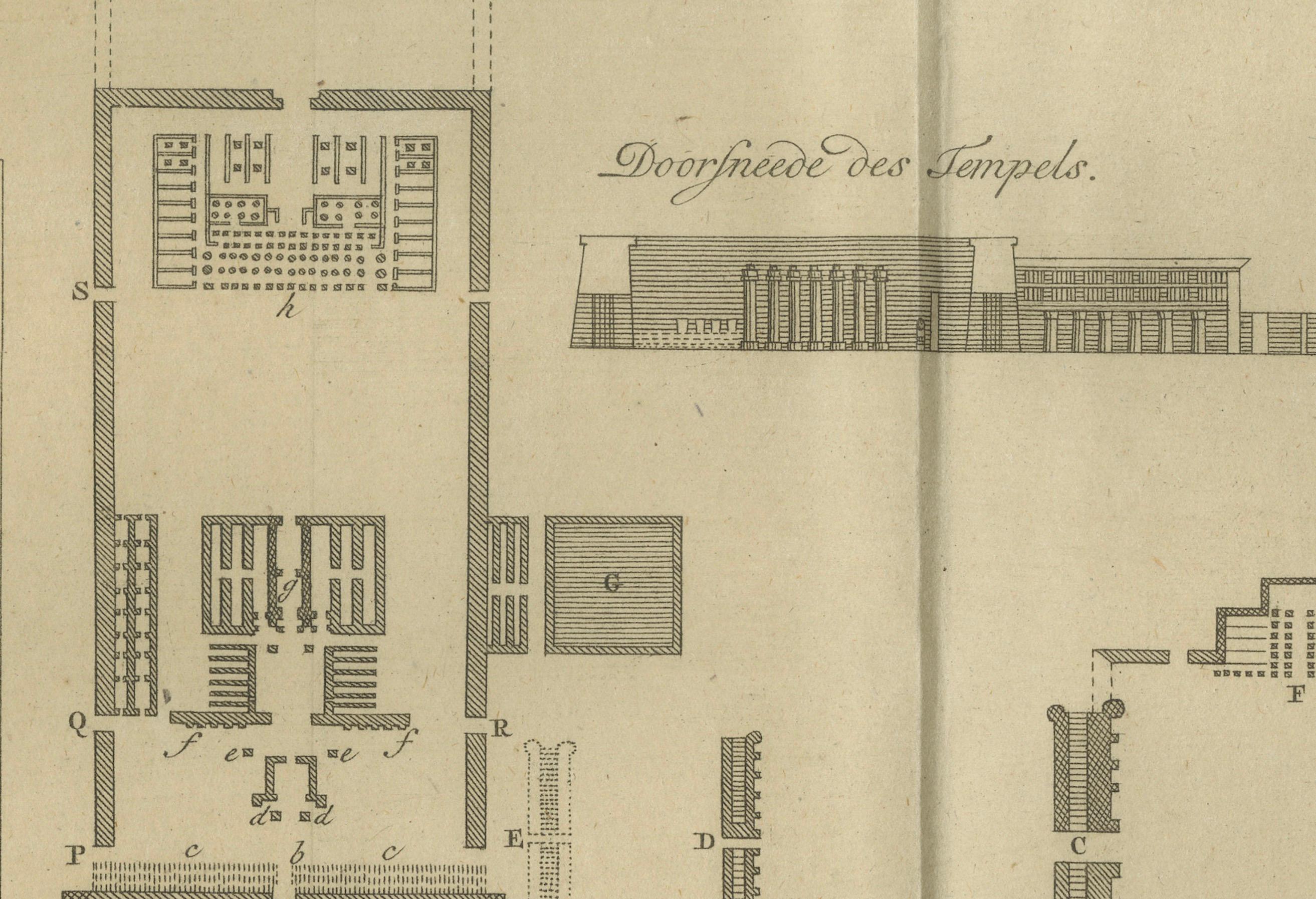
This precise architectural engraving, titled "Platte-Grond en Doorsnede des Tempels van Jupiter te Thebe, en Gezigt van eenige Poorten aldaar," presents a rare early 18th-century European interpretation of the Temple of Amun (then often referred to as the Temple of Jupiter) at Karnak, Thebes—modern-day Luxor, Egypt. The print dates from around 1710 and was published in the Dutch edition of Cornelis de Bruijn’s travel accounts.
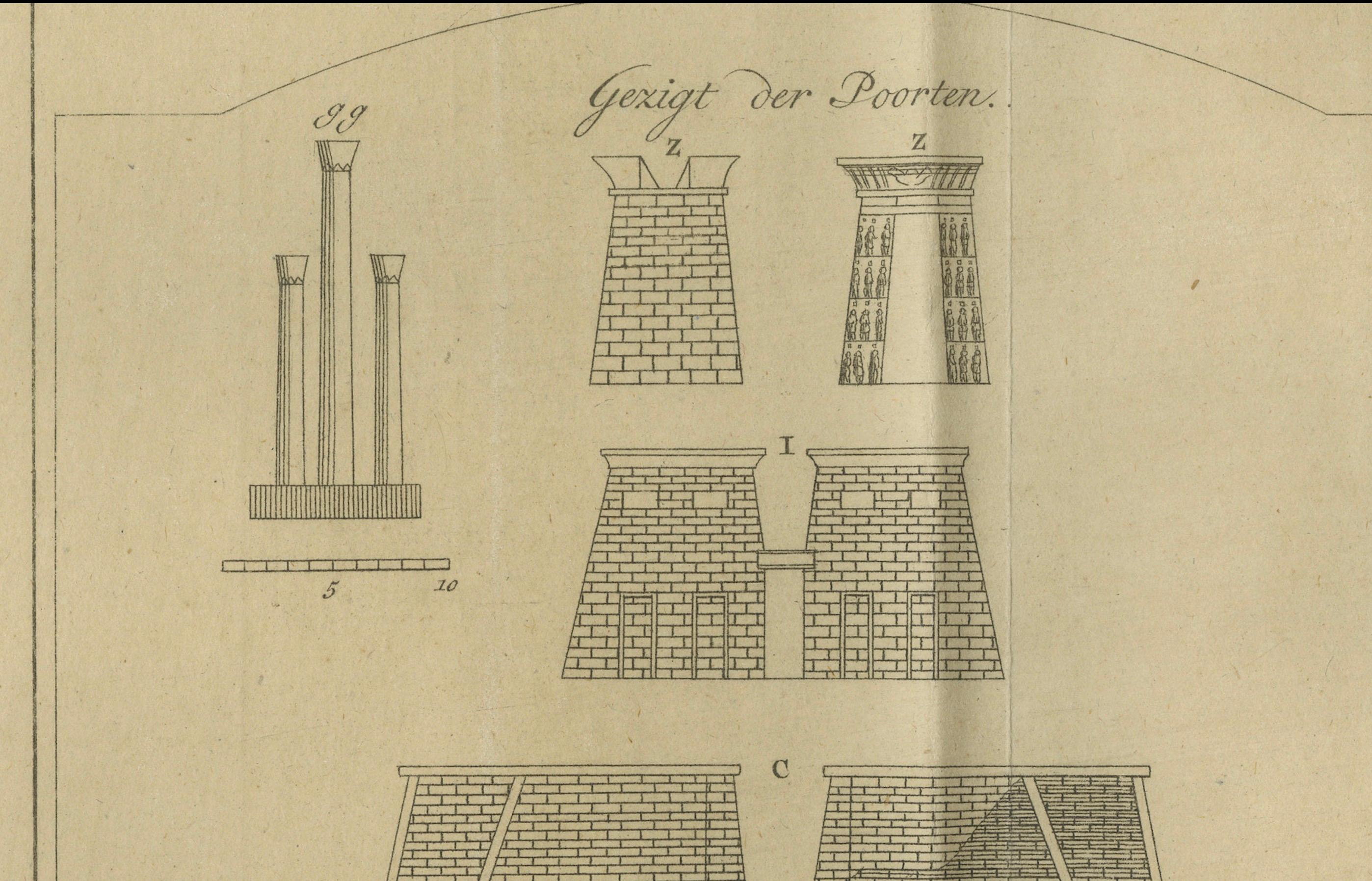
The composition is divided into two main sections: on the left is a detailed elevation of various pylons (or monumental gateways), labeled A through Y, which exhibit the typology and grandeur of ancient Egyptian temple entrances. These structures are meticulously drawn in front view, showing their proportions and construction style, including tapering sides, cornices, and occasional flagpole niches.
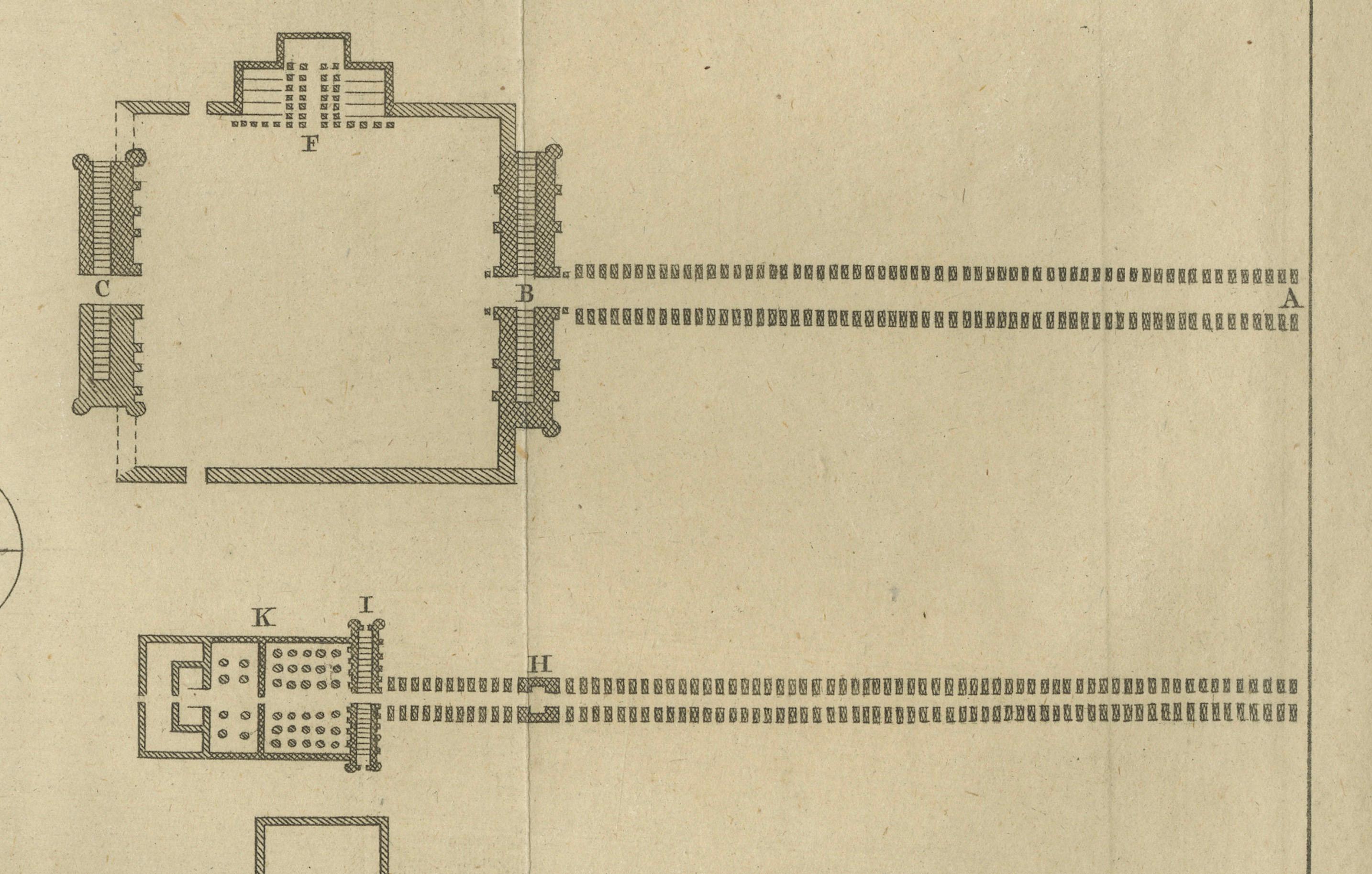
The right side of the print is dominated by a comprehensive floor plan and longitudinal section (doorsnede) of the Karnak temple complex, laid out from the main entrance to the innermost sanctum. Individual halls, columned courts, and chambers are clearly defined, offering an archaeological bird’s-eye view into the temple’s vast and complex structure. Notably, the hypostyle hall is represented with its dense forest of columns, an architectural marvel that continues to inspire awe today.
Cornelis de Bruijn (1652–1726/27), a Dutch artist and traveler, was among the first Europeans to document Egyptian antiquities through direct observation. His engravings predate the Napoleonic expedition and provide unique insights into how ancient ruins were interpreted and measured before modern archaeology.
Condition:
Good condition for its age. Strong impression with clean margins. Folds as issued. Light toning and some small creases to outer margins; image area remains crisp and undisturbed.
Framing tips:
This architectural plate benefits from a clean, academic presentation. A black or walnut wood frame with an off-white mat will highlight the technical linework. Ideal for display in a study, library, or gallery wall featuring architectural or historical prints.
Technique: Copperplate engraving
Maker: After Cornelis de Bruijn, The Netherlands, circa 1710