Salsta Castle in Pastoral Uppland, Sweden: A Dahlberg Engraving, 1694
€ 250
One of a kind: this is the sheet in the photographs. Ships from Langweer, the Netherlands.
Date
1694
Sheet size
34.5 × 45 cm (13.6 × 17.7 in)
Condition
Good
Reference
BG-13670-9
Condition
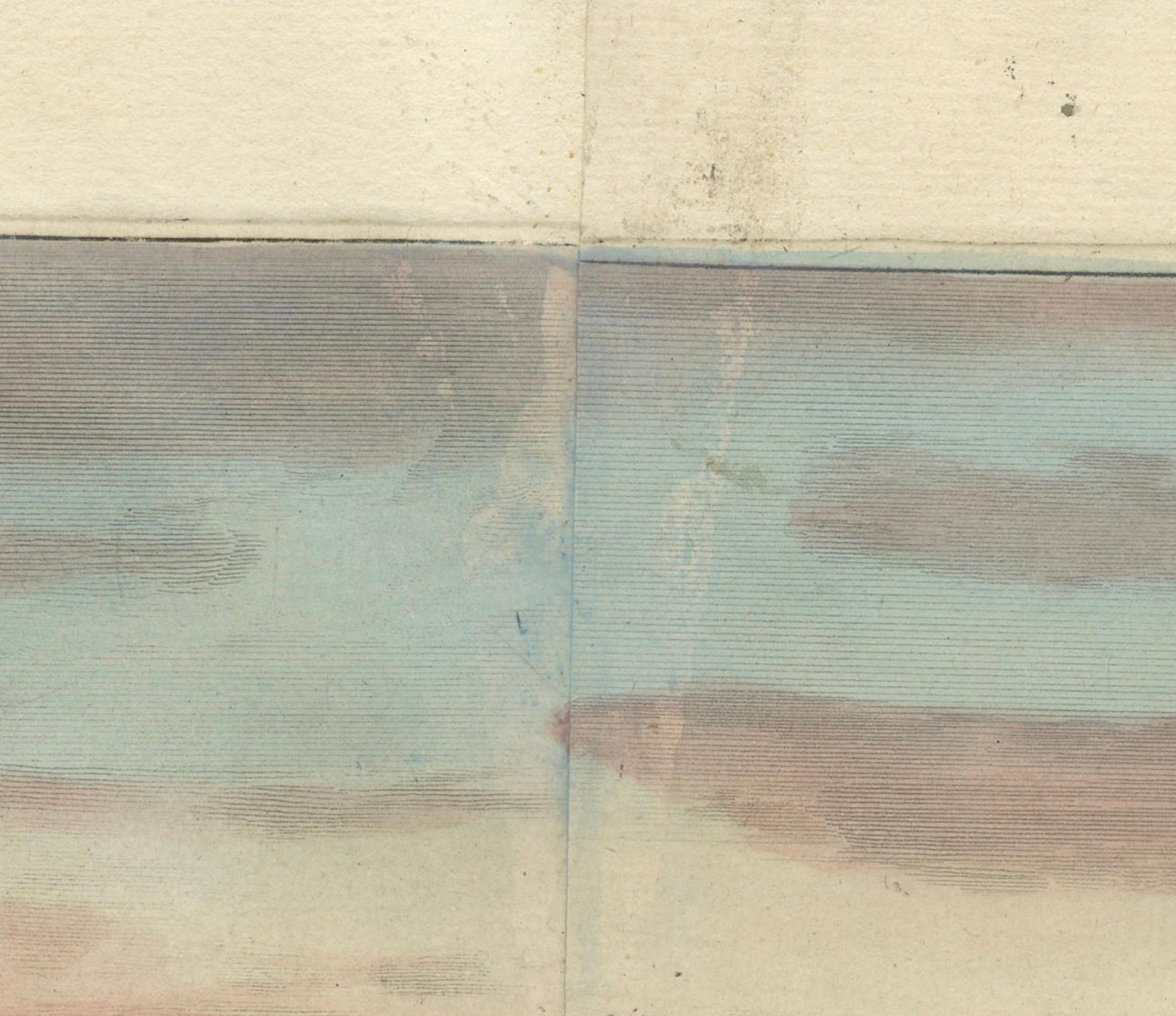
Good. Clean and white hand-pressed paper, with minor soiling. Two sheets are joined with some offset or soiling in the top of the are where they are joined, possibly glue residu. Study the images carefully.
About this sheet
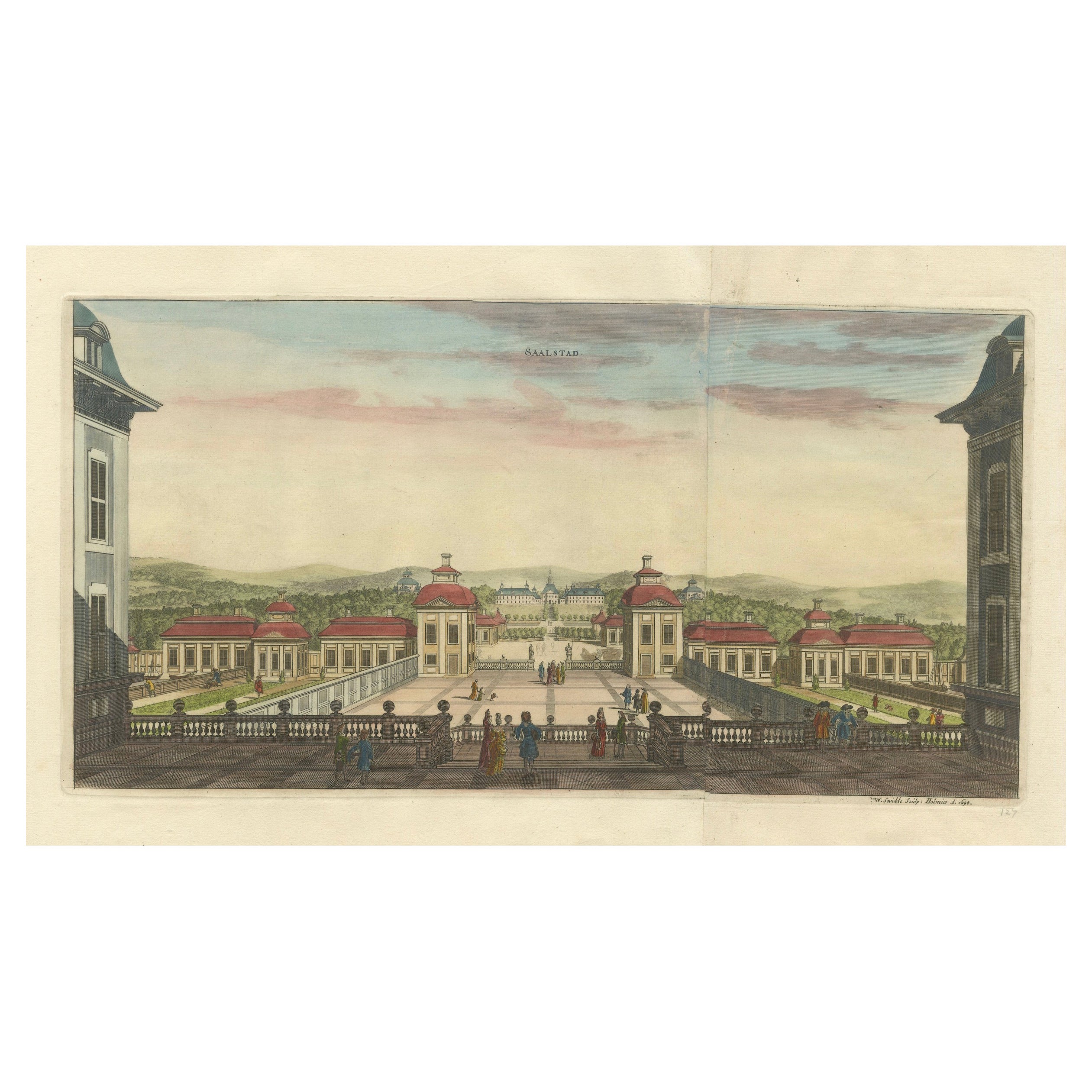
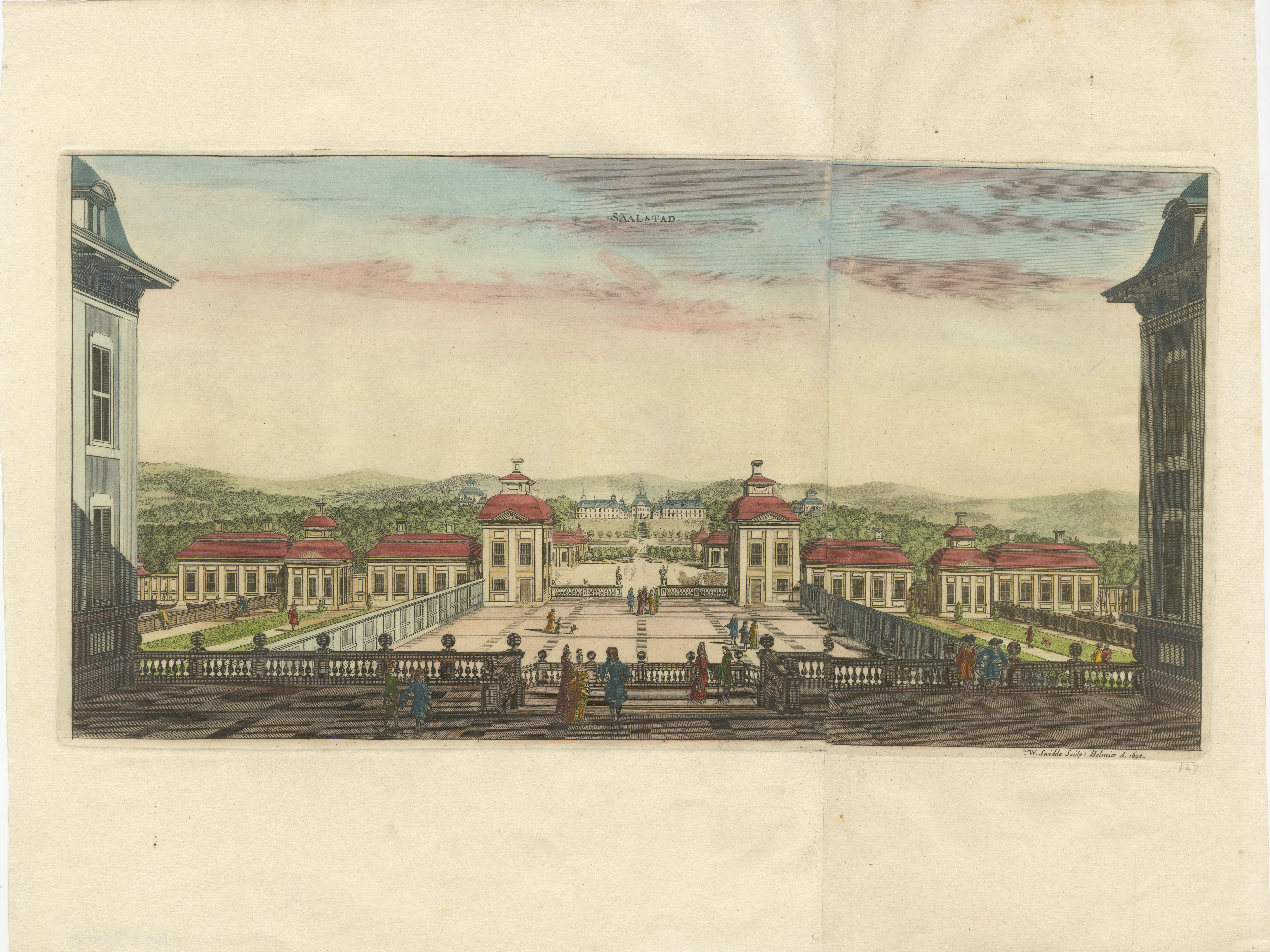
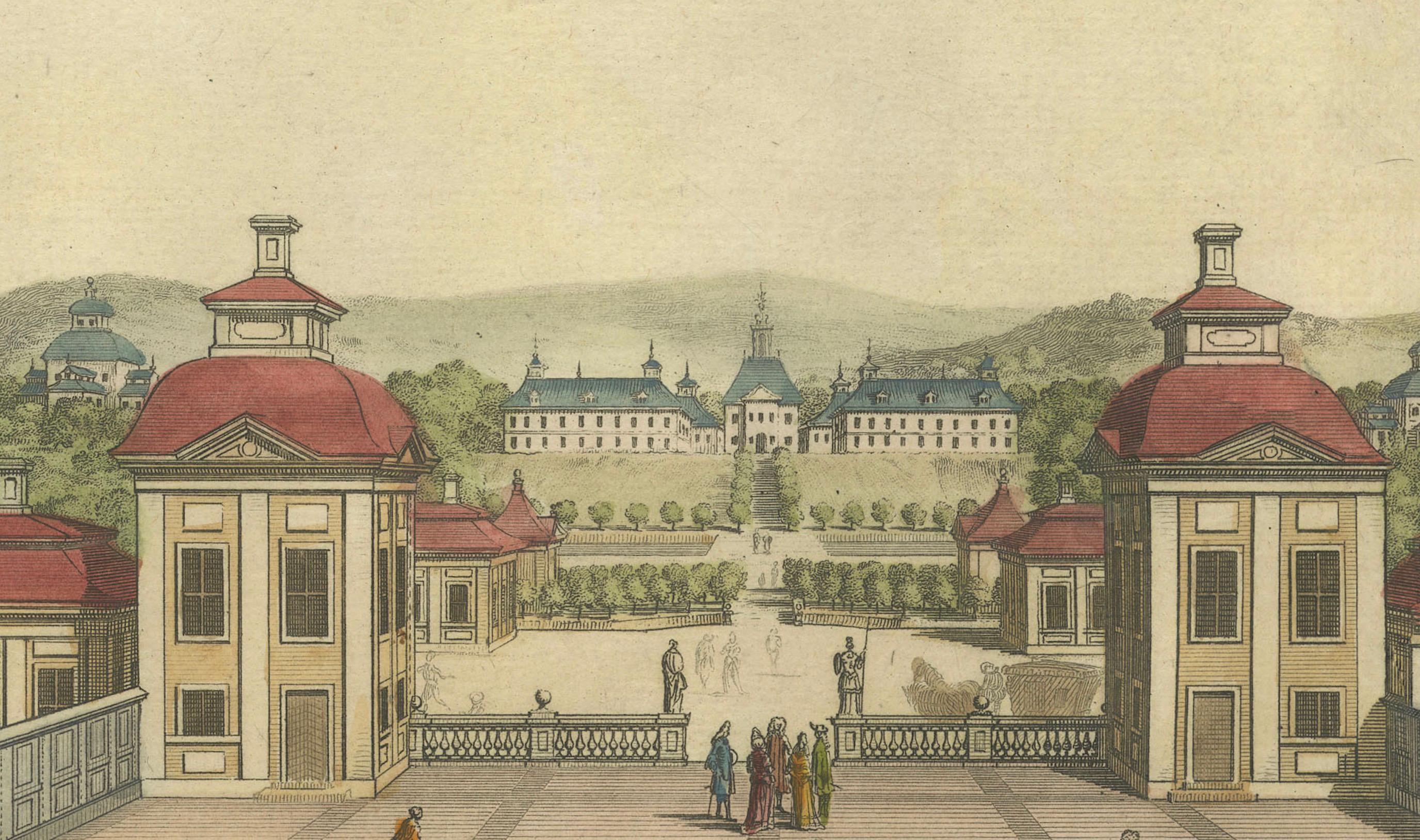
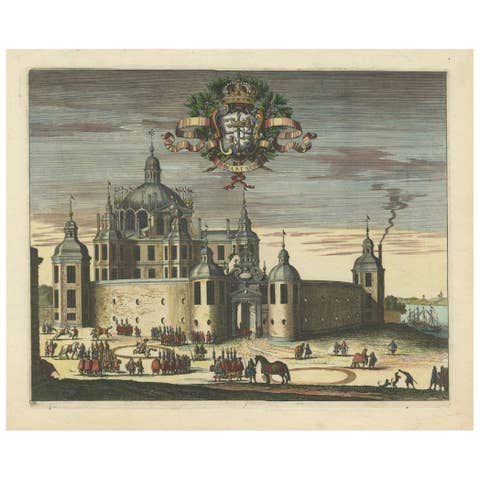
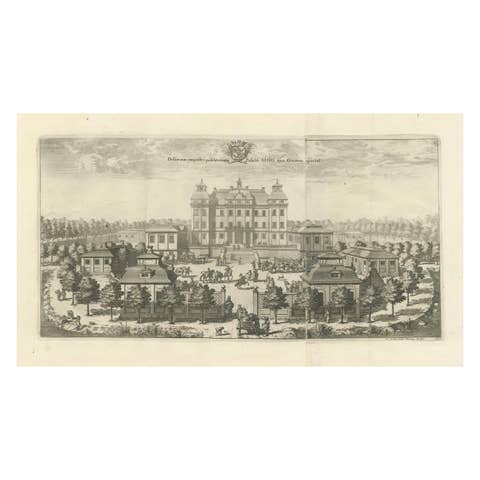
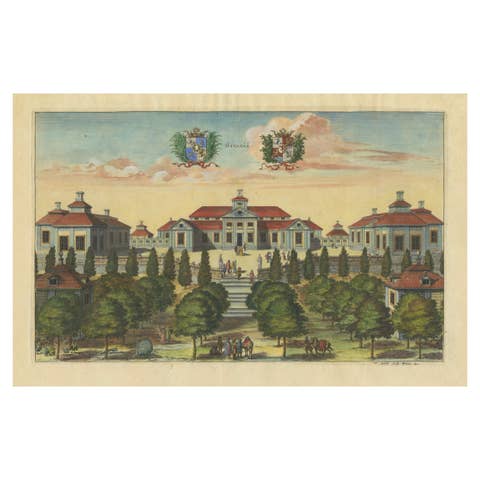
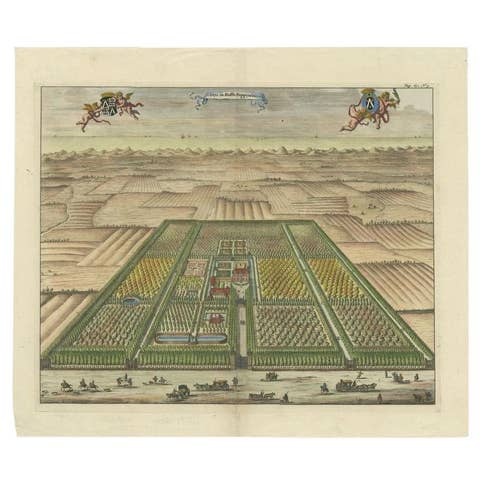
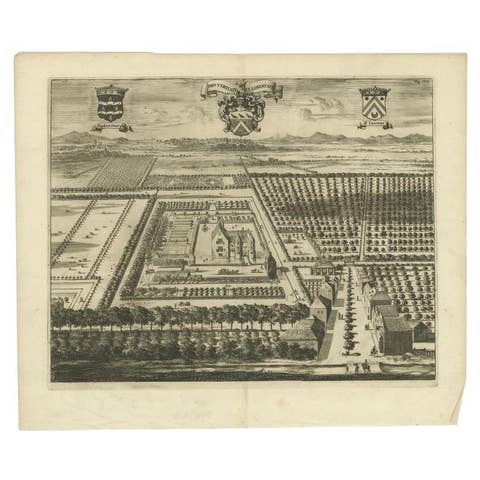
This original hand-colored engraving from 1694, entitled 'SAALSTAD,' presents a stately view of Salsta Castle located in Lena parish, Uppsala, Uppland. Created as part of the renowned Swedish Atlas by Erik Dahlberg, the image is a testament to the early 18th-century baroque architecture and the bucolic charm of Sweden's countryside.
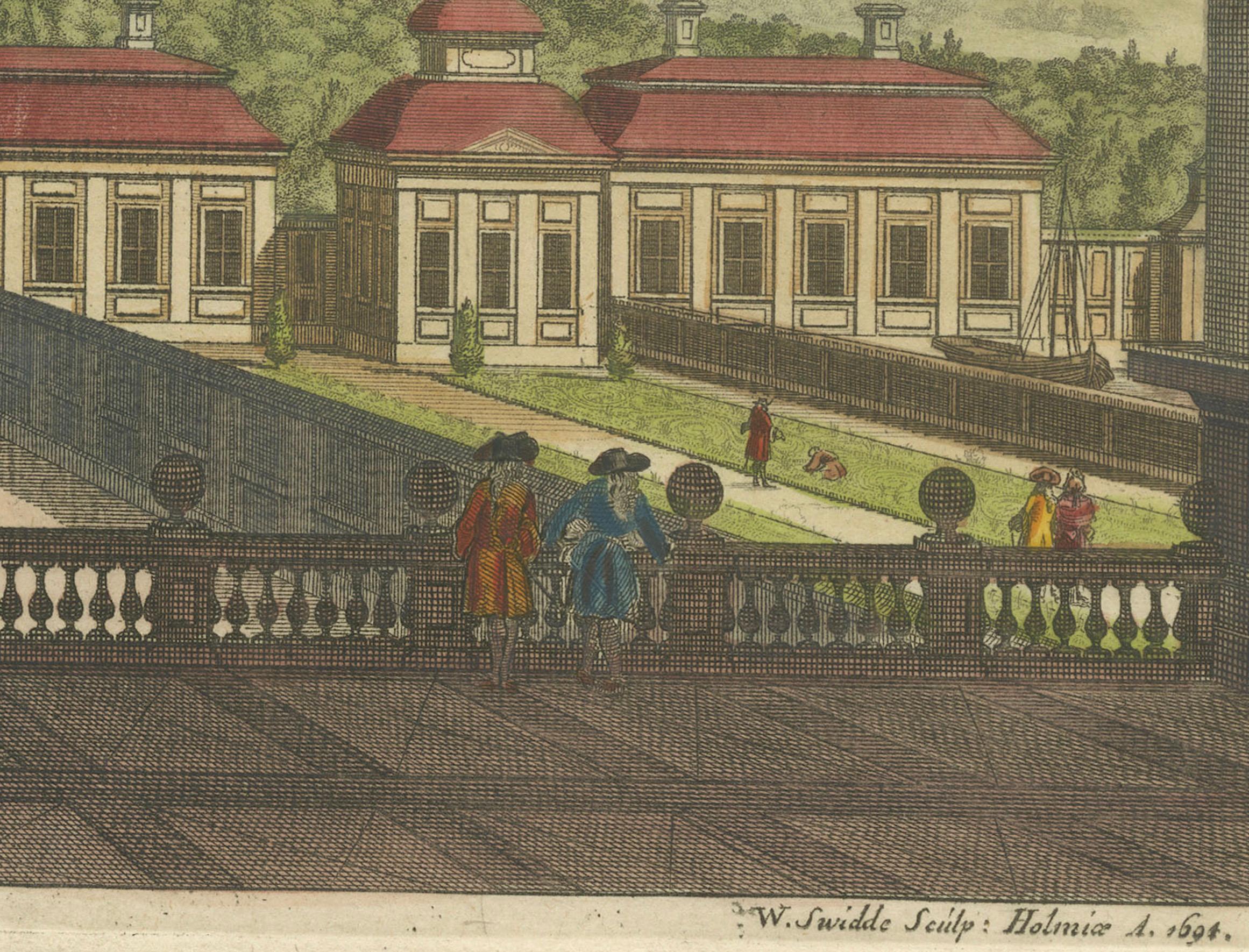
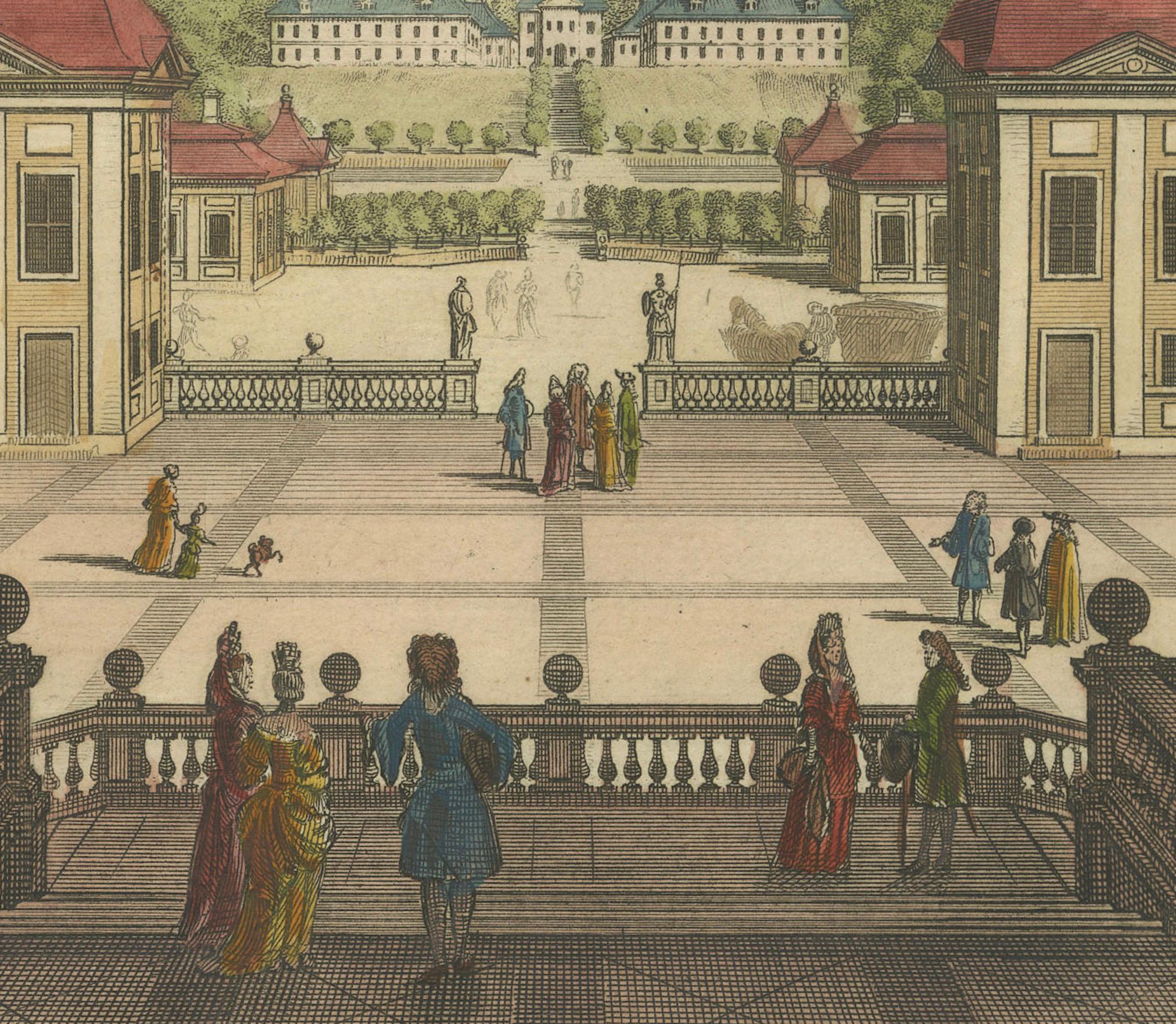
The illustration showcases Salsta Castle from a formal perspective, likely viewed from an opposing terrace or balcony, framing the central edifice symmetrically with its auxiliary structures. The foreground is lively with figures in period attire, leisurely strolling and engaging in conversation, emphasizing the castle’s role as a social hub in its heyday.
Salsta Castle, set against a backdrop of gentle hills and a wide sky, radiates the grandeur and tranquility of the Swedish landscape. The engraving, meticulously printed from two plates, reveals the precise detail and vibrant hues that bring the scene to life. Each architectural element, from the red-tiled roofs to the ornate windows and balustrades, is rendered with clarity and care, capturing the essence of the castle's design.
Published in Paris, this work is a fine example of Dahlberg’s dedication to illustrating Sweden's architectural and natural beauty. It serves as a historical document that conveys not only the aesthetic qualities of the era's structures but also a glimpse into the leisurely pace of life at Salsta Castle. As an original engraving, it holds significant value for collectors and enthusiasts of cartographic and architectural history.
As engraver is named W.Swidde. More about him:
Willem Swidde (c. 1660 in Amsterdam – 1697 in Stockholm) was a Dutch draughtsman and engraver, active in Sweden. Willem Swidde's life is not well documented. He was recruited by Erik Dahlbergh to come to Sweden to work with illustrating topographical and historical books. He came to Stockholm in 1688. His first commission was to make illustrations for a history of Charles X Gustav of Sweden, De Rebus a Carlo Gustavo Sveciae Regis, written by Samuel Pufendorf. Swidde made 18 of the 123 plates for the book. His next, main and final commission, which kept him occupied for the rest of his life, was the engraving of the illustrations for the grandly projected book Suecia Antiqua et Hodierna, a topographical work in the tradition of Matthäus Merian, intended to glorify Sweden. Swidde was one of a team of engravers, making 76 of the book's plates. He worked from drawings made by Dahlbergh, often correcting and bettering the motifs in cooperation with Dahlbergh. He died in Stockholm in 1697.