About this sheet
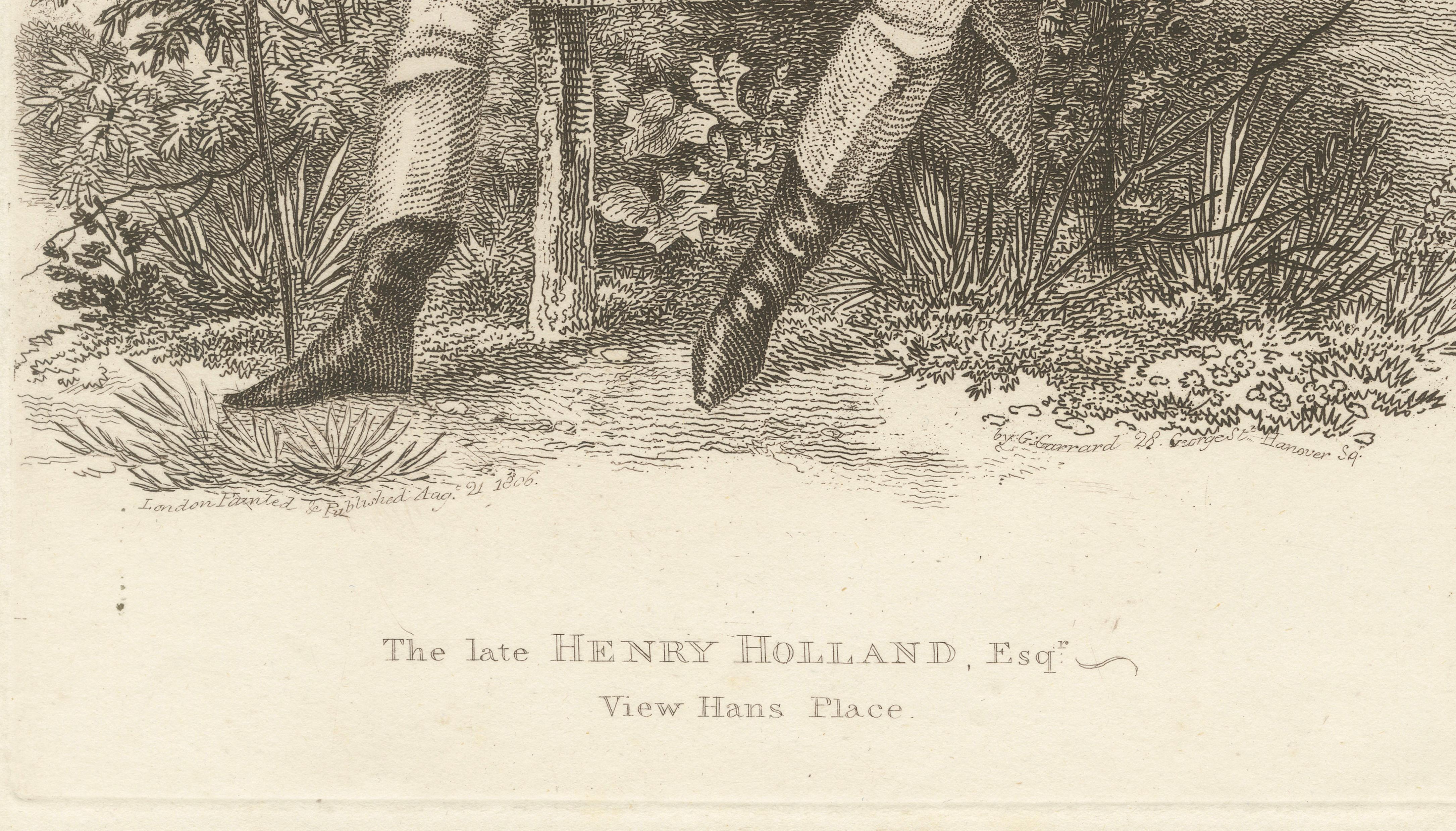
Portrait of Architect Henry Holland at Hans Place, Chelsea — Garrard, 1806
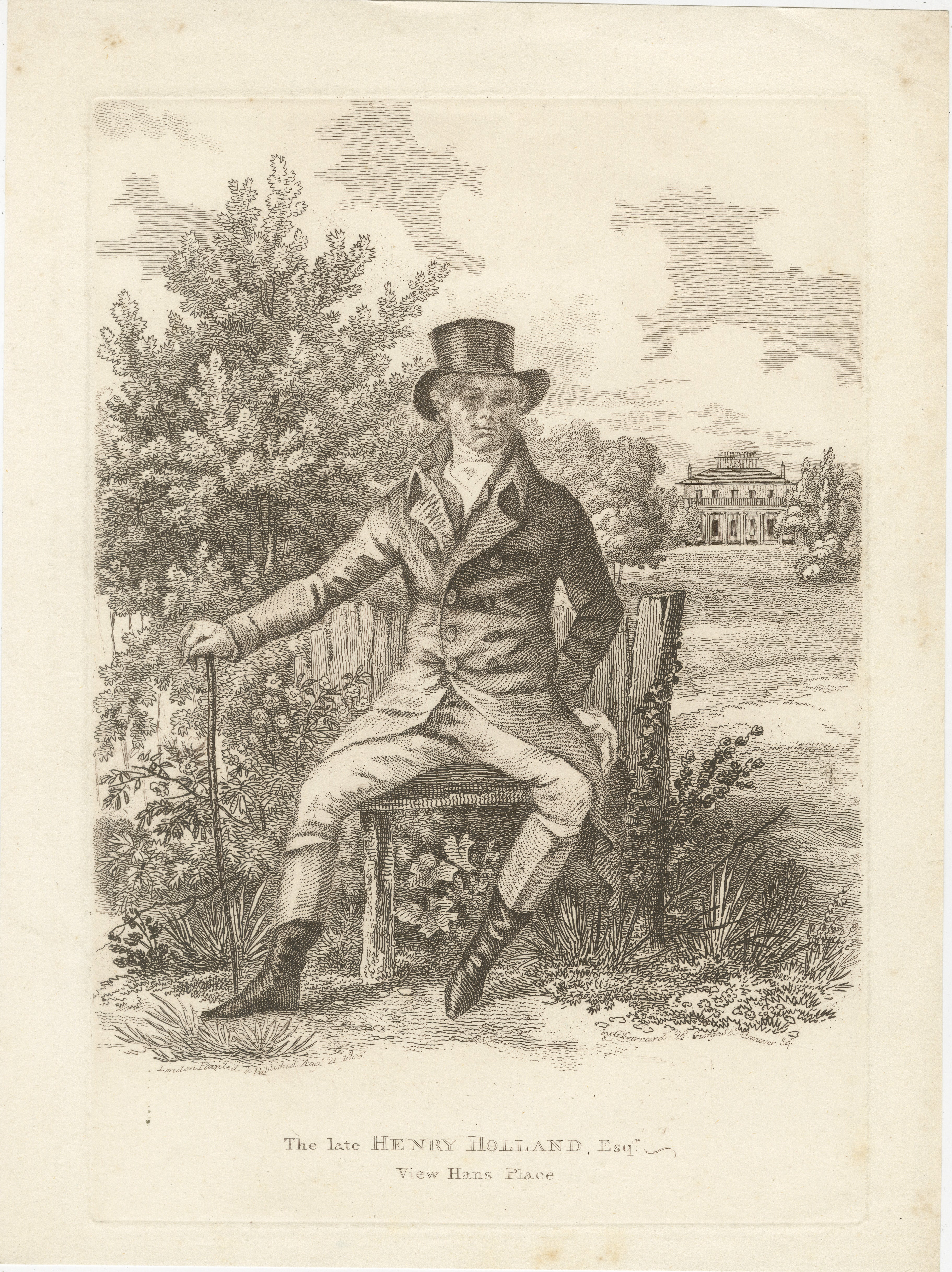
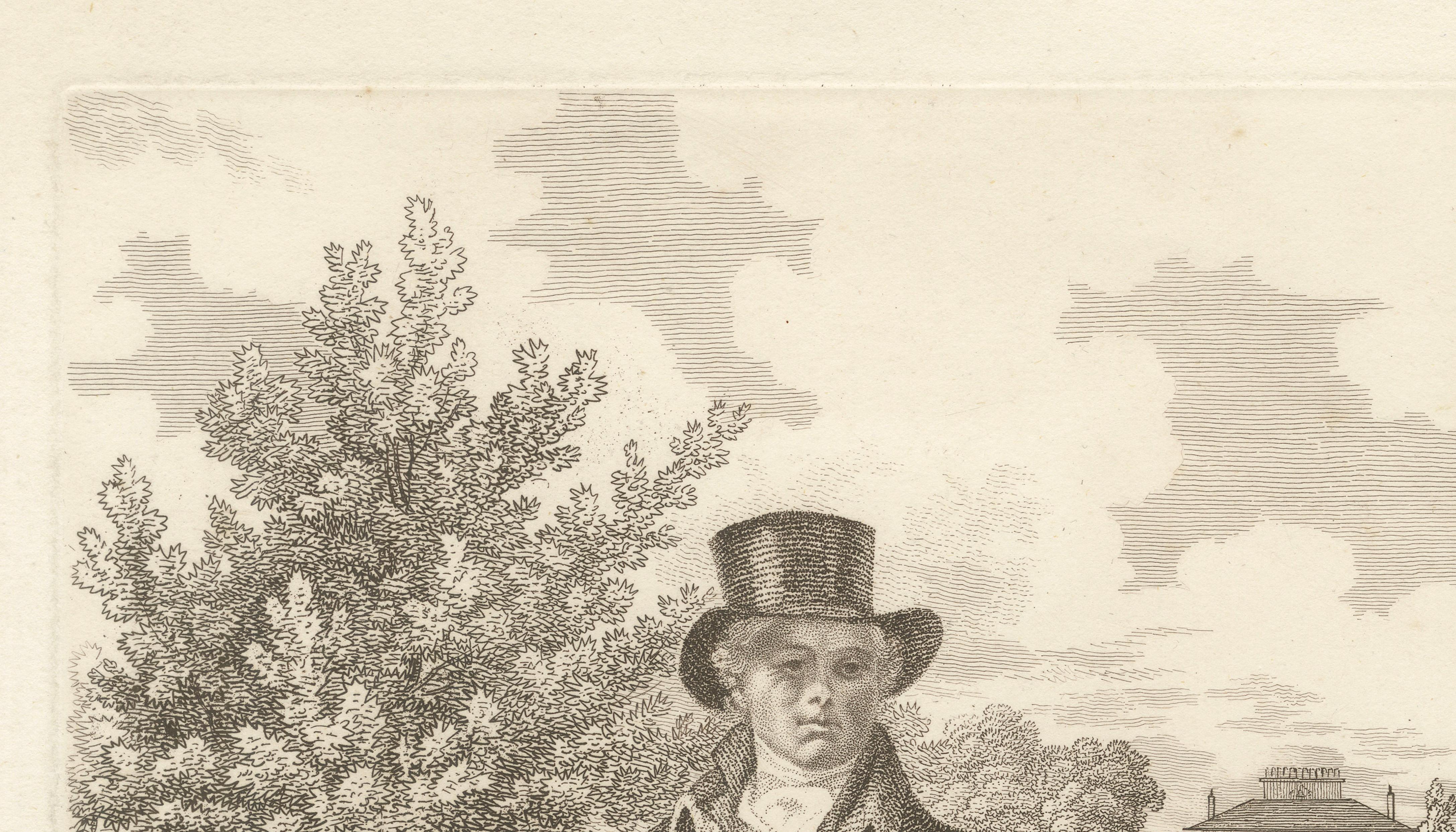
This rare commemorative portrait depicts the English architect Henry Holland (1745–1806), one of the most influential architects working for the British aristocracy in the late Georgian period. The print, titled The Late Henry Holland, Esq. — View Hans Place, was created shortly after his death and is widely regarded as the only known printed portrait of Holland.
The image was engraved by the British artist and engraver George Garrard and published in London on August 21, 1806. Garrard was known for his portrait engravings and worked within the refined stipple engraving tradition that became popular in Britain during the late 18th and early 19th centuries.
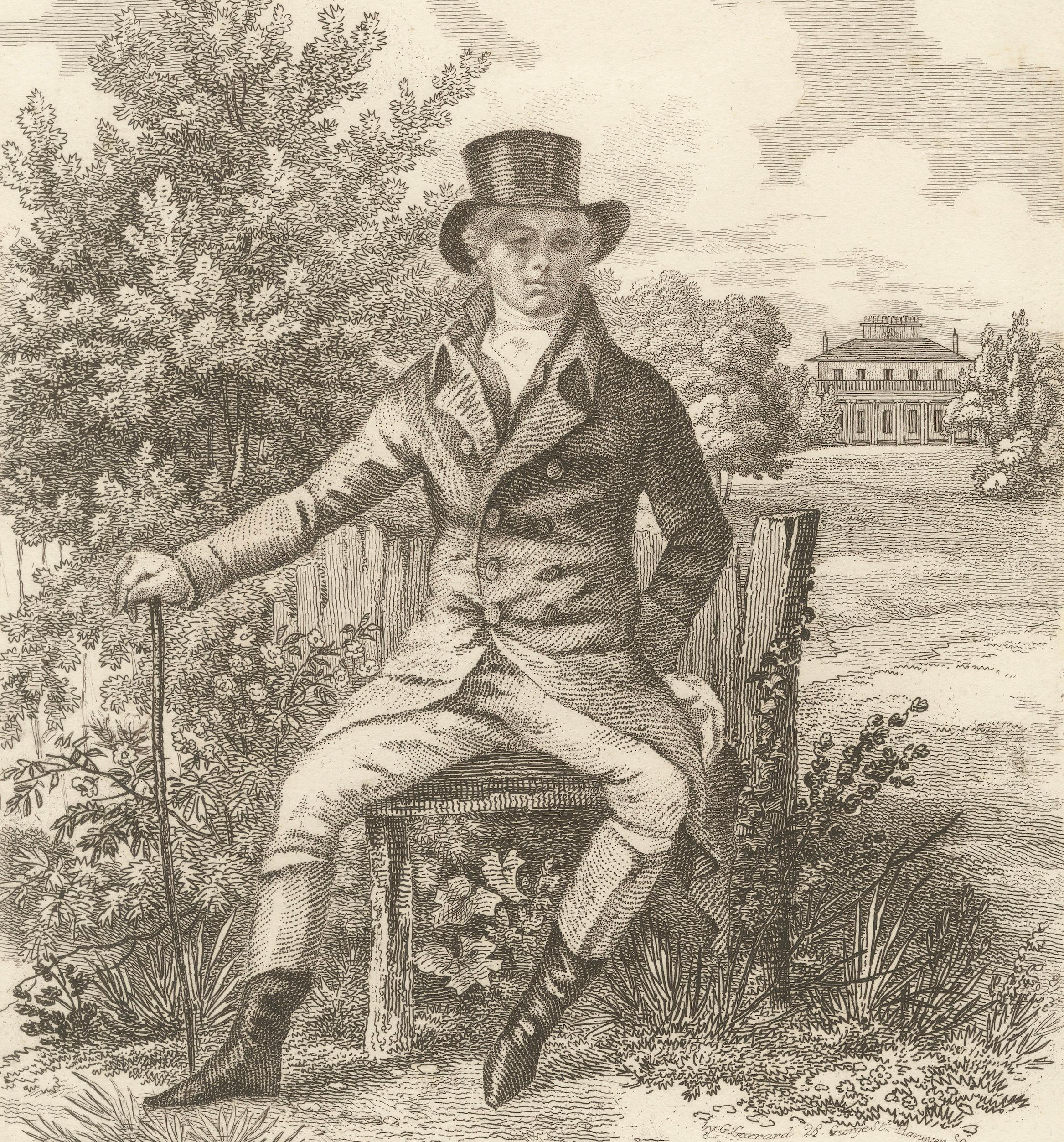
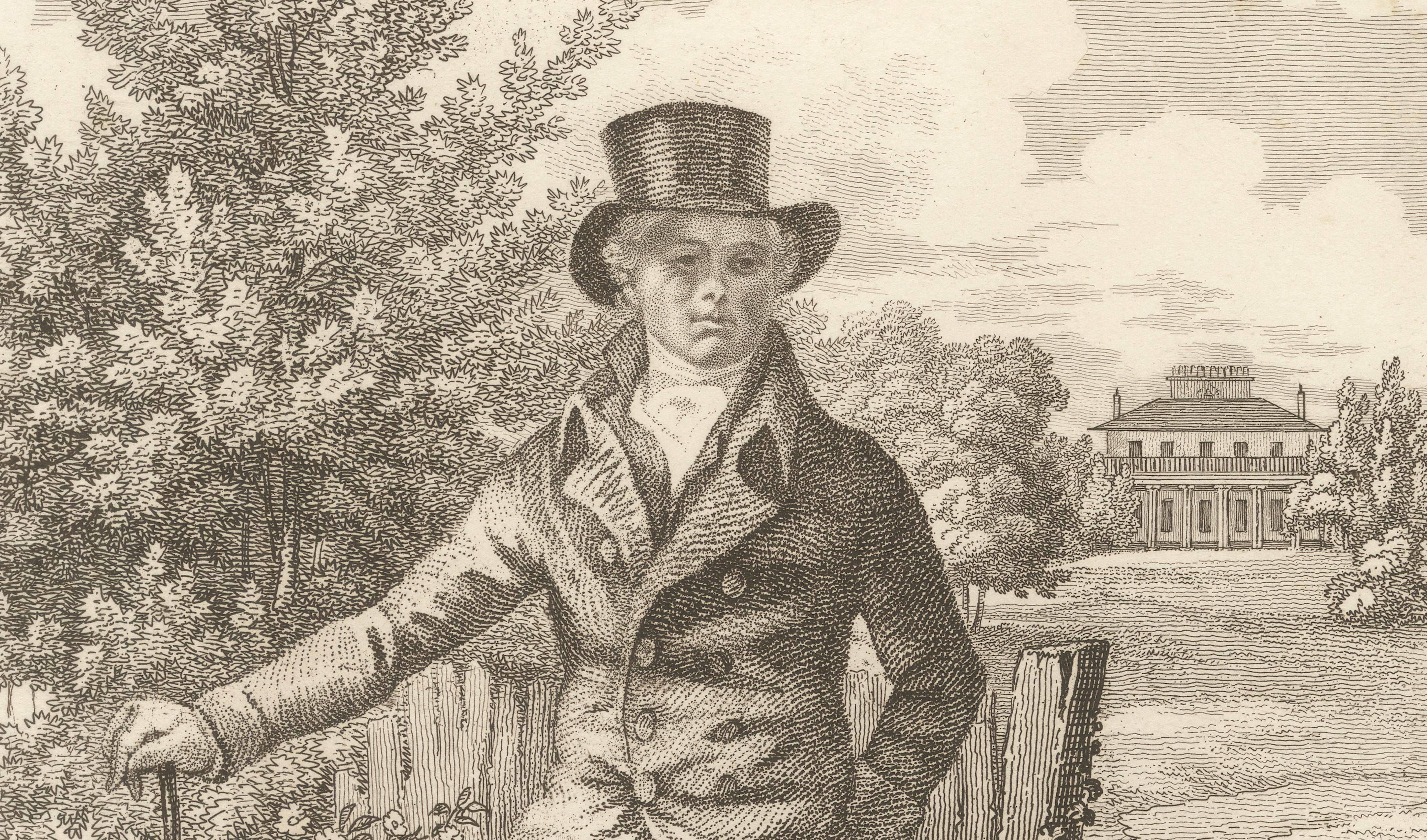
The composition presents Holland seated informally on a wooden stile in a landscaped setting. He wears a tall top hat and the fashionable coat and breeches typical of the late Georgian era. A walking cane rests in his hand, giving the portrait a contemplative and relaxed character rather than the more formal poses often seen in portrait engravings of the period.
Behind Holland appears the detached villa he designed and built for himself at Hans Place in Chelsea, London. This residence formed part of the ambitious development known as Hans Town, one of Holland’s most significant urban planning projects. During the late 18th century Holland developed approximately one hundred acres of land in the area, creating what would become some of London’s most prestigious residential streets, including Sloane Street, Sloane Square, and Hans Place.
Henry Holland played a major role in shaping late Georgian architecture in Britain. He was the son-in-law and professional partner of the famous landscape architect Lancelot “Capability” Brown, with whom he collaborated on several projects for aristocratic estates. Holland became the preferred architect for members of the British royal family and high society.
Among his most notable commissions were major alterations to Carlton House in London for the Prince of Wales (later King George IV), the design of the original Brighton Marine Pavilion—later transformed by John Nash into the famous Royal Pavilion—and the rebuilding of Drury Lane Theatre for playwright and theatre manager Richard Brinsley Sheridan in 1791.
This portrait offers a rare visual record of Holland and places him within the architectural landscape he helped shape. The combination of portraiture and topographical background reflects the Georgian interest in associating prominent figures with their estates and architectural achievements.
Because Holland was rarely depicted in print, impressions of this portrait are of particular interest to collectors of architectural history, Georgian portraiture, and London topographical prints.
Condition:
Good antique condition with light age toning and minor spotting to the margins. The plate mark is visible and the impression remains clear and well printed. Minor handling wear is consistent with age.
Framing tips:
This portrait displays beautifully in a dark walnut or black frame with a warm ivory mat. A generous mat border enhances the fine stipple engraving and creates an elegant presentation suitable for both traditional and contemporary interiors.
Technique: Etching and stipple engraving
Maker: George Garrard, England, published August 21, 1806