1805 Handcolored Engraving of Egyptian Monuments from Bertuch's "Bilderbuch"
€ 99
Original antique · The actual sheet photographed · Certificate of authenticity on request · Sold unframed · Worldwide shipping from € 15 (rates)
Date
1805
Sheet size
23 × 19 cm (9.1 × 7.5 in)
Condition
Good
Reference
BG-14000-4
What the condition grades mean
Excellent
Bright and clean, with no faults worth mentioning.
Very good
Only light signs of age, such as faint toning.
Good
Normal signs of age for a sheet of this period: toning, some foxing, small marks or neat old repairs.
Fair
Clear faults such as staining, tears or repairs, priced to match.
Every fault we see is written in the condition note, and the whole sheet is shown uncropped in the photos.
Condition
Condition with some foxing, light creasing and age toning, typical of its era. Original hand-colored. Study the images carefully.
About this sheet
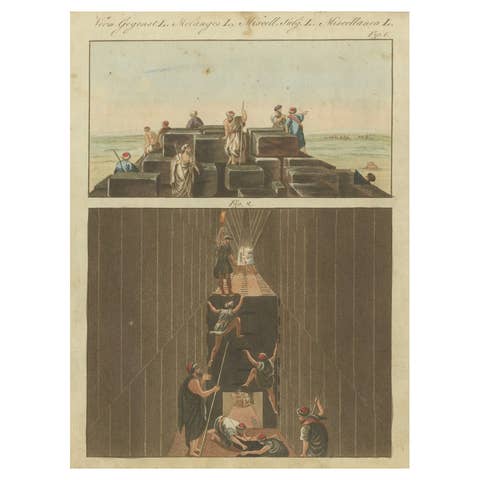
1805 Handcolored Engraving of Egyptian Monuments from Bertuch's "Bilderbuch für Kinder" This remarkable handcolored engraving from 1802 depicts two iconic views of ancient Egyptian monuments. The upper image showcases the Colossi of Memnon, the towering statues of Pharaoh Amenhotep III near Luxor, while the lower image features an exploration scene of the Great Sphinx of Giza, highlighting its grandeur during early 19th-century expeditions.
Taken from Friedrich Johann Bertuch's renowned "Bilderbuch für Kinder" (Picture Book for Children), this plate combines artistic beauty with historical significance. Bertuch’s 12-volume encyclopedia, published between 1790 and 1830 in Weimar, sought to educate children through intricate illustrations covering topics such as natural history, world cultures, and mythology. This engraving is a testament to Enlightenment-era curiosity about the ancient world and early archaeological efforts.
Ideal for collectors of Egyptology prints or historical engravings, this artwork offers a glimpse into early representations of Egypt’s enduring monuments. Its delicate hand-coloring and rich historical context make it a fascinating and rare find for enthusiasts of cultural history.