About this sheet
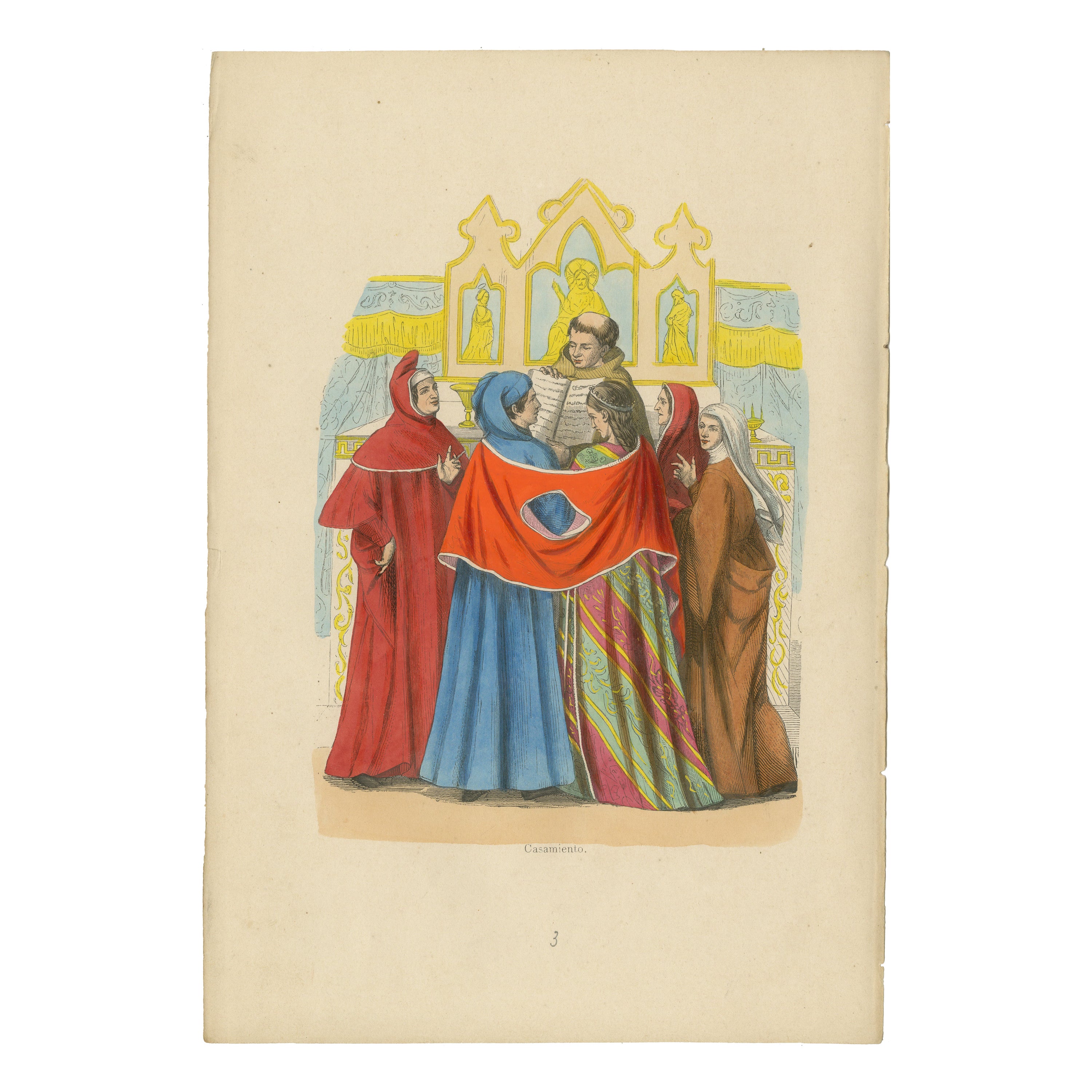
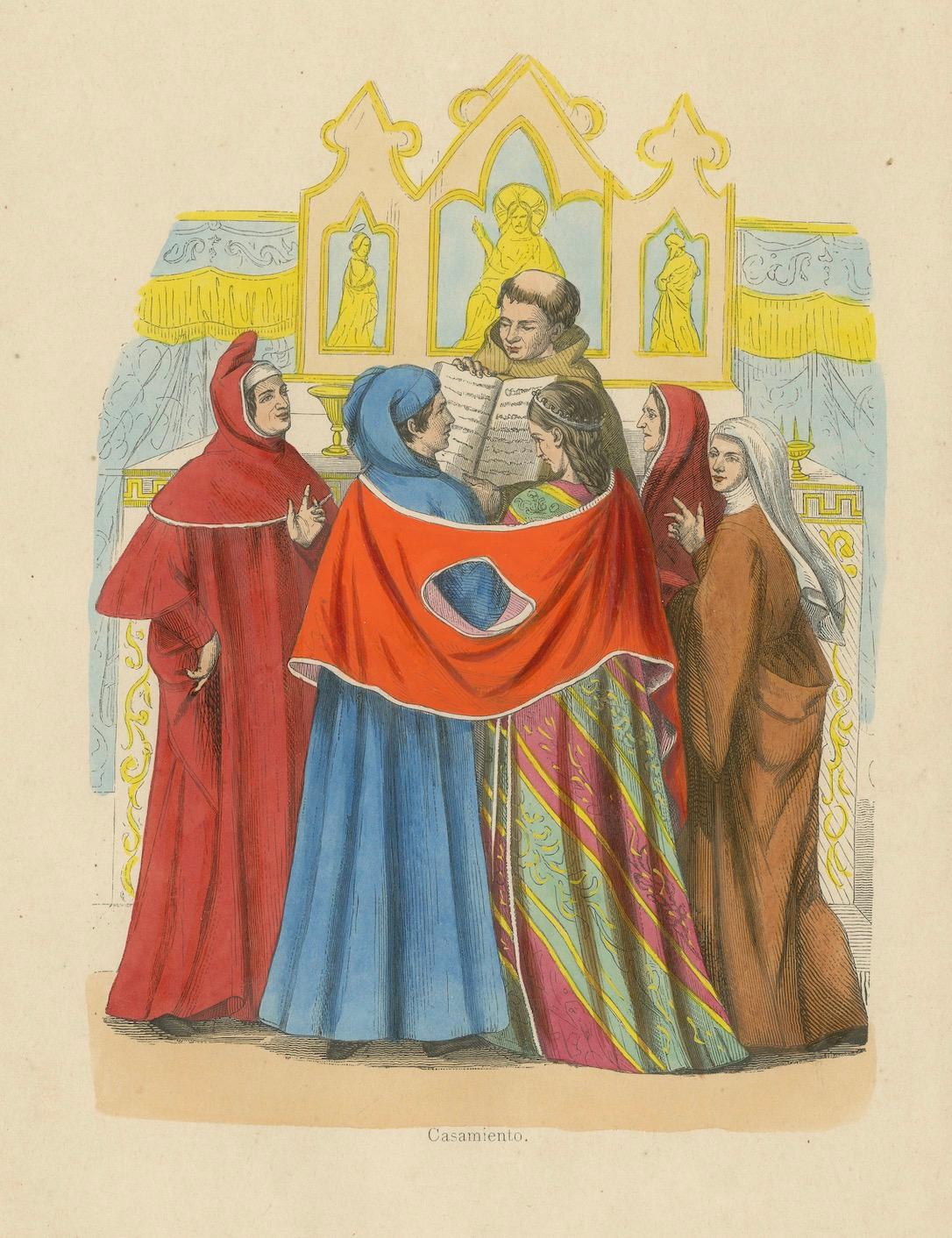
This print from "Costume Di Moyen Age" (Costumes of the Middle Ages) published in Paris in 1847, depicts a scene from the medieval era. The image features a group of individuals in an indoor setting, likely a part of a noble class, given the richness of their attire and the elegant interior.
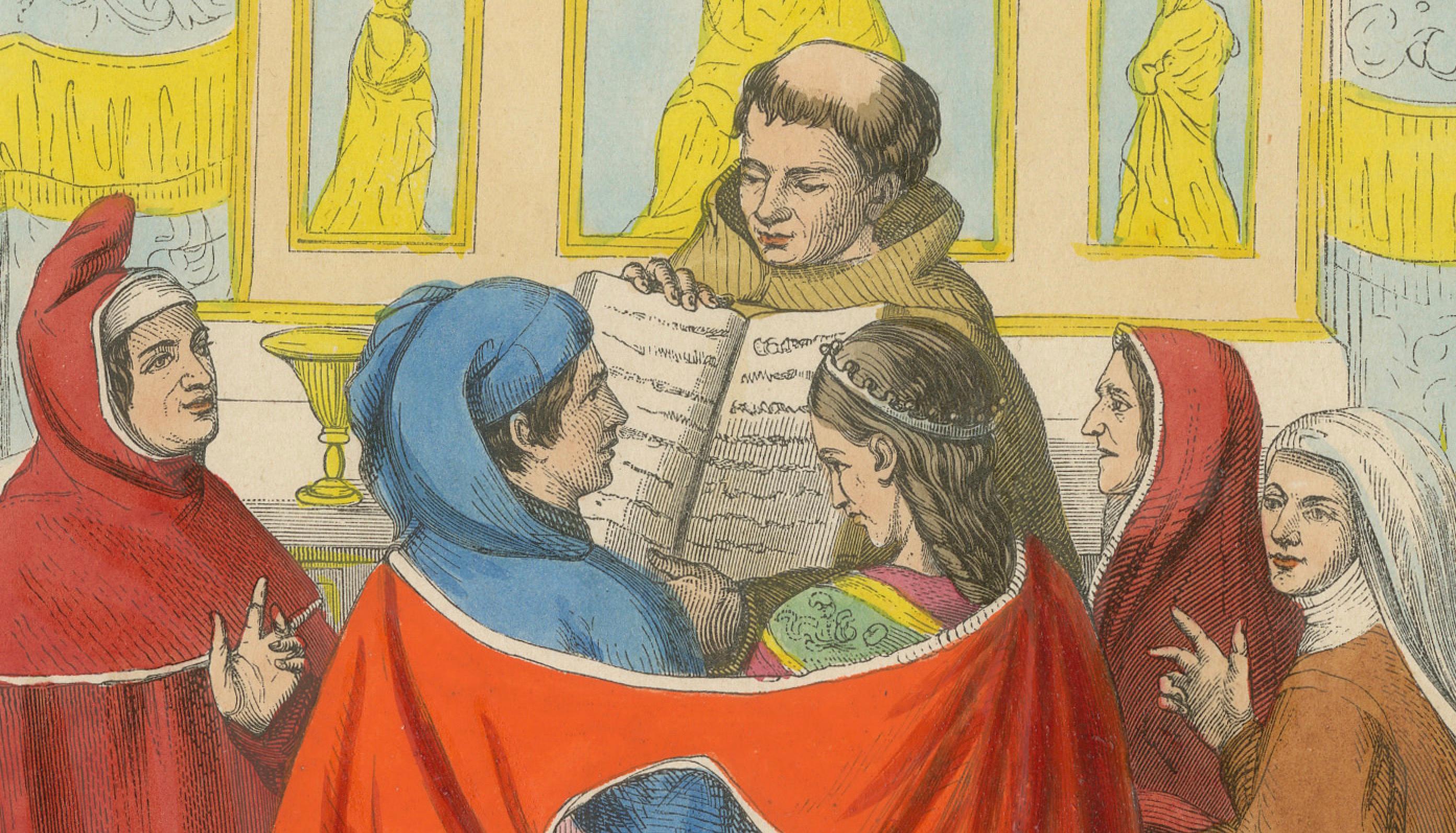
A central figure in a blue cape with a red lining is in a dialogue or exchange with a person wearing a green and yellow patterned garment. They both are in the foreground and appear to be the primary subjects of this interaction. Behind them, there are other individuals who seem to be part of the scene, including a person in red robes who is possibly a clergyman, given the context and attire, which resembles ecclesiastical clothing.
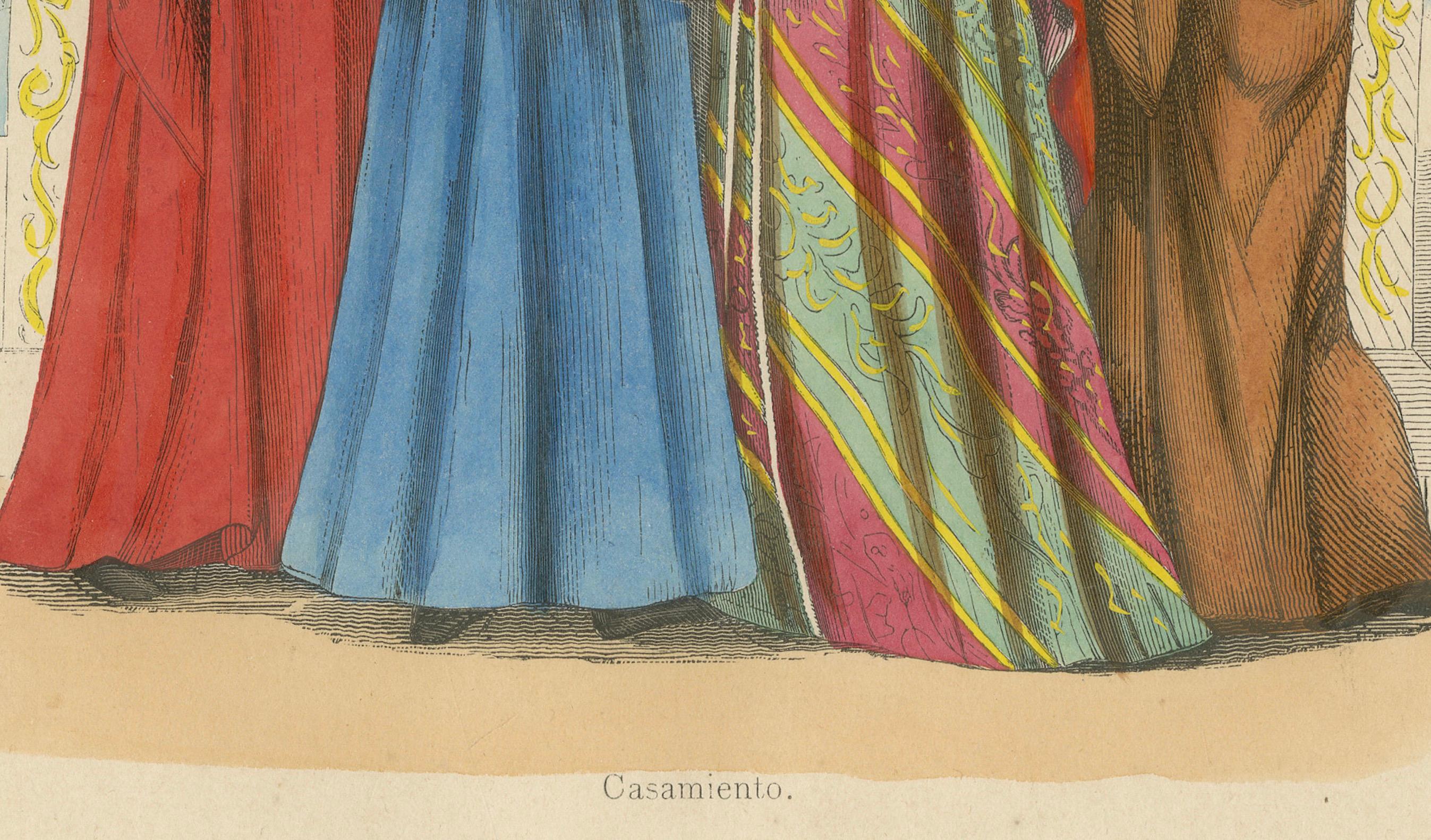
The background is adorned with Gothic architectural elements such as pointed arches and intricate detailing. Statues or figures are set within the architectural framework, suggesting a church or a similarly important building. The use of bright, primary colors is notable, and the attention to the detail in the clothing suggests a significant event, possibly a ceremony like a marriage, as indicated by the word "Casamiento" (meaning marriage in Spanish) at the bottom of the print.
Overall, the print is rich in historical clothing detail, showcasing the elaborate textiles and fashions of the Middle Ages in Western Europe, specifically the intricate designs and the layering of clothing which was indicative of one's social status during that time.
The colors have a nice glow over them. Historically, egg whites, known as glair, and sometimes egg yolk were indeed used in illumination and painting, particularly in manuscripts, to give colors a brighter appearance and to add a sheen or gloss to the work. This technique was quite common during the Middle Ages and into the Renaissance.
Egg whites can be applied as a varnish over pigments to enhance their brightness and to protect the colors. This application could make the colors appear more vivid and also add a slight glossy sheen to the surface of the image.
Egg yolk, on the other hand, was commonly used as a binding agent in paint. It forms the basis of tempera paint, a medium that was widely used before the advent of oil painting. Egg yolk helps to create a durable and long-lasting color that adheres well to various surfaces.
In the context of the print from 1847, it's less likely that egg whites or yolks were used directly on the print, as by that time, commercial printing processes would have been more advanced and less reliant on such manual methods. However, if this print is a representation of an earlier style or is meant to mimic the appearance of hand-painted manuscripts, the original artists might have employed techniques or materials that gave a similar effect to those achieved with egg-based binders and varnishes.