About this sheet
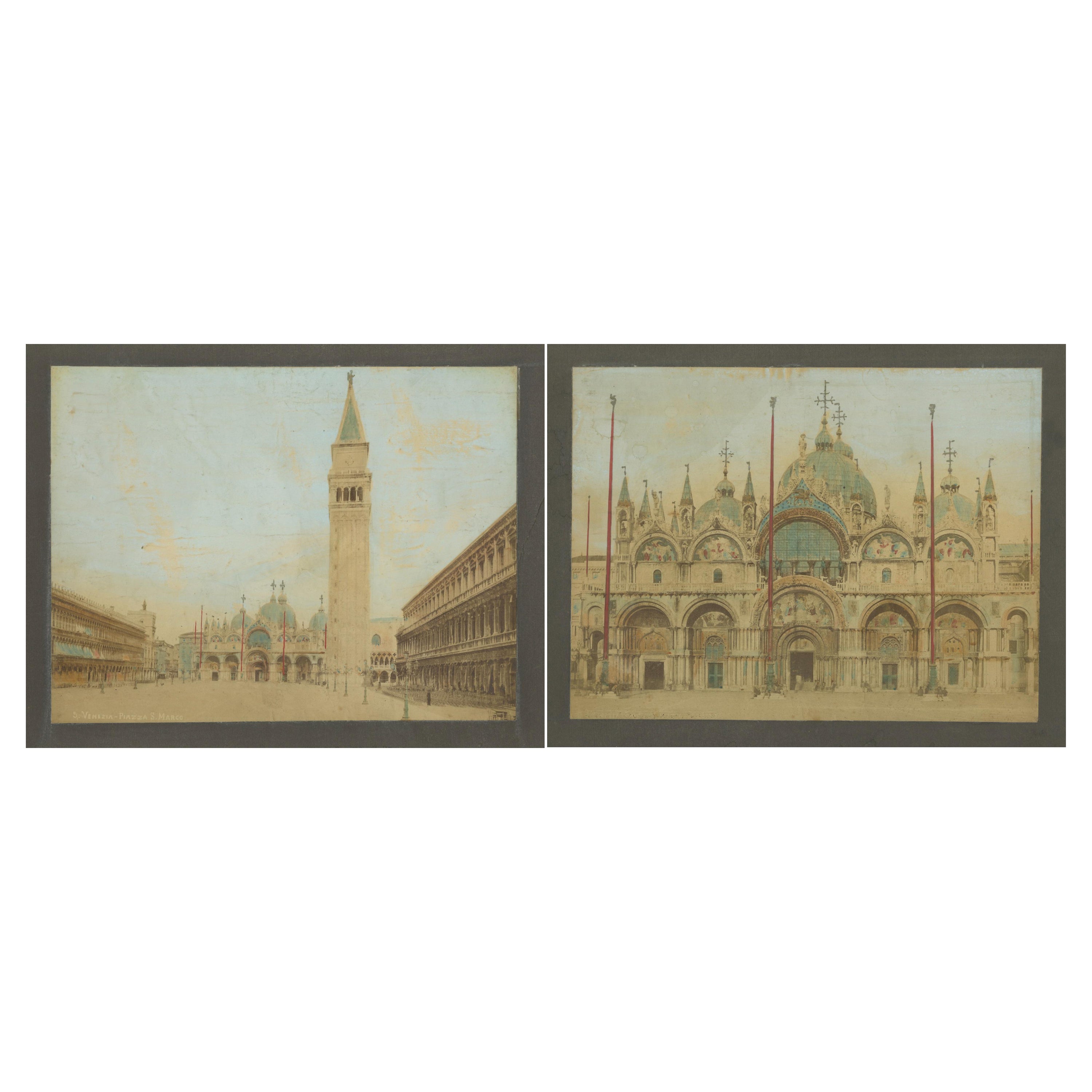
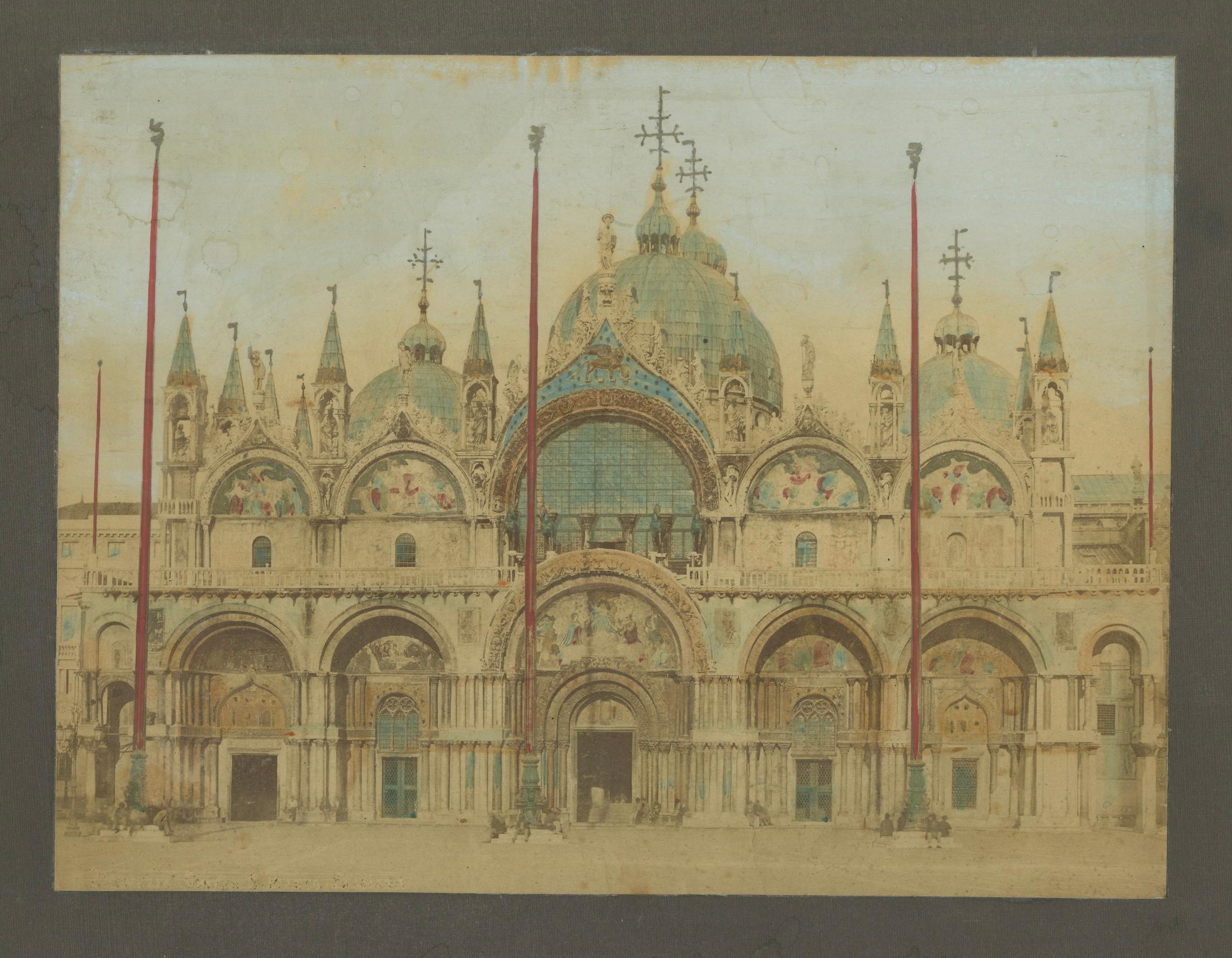
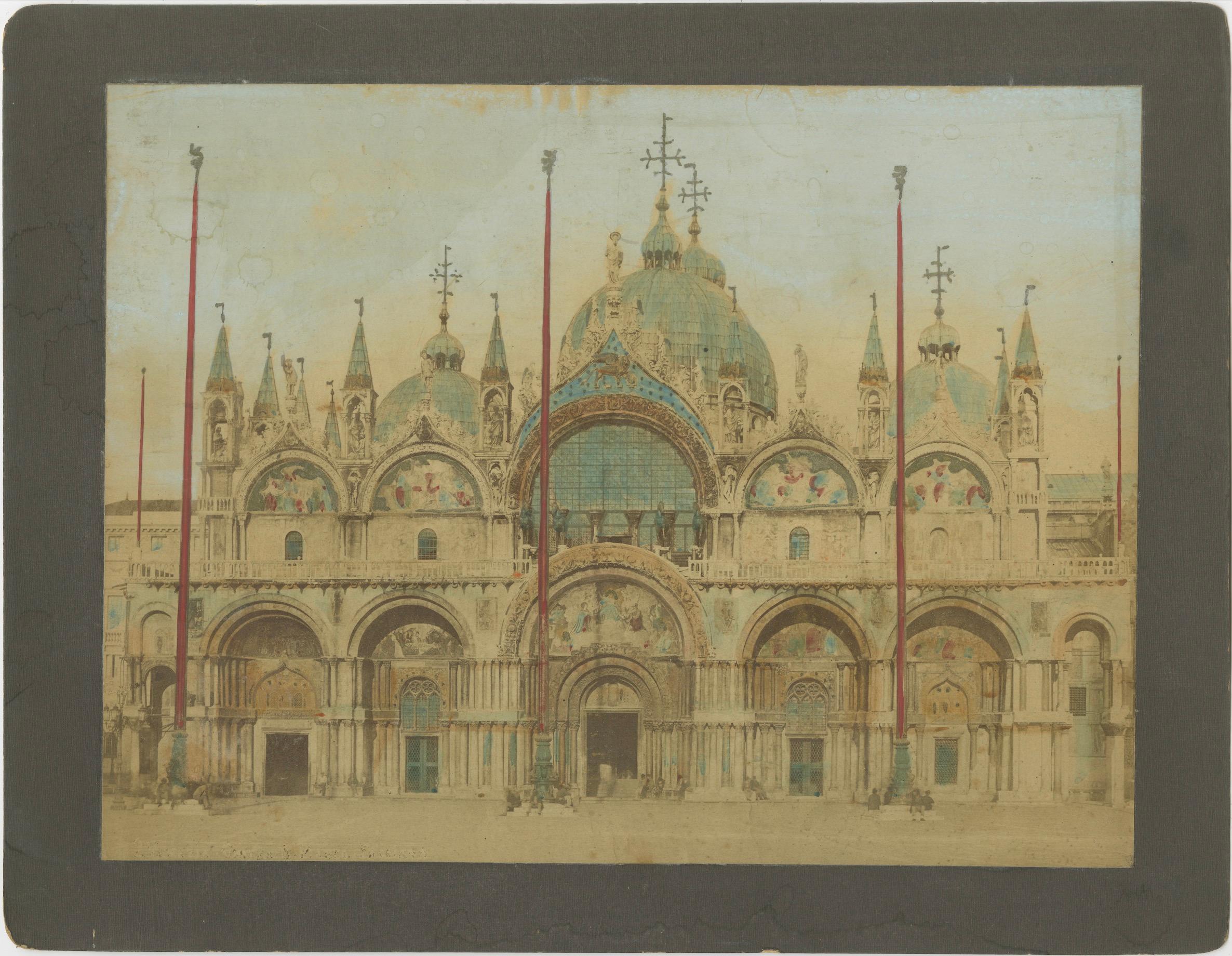
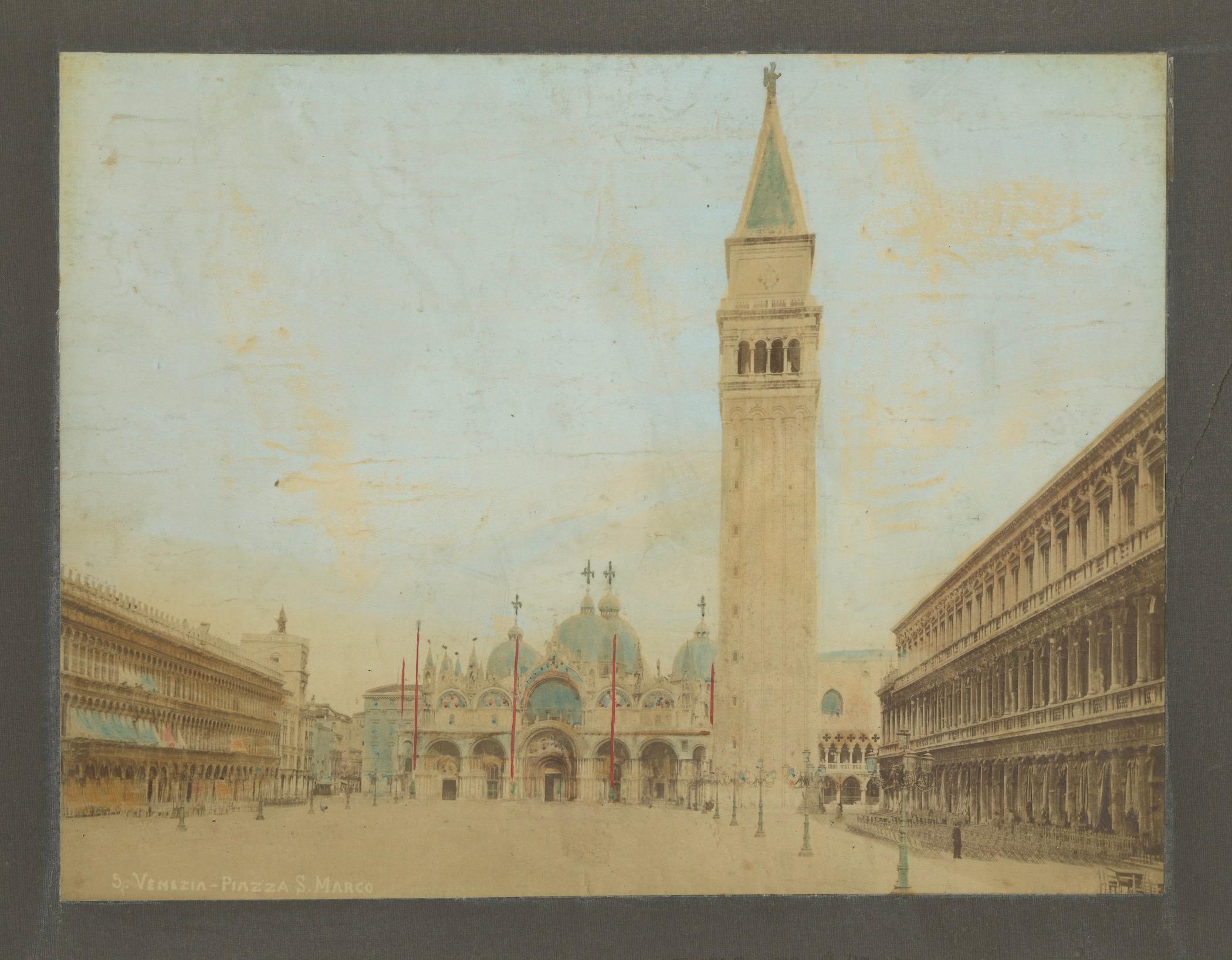
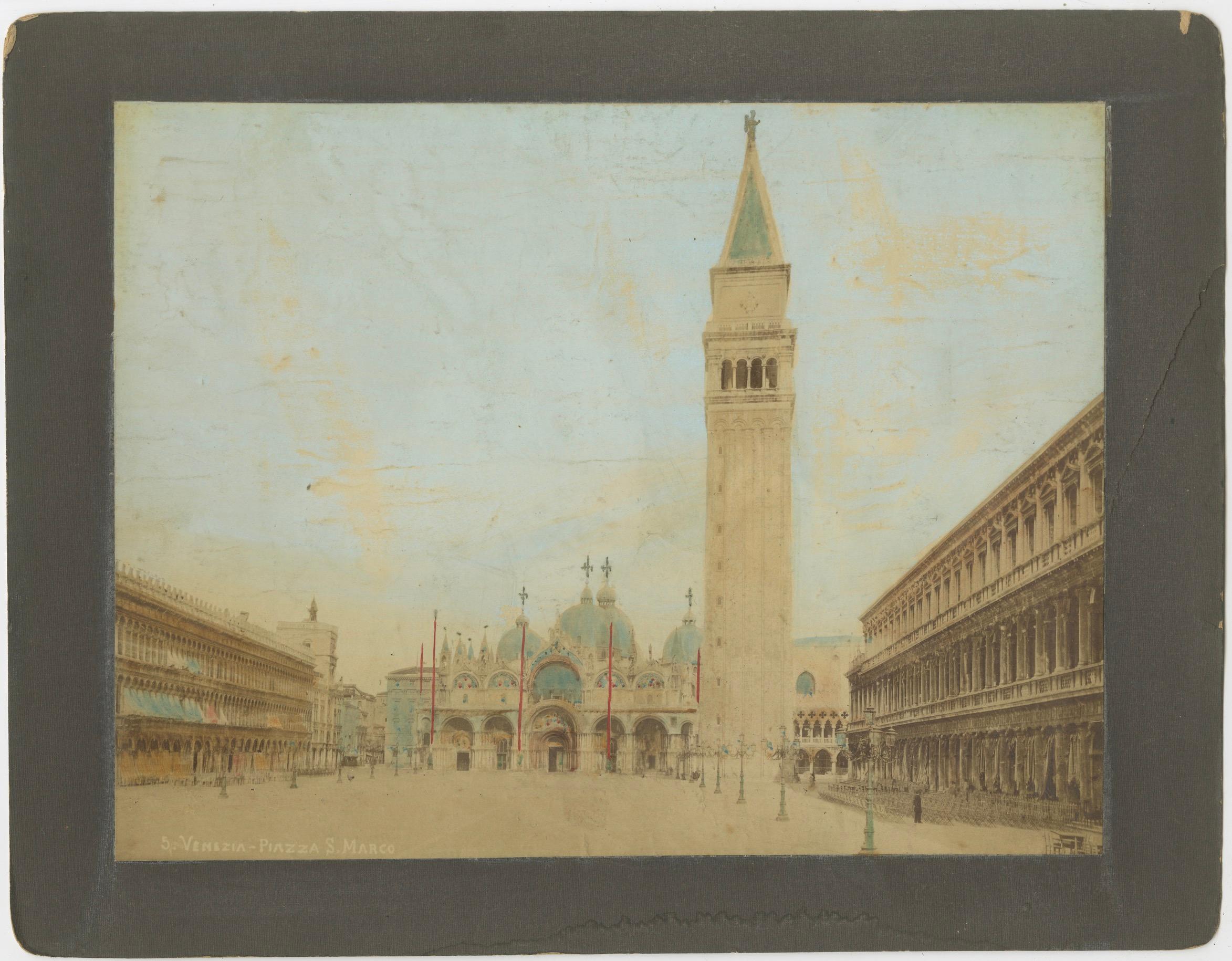
The two photographs are hand-colored images of Piazza San Marco in Venice, Italy, showcasing iconic Venetian architecture:
First Image:
- Subject: The broader view of Piazza San Marco, with the Campanile di San Marco (the tall bell tower) in the center. On the right is part of the Procuratie Vecchie (the long arcade), and in the background, you can see the domes of St. Mark’s Basilica.
Second Image:
- Subject: A detailed view of St. Mark’s Basilica from the front, highlighting its intricate Byzantine architecture, domes, mosaics, and facade. The tall flagpoles, which are typically found in front of the basilica, are also visible.
Location:
- Piazza San Marco (St. Mark’s Square) in Venice, Italy. This square is the heart of the city and home to some of Venice’s most iconic landmarks, including St. Mark’s Basilica and the Campanile.
Date and Artist:
- These photos are likely from the late 19th century, given the hand-coloring technique, which was popular during this period before color photography became widely available. The precise photographer or studio is unclear, but these types of images were often produced by well-known studios of the time, possibly Edizioni Brogi or similar Italian photographic publishers that produced souvenir images of famous landmarks for tourists.
Technique:
- Hand-colored photograph: These photos were originally black-and-white photographs that were meticulously hand-colored with pigments to enhance their appearance, a popular technique in the late 1800s and early 1900s. This method was used to give a more vibrant, lifelike quality to images in an era before color photography.
Condition:
1. Overall: The photographs are generally in fair condition but show signs of aging typical of prints from this period.
2. Discoloration and Fading: There is some visible discoloration, particularly in the sky areas, where yellowing and fading have occurred. The colors, though faded in parts, still retain a degree of their original vibrancy, particularly the blues and reds, though the photos show a sepia-tone effect due to aging.
3. Surface Wear: Minor surface abrasions or spotting can be seen, possibly from handling or exposure to environmental conditions over time. The upper regions show some light scratches or stains, indicating typical wear.
4. Mounting: The photos are mounted on dark backing, which has preserved their structural integrity, though the edges of the images show slight wear and tear, typical for photographs of this age.
Summary:
These are classic examples of late 19th to early 20th-century hand-colored photographs, capturing the grandeur of Venice’s Piazza San Marco and St. Mark’s Basilica. Though slightly worn with fading and discoloration, the photos retain their charm and historical significance, offering a beautiful glimpse into a bygone era of Venice.
The photographs are an albumen print photography, a popular technique used from the mid-19th century until the early 20th century, particularly in the production of landscape and architectural images.
Key Aspects of the Albumen Print Process:
1. Process: Albumen prints were made by coating paper with a mixture of egg whites (albumen) and a salt solution, which would form a glossy surface. The paper was then sensitized with silver nitrate, making it light-sensitive.
2. Exposure: The sensitized paper was placed in contact with a glass negative (usually in large format for sharp detail), and exposed to sunlight. The exposure time could be long, depending on the light intensity, usually several minutes.
3. Development and Fixing: After exposure, the print was developed in a chemical solution and then fixed to remove unexposed silver salts. This would leave the image permanently on the paper.
4. Characteristics:
- Sepia Tone: Albumen prints often have a warm, sepia tone, which matches the slight yellowing visible in this photograph.
- Glossy Finish: The egg white coating gives these prints a smooth and shiny finish.
- Detail: This process allowed for a high level of detail, which is evident in the buildings in this photo.
Likely Timeframe:
The albumen process was widely used between the 1850s and 1890s, and continued somewhat into the early 20th century.
Other early photographic techniques like gelatin silver prints became more popular after 1900.