Byzantine Ornamental Art from Ornamentenschatz, 1887
€ 430
Original antique · The actual sheet photographed · Certificate of authenticity on request · Sold unframed · Worldwide shipping from € 15 (rates)
Date
1887
Sheet size
35 × 25 cm (13.8 × 9.8 in)
Condition
Good
Reference
BG-13766-2-31, BG-13766-2-32, BG-13766-2-33
What the condition grades mean
Excellent
Bright and clean, with no faults worth mentioning.
Very good
Only light signs of age, such as faint toning.
Good
Normal signs of age for a sheet of this period: toning, some foxing, small marks or neat old repairs.
Fair
Clear faults such as staining, tears or repairs, priced to match.
Every fault we see is written in the condition note, and the whole sheet is shown uncropped in the photos.
Condition
Given age. Very good considering age. General age-related toning and/or occasional minor defects from handling. Please study scans carefully.
About this sheet
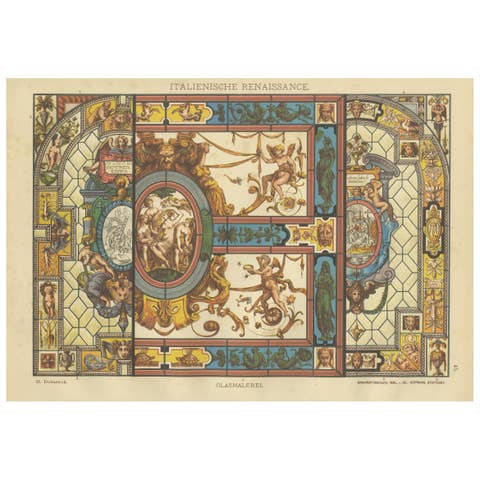
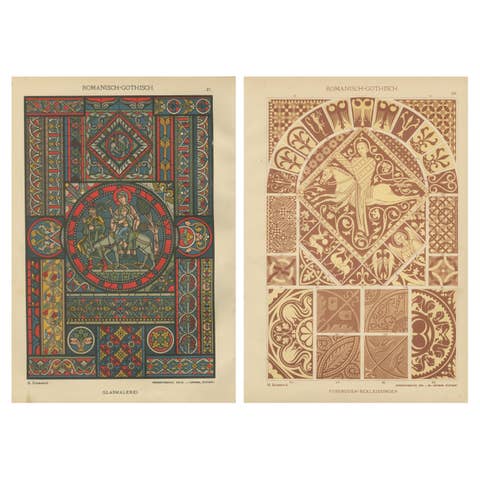
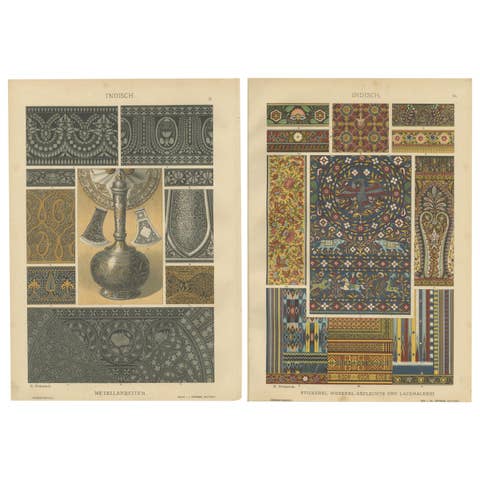
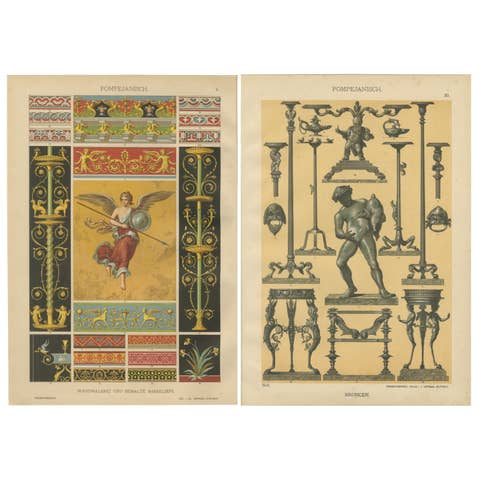
"Byzantine Ornamental Art from Ornamentenschatz, 1887" These prints by H. Dolmetsch are featured in "Ornamentenschatz," a compilation published by Verlag J. Hoffmann, Stuttgart, in 1887.
The collection portrays Byzantine artistic elements, noted for their intricate mosaics, vibrant colors, and detailed iconography. Each print displays traditional Byzantine motifs, including elaborate cross designs, detailed geometric patterns, and vivid portrayals of flora and fauna, all common in Byzantine art.
Attractiveness and Decorative Appeal:
The prints are visually appealing due to their rich color combinations and the complexity of the patterns, which are emblematic of Byzantine craftsmanship. The precision in the geometric and floral designs, paired with the symmetry and harmony in the layout, contributes to their aesthetic value. The inclusion of animal and botanical elements brings life and dynamism to the traditionally rigid and symbolic Byzantine style.
Gold-Plated Appearance Technique:
The gold-plated look in these prints is likely achieved through chromolithography, which allows for the precise application of multiple colors and shades, including gold-toned inks. This technique replicates the effect of gold leaf commonly used in Byzantine manuscripts and mosaics, enhancing the luxurious and regal feel typical of Byzantine art. The strategic placement of these gold-like hues helps to highlight certain features and gives the artwork a rich, opulent appearance.