About this sheet
Antique Indian Decorative Art Prints: Metalwork and Textile Motifs, 1887
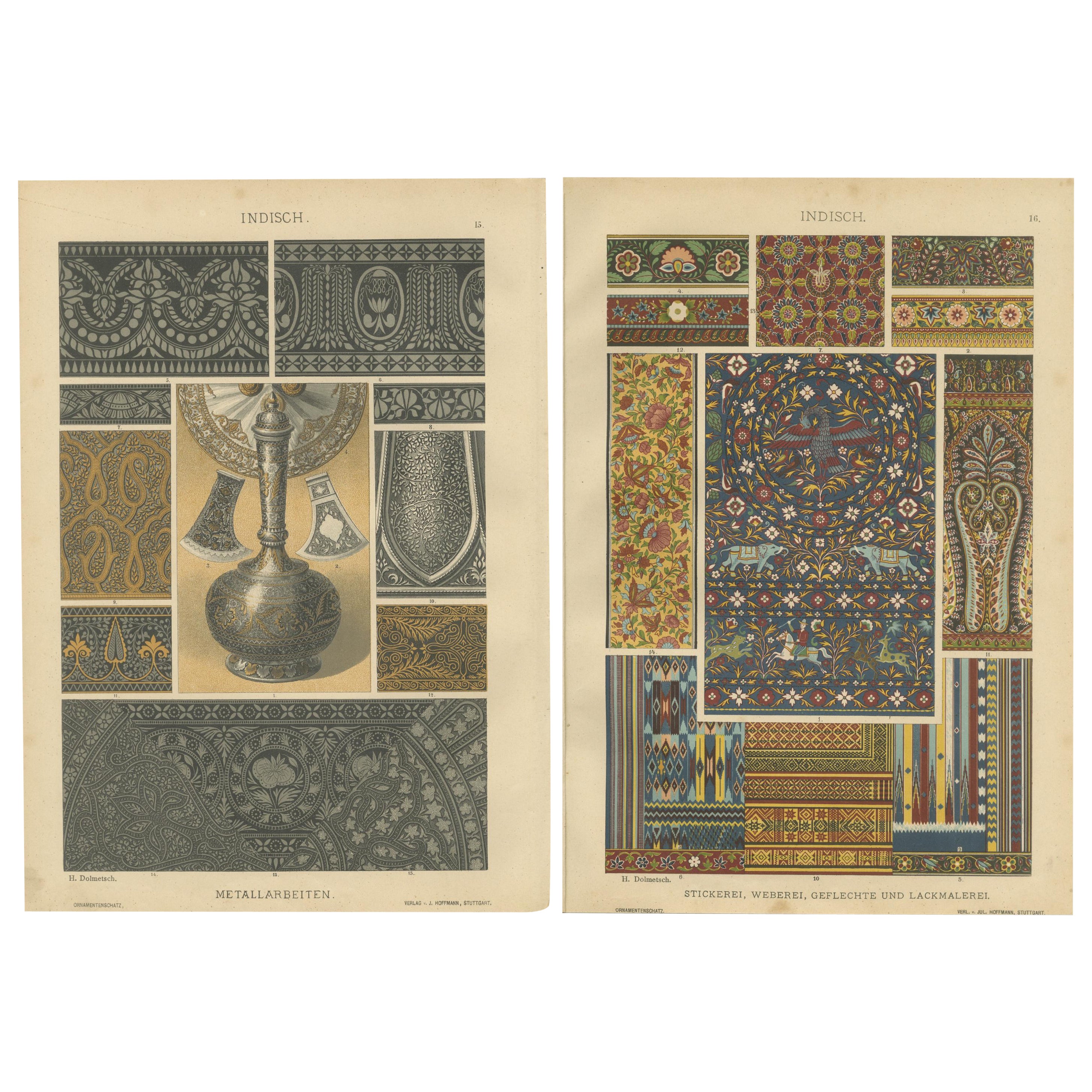
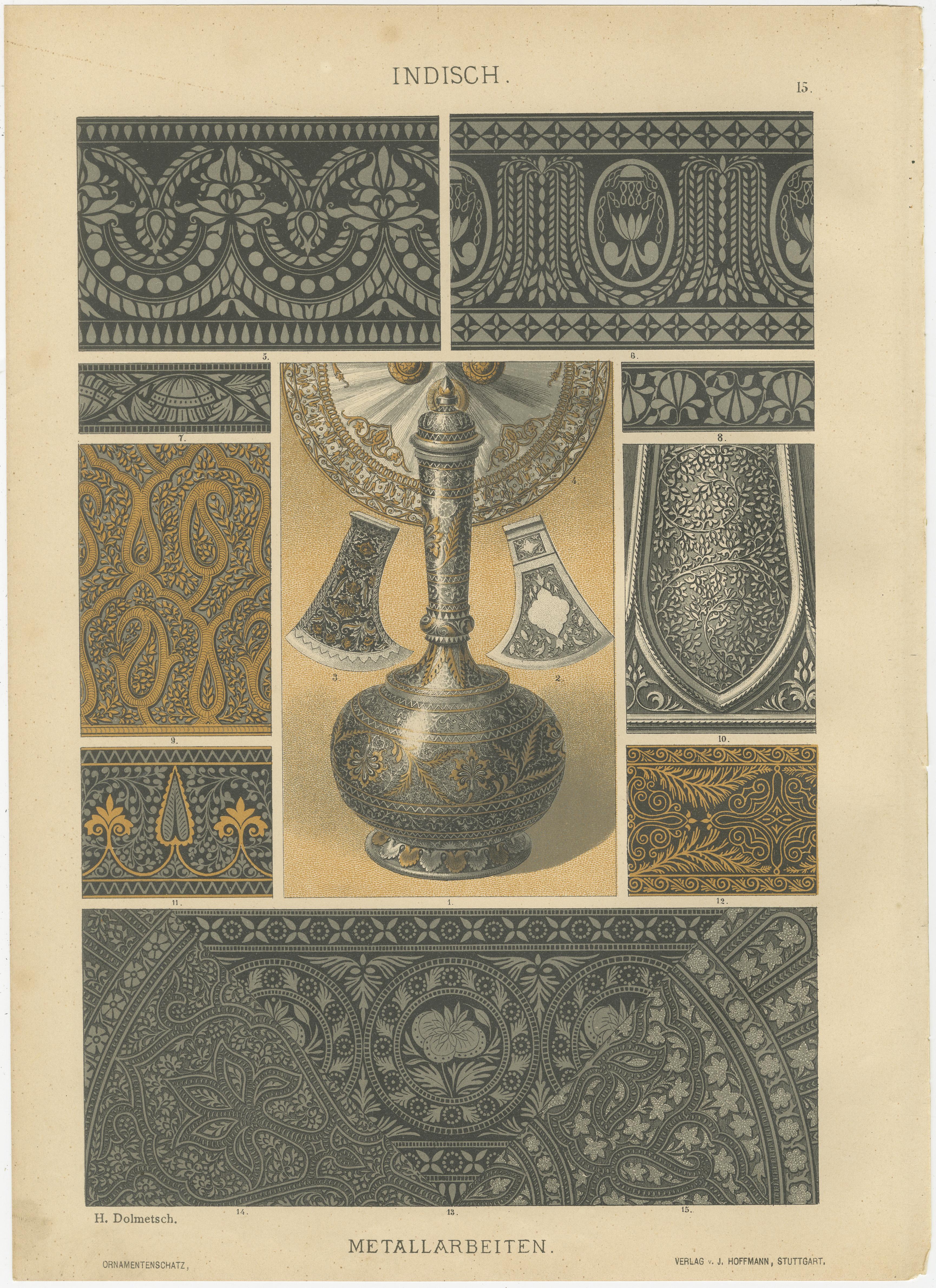
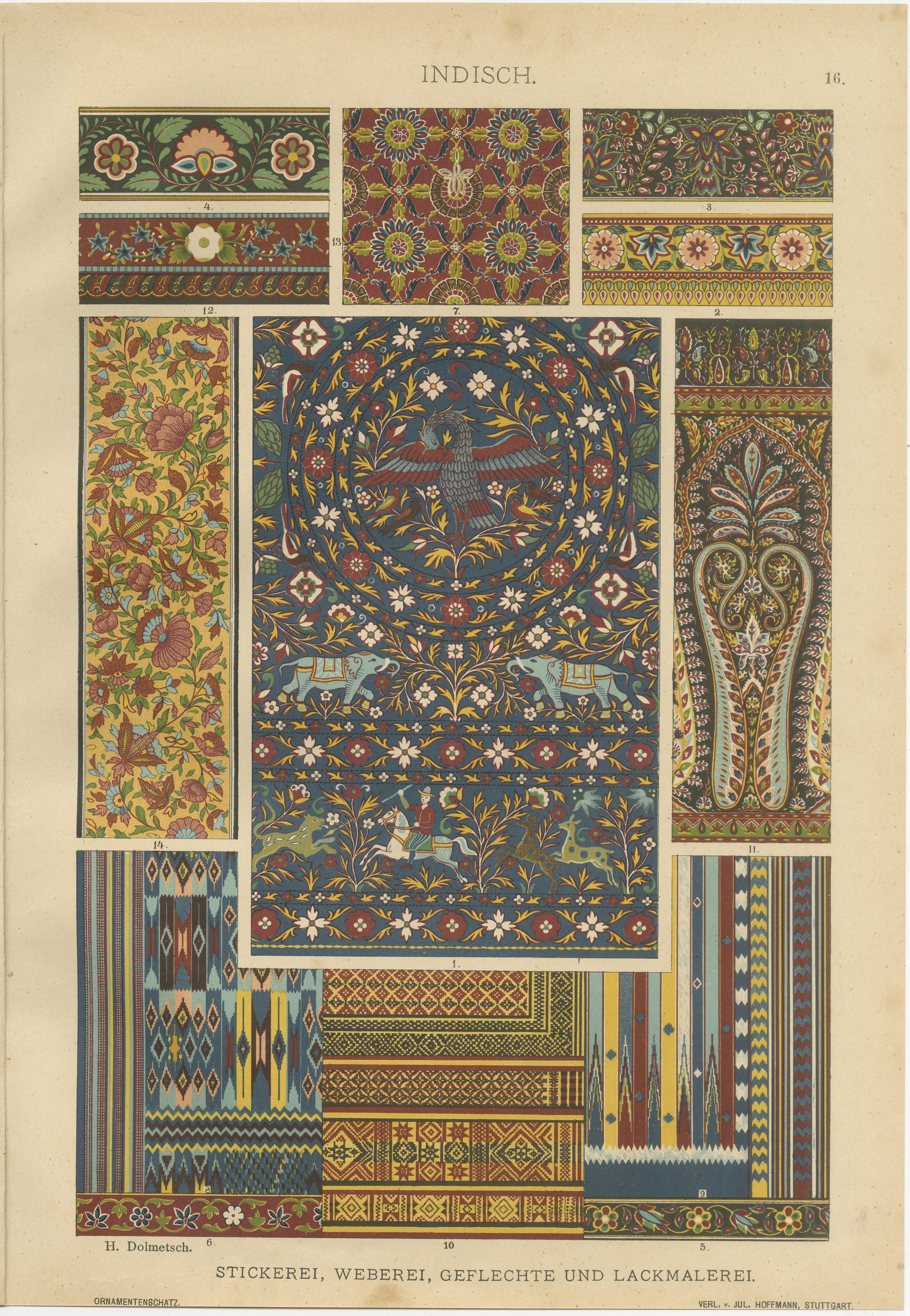
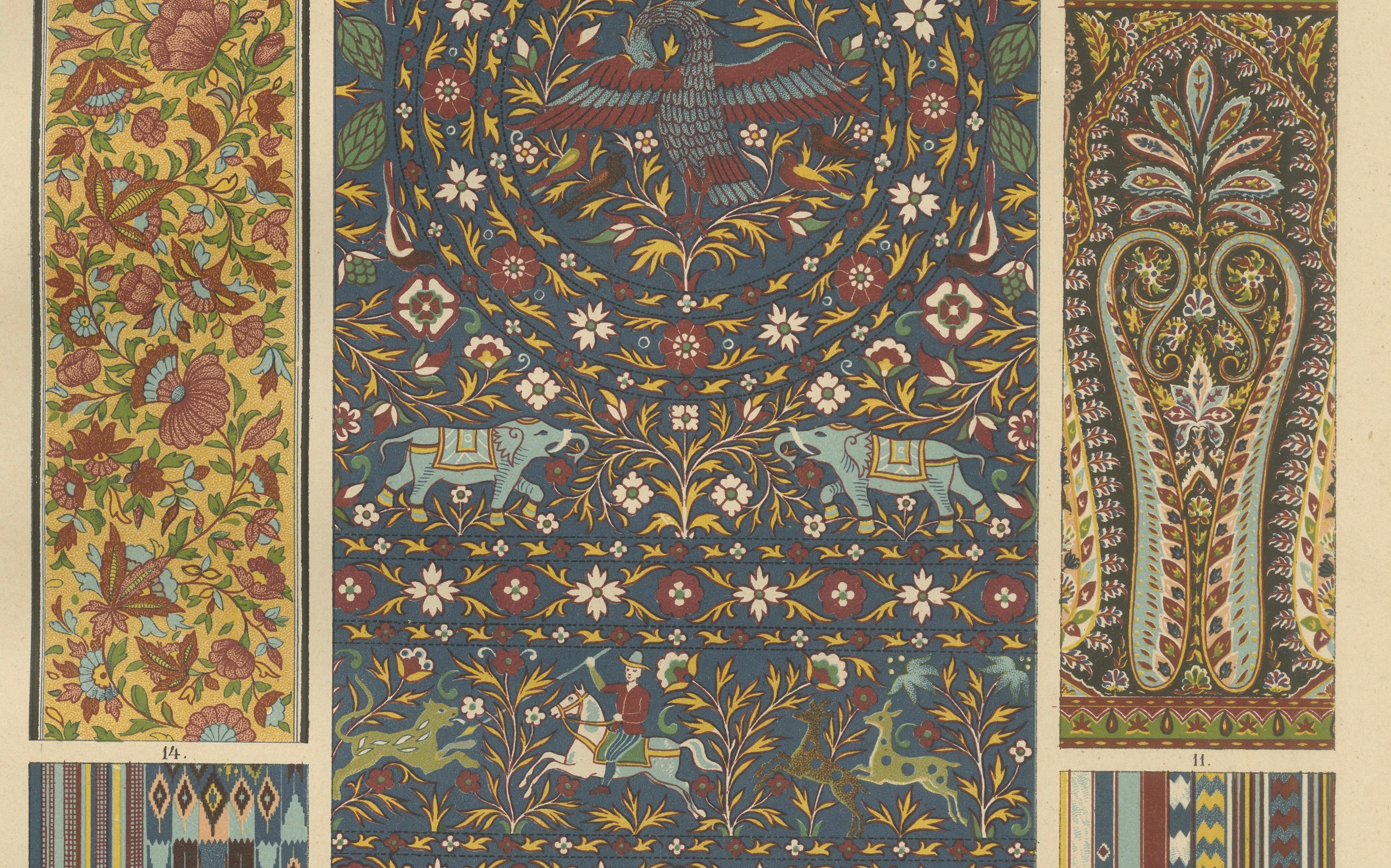
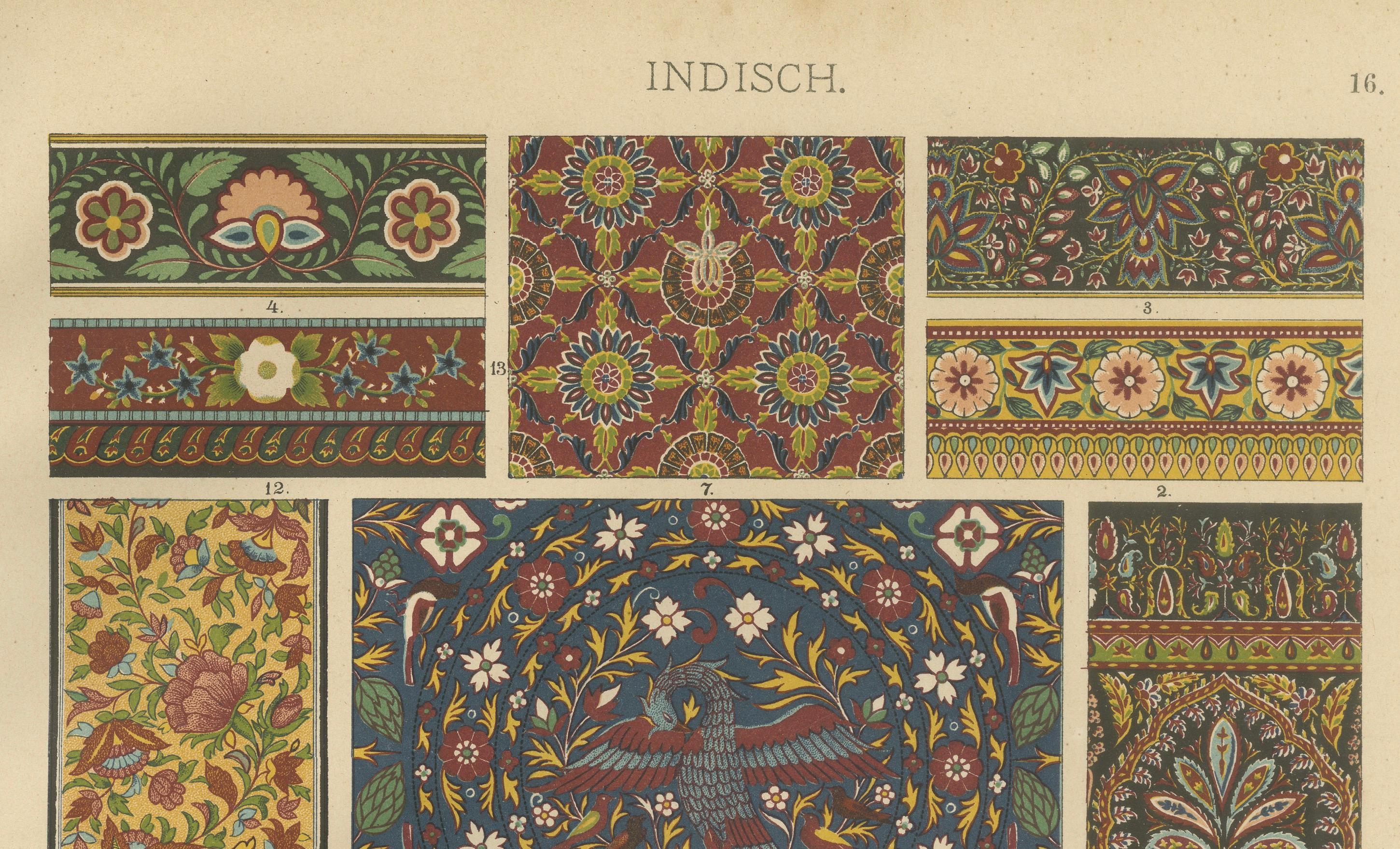
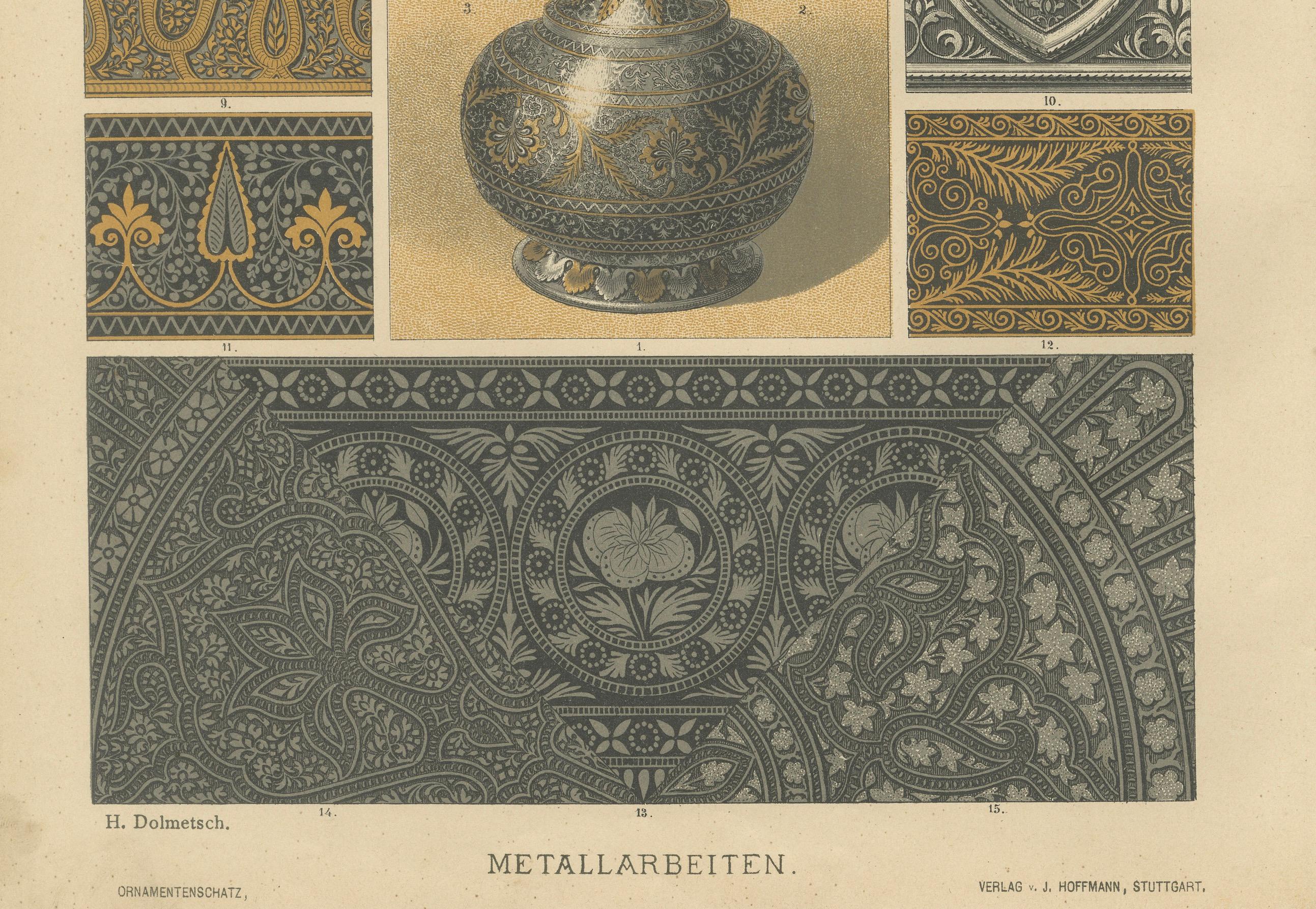
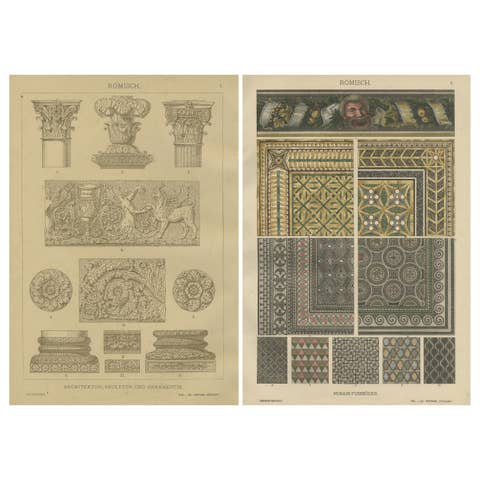
This elegant pair of antique prints presents a captivating overview of traditional Indian decorative arts, focusing on both ornamental metalwork and richly patterned textiles. Published in 1887 as part of the monumental design compendium *Der Ornamentenschatz* (The Treasury of Ornament), these plates were compiled by architect and historian H. Dolmetsch and printed by Julius Hoffmann in Stuttgart. The publication served as a global reference for artists and designers seeking inspiration from historic ornamental traditions.
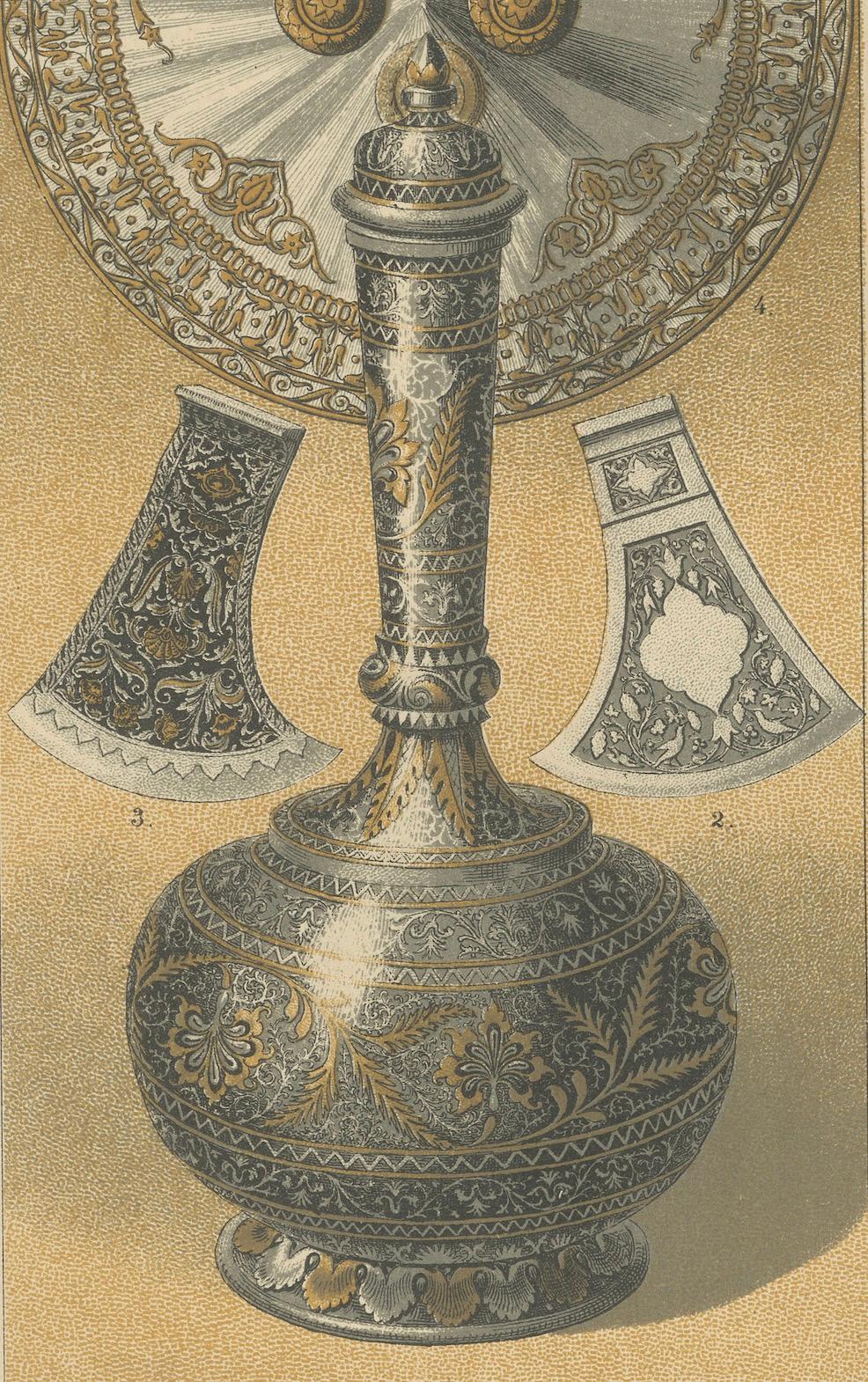
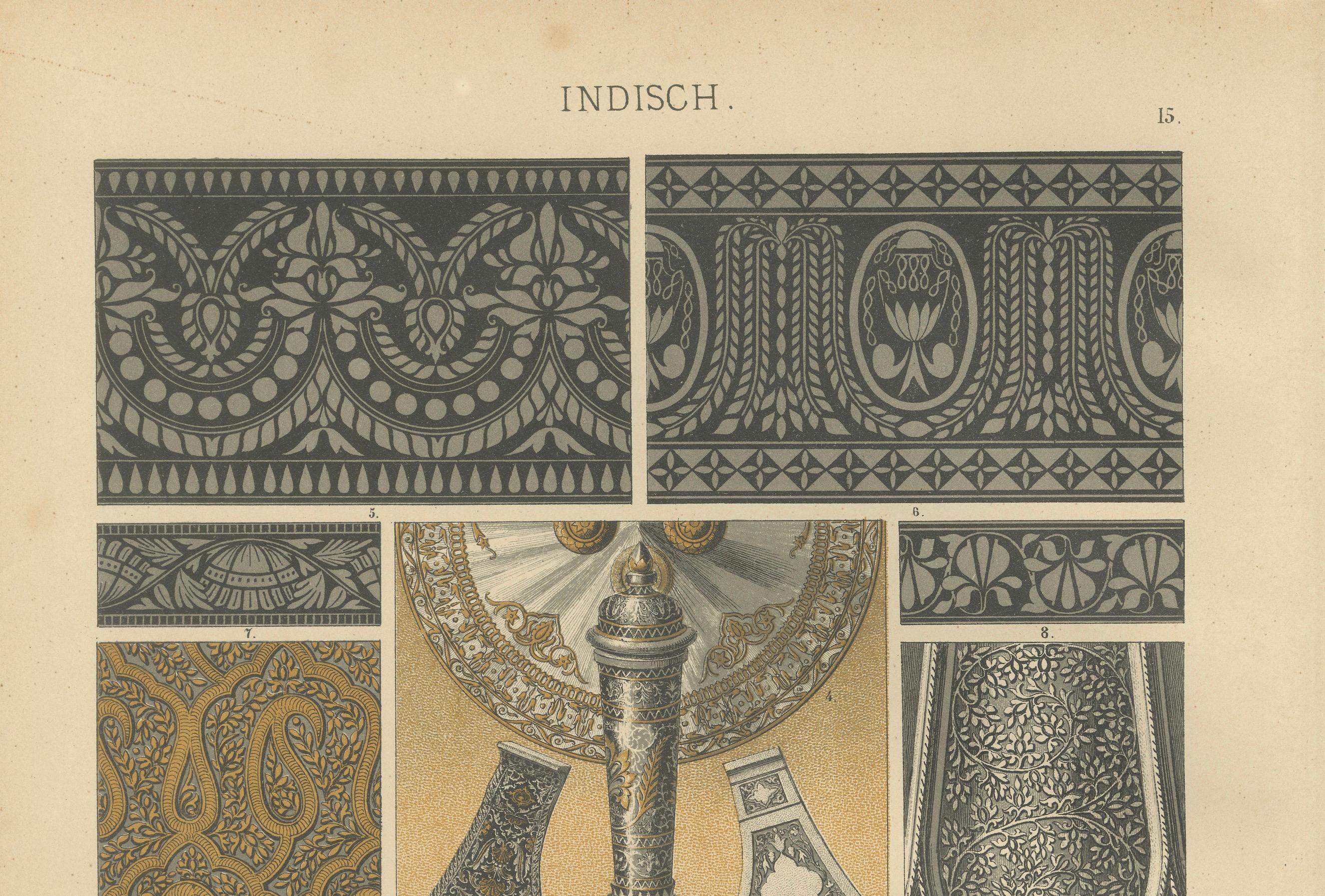
The first print, titled *Metallarbeiten* (Metalwork), showcases the intricacy of Indian metal craftsmanship. At its center is a finely decorated vessel flanked by additional inlaid objects such as shields and axe heads, all adorned with delicate floral and geometric patterns in shades of gold and steel grey. Surrounding the central objects are bands and panels displaying repoussé and engraved designs typical of Islamic-influenced Indian art from regions such as Mughal North India and Deccan. These include stylized leaf patterns, scrolling vines, and symmetrical arrangements that reflect centuries of artisan tradition in bronze, silver, and brass work.
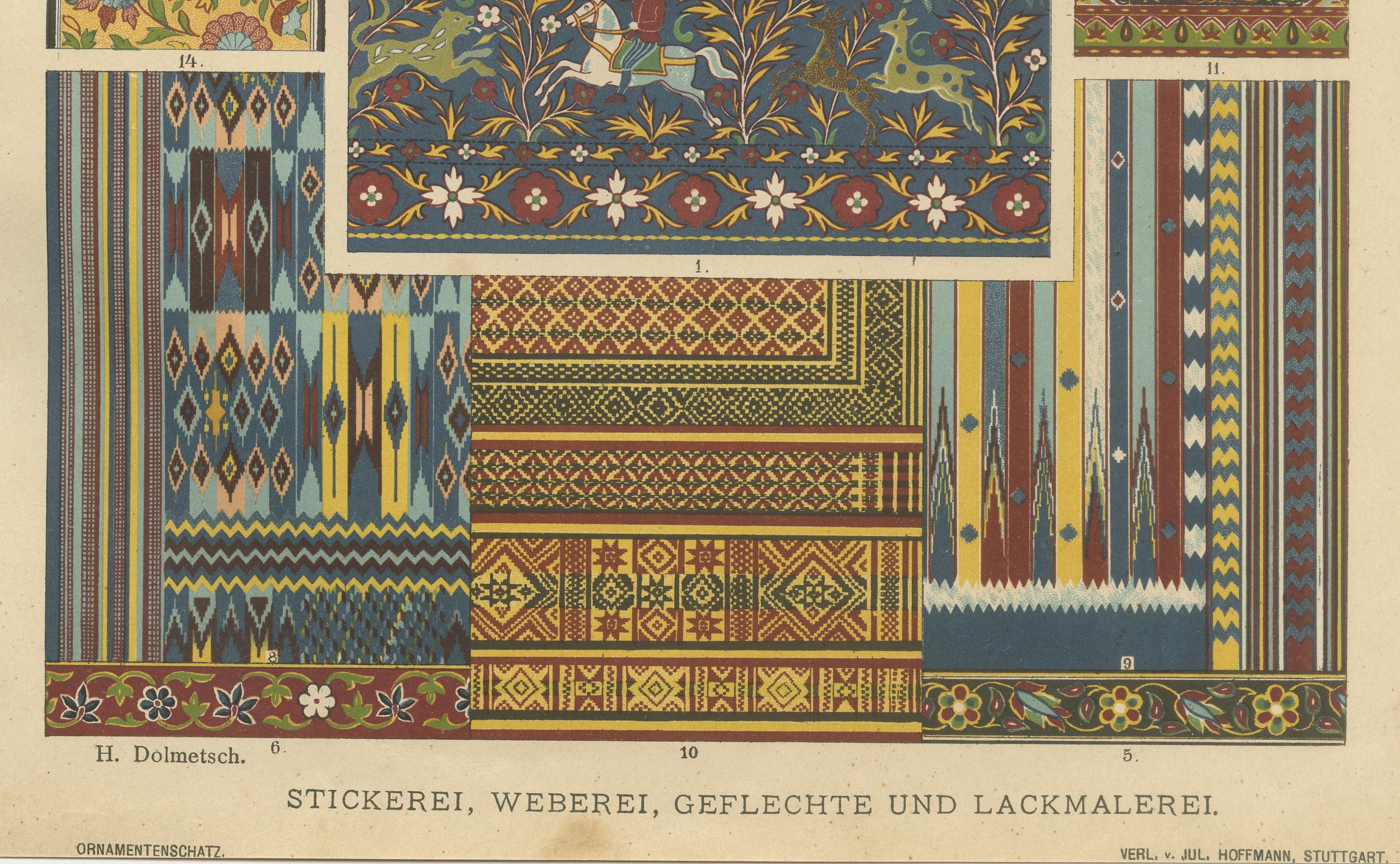
The second print shifts focus to Indian surface decoration in the realm of *Stickerei, Weberei, Geflechte und Lackmalerei* (Embroidery, Weaving, Braiding, and Lacquer Painting). Vivid reds, blues, yellows, and greens dominate this plate, with floral motifs, birds, elephants, and figures set against intricate backdrops of vines and geometric patterns. The central panel features a bird within a flowering medallion, reminiscent of traditional temple textiles and painted screens. Surrounding it are examples of embroidery bands, block-printed fabrics, and woven saris or wall hangings, rich in both symbolism and color. These designs reflect regional styles from across India, from Gujarat’s colorful textiles to Kashmiri needlework and southern decorative panels.
These prints provide not only historical insight but also a strong decorative impact, celebrating the layered aesthetic heritage of Indian design.
Condition:
Both prints are in good antique condition. Colors remain vibrant, with no notable fading. There is minor age toning and light foxing typical for prints of this age, but no tears or stains. The paper is stable and the reverse sides are blank.
Framing Tips:
To bring out the detail and elegance of these prints, we recommend framing with wide off-white or soft ivory mats and gold or dark wood frames for a traditional presentation. Alternatively, minimalist black frames can offer a contemporary contrast. Displayed as a pair, they provide a beautiful focal point in interiors with eclectic, colonial, or bohemian influences, or anywhere a celebration of global craftsmanship is welcome.