About this sheet
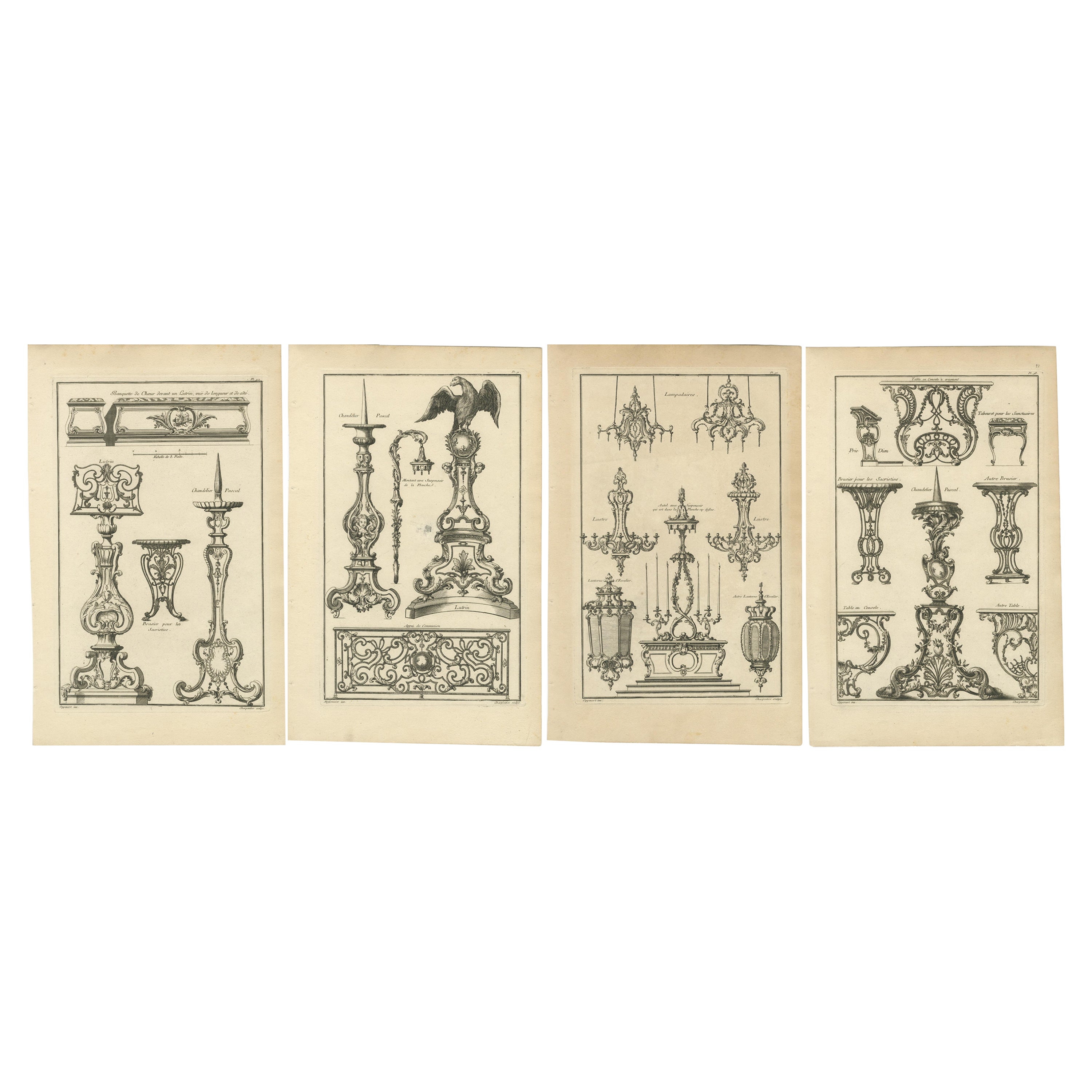
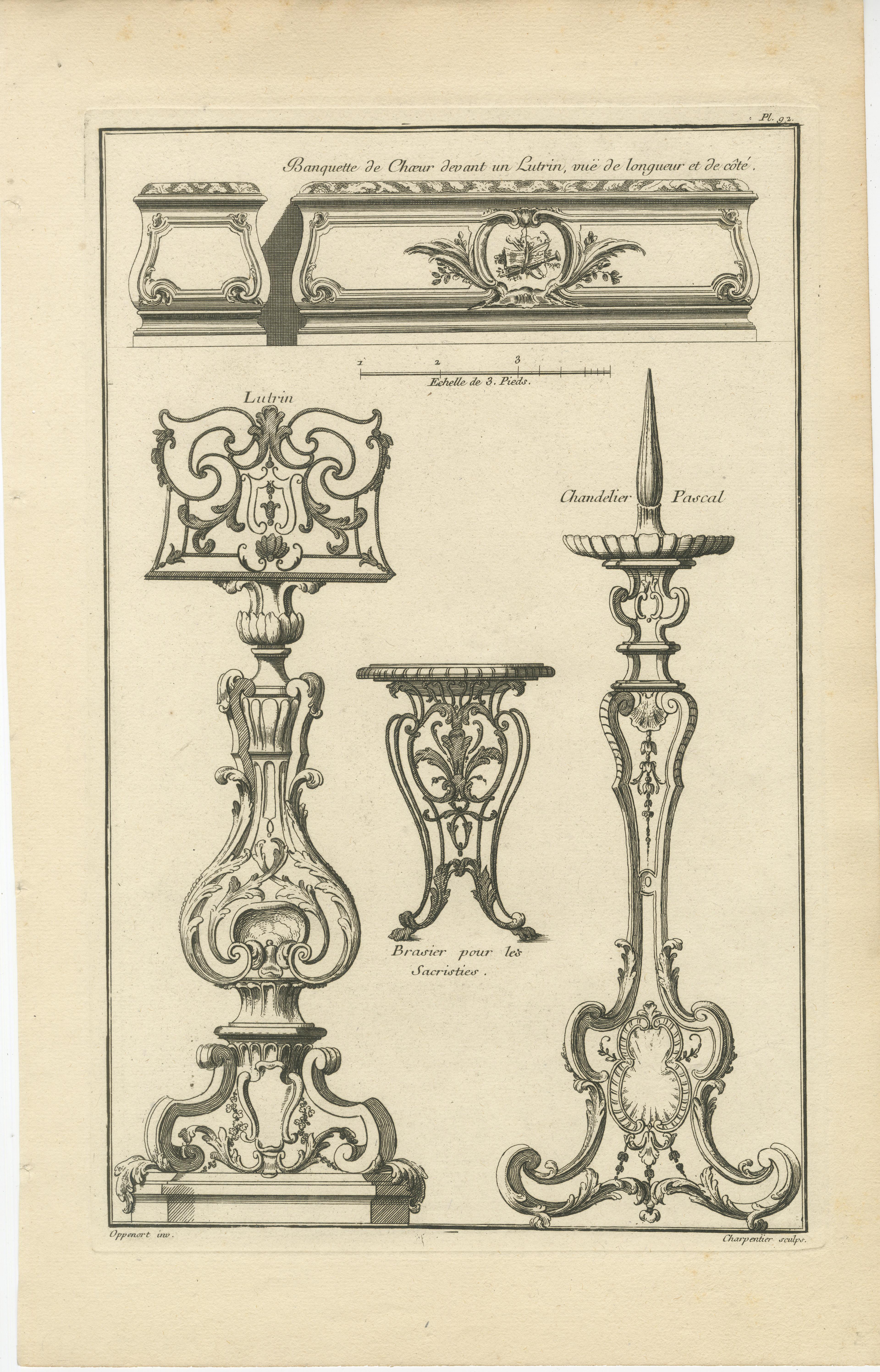
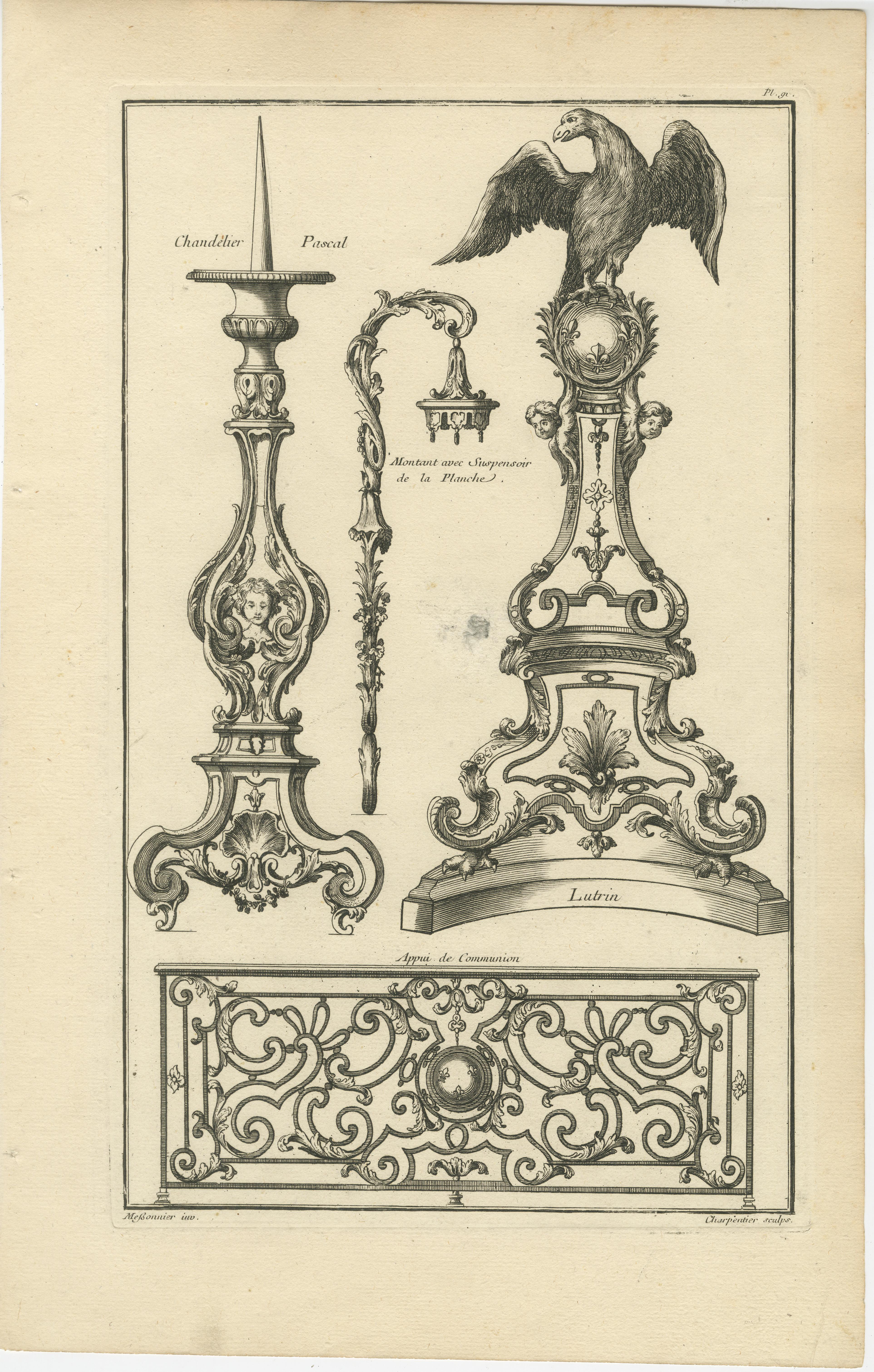
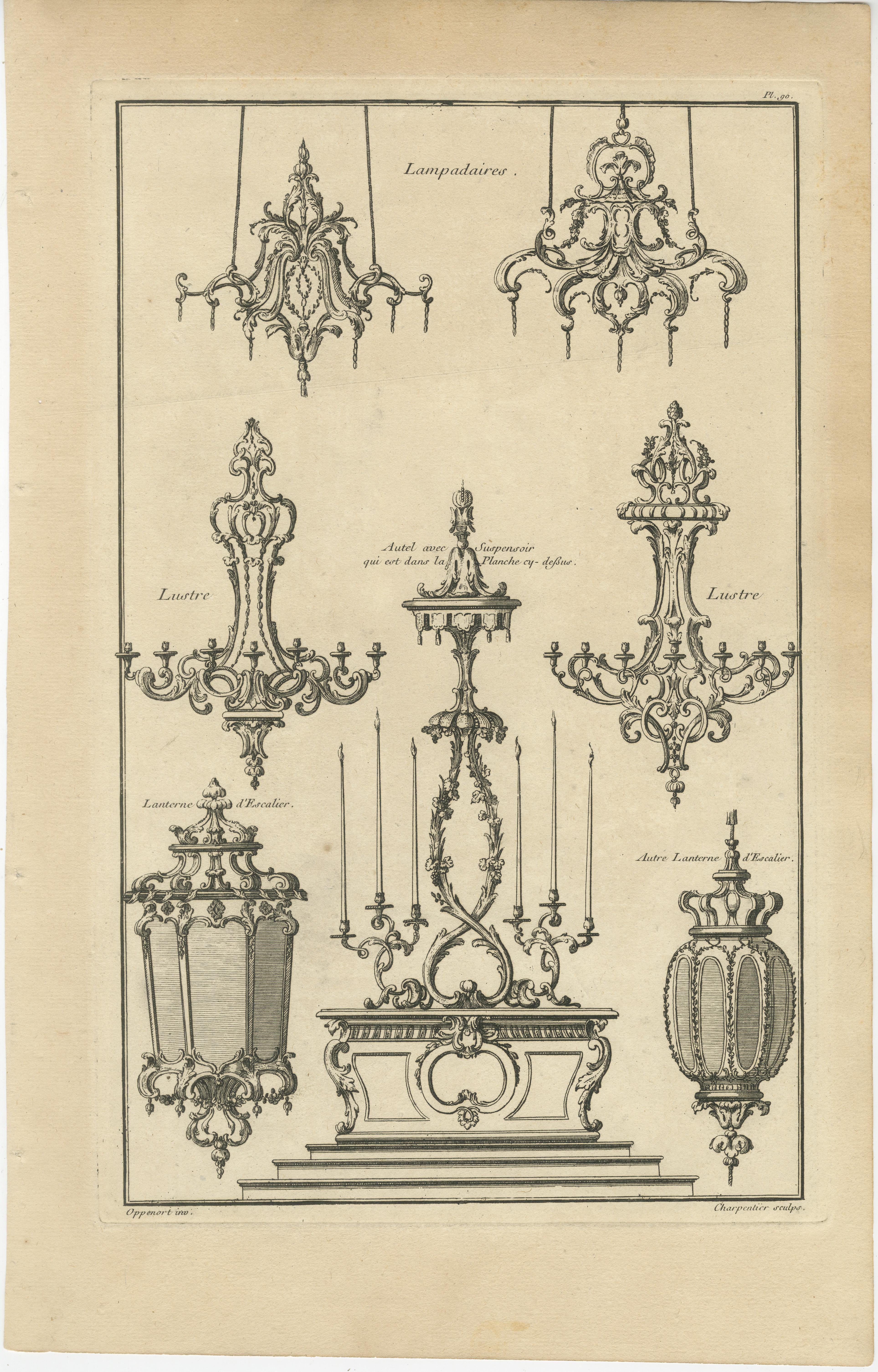
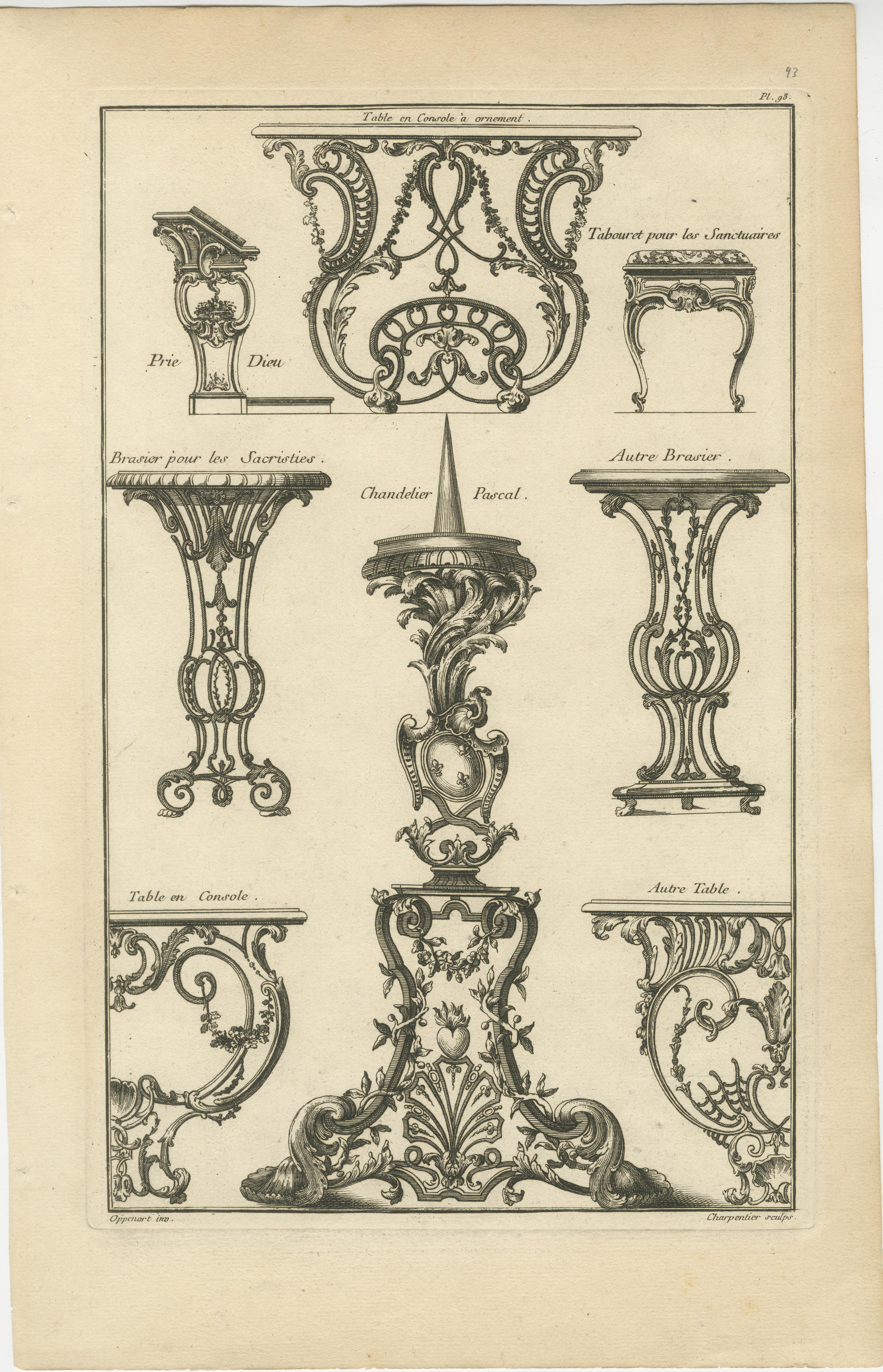
The engravings are a stunning representation of Baroque ironwork designs, a testament to the intricate artistry of the 18th century. Created in 1767, the works of Charpentier and Huquier, as well as Soubeyaran and Oppenort, are depicted in these images. They showcase an array of ornamental tables and candelabras, each piece rich with the elaborate detail characteristic of the Baroque era.
Tables are adorned with scrollwork, floral and foliage motifs, and classical figures, often with a central crest or medallion. These designs not only reflect the aesthetic of the time but also the technical skill involved in working iron into such delicate patterns.
The candelabras exhibit a similar level of ornamentation, with multiple arms gracefully curving outwards to hold candles, often topped with elaborate finials. These would have served as both functional items and decorative centerpieces, illuminating the lavish interiors of the period.
The fact that these designs have been preserved in such detailed engravings allows us to appreciate the beauty and complexity of Baroque decorative arts, especially in ironwork, which required a high level of craftsmanship and artistry to produce. The engravings serve as a historical record of the decorative trends and techniques of the time, and they continue to inspire admiration for the mastery of Baroque artisans.
More about the artists:
Étienne Charpentier (c. 1707–c. 1792) was a French artist known for his work in the Rococo style, which was prevalent during the 18th century. While specific details about his life may not be widely documented or readily available, we do know that artists of this era, especially those active in the decorative arts, were often involved in producing designs for a variety of luxury items and architectural elements that were in vogue among the European elite.
The Rococo style, where Charpentier's work would be categorized, emerged in France as a decorative evolution of the Baroque era, characterized by lighter themes, more playful and intricate ornamentation, and an emphasis on asymmetry and curved lines. This style was epitomized by elaborate scrollwork, floral patterns, and a general sense of elegance and fluidity.
Given the time frame in which Étienne Charpentier was active, it is likely that he contributed to the design of ornamental engravings, interior decorations, and possibly furniture or architectural detailing. Artists and designers of the Rococo period often created intricate engravings to be used by craftsmen in the manufacture of decorative items. These engravings served as templates for works in various mediums, including ironwork, woodwork, and textile production.
Charpentier, like his contemporaries, would have been part of a network of artists, engravers, and patrons who collaborated to produce works that reflected the tastes and styles of the period. His contributions would have been part of the larger cultural movement that spread across Europe, influencing art, architecture, and the decorative arts well into the late 18th century.
Huquier: Gabriel Huquier (1695–1772) was a French draftsman, engraver, and printmaker. He was known for his rocaille engravings and was part of the Rococo movement that was prevalent during the first half of the 18th century. Huquier was notable for his work in chinoiserie, a style that was characterized by the use of motifs and techniques that were thought to be Chinese.
Pierre Soubeyran was an artist and craftsman from Geneva, born on November 6, 1709, and lived until April 12, 1775. While specific information about Soubeyran's individual works and contributions to the art world might not be as widely known or documented as those of some of his contemporaries, we can infer from the period and region in which he lived certain aspects about the nature of his work.
Geneva, during the 18th century, was a hub for luxury goods and craftsmanship, particularly known for watchmaking and related fine metalwork. As an artist active in this milieu, Soubeyran might have been involved in the design and production of decorative art pieces, which would have included engraving, metalwork, and possibly horology, given the strong tradition of watchmaking in Geneva.
The Republic of Geneva was also a center of enlightenment thought during Soubeyran's lifetime. The city attracted intellectuals from all over Europe, and this environment could have influenced the local art scene, potentially including Soubeyran's work, fostering a culture of innovation and intricate design that would be reflected in the decorative arts.
Given the dates of his life, Soubeyran's career would have spanned the latter part of the Baroque period and into the Rococo, and he may have witnessed the beginning shifts towards Neoclassicism. His work would likely have been characterized by the ornate and intricate qualities typical of the time, with a potential emphasis on the precision and elegance demanded by Geneva's luxury goods...