About this sheet
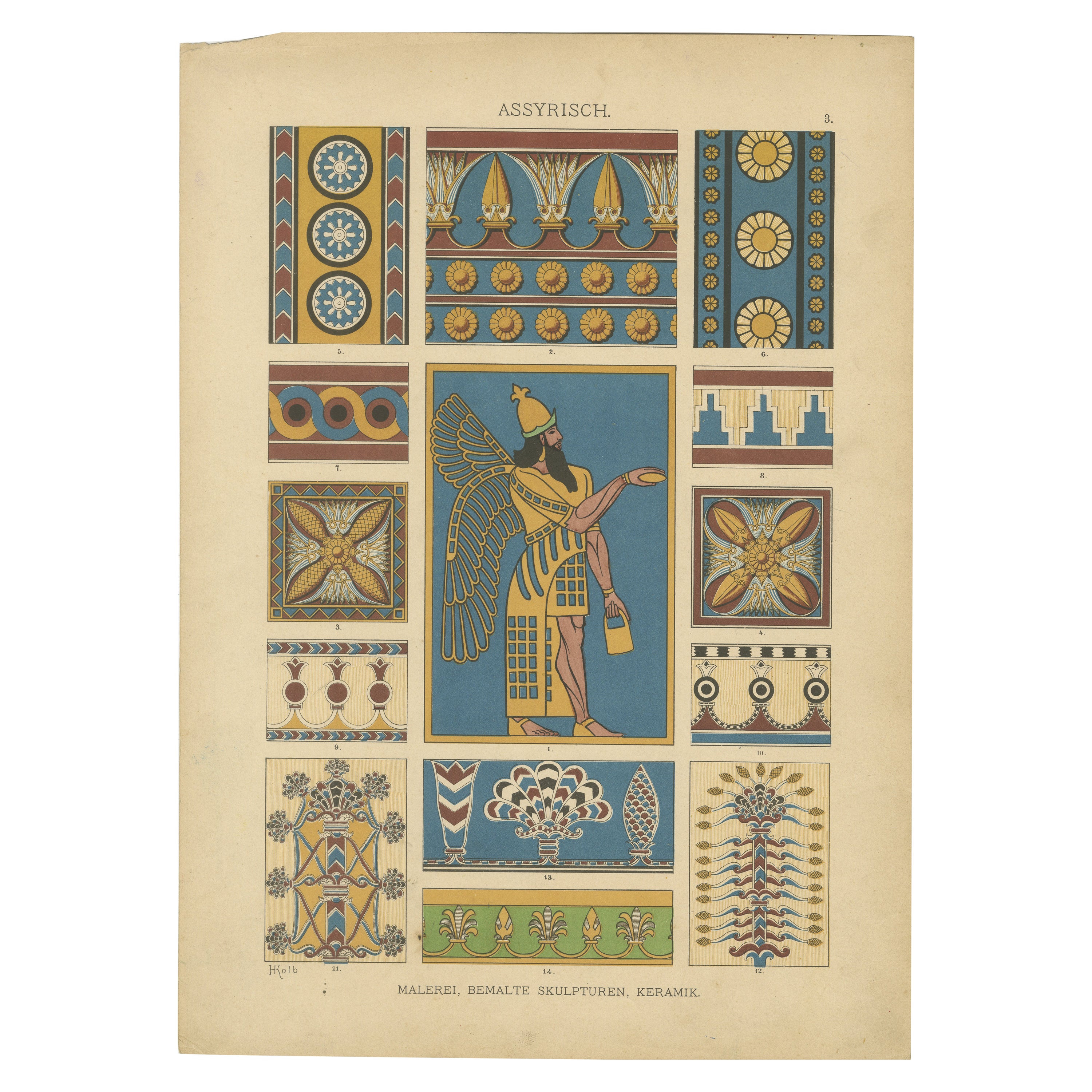
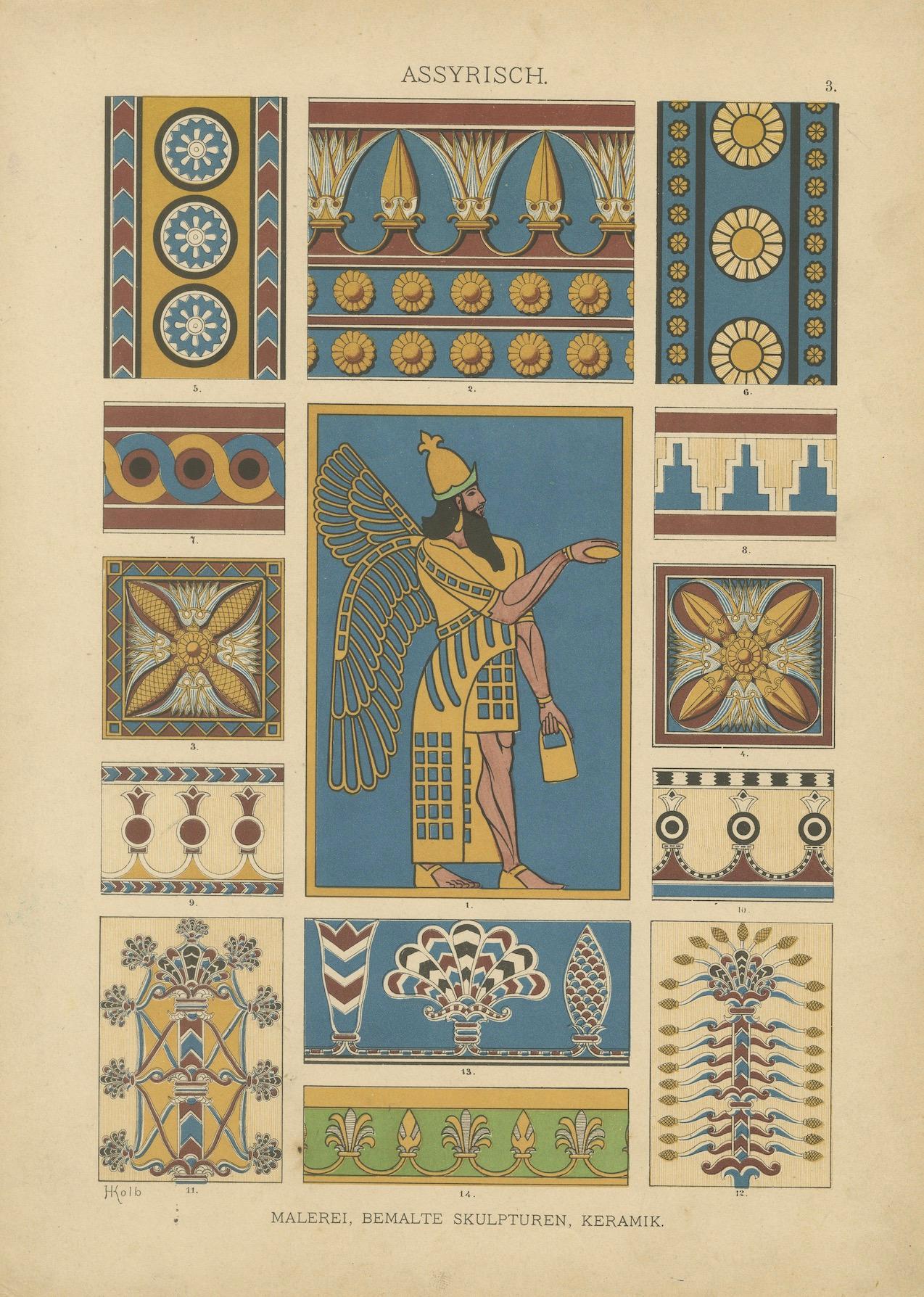
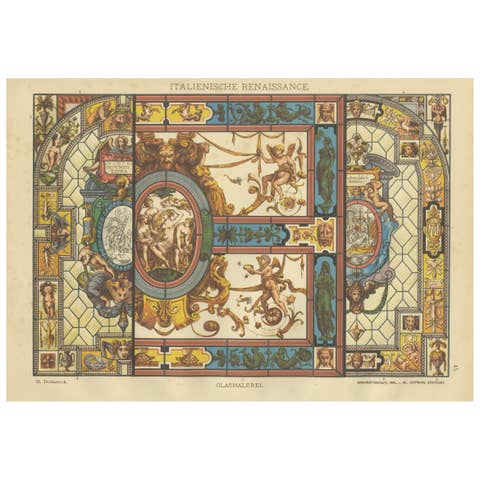
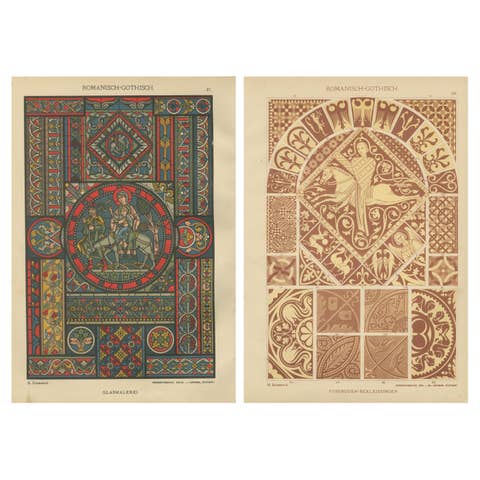
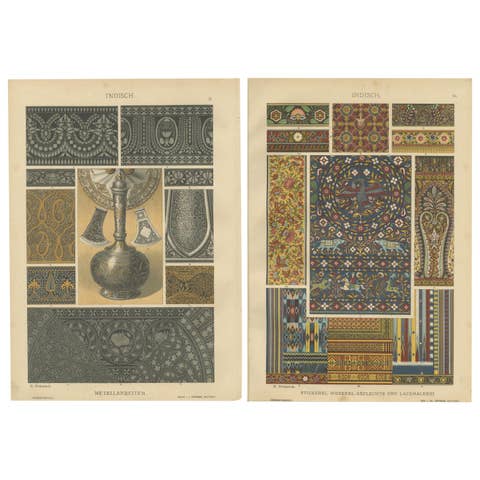
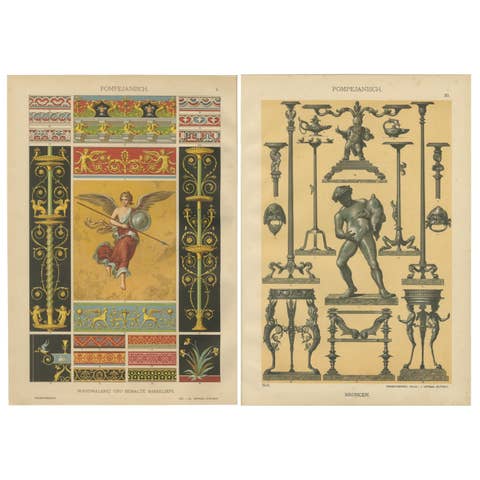
The print is an illustration from the 19th-century pattern book, "Der Ornamentenschatz" by H. Dolmetsch, showcasing Assyrian art styles.
This particular print beautifully captures various decorative elements commonly found in Assyrian art, such as intricate geometric patterns, floral motifs, and depictions of winged deities. The featured figure, possibly a god or royal figure, is adorned in typical Assyrian costume, complete with detailed accessories and a symbolic gesture, which highlights the grandeur and divine connection of Assyrian rulers.
The print is categorized into sections showcasing different artistic expressions:
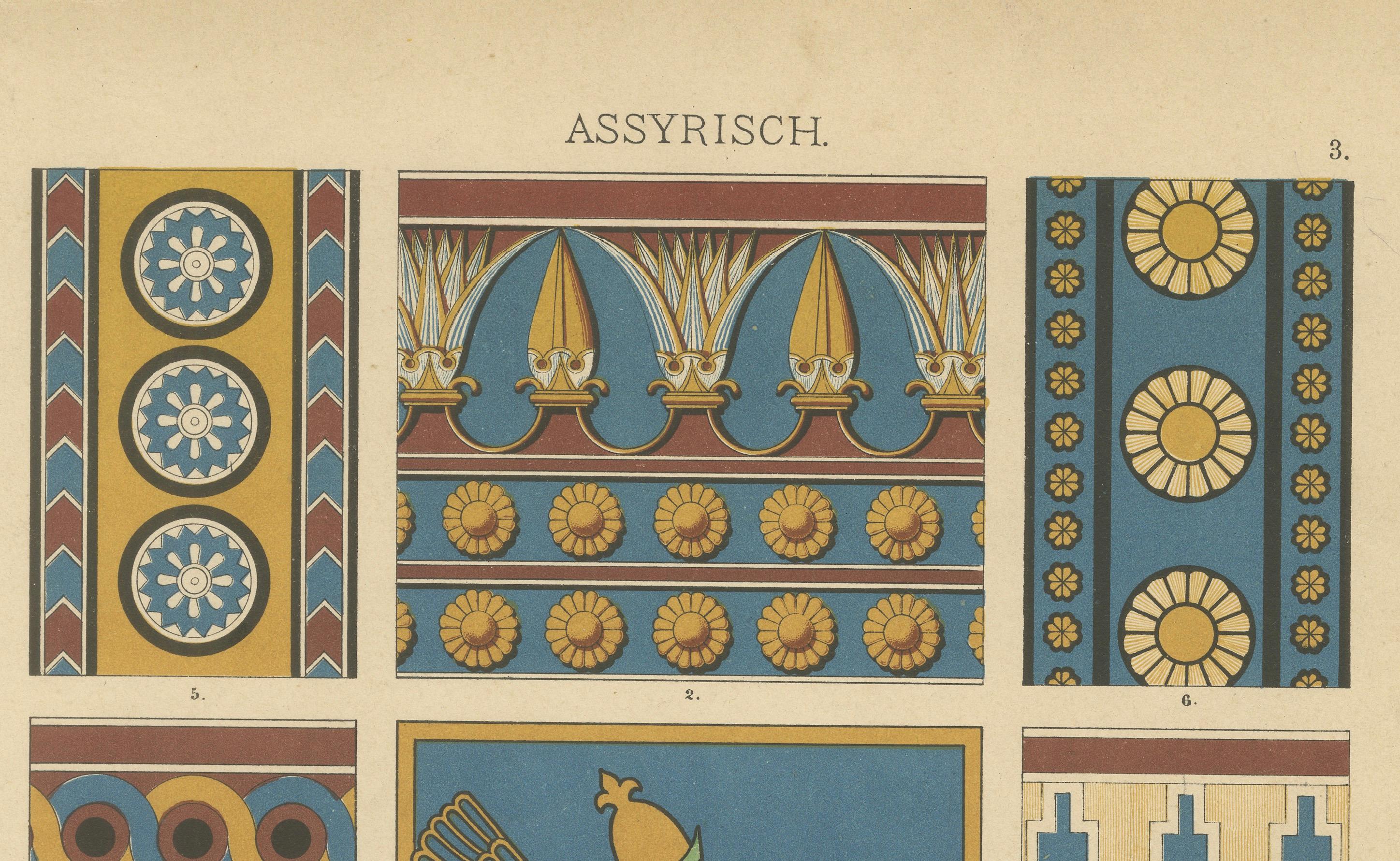
- Panels 1, 3, 6, and 8 focus on geometric and floral patterns, which were prevalent in Assyrian tiles and fabrics.
- Panel 2 depicts sacred emblems and symbols, illustrating the deep religious and mythological roots of Assyrian culture.
- Panel 4 features an iconic winged deity, representing power and protection, commonly seen in Assyrian palaces and temples.
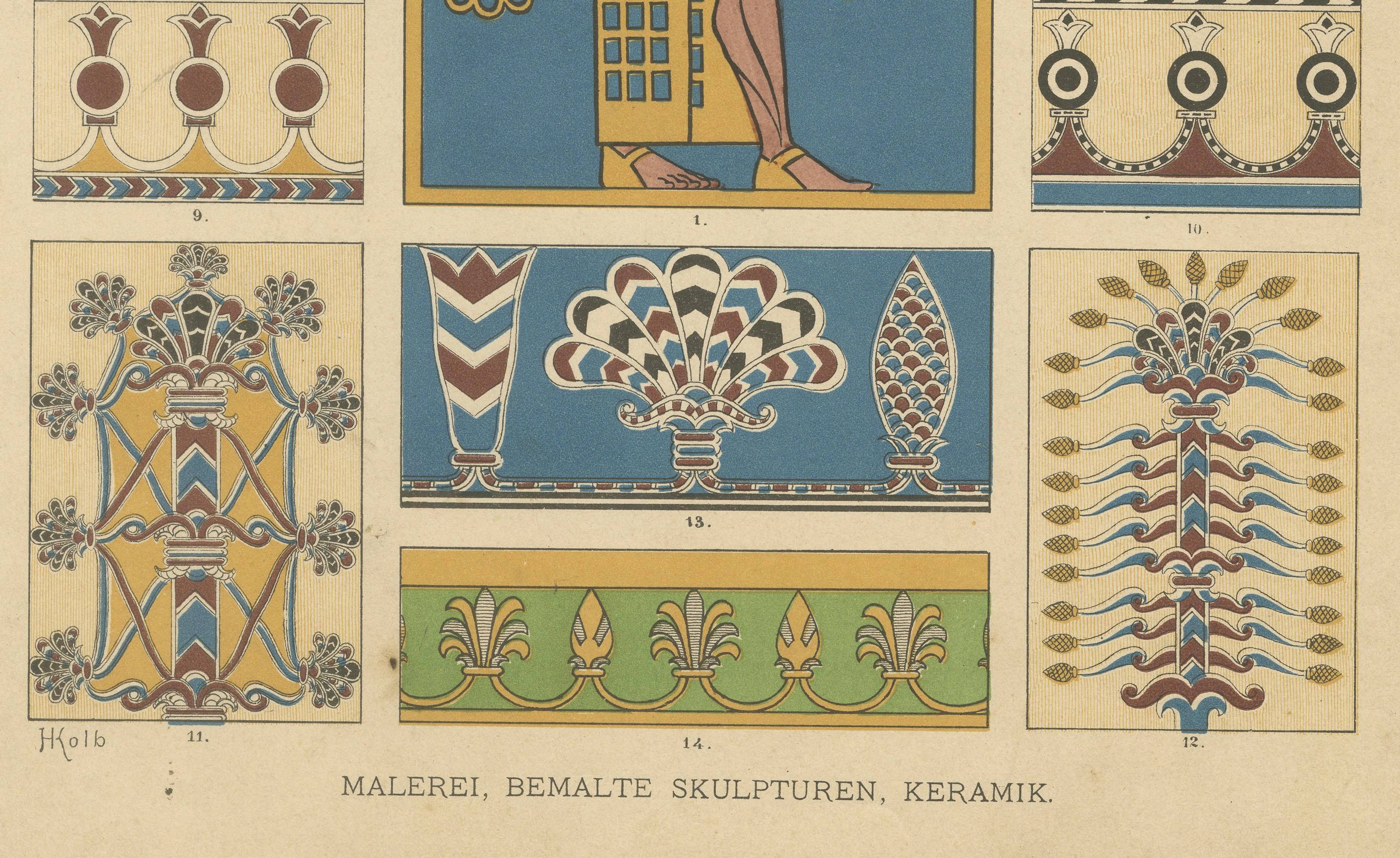
- Panels 9, 11, 12, 13, and 14 emphasize ornamental and stylized plant designs, indicative of the Assyrian love for gardens and nature-inspired motifs.
The print’s attractiveness stems from its vibrant colors and the complexity of its designs, which are not only decorative but also hold cultural and historical significance. These designs give us a glimpse into the sophisticated visual language of the Assyrians, reflecting their achievements in art and architecture.
These prints are plates from "Der Ornamentenschatz," a comprehensive pattern book of decorative ornaments from various art periods, authored by H. Dolmetsch and published in 1887 in Stuttgart by Julius Hoffmann. The book comprises 83 plates with 1200 color illustrations, intended to serve as a resource and inspiration for artists, designers, and historians.
These prints are particularly attractive and decorative due to their rich colors, detailed craftsmanship, and the timeless appeal of Assyrian iconography. They embody a unique aesthetic that combines symmetry, spiritual symbolism, and an intricate portrayal of ancient life and mythology, making them captivating both visually and culturally.
The condition of the print is good considering age, with some signs of wear and aging:
1. Color Preservation: The colors in the print remain vibrant, which suggests they have been well-preserved or possibly stored in conditions that minimized light exposure, which can fade colors over time.
2. Paper Condition: There are visible signs of aging on the paper, such as slight discoloration and spotting (foxing), which are common in paper-based artifacts from the 19th century. These spots are likely caused by the natural aging process of the paper and exposure to air and moisture.
3. Edge Wear: There is some minor wear and tear along the edges, including small tears or frays, which is typical for paper items handled and stored over many years.
4. Structural Integrity: The paper does not show signs of significant warping or water damage, which indicates that the prints have maintained structural integrity.
Overall, the print is in a relatively good state, but they show typical signs of aging. Proper preservation methods, such as storage in acid-free conditions and protection from excessive light and humidity, would be beneficial to maintain their condition further.