Antique Sheffield Daggers and Sheaths by Alfred Stevens, 1852
€ 575
Original antique · The actual sheet photographed · Certificate of authenticity on request · Sold unframed · Worldwide shipping from € 15 (rates)
Date
1852
Mapmaker / artist
Designed and drawn by A. Stevens for George Wostenholm and Son, Sheffield (lettered Westenholz), lithographed by F. Bedford, under the direction of M. Digby Wyatt
Publisher
Day and Son, Lithographers to the Queen, London
Technique
Chromolithograph
Coloring
Printed color
Sheet size
34 × 51.5 cm (13.4 × 20.3 in)
Condition
Good
Reference
BG-14491-101
What the condition grades mean
Excellent
Bright and clean, with no faults worth mentioning.
Very good
Only light signs of age, such as faint toning.
Good
Normal signs of age for a sheet of this period: toning, some foxing, small marks or neat old repairs.
Fair
Clear faults such as staining, tears or repairs, priced to match.
Every fault we see is written in the condition note, and the whole sheet is shown uncropped in the photos.
Condition
Light age toning. Scattered foxing in the margins, a few spots larger than the rest. Light handling wear to the upper right and lower left corners, with a slight irregularity to the right edge. The printed image is clean.
About this sheet
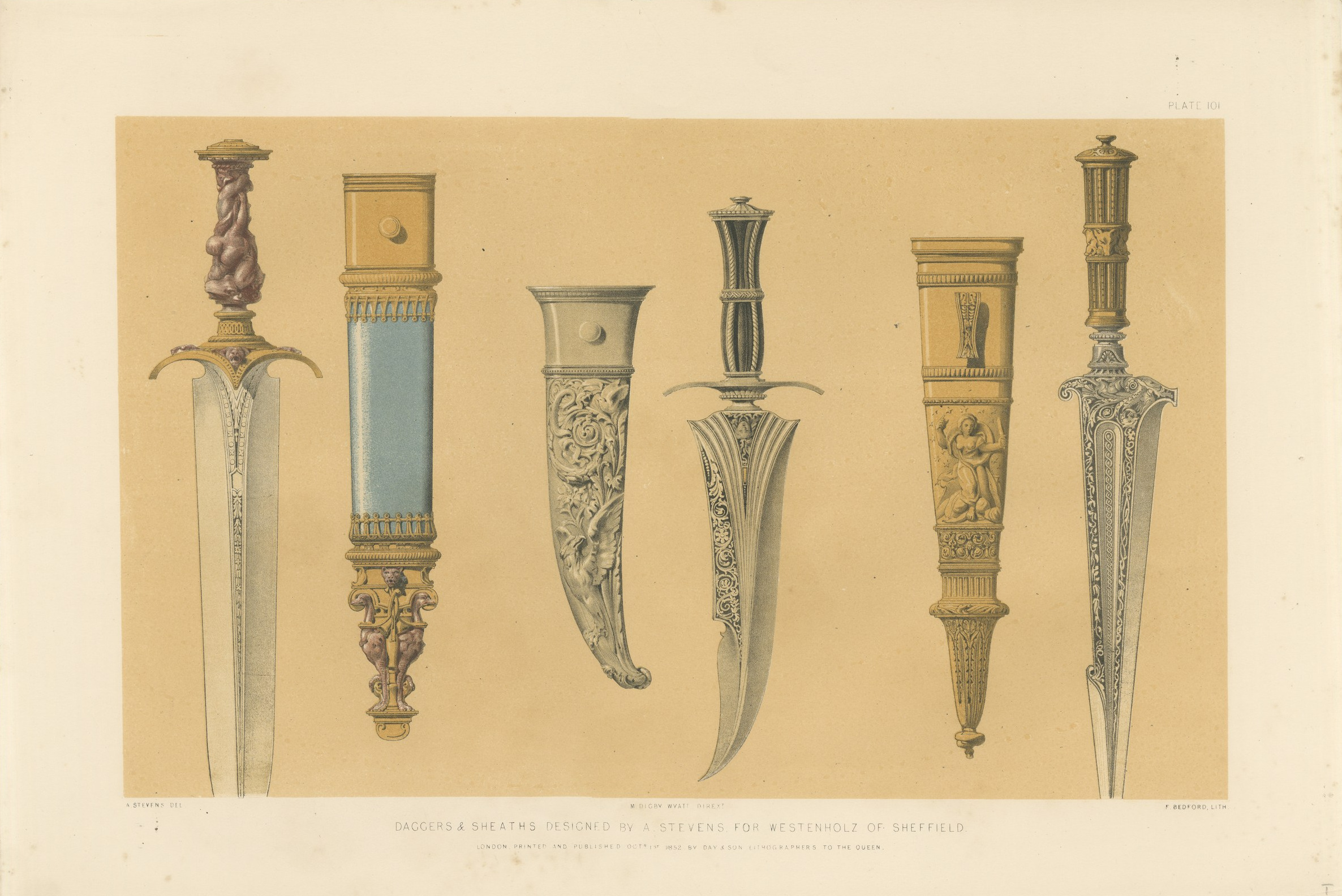
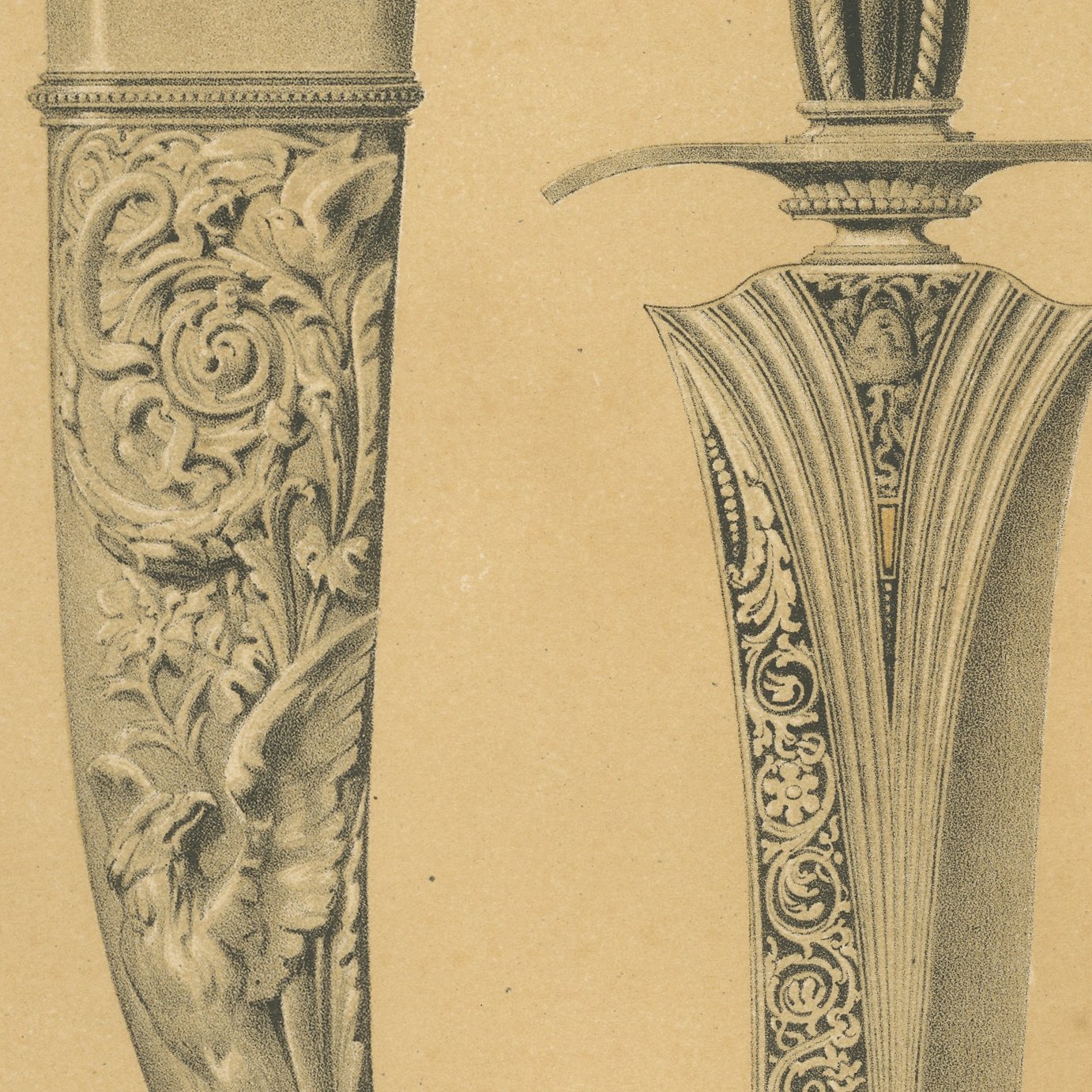
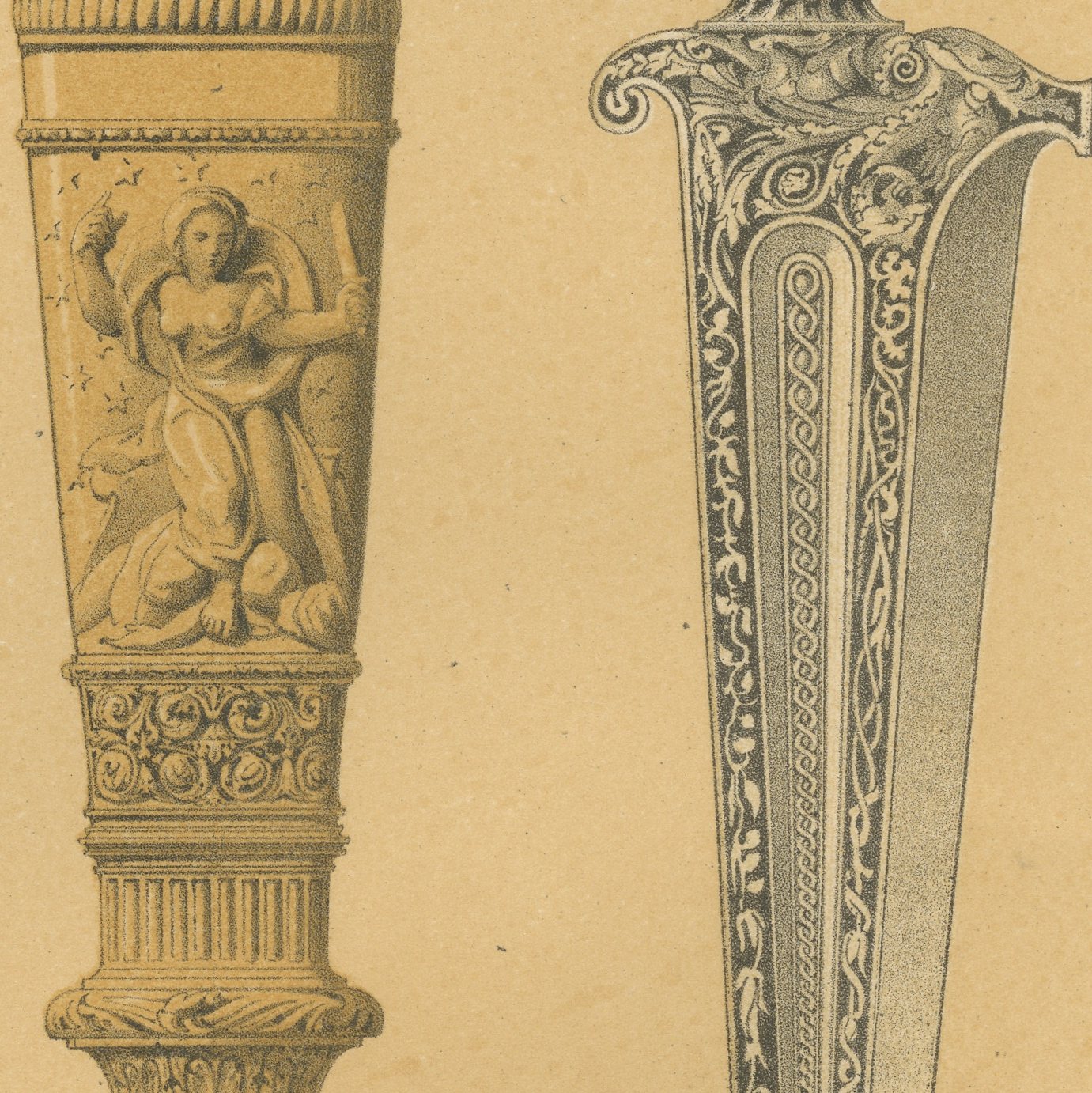
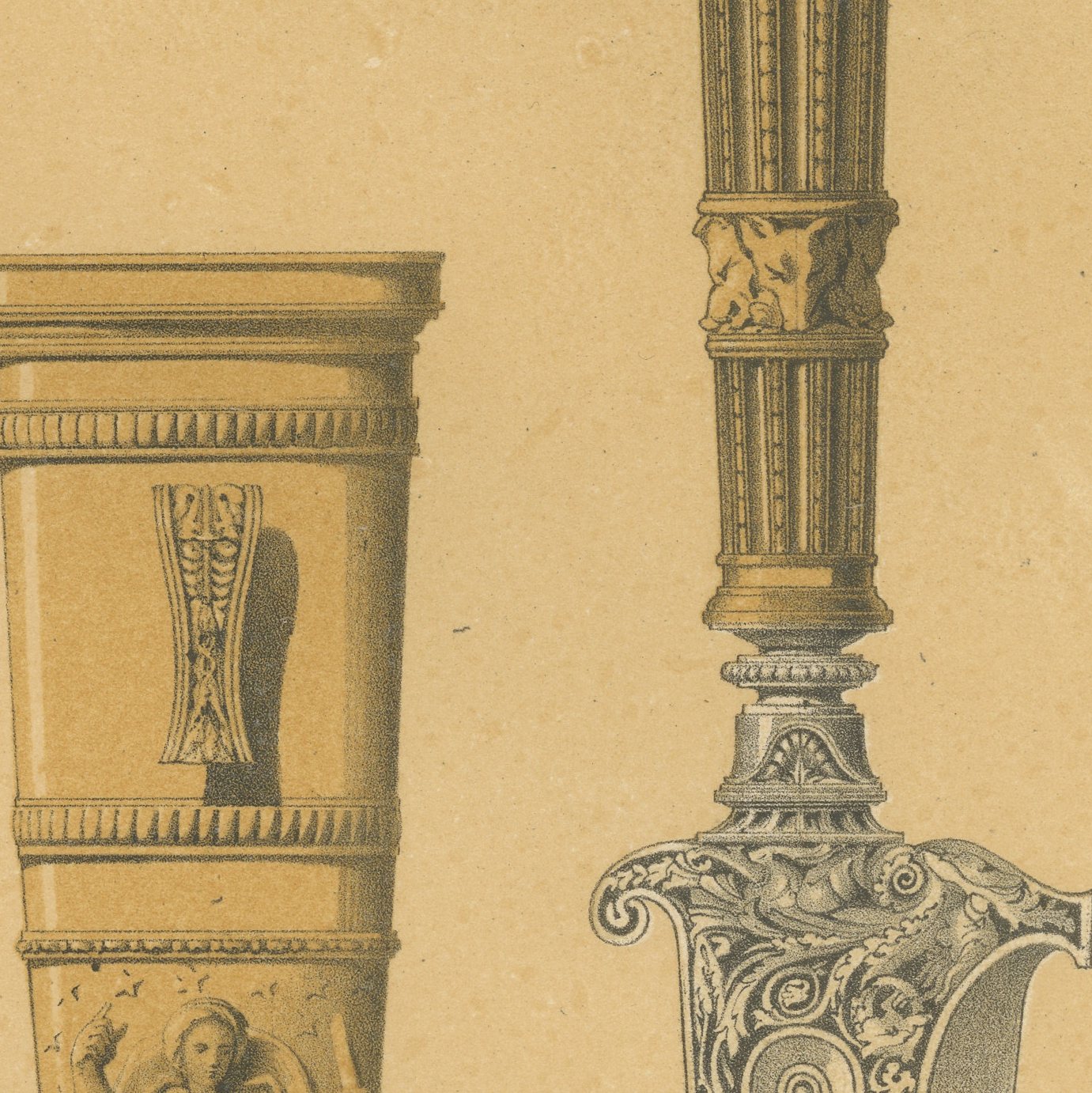
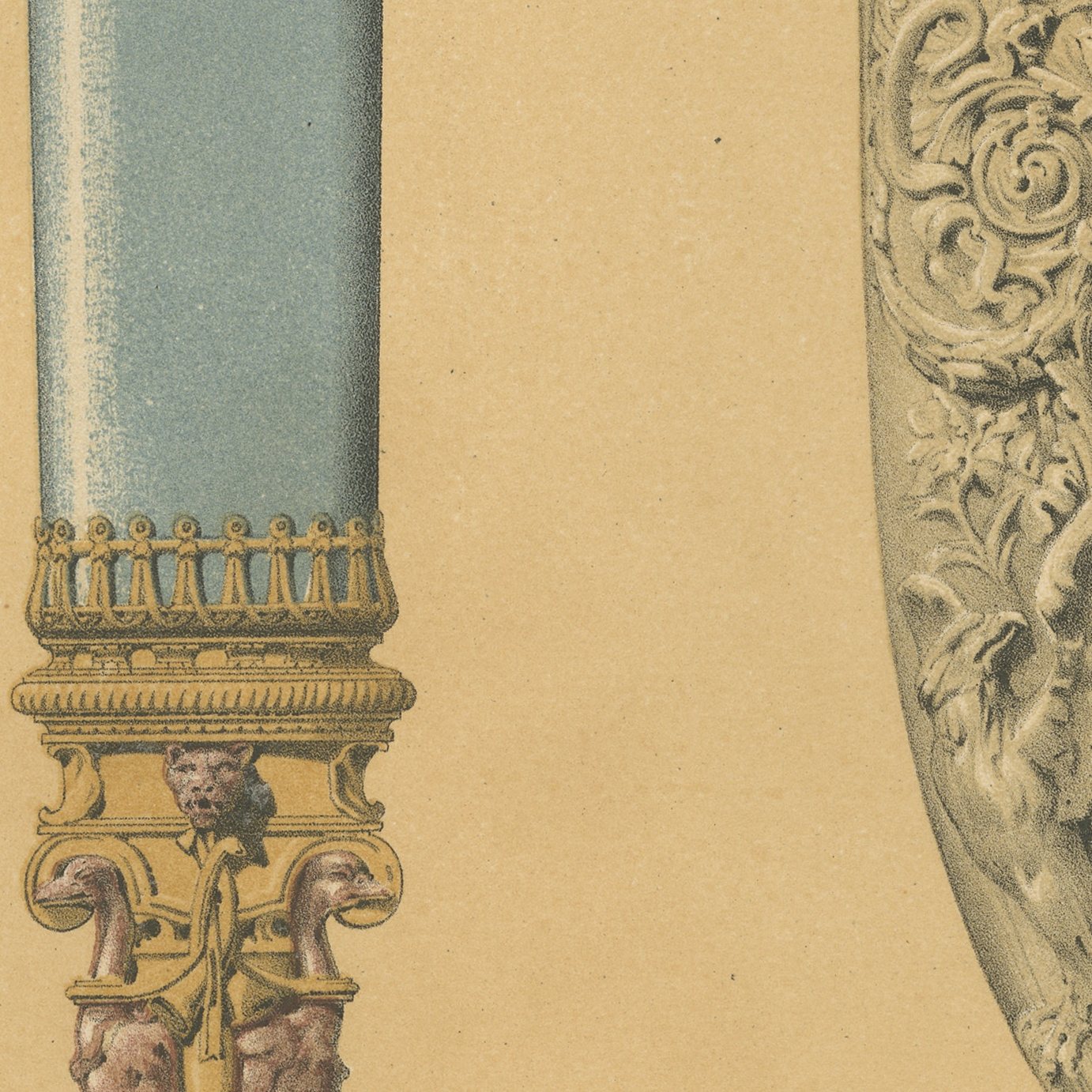
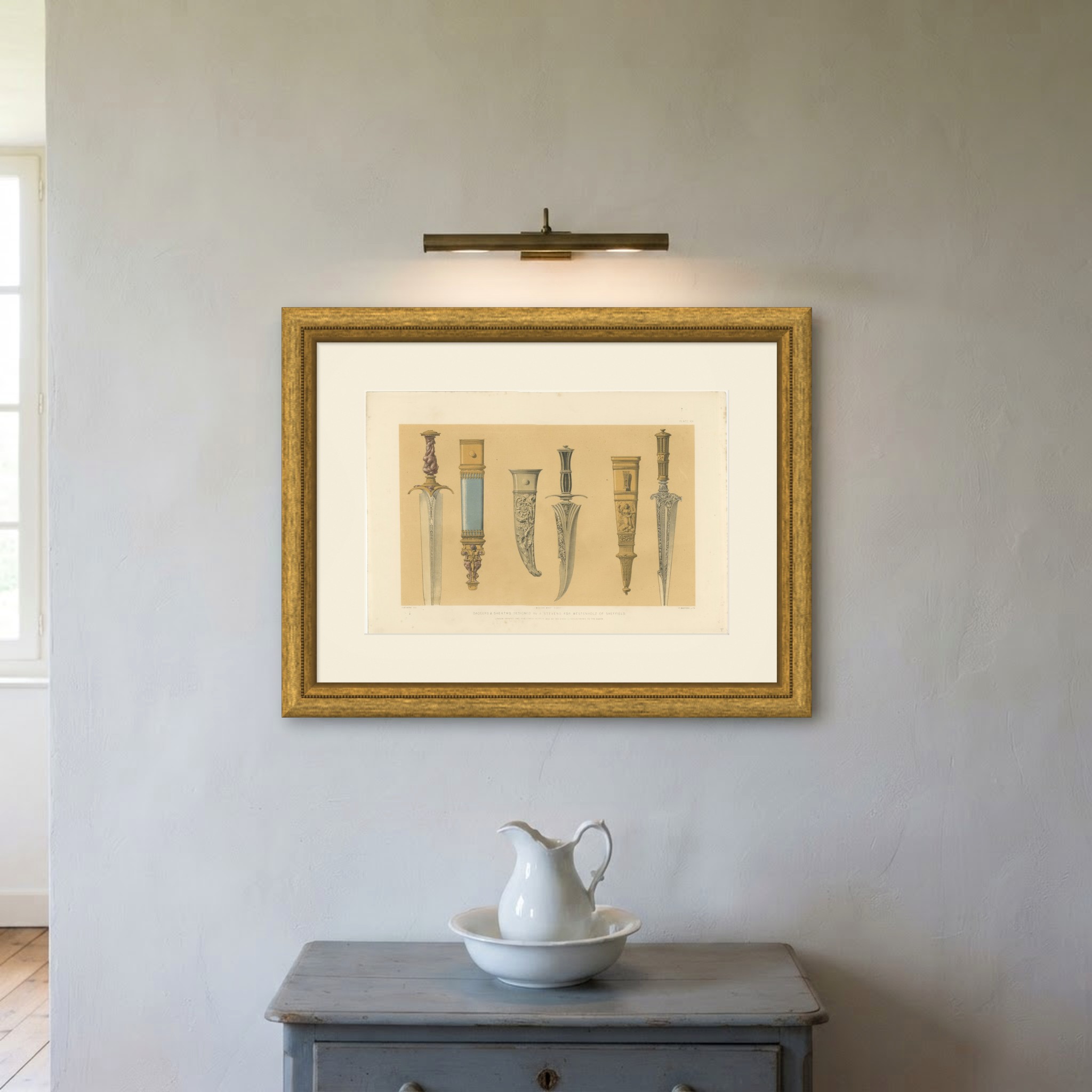
This original antique chromolithograph of 1852 shows three daggers and their sheaths, designed by Alfred Stevens for the Sheffield cutlery trade and ranged across a warm ochre ground. One hilt is modeled as a standing figure, another as a fluted column, the third as a tapering shaft of acanthus. The sheaths carry classical figures in relief, panels of foliage and bands of enamel in pale blue. The steel of the blades is drawn in the gray of polished metal and the mounts in silver and gold. The lettering beneath names the sheet as Daggers and Sheaths designed by A. Stevens for Westenholz of Sheffield, with A. Stevens himself as draftsman, M. Digby Wyatt as director and F. Bedford as lithographer, and the imprint gives the first of October 1852.
The plate comes from The Industrial Arts of the Nineteenth Century, Matthew Digby Wyatt's record of the Great Exhibition of 1851, published in London by Day and Son, lithographers to the Queen, between 1851 and 1853 and dedicated by permission to Prince Albert. It was issued to subscribers in forty parts in printed paper wrappers, and the two volumes together carry about a hundred and sixty large folio plates. The project came from the publishers, who approached Wyatt soon after the exhibition opened wanting to show, on a large scale, what color printing could do for industrial education. Chromolithography was then new and costly, and each color on a sheet was printed from its own stone. Francis Bedford, John Sleigh, John Alfred Vinter and their colleagues drew and lithographed the plates under Wyatt's direction, and every plate carries its own imprint and date.
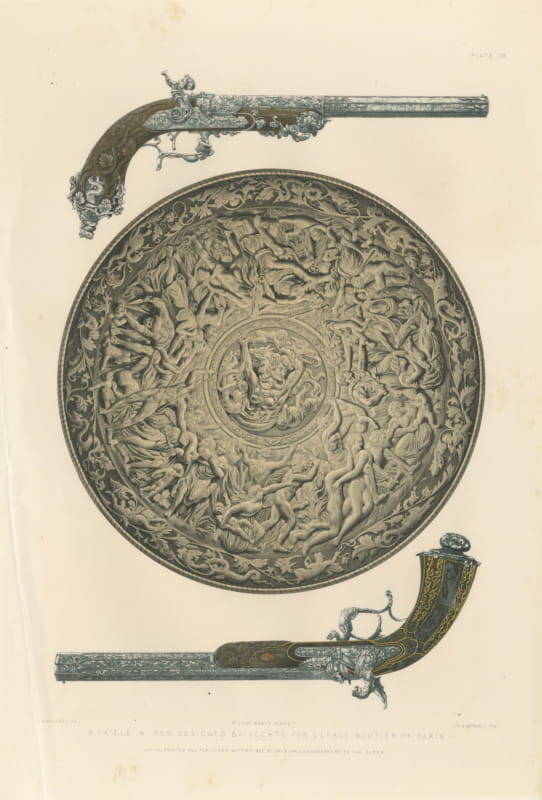
Alfred Stevens, later the sculptor of the Wellington Monument in St Paul's Cathedral, designed for the Sheffield trade in the early 1850s, and the firm named on this plate as Westenholz is George Wostenholm and Son, the Sheffield cutlers of the Washington Works; the Victoria and Albert Museum holds a plaster model by Stevens for the base of one of these sheaths. The sheet brings together a named designer, a leading Sheffield firm and finely drawn arms. It hangs well in a study, a library or a gun room, and it makes a strong companion to the Vechte shield plate from the same book.
Light age toning. Scattered foxing in the margins, a few spots larger than the rest. Light handling wear to the upper right and lower left corners, with a slight irregularity to the right edge. The printed image is clean.
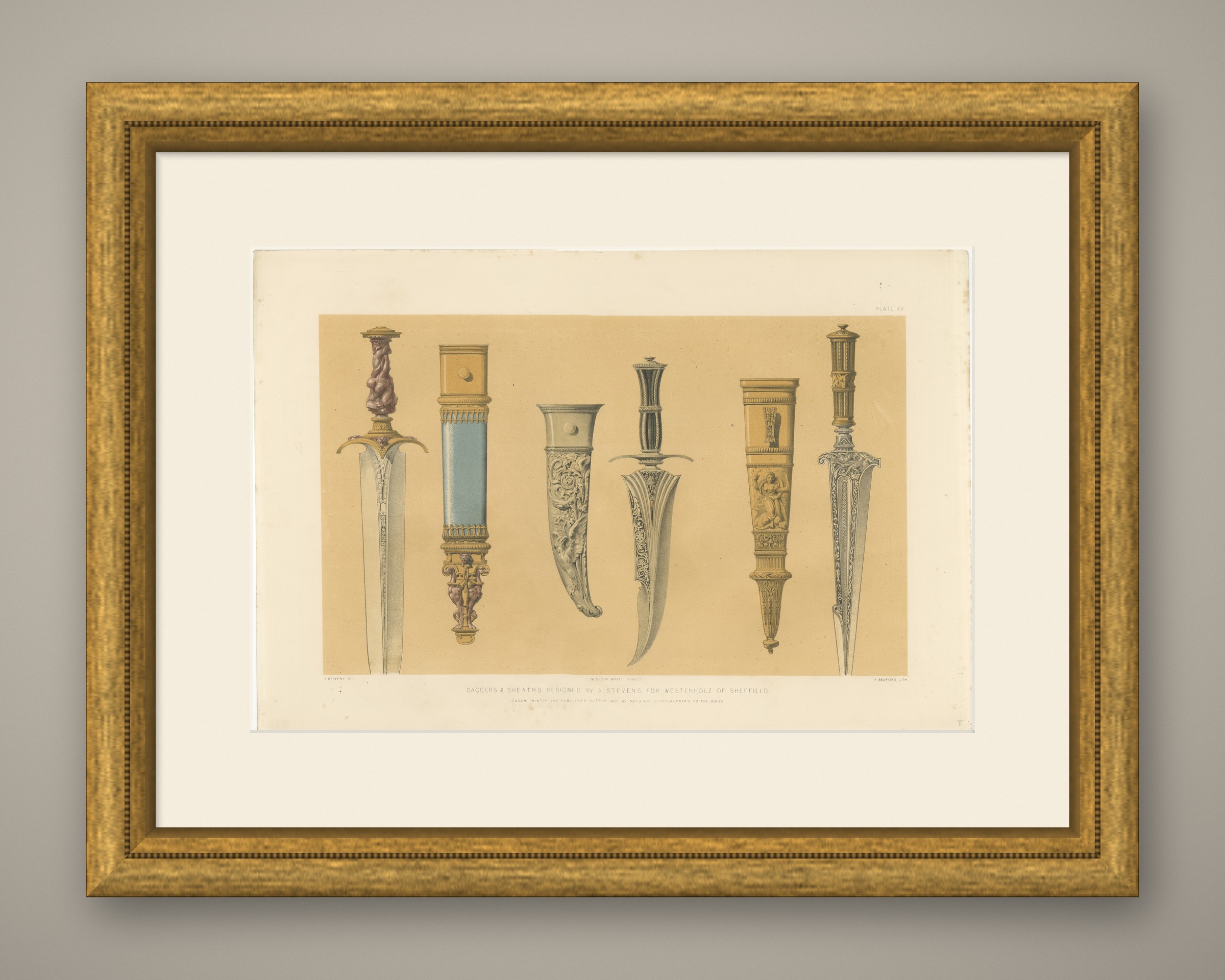
This is an original antique print, not a modern reproduction. This item is sold unframed. Any framed or interior images are shown for presentation and inspiration only, unless the listing explicitly states that the item is sold framed.