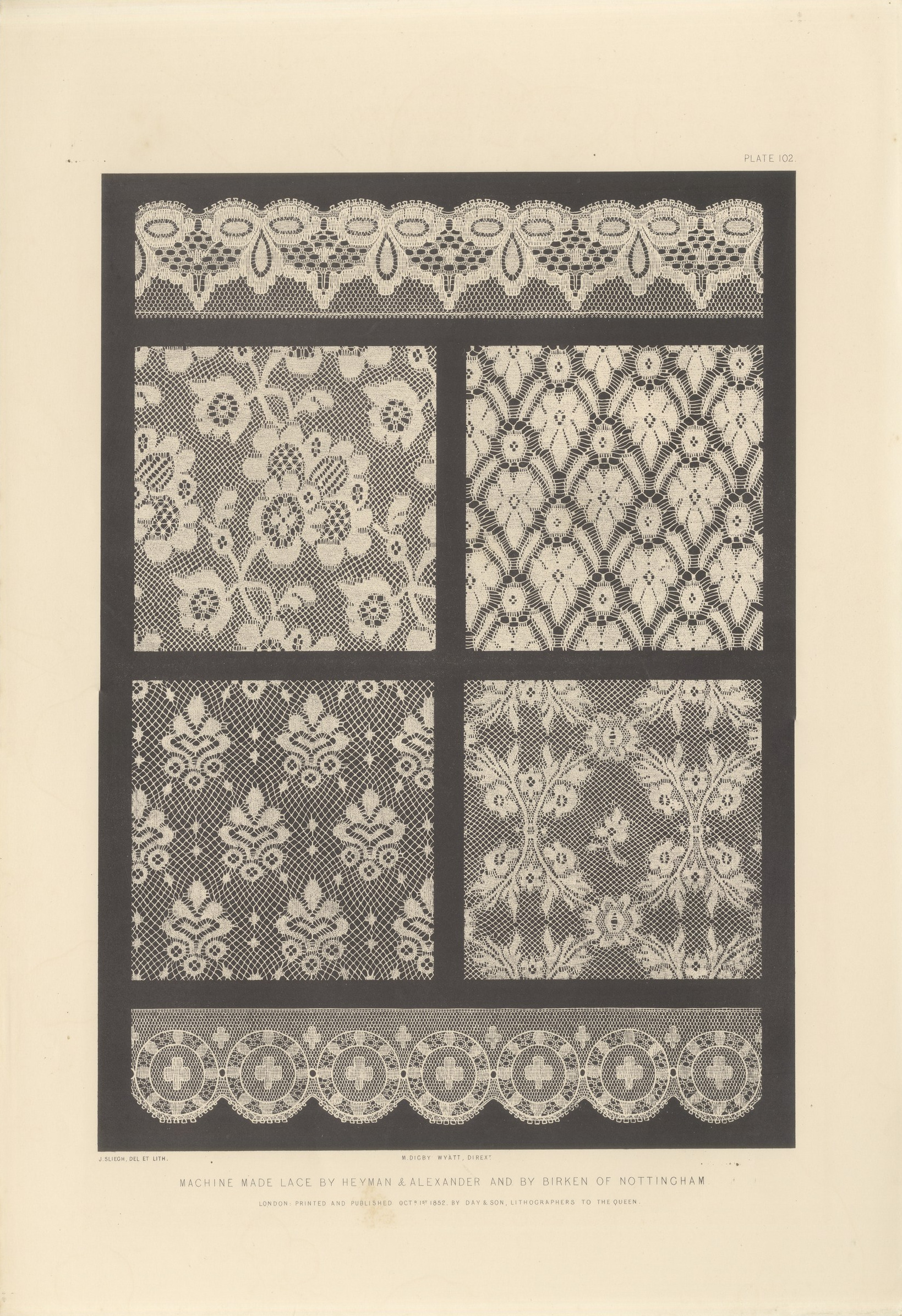
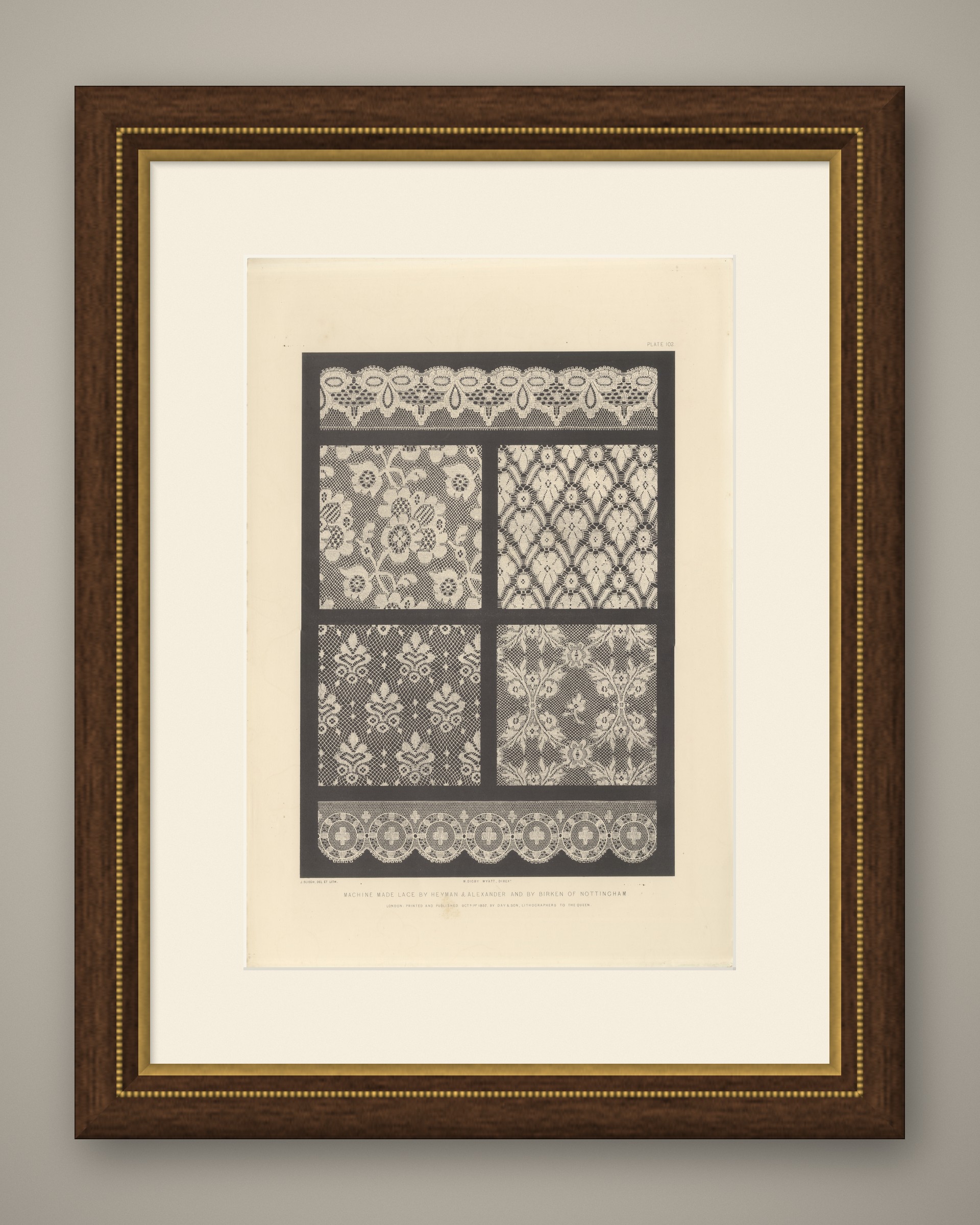
Antique Nottingham Machine Made Lace on a Black Ground, 1852
€ 395
Original antique · The actual sheet photographed · Certificate of authenticity on request · Sold unframed · Worldwide shipping from € 15 (rates)
Date
1852
Mapmaker / artist
Heymann and Alexander and Birkin of Nottingham; drawn and lithographed by J. Sleigh under the direction of M. Digby Wyatt
Publisher
Day and Son, Lithographers to the Queen, London
Technique
Chromolithograph
Coloring
Printed color
Sheet size
51.5 × 34 cm (20.3 × 13.4 in)
Condition
Good
Reference
BG-14491-102
What the condition grades mean
Excellent
Bright and clean, with no faults worth mentioning.
Very good
Only light signs of age, such as faint toning.
Good
Normal signs of age for a sheet of this period: toning, some foxing, small marks or neat old repairs.
Fair
Clear faults such as staining, tears or repairs, priced to match.
Every fault we see is written in the condition note, and the whole sheet is shown uncropped in the photos.
Condition
Complete sheet, the corners present and the edges running straight. Light overall age toning. A few small foxing spots in the margins. The deep black ground of the printed area is even and unmarked.
About this sheet
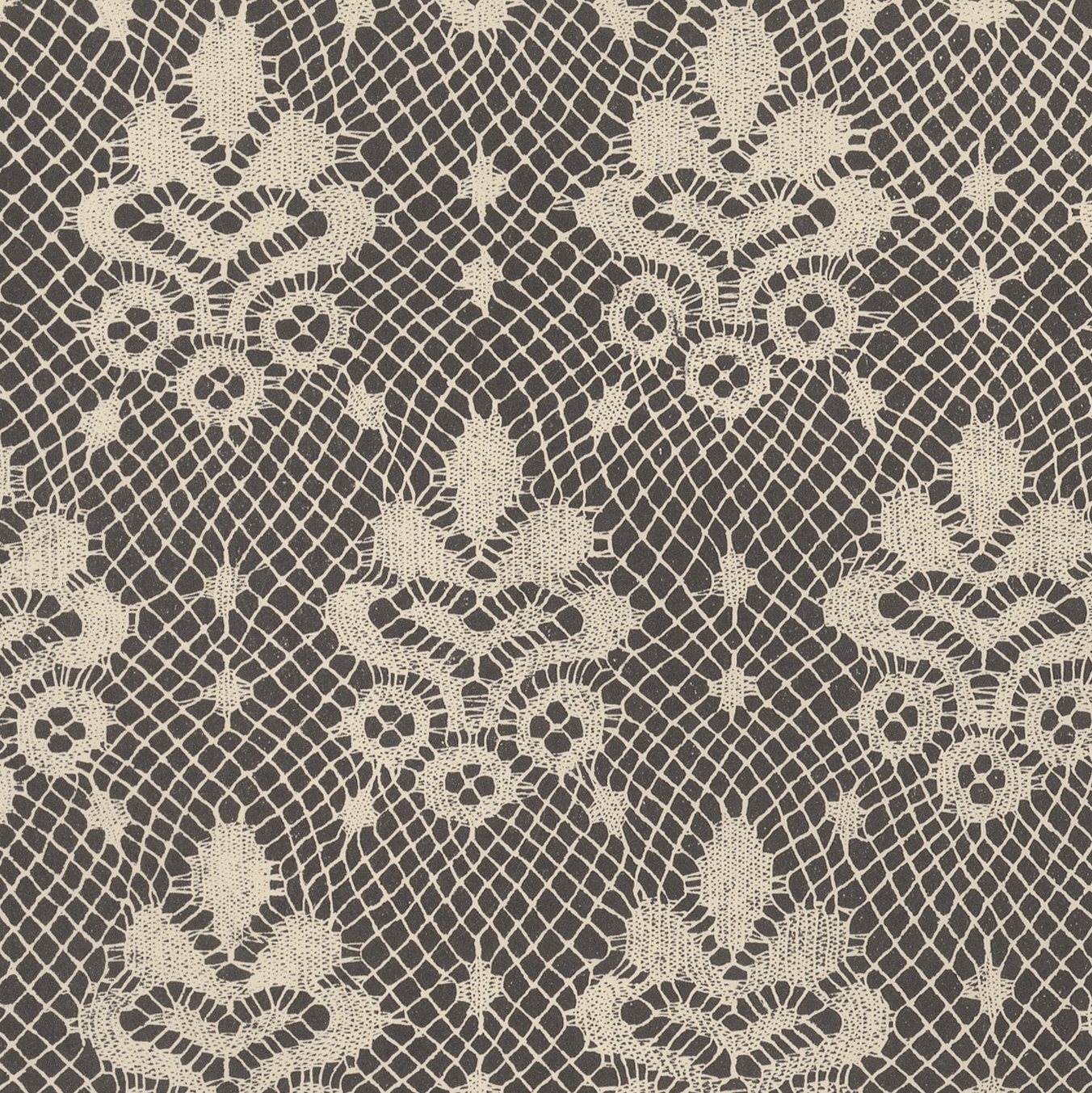
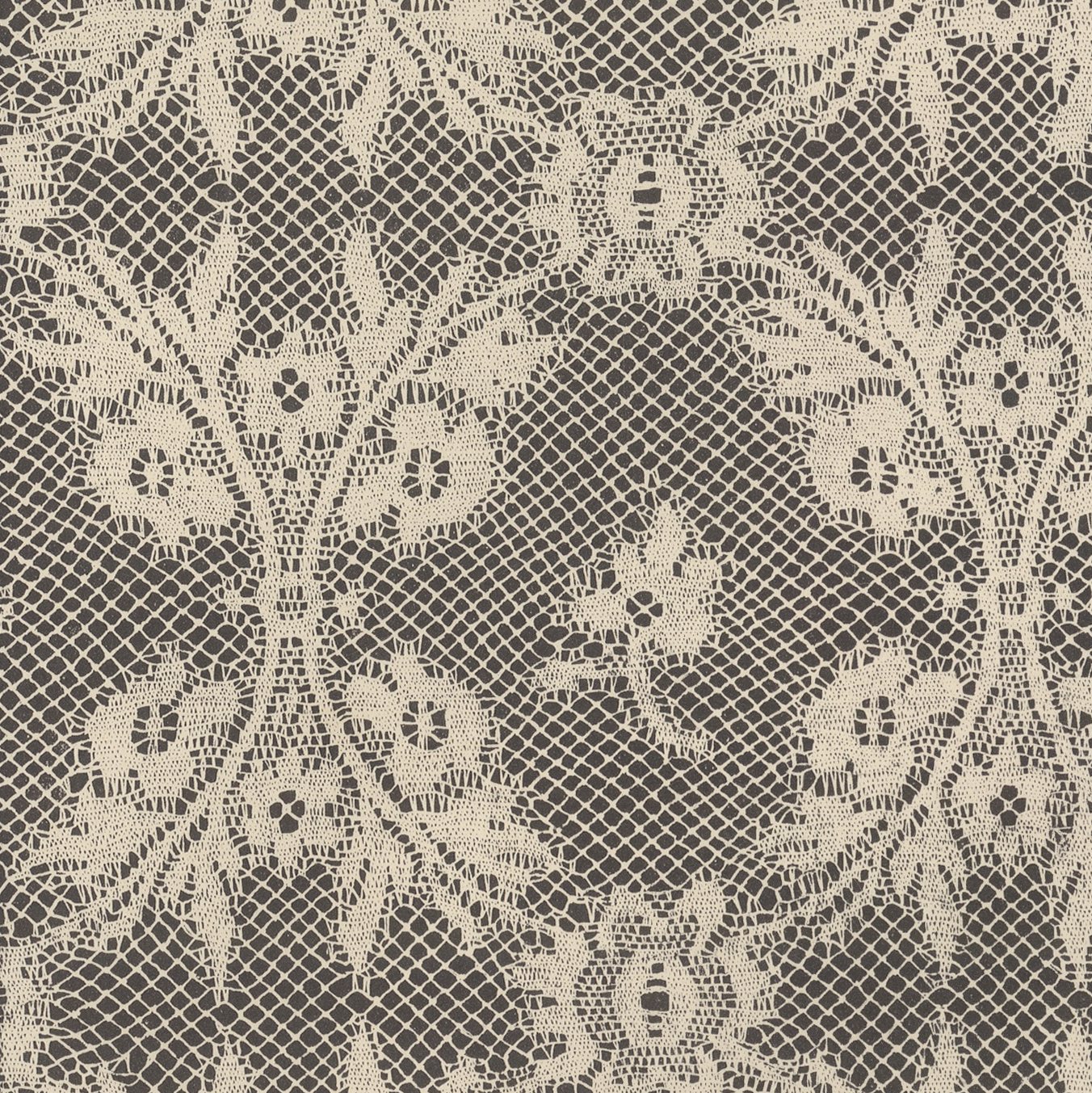
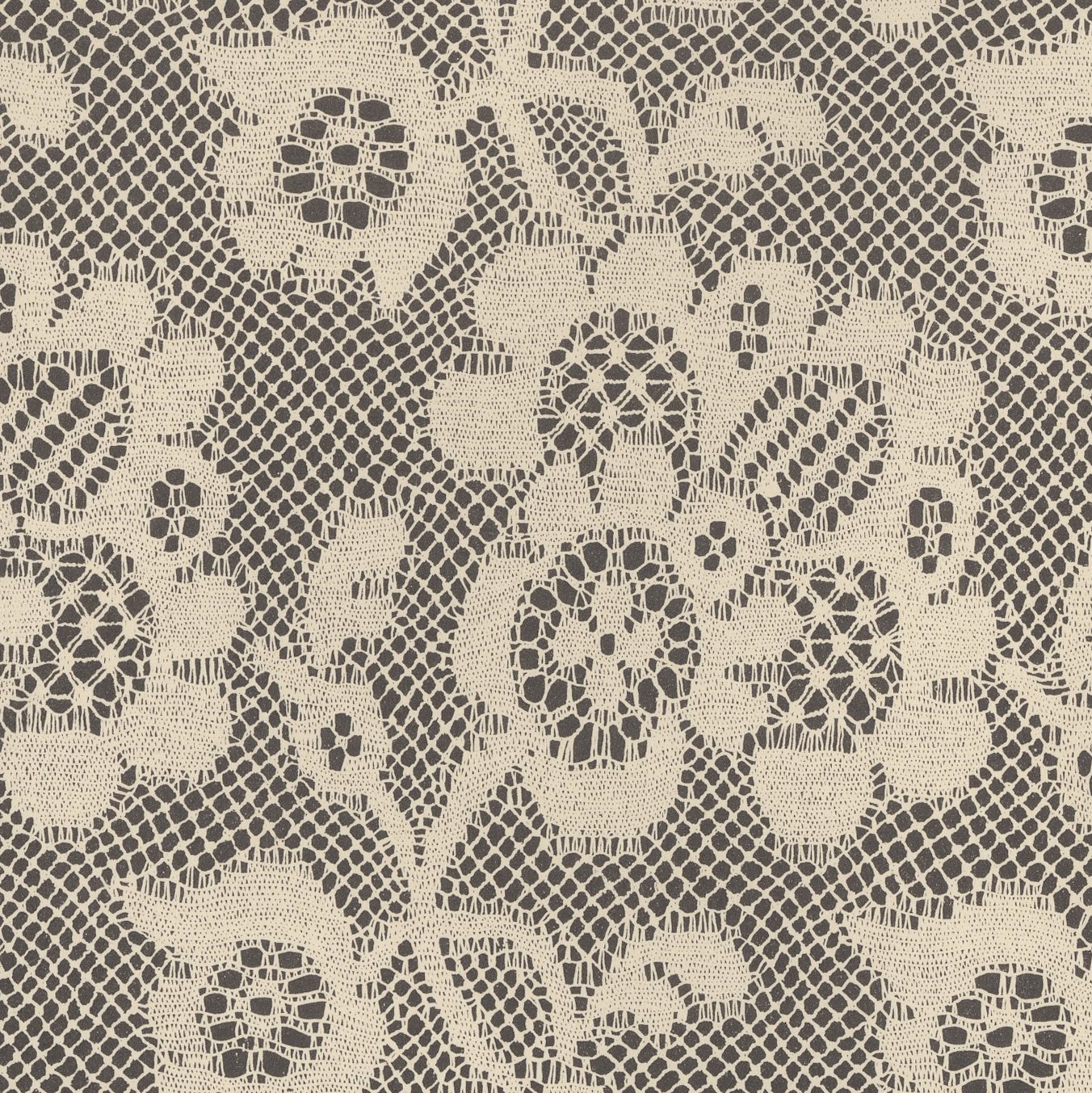
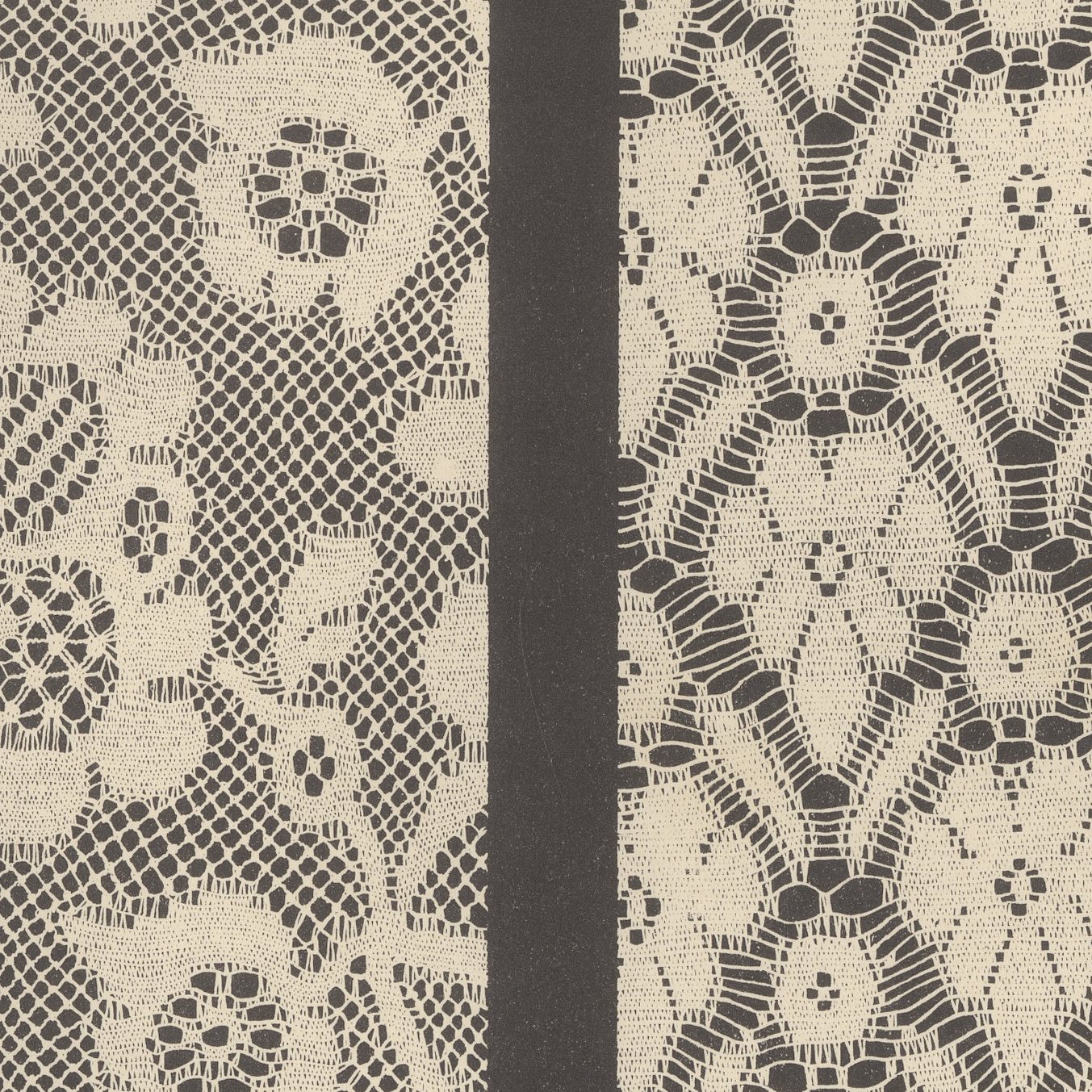
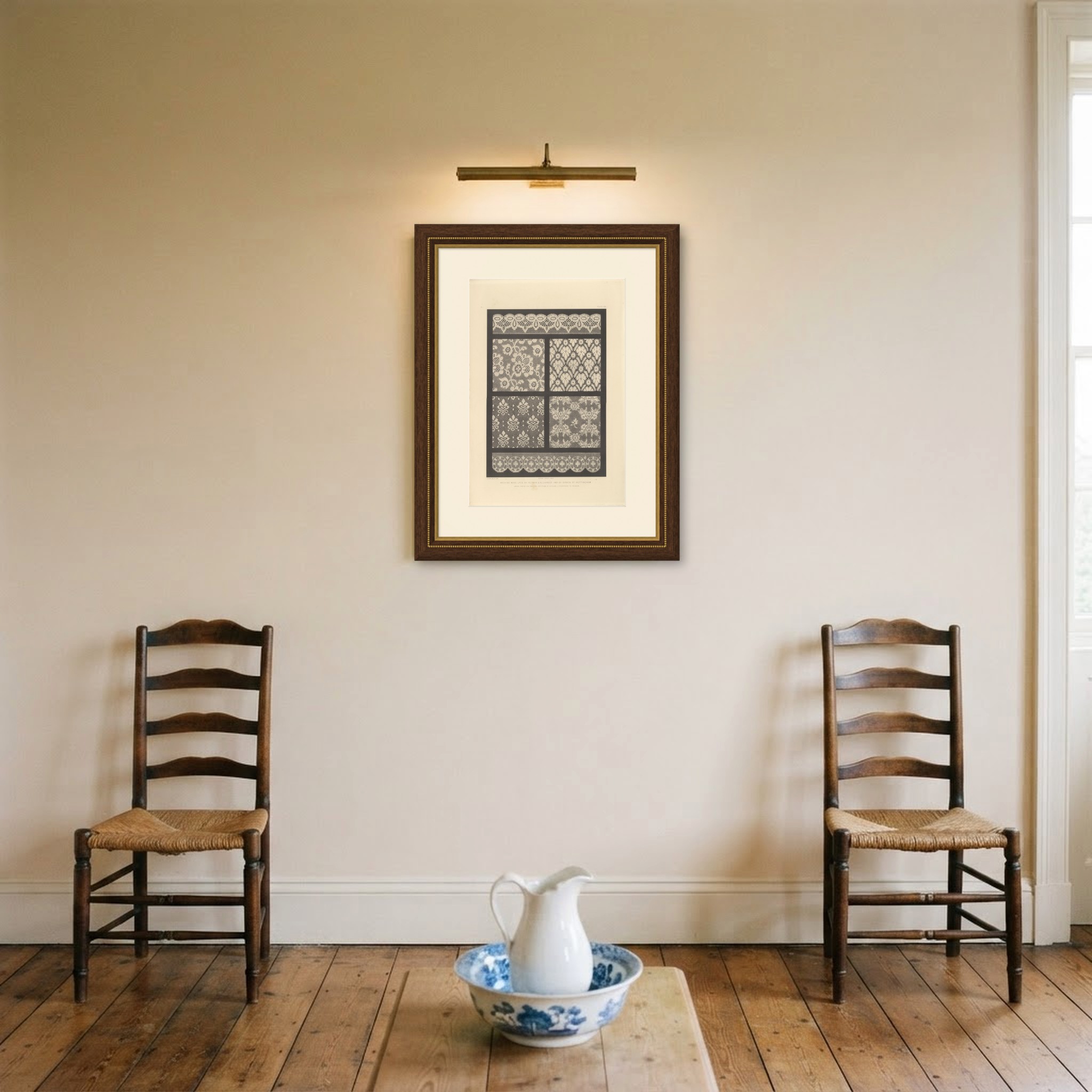
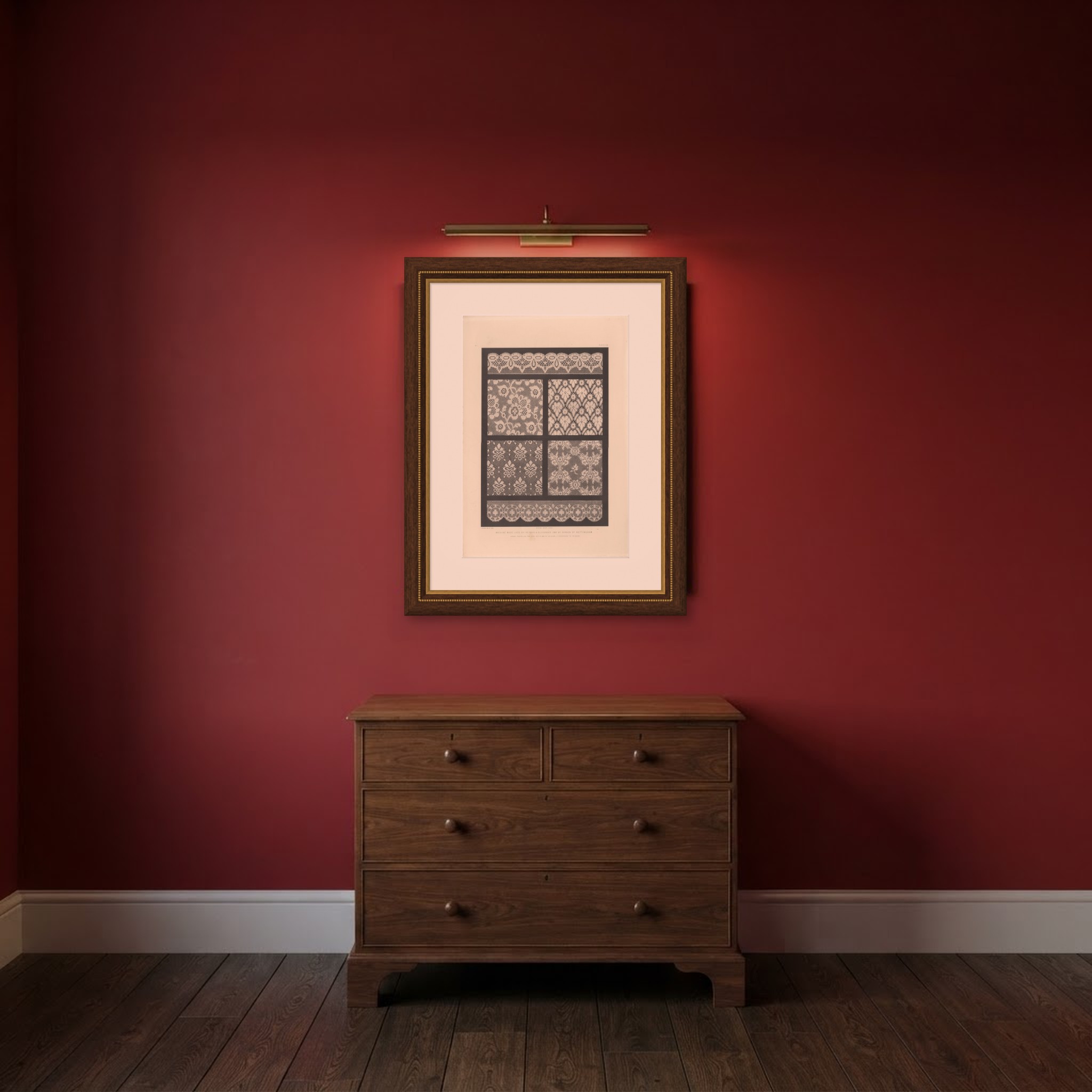
This original antique chromolithograph of 1852 shows six specimens of Nottingham machine made lace against a deep black ground that throws every thread into relief. A scalloped flounce runs across the top of the plate and a second band of circular medallions and crosses across the foot. Between them sit four square samples: a close spotted net strewn with rosettes and sprays, a trellis of diamonds enclosing small flowers, a damask pattern of palmettes and tulips, and a lighter ground of scattered sprigs. The lettering beneath names the sheet as Machine Made Lace by Heyman and Alexander and by Birken of Nottingham, with J. Sleigh as draftsman and lithographer, M. Digby Wyatt as director, and the imprint of the first of October 1852.
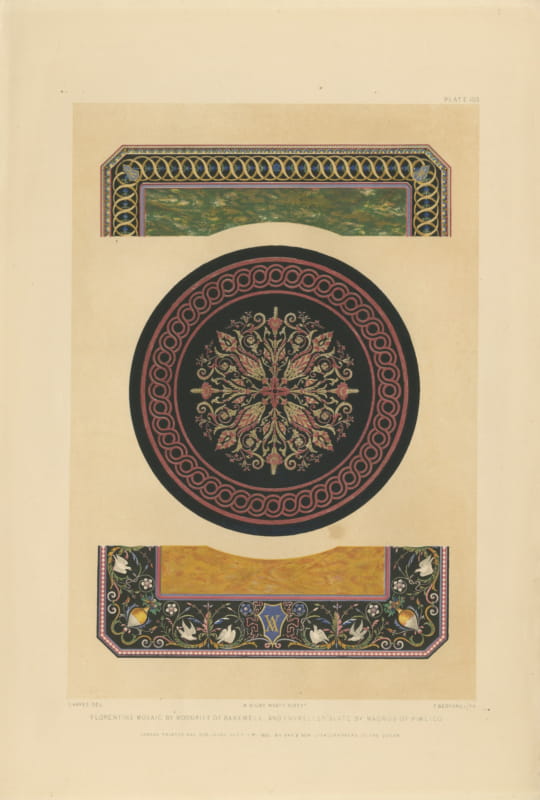
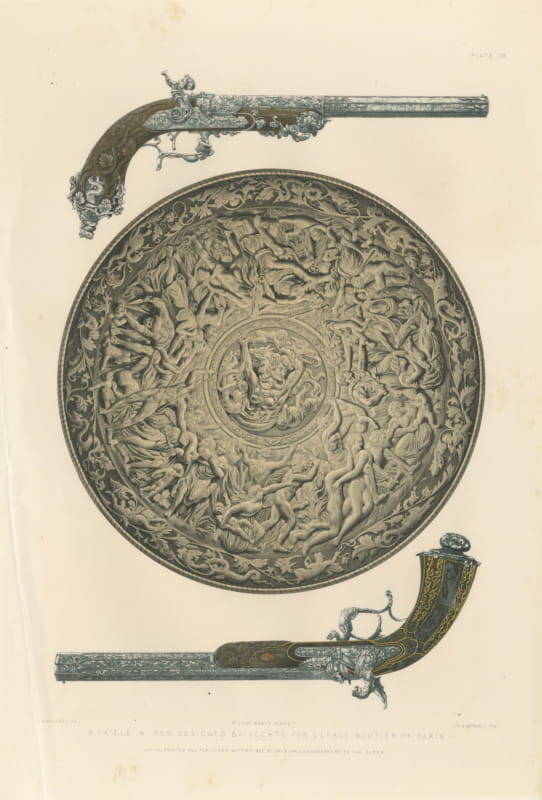
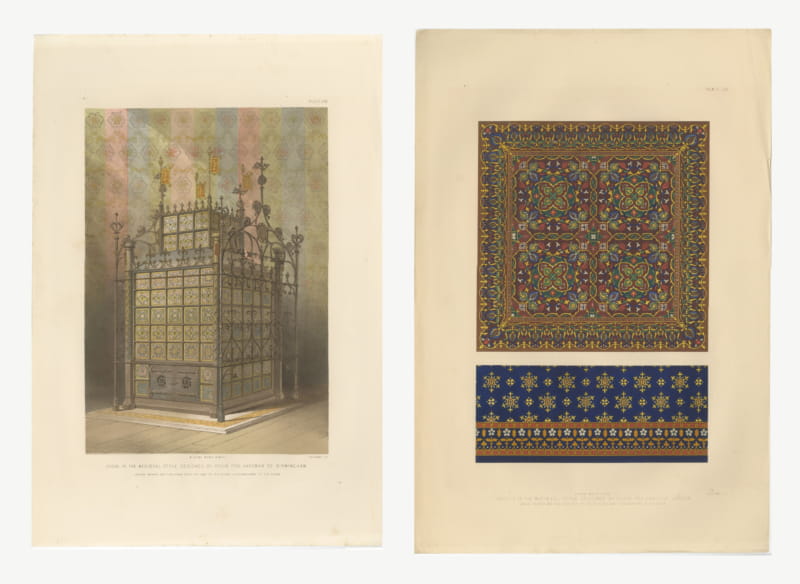
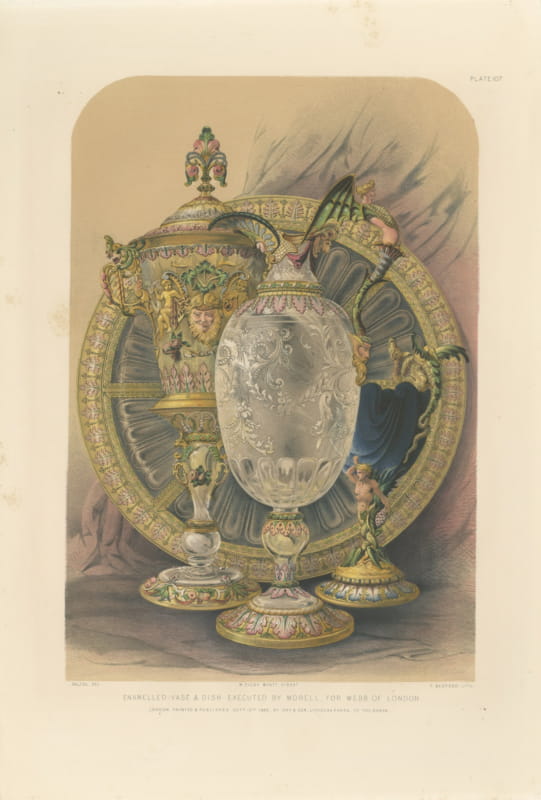
The plate comes from The Industrial Arts of the Nineteenth Century, Matthew Digby Wyatt's record of the Great Exhibition of 1851, published in London by Day and Son, lithographers to the Queen, between 1851 and 1853 and dedicated by permission to Prince Albert. It was issued to subscribers in forty parts in printed paper wrappers, and the two volumes together carry about a hundred and sixty large folio plates. The project came from the publishers, who approached Wyatt soon after the exhibition opened wanting to show, on a large scale, what color printing could do for industrial education. Chromolithography was then new and costly, and each color on a sheet was printed from its own stone. Francis Bedford, John Sleigh, John Alfred Vinter and their colleagues drew and lithographed the plates under Wyatt's direction, and every plate carries its own imprint and date.
Nottingham was the center of the machine lace trade, and the bobbin net machines of the town had turned a luxury into something a middle class household could buy. Richard Birkin and the firm of Heymann and Alexander, lettered on the sheet as Birken and Heyman, were among the leading Nottingham makers of the day and both exhibited in 1851. Printing the white lace against a solid black ground gives the sheet a strongly graphic look. It reads almost as a modern photogram, and in a plain black or gilt frame it holds its own beside contemporary art in a drawing room, a bedroom or a workroom.
Complete sheet, the corners present and the edges running straight. Light overall age toning. A few small foxing spots in the margins. The deep black ground of the printed area is even and unmarked.
This is an original antique print, not a modern reproduction. This item is sold unframed. Any framed or interior images are shown for presentation and inspiration only, unless the listing explicitly states that the item is sold framed.