About this sheet
1832 Hand-Colored Engraving - "Death of the Fox at Tutbury Castle" by W. B. Scott
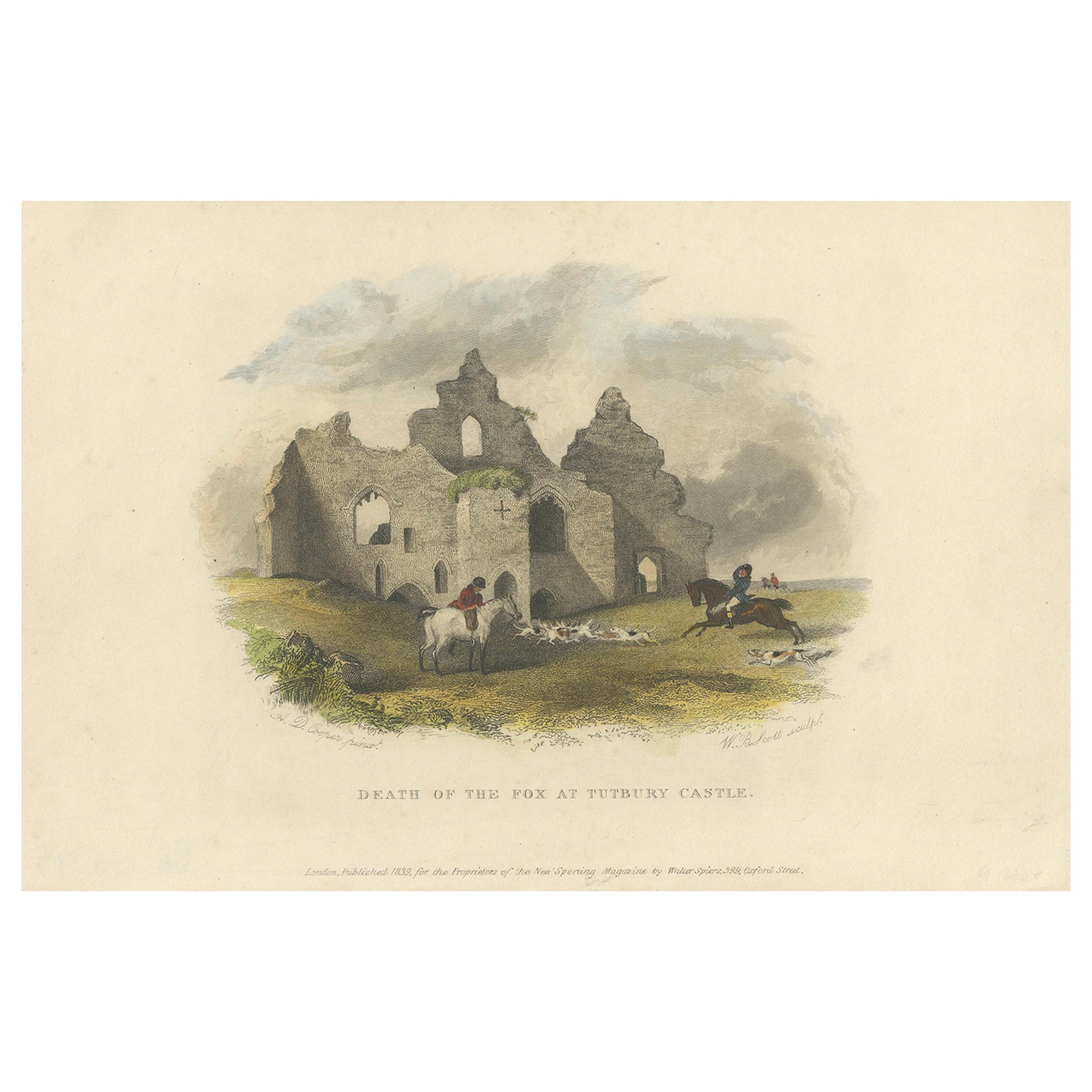
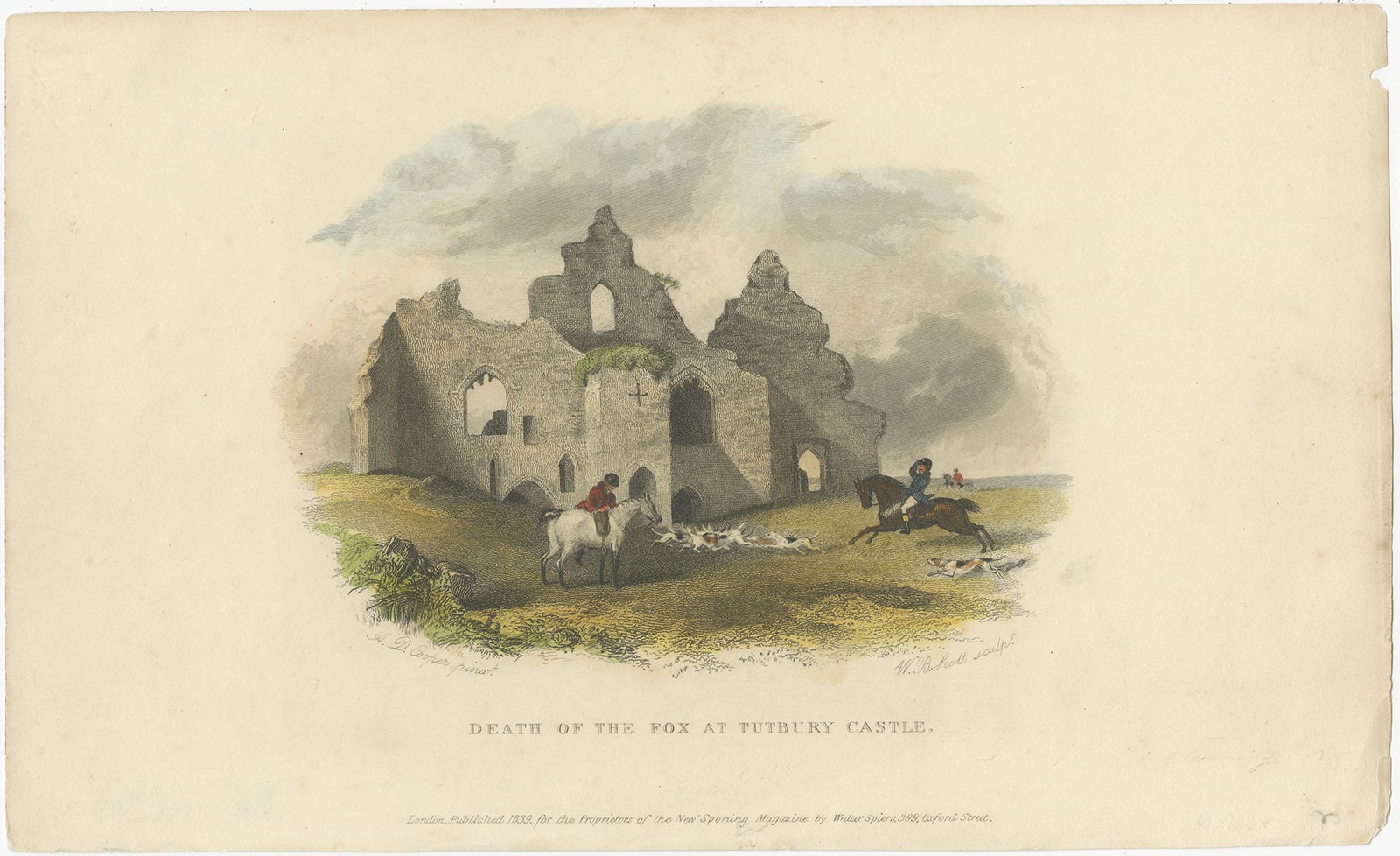
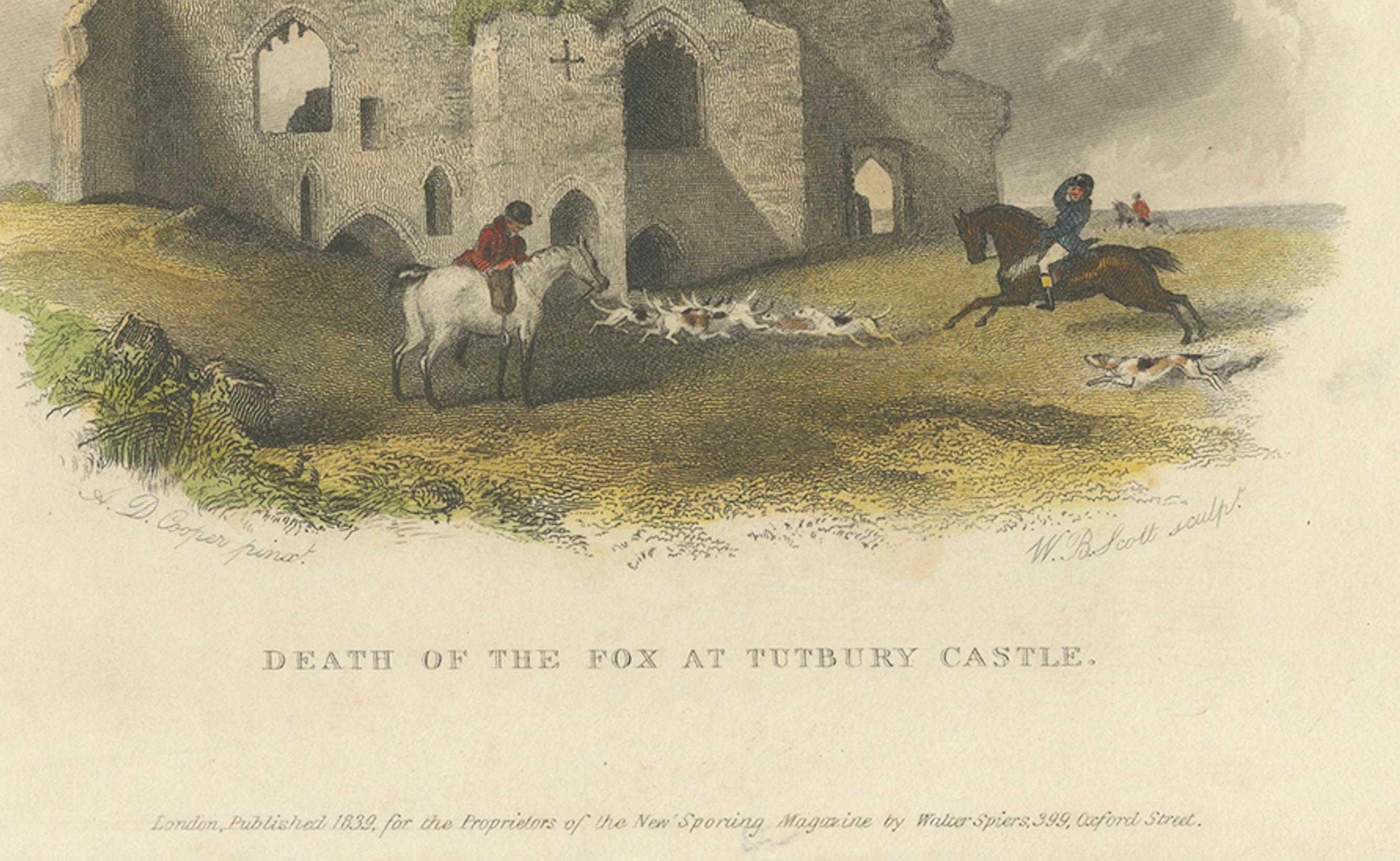
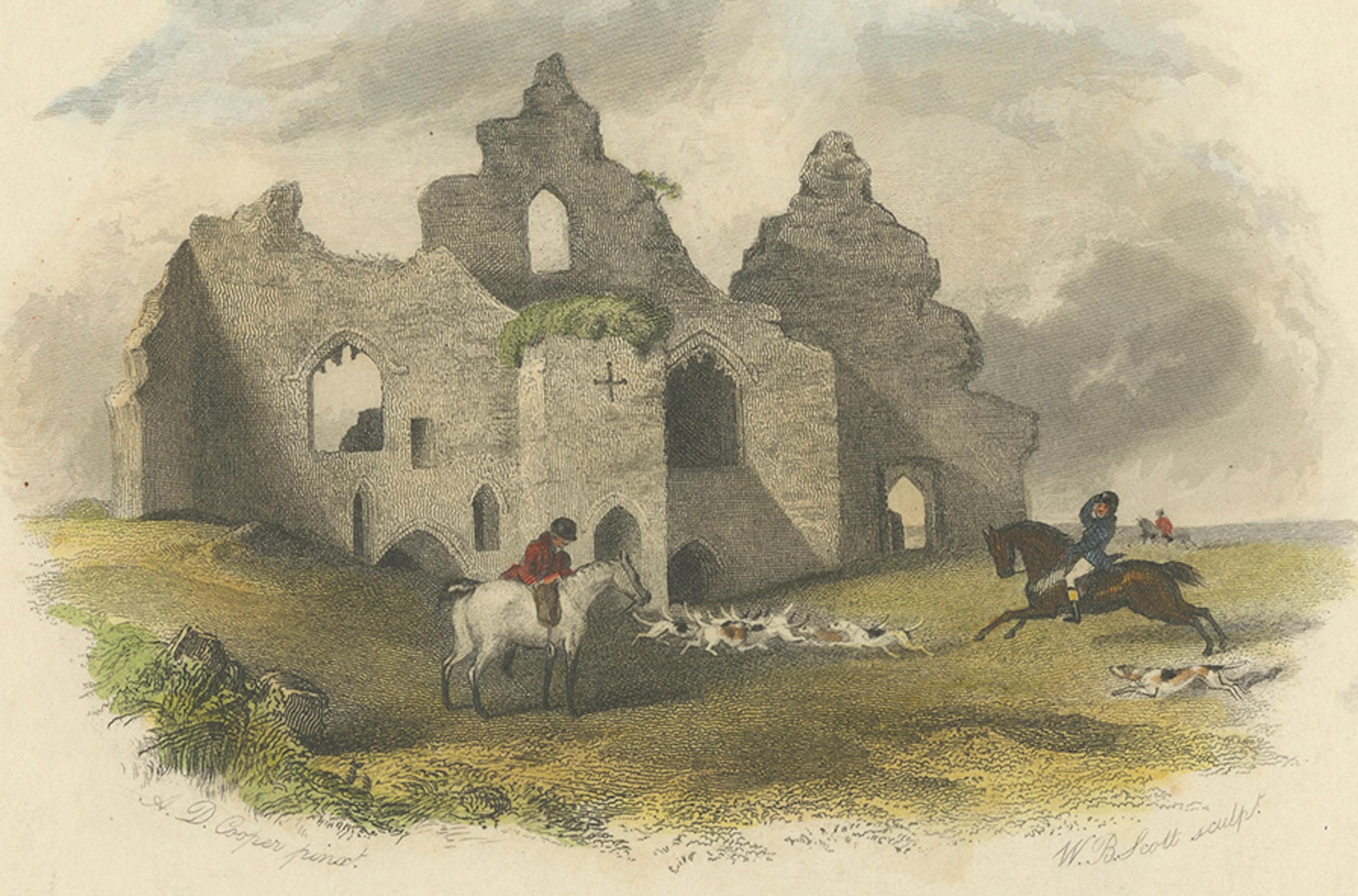
This is a finely detailed, hand-colored engraving titled "Death of the Fox at Tutbury Castle," published in 1832 for the New Sporting Magazine by W. B. Scott, after a painting by A. D. Cooper.
It depicts a dramatic fox hunting scene near the ruins of Tutbury Castle, capturing a moment of pursuit as hunters on horseback and hounds converge on their quarry. The ruins and cloudy sky create a striking backdrop, emphasizing the English hunting tradition.
Tutbury Castle is a historical site located in the village of Tutbury, Staffordshire, England. The castle dates back to the Norman period, originally built shortly after the Norman Conquest in the 11th century by Henry de Ferrers, a Norman nobleman granted lands by William the Conqueror. The castle was an important fortification, overlooking the River Dove, and played a significant role in English medieval history.
1. Tutbury Castle has a strong association with the English monarchy. It was held by several members of the royal family throughout its history. One of the most famous historical events linked to the castle is the imprisonment of Mary, Queen of Scots. She was held there on four separate occasions between 1569 and 1585, under the custody of the Earl of Shrewsbury. Tutbury was one of the several locations where Mary was kept during her lengthy imprisonment in England.
2. The castle experienced several episodes of destruction and rebuilding over the centuries. During the civil war between King Stephen and Empress Matilda in the 12th century, Tutbury Castle changed hands and was partially dismantled. It was also involved in the Barons' Wars and the English Civil War. During the Civil War in the mid-17th century, the castle was captured by Parliamentary forces, and Oliver Cromwell ordered it to be slighted (deliberately destroyed) to prevent its further use as a military stronghold.
3. Today, Tutbury Castle is a ruin, with significant portions of its original structure still visible, including parts of the gatehouse, the Great Hall, and the outer walls. The picturesque ruins give an impression of its former grandeur and serve as a reminder of its historic significance. It is now a popular tourist attraction, offering guided tours, educational programs, and events like historical reenactments, ghost tours, and medieval festivals. The views from the castle grounds are panoramic, providing sweeping vistas over the surrounding countryside.
4. Archaeological investigations at Tutbury Castle have uncovered several important findings, including medieval pottery, coins, and structural remains that provide insight into the castle's layout and its role in different historical periods.
5. The castle is rumored to be haunted and has become a popular site for paranormal investigations. Ghost stories often relate to the tragic life of Mary, Queen of Scots, and others who were associated with the castle during its turbulent past.
Overall, Tutbury Castle is a fascinating historic site with a rich and sometimes turbulent history, from its Norman origins through to its role in royal intrigues and military conflicts. Today, its ruins offer visitors a glimpse into England’s medieval past and the lives of those who lived in or were imprisoned there.
The engraving remains in good condition, with intact edges and vivid coloring, showing minimal foxing and age wear typical of early 19th-century prints.