About this sheet
17th and 18th Century Ornamental Arts Print by H. Dolmetsch – Embroidery and Giltwork
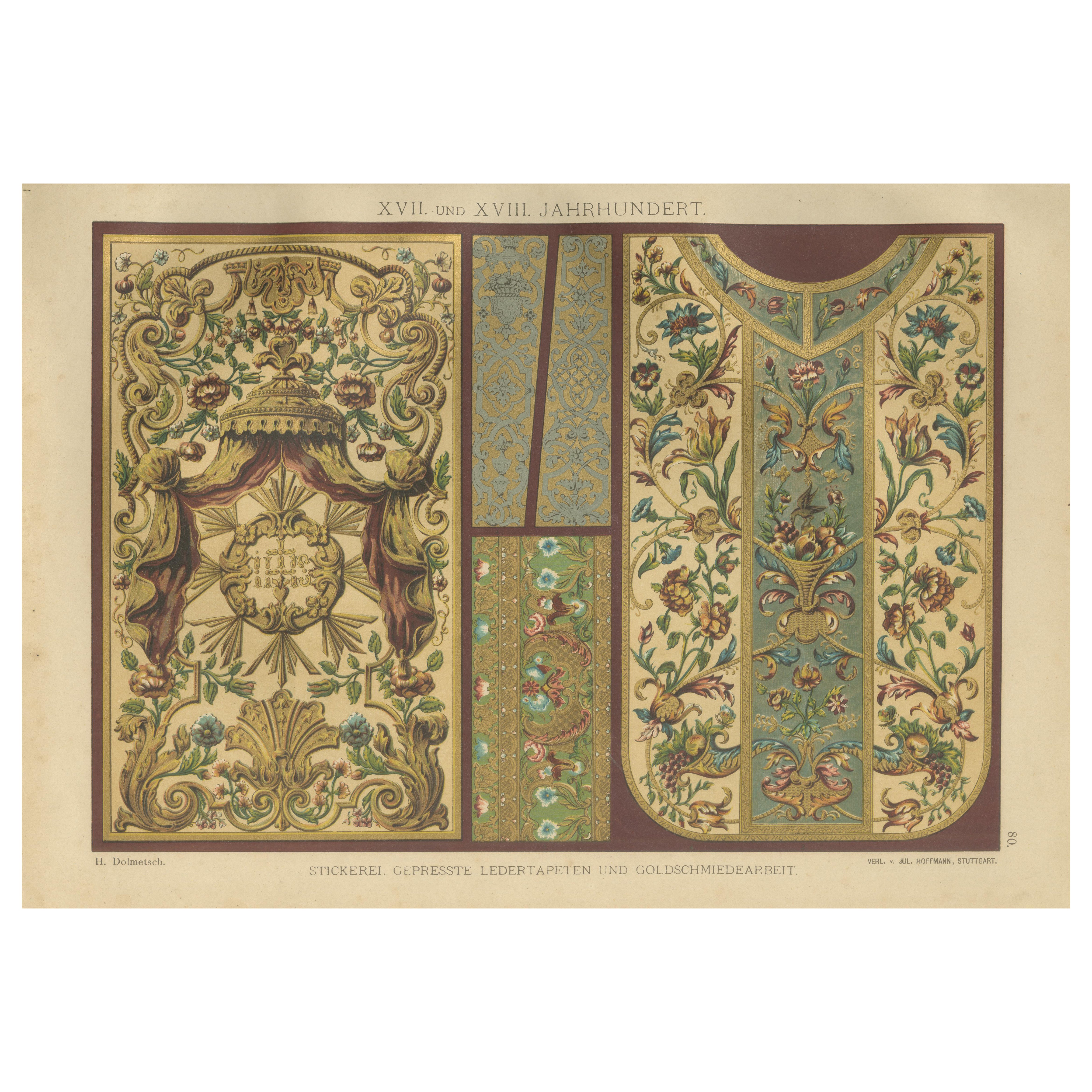
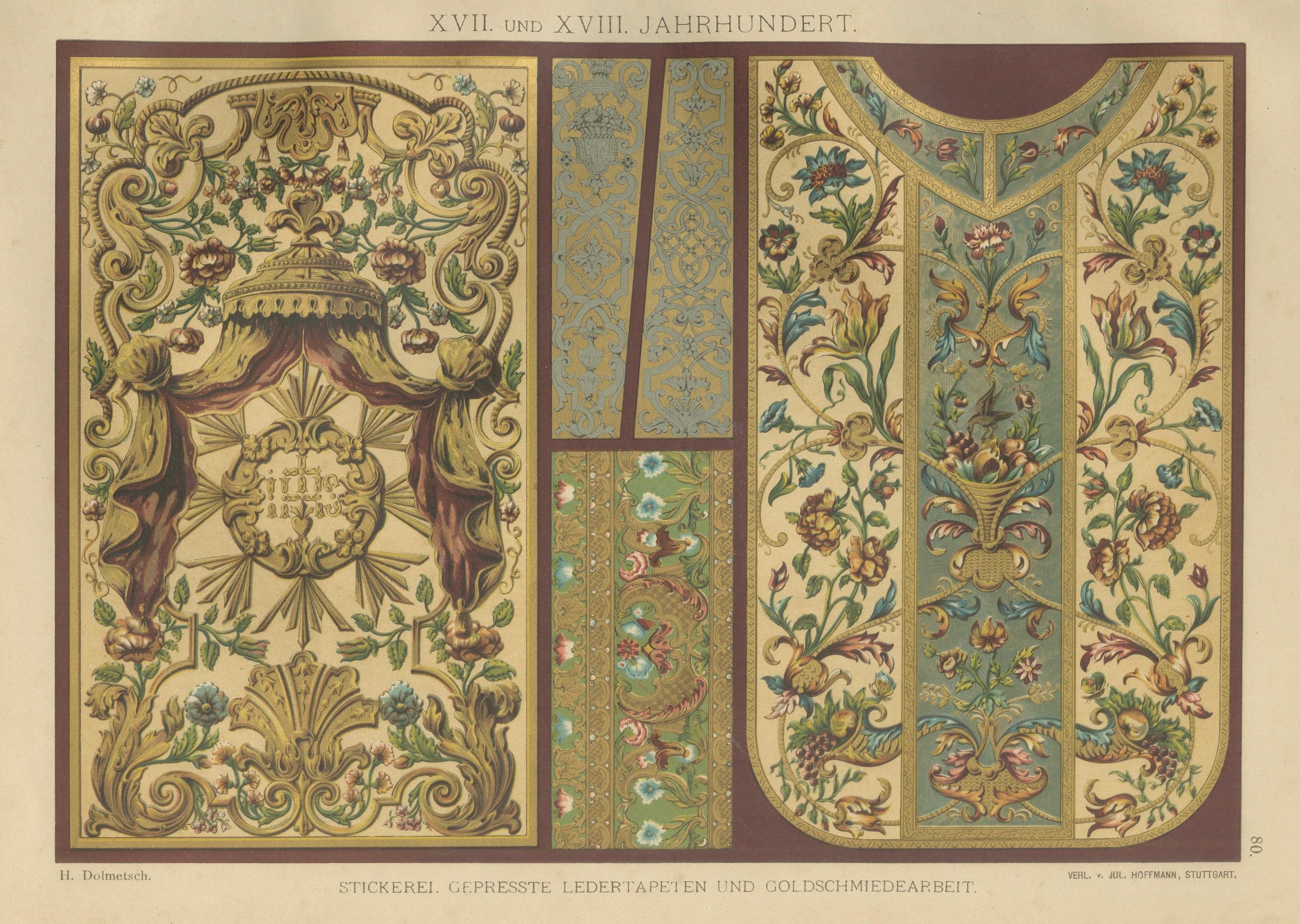
This striking antique print by H. Dolmetsch, published in Stuttgart by Jul. Hoffmann in the late 19th century, presents a vivid and elegant overview of decorative arts from the 17th and 18th centuries. Drawn from the celebrated *Ornamentenschatz* series, this plate is titled *Stickerei, gepresste Ledertapeten und Goldschmiedearbeit*, which translates to *Embroidery, Embossed Leather Wallcoverings, and Goldsmith Work*. It is a rich visual document capturing the refined ornamental tastes of the Baroque and Rococo eras, rendered in superb chromolithography.
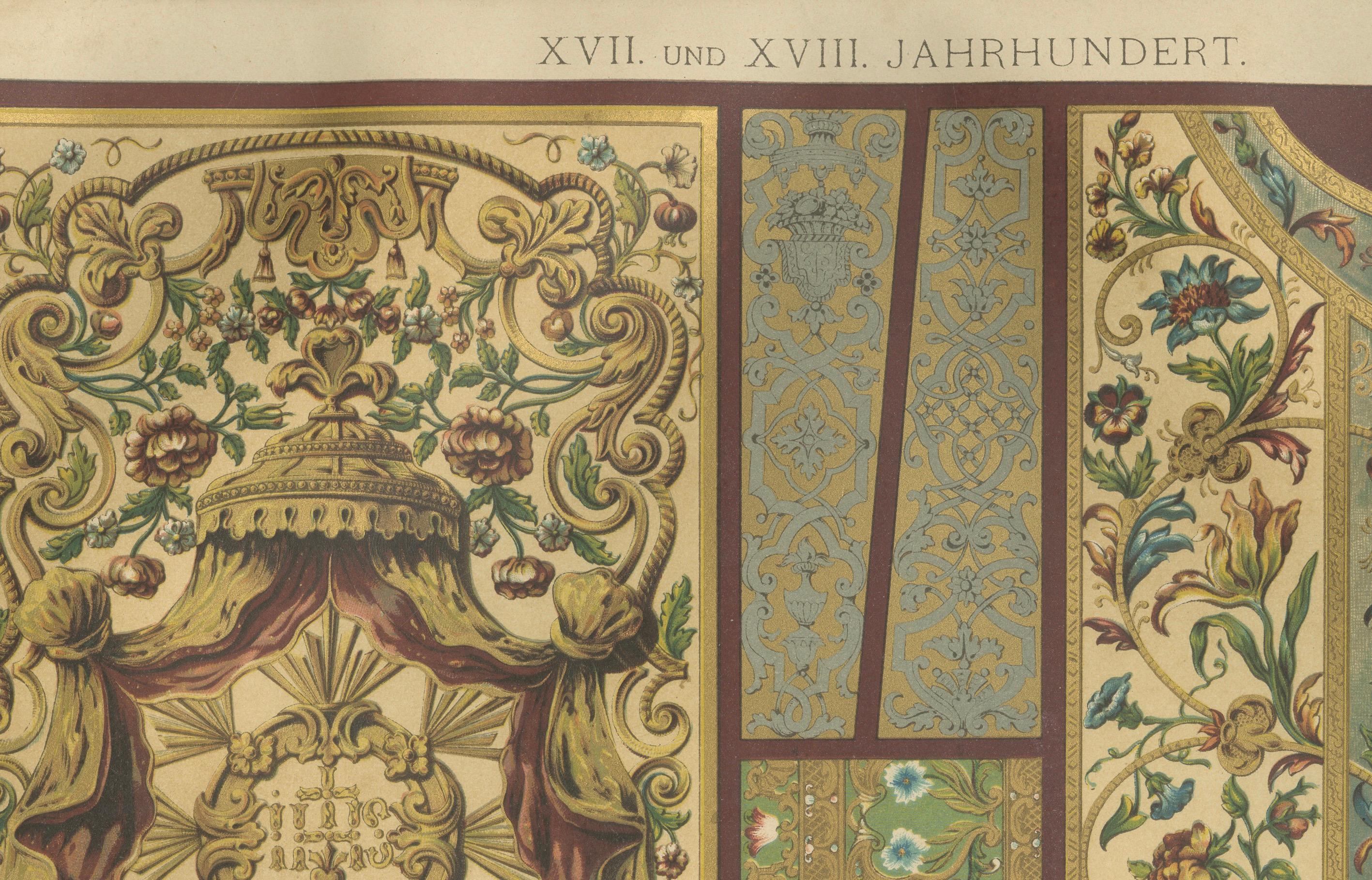
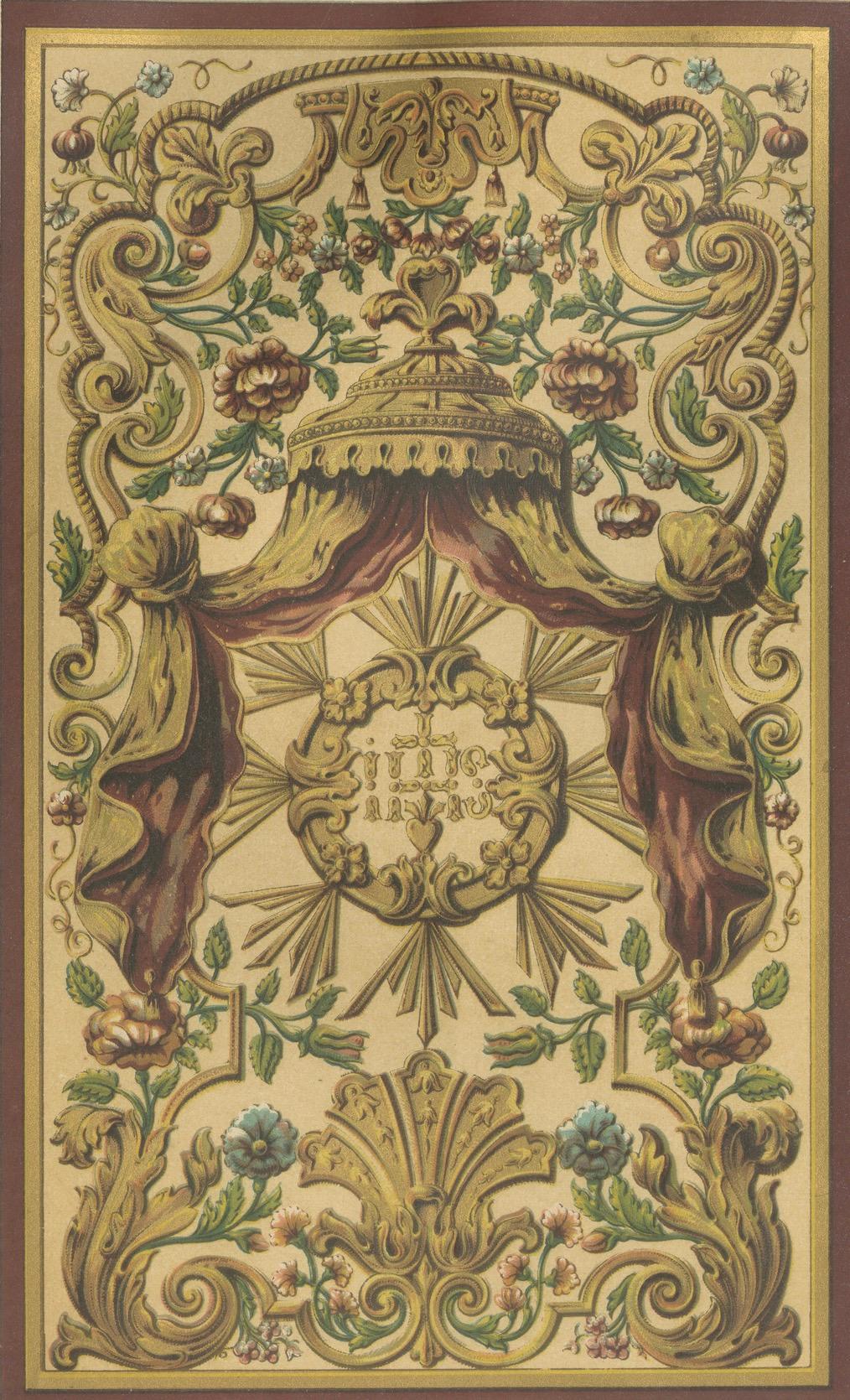
The left panel of the composition features an ornate embroidered motif with theatrical drapery, floral garlands, and a central medallion inscribed with an intricate monogram beneath a noble crown. It evokes the grandeur of courtly interiors or ecclesiastical vestments, with its emphasis on symmetry, heraldic elements, and gilded luxury. The sunburst form and flowing ribbons suggest a ceremonial or liturgical function, where decoration served to elevate authority and spirituality alike.
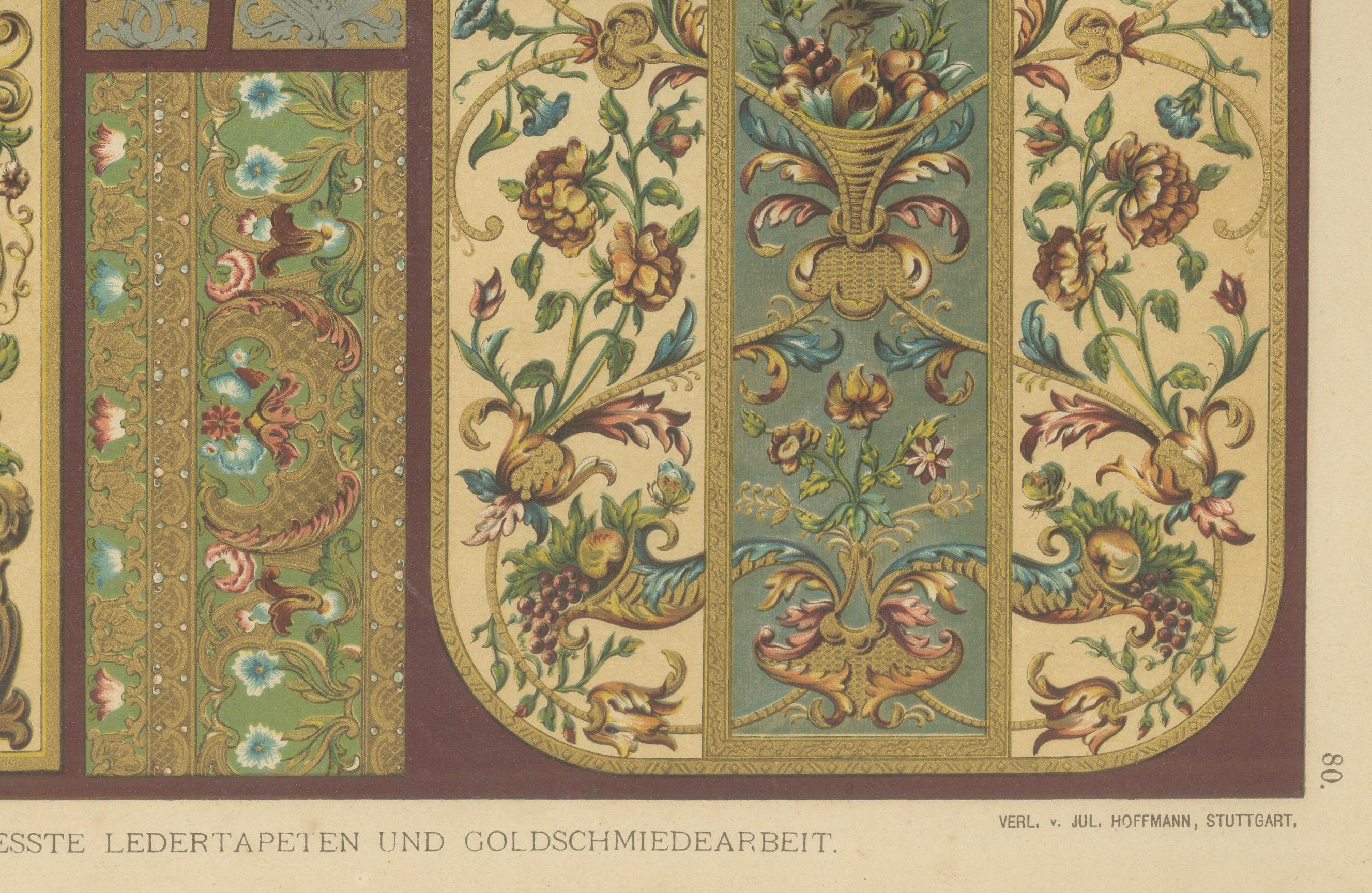
In the center of the print, narrow decorative bands illustrate various applications of gilded leather wall coverings and tooled designs. These would have been used in aristocratic interiors, lining walls and doors with embossed vegetal patterns in gold leaf and color. The effect is richly tactile, balancing the formality of geometric layout with the softness of scrolling botanical elements.
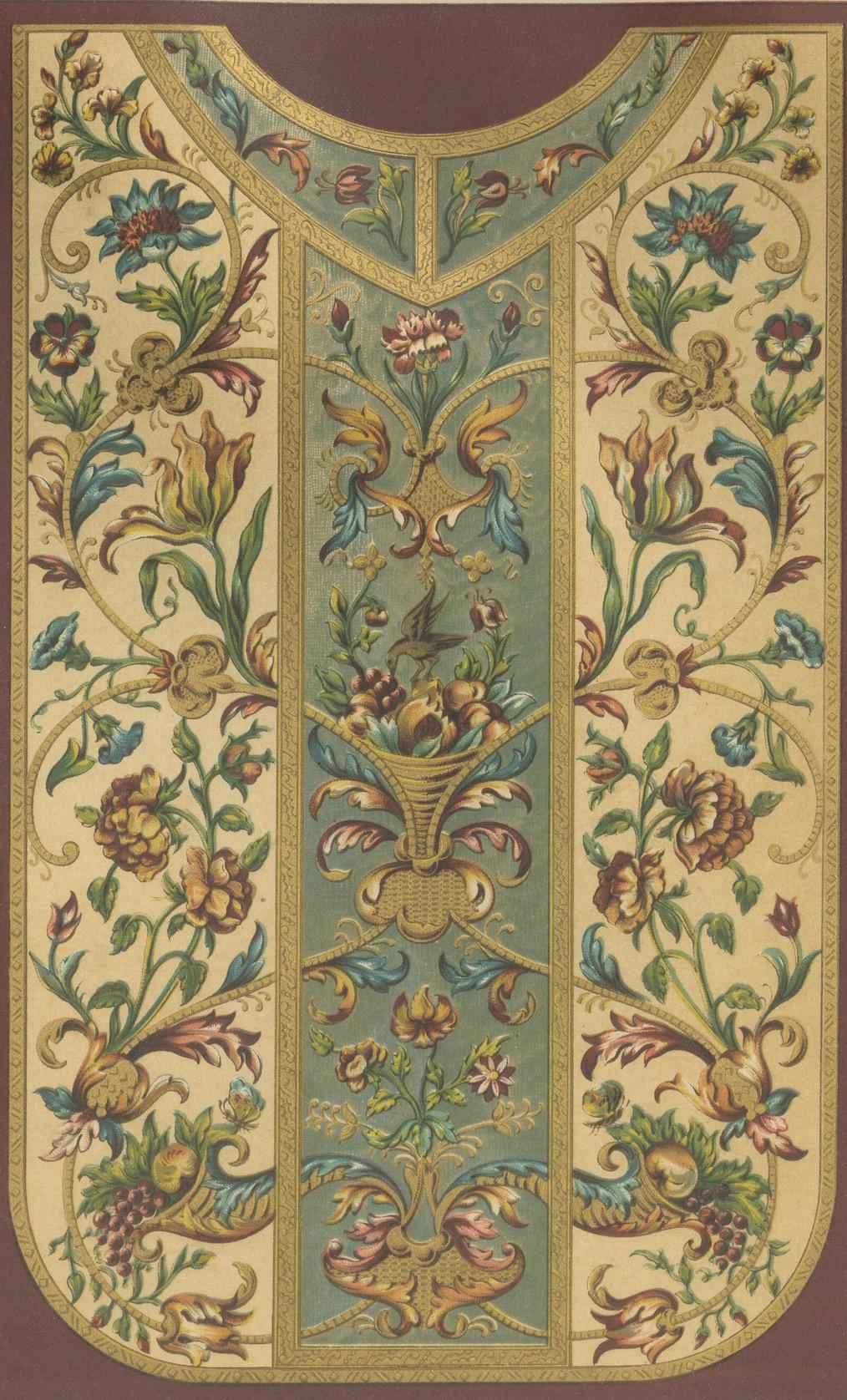
To the right, a broad vertical panel replicates a baroque embroidery or gilded textile pattern with radiant blooms, curling vines, and a central basket of stylized flowers. The symmetry, pastel blues and greens, and detailed gold accents all recall the floral tapestries and textile paneling favored in the salons and chapels of the 18th century.
H. Dolmetsch, a German designer and scholar of historic ornament, created the *Ornamentenschatz* to document decorative traditions across centuries and cultures. This plate is a masterclass in decorative complexity, showing how embroidery, textile design, and goldwork functioned not only as surface adornment but as powerful expressions of taste, wealth, and ceremonial importance in early modern Europe.
Condition:
This print is in very good antique condition. The colors remain strong and the printing sharp. Minor signs of age, such as slight edge wear or faint toning, may be present but are not distracting. It is a well-preserved and beautifully printed example.
Framing Tips:
To highlight the richness of the gold and color, consider a wide off-white or cream mat paired with a gold or dark wood frame. UV-protective glass will safeguard the colors from fading. This piece works well as a standalone highlight or as part of a series on historic decorative arts. Its vertical composition also lends itself beautifully to hallways, alcoves, or narrow wall spaces.