About this sheet
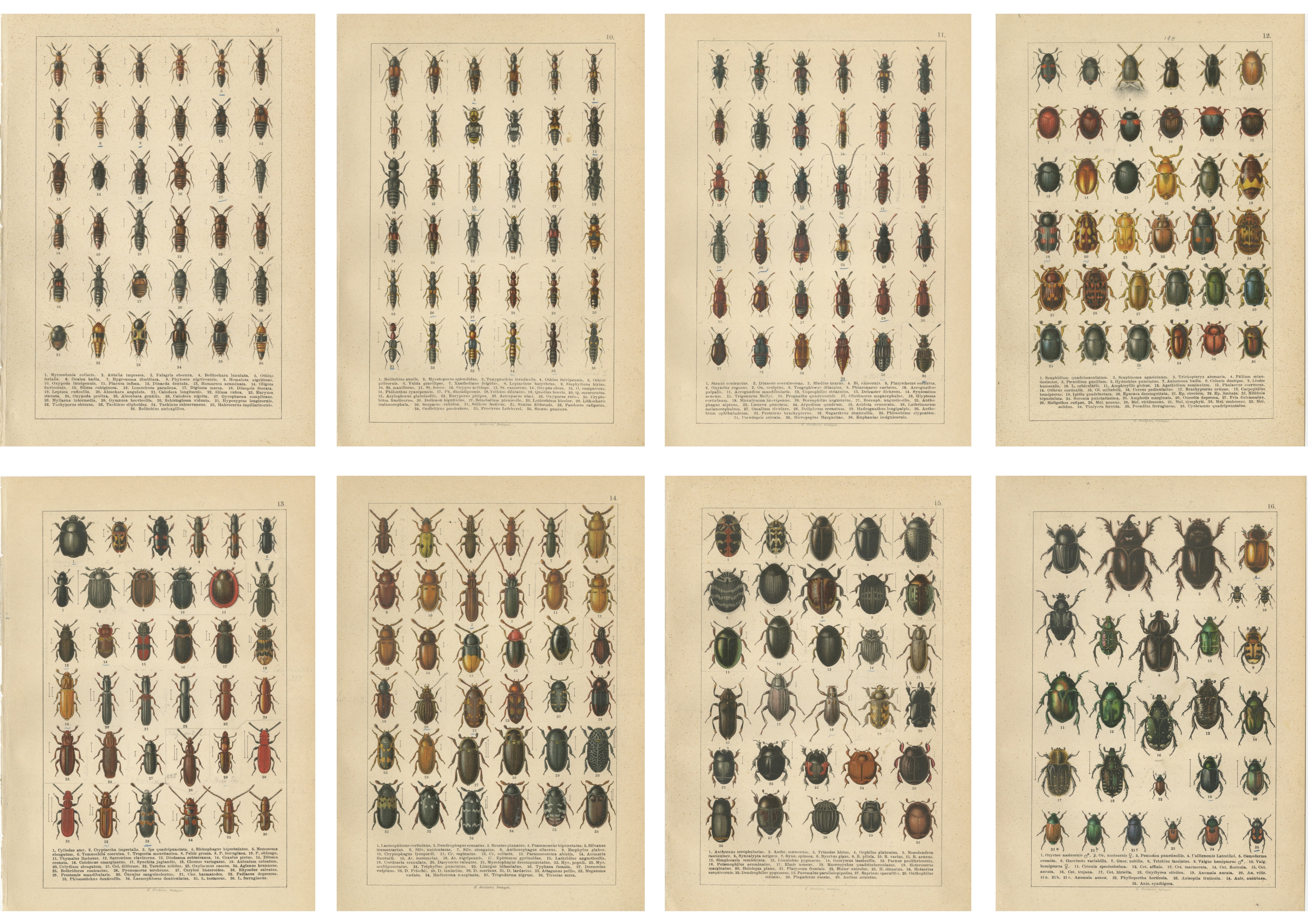
Museum Style Beetle Specimen Plates, Victorian Entomology Prints, Set of 8
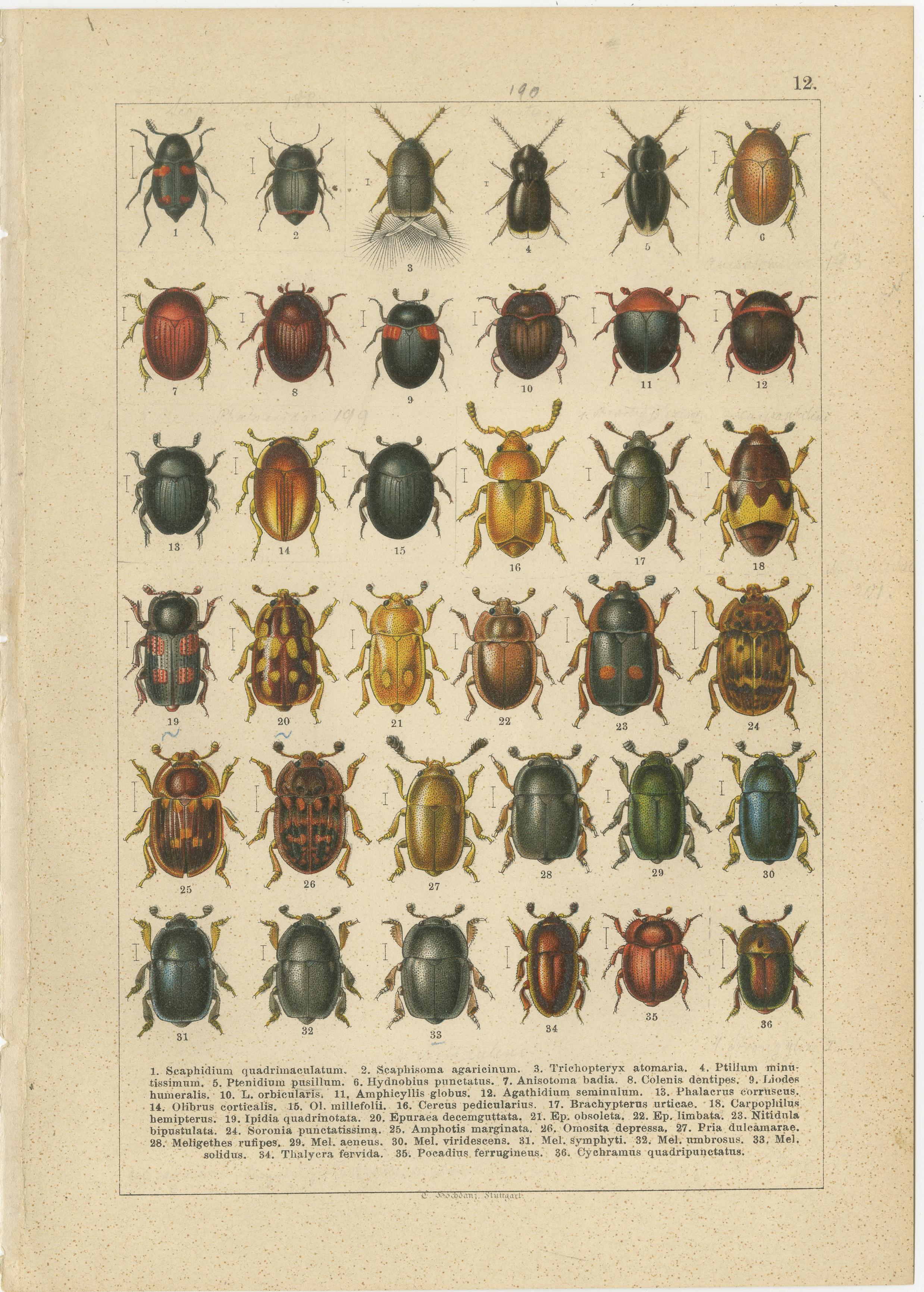
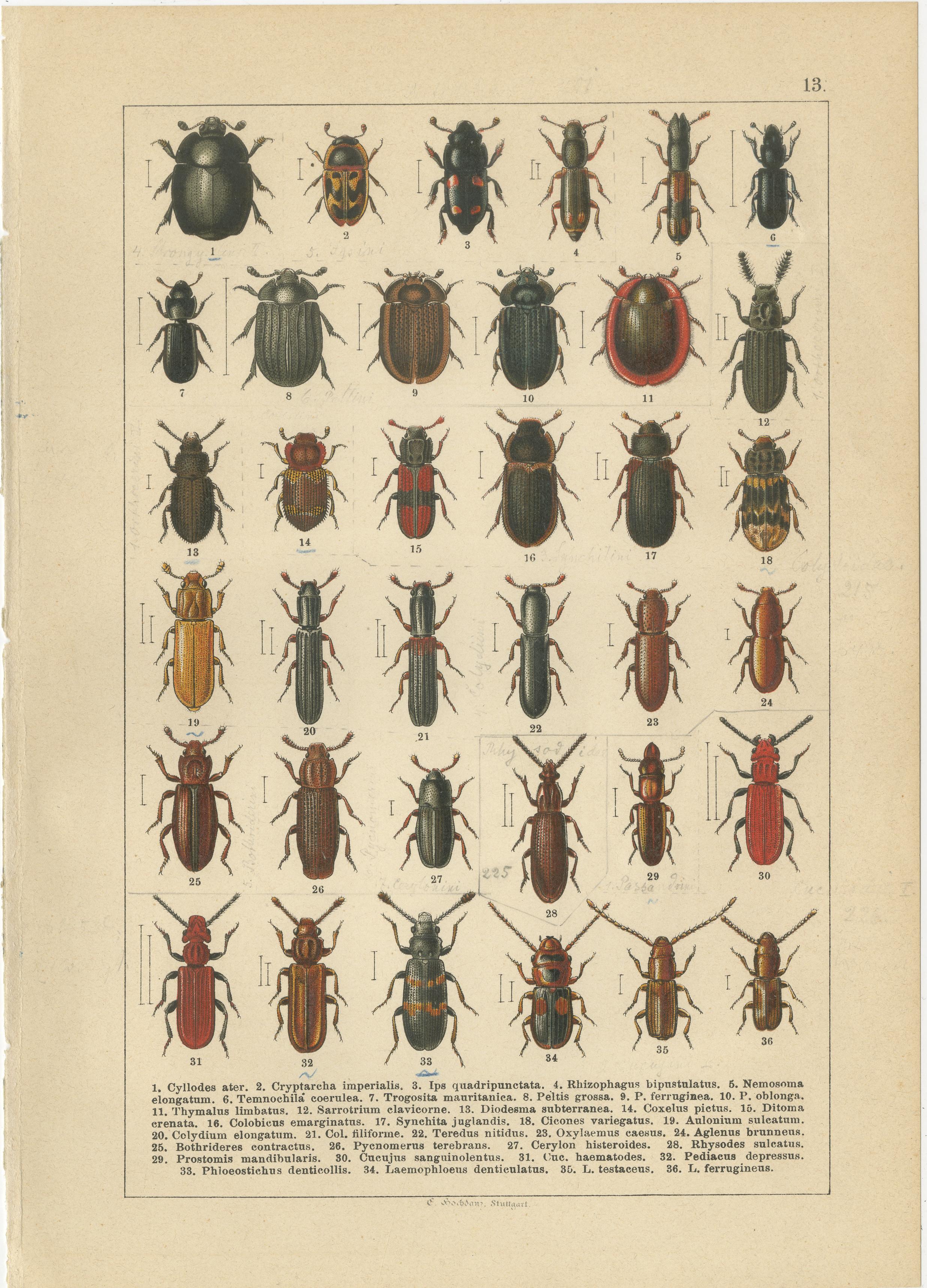
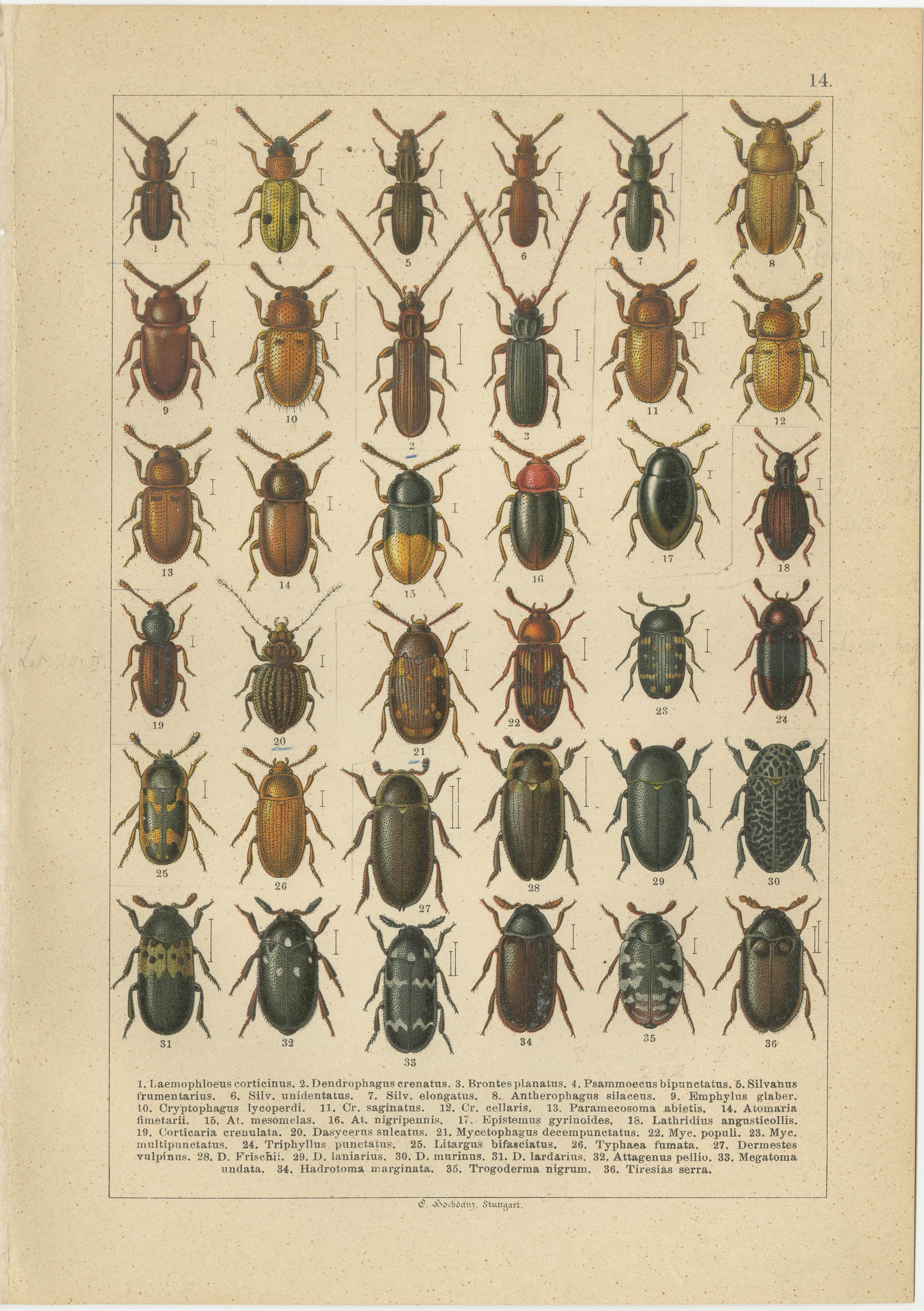
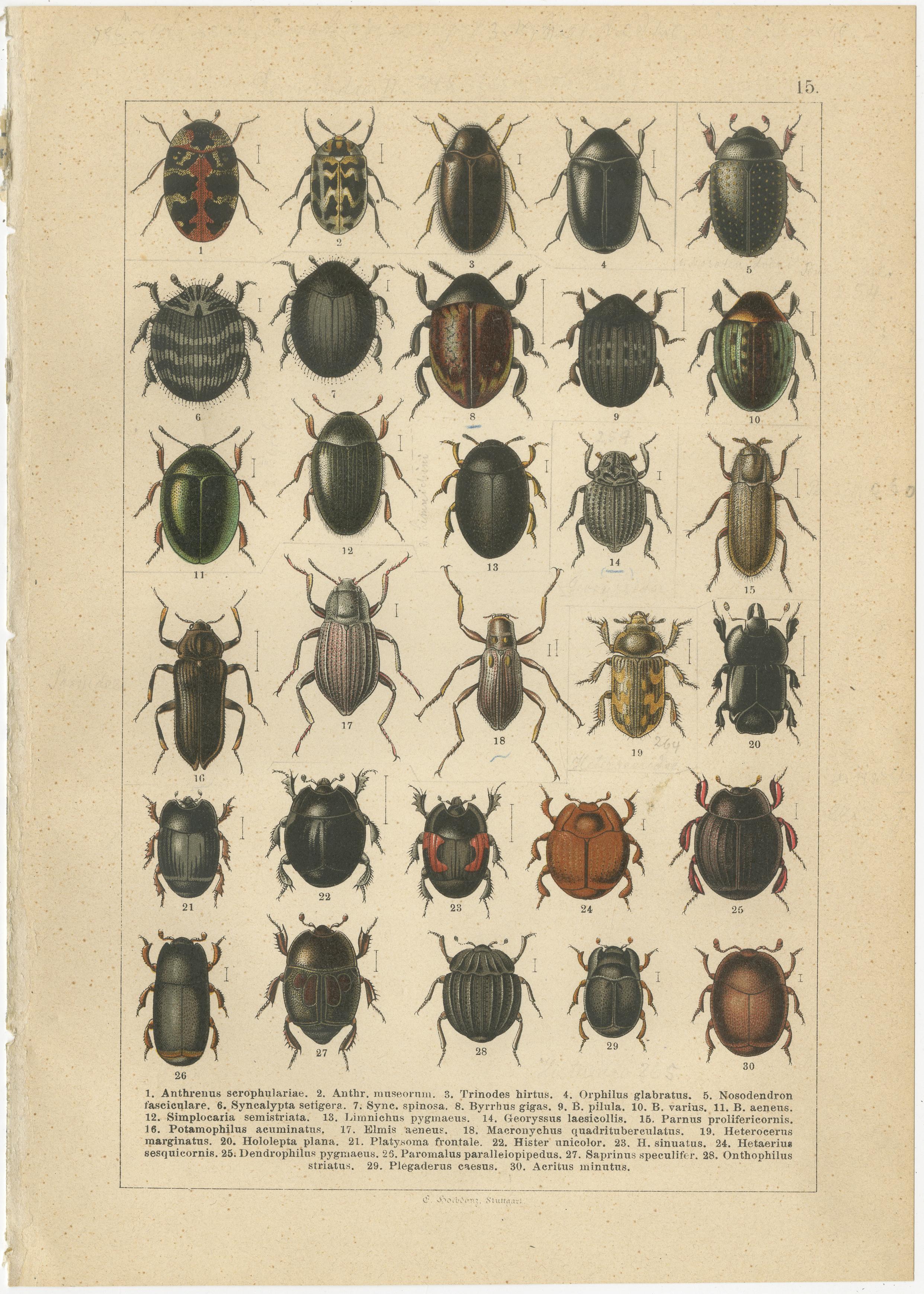
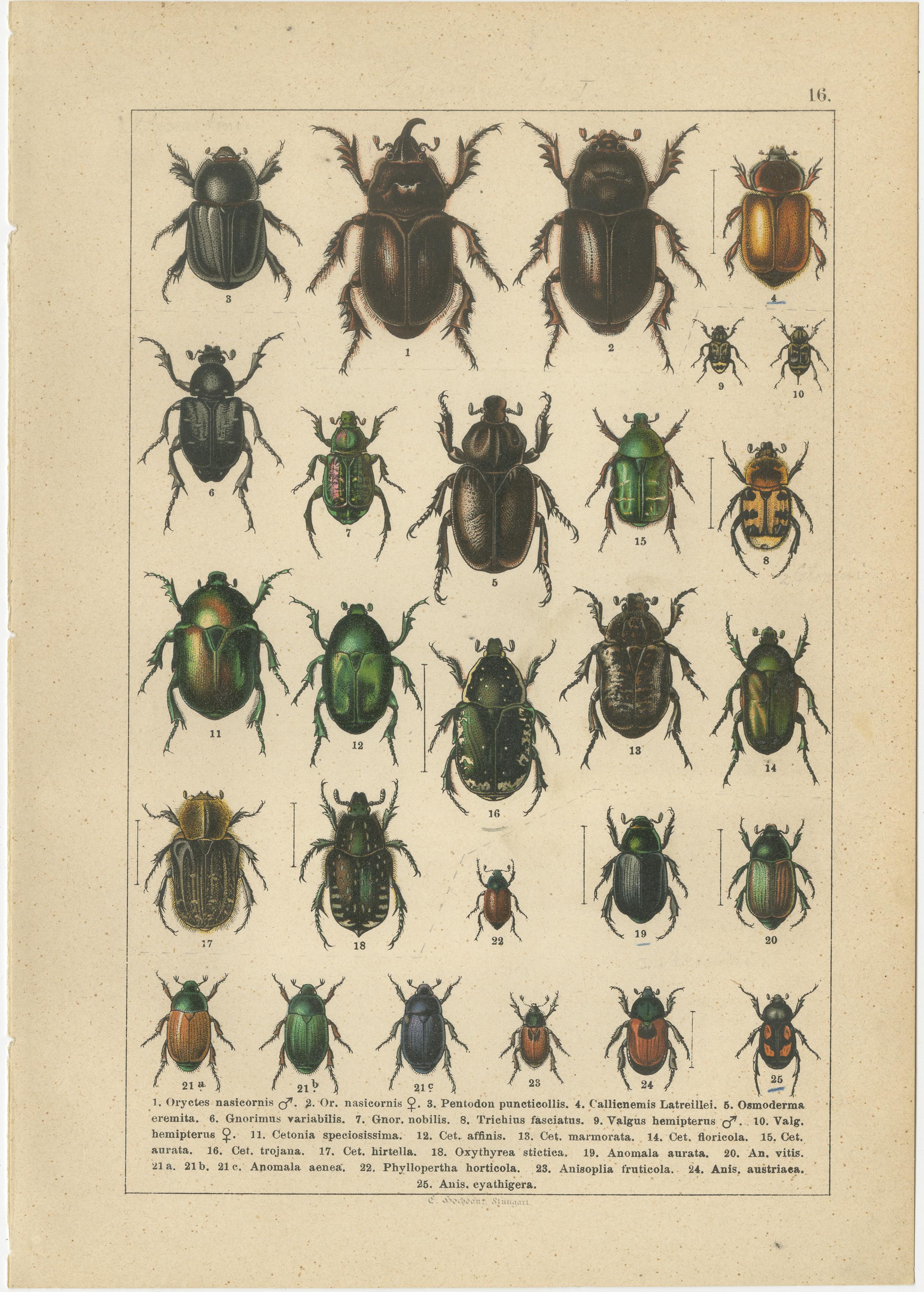
This striking decorative set of eight beetle plates originates from the celebrated German entomological work Käferbuch – Naturgeschichte der Käfer Europas by the naturalist C. G. Calwer. The prints were published in the expanded fifth edition of 1893, edited by Professor Dr. G. Jäger and revised by Dr. G. Stierlin, and issued in Stuttgart by the publisher Julius Hoffmann. Calwer’s Käferbuch became one of the most widely used illustrated guides to European beetles in the late nineteenth century and was specifically intended “Zum Handgebrauche für Sammler,” meaning for practical use by collectors and naturalists.
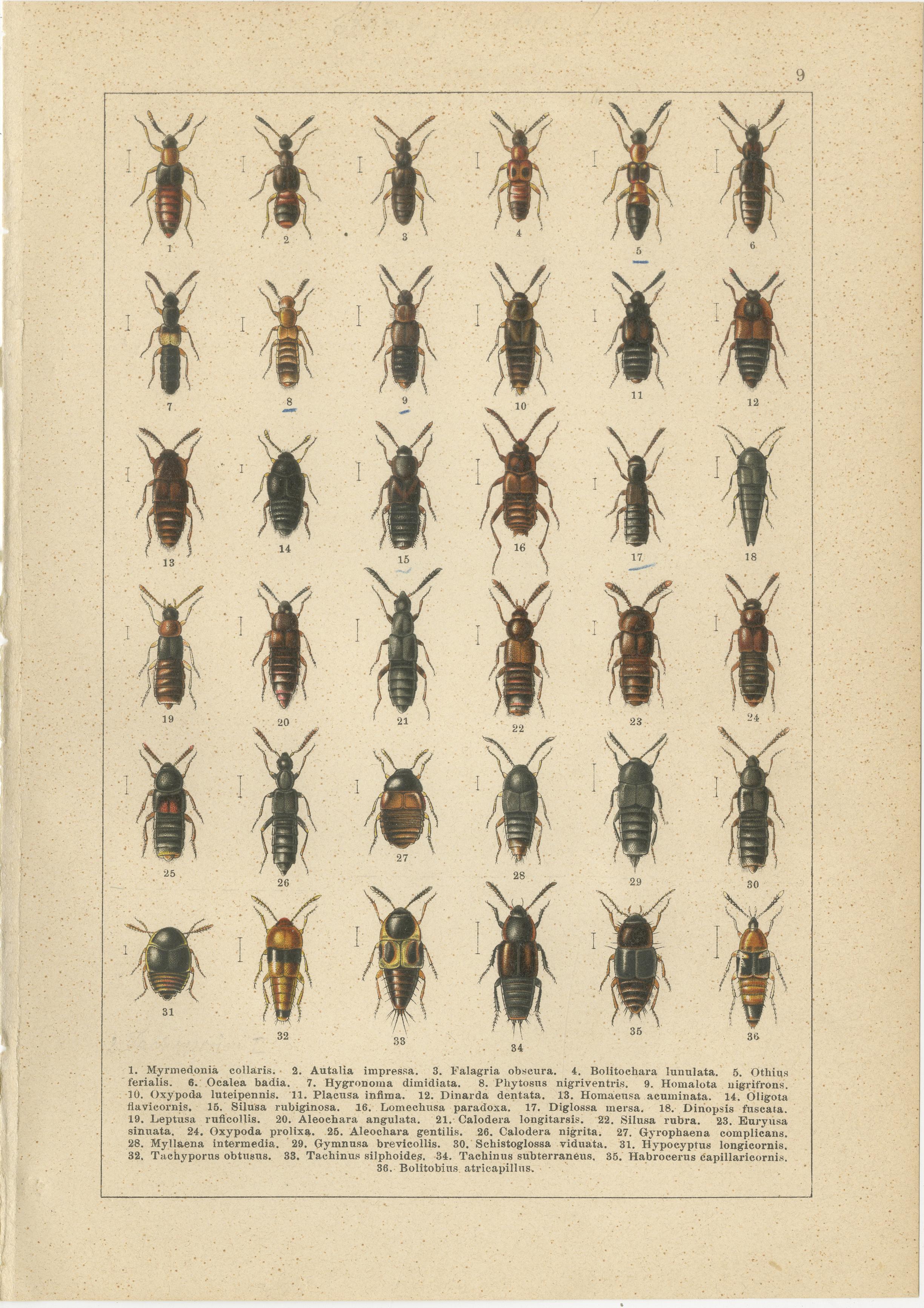
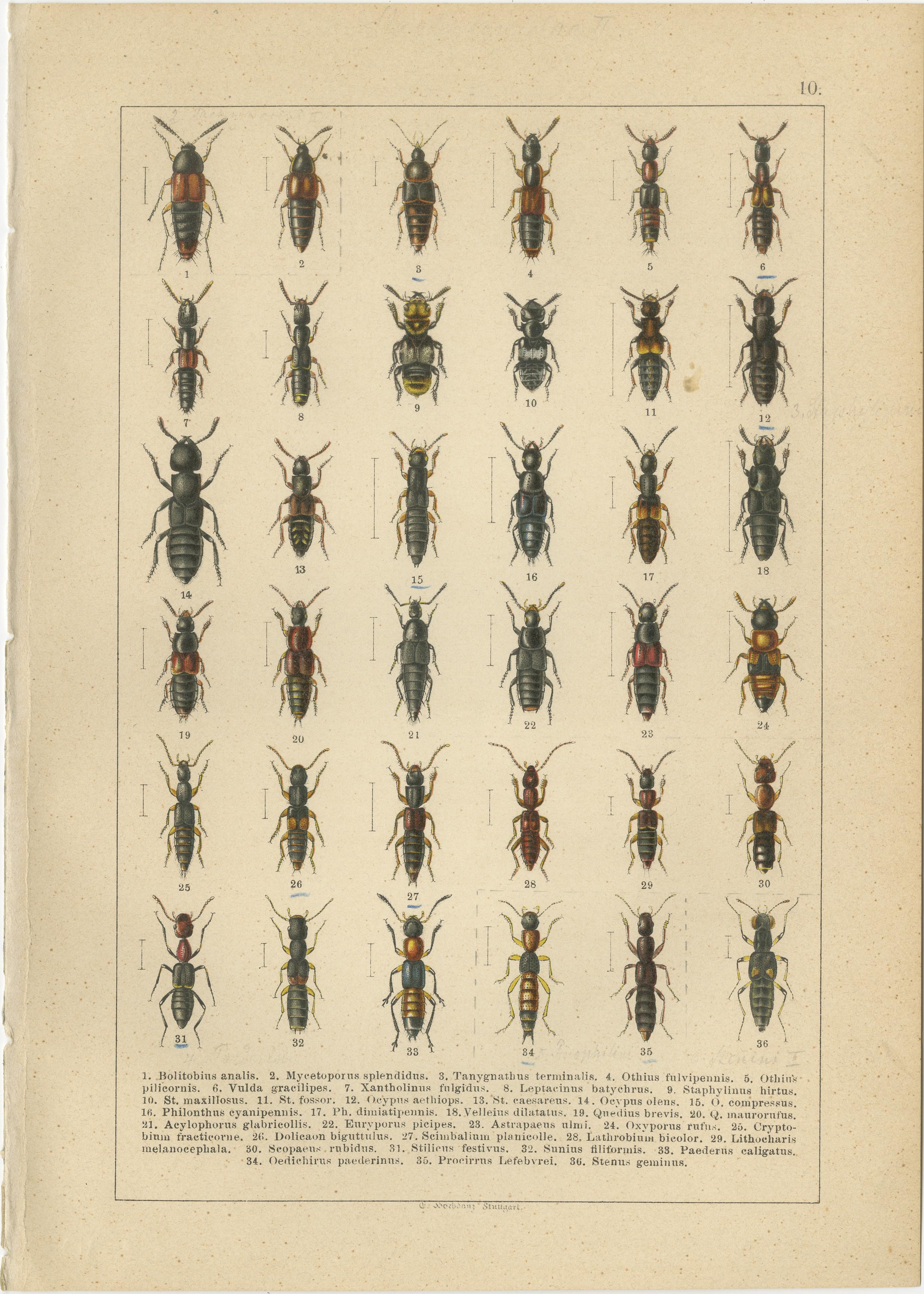
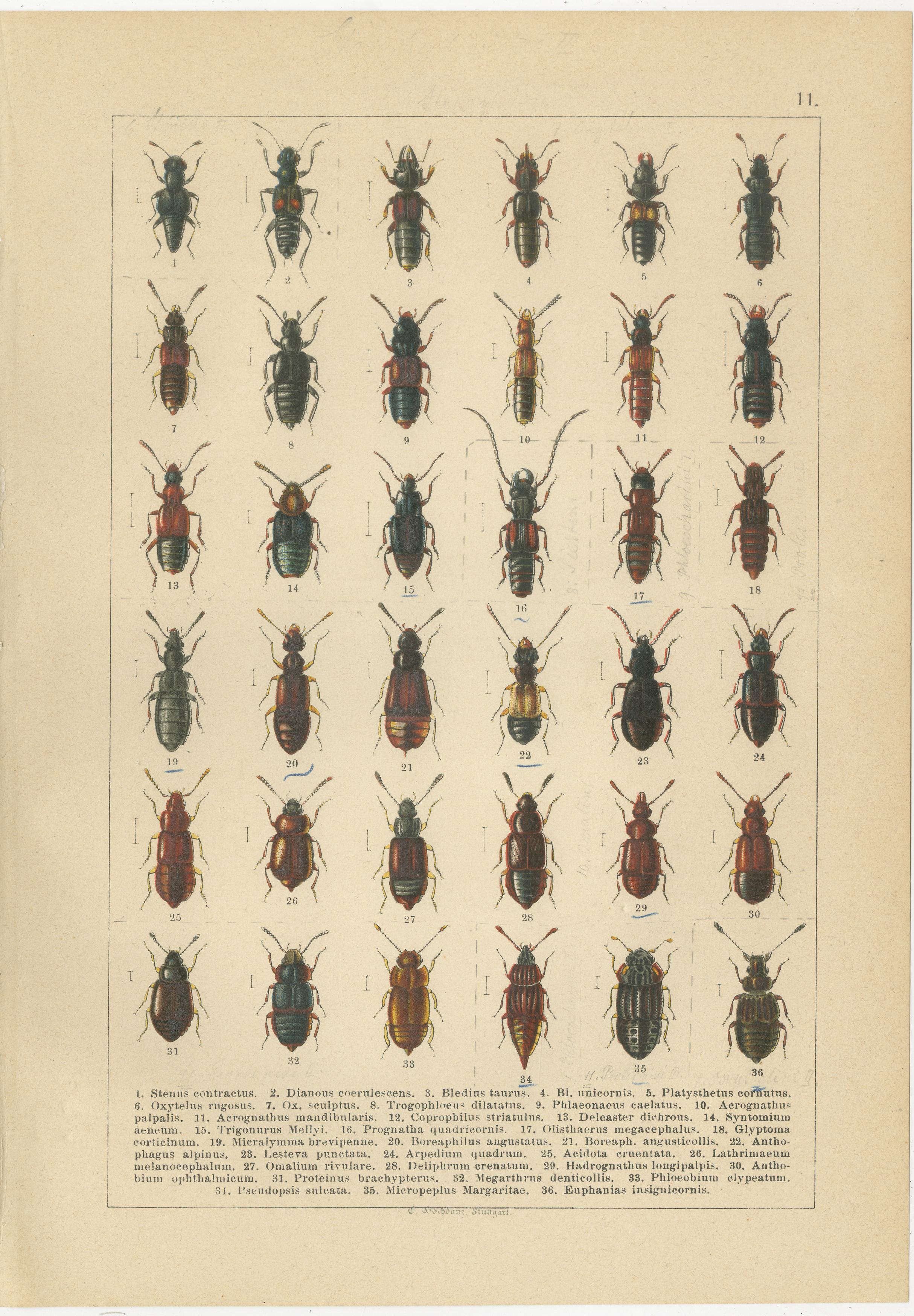
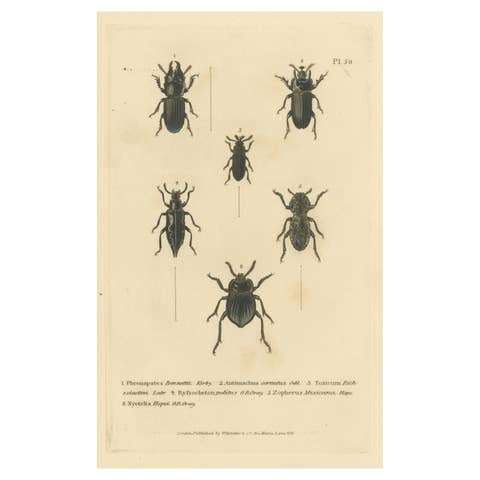
The plates present a fascinating visual survey of European beetles (order Coleoptera), arranged in beautifully balanced compositions typical of late nineteenth-century natural history illustration. Each plate displays numerous species carefully organized in a grid, allowing the viewer to compare body forms, colors, and patterns. The insects are rendered with remarkable clarity and depth using chromolithography, a sophisticated color printing process that allowed multiple stones to reproduce the metallic greens, bronzes, reds, and blacks characteristic of many beetle species.
Among the beetles illustrated are several well-known European species that remain familiar to naturalists and collectors today. These include the Green Tiger Beetle (Cicindela campestris), the Hybrid Tiger Beetle (Cicindela hybrida), the Gold Ground Beetle (Carabus auratus), the Violet Ground Beetle (Carabus violaceus), and the impressive Caterpillar Hunter (Calosoma sycophanta). Aquatic species such as the Great Diving Beetle (Dytiscus marginalis) appear alongside carrion beetles, burying beetles (Nicrophorus species), rove beetles, water beetles, and various ground beetles found throughout forests, meadows, and wetlands across Europe.
Beyond their scientific importance, these prints possess strong decorative qualities. The orderly arrangements, jewel-like coloration, and variety of forms create compositions reminiscent of Victorian cabinets of curiosity and museum specimen drawers. When displayed together, the plates form an impressive natural history wall display that combines scientific heritage with elegant design.
Sets of nineteenth-century insect plates have become increasingly sought after by collectors, natural history enthusiasts, and interior designers. Their intricate details and structured layouts make them particularly suitable for libraries, studies, offices, or interiors inspired by classical scientific aesthetics.
Note: Please note that these prints are originals and not reproductions. They are offered unframed.
Condition report:
Very good antique condition with light age toning and occasional minor spotting typical of late nineteenth-century paper. The sheets retain generous margins and strong original color. Minor handling marks may be present as expected for plates originally bound in a reference volume.
Framing tips:
These plates display beautifully as a symmetrical gallery arrangement of eight prints. Dark walnut, black, or ebonized frames paired with ivory or warm off-white mats highlight the antique paper tones and enhance the vivid beetle colors. Arranged in two rows of four, they create a striking museum-style presentation reminiscent of natural history collections.
Technique: Chromolithograph
Maker: C. G. Calwer, Germany, published Julius Hoffmann, Stuttgart, 1893