About this sheet
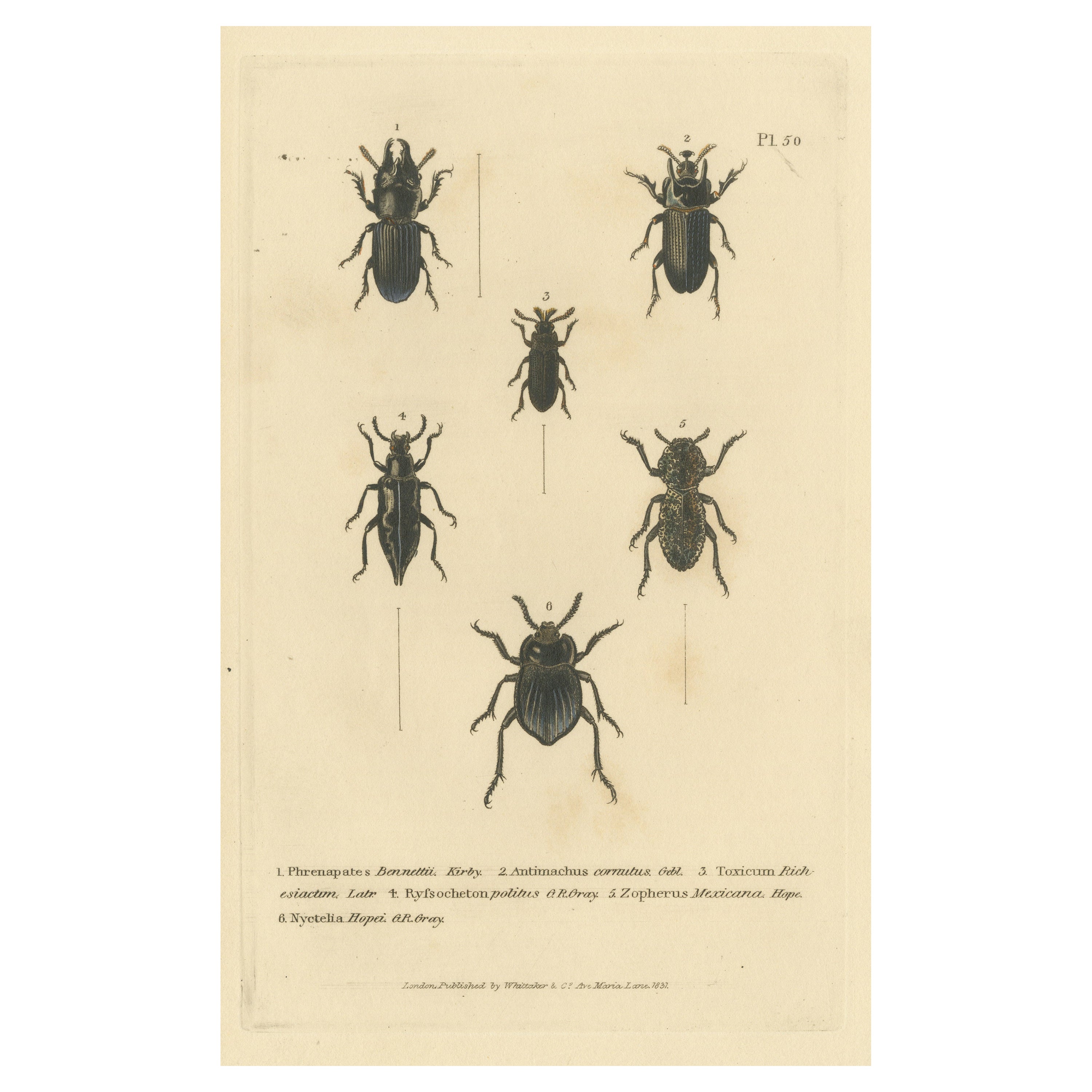
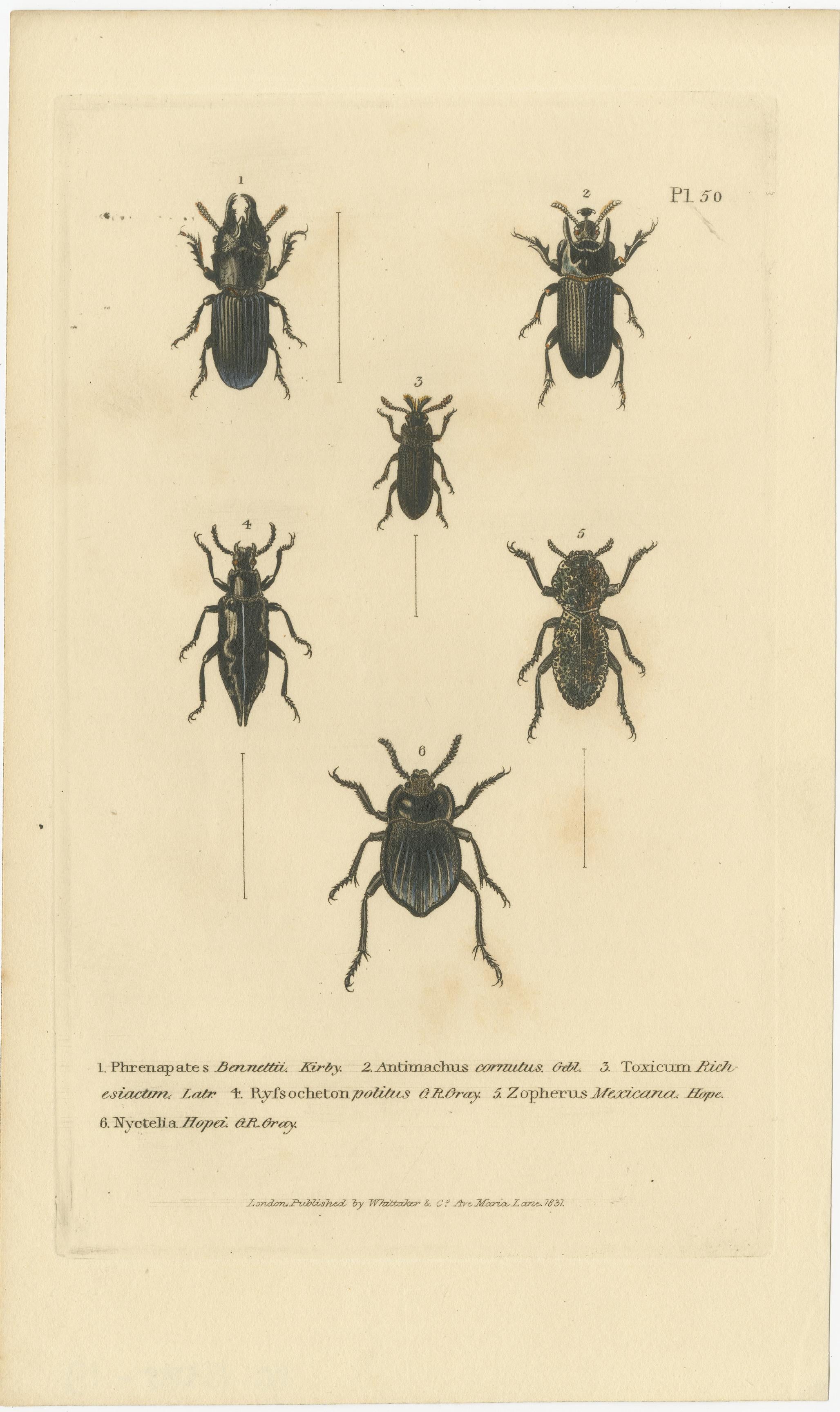
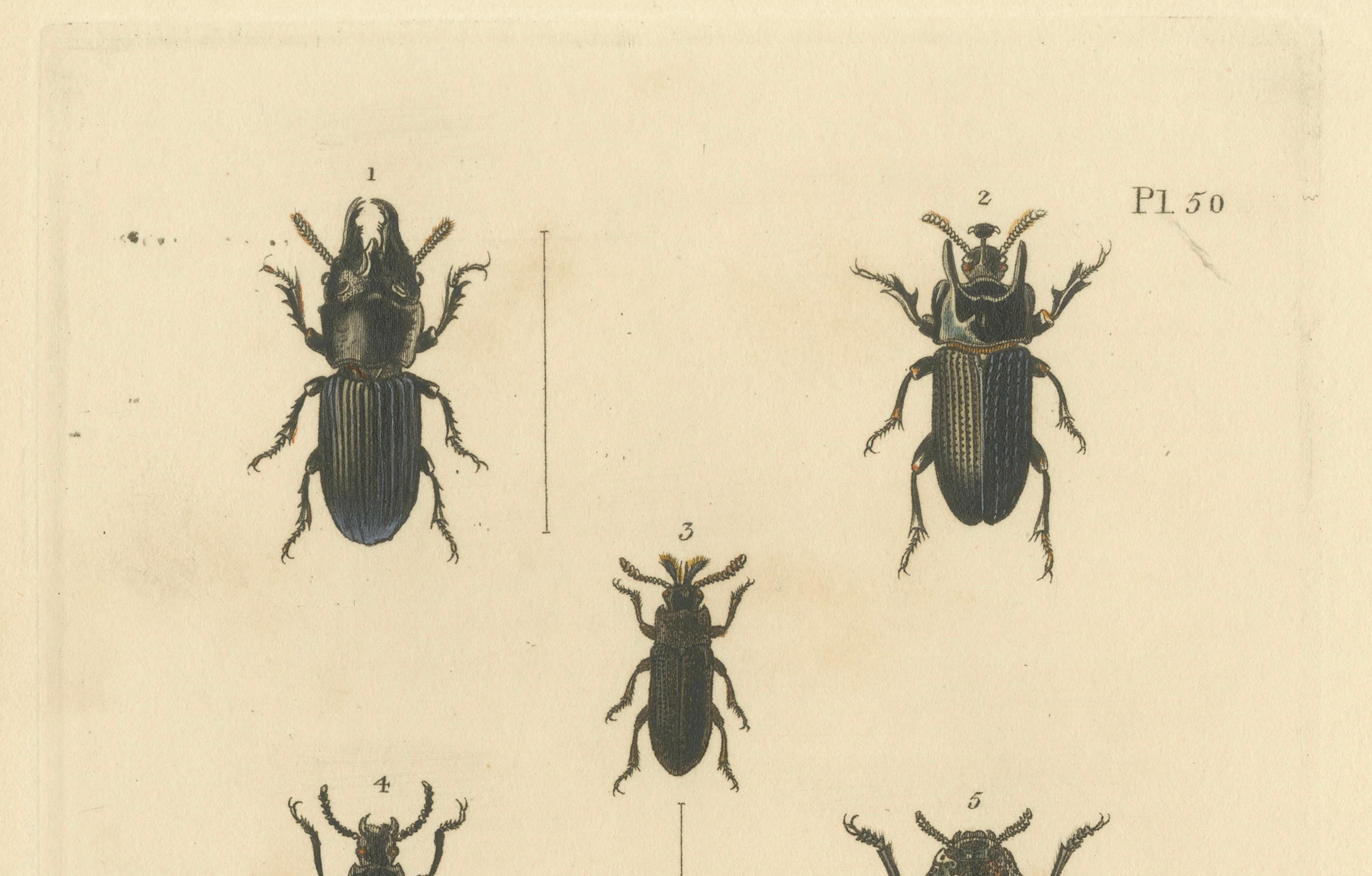
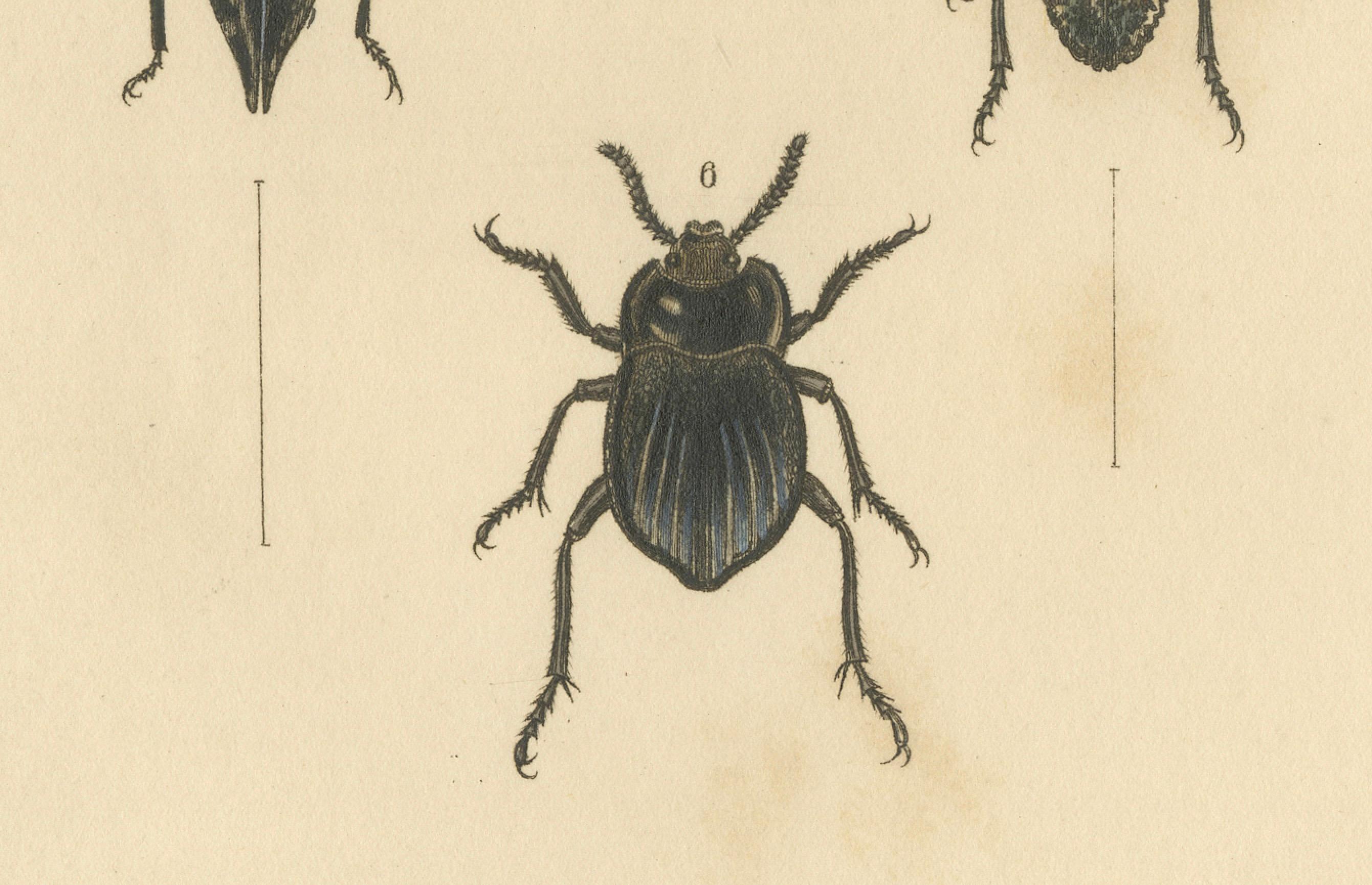
This image is an original antique print from a plate labeled "Pl. 50" featuring six different species of beetles, each meticulously illustrated. The title provided, "Phrenapates Bennettii Kirby, 2. Antimachus cornutus (...)", indicates the first two beetles’ scientific names, with the first being named after the entomologist William Kirby and the second featuring a notable characteristic 'cornutus' which means 'horned'.
The print was published between 1827 and 1835 as part of "The Animal Kingdom" by Georges Cuvier, a pivotal figure in the natural sciences. Georges Cuvier is renowned for his contributions to the fields of comparative anatomy and paleontology, establishing foundational principles by comparing living animals with fossils, earning him the moniker "founding father of paleontology".
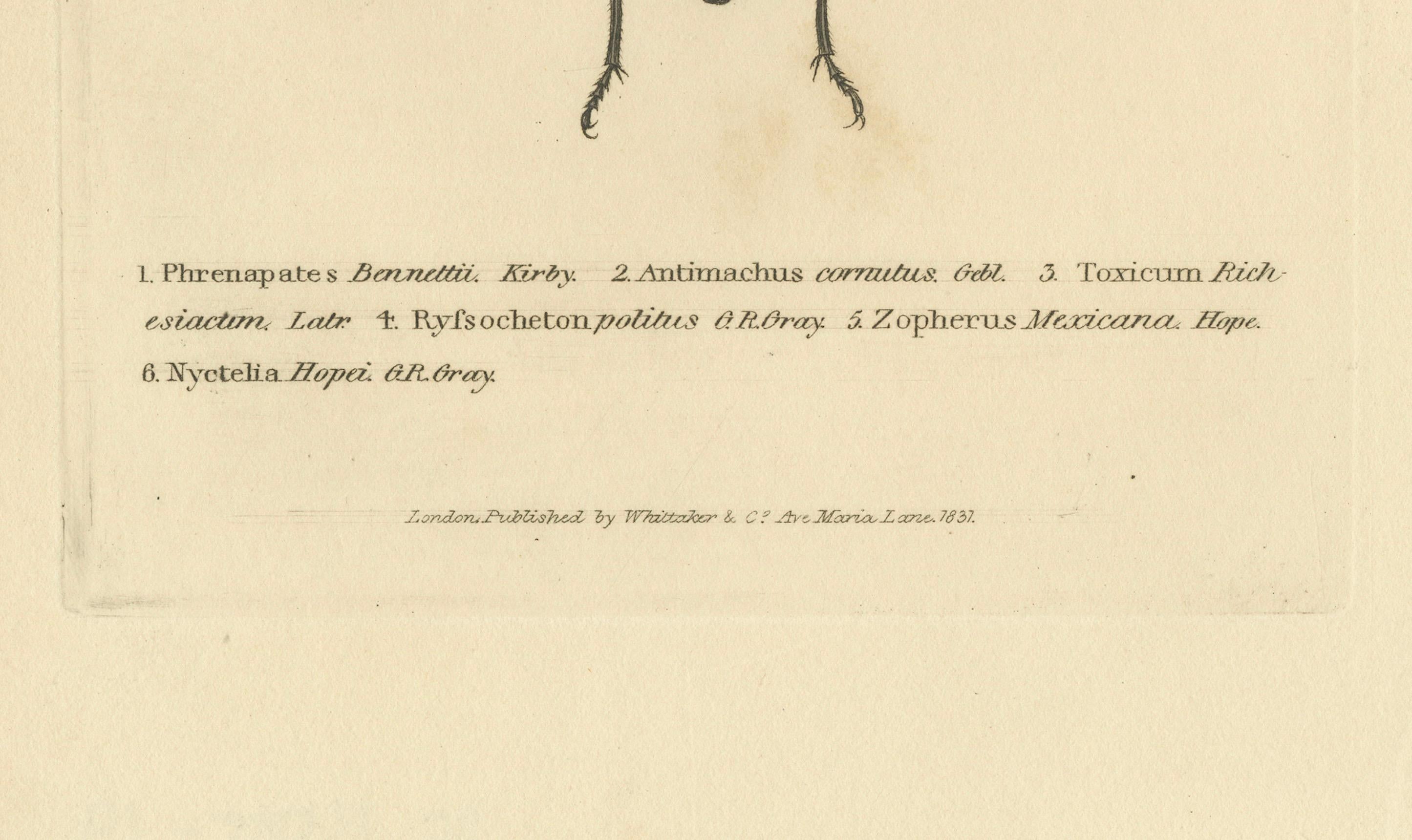
Each beetle is numbered and arranged in two columns, with the specimens varying in size and shape, reflecting their unique physical characteristics. Such prints were common in the period as a way to document and share scientific knowledge about biodiversity. The detailed rendering of each beetle would have aided scientists and enthusiasts in the identification and study of these species. The text at the bottom of the print provides the scientific names of the beetles illustrated, which correspond to the numbers next to each beetle. In more detail:
1. Phrenapates Bennettii Kirby: This could refer to a beetle species named after William Kirby, an entomologist. "Bennettii" could indicate the species was dedicated to or discovered by someone with the surname Bennett.
2. Antimachus cornutus: The term "cornutus" suggests this beetle has some horn-like projections.
3. Toxicon: While this name isn't followed by a species name, it could refer to a genus.
4. Rhysocheton politus A. Gray: The name includes a reference to A. Gray, who could be the identifier or classifier of this species. "Politus" may describe some polished or smooth aspect of the beetle.
5. Zopherus Mexicana Hope: Indicates a beetle species likely native to Mexico and named by someone with the last name Hope.
6. Nyctelia Hopei A. Gray: Similarly, this species seems to be identified by A. Gray and named after someone named Hope.
The text at the bottom indicates that this print was published in London by Whittaker & Co. on Ave Maria Lane in the year 1837. This information helps to date the print and provides context for the location and publisher of the work.
Overall, the image is a testament to the meticulous work of early naturalists and illustrators who cataloged the natural world during an era of significant scientific discovery and exploration.