About this sheet
Fleas, Tarantula & Spiders – Brodtmann Hand-Colored Natural History Plate, 1816
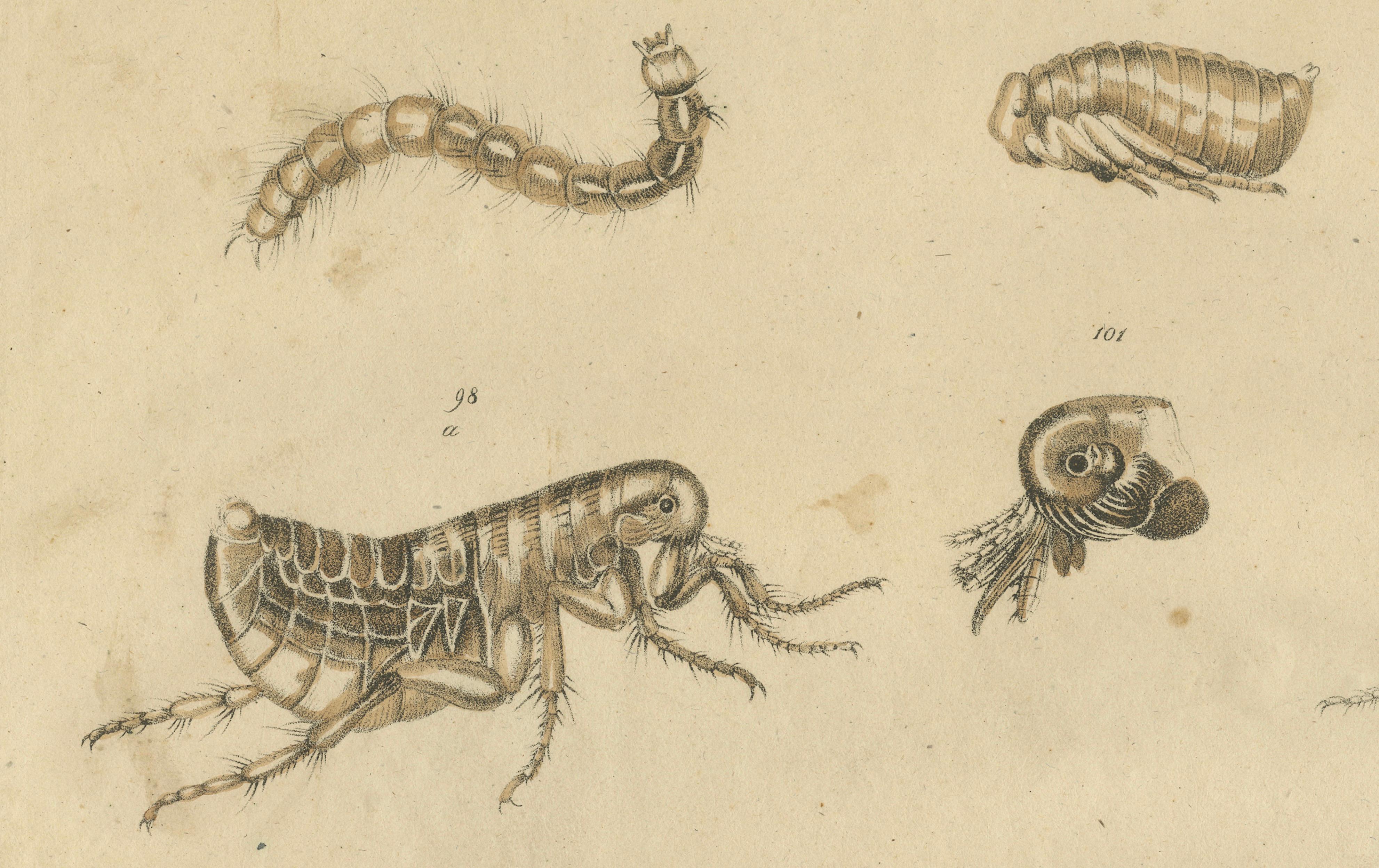
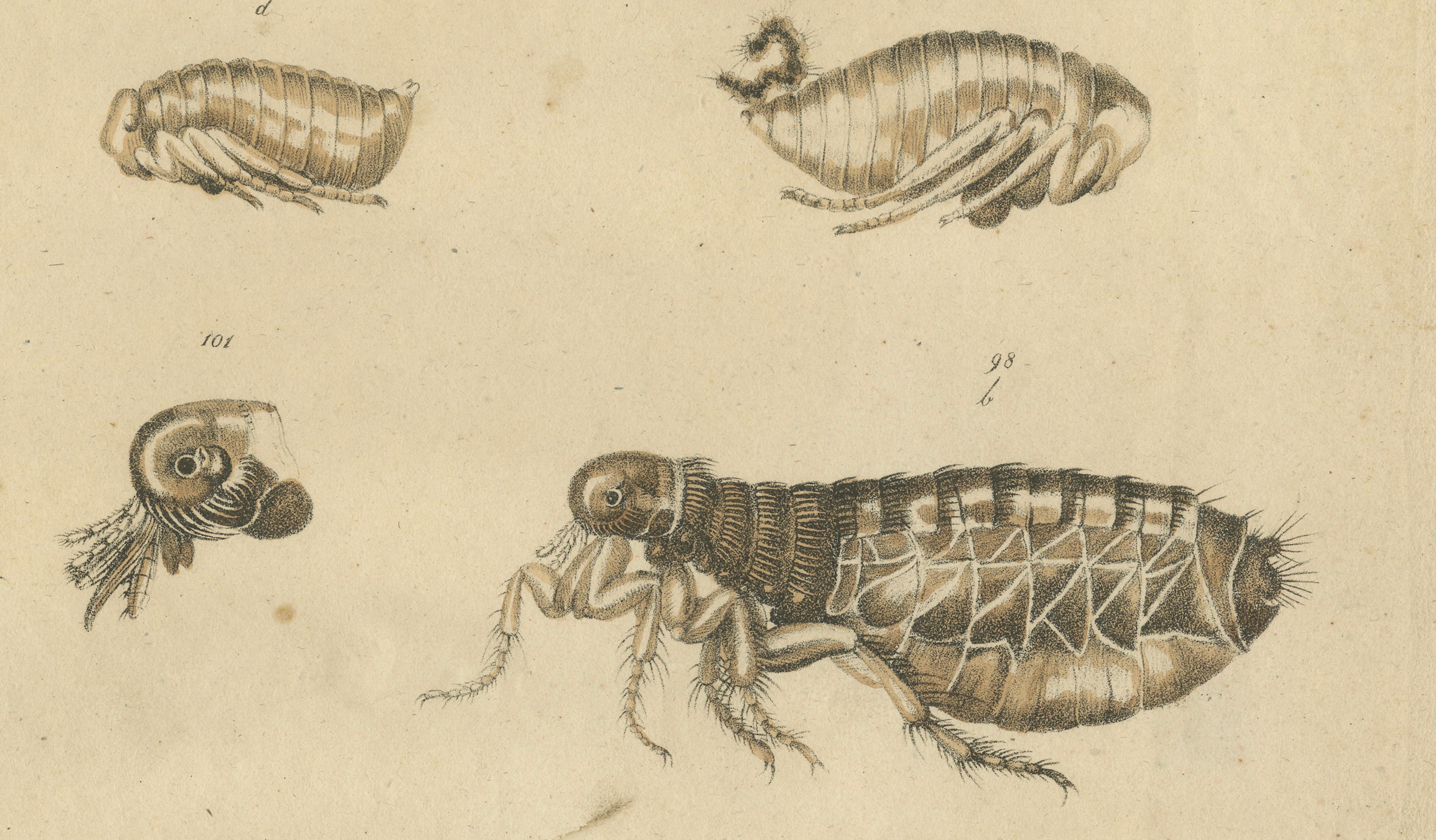
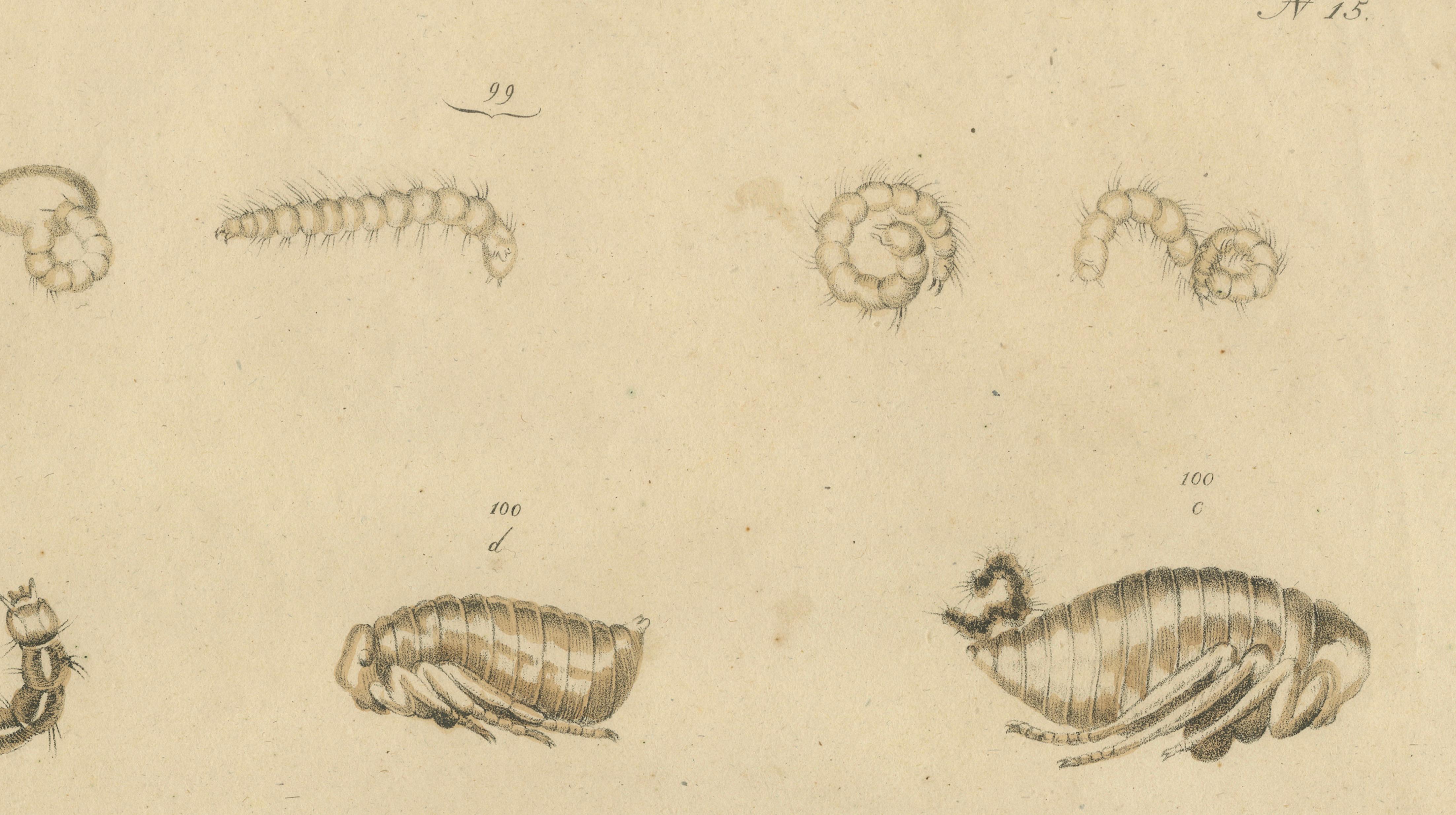
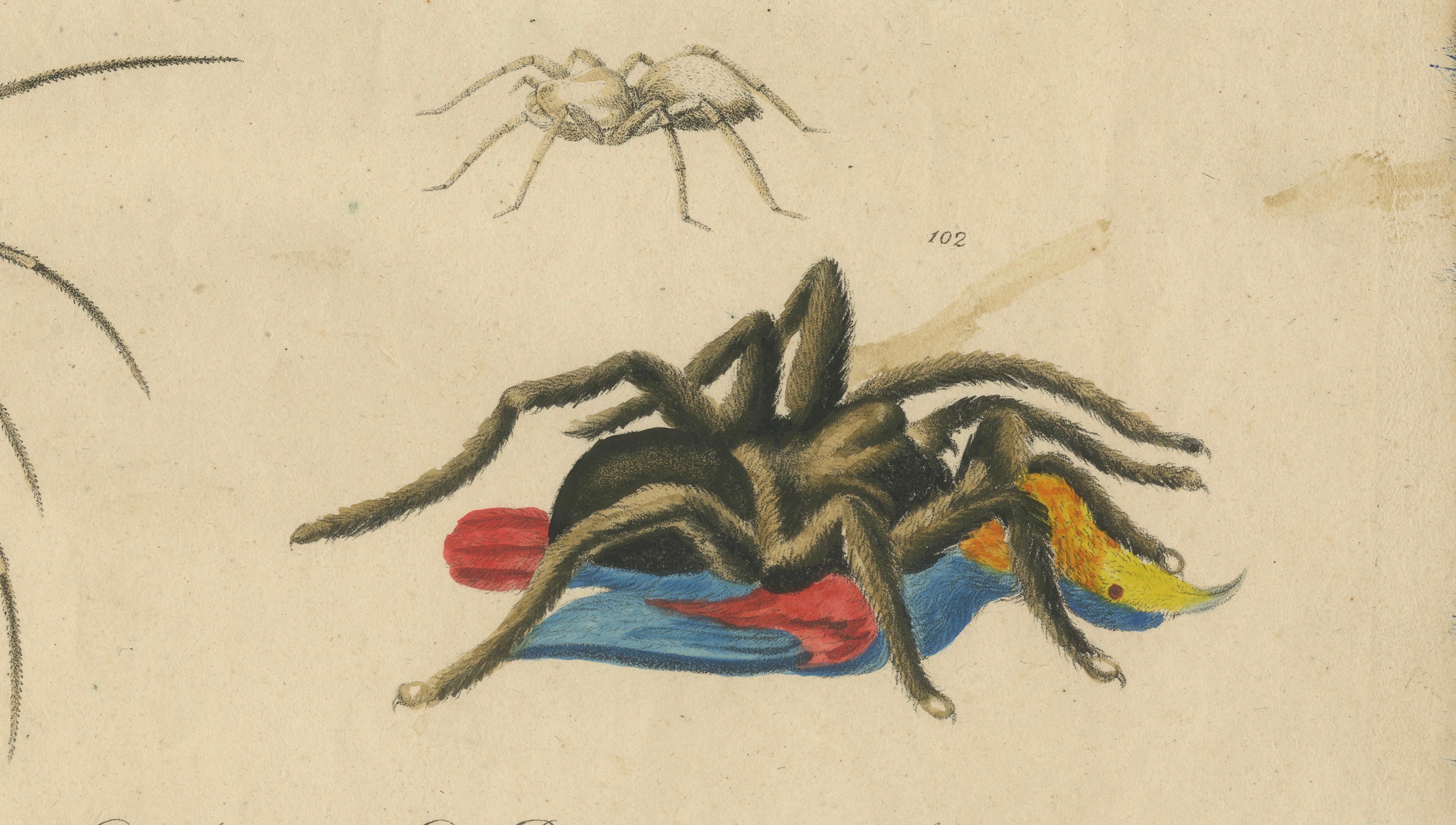
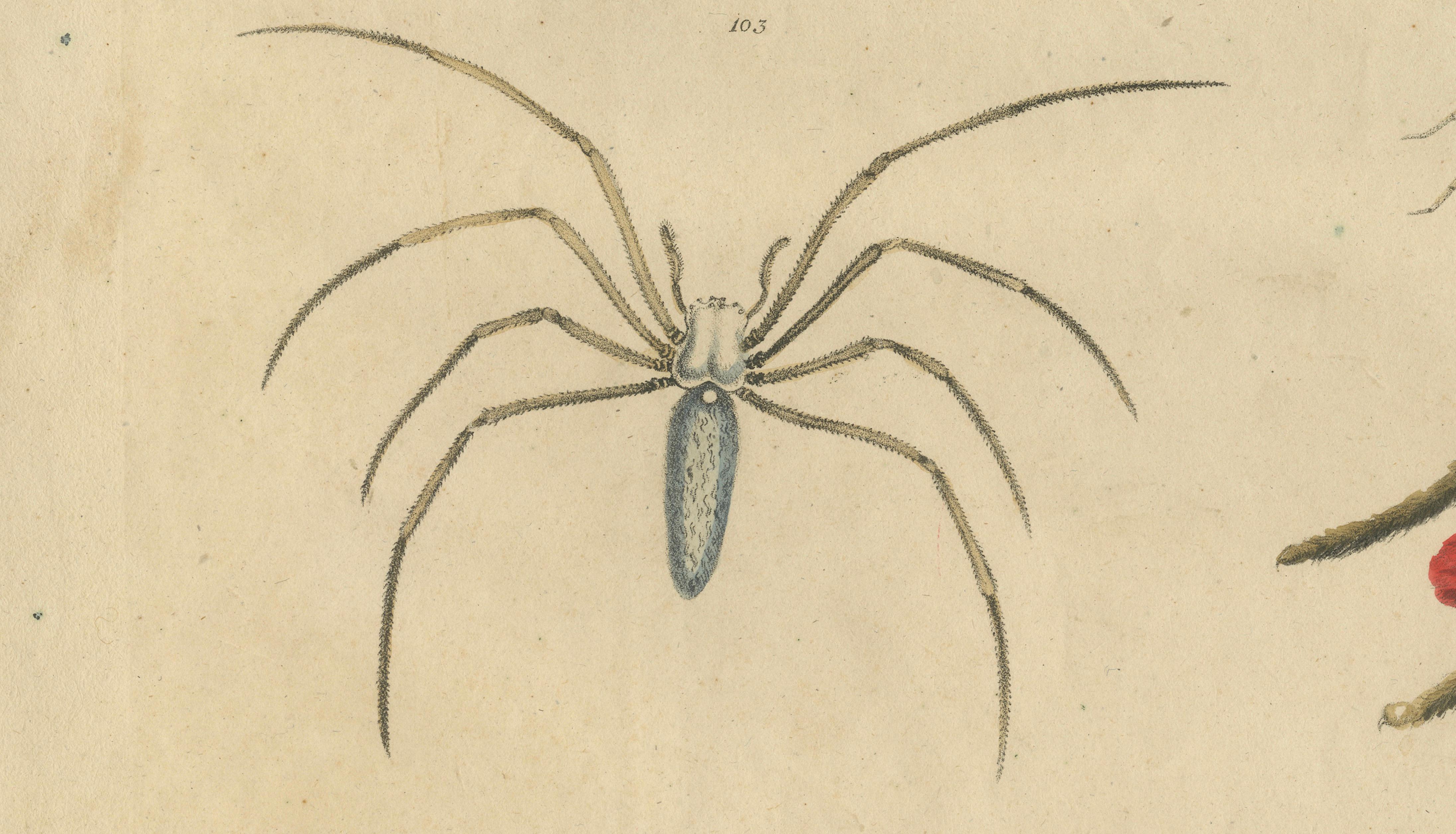
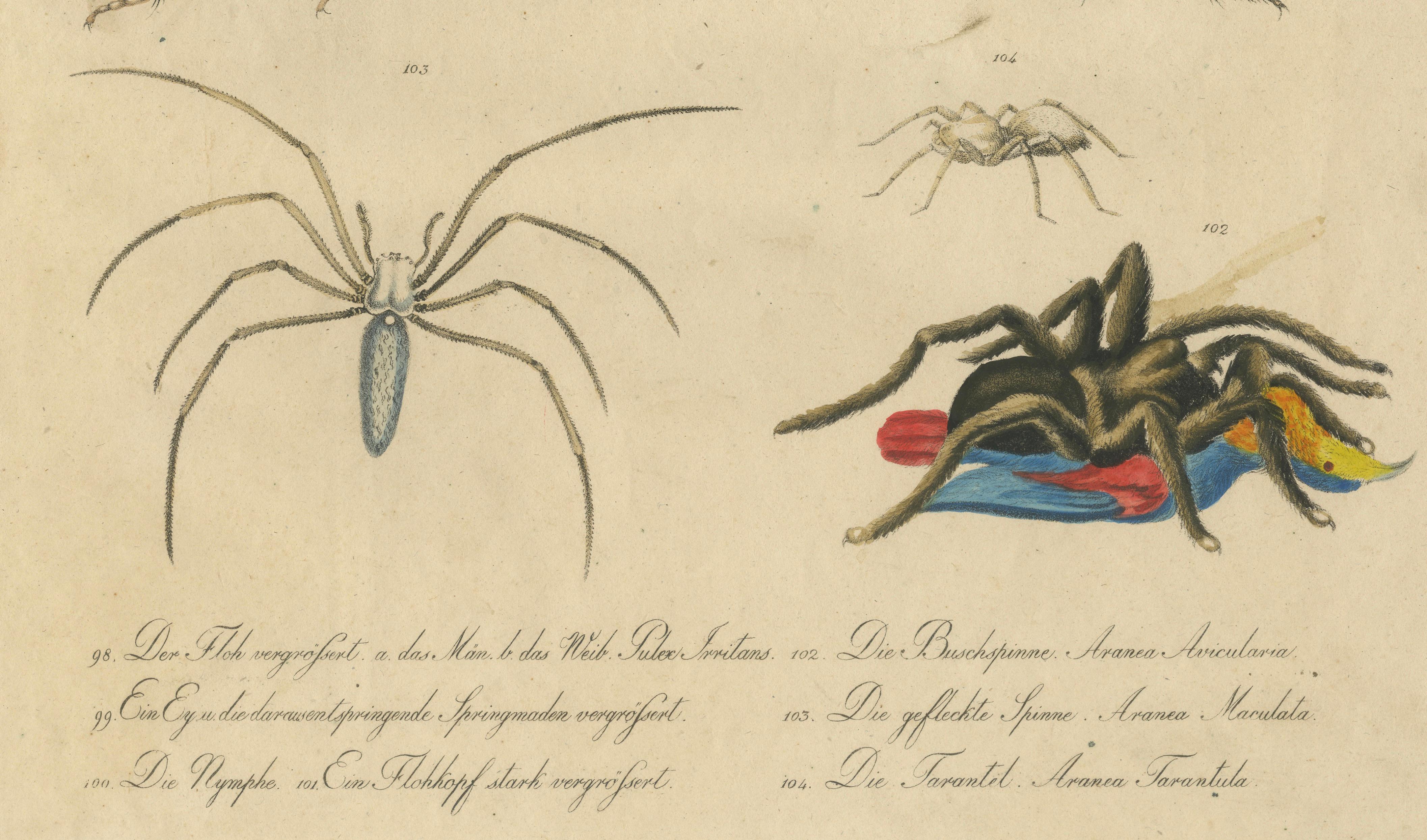
This fascinating original hand-colored lithograph illustrates a variety of insects and arachnids, combining scientific observation with the artistic refinement characteristic of early nineteenth-century natural history publications. The plate features enlarged studies of fleas in different developmental stages, alongside several species of spiders, including a dramatic depiction of a tarantula.
Created by Swiss artist and natural history illustrator Karl Joseph Brodtmann (1787–1862), the print was published in Lindau in 1816 as part of the celebrated *Naturhistorische Bilder-Gallerie aus dem Thierreiche*. Brodtmann was among the pioneers of lithographic illustration and became renowned for his ability to combine scientific accuracy with exceptional artistic quality.
The upper portion of the sheet is devoted to the life cycle of the flea (*Pulex irritans*), showing eggs, larvae, pupae, and enlarged adult specimens. These detailed studies reflect the growing interest in entomology during the Enlightenment and early nineteenth century, when naturalists sought to classify and document even the smallest creatures of the natural world.
The lower section presents several spiders, including the Bush Spider (*Aranea avicularia*), the Spotted Spider (*Aranea maculata*), and the imposing Tarantula (*Aranea tarantula*). The vividly colored tarantula at lower right forms the visual centerpiece of the composition, contrasting beautifully with the more delicate scientific studies surrounding it. The enlarged scale allows the viewer to appreciate anatomical details that would otherwise be difficult to observe.
Natural history plates depicting spiders and insects are increasingly sought after by collectors because they combine decorative appeal with scientific interest. The unusual subject matter, together with the elegant hand coloring and precise draftsmanship, makes this sheet particularly attractive for collectors of entomology, arachnology, scientific illustration, and early lithography.
Today, Brodtmann's natural history prints are admired not only as scientific documents but also as works of art that capture the curiosity and spirit of discovery that characterized the early nineteenth century.
Keywords: Tarantula, Spider, Flea, Pulex irritans, Aranea tarantula, Aranea avicularia, Aranea maculata, Arachnology, Entomology, Natural History, Karl Joseph Brodtmann, Hand-Colored Lithograph, Scientific Illustration, Insects, Arachnids, Life Cycle, Flea Anatomy, Zoology, Antique Print, Curiosity Cabinet, Natural Sciences, Lindau 1816, Decorative Natural History.
Condition report:
Good condition considering age. Light age toning, occasional foxing, and minor handling wear consistent with a print more than 200 years old. Original hand coloring remains attractive. Please examine the photographs carefully.
Framing tips:
This print works exceptionally well in a dark walnut, ebonized, or black-gilt frame with an ivory museum mat. The scientific arrangement and dramatic tarantula illustration make it an excellent conversation piece for studies, libraries, curiosity cabinets, and modern interiors with natural history themes.
Technique: Hand-colored lithograph
Maker: Karl Joseph Brodtmann, Switzerland, published in Lindau, 1816.