About this sheet
Sacramento City California – Antique Gold Rush Port Steel Engraving, ca.1850
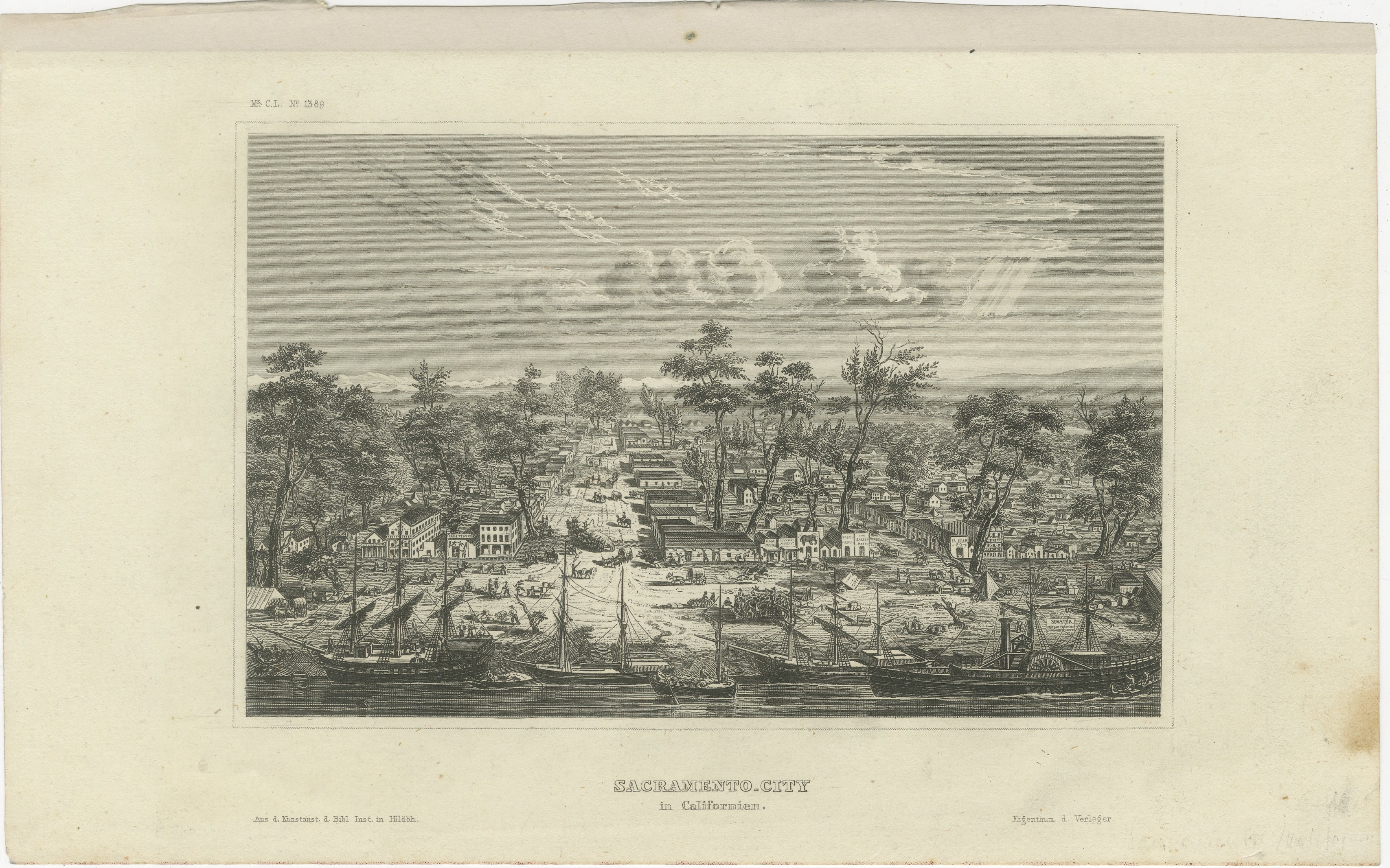
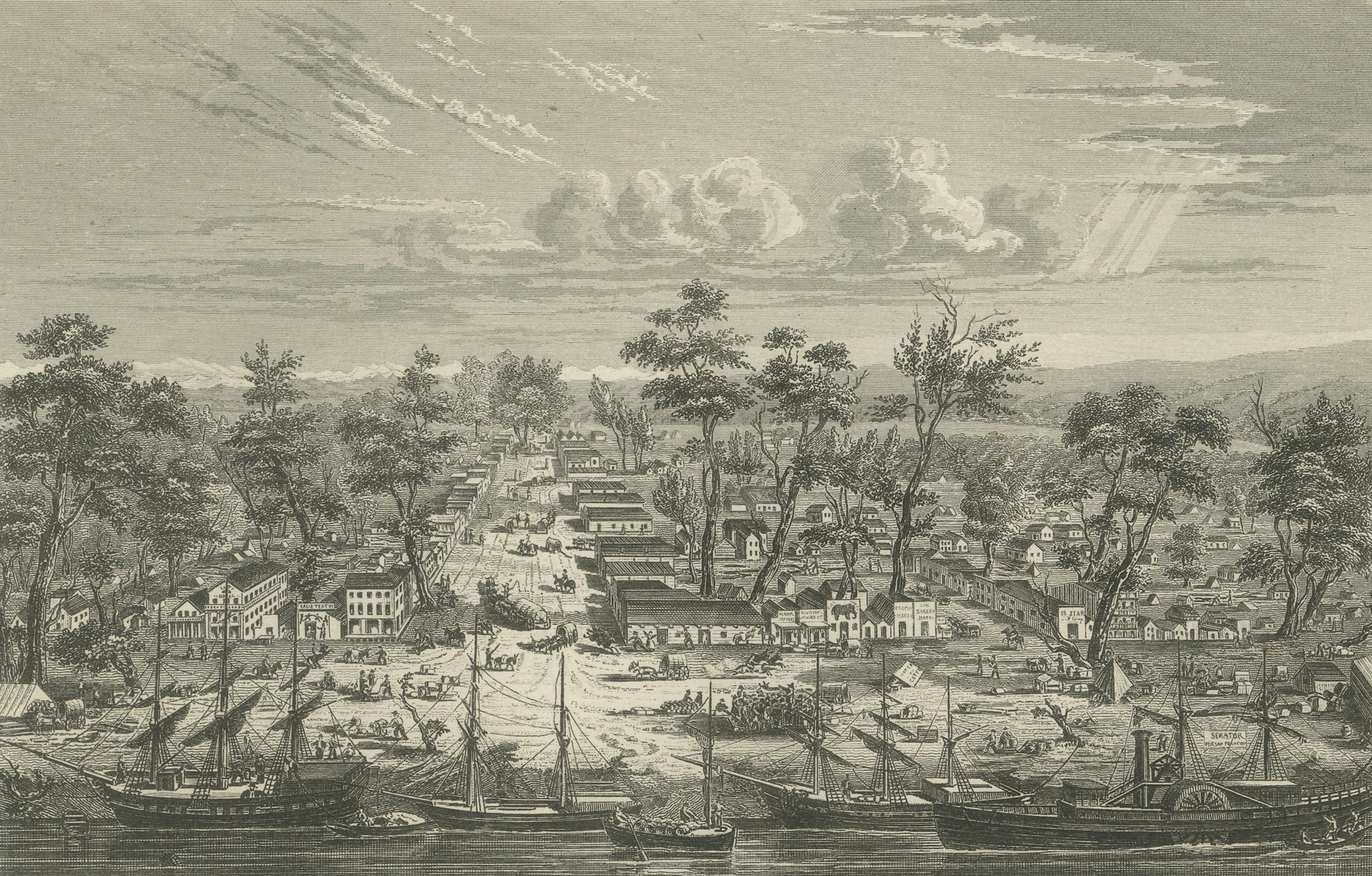
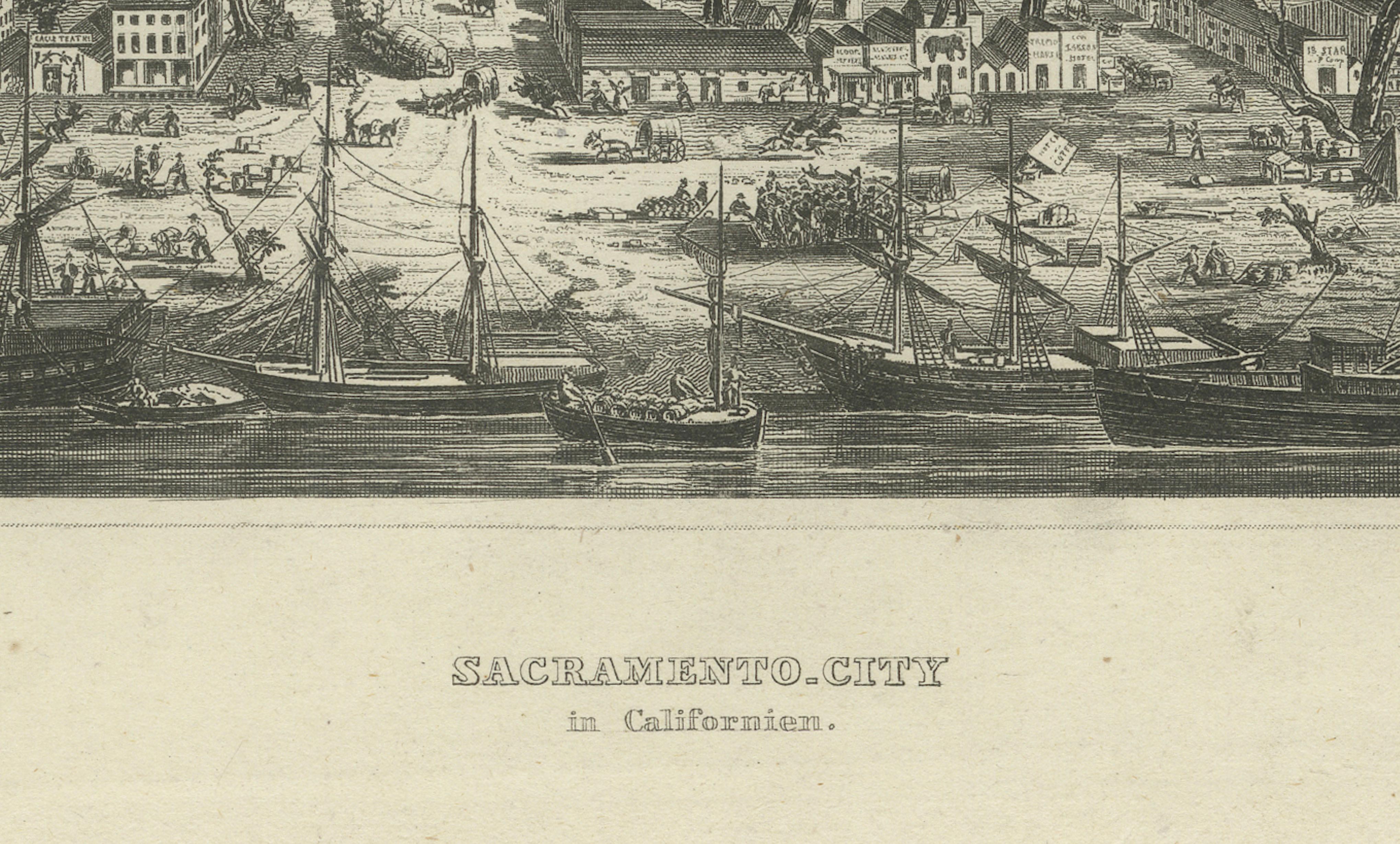
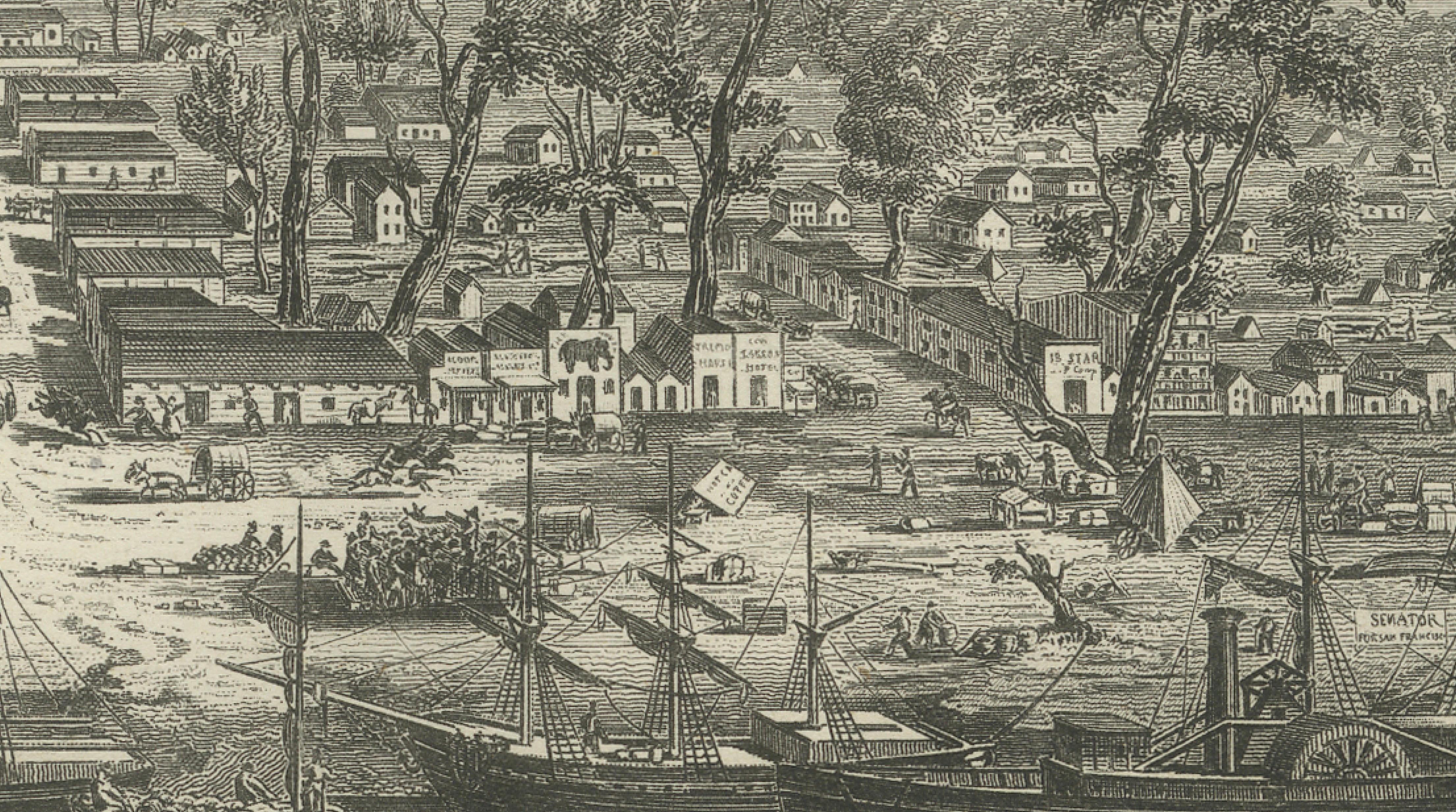
This detailed mid-19th century steel engraving presents an early panoramic view of Sacramento City in California during the formative years of the American Gold Rush. The print was published in the renowned illustrated geographical series Meyers Universum by the Bibliographisches Institut in Germany during the mid-1800s. These engravings introduced European audiences to important cities, landscapes, and rapidly developing settlements across North America.
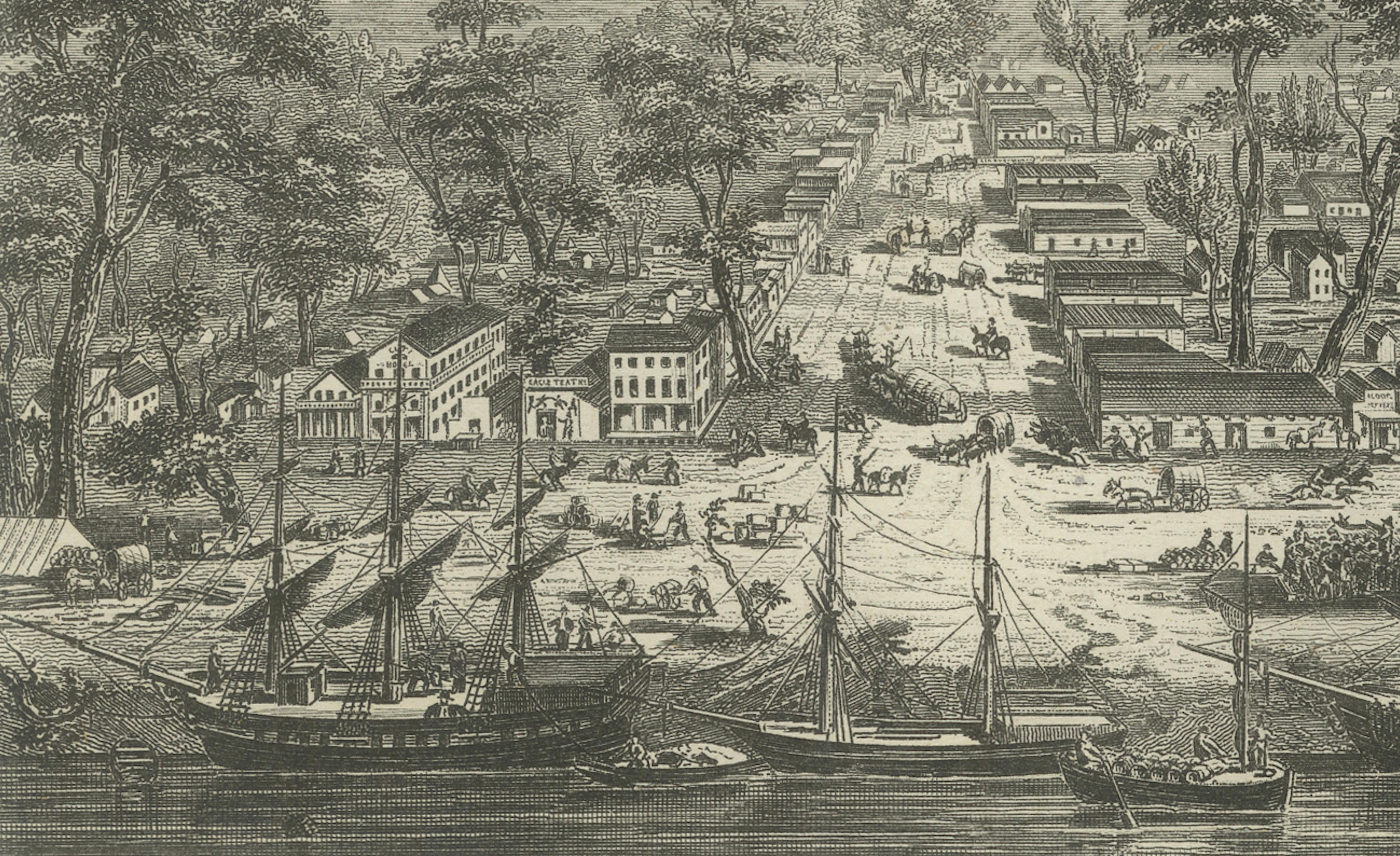
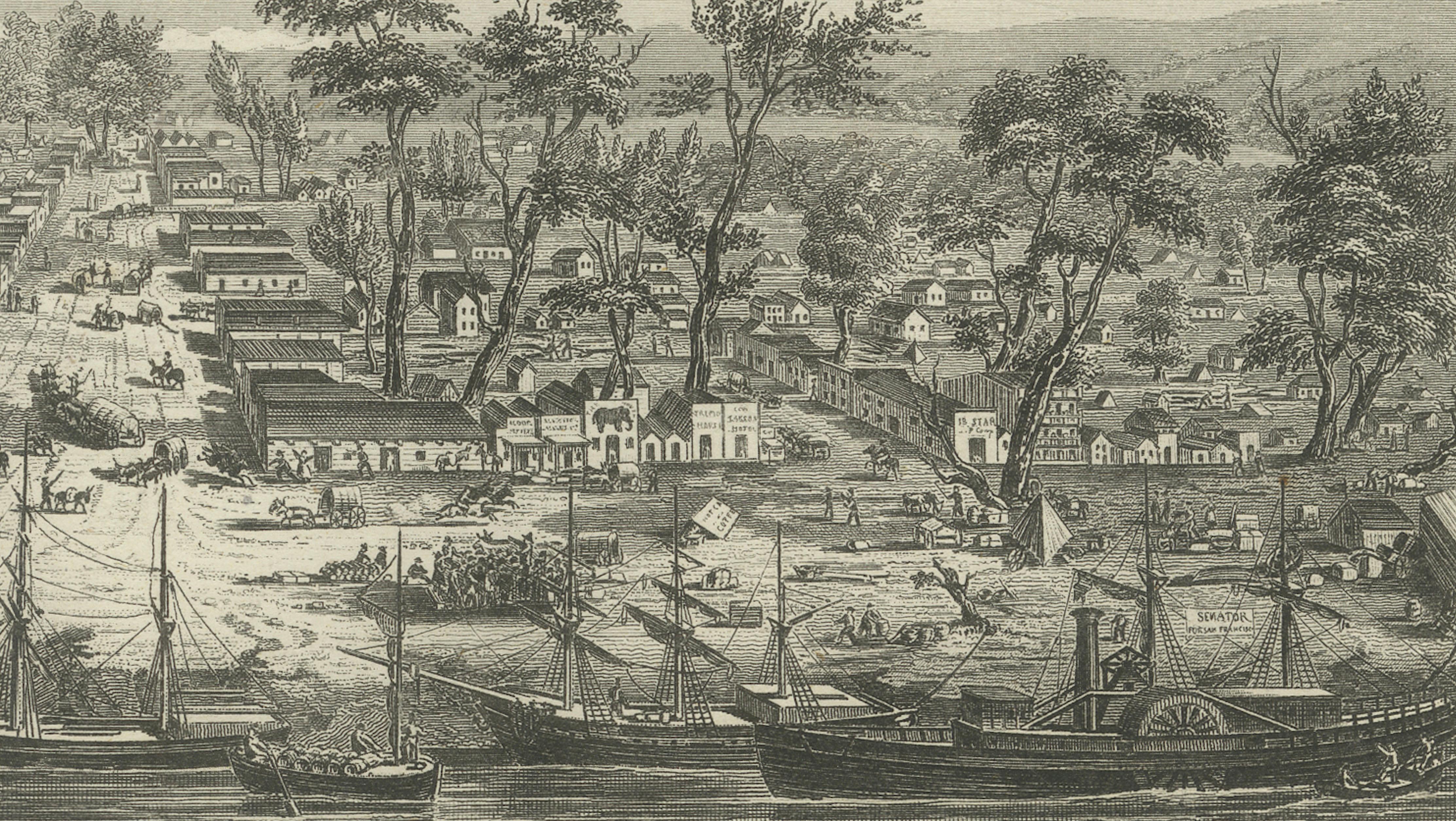
The composition offers a lively view of Sacramento along the Sacramento River, capturing the energy and expansion of the city during the early years following the discovery of gold in California in 1848. In the foreground several sailing ships and river vessels are anchored along the waterfront, illustrating the city’s role as a crucial river port supplying miners and settlers traveling inland to the gold fields of the Sierra Nevada.
Behind the riverfront the rapidly expanding settlement stretches inland along wide streets lined with wooden buildings, shops, warehouses, and public structures. Horse-drawn wagons and pedestrians populate the streets, while clusters of tents and temporary structures reflect the transient character typical of Gold Rush towns. The engraving vividly illustrates how Sacramento developed from a small settlement into a bustling commercial center almost overnight.
Sacramento was founded by Swiss immigrant John Sutter and American pioneer Samuel Brannan, who recognized the strategic importance of the location at the confluence of the Sacramento and American Rivers. The city quickly became the main gateway to the gold mining regions of Northern California, serving as a transportation hub for goods, equipment, and thousands of fortune seekers arriving from around the world.
The river itself played a vital role in Sacramento’s growth. Steamboats and sailing vessels connected the city with San Francisco Bay, transporting supplies inland and shipping agricultural products and gold back to coastal markets. By the early 1850s Sacramento had become one of the most important commercial centers in the American West.
The engraving reflects the precision and elegance typical of steel-plate printing, a technique capable of producing extremely fine lines and detailed tonal effects. Such prints were widely admired in Europe for their ability to depict distant cities and landscapes with clarity and atmosphere.
Today this engraving offers both a fascinating historical record of Sacramento during the Gold Rush era and an attractive decorative view of one of California’s earliest urban centers.
Condition report:
Good condition for its age with light age toning and scattered minor spotting mainly visible in the margins. Plate mark visible. Paper remains stable and well preserved.
Framing tips:
This engraving frames beautifully in a dark walnut, black, or ebonized frame with a wide ivory or museum-white mat. The panoramic composition and historic western subject make it particularly suitable for classic interiors or collections focused on American frontier history.
Technique: Steel engraving
Maker: Bibliographisches Institut (Meyers Universum), Germany, circa 1850–1860
Keyword block (nearby towns and cities):
Sacramento California, Sacramento River, American River California, Stockton California, Davis California, Woodland California, Elk Grove California, Roseville California, Folsom California, Auburn California, Placerville California, Nevada City California, Grass Valley California, San Francisco California, California Gold Rush region.
SEO keyword block:
Sacramento City print, California Gold Rush engraving, antique Sacramento city view, historic California river port print, 19th century Sacramento engraving, Gold Rush town artwork, antique American frontier city print, Sacramento River harbor engraving, vintage California cityscape print, decorative western history artwork, Meyers Universum engraving, Bibliographisches Institut print, collectible California history print, antique American landscape engraving, historic Gold Rush harbor scene.