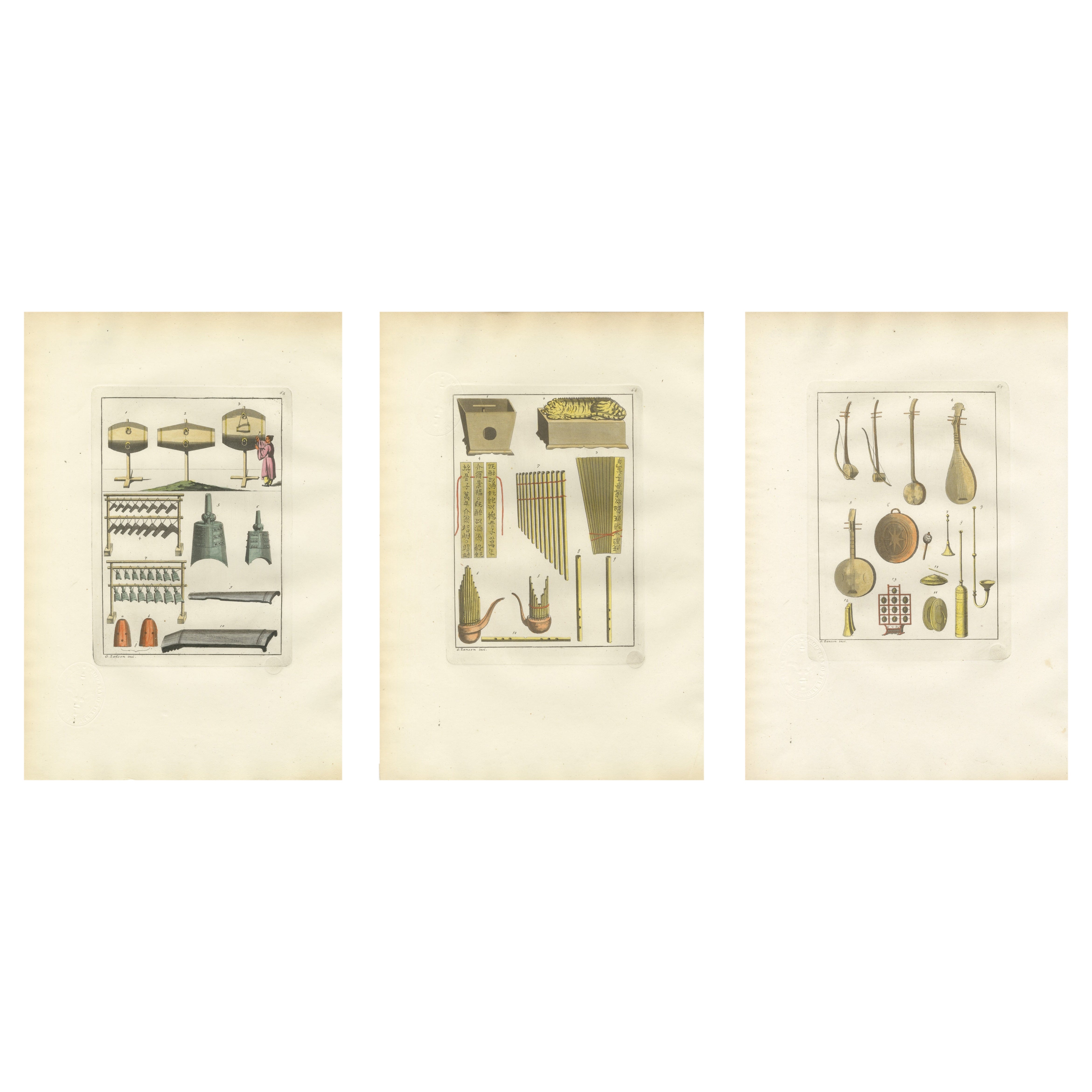
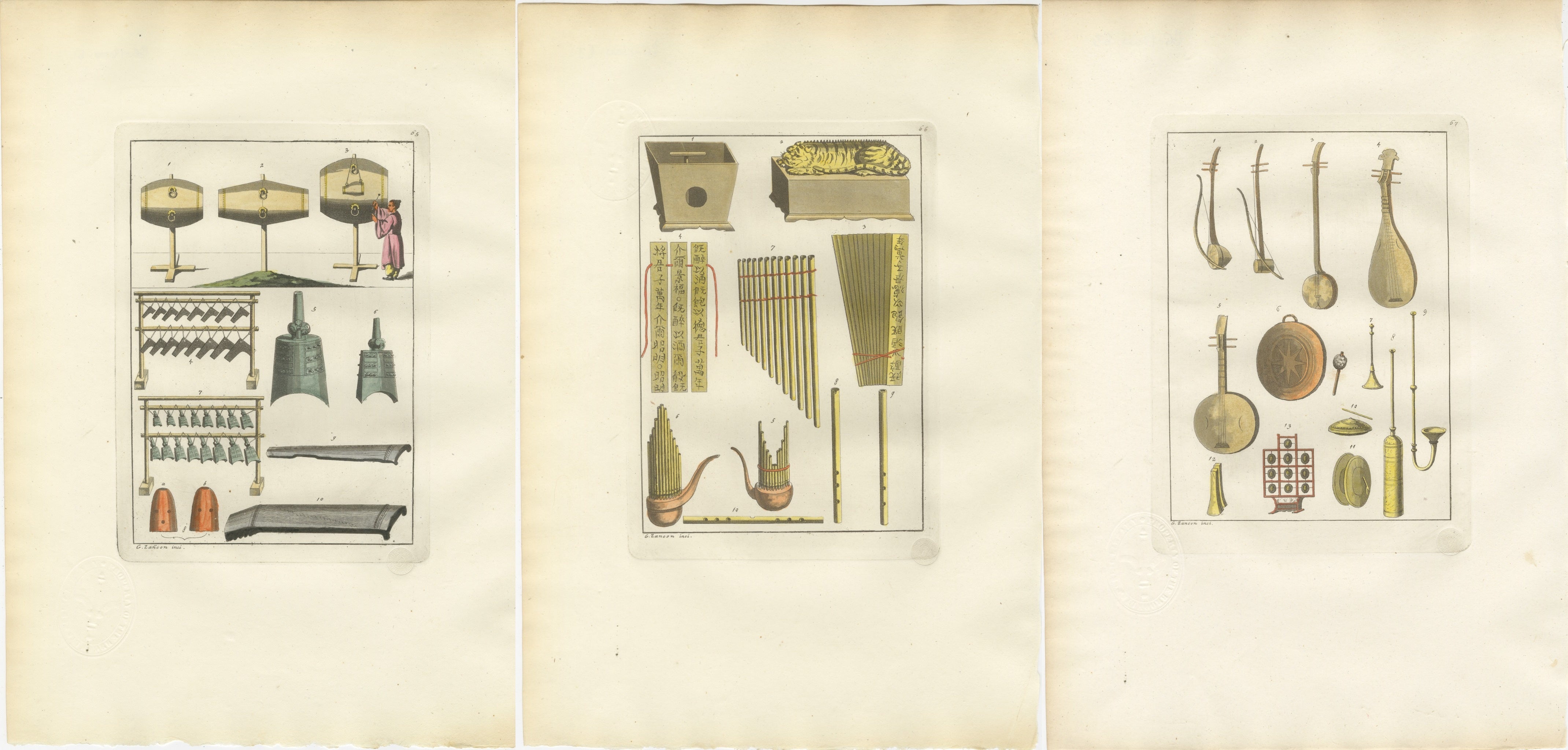
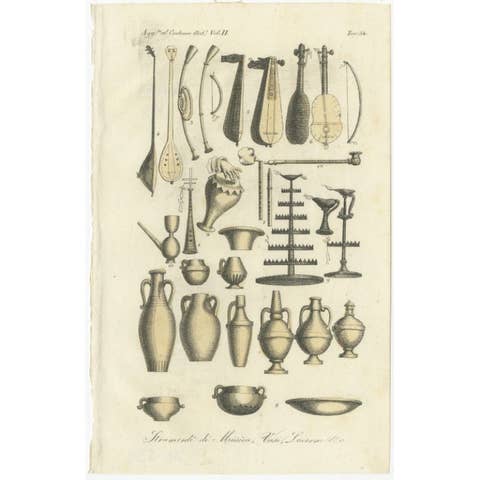
Chinese Musical Instruments – Set of Three Hand-Colored Engravings, 1815
€ 420
Original antique · The actual sheet photographed · Certificate of authenticity on request · Sold unframed · Worldwide shipping from € 15 (rates)
Date
1815
Mapmaker / artist
Giulio Ferrario (publisher), Andrea Bernieri (engraver), Milan, circa 1815
Technique
Hand-colored copperplate engraving
Sheet size
35.4 × 25.4 cm (13.9 × 10.0 in)
Condition
Good
Reference
BG-13000-65, -66, -67
What the condition grades mean
Excellent
Bright and clean, with no faults worth mentioning.
Very good
Only light signs of age, such as faint toning.
Good
Normal signs of age for a sheet of this period: toning, some foxing, small marks or neat old repairs.
Fair
Clear faults such as staining, tears or repairs, priced to match.
Every fault we see is written in the condition note, and the whole sheet is shown uncropped in the photos.
Condition
Good condition consistent with age. Plate marks visible. Light toning, minor foxing, and occasional handling wear typical of early nineteenth-century paper. Original embossed blind stamp visible on the sheets, as issued, with possible light overlap.
About this sheet
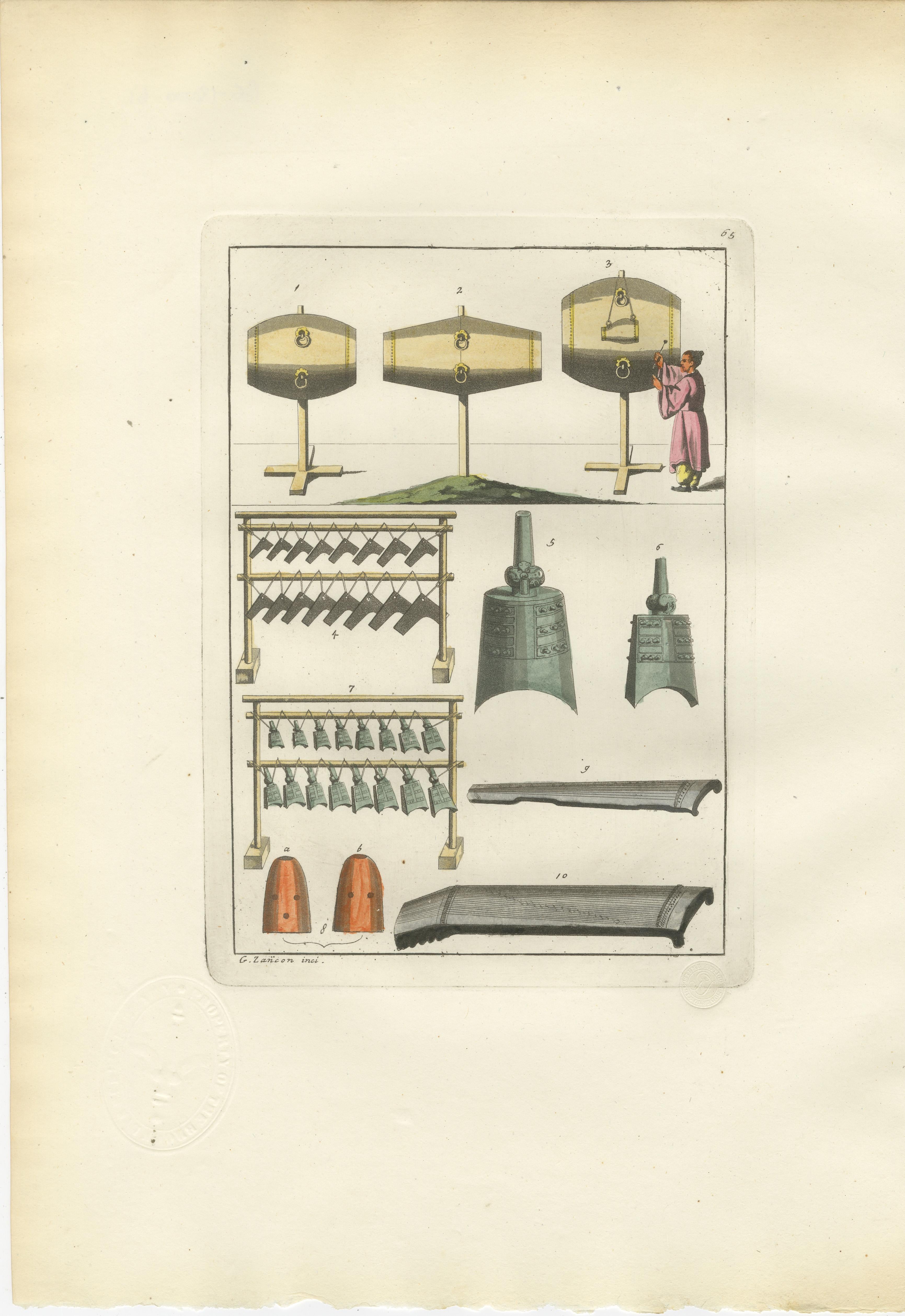
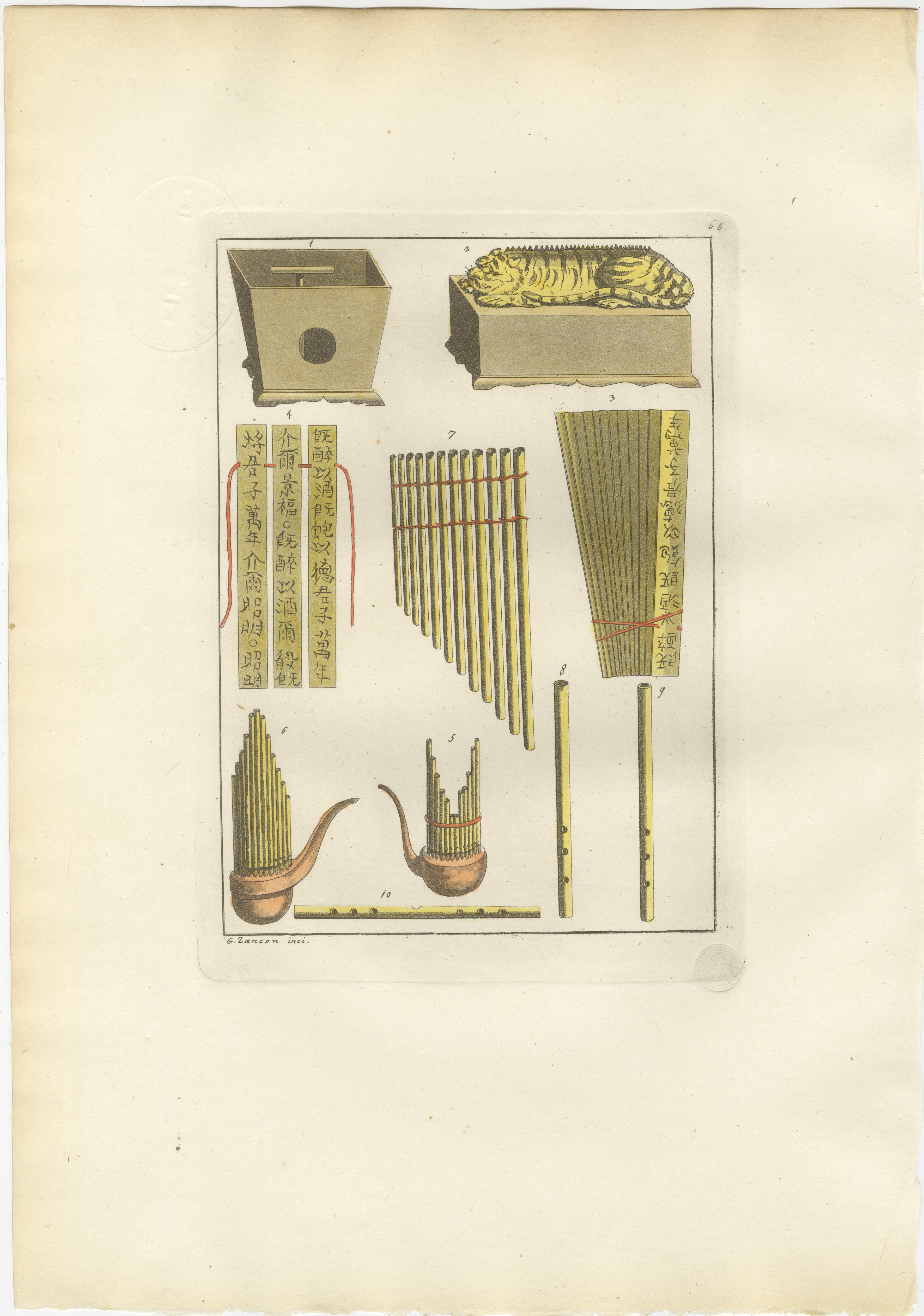
Chinese Musical Instruments – Set of Three Ferrario Hand-Colored Engravings, 1815
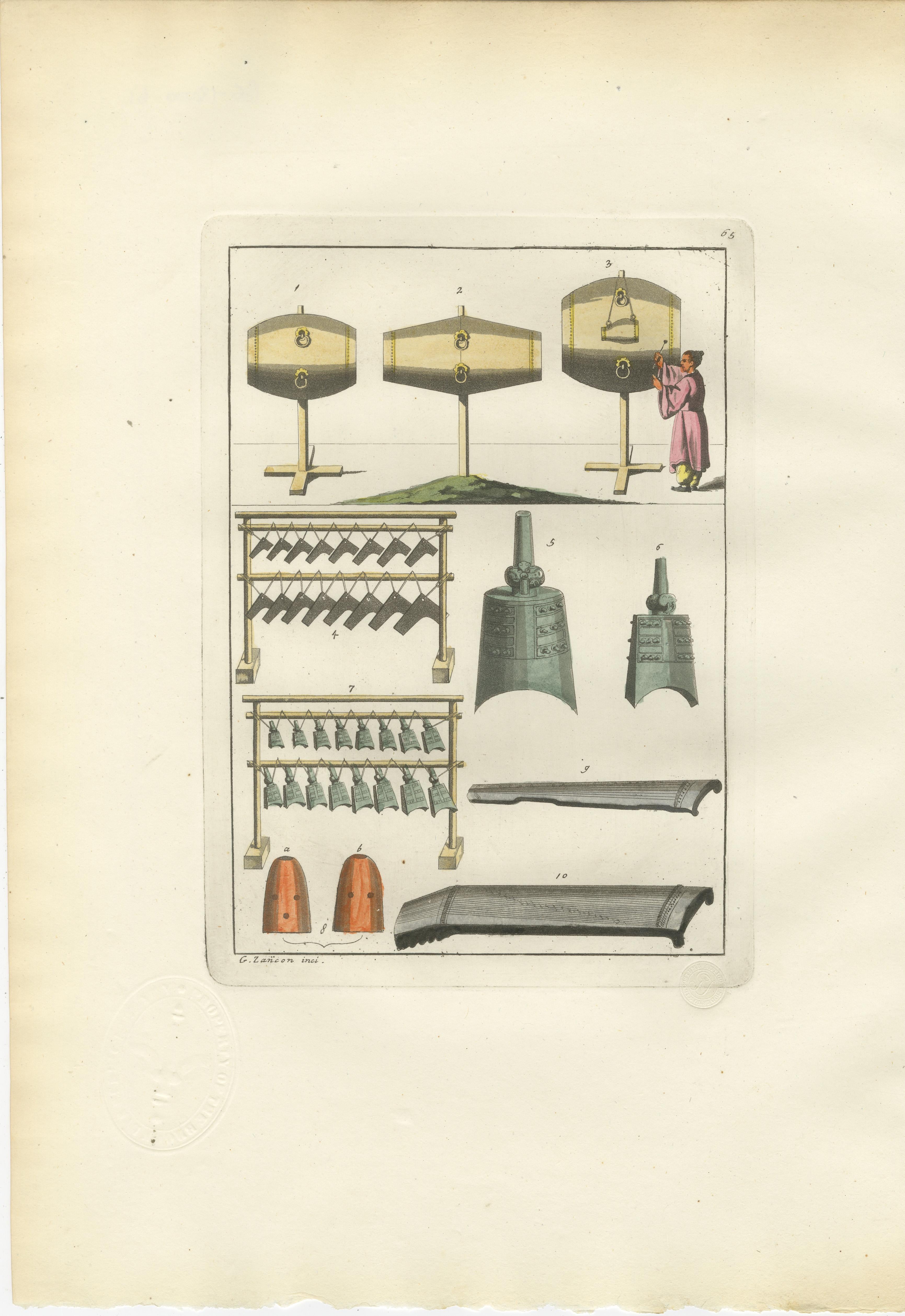
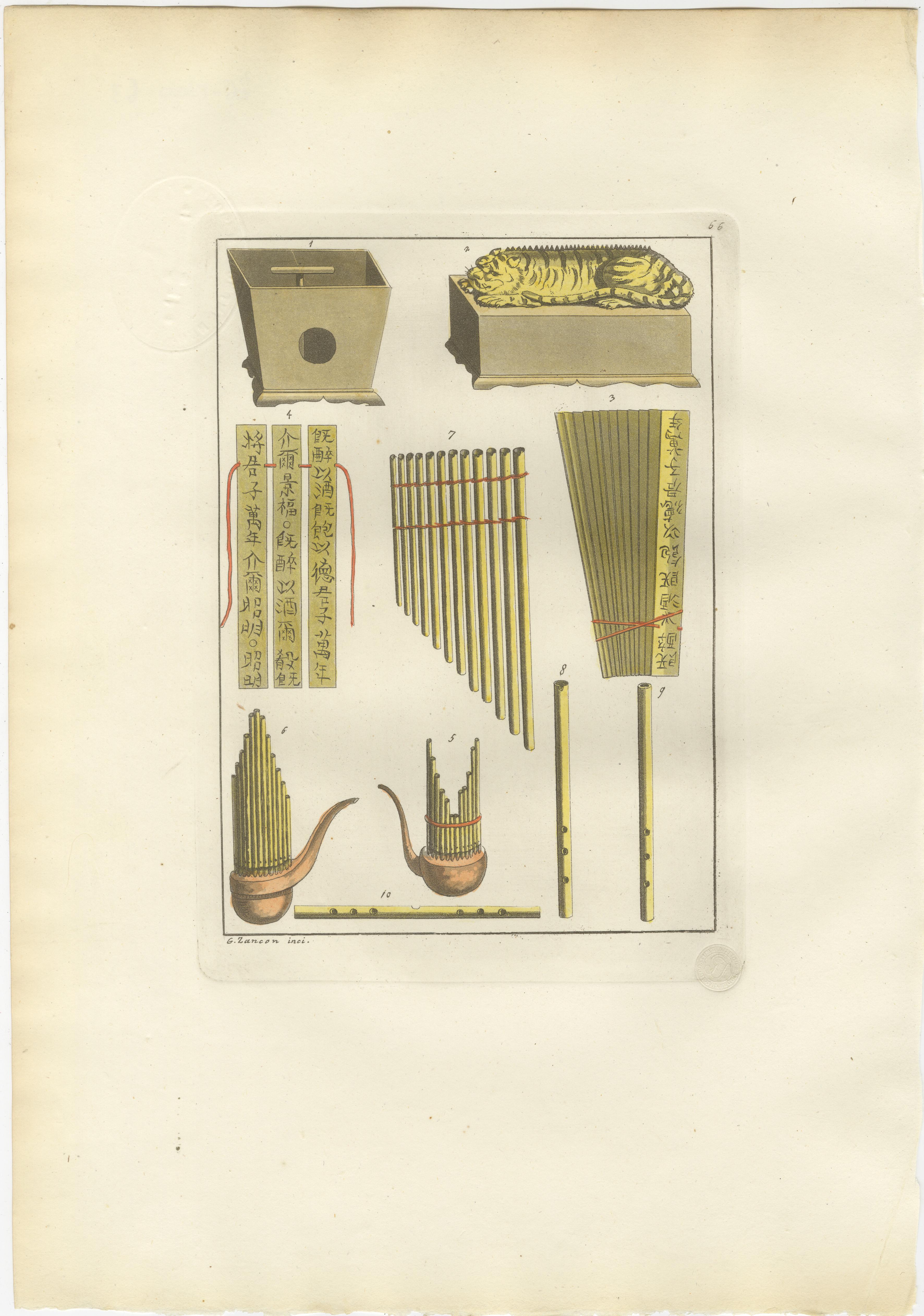
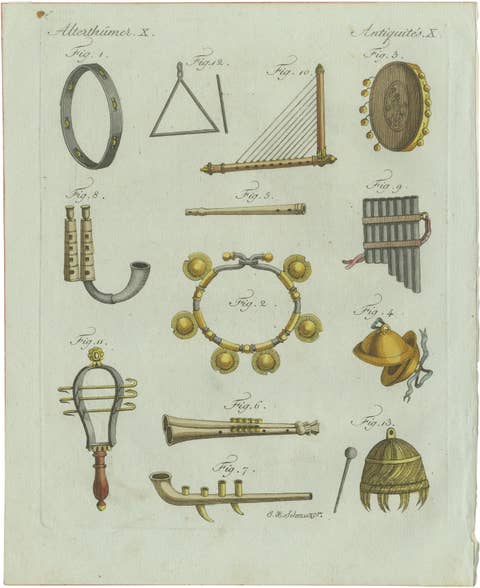
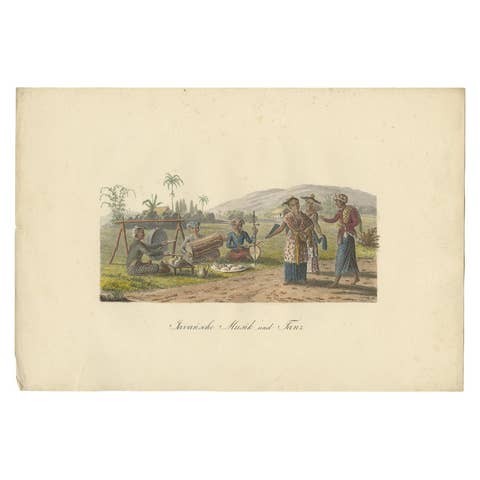
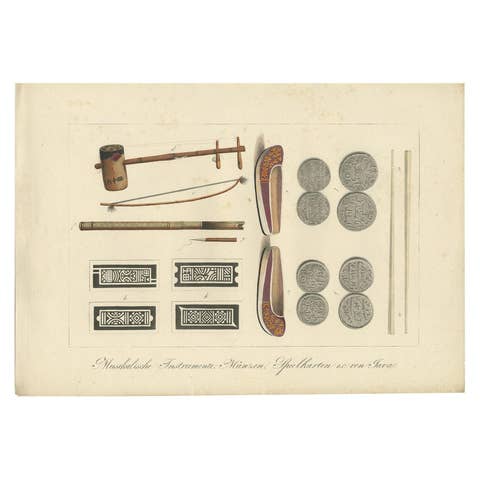
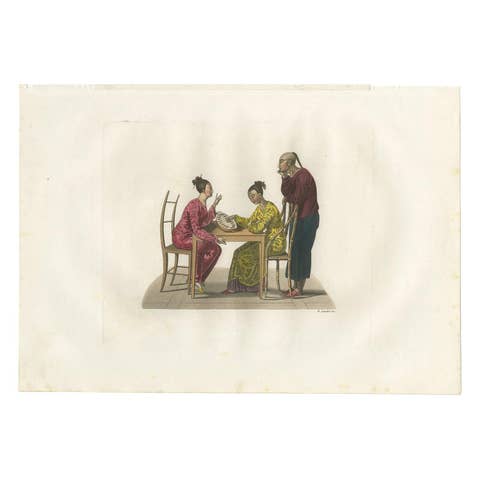
A rare early nineteenth-century hand-colored copperplate engraving from Giulio Ferrario’s celebrated ethnographic publication Il Costume Antico e Moderno di Tutti i Popoli (Ancient and Modern Costumes of All Peoples), published in Milan circa 1815. This finely detailed plate presents a visual survey of traditional Chinese musical instruments, combining artistic refinement with documentary intent and reflecting Europe’s growing fascination with Chinese culture during the period of Chinoiserie and early global ethnography.
The engraving illustrates a diverse array of classical instruments associated with court, ceremonial, theatrical, and scholarly traditions of Qing dynasty China. Among the identifiable instruments are the pipa (琵琶), the iconic pear-shaped lute central to classical repertoire; the ruan (阮) and yueqin (月琴), round-bodied lutes used in ensemble and opera music; and the sanxian (三弦), a long-necked three-string lute widely employed in storytelling and theatrical performance. Wind instruments depicted include the sheng (笙), a mouth organ with multiple pipes capable of polyphonic sound; the dizi (笛子), a transverse bamboo flute known for its bright tonal character; and instruments related to ceremonial horns such as the suona (唢呐). The plate further includes ritual percussion and idiophones, likely representing bianzhong (编钟) bronze bell sets, gongs (锣), cymbals (钹), and other ceremonial sound devices associated with temple and court music.
Ferrario’s monumental work sought to catalog global cultures through costume, architecture, and material culture, and these engravings were based on travel accounts, missionary reports, and earlier European illustrations. The result is both ethnographic record and artistic interpretation, capturing European perceptions of Chinese musical tradition during the early nineteenth century. The delicate hand-coloring enhances the clarity of form and provides an appealing decorative quality while preserving scholarly detail.
This engraving works exceptionally well as both a standalone decorative object and as part of a curated group of Ferrario plates, particularly appealing to collectors of Asian art, ethnographic illustration, music history, and early travel imagery. The balanced composition and refined palette allow it to integrate seamlessly into contemporary interiors, especially when framed with a generous ivory mat and classic moulding, creating a museum-quality presentation suited to high-end residential or hospitality environments.
Framing tips: A dark walnut or ebonised frame with an ivory or warm off-white mat enhances the soft tones and reinforces a refined gallery aesthetic. Particularly effective within curated gallery walls or luxury interior settings inspired by Asian or eclectic historic design.