About this sheet
Ottoman Court Attendants and Soldiers – 1734 Print of Imperial Palace Figures
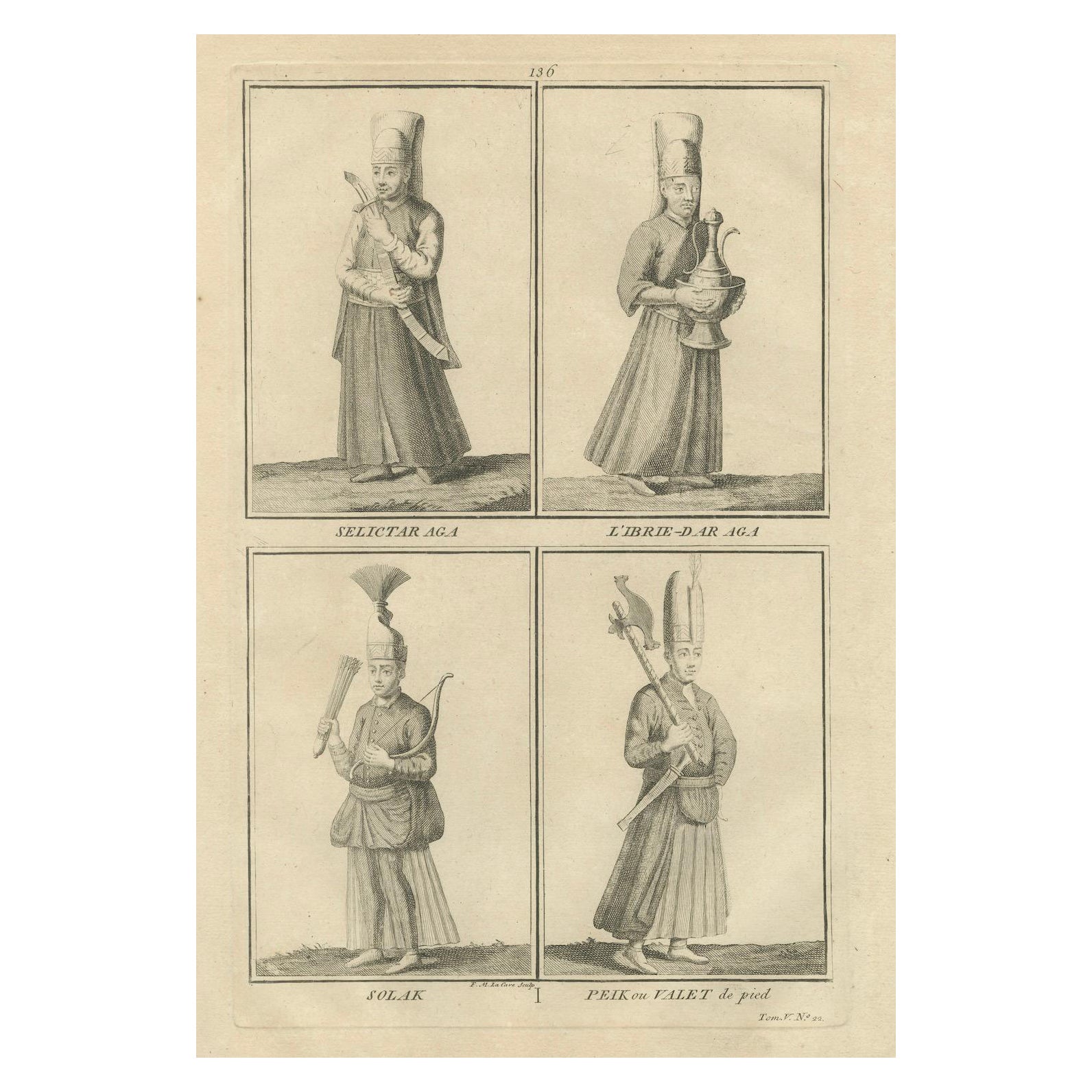
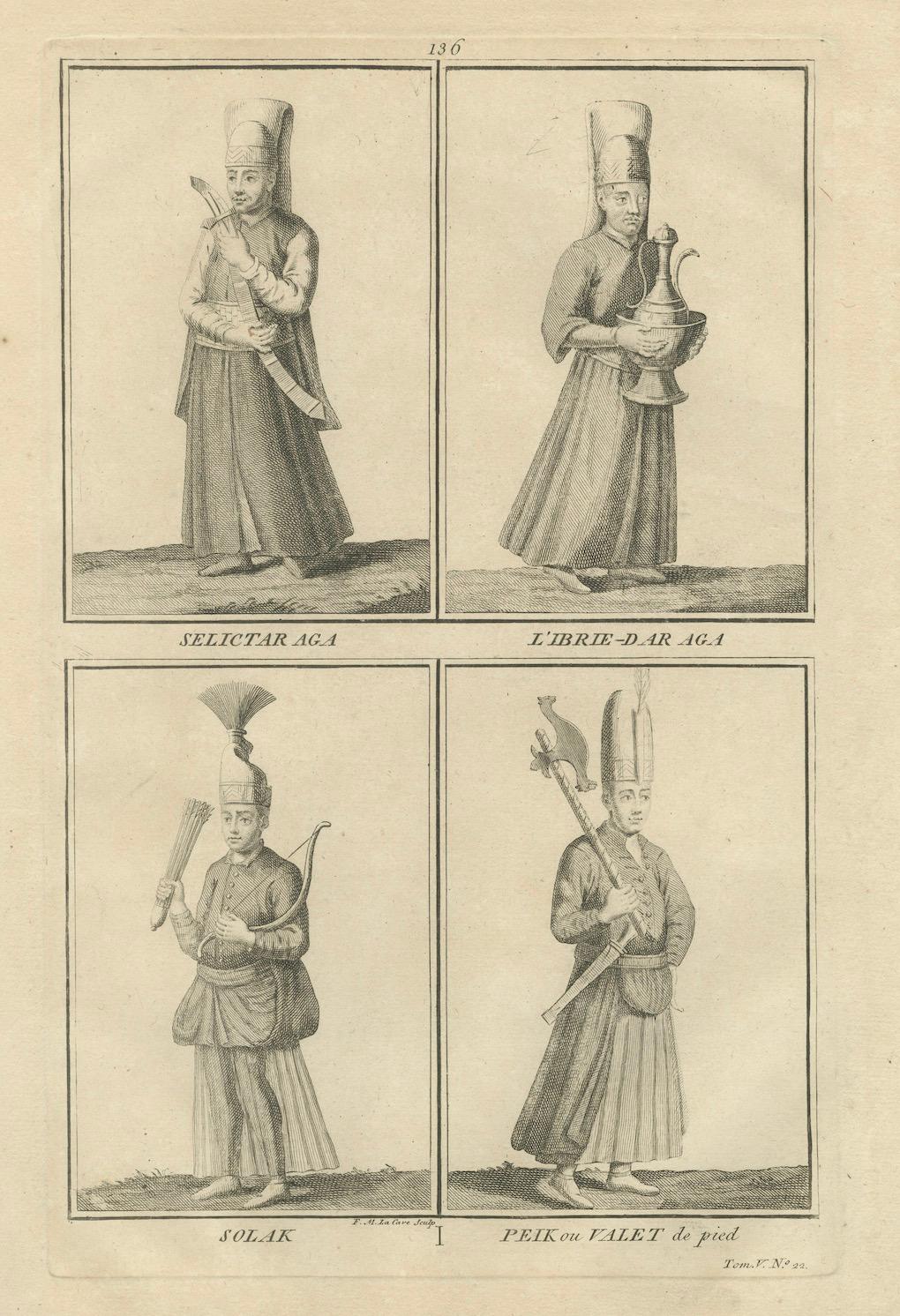
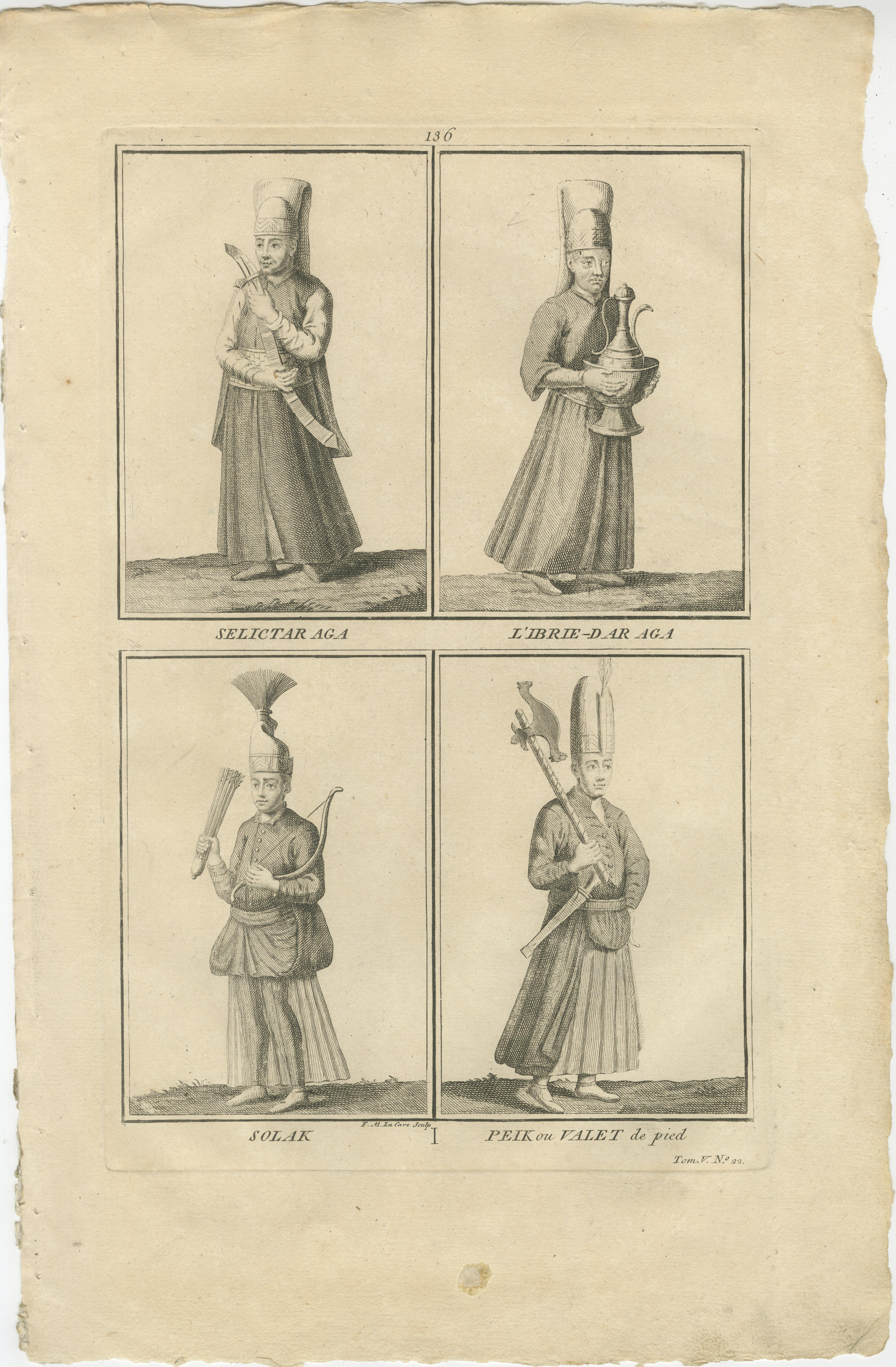
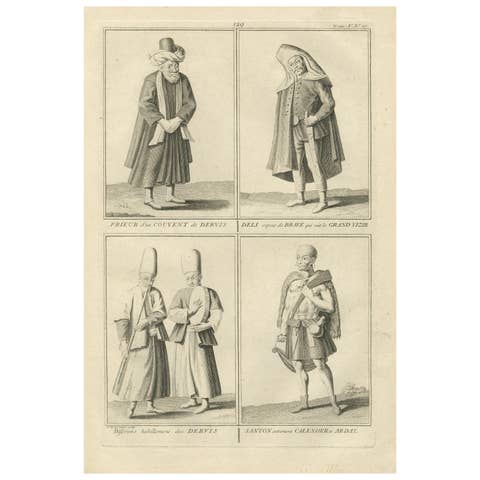
This finely executed copperplate engraving from 1734 presents four detailed portraits of figures from the Ottoman imperial court, part of the renowned multi-volume publication *Les Cérémonies et Coutumes Religieuses de tous les Peuples du Monde*. The work offers a European perspective on the structure and rituals of non-Western societies, with particular fascination for the grandeur and complexity of the Ottoman Empire.
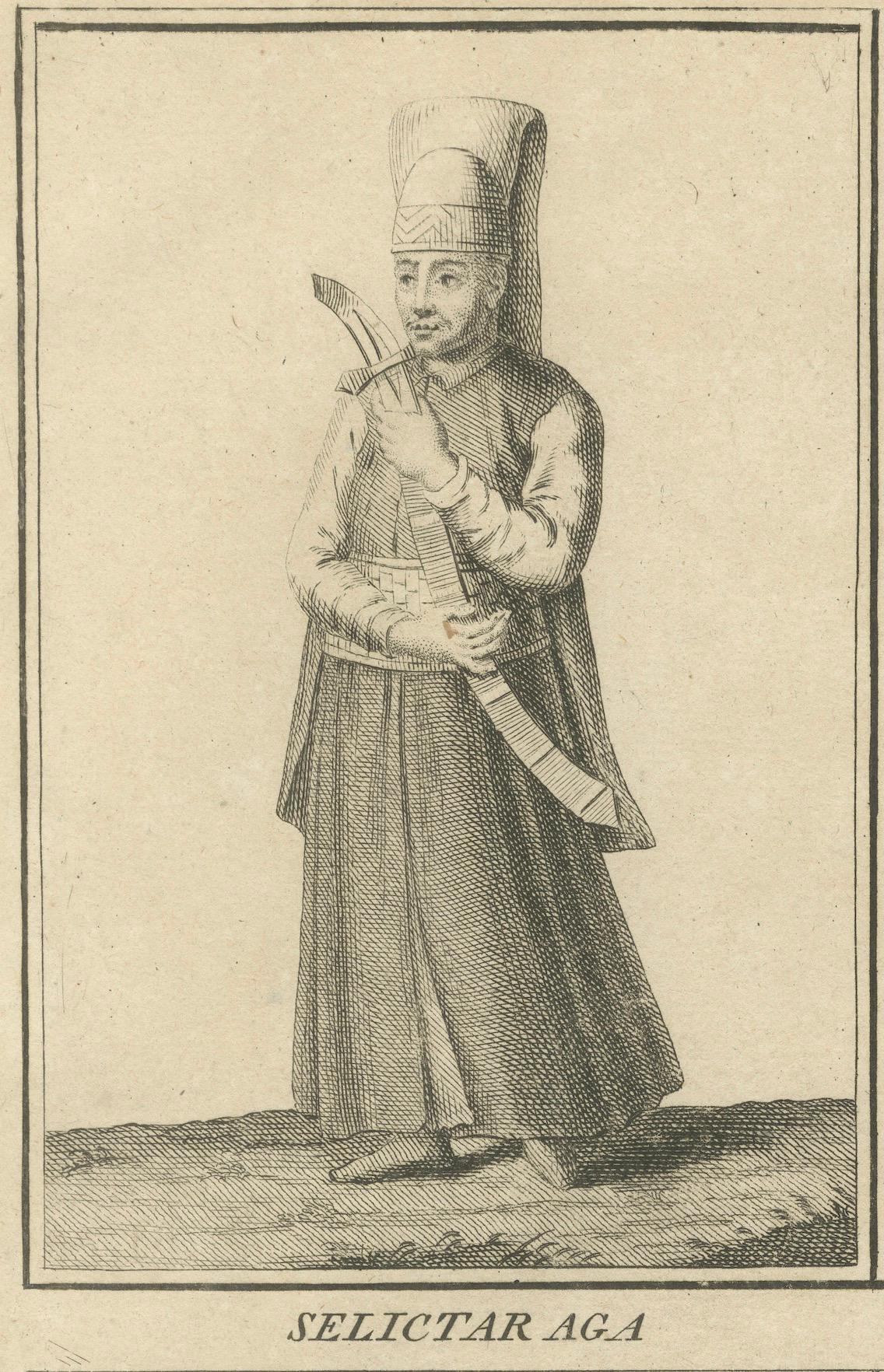
Each figure is isolated in a rectangular frame, emphasizing their costume, rank, and symbolic role. At the top left is the *Selictar Aga*, the chief sword-bearer to the Sultan, holding a curved scimitar with both hands. This was a prestigious role within the inner court, trusted with the personal weapons of the ruler and often involved in ceremonial functions.
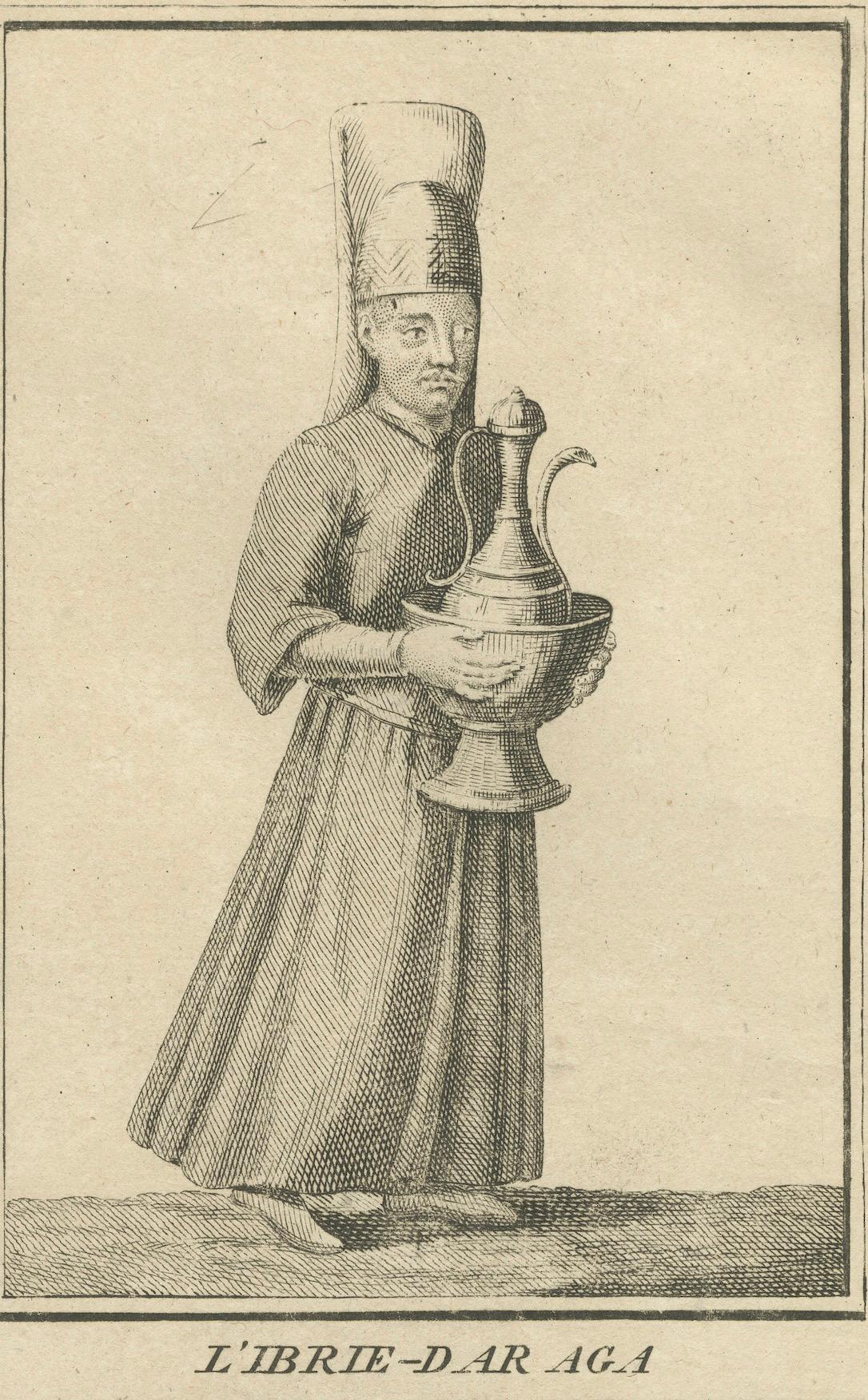
Top right is the *L’Ibrie-dar Aga*, likely referring to the *İbrikdar Ağa*, or Chief Water Bearer. He is shown carrying an elaborate ewer and basin, objects used in ritual purification and hand-washing before prayer or meals, a function deeply embedded in both Islamic custom and Ottoman court etiquette.
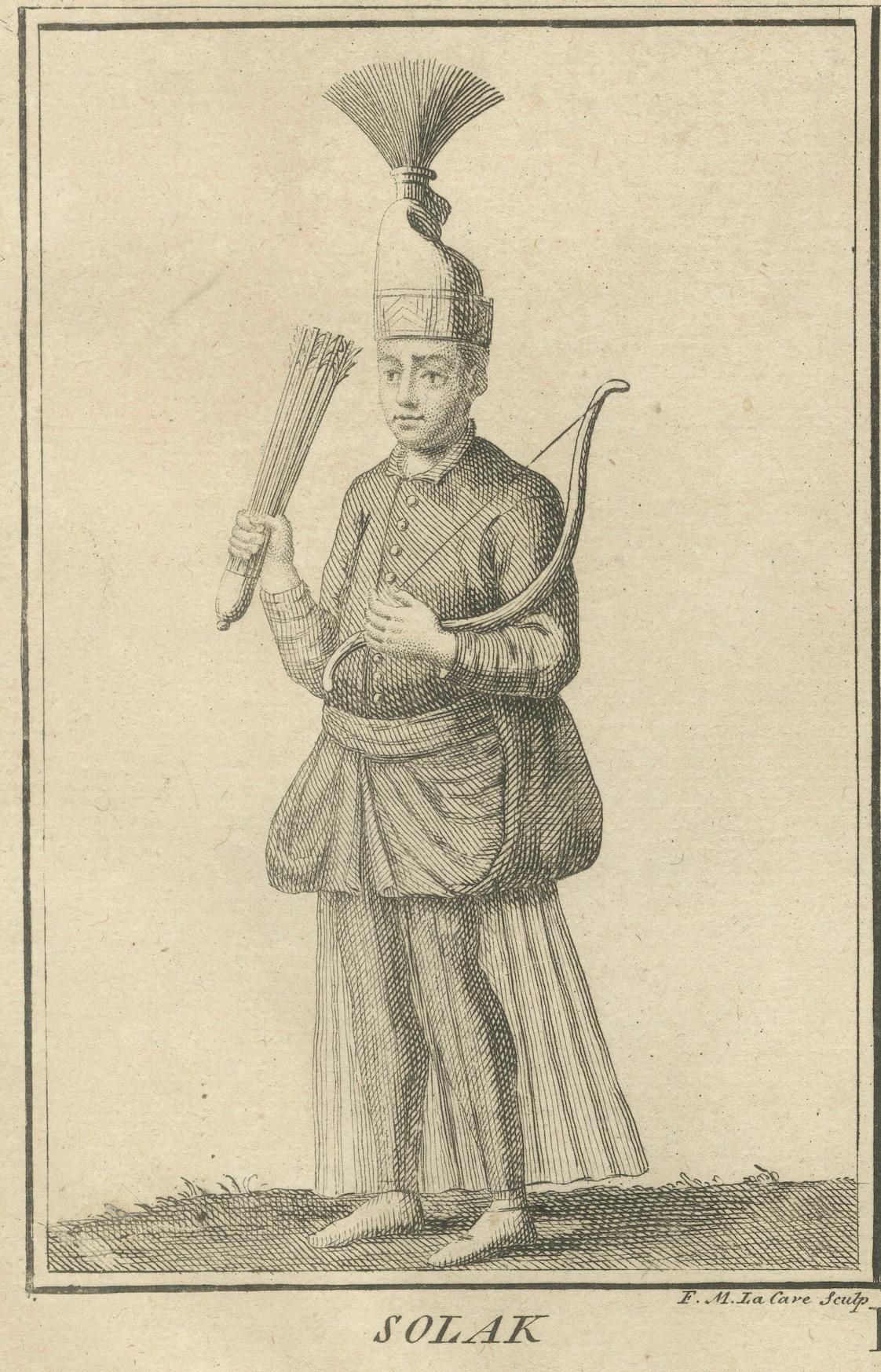
Bottom left is the *Solak*, a left-handed archer from the elite Janissary corps, identifiable by his bow and defensive stance. Solaks were chosen from among the most disciplined of the Janissaries and served as royal guards within the palace, especially during ceremonies or on campaign.
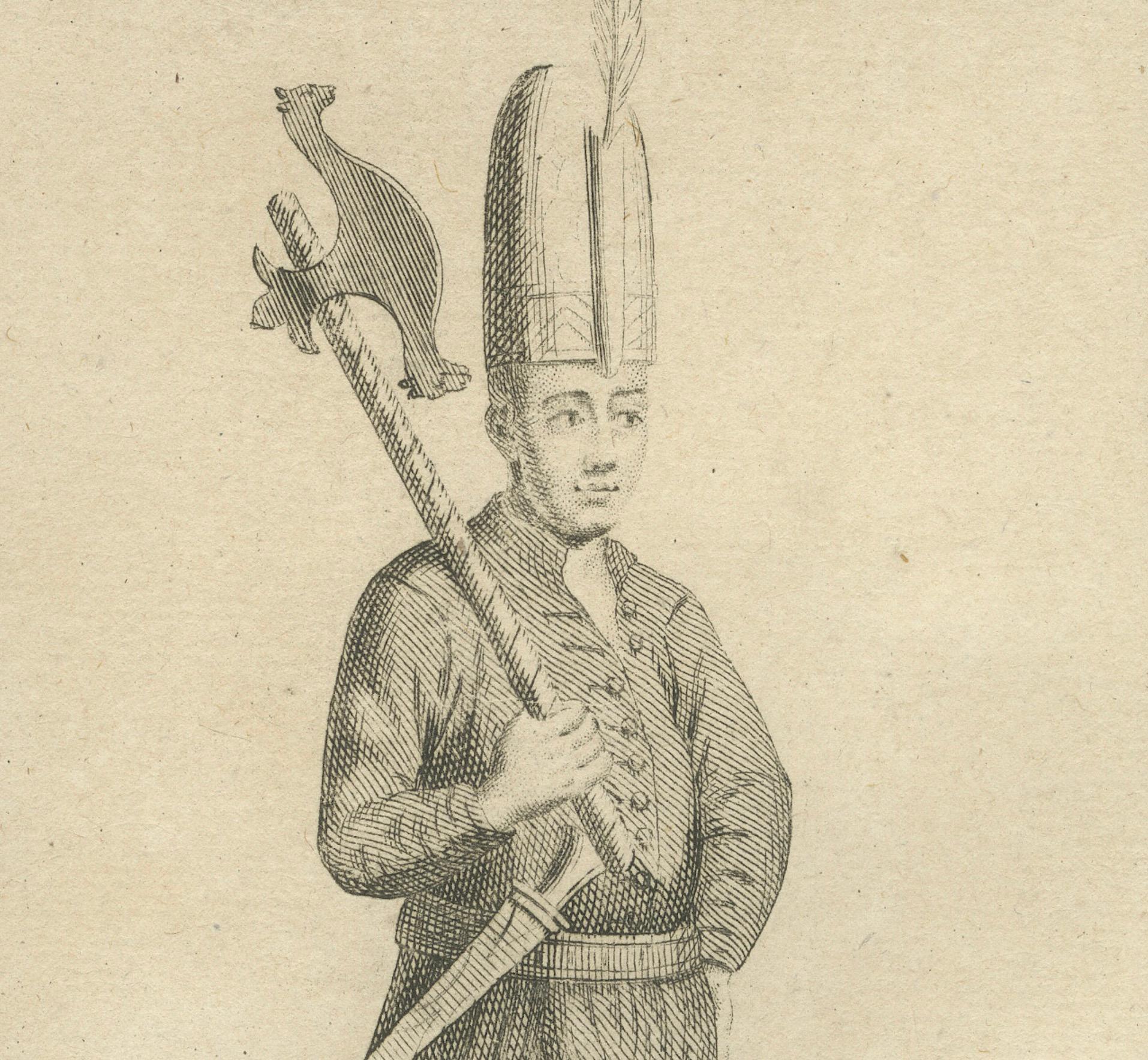
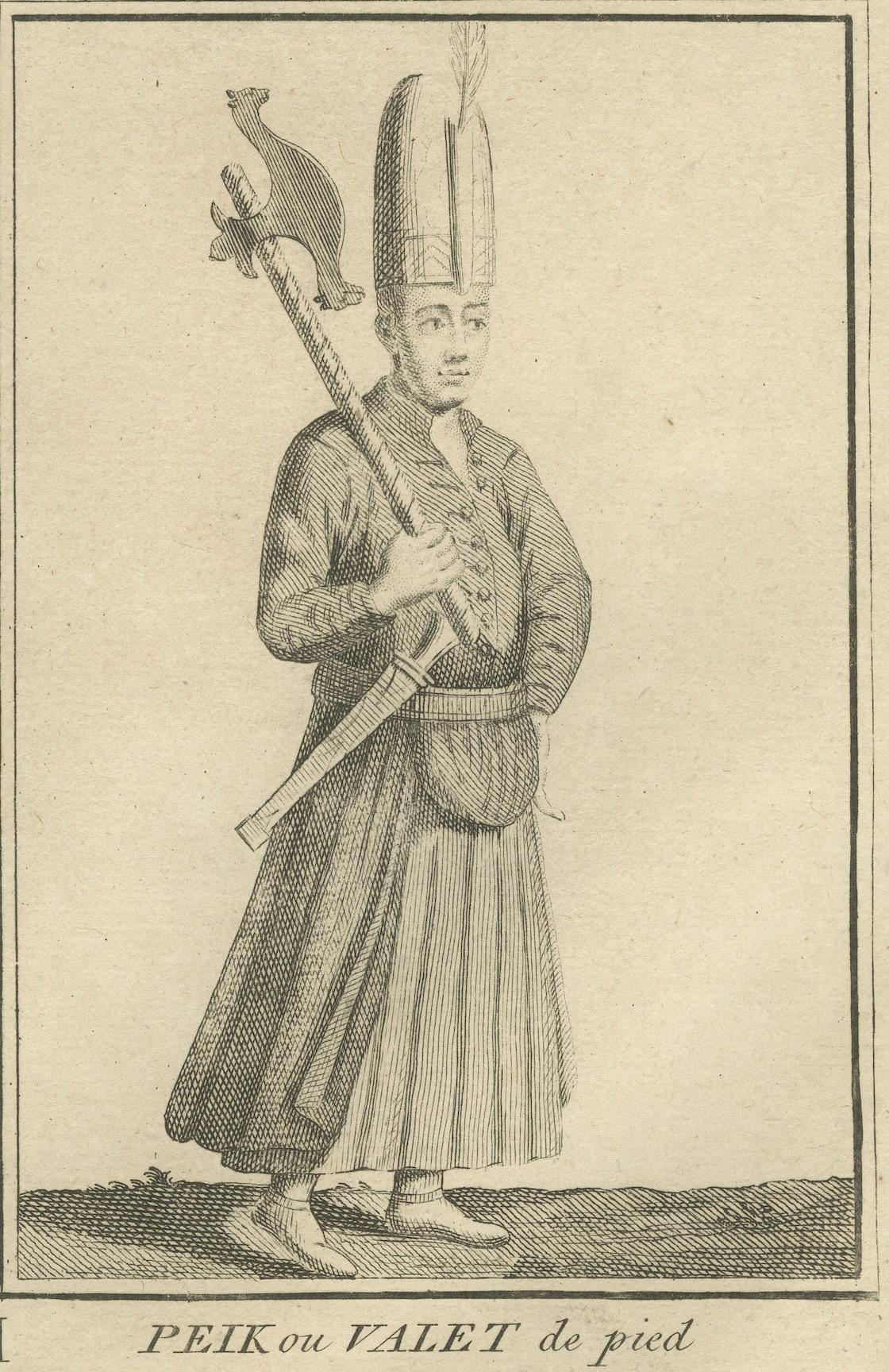
Bottom right is the *Peik ou Valet de pied* (Footman or Page), carrying a tall staff or ceremonial weapon. Peiks served in both military and domestic roles, frequently accompanying ambassadors or senior officials as part of public processions or formal audiences.
All figures wear stylized Ottoman garb including flowing kaftans and tall turbans or headgear, rendered with precision and subtle shading. The engraving reflects the European imagination of Ottoman order, hierarchy, and exoticism, with a focus on costume and visual spectacle.
Condition is very good. The print shows only minor signs of age such as light toning and a few faint spots in the lower margin. The impressions remain sharp and well-inked, with wide margins intact and no tears or repairs.
This piece frames well in a vertical orientation with an ivory or light cream mat and a classic black or dark wood frame. Due to its symmetrical design, it lends itself beautifully to traditional interiors or thematic groupings of court or military history. Use UV-protective glass for long-term preservation.