Mounted Persian Soldier – Safavid Military Costume, c.1730
€ 370
Original antique · The actual sheet photographed · Certificate of authenticity on request · Sold unframed · Worldwide shipping from € 15 (rates)
Date
1730
Mapmaker / artist
Anonymous Dutch engraver, Netherlands, circa 1730
Technique
Copperplate engraving
Sheet size
18.5 × 12 cm (7.3 × 4.7 in)
Reference
BG-11491-2
What the condition grades mean
Excellent
Bright and clean, with no faults worth mentioning.
Very good
Only light signs of age, such as faint toning.
Good
Normal signs of age for a sheet of this period: toning, some foxing, small marks or neat old repairs.
Fair
Clear faults such as staining, tears or repairs, priced to match.
Every fault we see is written in the condition note, and the whole sheet is shown uncropped in the photos.
Condition
Very good condition with strong plate marks and fine detail. Slight toning and some faint foxing near the left edge. Minor edge wear from original binding. No tears or repairs.
About this sheet
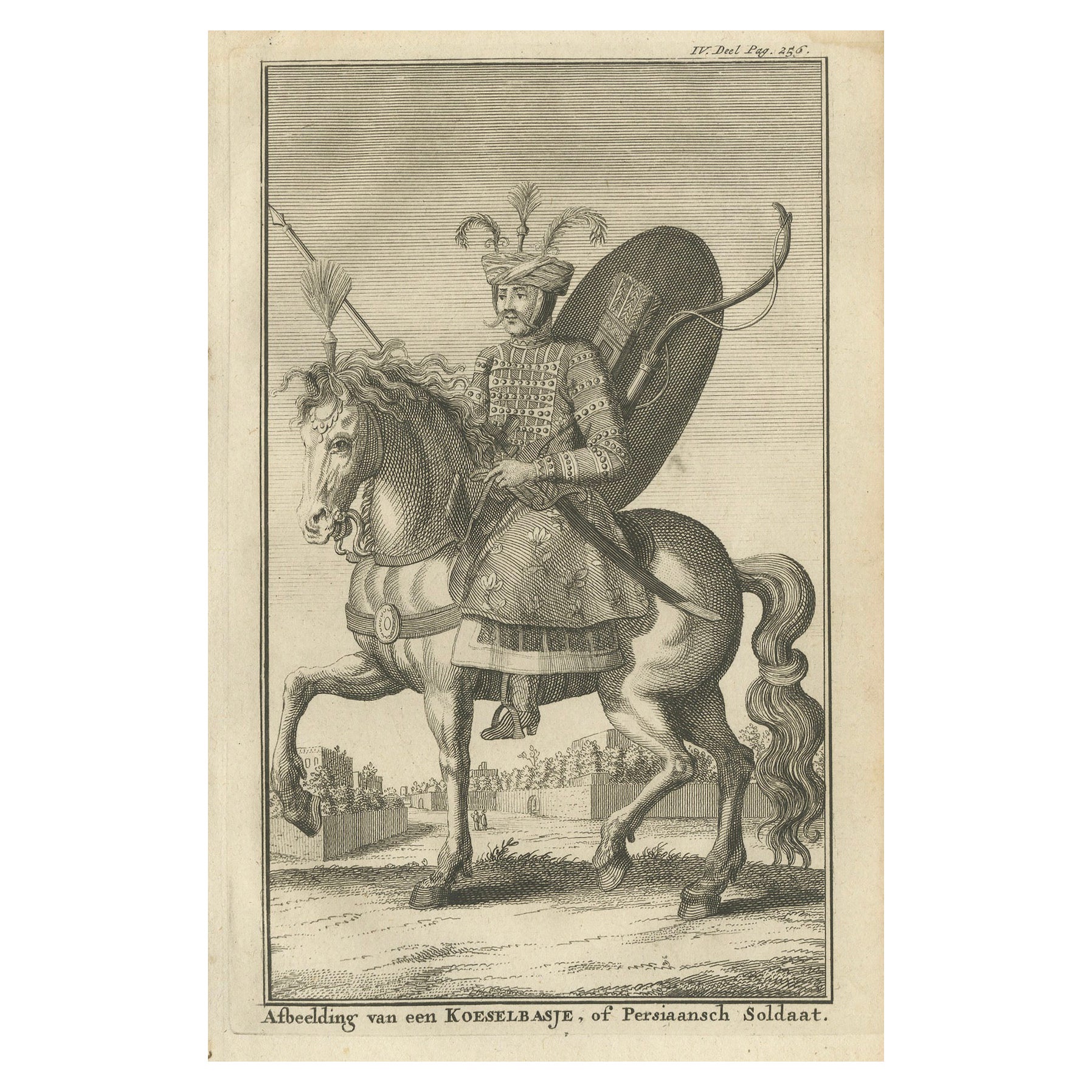
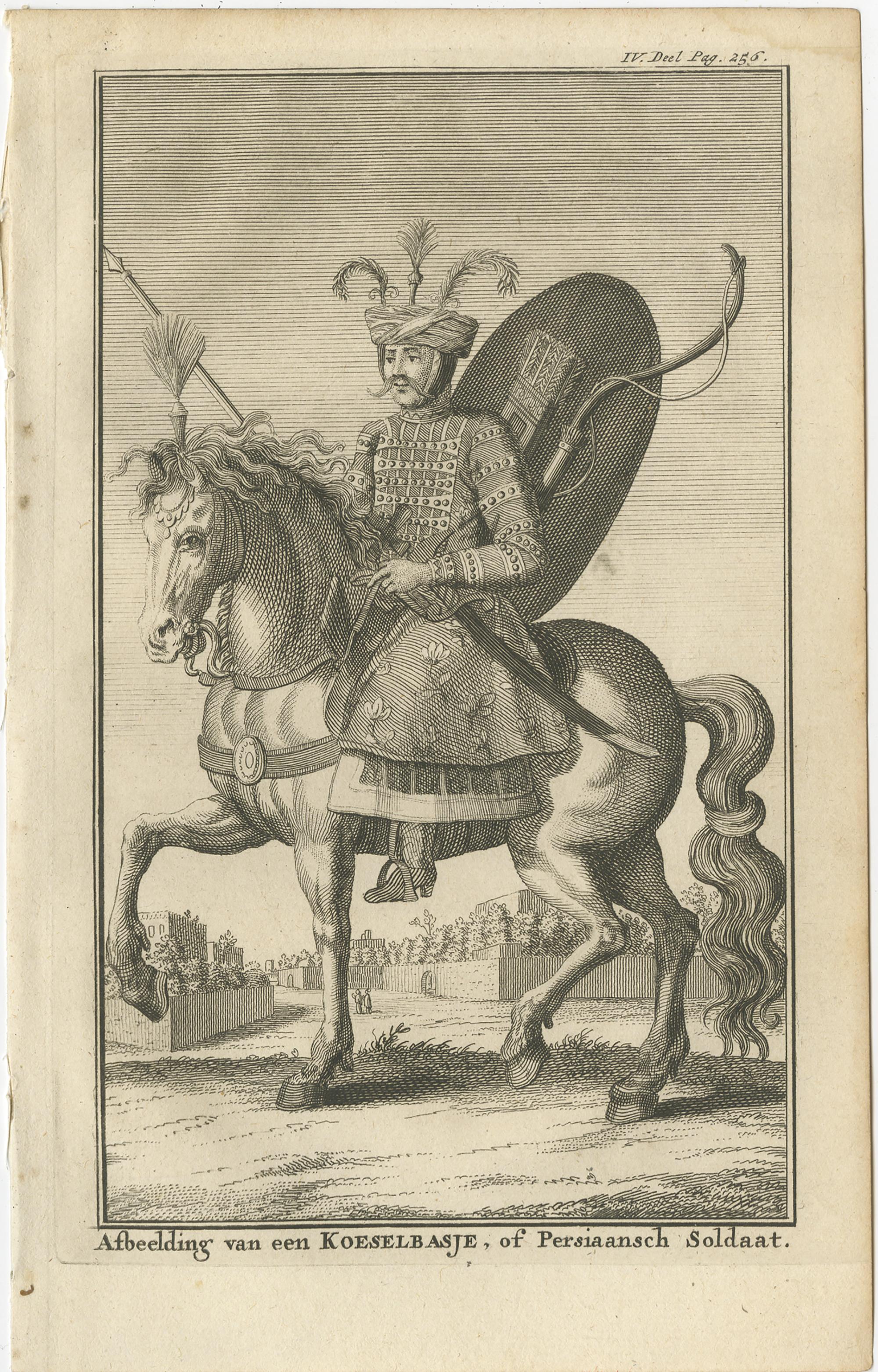
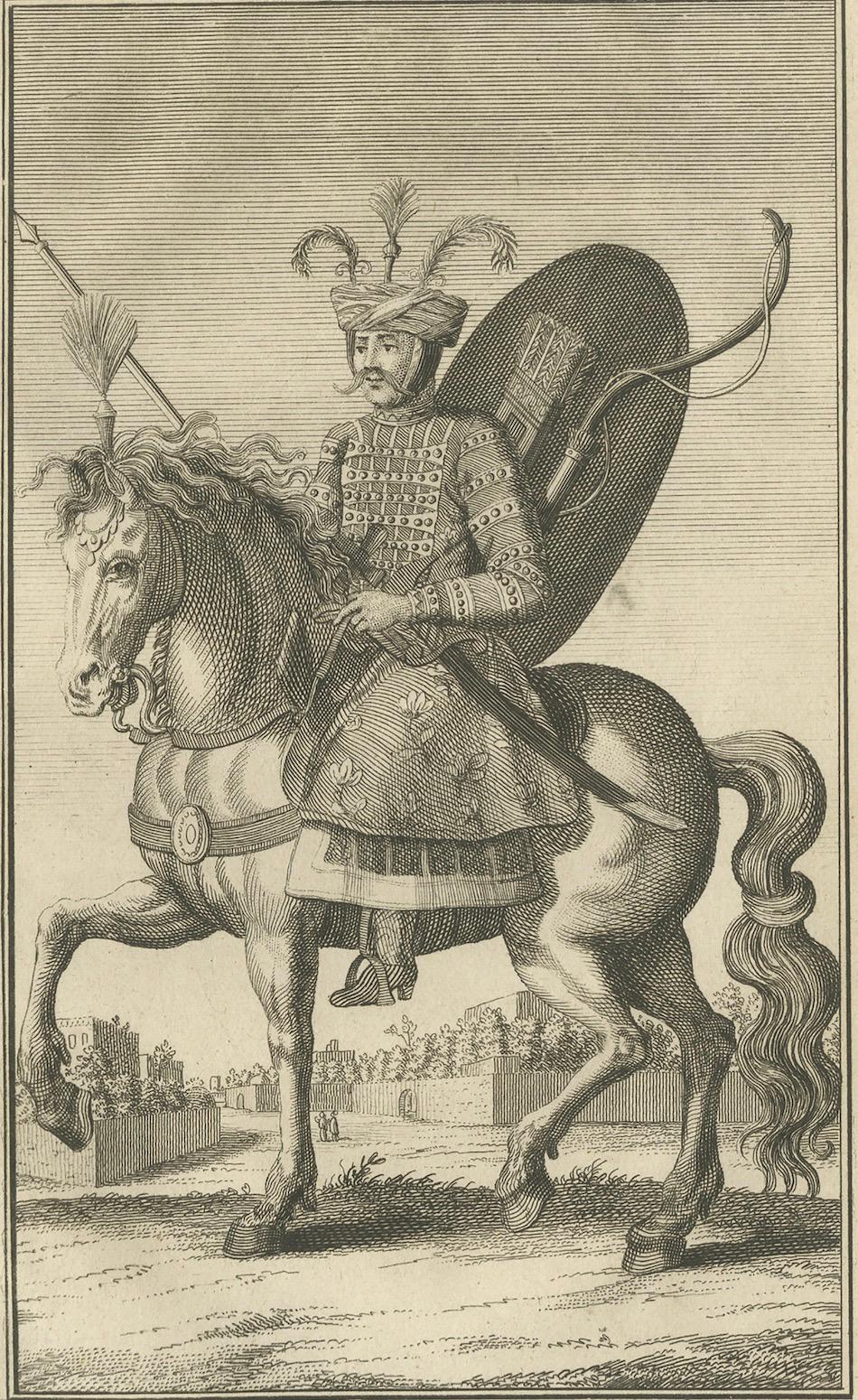
Mounted Persian Soldier (KoeseIbasje) – Antique Engraving of Safavid Military Costume, c.1730
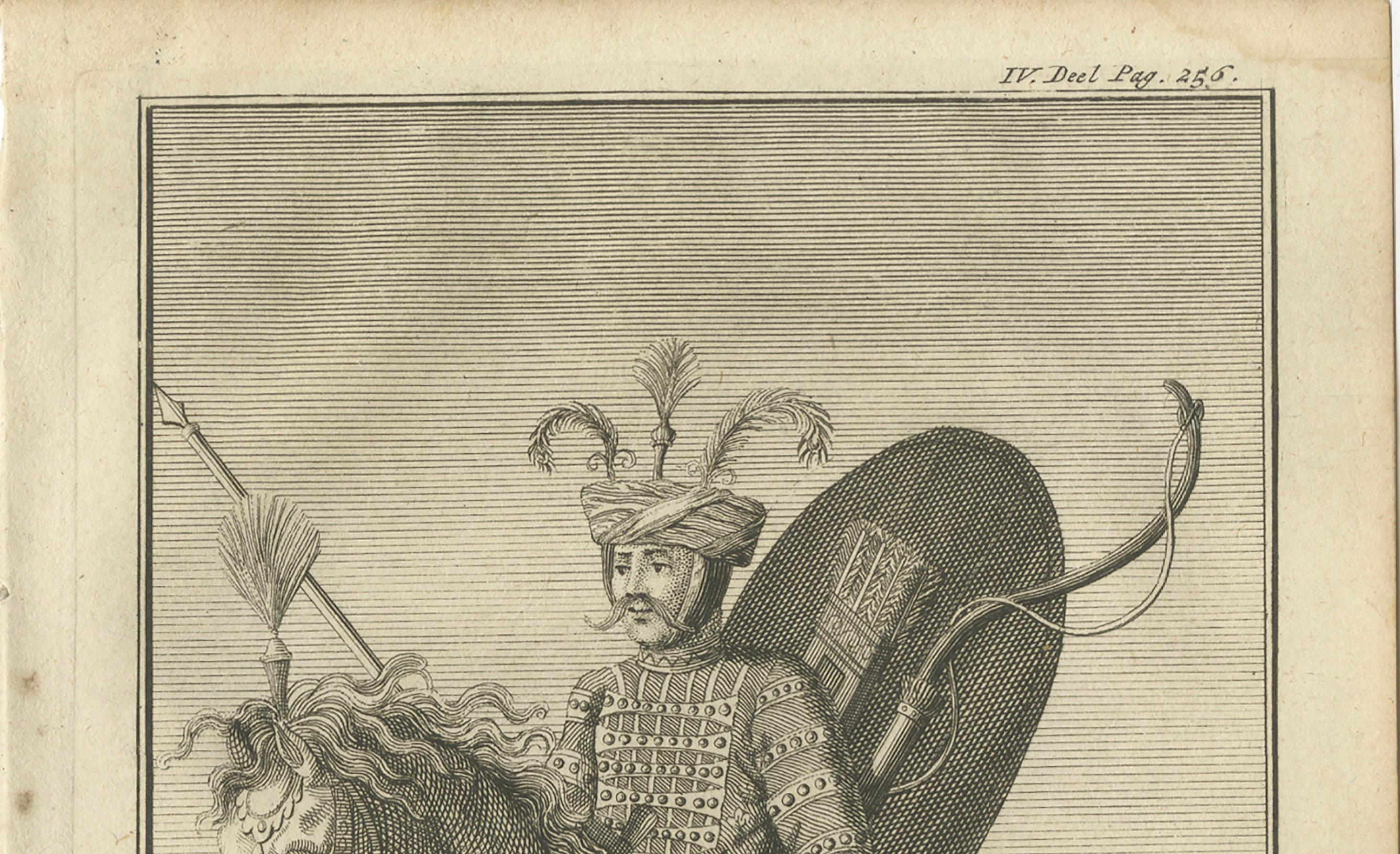
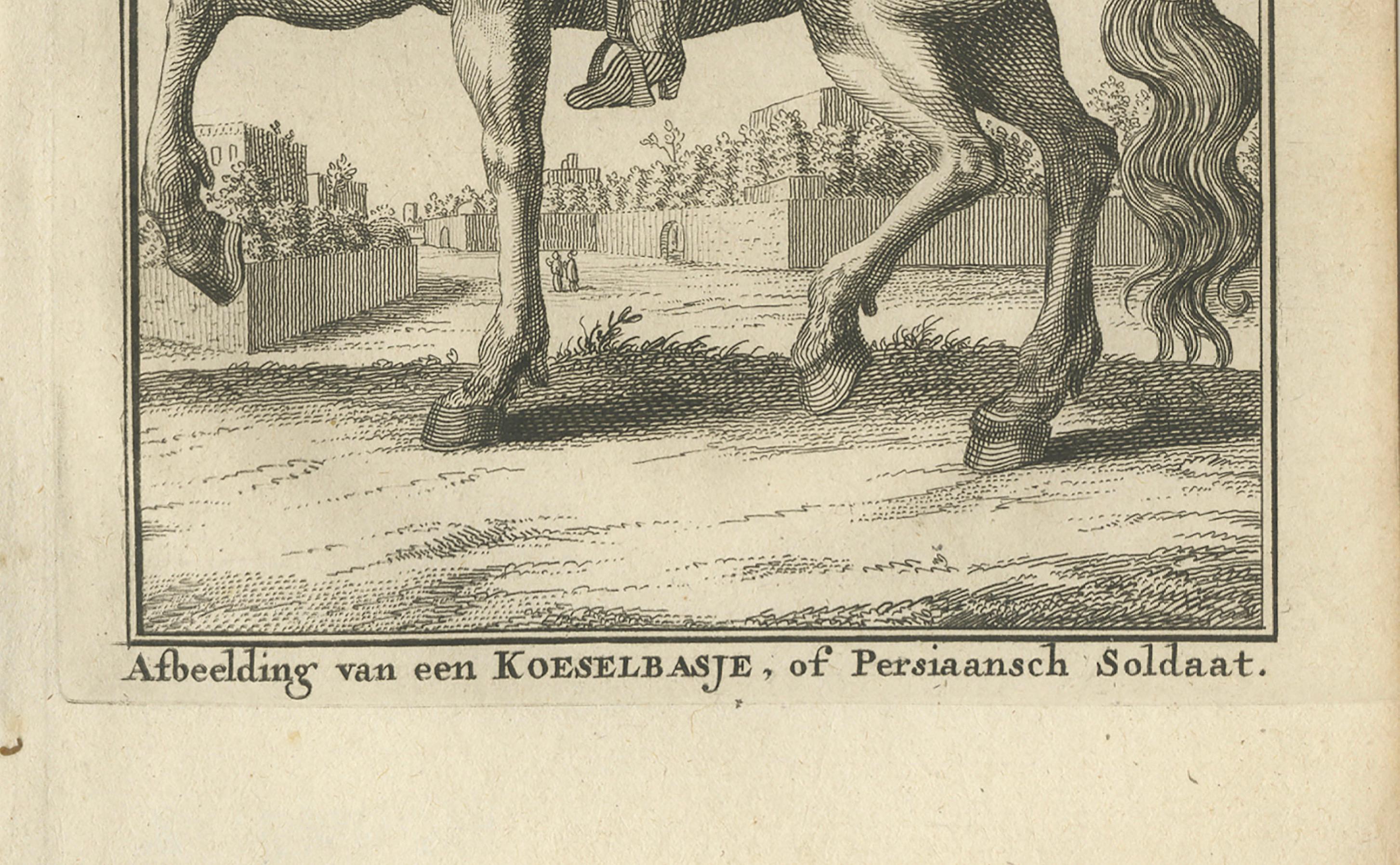
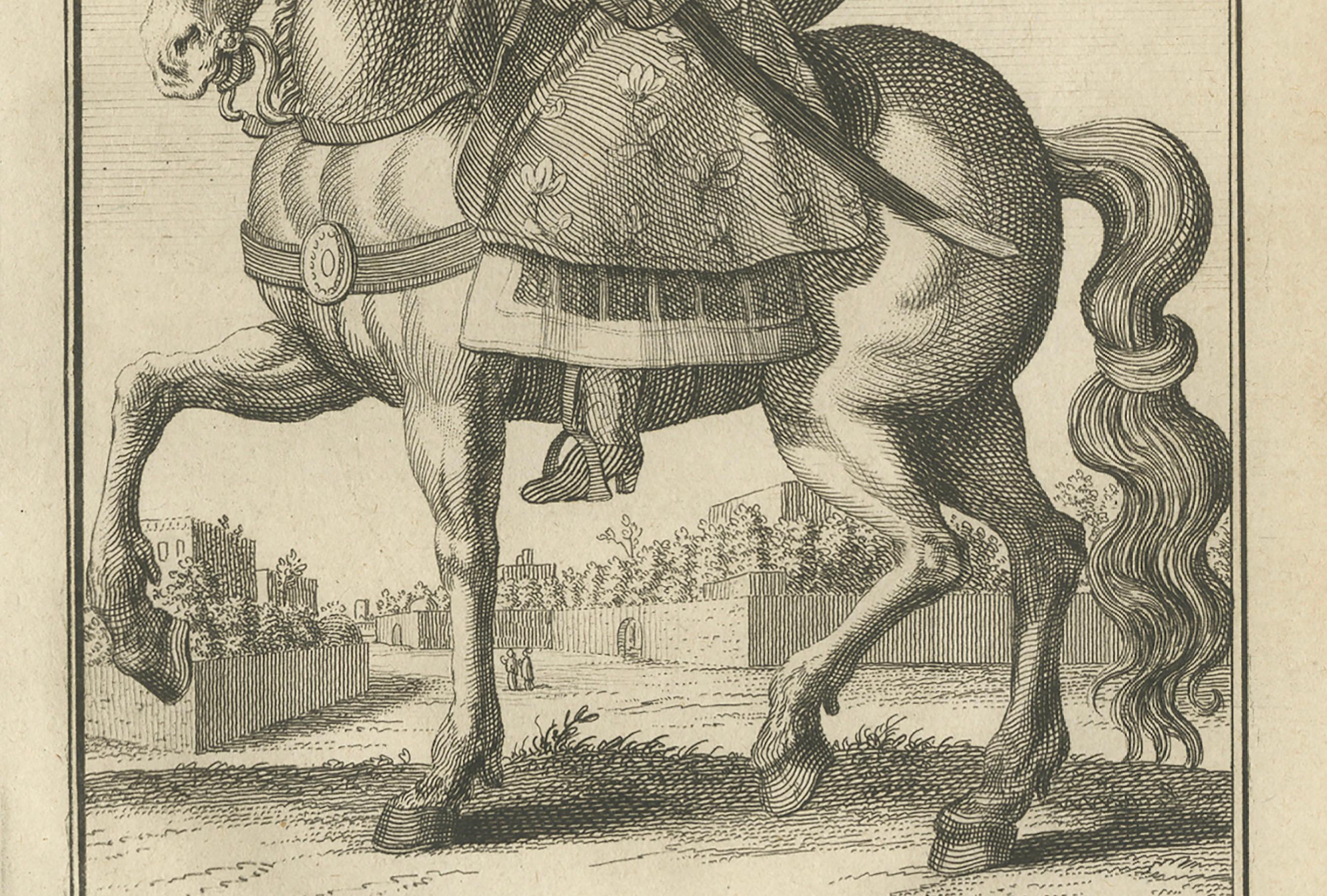
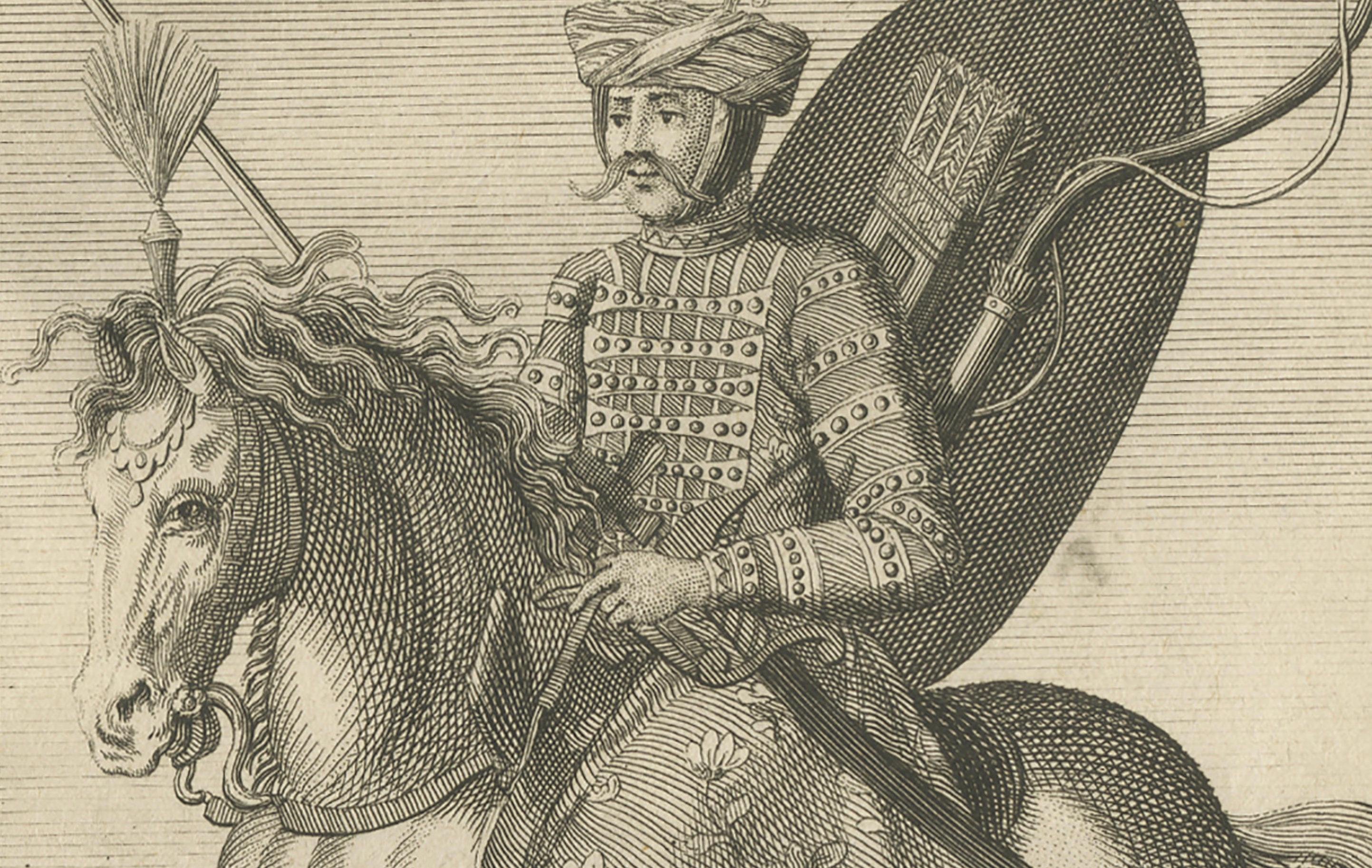
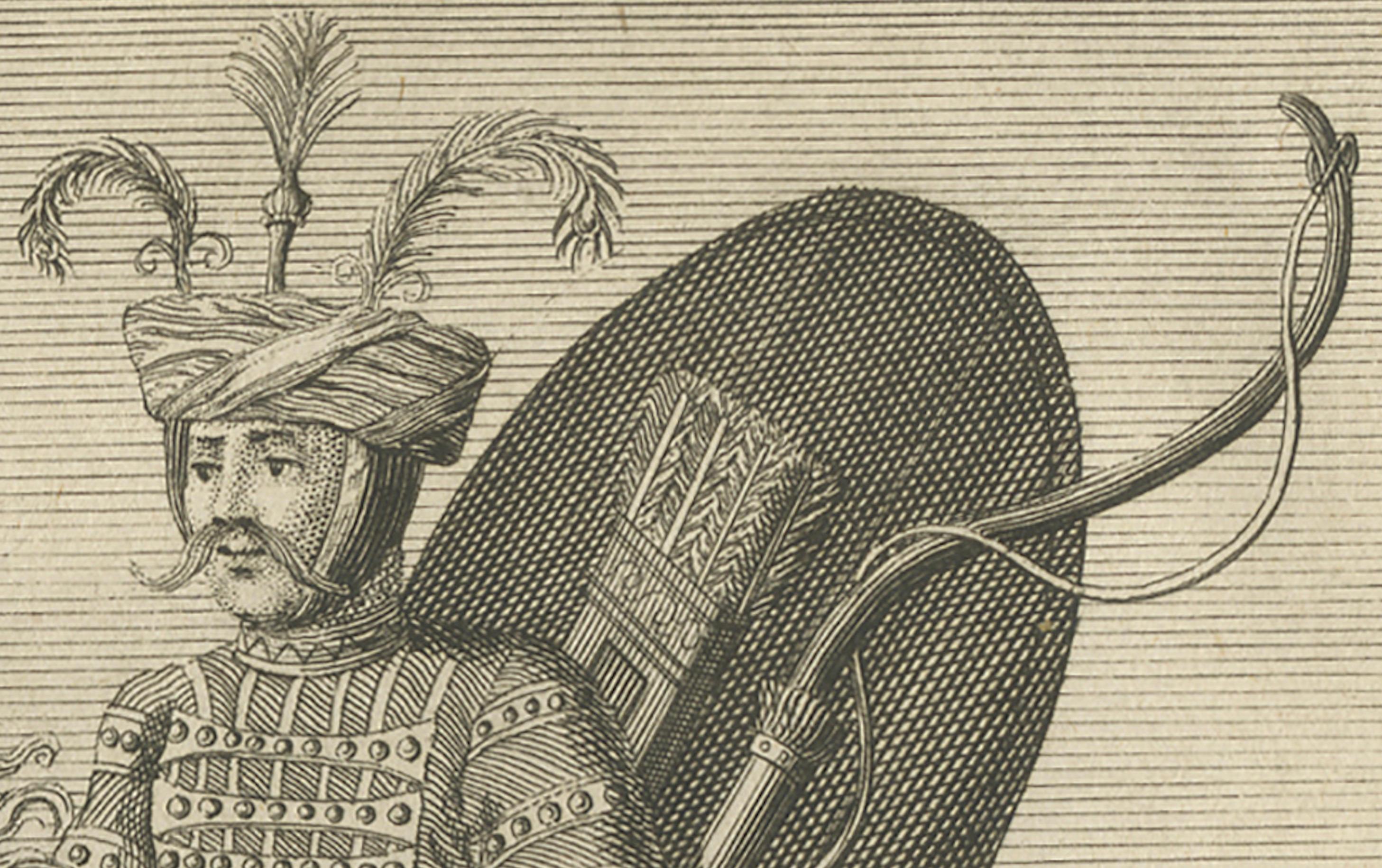
This impressive 18th-century engraving depicts a heavily armed Persian cavalryman known as a “KoeseIbasje,” a term associated with elite horsemen or guards of the Persian military during the Safavid or early Afsharid period. The soldier is richly dressed in patterned robes and segmented armor, with a tall feathered turban and a large shield slung over his back. He holds the reins of a finely groomed warhorse adorned with decorative tack, poised in mid-step as the soldier surveys the landscape. The caption in Dutch reads: "Afbeelding van een Koeselbasje, of Persiaansch Soldaat" (Image of a KoeseIbasje, or Persian Soldier).
The engraving appears on a folio page marked “IV. Deel Pag. 256,” suggesting it was originally published in the fourth volume of a Dutch travel or ethnographic compendium. Based on its style and format, the print most likely originated from an early 18th-century Dutch work such as those by Olfert Dapper or François Valentyn, which documented peoples and customs from around the world during the height of Dutch overseas exploration and trade.
The soldier’s attire, armor, and weaponry—including a curved sword (shamshir), bow, and quiver—reflect traditional Safavid military aesthetics, combining martial functionality with courtly grandeur. These types of engravings were not only artistic depictions but also served as visual records of foreign cultures for European audiences fascinated by the Ottoman and Persian empires.
Framing tips: This dramatic equestrian portrait would look striking in a tall black or dark brown frame. Pair with a warm off-white mat or parchment-toned mount. For a more historic presentation, consider a gold-lined or ebonized frame with a subtle antique finish.