About this sheet
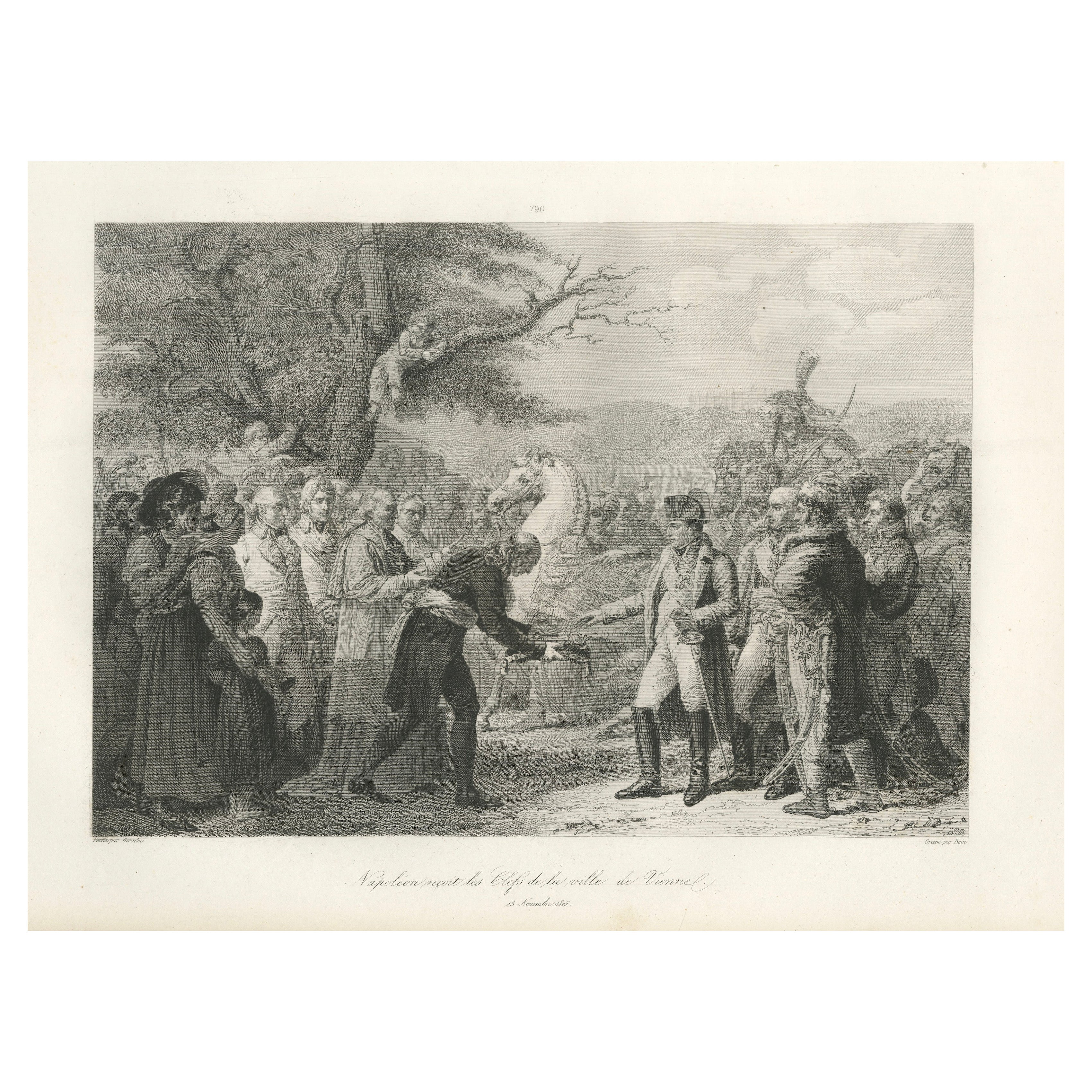
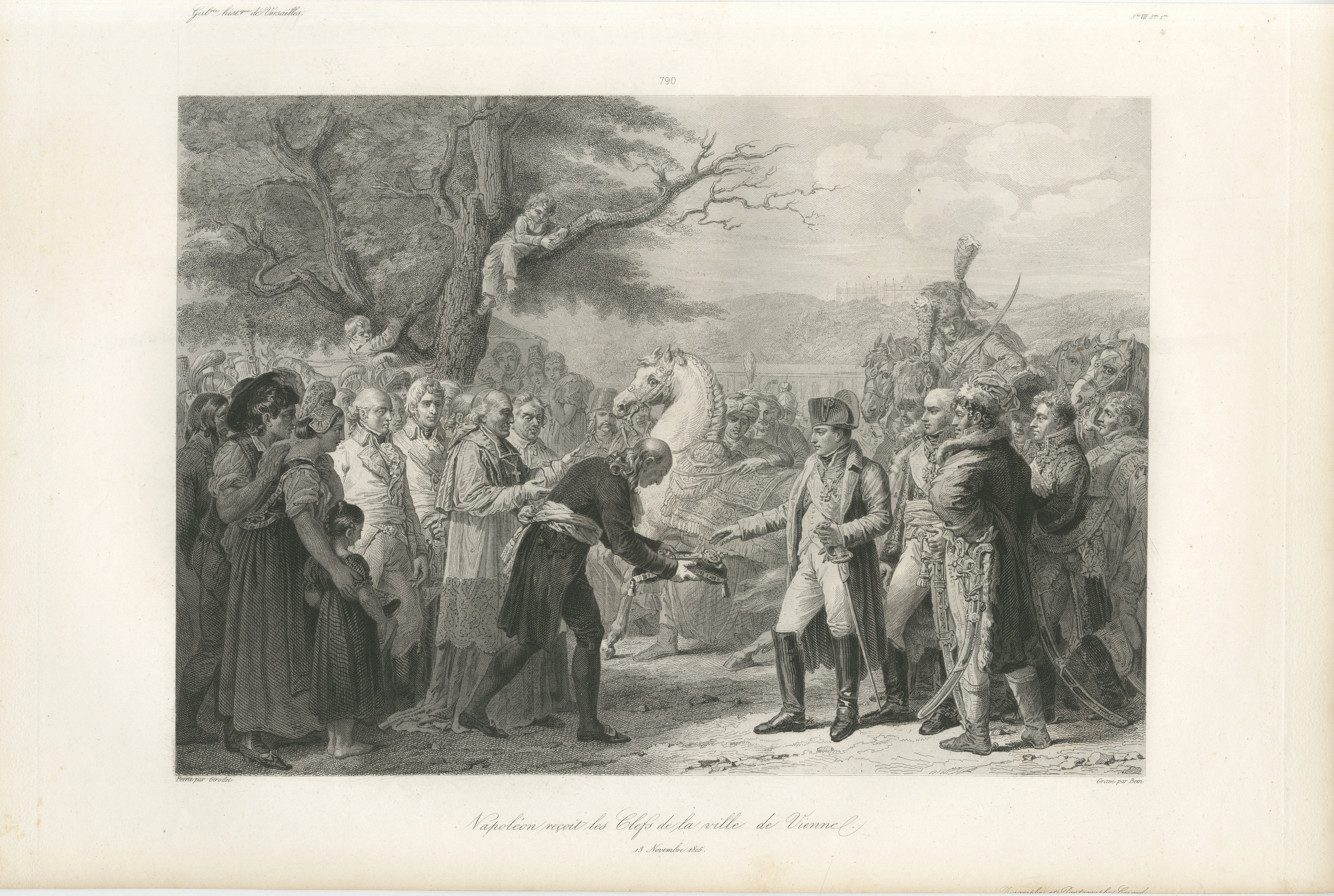
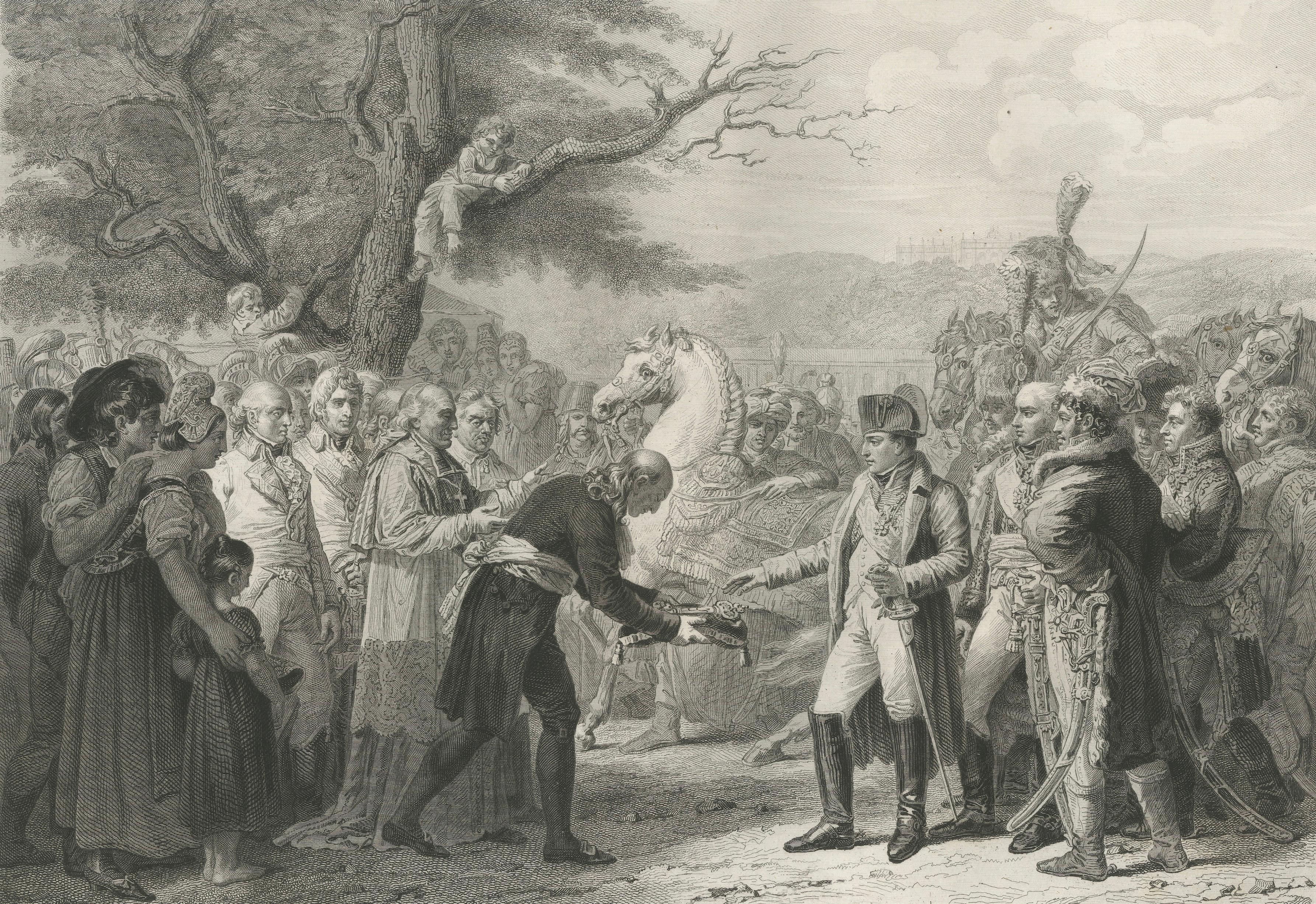
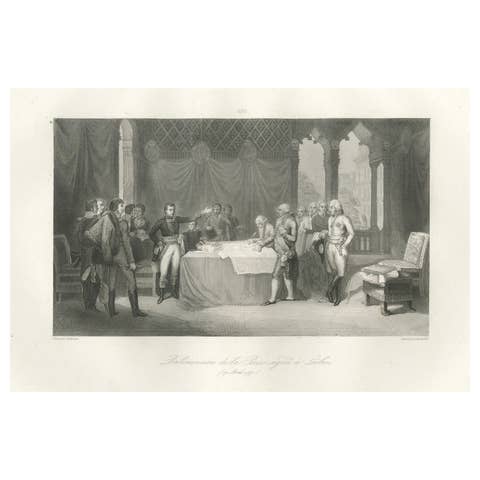
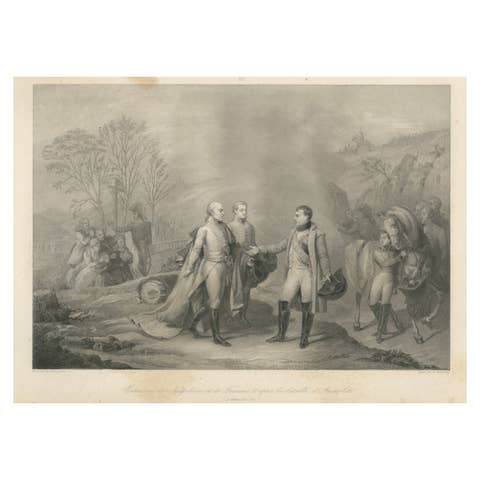
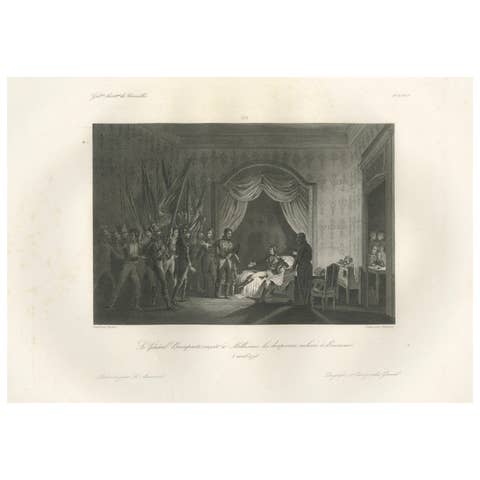
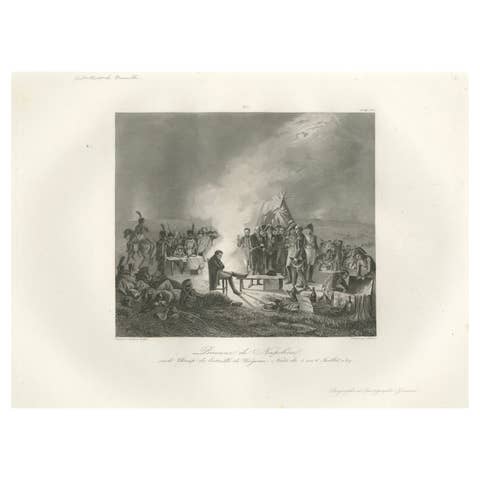
This 19th-century French engraving depicts Napoleon Bonaparte receiving the keys of the city of Vienna, marking the symbolic submission of the Austrian capital during the Napoleonic Wars. The scene represents a moment of ceremonial victory rather than battlefield action, emphasizing authority, political power, and public recognition.
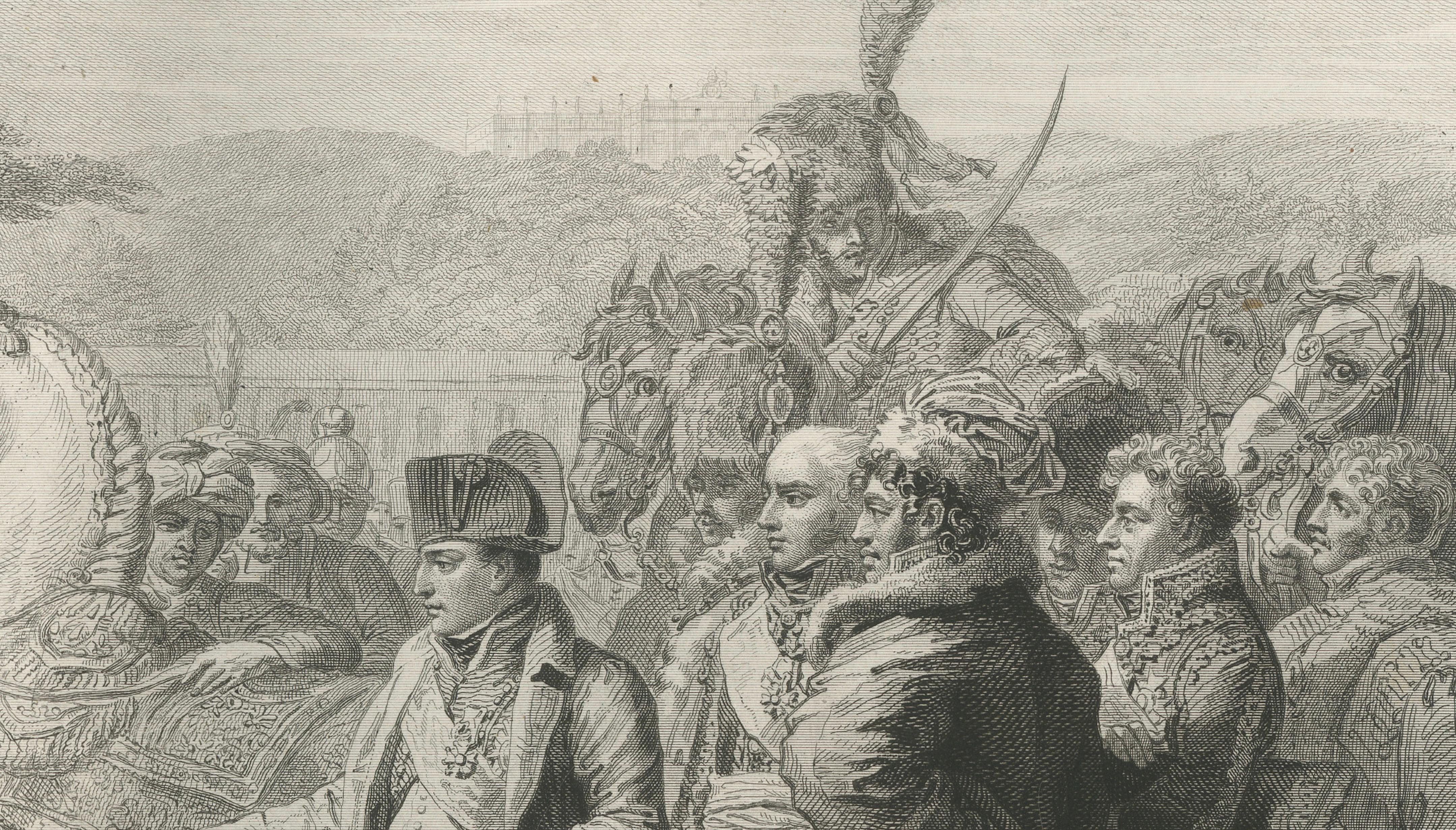
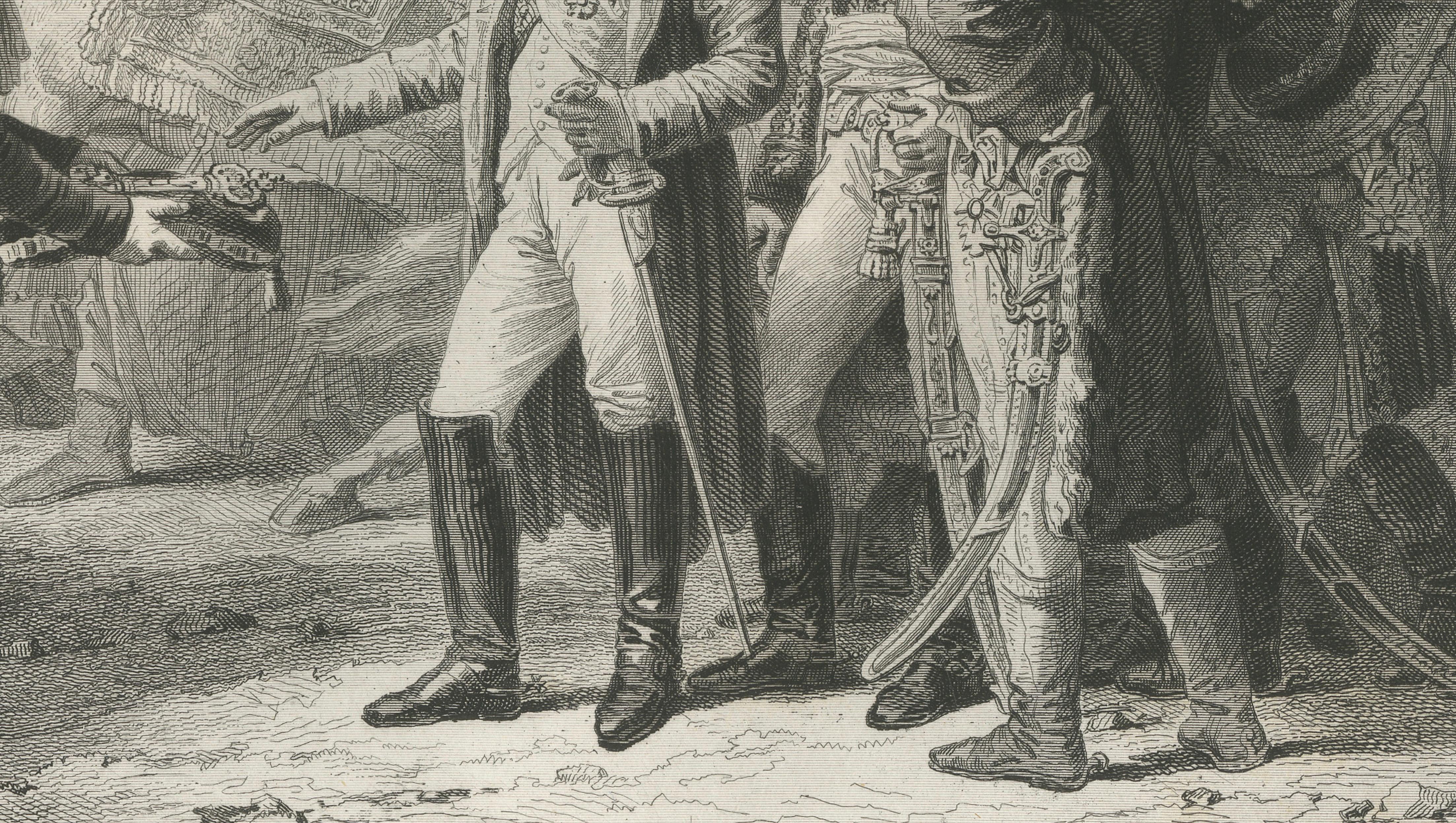
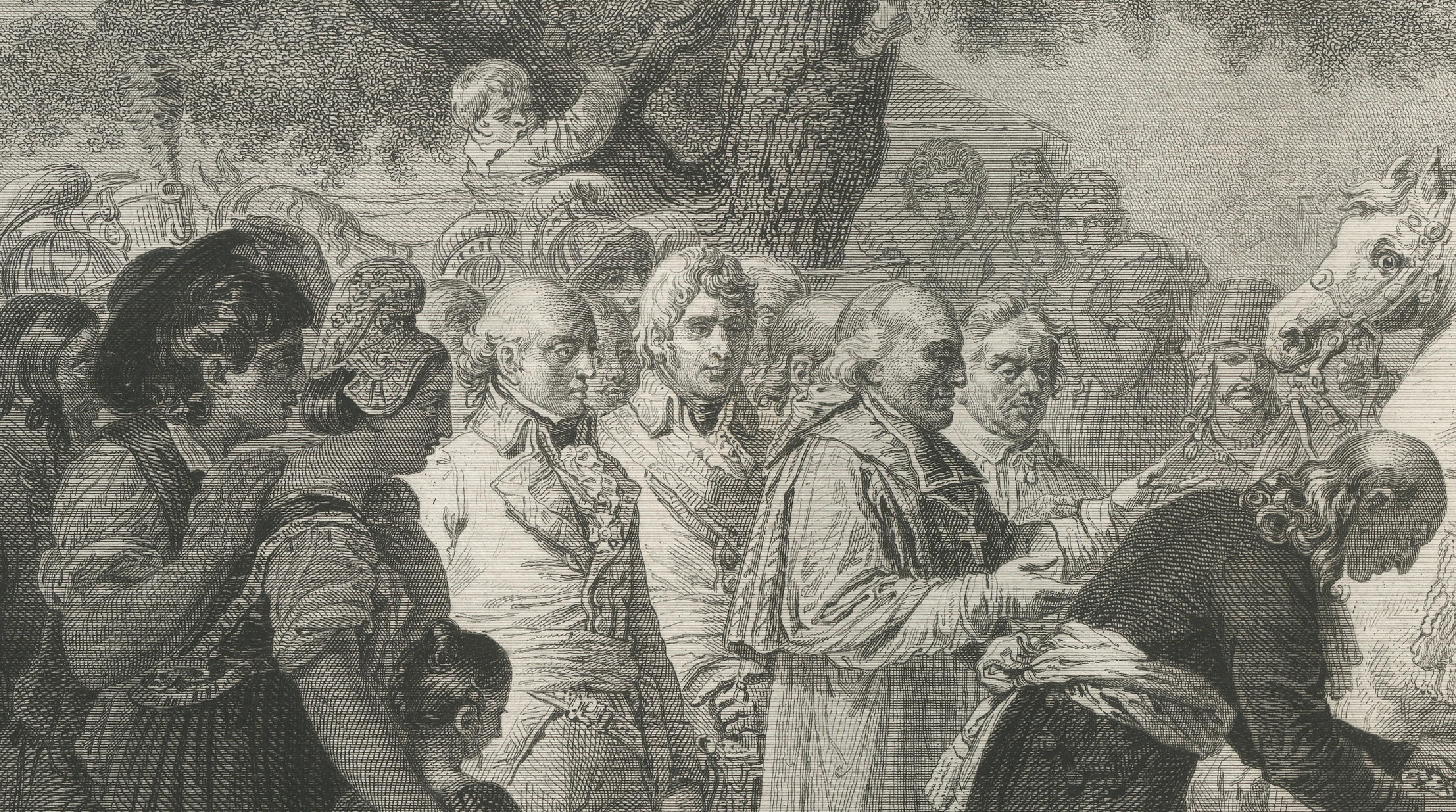
Napoleon is shown at the center of the composition, standing calmly as civic representatives present the keys, surrounded by officers, soldiers, and onlookers. To the left, members of the local population observe the event, adding a human and civic dimension to the military triumph. The background landscape, with trees, distant troops, and mounted figures, reinforces the sense of occupation and transition while maintaining a balanced and readable composition.
The engraving is executed with fine, precise linework typical of early 19th-century French historical printmaking. The monochrome palette allows the viewer to focus on gesture, expression, and narrative clarity. Produced circa 1840, this print belongs to a later wave of Napoleonic imagery, created when major events of the Empire were being revisited and commemorated for educational and decorative purposes.
This is an original 19th-century engraving, not a later reproduction. Its combination of historical significance, strong narrative content, and calm visual authority makes it appealing to collectors of Napoleonic history as well as interior designers seeking historically grounded wall art with presence.
Condition report:
Good condition. General age-related toning and scattered foxing across the sheet, primarily visible in the margins and lighter areas. The engraved image remains clear and well-defined. No folds or major structural issues observed.
Framing tips:
A wide cream or light grey mat will soften the aged paper tone and give the image visual balance. A dark wood, antique gilt, or matte black frame will complement the historic subject and provide an elegant, library- or study-ready presentation.
Technique: Engraving
Maker: After Baron Gros, engraved by P. Blanchard, France, circa 1840