Indians of North America, Dress and Weapons – Millar Geography Engraving, c.1782
€ 340
Original antique · The actual sheet photographed · Certificate of authenticity on request · Sold unframed · Worldwide shipping from € 15 (rates)
Date
1782
Sheet size
24.3 × 37 cm (9.6 × 14.6 in)
Condition
Good
Reference
BG-14129-30
What the condition grades mean
Excellent
Bright and clean, with no faults worth mentioning.
Very good
Only light signs of age, such as faint toning.
Good
Normal signs of age for a sheet of this period: toning, some foxing, small marks or neat old repairs.
Fair
Clear faults such as staining, tears or repairs, priced to match.
Every fault we see is written in the condition note, and the whole sheet is shown uncropped in the photos.
Condition
Good antique condition. Paper with light overall toning and scattered age-related spotting. A faint horizontal crease visible across the sheet, consistent with original binding or storage. Minor edge wear and small surface marks, mainly in the margin.
About this sheet
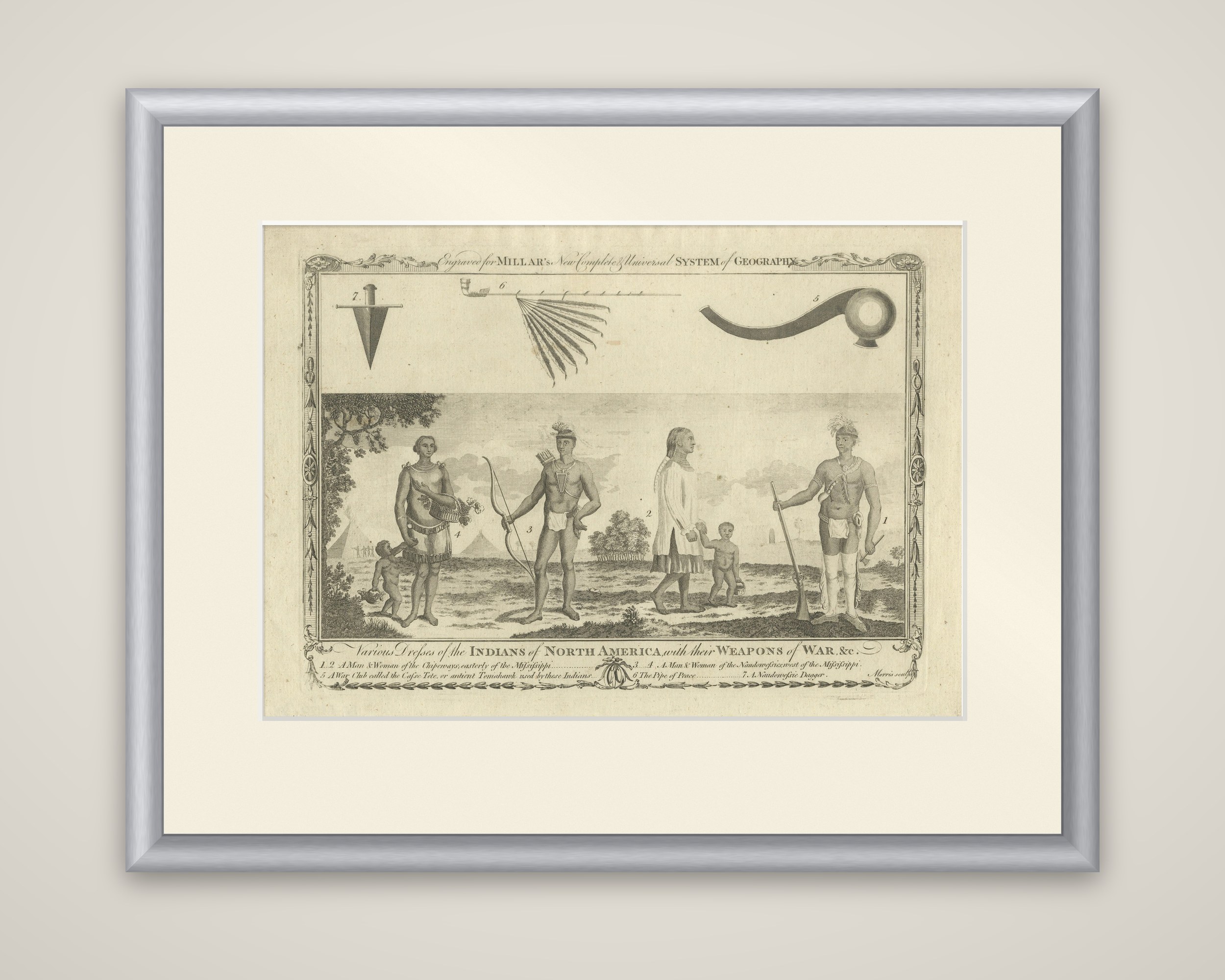
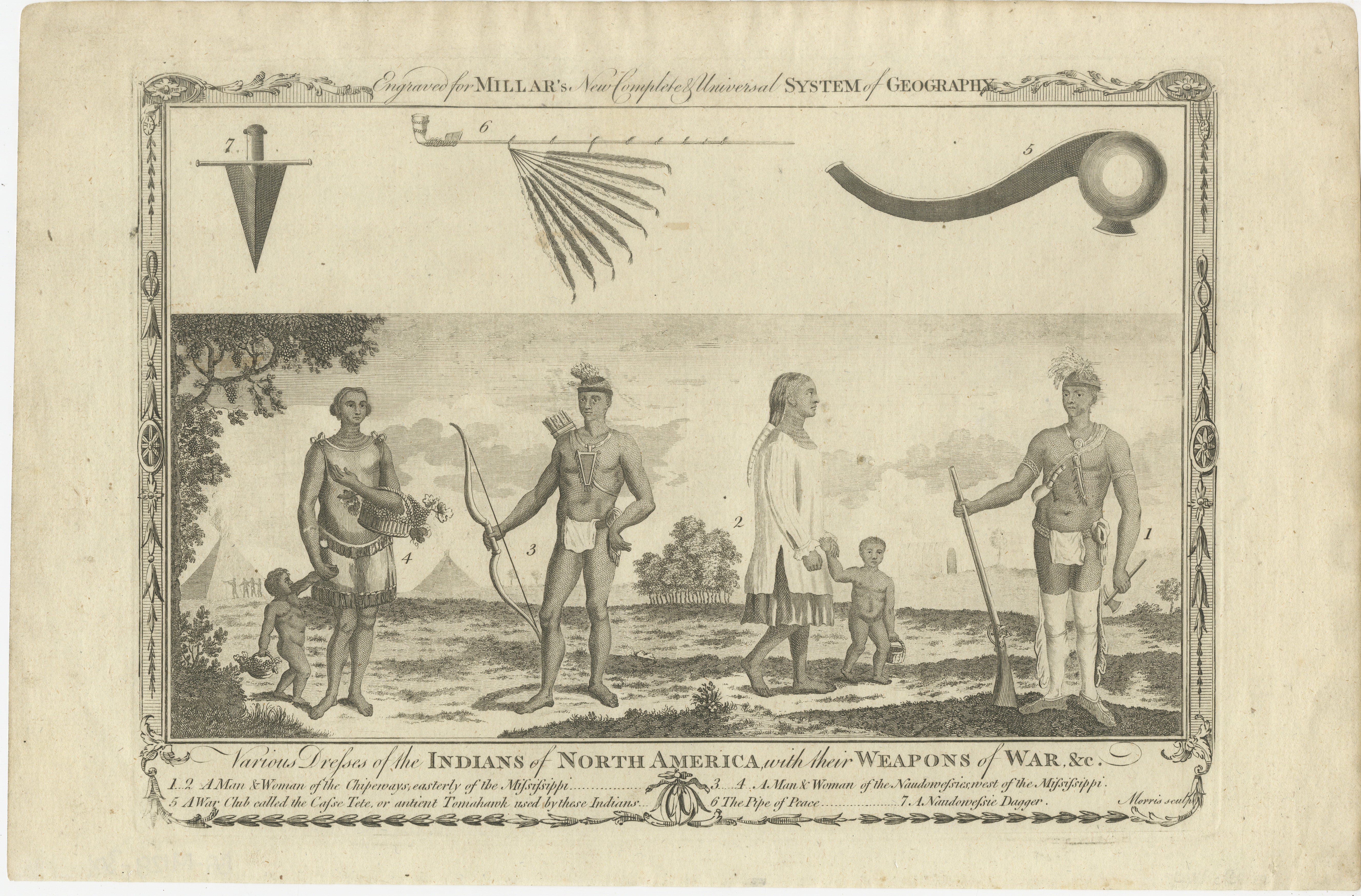
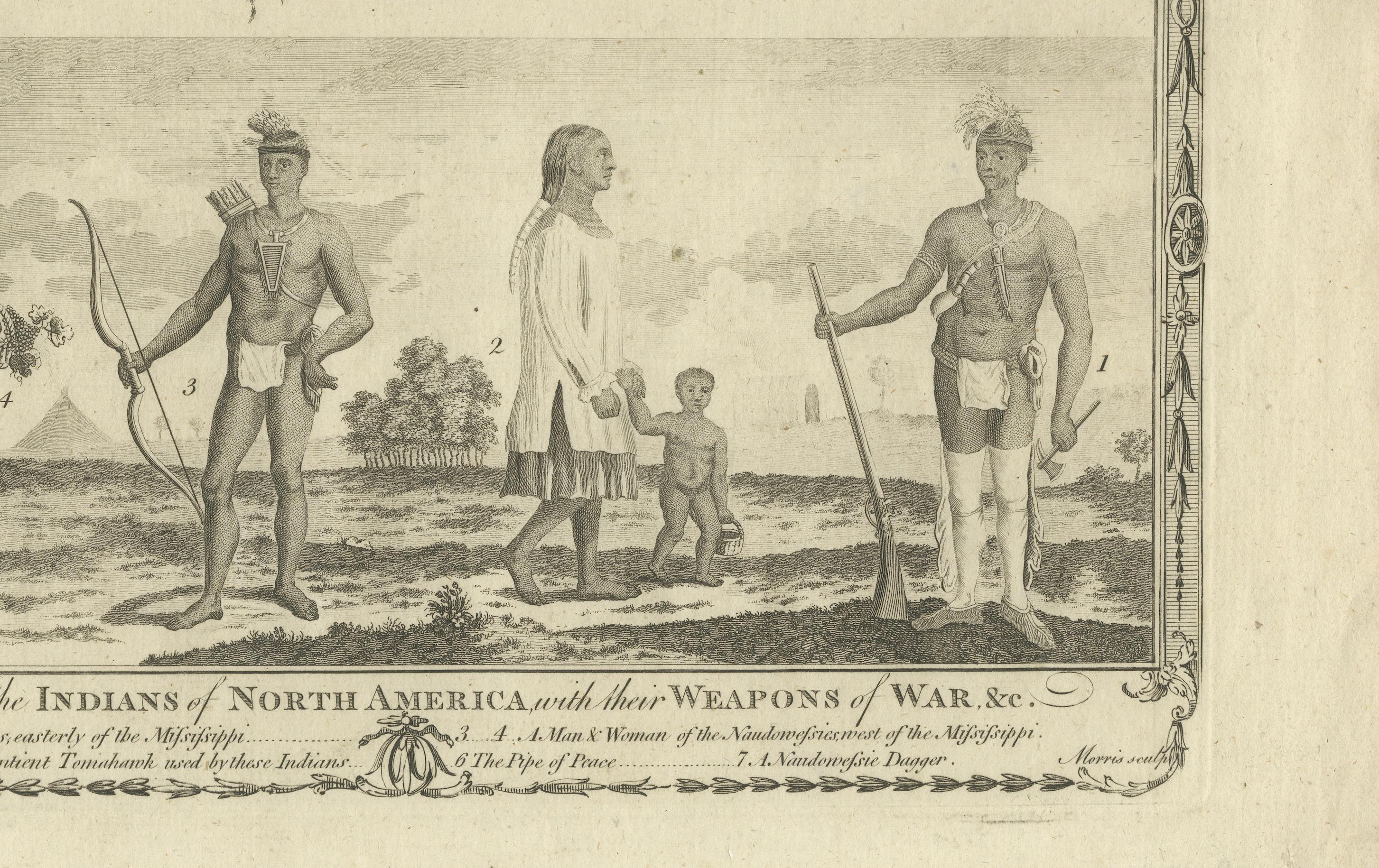
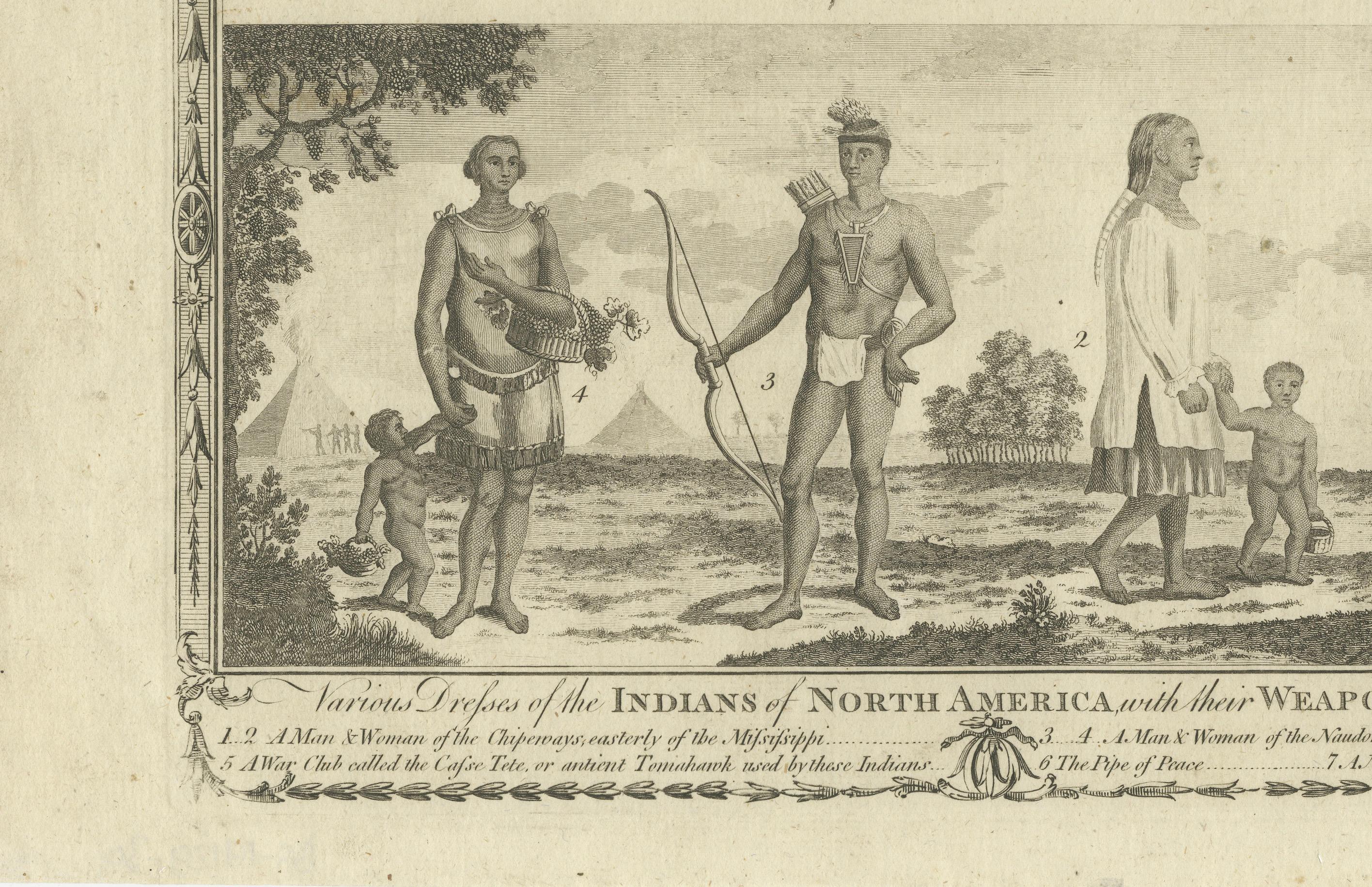
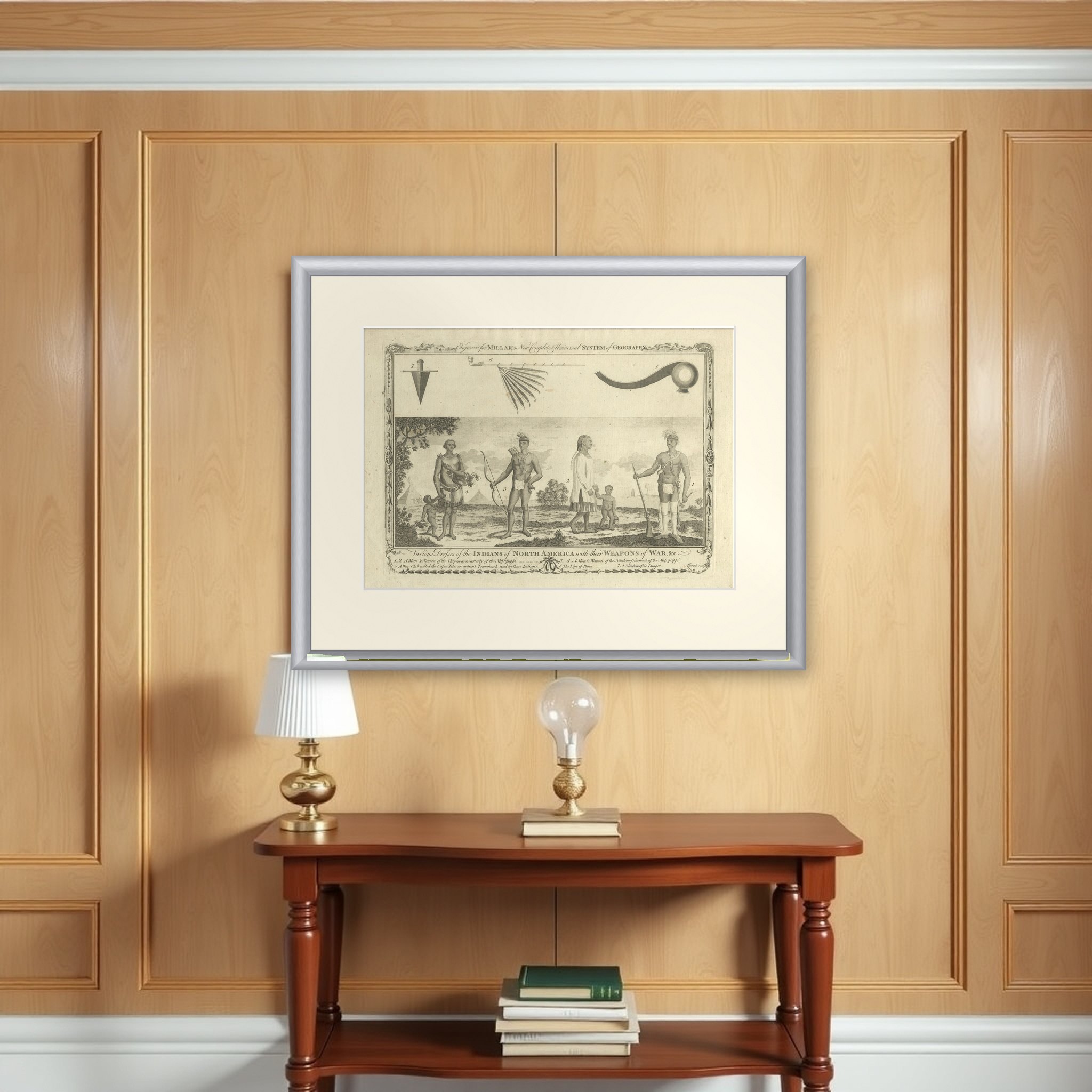
Native peoples of the northern interior on a copper engraving from Millar's New Complete and Universal System of Geography, c.1782. The plate is titled "Various Dresses of the Indians of North America, with their Weapons of War, &c." and is signed "Morris sculp."
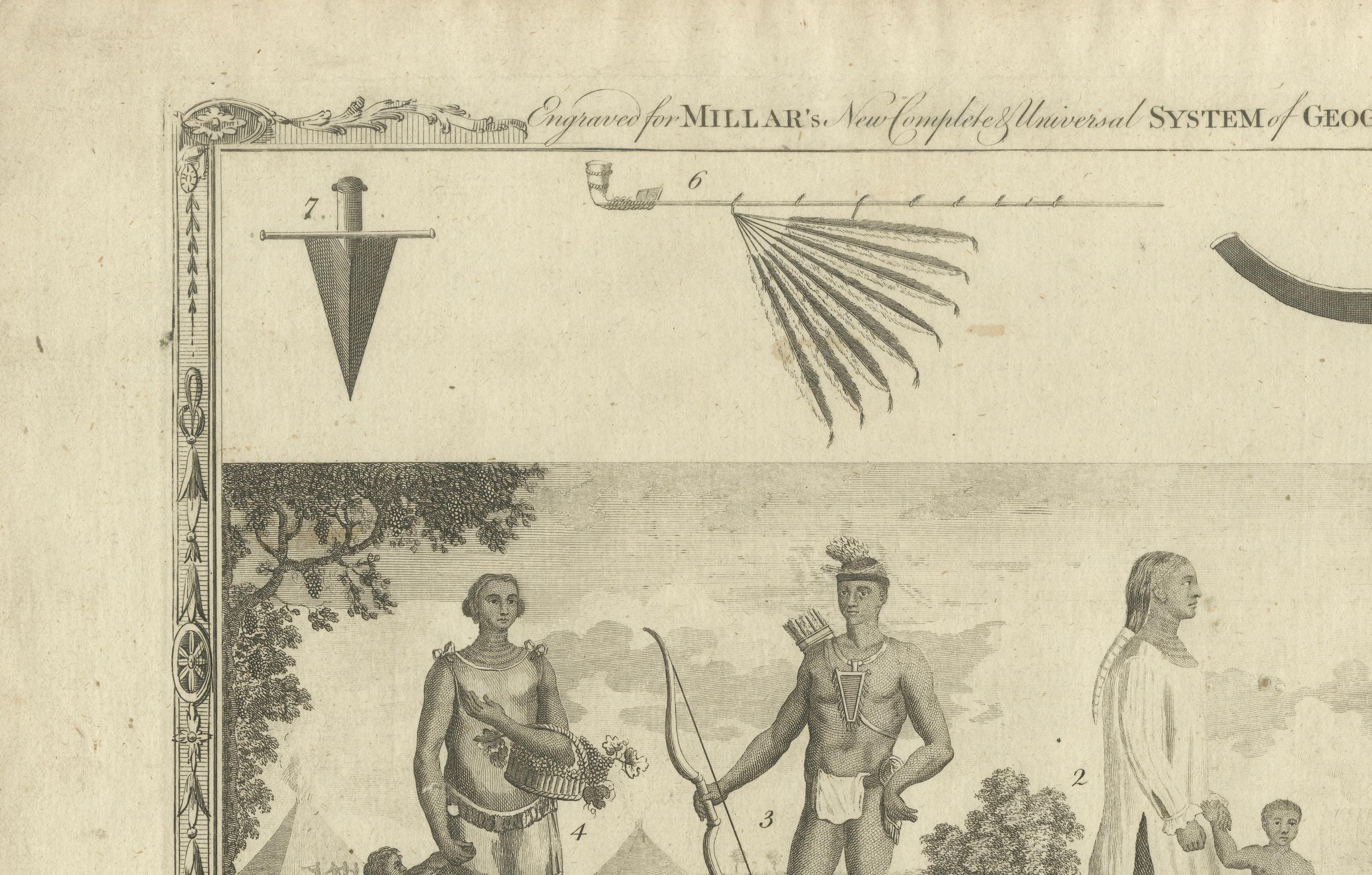
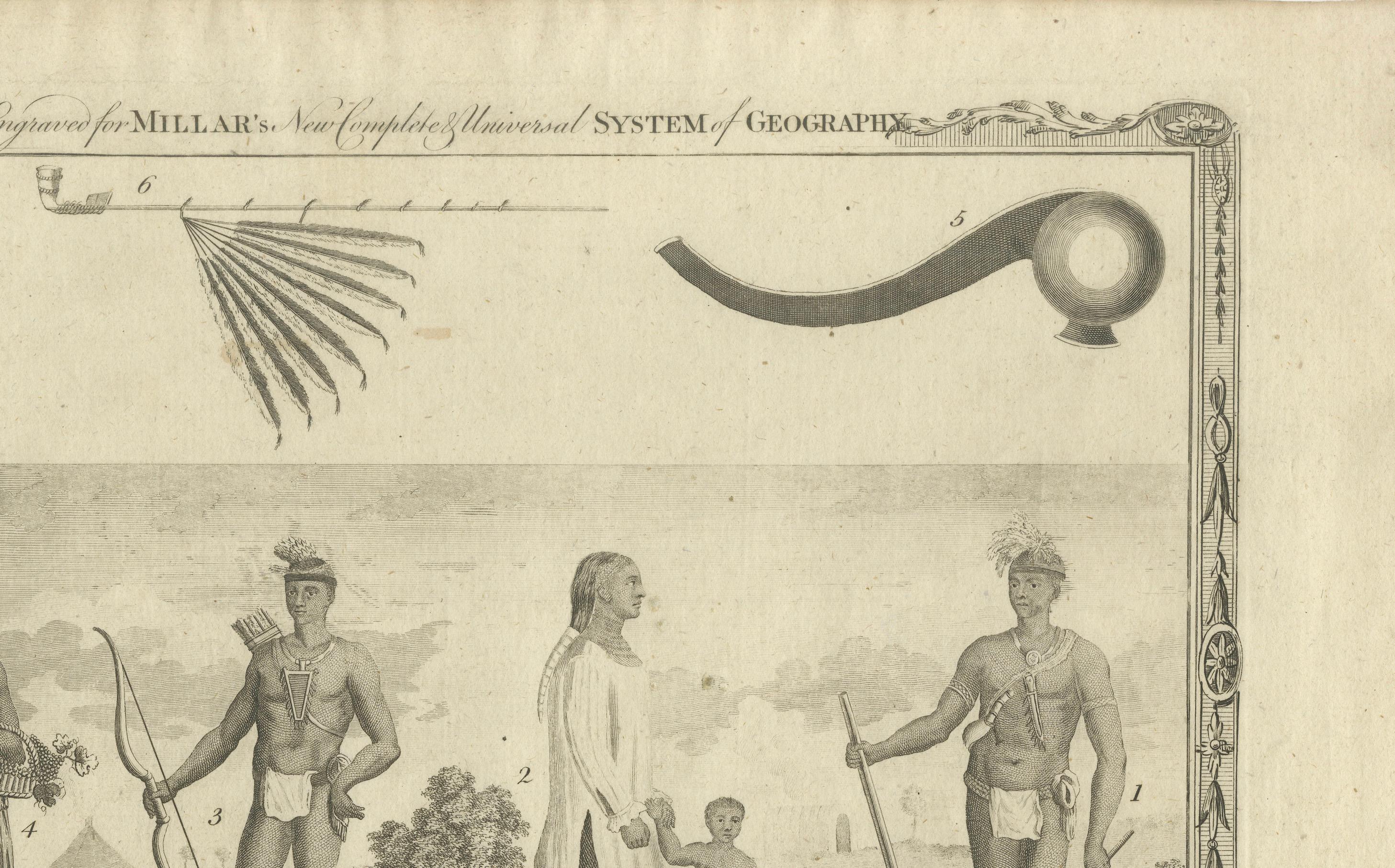
Four standing figures cross an open landscape: a man and a woman of the Chipeways, "eastward of the Mississippi", and a man and a woman of the Naudowessies, "westward of the Mississippi", each numbered to a key engraved below the image. The men carry a musket, bow and quiver, and the women are shown with children. Tents stand in the background. Across the top of the sheet three numbered weapon studies are set out: a war club called the "Casse Tete" or ancient tomahawk, the pipe of peace with a fan of feathers, and a Naudowessie dagger. A decorative border frames the whole sheet.
Millar's geography was a London part-work of the 1780s that supplied general readers with maps and costume plates. The plate is useful for the names it records, Chipeway and Naudowessie, as they were written by English-language authors of the day.