About this sheet
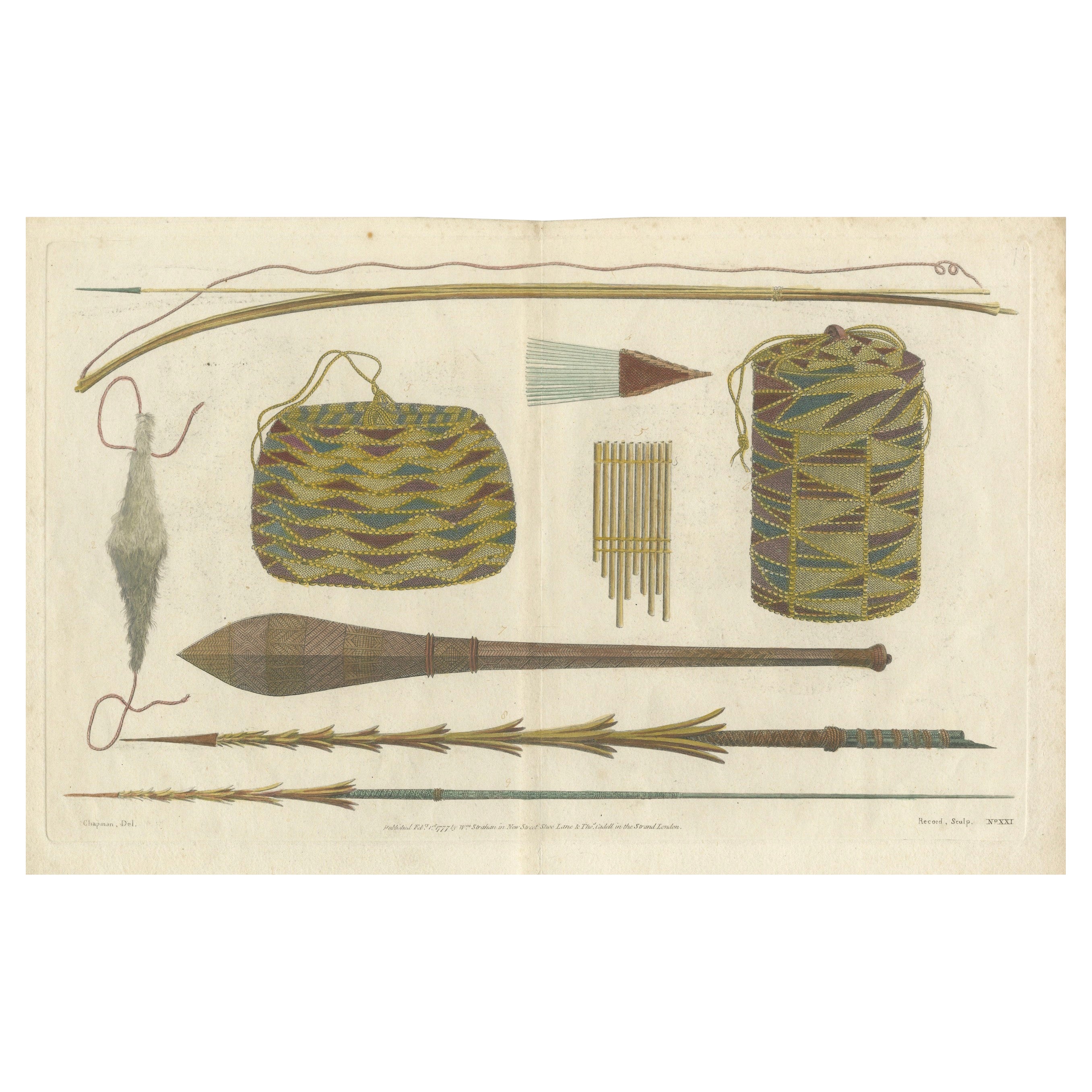
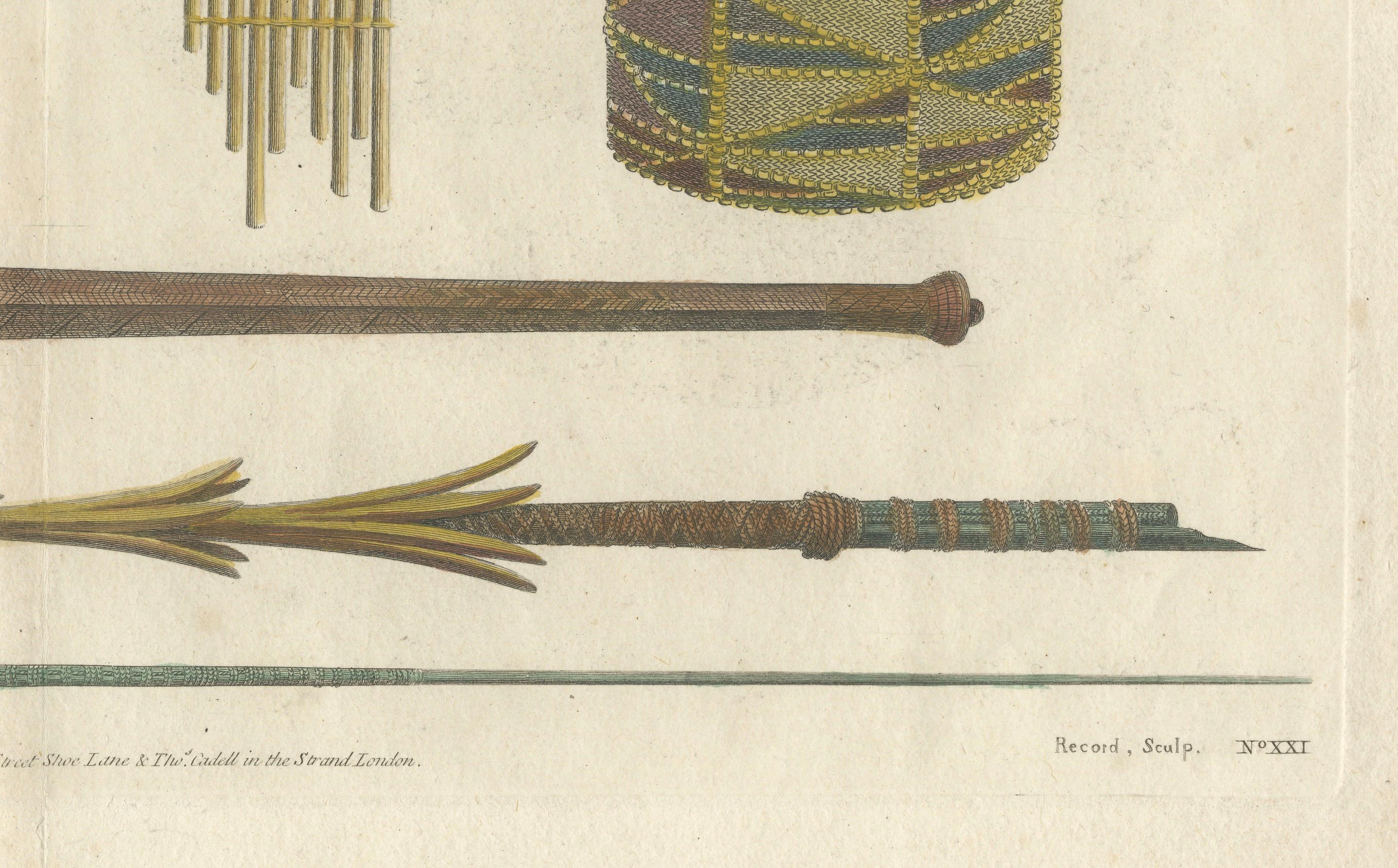
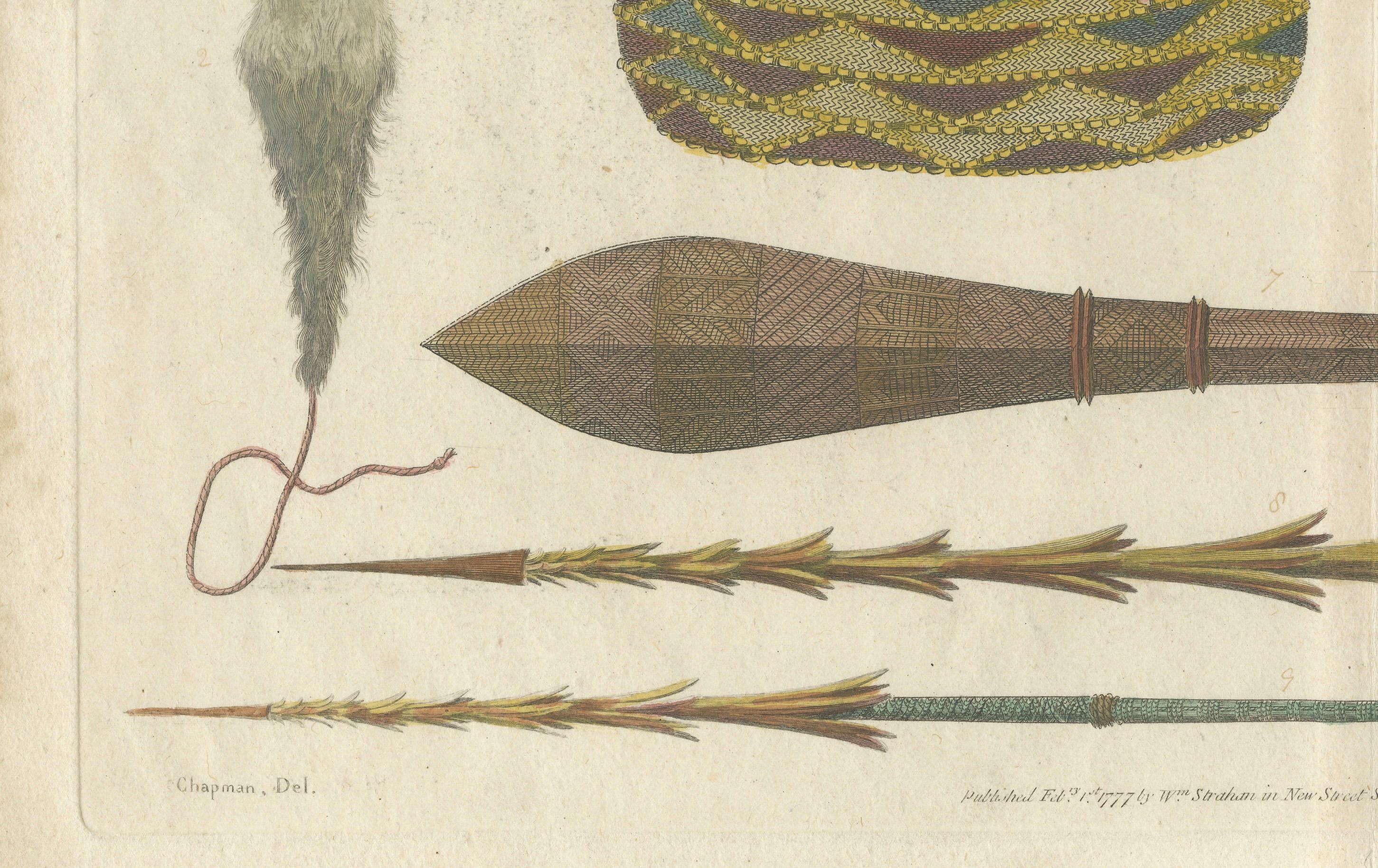
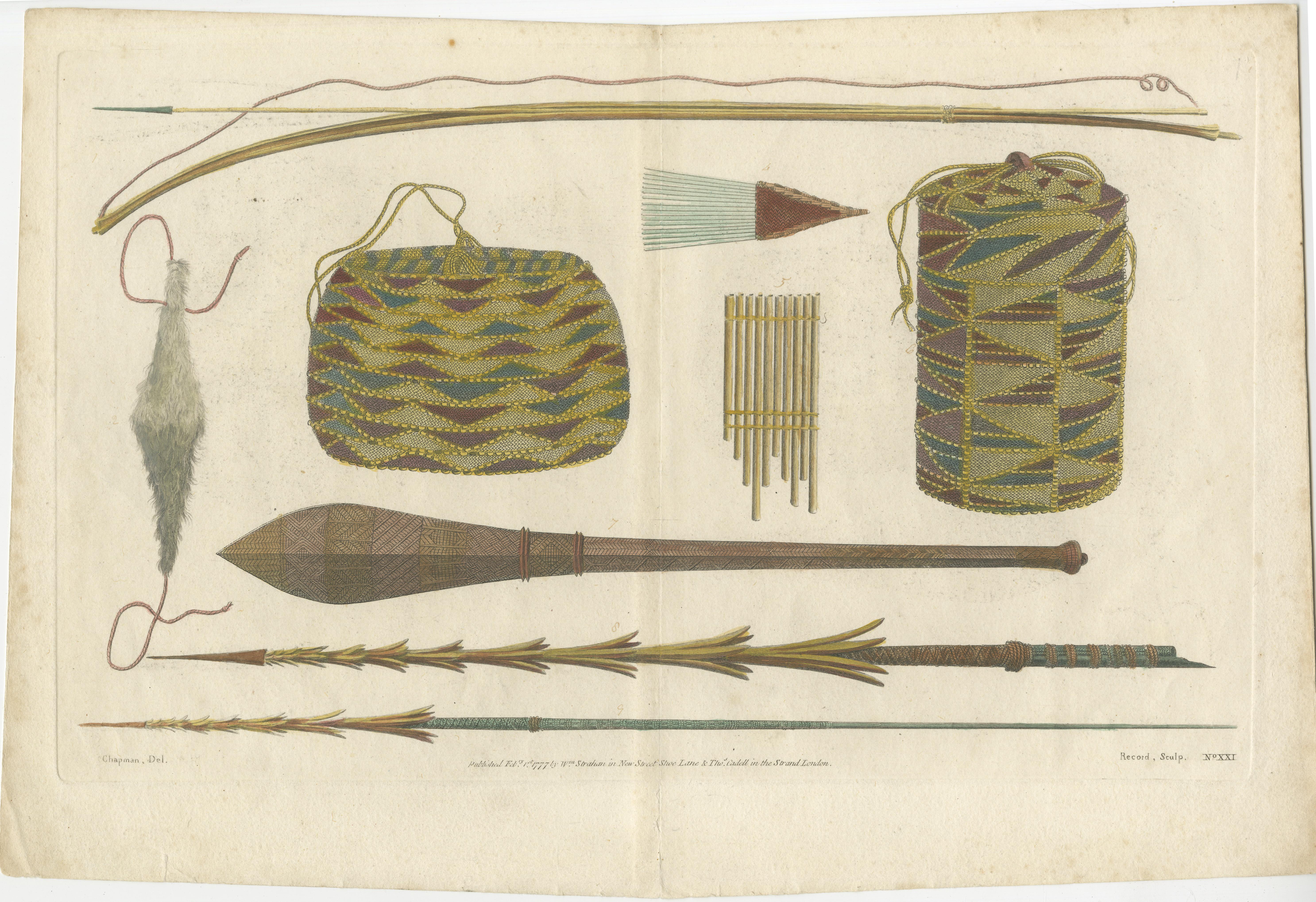
This print titled "Ornemens, Ustensiles Et Armes Des Isles Des Amis" is from Captain James Cook's third voyage, specifically published in 1777 by Strahan and Cadell. It represents various weapons, decorations, and utensils from the Tonga Islands (referred to as "Isles des Amis" in French). The copper-plate engraving, produced by Chapman (Del.) and Record (Sculp.), is part of an original collection of prints from *Voyage dans L’Hémisphère Austral et Autour du Monde*, a French edition of Cook's journals. The voyage occurred from 1776 to 1779, marking Cook's third and final voyage.
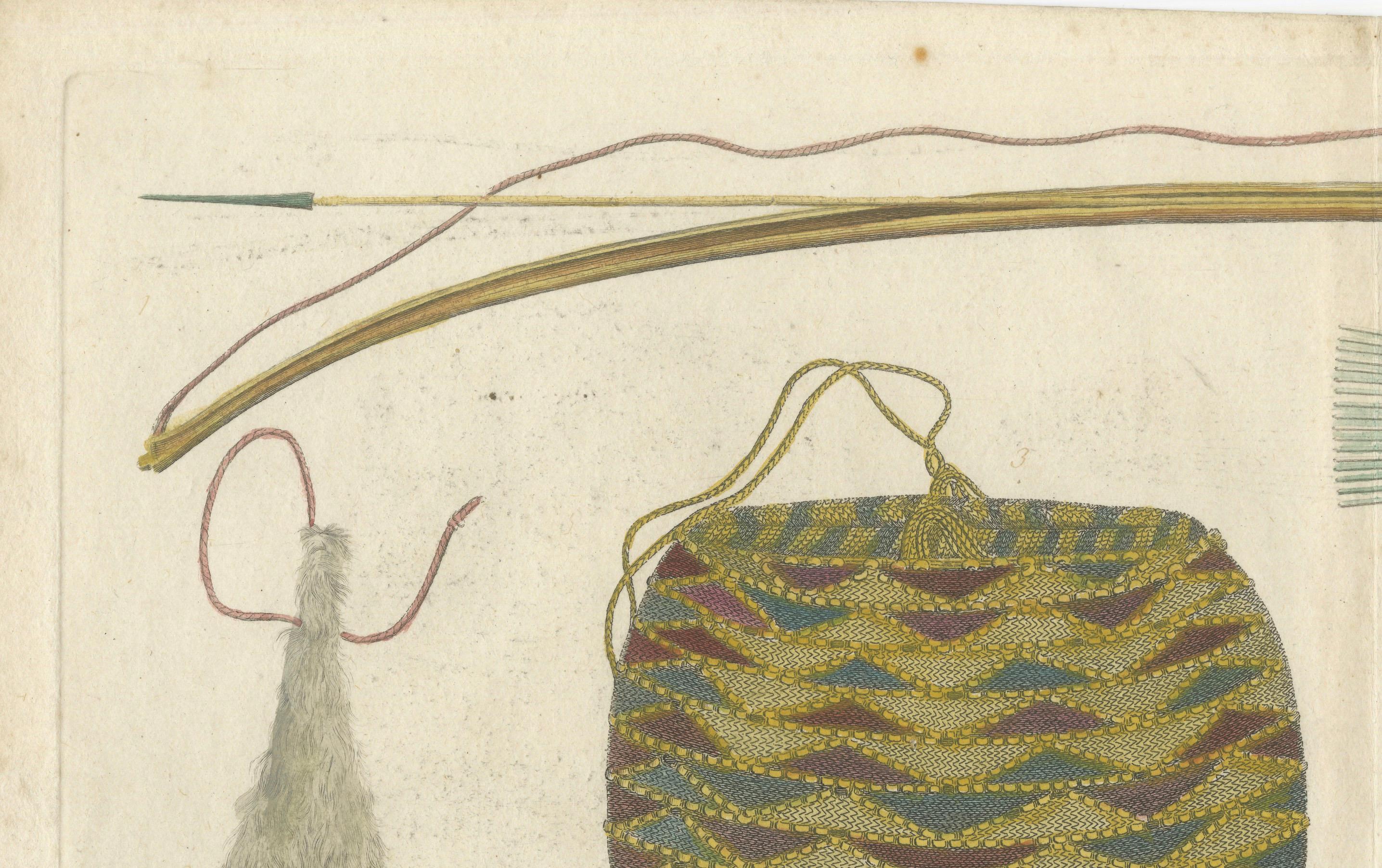
This particular illustration, "No. XXI," shows intricately designed objects, including tools, woven bags, spears, and other items used by the Tongan people, beautifully capturing the craftsmanship and cultural artifacts encountered during the expedition.
This 1777 engraving, titled *Ornemens, Ustensiles Et Armes Des Isles Des Amis*, provides a fascinating glimpse into the material culture of the Tonga Islands, referred to as "Isles des Amis" in the French edition of Captain James Cook's third voyage (1776–1779). Cook's exploration of the Pacific included visits to the Tonga Islands, and the items depicted in this engraving reflect both functional and aesthetic aspects of Tongan life.
### Detailed Analysis of the Items Depicted:
1. Weapons (Spears and Clubs):
The engraving features spears and clubs, which were essential for both hunting and warfare. The intricate designs on the spears, particularly the details on the tips and shafts, demonstrate the advanced craftsmanship of the Tongan people. Some of these weapons may have also held ritual or ceremonial significance, indicating their cultural importance beyond practical use.
2. Woven Baskets:
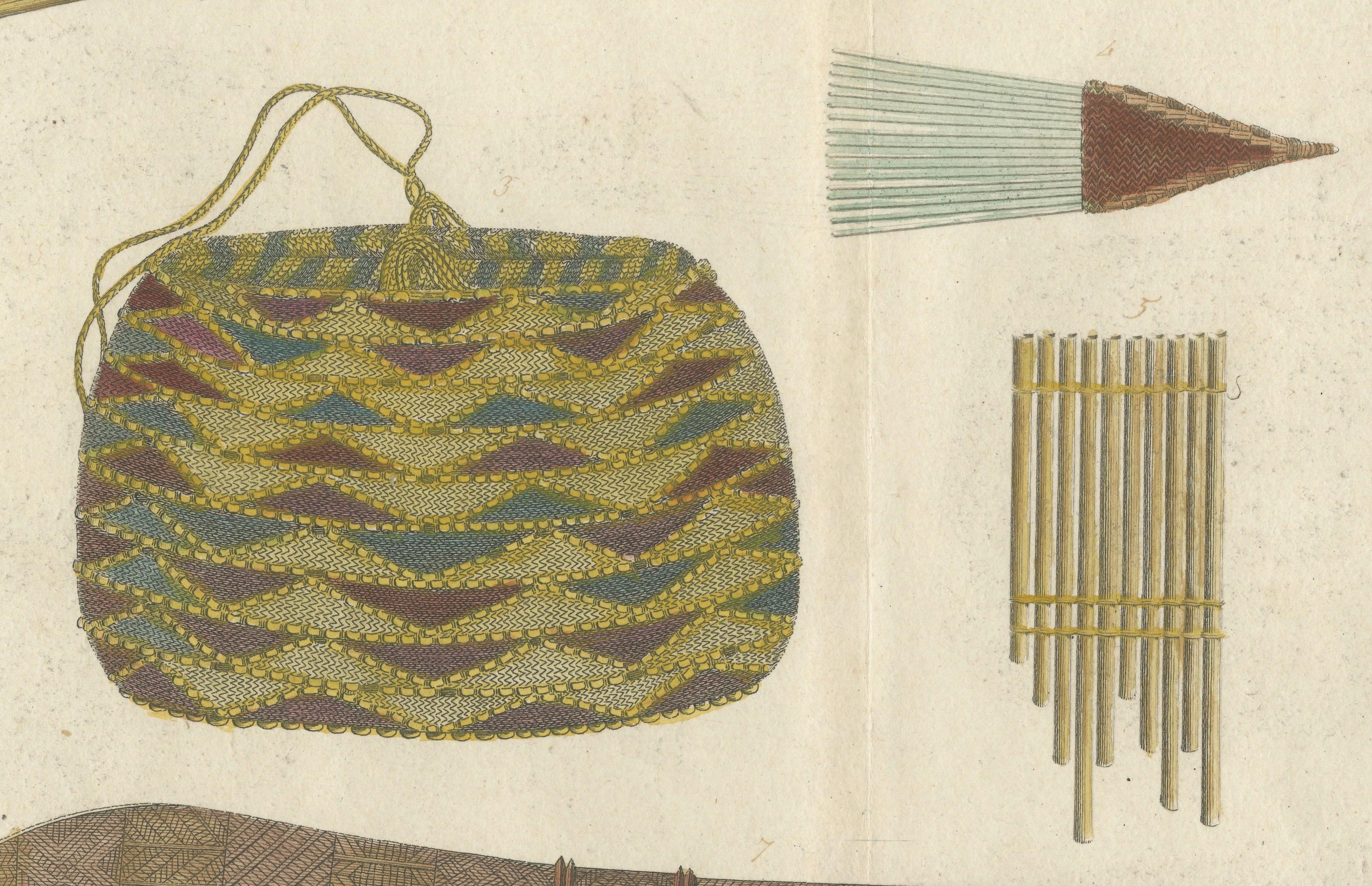
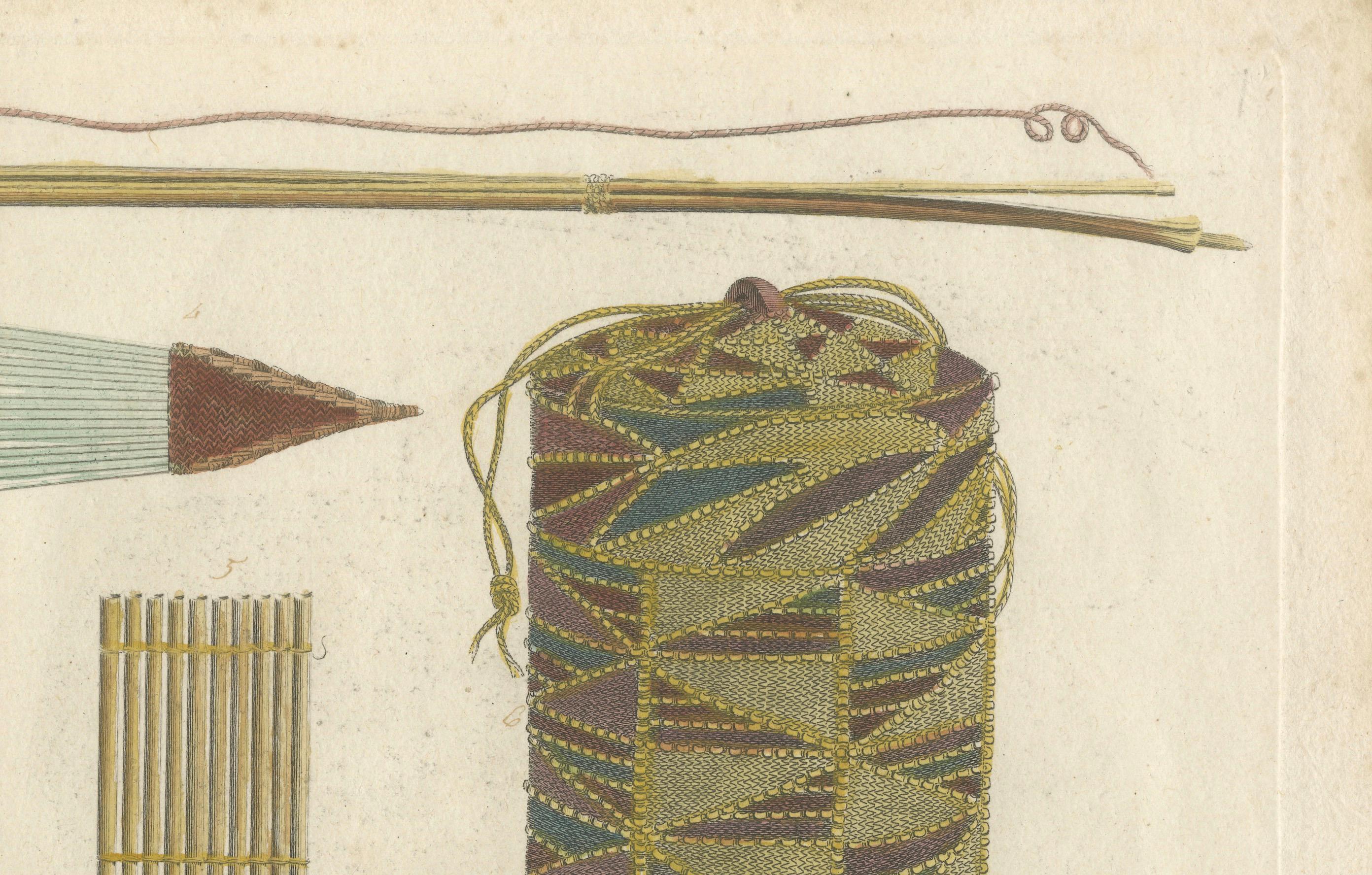
The two baskets shown in the engraving are skillfully woven, with complex geometric patterns and bright colors. These baskets were likely used for storage, but their detailed designs suggest that they also had aesthetic value. The weaving traditions of Tonga are emphasized here, showcasing the artistry involved in creating such practical yet beautiful items.
3. Fishhooks and Lures:
The fishing tools, including what appears to be a hook or lure, highlight the importance of fishing in Tongan society. The design of these items reflects the islanders' deep knowledge of their marine environment and their expertise in crafting tools specifically suited for local conditions. Fishing was a vital aspect of daily life, and these items were critical for sustenance.
4. Decorative Objects and Utensils:
The inclusion of a reed panpipe suggests that music played a role in Tongan culture. This musical instrument reflects broader social and cultural practices, where music and communal gatherings were likely significant. Other small items shown in the engraving could serve decorative or ritualistic purposes, indicating the complexity of Tongan cultural life.
### Context in Captain Cook's Third Voyage:
This engraving comes from one of the most significant periods of European exploration in the Pacific, led by Captain James Cook. During his third voyage, Cook's team encountered the people of the Tonga Islands, and the items in this engraving represent the material culture they observed. The objects depicted were carefully selected to convey a sense of the everyday life and craftsmanship of the Tongan people to a European audience.
The print was created as part of the official publication of Cook’s journals and accompanied his written accounts of the Pacific Islands. These publications were immensely popular in Europe, and the engravings allowed readers to visually engage with the exotic items described in the texts. The high level of detail in the engraving was meant to ensure accuracy and to satisfy the curiosity of Europeans eager to learn about distant lands.
This particular engraving was published by Thomas Cadell and William Strahan, who were prominent figures in the London print and publishing industry. Their involvement in producing and disseminating Cook's journals helped spread knowledge of the Pacific to a wide European audience, contributing to the growing interest in ethnography and exploration.
### Artistic and Historical Significance:
1. Ethnographic Importance:
The engraving is an early example of ethnographic documentation, recording not just the objects but also the culture of the Pacific Islanders. These prints offered European audiences a rare visual insight into cultures that were previously unknown to them.
2. Cultural Exchange:
The baskets, musical instruments, and other objects in the engraving highlight the richness of Tongan craftsmanship and the cultural exchanges that took place during Cook's voyage. These objects were symbols of the interactions between Europeans and indigenous peoples, showcasing both the uniqueness and the universality of human creativity.
3. Printmaking and Distribution:
The engraving, produced using copper-plate...