About this sheet
Belgian National Guard – Infantry Drill and Uniforms, c.1830–1840
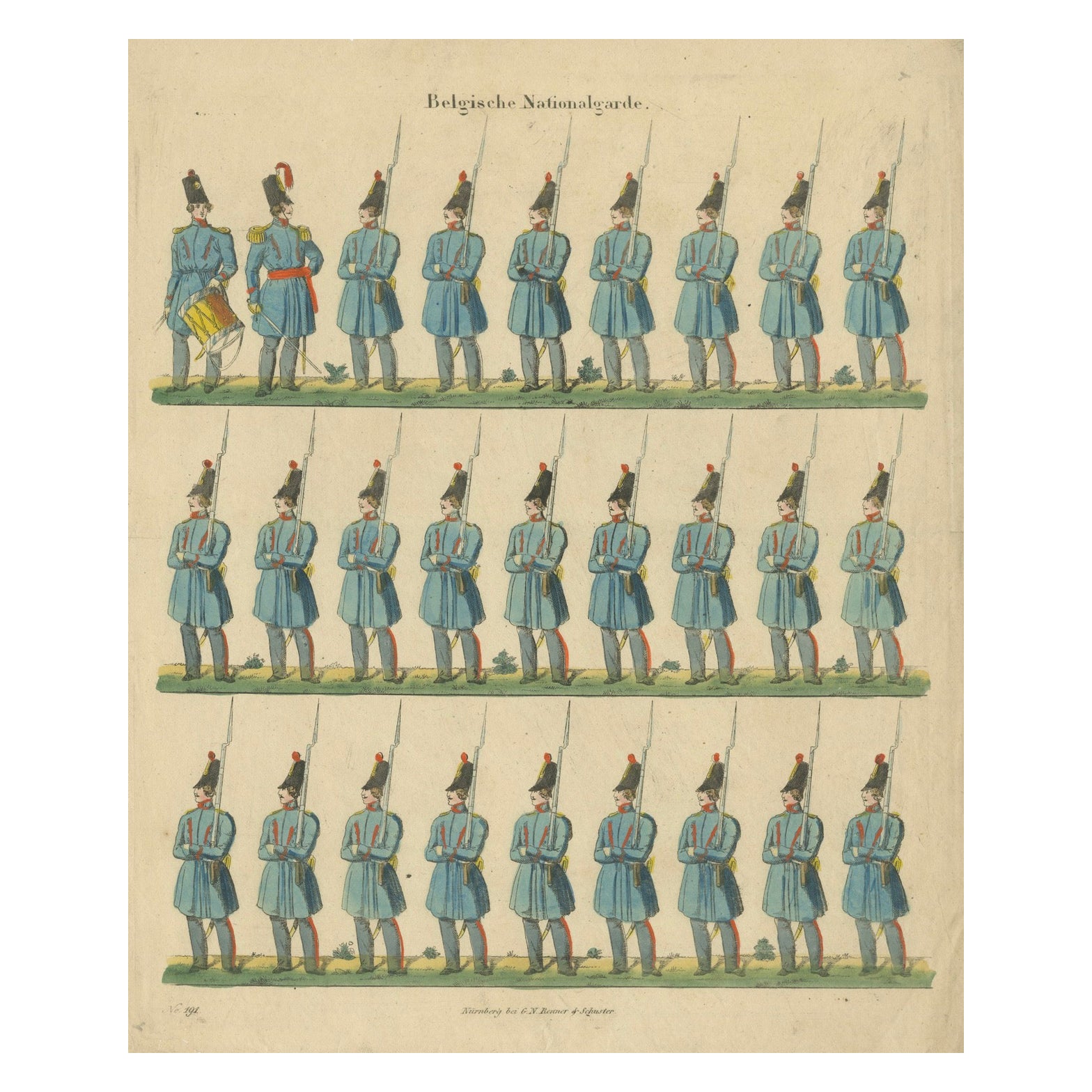
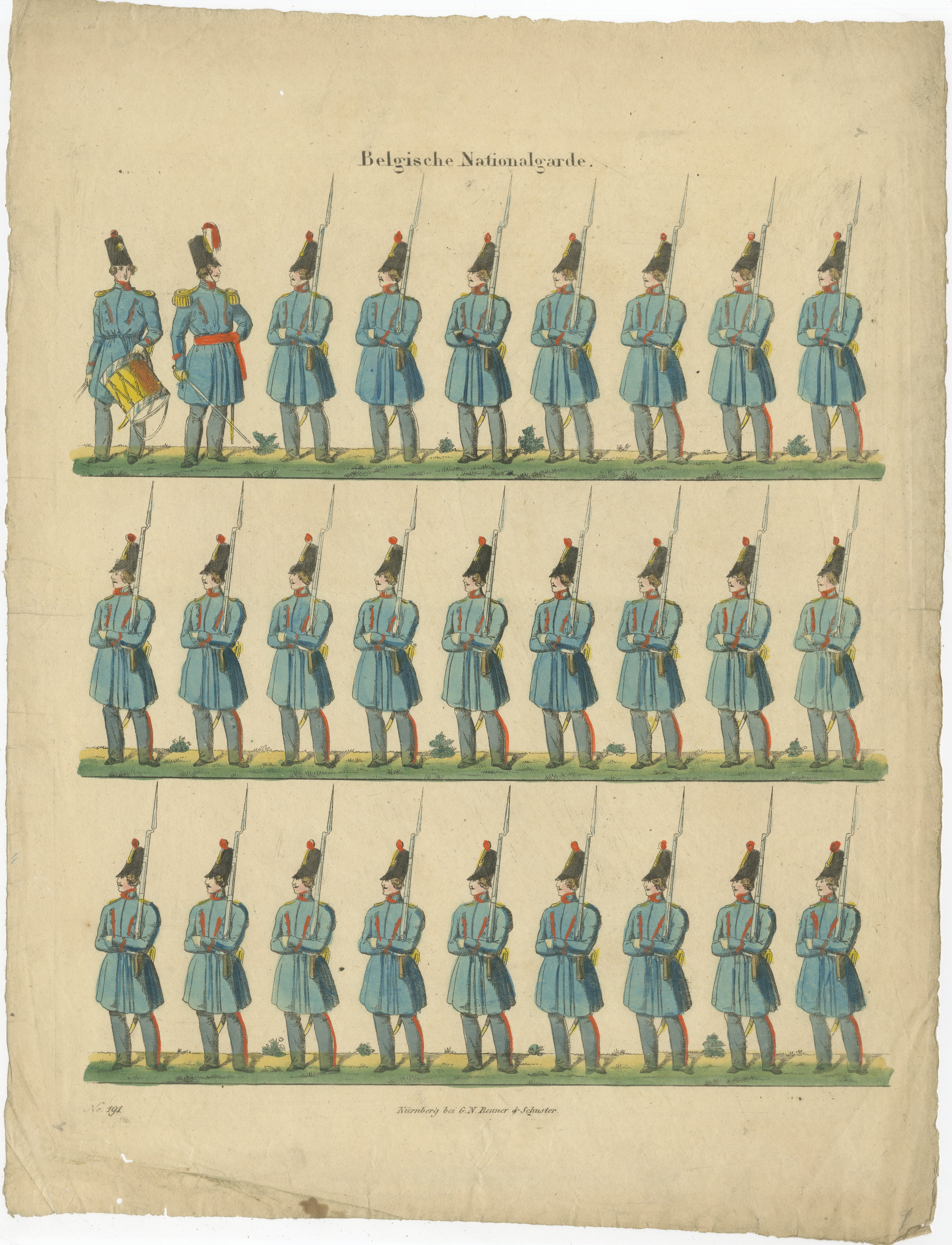
This finely hand-colored military print depicts the Belgian National Guard shortly after the formation of the Kingdom of Belgium, presenting infantry soldiers in formal drill formation. Produced in Nuremberg for the Central European market, the sheet documents the appearance, discipline, and organization of the citizen-soldier forces established following Belgian independence in 1830.
The composition is arranged in three horizontal registers, each showing a continuous line of guardsmen standing at attention with muskets held upright. At the head of the formation, a drummer and officer introduce the unit, emphasizing command structure and ceremonial function. The repetition of figures serves a documentary purpose, allowing close comparison of posture, uniform details, and equipment across the ranks.
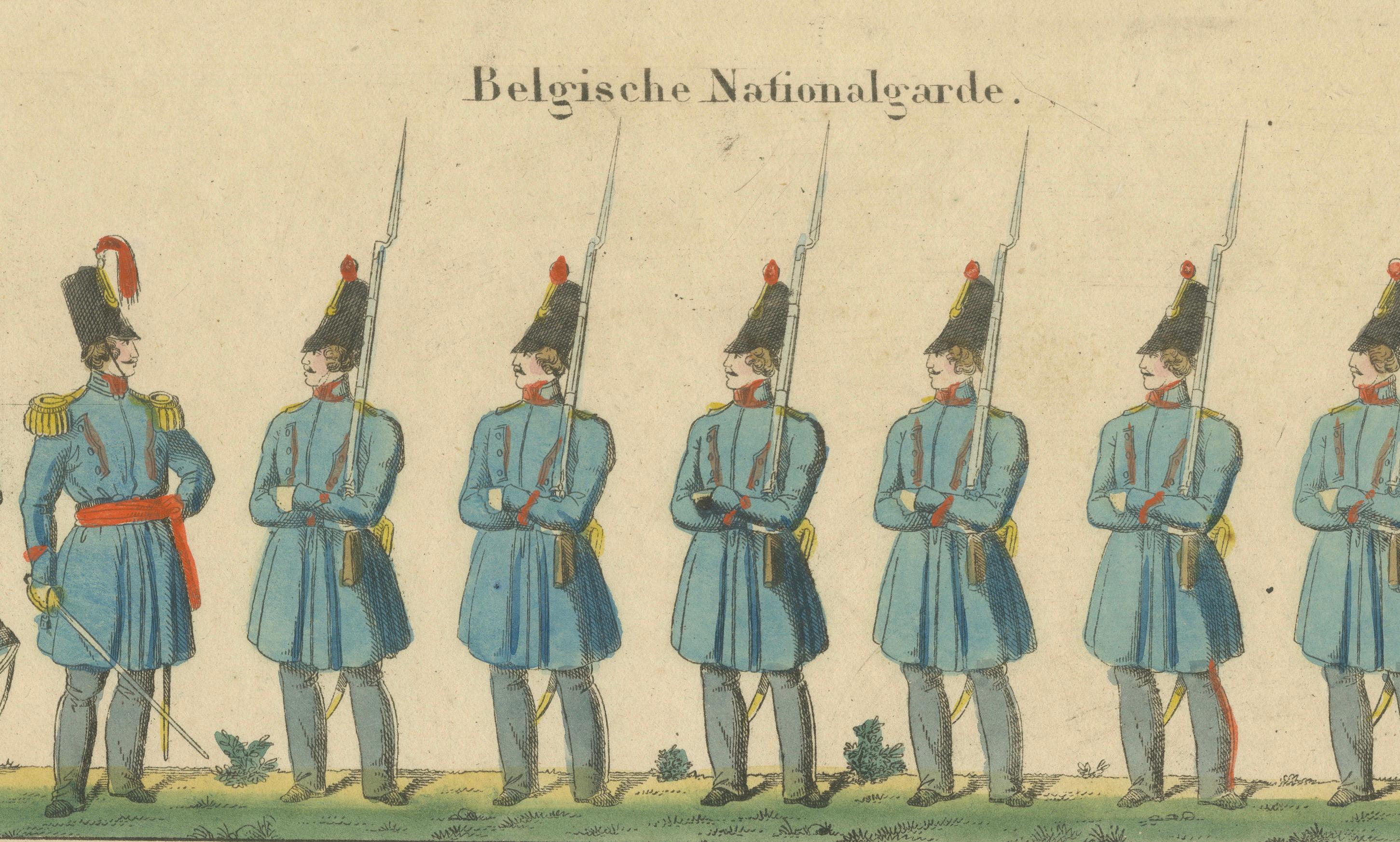
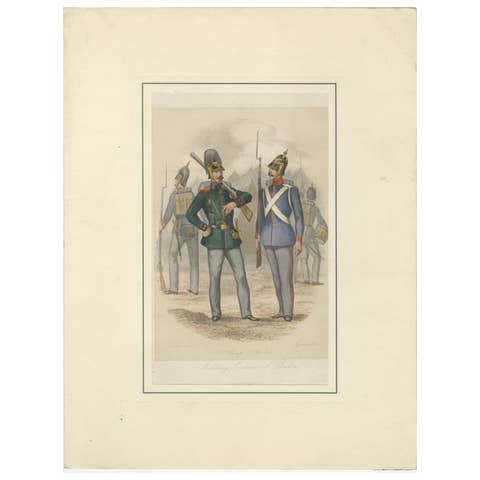
Uniforms are rendered with clarity and restraint. The soldiers wear light blue coats with red piping, dark shakos with red pompons, and standard infantry arms. Subtle variations in stance and facial expression add visual rhythm while maintaining strict uniformity. The hand coloring is delicate yet effective, reinforcing the instructional nature of the image without distracting from its orderly composition.
The title “Belgische Nationalgarde” identifies the subject clearly, reflecting the emergence of Belgium as a new nation-state and the importance placed on civic defense and public order. Such prints were widely circulated as visual records of national identity, military readiness, and modern discipline, and were used by officers, collectors, and institutions alike.
Belgian National Guard imagery from this early period is less frequently encountered than French or German equivalents, making this an appealing example for collectors of early 19th-century military history, Belgian history, and uniform studies. Its calm, repetitive structure also makes it a refined decorative piece suitable for both scholarly collections and elegant interiors.
Condition
Good overall condition. Noticeable age toning and scattered surface wear consistent with early 19th-century paper. Minor creases, edge wear, and small losses at the margins. Hand coloring remains clear and cohesive. Overall an honest and well-preserved example.
Framing tips
A wide off-white or light grey mat will enhance the clarity of the three registers and complement the aged paper tone. A dark wood or walnut frame suits the historical character well. Museum or UV-filtering glass is recommended to protect the original coloring and paper.
Technique: Hand-colored engraving
Maker: German school, published in Nuremberg by C.W. Bauer & Schuster, c.1830–1840