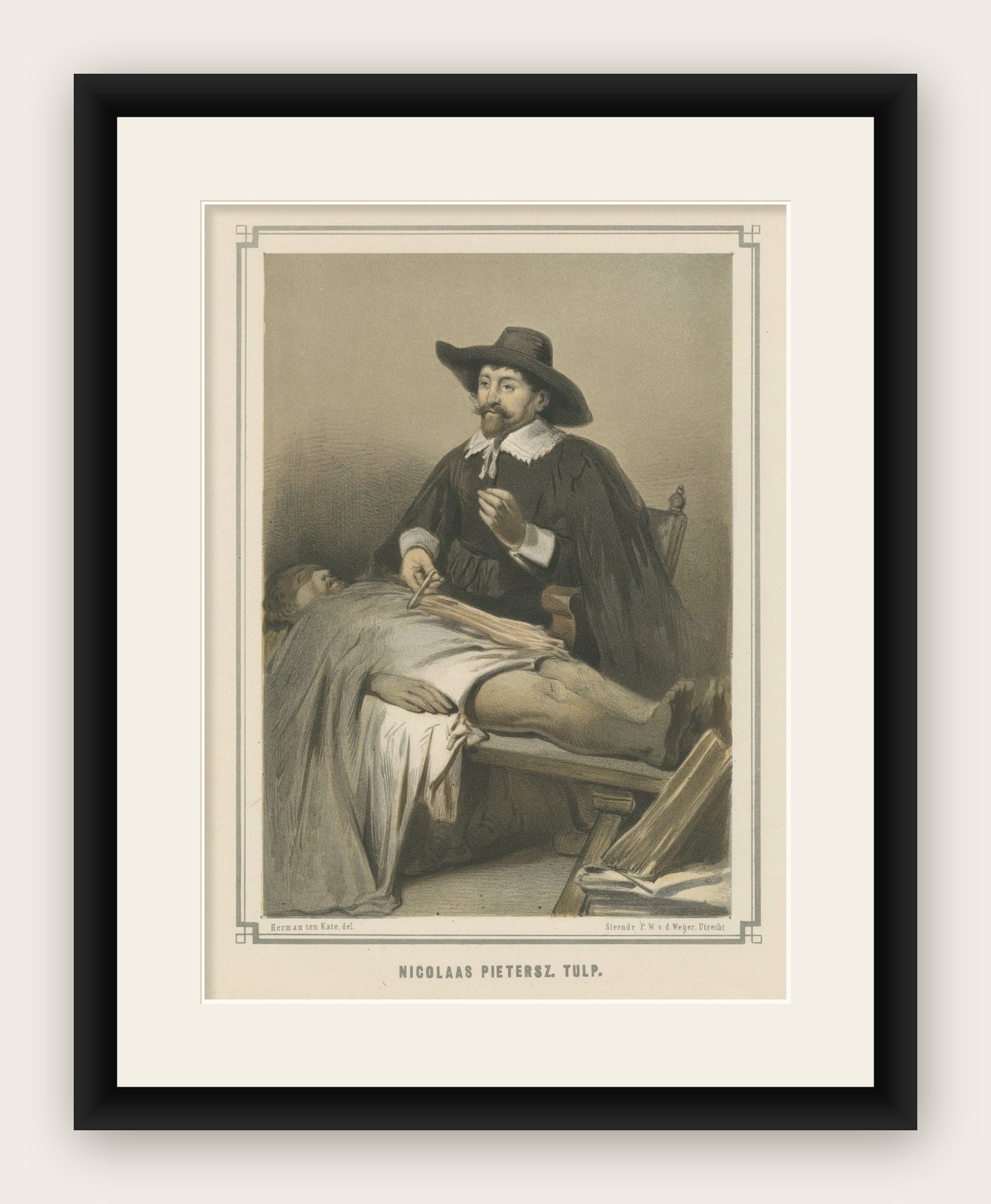
Nicolaas Tulp Performing a Dissection – 19th-Century Hand-Colored Lithograph
€ 150
Original antique · The actual sheet photographed · Certificate of authenticity on request · Sold unframed · Worldwide shipping from € 15 (rates)
Sheet size
29 × 22 cm (11.4 × 8.7 in)
Condition
Good
Reference
BG-11761-353
What the condition grades mean
Excellent
Bright and clean, with no faults worth mentioning.
Very good
Only light signs of age, such as faint toning.
Good
Normal signs of age for a sheet of this period: toning, some foxing, small marks or neat old repairs.
Fair
Clear faults such as staining, tears or repairs, priced to match.
Every fault we see is written in the condition note, and the whole sheet is shown uncropped in the photos.
Condition
The condition is good, with strong definition, rich tone, and minimal signs of aging.
About this sheet
Nicolaas Tulp Performing a Dissection – 19th-Century Hand-Colored Lithograph
This 19th-century hand-colored lithograph portrays Nicolaas Pietersz. Tulp, a prominent Dutch physician, magistrate, and scholar of the seventeenth century. Born in 1593, Tulp is best known today as the central figure in Rembrandt’s famous painting The Anatomy Lesson of Dr. Tulp. As a member of the Amsterdam Guild of Surgeons, he was widely respected for his scientific insight and civic leadership, eventually becoming mayor of Amsterdam.
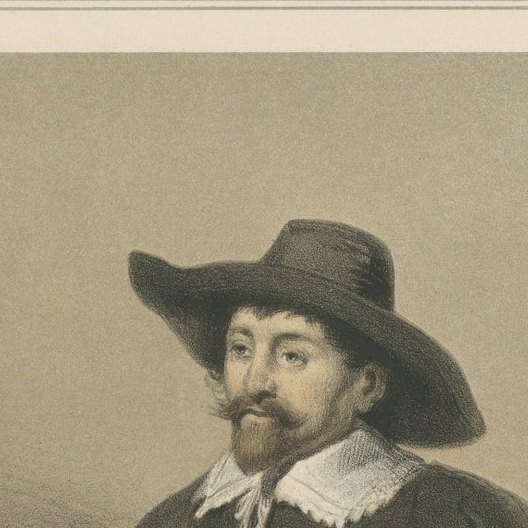
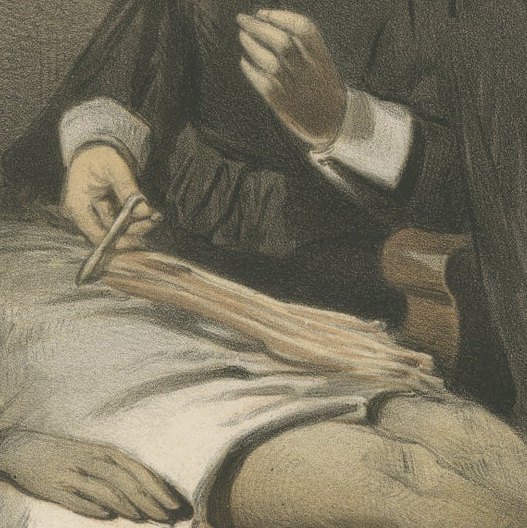
In this scene, Tulp is shown demonstrating a dissection, seated beside a cadaver, with a surgical tool in hand and a calm, authoritative expression. The moment captures the spirit of Enlightenment inquiry and the evolving understanding of anatomy in the Dutch Republic. The setting is understated, focusing attention on the figure and the act of scientific teaching.
The lithograph was drawn by Herman ten Kate and printed by P W van de Weijer in Utrecht around 1850. The image is printed via lithography and finished with hand-applied color, creating depth and atmosphere while maintaining clarity of form.
The condition is good, with strong definition, rich tone, and minimal signs of aging.
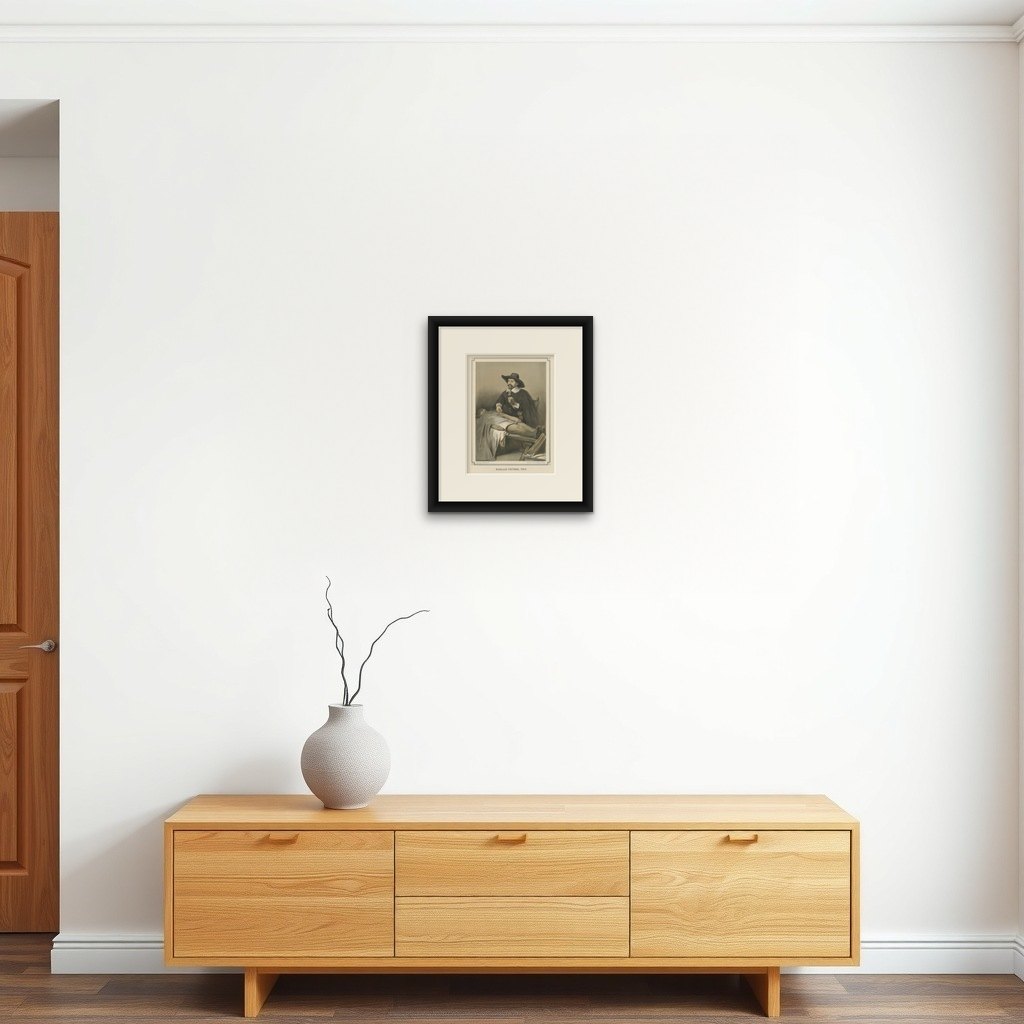
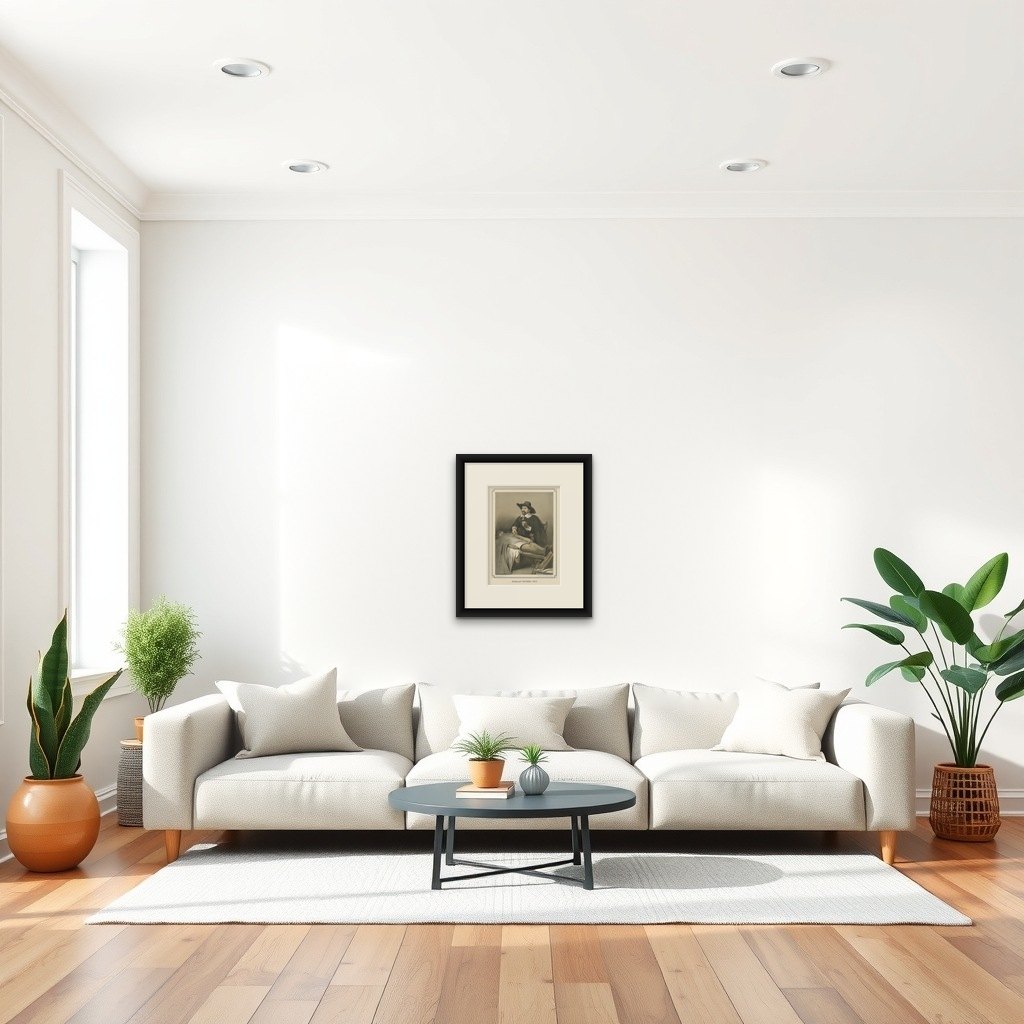
Framing suggestion: This work suits a classic dark wood or ebony frame. Use archival matting in soft gray or ivory and UV-protective glass to preserve the subtle tones and detailing. A museum-style frame can highlight the academic subject matter.