About this sheet
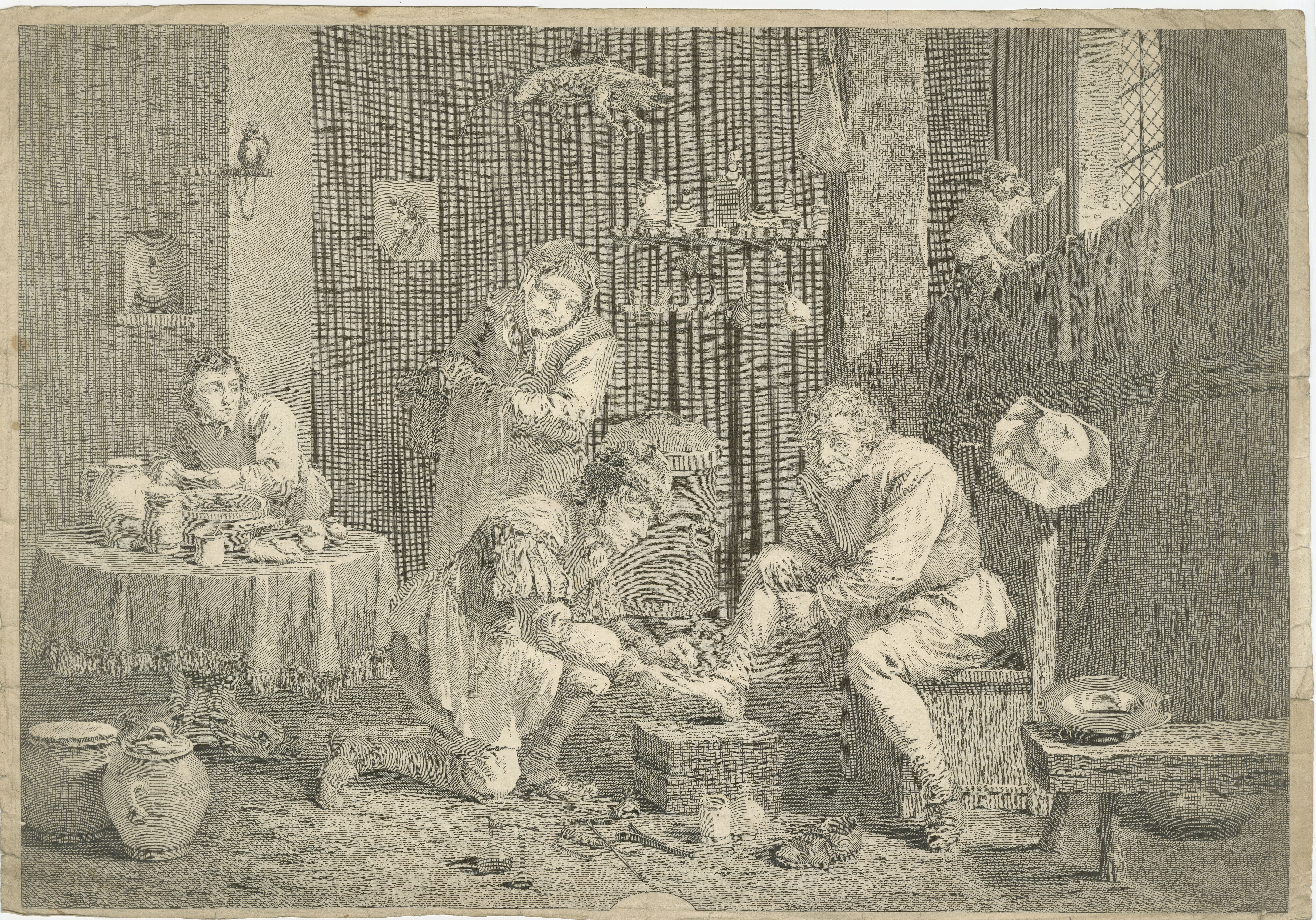
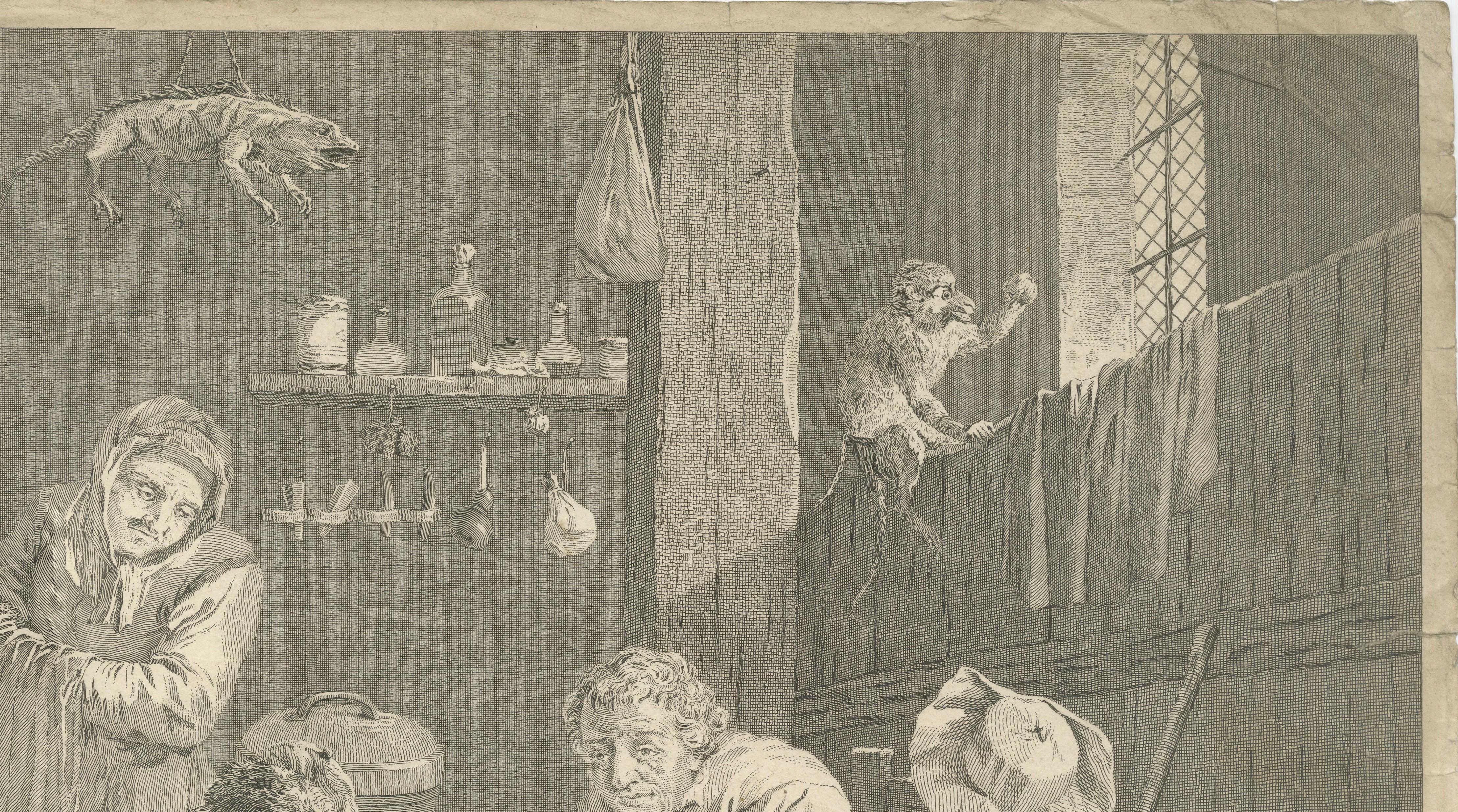
Early Surgery Scene – Village Surgeon Treating Patient, Teniers Engraving
This lively 18th-century copperplate engraving depicts a rustic medical scene traditionally known as The Village Surgeon or Le Chirurgien de Campagne. The composition reproduces a genre painting by the celebrated Flemish master David Teniers the Younger (1610–1690) and was engraved by the English printmaker Thomas Major (1720–1799), one of the most accomplished reproductive engravers working in Europe during the mid-eighteenth century.
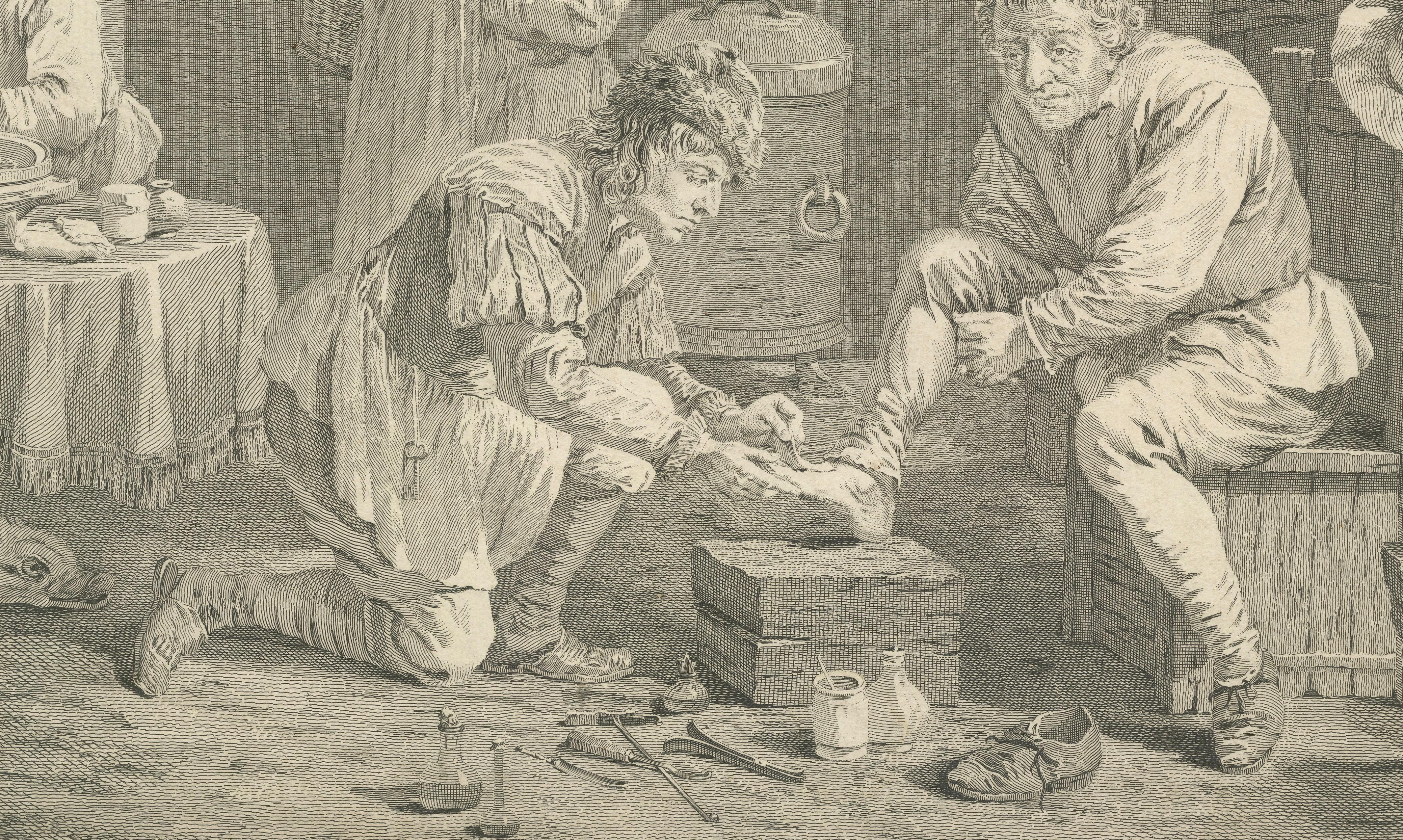
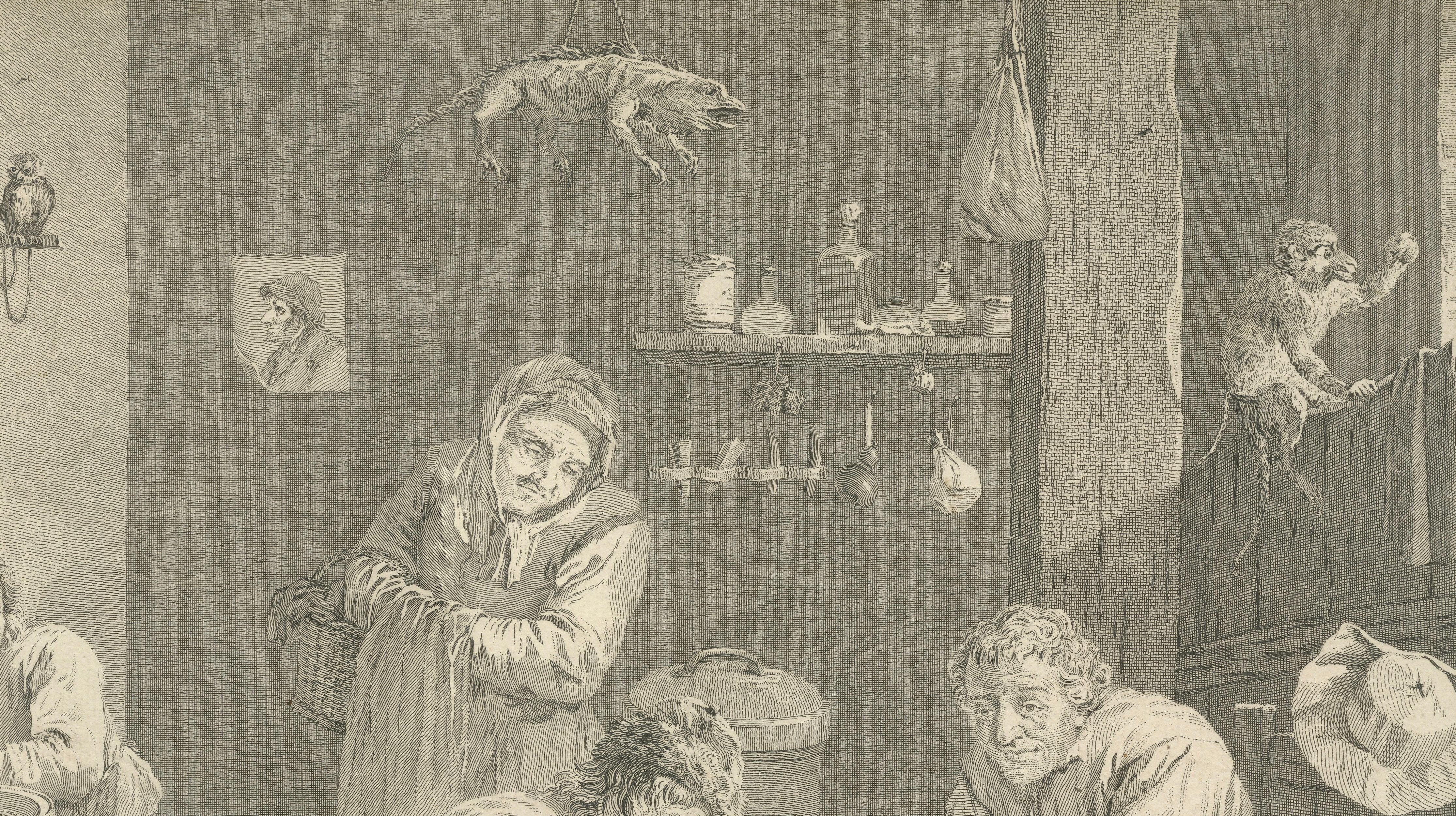
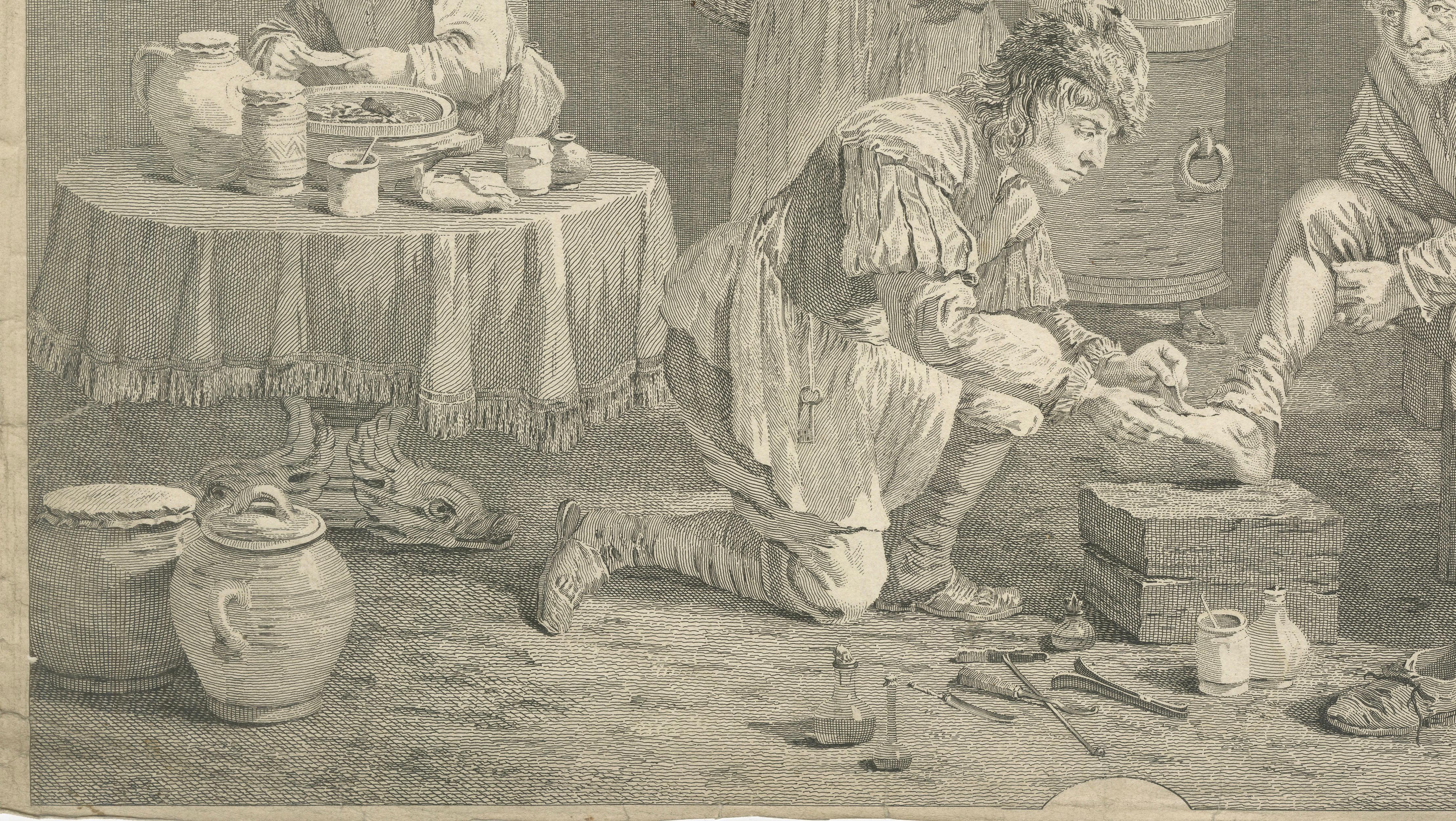
The scene unfolds inside a humble peasant interior typical of the Flemish genre tradition. A village surgeon kneels while treating the injured foot of a seated patient, performing the kind of minor surgical care commonly handled in the early modern period by barber-surgeons or itinerant practitioners. Nearby, an older woman observes the procedure with concern, while another figure sits at a table behind them surrounded by vessels and domestic utensils. The interior is richly detailed with everyday objects, reinforcing the sense of rural life that made Teniers’ paintings so admired throughout Europe.
Teniers the Younger was renowned for his witty depictions of peasant interiors, tavern scenes, and village life. His paintings were widely collected by European aristocrats and reproduced in engravings during the eighteenth century. Prints such as this one helped spread the reputation of Dutch and Flemish genre painting across Britain and France, where collectors eagerly sought engraved interpretations of celebrated Old Master works.
Thomas Major played a key role in this movement. After training in London, he worked in Paris where he engraved numerous plates after Dutch and Flemish masters before returning to England. He later became the first engraver formally appointed to the British king. His engravings are known for their rich tonal modelling and careful cross-hatching, which translate the painterly qualities of the original compositions into refined printed form.
The humorous elements within the image are characteristic of genre scenes inspired by Teniers. Details such as the monkey perched near the window and the curious objects hanging from the ceiling add symbolic references to folly, imitation, and the eccentric world of early medicine. Such touches gave these images both narrative charm and subtle moral commentary.
Engravings after Teniers were highly popular among eighteenth-century collectors and remain appealing today for their lively storytelling and decorative character. They are particularly attractive in interiors that celebrate European history, Old Master art, or the history of medicine.
Condition: Fair antique condition with age-related toning and scattered foxing mainly in the margins. Wrinkled at places and tape remains on the reverse.
Framing tips: This print frames beautifully in a dark walnut or ebonized frame with a wide warm ivory or museum-white mat. The detailed medical scene makes it especially suitable for doctors’ offices, surgeons’ consulting rooms, libraries, or traditional European interiors.
Technique: Copperplate engraving
Maker: Thomas Major after David Teniers the Younger, England, circa 1740–1750