About this sheet
Antique Scientific Plates of Leeches, Worms, Spiders, and Microscopic Anatomy – Sumatra c.1887
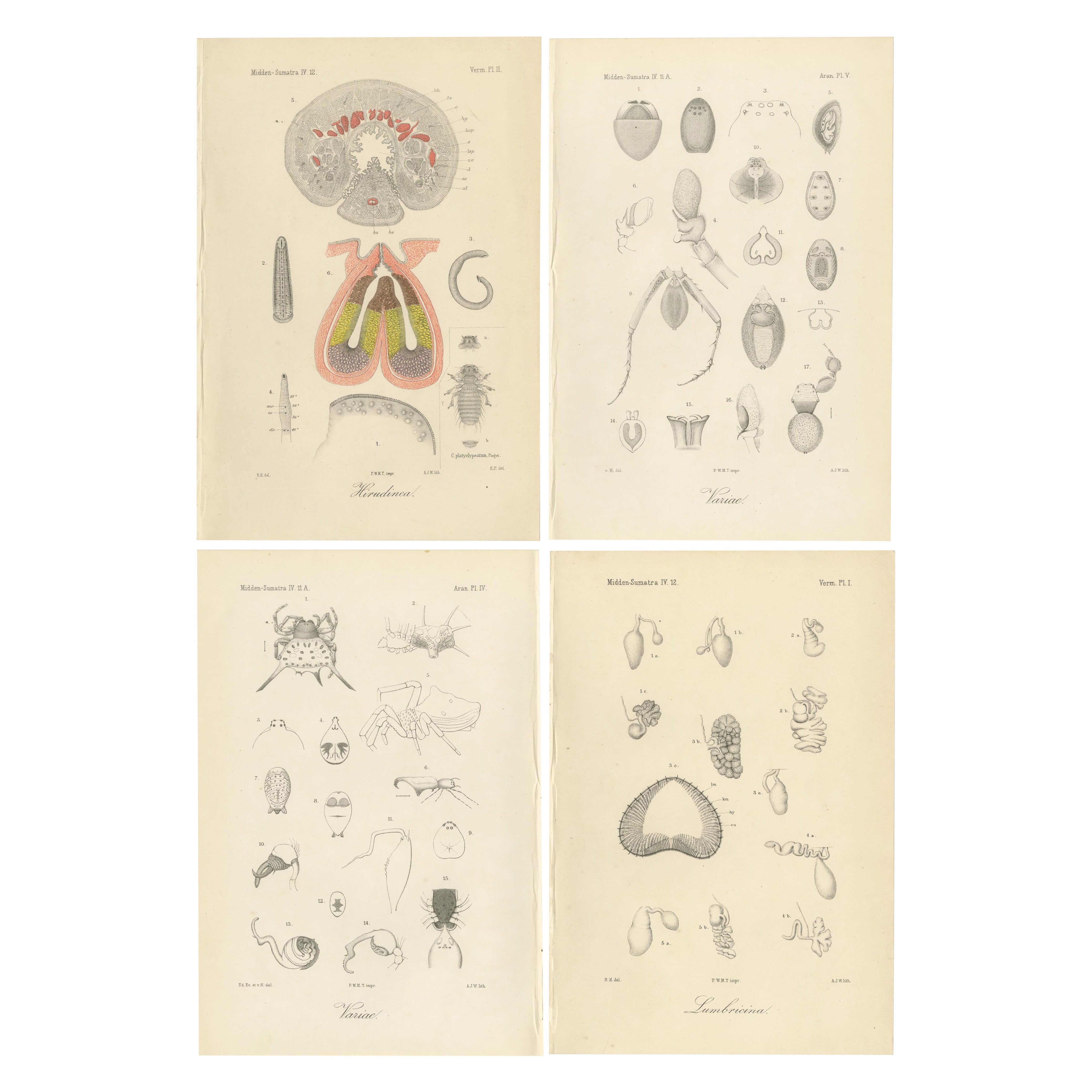
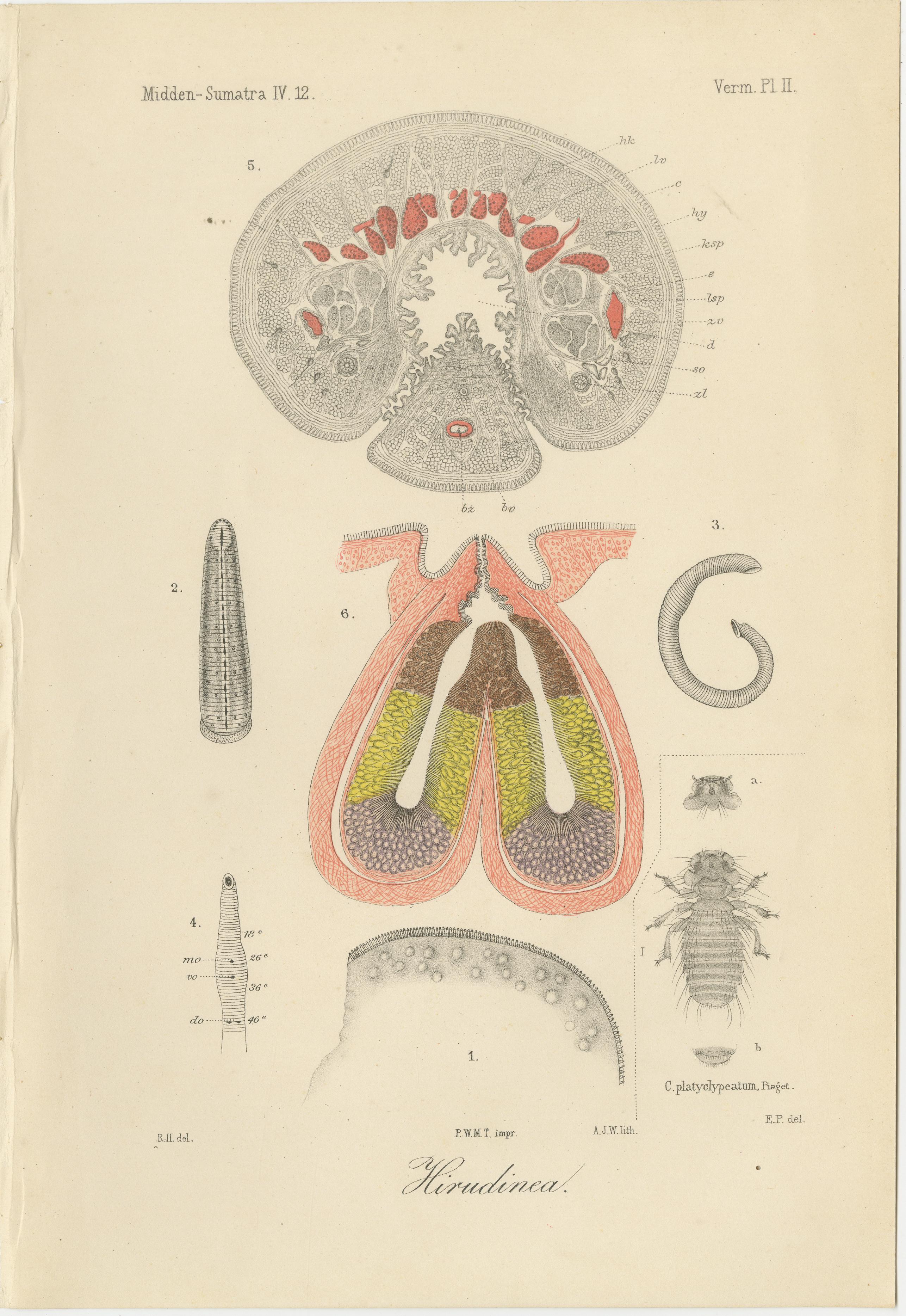
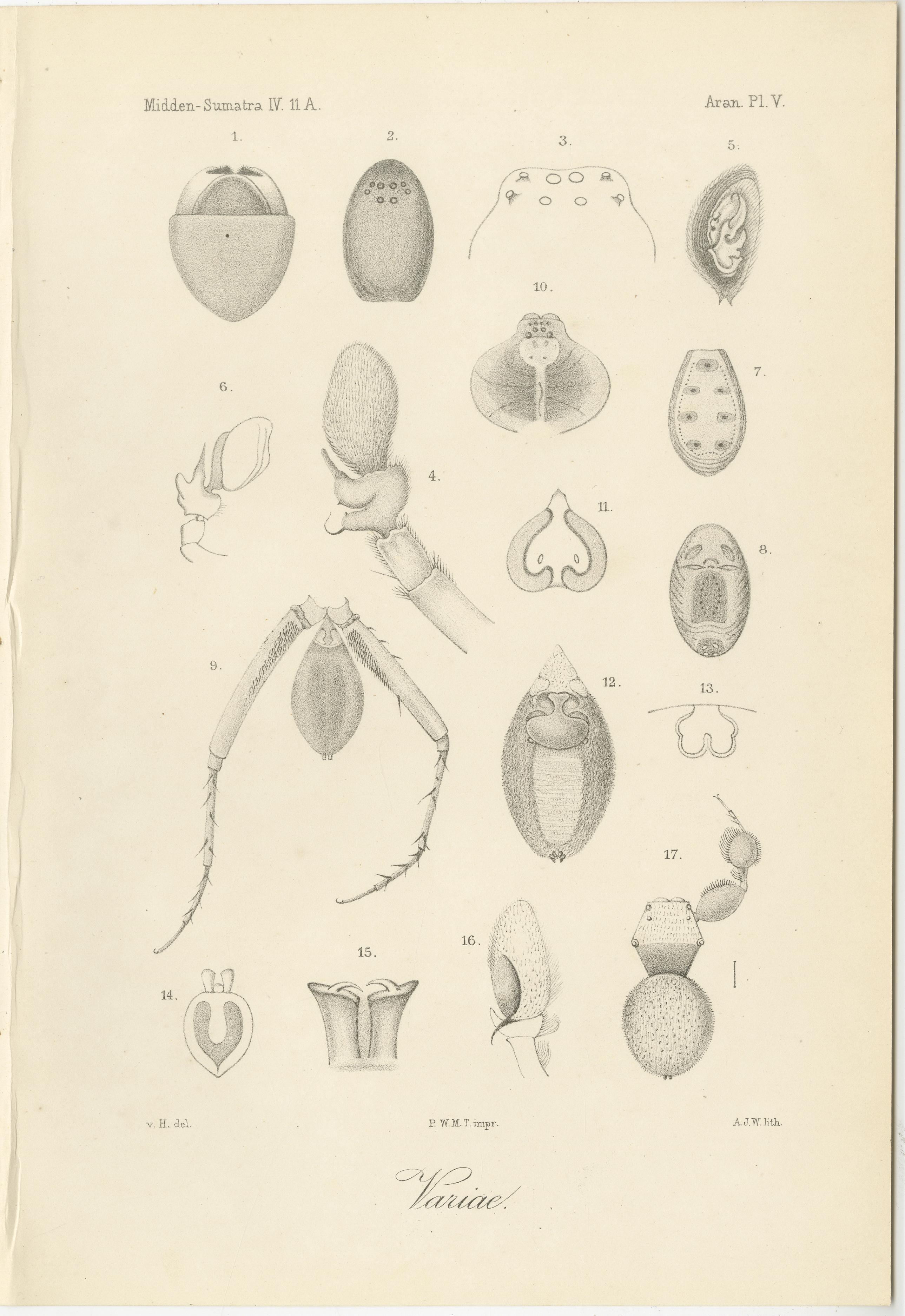
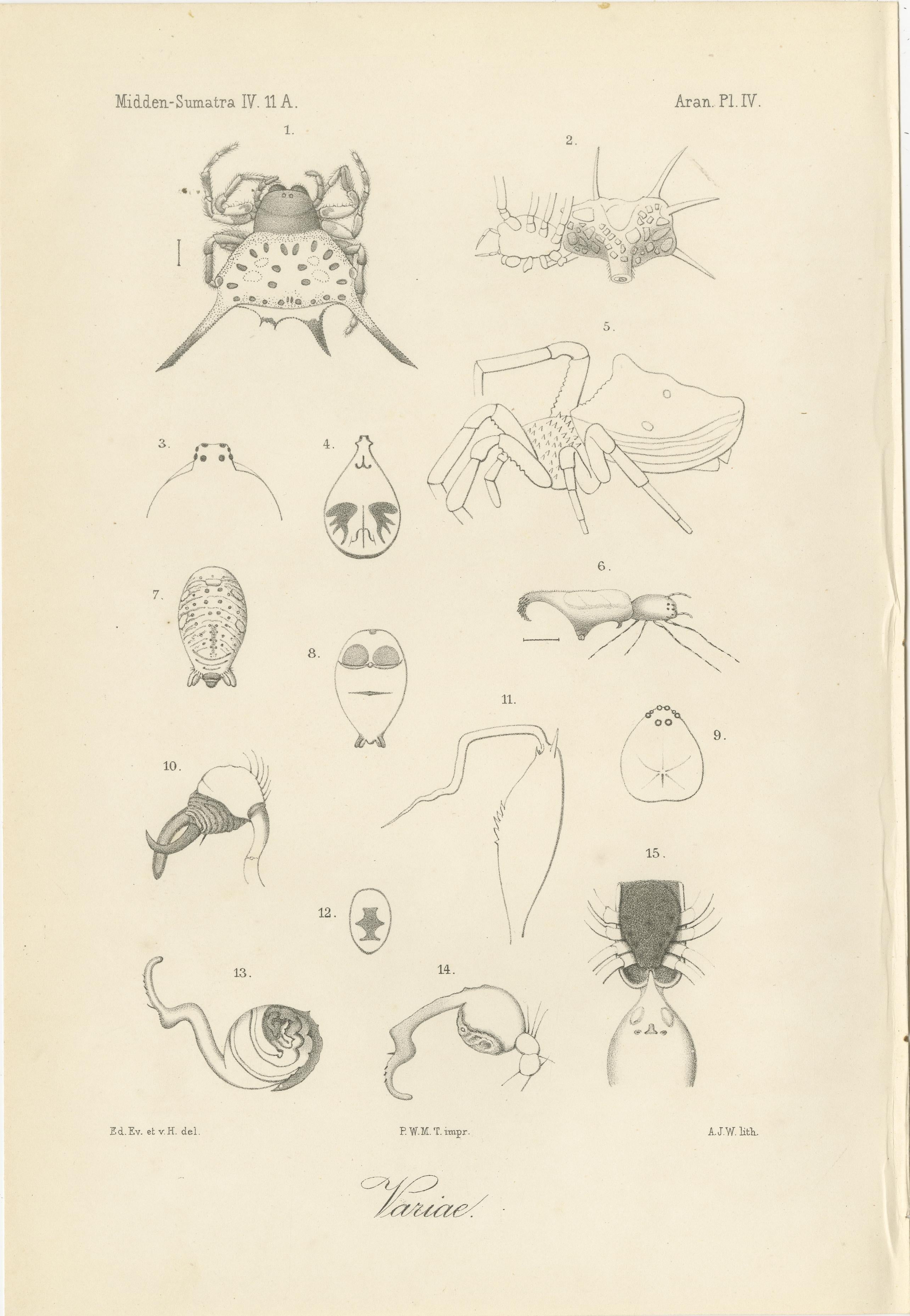
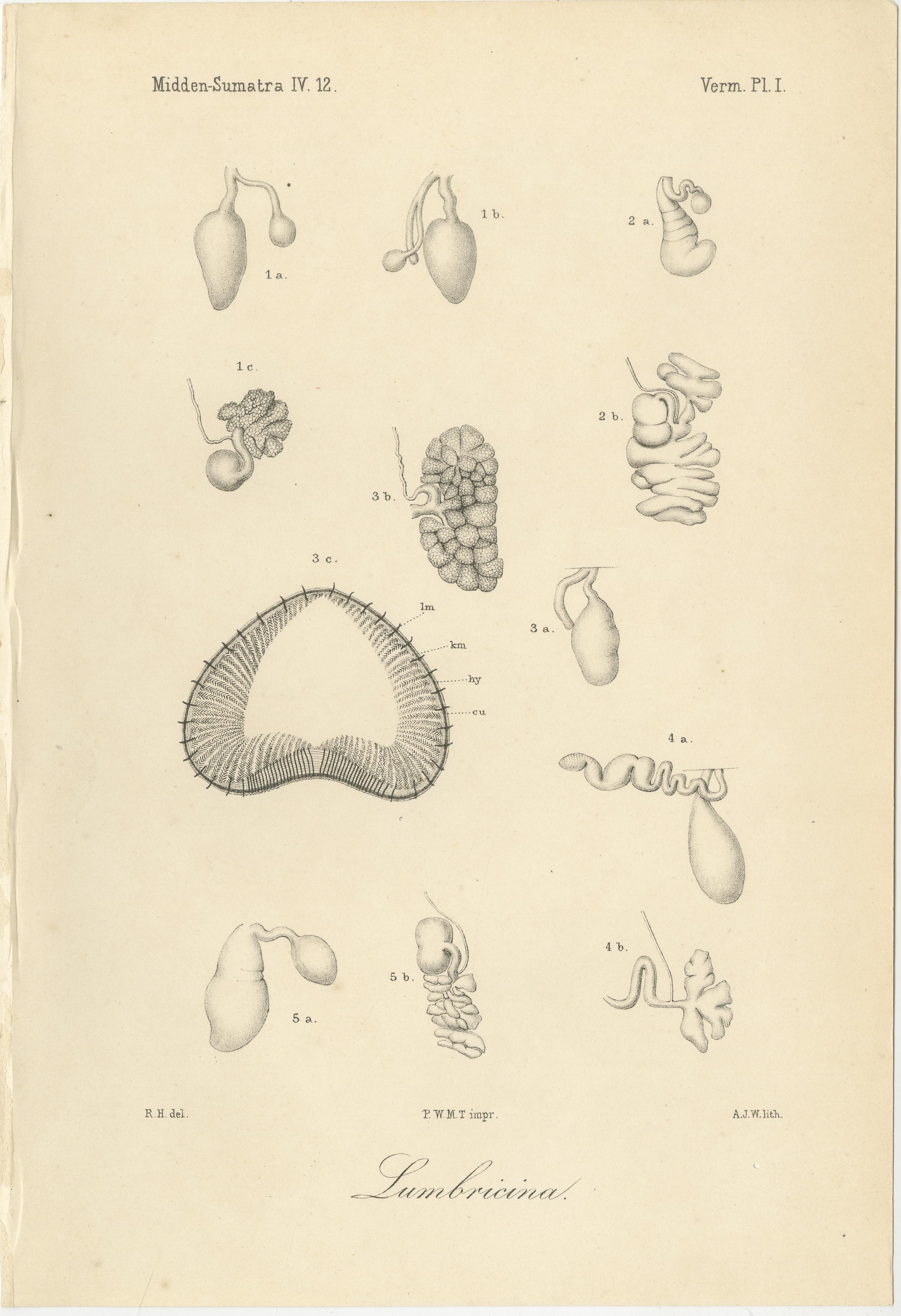
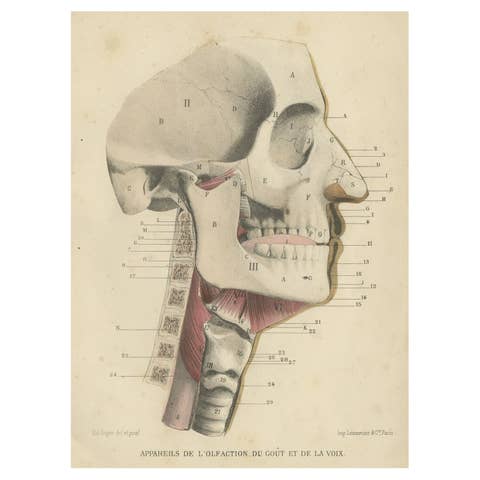
This set of four fascinating 19th-century lithographs originates from the important Dutch scientific series *Midden-Sumatra* published circa 1878. These plates illustrate detailed anatomical, zoological, and microscopic studies undertaken during the extensive Dutch expeditions in Sumatra. They include:
Top left: Hirudinea (leeches), showing dissections of internal anatomy and cross-sections, revealing organs, reproductive systems, and segmentation with precision and delicate hand-coloring to highlight vascular and digestive structures.
Top right: Various arachnid anatomical dissections labelled ‘Variae’ (various structures) including spinneret morphology, leg joints, and reproductive organs, drawn with fine line lithography for detailed comparison of species.
Bottom left: Another spider plate also titled ‘Variae’, focusing on thoracic and abdominal anatomy, mouthparts, chelicerae, palps, and fine microscopic details essential for taxonomic classification in 19th-century arachnology.
Bottom right: Lumbricina (earthworms) illustrating internal organs, including reproductive structures, alimentary canal, nephridia, and segmentation, reflecting the era’s scientific focus on comparative anatomy and invertebrate biology.
These plates were lithographed by P.W\.M. Trap, Leiden, with illustrations by Dutch zoological artists H.W. van der Ent and A.J.W. lith, known for their clarity and scientific precision. The prints are labelled with plate and figure numbers in Latin and Dutch, preserving their authentic academic context.
Condition report:
Overall very good condition for their age with only minor toning, faint foxing in margins, and some edge wear typical of original 19th-century expedition prints. Strong plate marks and detailed impressions remain intact.
Framing tips:
Frame individually or as a scientific set in thin black, walnut, or brushed silver frames with off-white mounts to emphasise their fine anatomical lines. Ideal for natural history interiors, libraries, or gallery walls where vintage zoological plates enhance an intellectual and timeless aesthetic.