Naval Battle Lithographs in Frame– Etna and Palermo Engagements of 1676, Schotel
€ 2 600
Original antique · The actual sheet photographed · Certificate of authenticity on request · Sold unframed · Worldwide shipping from € 15 (rates)
Date
1676
Mapmaker / artist
After Petrus Johannes Schotel, Dutch marine painter (1808–1865)
Technique
Lithograph
Sheet size
49.5 × 60 cm (19.5 × 23.6 in)
Reference
BG-12926-1 & BG-12926-2
What the condition grades mean
Excellent
Bright and clean, with no faults worth mentioning.
Very good
Only light signs of age, such as faint toning.
Good
Normal signs of age for a sheet of this period: toning, some foxing, small marks or neat old repairs.
Fair
Clear faults such as staining, tears or repairs, priced to match.
Every fault we see is written in the condition note, and the whole sheet is shown uncropped in the photos.
Condition
The lithograph is in very good condition with strong colors and only minor signs of age. The mat and frame are likewise in excellent presentation quality, ready to display.
About this sheet
Naval Battle Lithograph – Etna and Palermo Engagements of 1676, Schotel
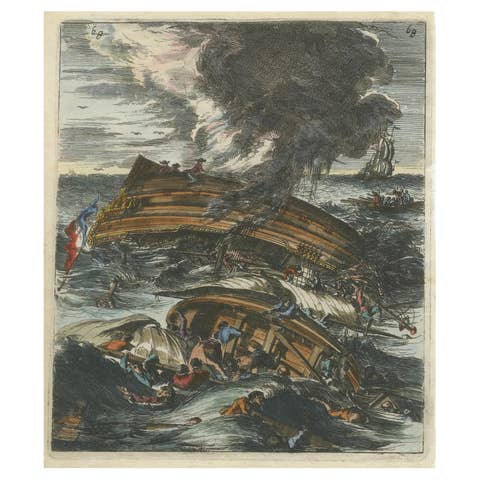
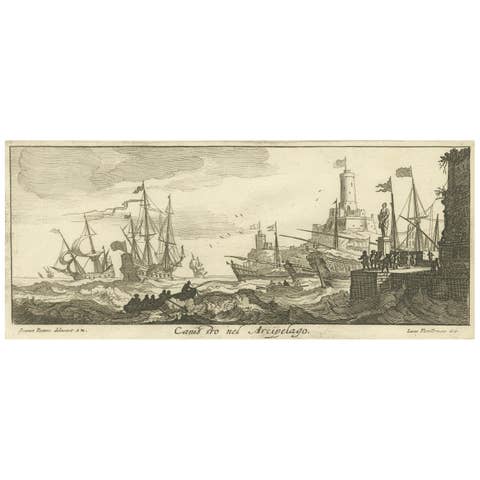
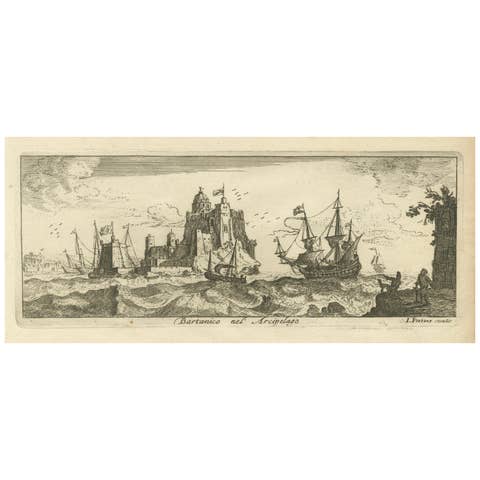
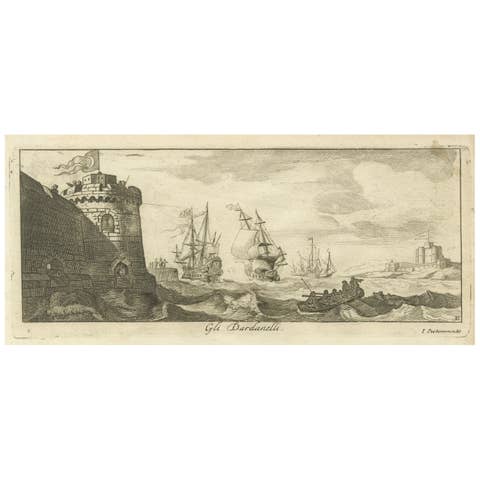
This finely executed lithograph depicts the dramatic naval engagements near Etna and Palermo in 1676, a series of battles fought during the Franco-Dutch conflicts in the Mediterranean. The work is after Petrus Johannes Schotel (1808–1865), a Dutch marine painter renowned for his atmospheric depictions of maritime scenes and naval history. Schotel’s works were widely reproduced in the 19th century as lithographs, prized for their vivid sense of movement and masterful rendering of ships, sea, and smoke.
The scene captures the chaos of battle with smoke billowing from burning vessels, men rowing frantically in smaller boats, and towering ships-of-the-line dominating the harbor backdrop. The coastal landscape and looming clouds add further drama, evoking the intensity and scale of these historic encounters.
This print is presented in a wide cream-colored mat with delicate double-line ruling, highlighting the composition without distraction. The frame itself is a distinguished veneered burl wood, likely maple or elm, with rich reddish-brown tones and swirling grain patterns that provide a warm, elegant contrast to the maritime subject. The burl wood finish, with its natural decorative figuring, reflects the 19th-century taste for luxurious yet understated presentation.
Framing tips: Already professionally framed with a burl wood veneer, this piece requires no further enhancement. It would display beautifully in a study, library, or interior with dark woods and maritime accents, where the warm grain of the frame will complement the dramatic seascape.