About this sheet
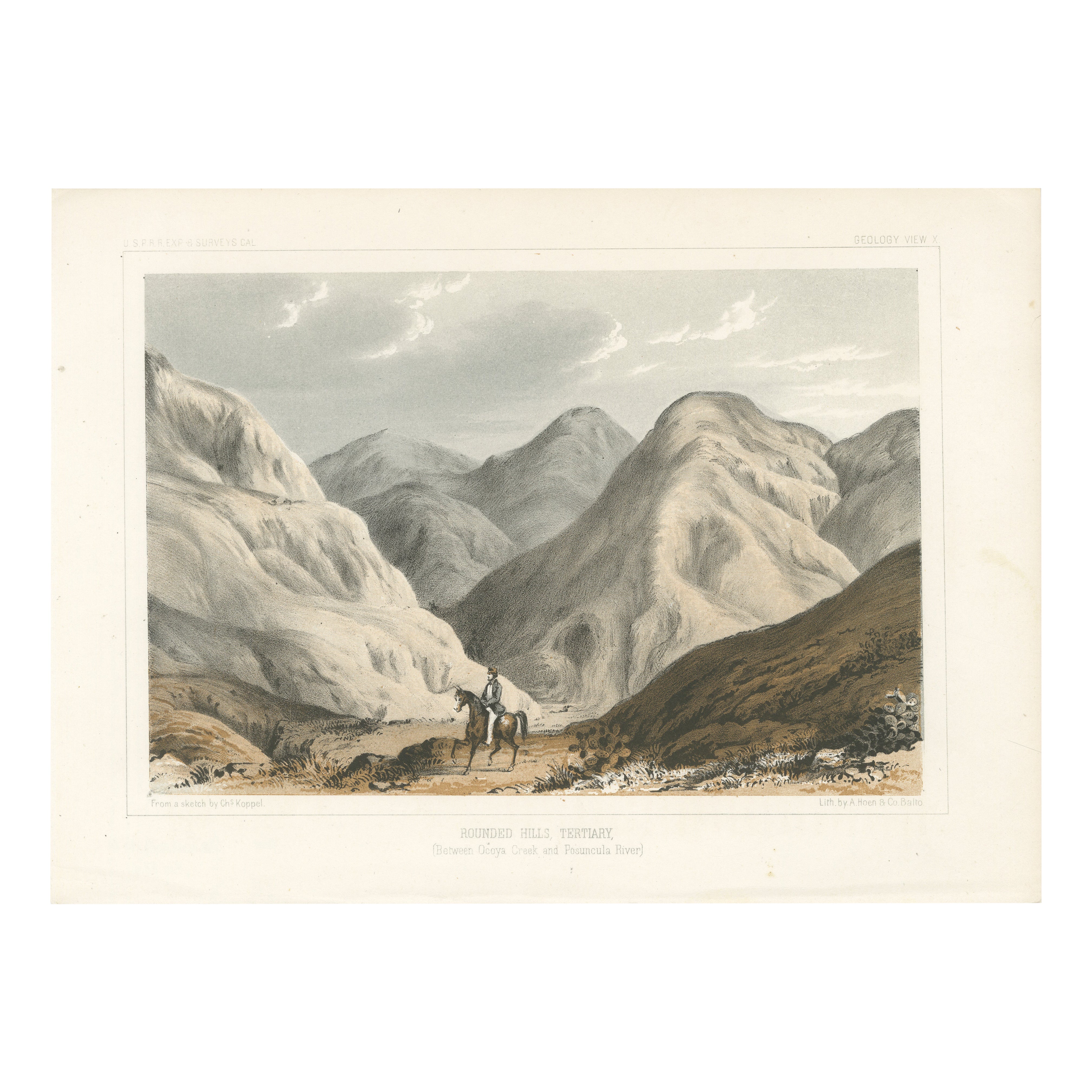
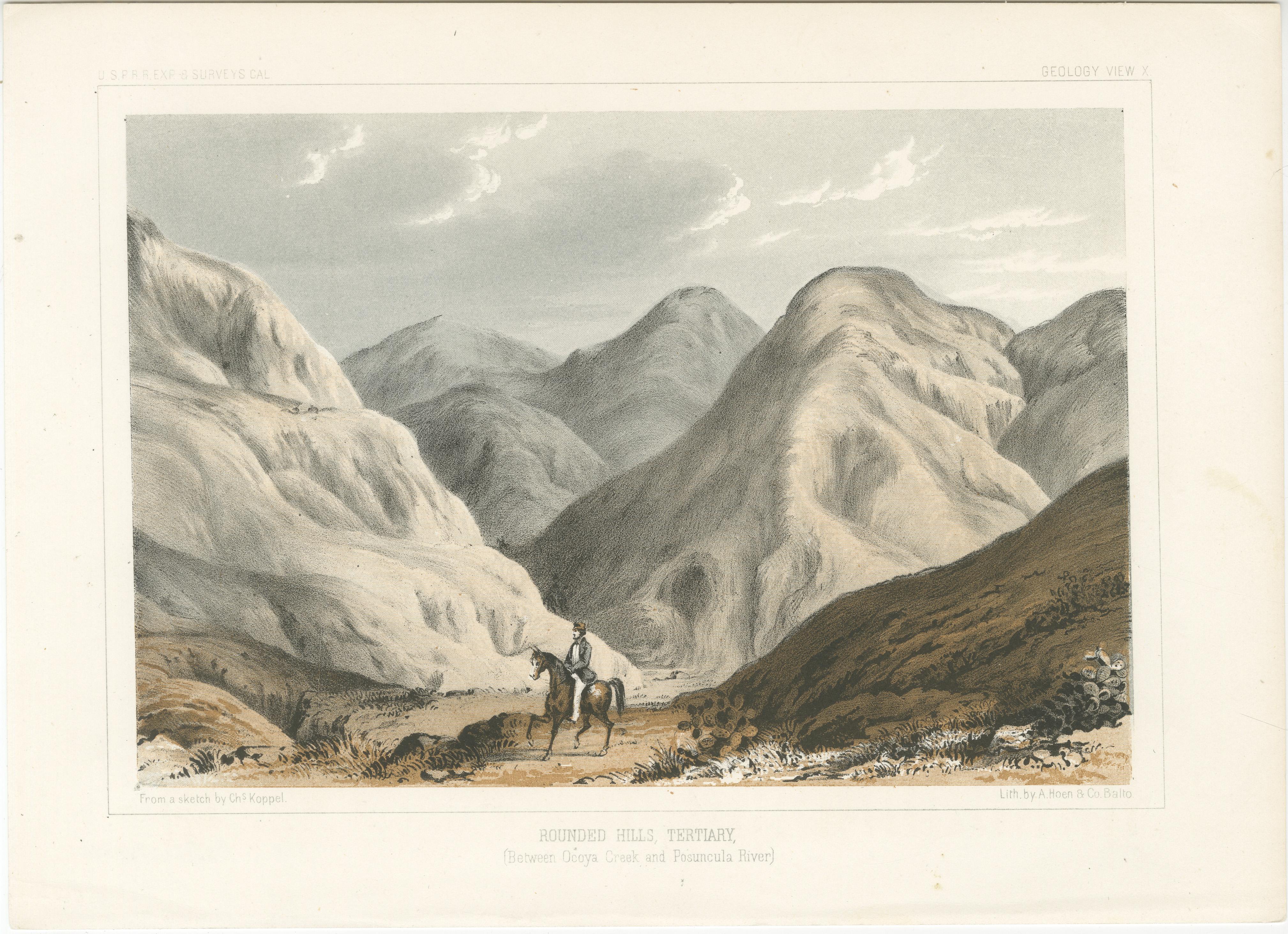
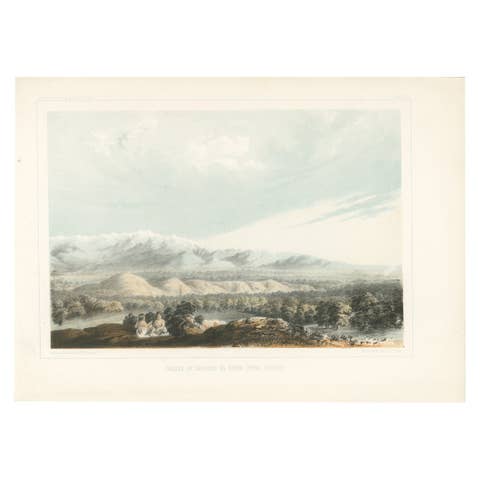
This captivating lithograph, "Rounded Hills, Tertiary," illustrates the striking geological formations between Ocoya Creek and the Posuncula River (modern Kern River). Published as Geology View X in the Pacific Railroad Exploration Survey reports of 1856, this print showcases the rounded, eroded hills typical of the Tertiary period landscape.
The composition highlights the natural beauty and isolation of the terrain, with a lone figure on horseback traversing the foreground, dwarfed by the dramatic hills. The scene emphasizes the immensity and ruggedness of the environment, offering a snapshot of the challenges faced during 19th-century explorations of the American West.
This lithograph, based on a sketch by Charles Koppel and rendered by A. Hoen & Co., exemplifies the skillful artistry of the era. Tinted lithography techniques bring depth and texture to the image, with soft gradients and warm tones capturing the intricate details of the rocky terrain and the expansive sky.
Rounded hills from the Tertiary period were formed by erosion, sediment deposition, and volcanic activity over millions of years. The Tertiary period lasted from about 66 to 2.6 million years ago and saw major geological changes that shaped landscapes worldwide.
These hills can be found in various regions, including the western United States, where many hills in California, Oregon, and Washington are made of volcanic rock, sandstone, and other sedimentary deposits. In the Great Plains and Midwest, rolling hills such as the Loess Hills of Iowa and Nebraska were shaped by wind and water erosion. The Appalachian Piedmont in the eastern U.S. also has rounded hills influenced by Tertiary erosion.
Outside North America, similar formations appear in parts of Europe, such as Spain and France, as well as in South America, particularly in the Patagonian plateaus and foothills of the Andes.
The main causes of these rounded hills include weathering and erosion, which gradually smoothed out sharp peaks over time. Many of these hills are composed of soft sedimentary rocks like sandstone and shale, which erode more easily than harder rock formations. Tectonic activity during the Tertiary period also helped shape the land, creating uplifted areas that were later worn down into gentle slopes.
Condition: Near excellent, with minimal signs of age on the margins. The colors are vibrant, and the details remain sharp and clear.
Framing Tip: Highlight the lithograph’s natural tones with a matte in light beige or gray and pair it with a classic wooden or metallic frame. This piece would make a stunning addition to a study, gallery, or collection focused on the geological history and landscapes of the American West.