About this sheet
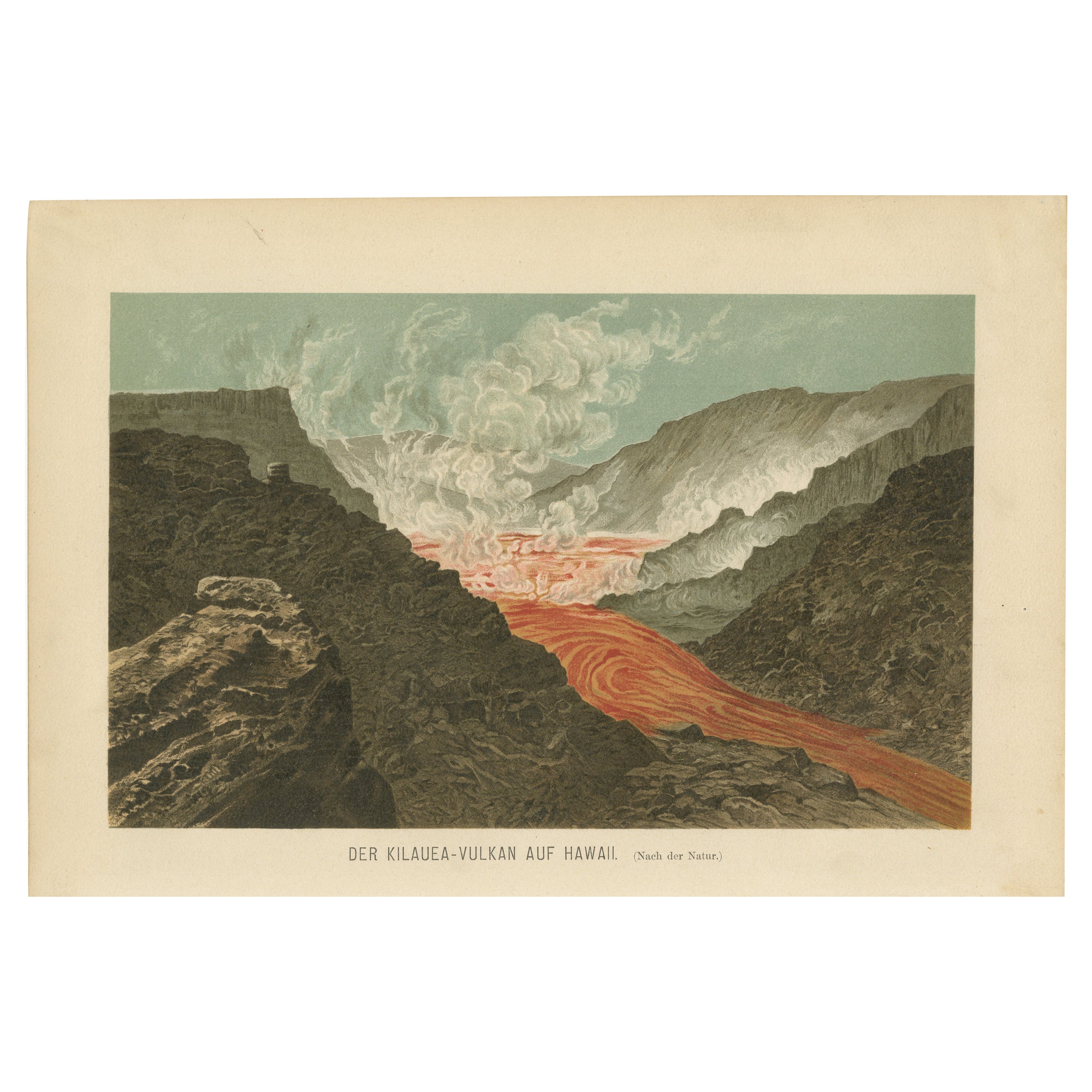
The image is an illustration of the Kilauea volcano in Hawaii, as indicated by the German caption "Der Kilauea-Vulkan auf Hawaii (Nach der Natur)" which translates to "The Kilauea Volcano in Hawaii (After Nature)."
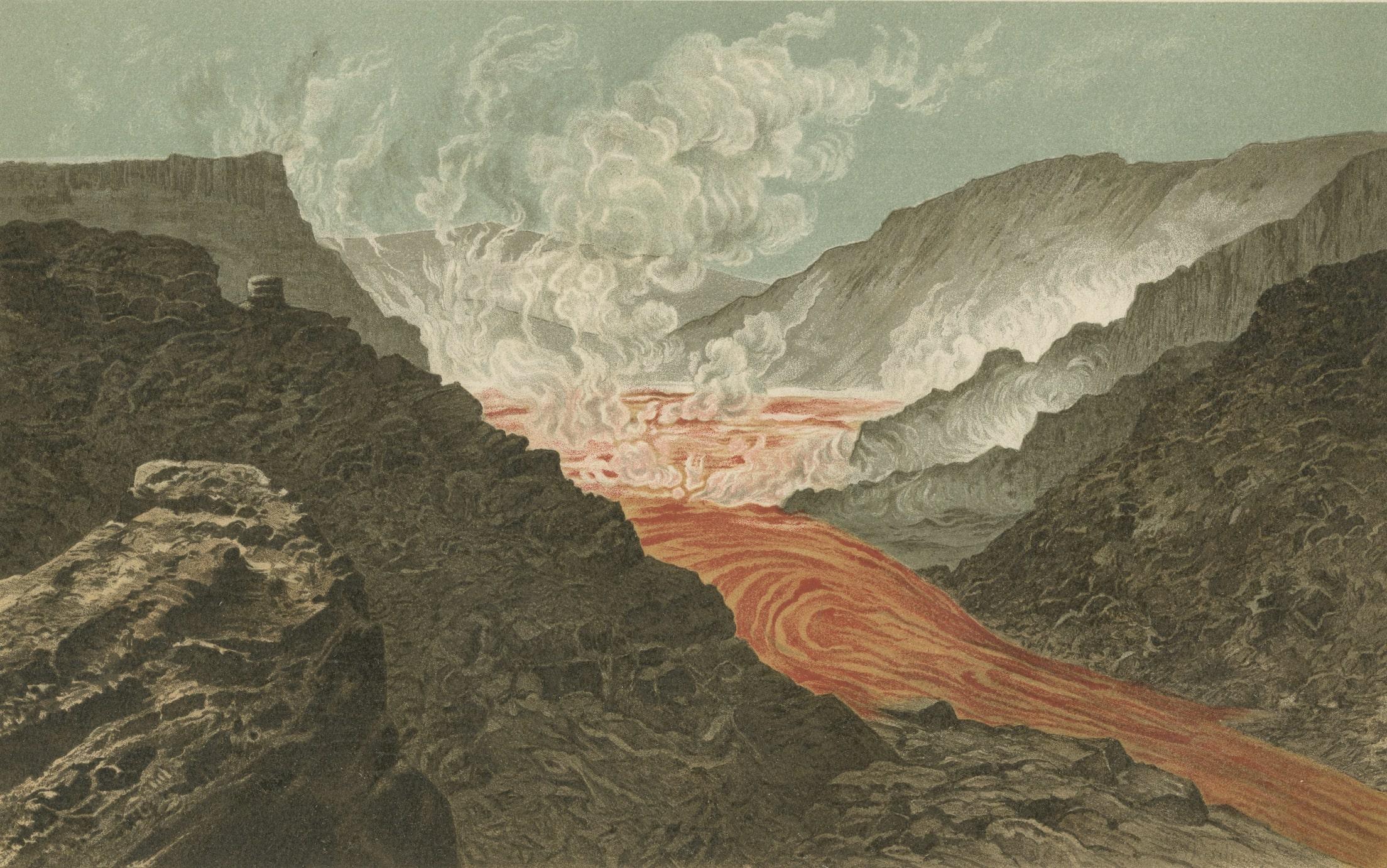
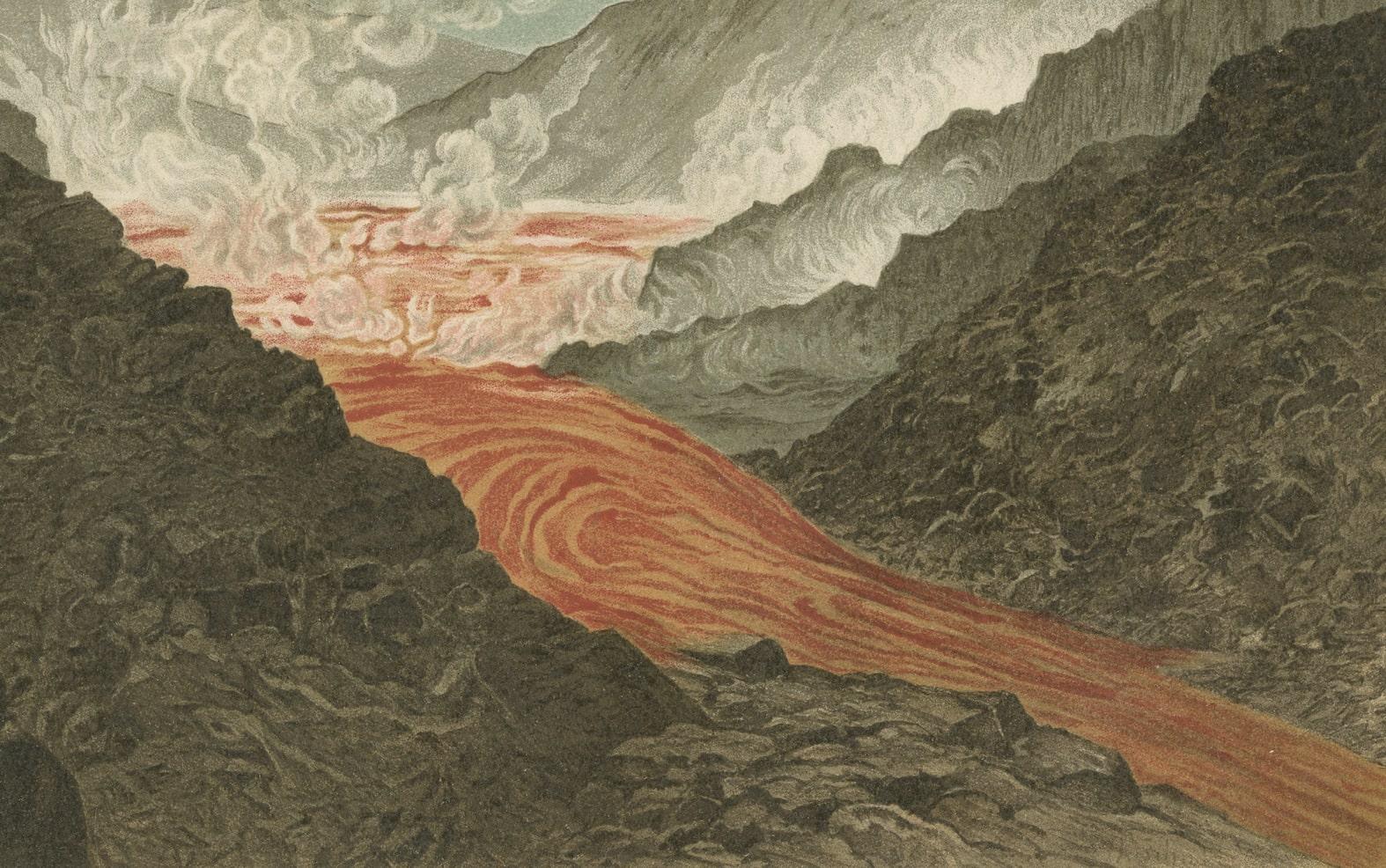
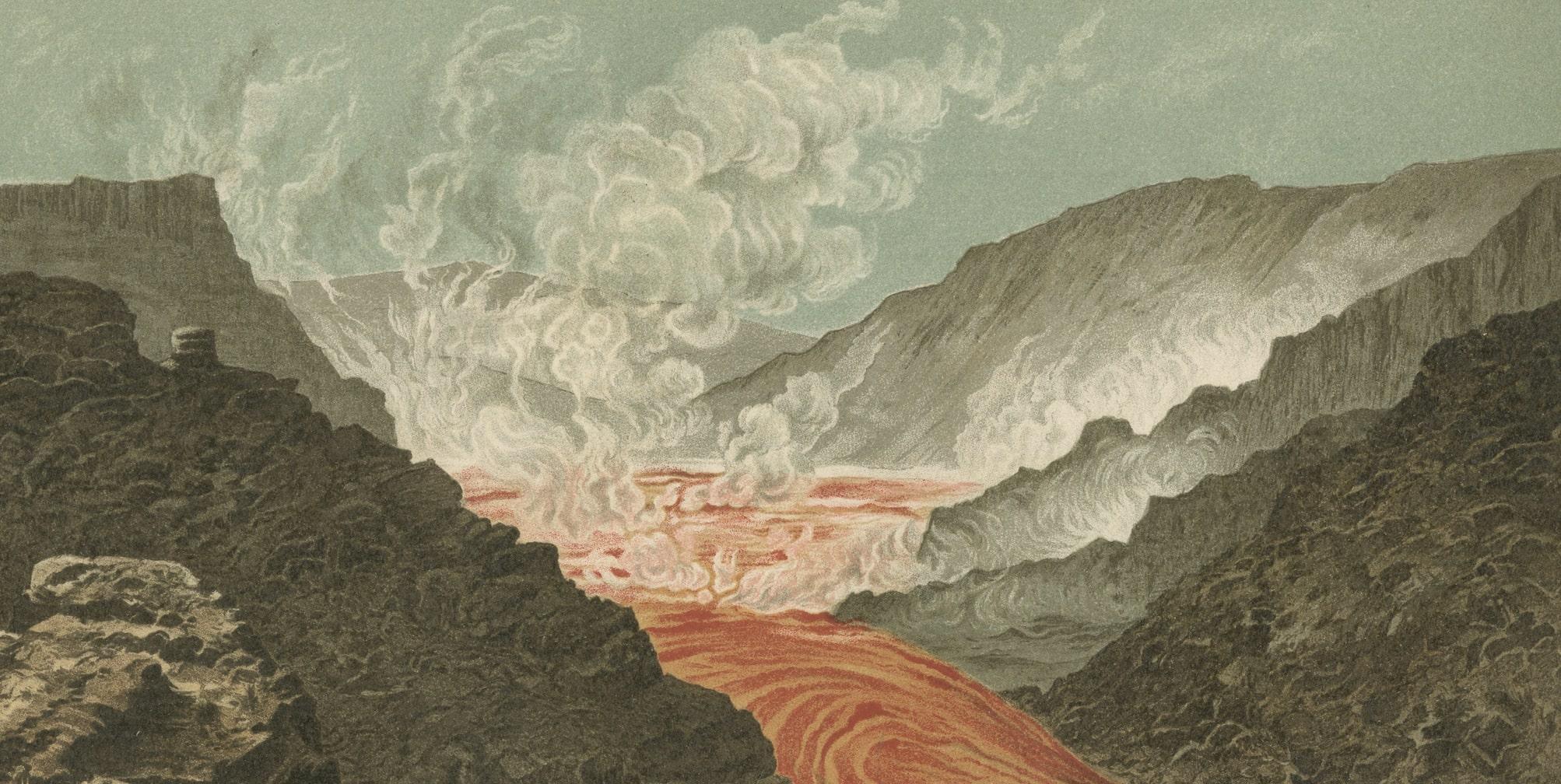
It depicts a volcanic landscape during an eruption, with lava flowing down the volcano's side, creating a river of red and orange molten rock. The lava is emitting a significant amount of smoke and steam as it cools in the air, contrasting against the more stable, cooler, dark rocky terrain around it. The sky appears to be clouded with the smoke and ash from the eruption. This illustration seems to be rendered with a degree of realism, aiming to represent the natural phenomenon accurately.
This chromolithograph of the Kilauea Volcano in Hawaii, published in 1902, is a significant historical artifact. The maker was D.Schulz.
Chromolithography was a unique method for making multi-color prints, which allowed for vibrant and varied hues, a technique that was quite popular at the turn of the 20th century. The image itself likely aimed to capture the spectacular and dramatic natural beauty of Kilauea's eruption, with the color palette effectively conveying the intense glow of the lava and the stark ruggedness of the volcanic landscape. Such prints would have been important for scientific documentation as well as for public education and fascination with natural wonders around the world.