About this sheet
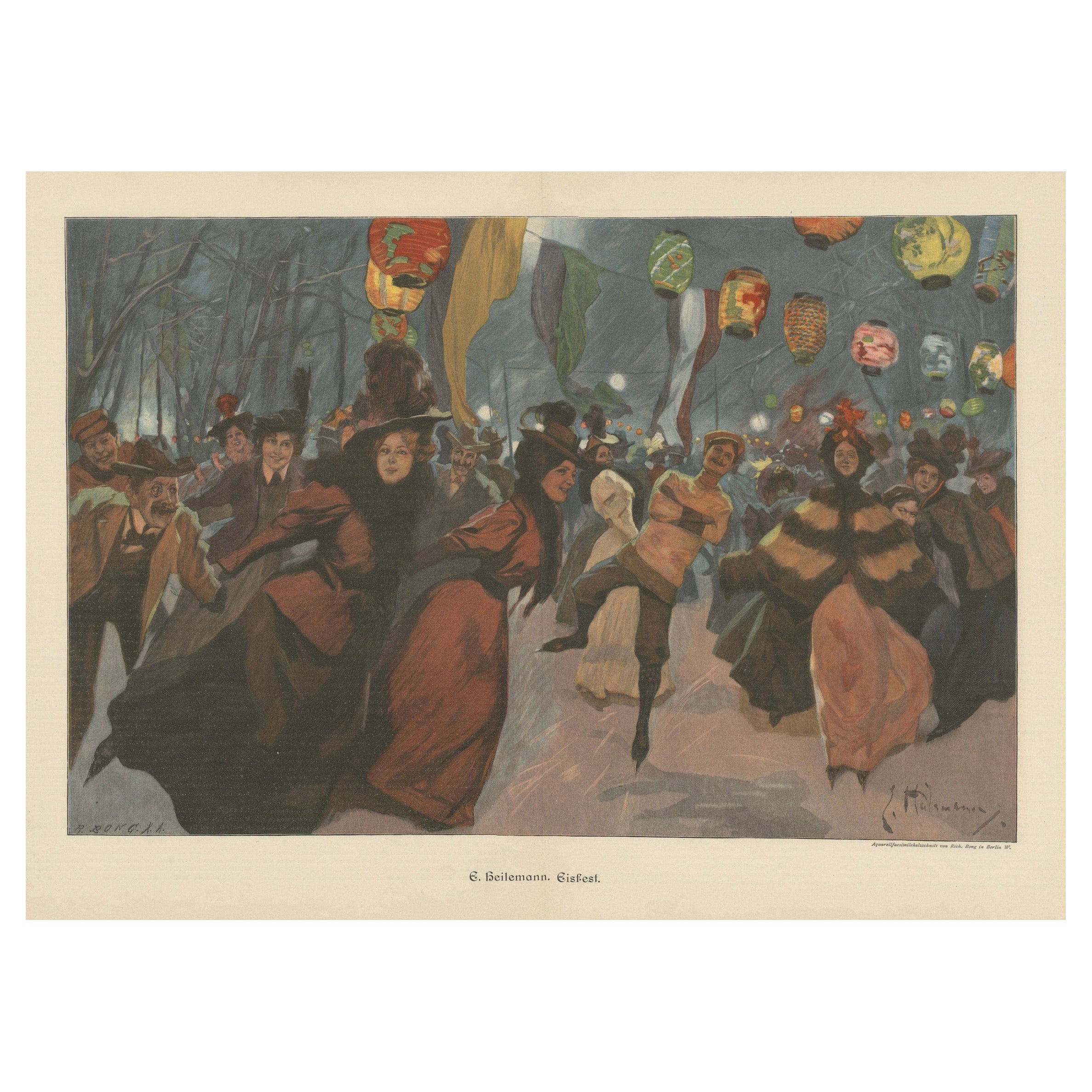
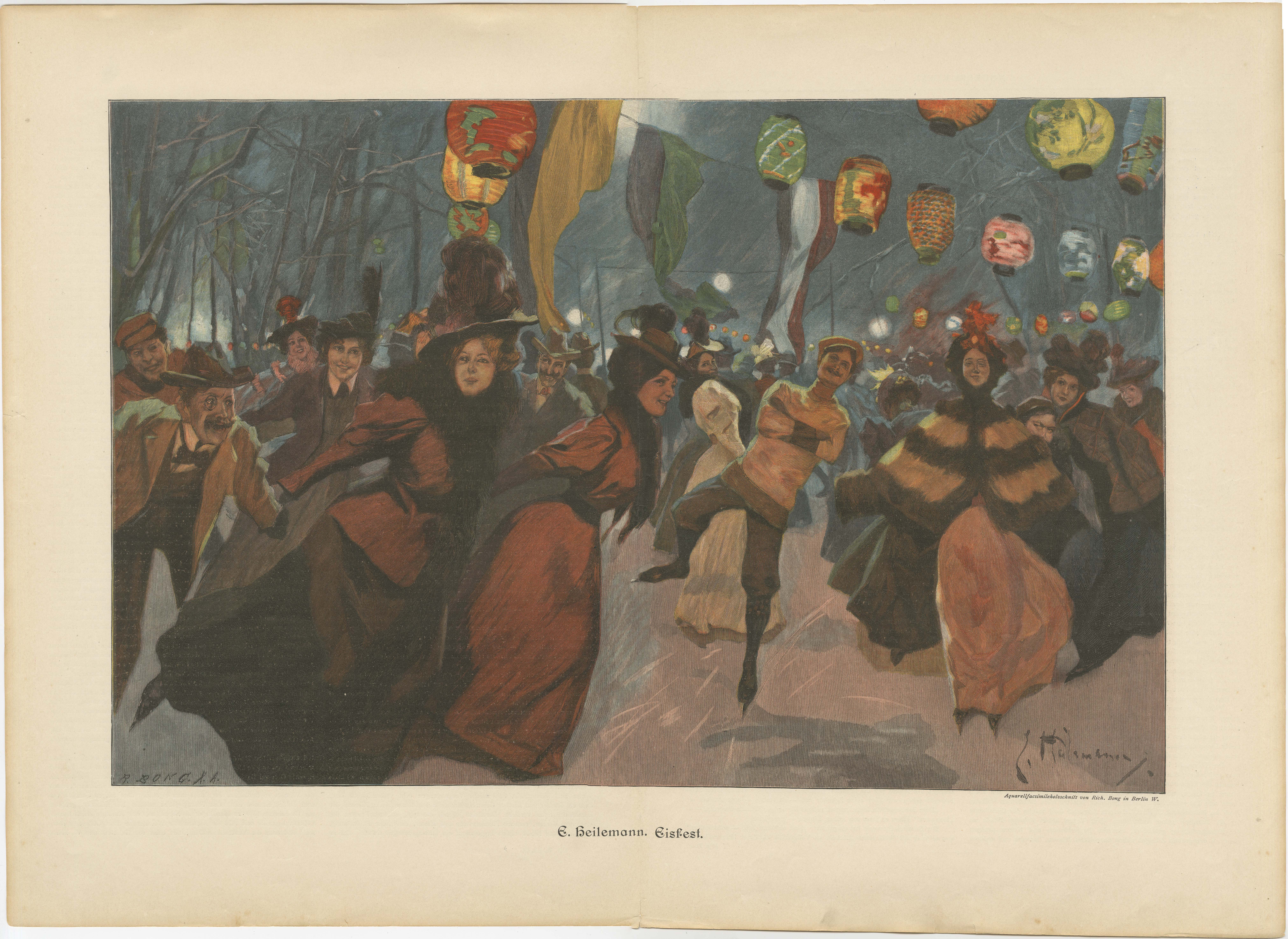
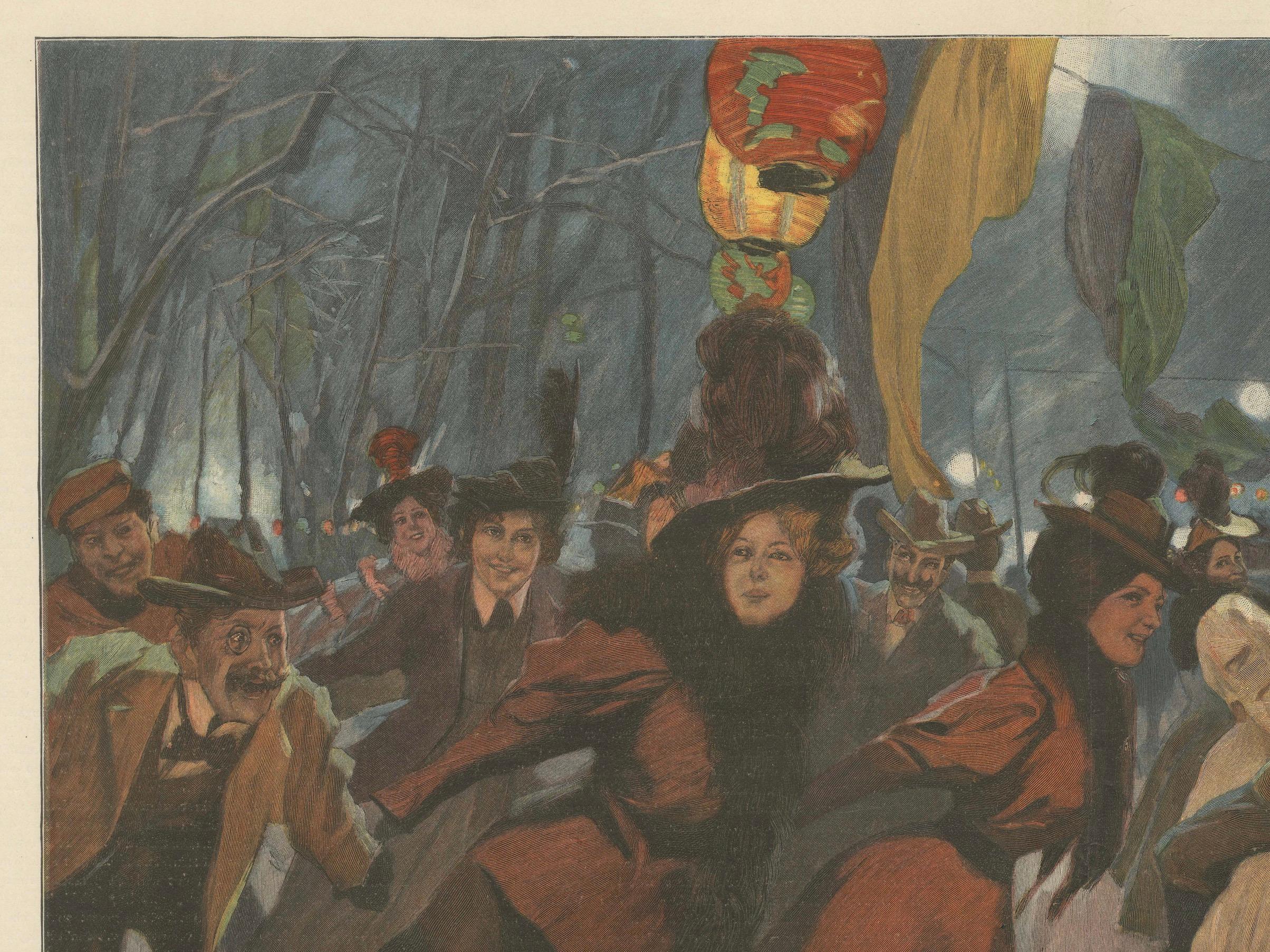
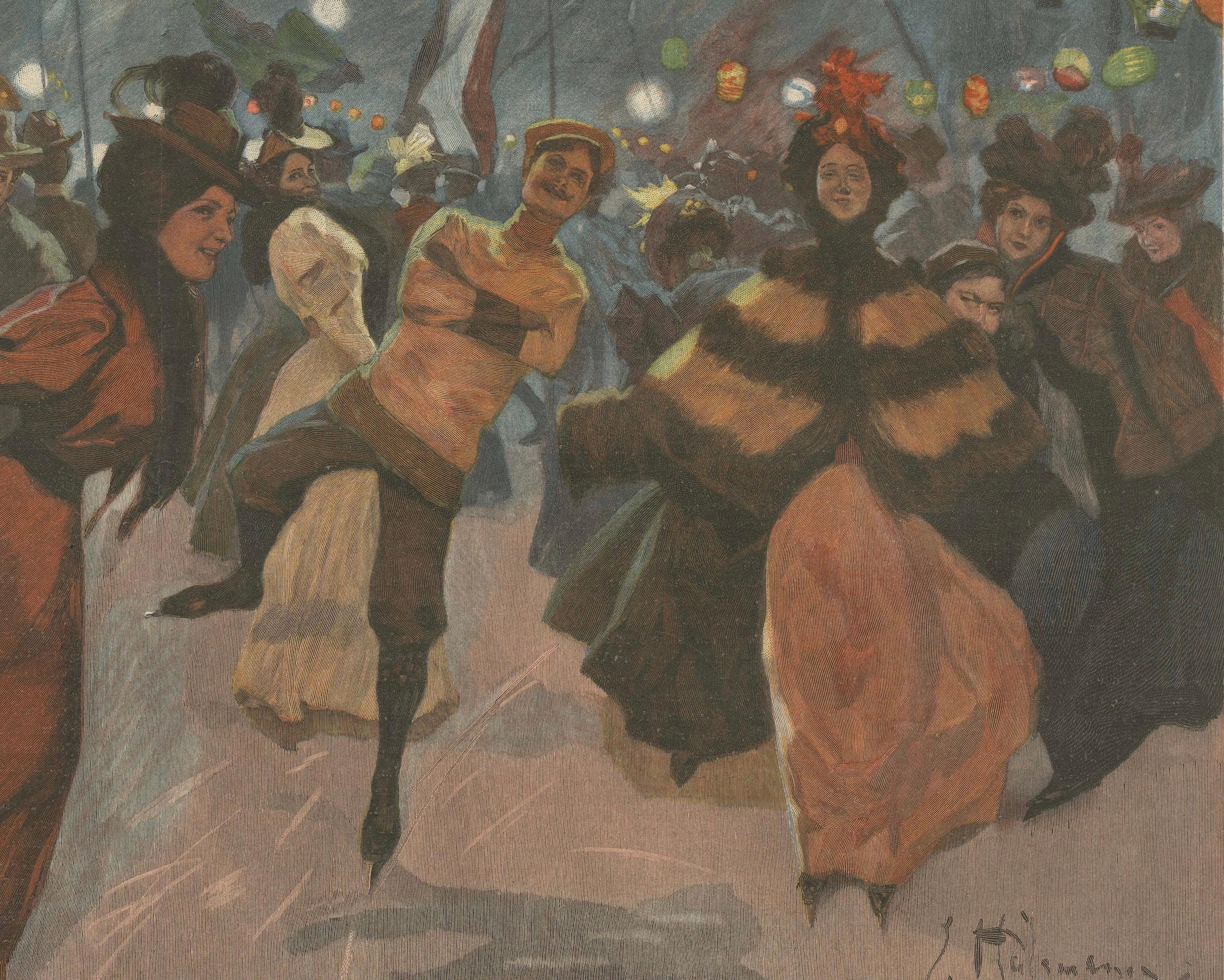
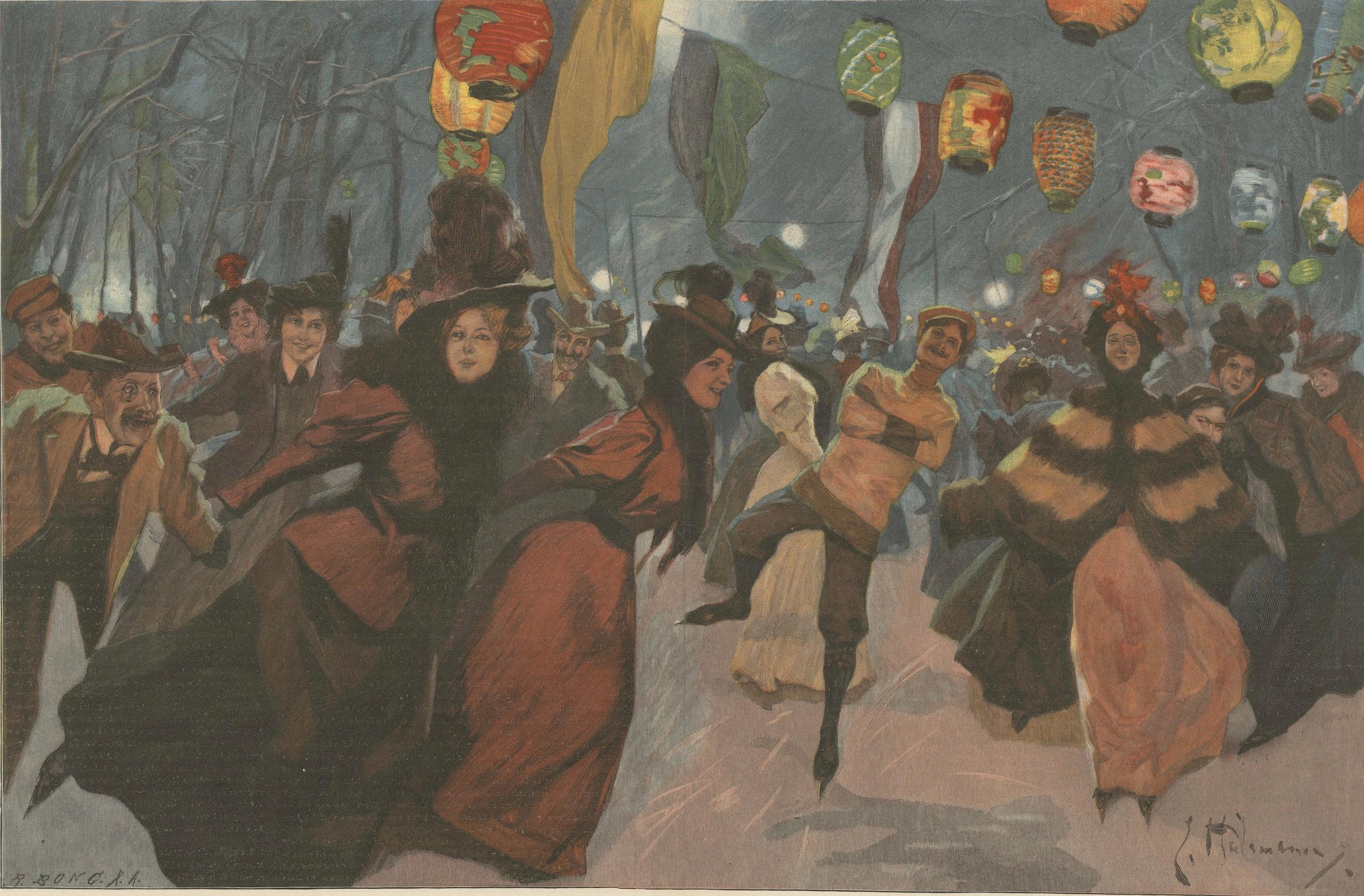
This colorful illustration by E. Heilemann, titled *Eisfest* (Ice Festival), depicts a lively winter scene of revelers enjoying an evening celebration on the ice. The festive atmosphere is enhanced by the presence of lanterns hanging overhead, casting a warm glow across the gathering. People of all ages, dressed in winter attire, are joyfully skating or dancing, their movements full of energy and excitement.
The vibrant clothing of the participants and the dynamic composition, with figures moving in all directions, captures the spirit of a traditional winter festival. The scene evokes a sense of communal enjoyment, as the crowd gathers in the cold night to participate in the winter revelry. The use of bold colors and expressive lines adds a sense of movement and celebration to the piece.
This artwork likely comes from a period in the late 19th or early 20th century when public ice festivals and outdoor winter activities were popular social events.
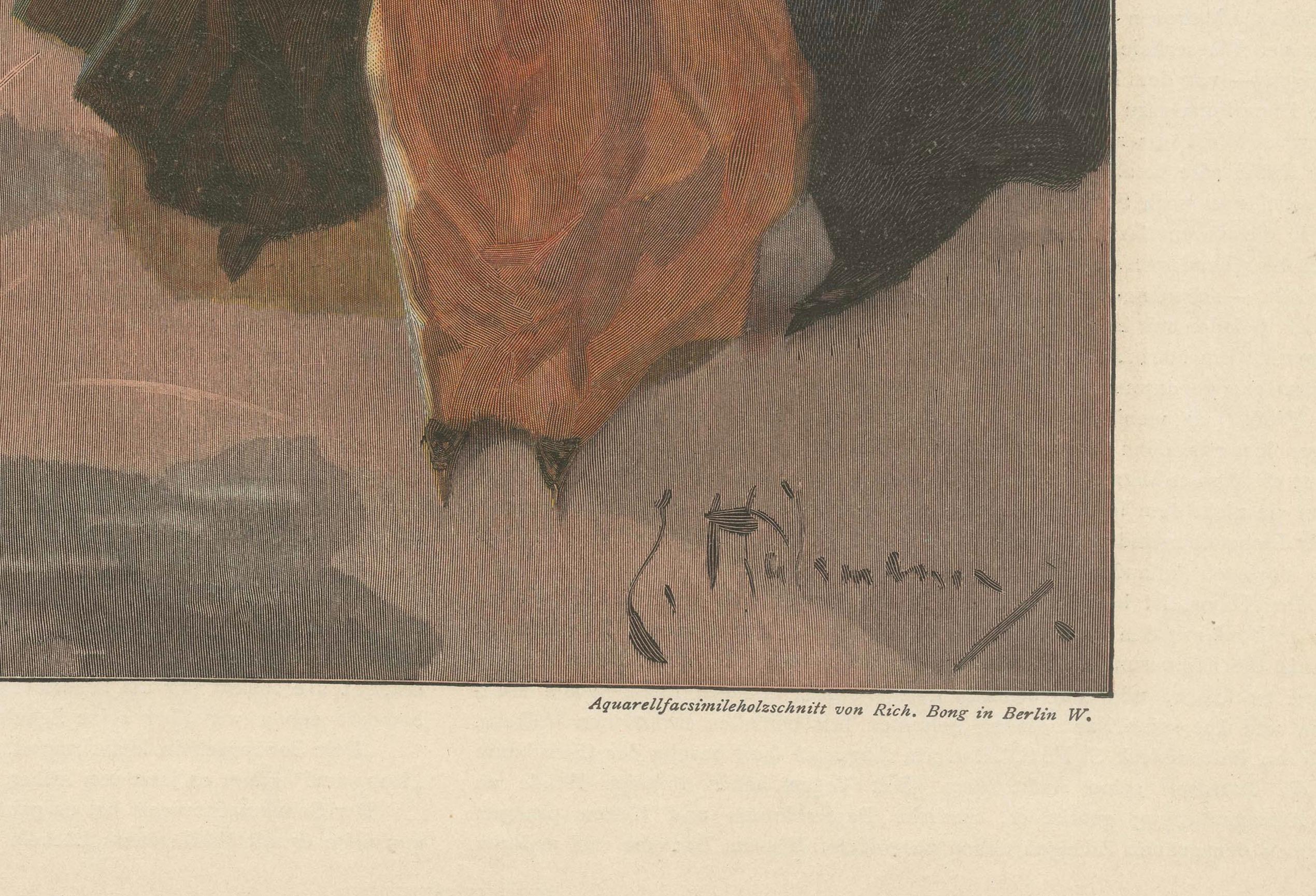
The visible text in the lower-right corner of the image reads:
"Aquarellfacsimileholzschnitt von Rich. Bong in Berlin W."
### Explanation:
- Aquarellfacsimileholzschnitt: This German term translates to "facsimile woodcut in watercolor." It indicates that this print was produced using a technique designed to replicate the look of an original watercolor painting through a woodcut process.
- von Rich. Bong in Berlin W.: This refers to the publisher or printer responsible for producing the facsimile. "Rich. Bong" is likely shorthand for Richard Bong, a printer or publisher based in Berlin, in the western part of the city ("Berlin W.").
Together, the text indicates that this piece is a reproduction of an original work, printed using woodcut technology to imitate the appearance of watercolor, and it was printed by Richard Bong in Berlin.
Based on the style of the illustration and the printing technique described as an 'aquarellfacsimileholzschnitt' (facsimile woodcut in watercolor), this type of print was popular during the late 19th to early 20th centuries. The detailed nature of the scene and the mention of 'Rich. Bong in Berlin' suggest a high-quality, illustrated publication.
Richard Bong was a well-known Berlin publisher active during the late 19th and early 20th centuries, which further supports the timeframe for the print’s publication, likely around the 1880s to 1910s.
### Possible Publications:
This print could have been featured in a high-quality illustrated journal or magazine that focused on art, culture, or special events. Some likely candidates include:
- "Die Gartenlaube": A popular German illustrated family magazine from the mid to late 19th century, known for its diverse content, including cultural events and artistic works.
- "Moderne Kunst": A German art periodical from the late 19th century that featured reproductions of contemporary artwork.
- "Illustrierte Zeitung": Another illustrated magazine from Germany that was well-known for publishing prints and illustrations of current events, social life, and the arts.
Given the festive and social nature of the scene, the illustration likely appeared in a periodical that focused on public events, seasonal festivities, or art collections, possibly during the winter season or as part of a special issue.