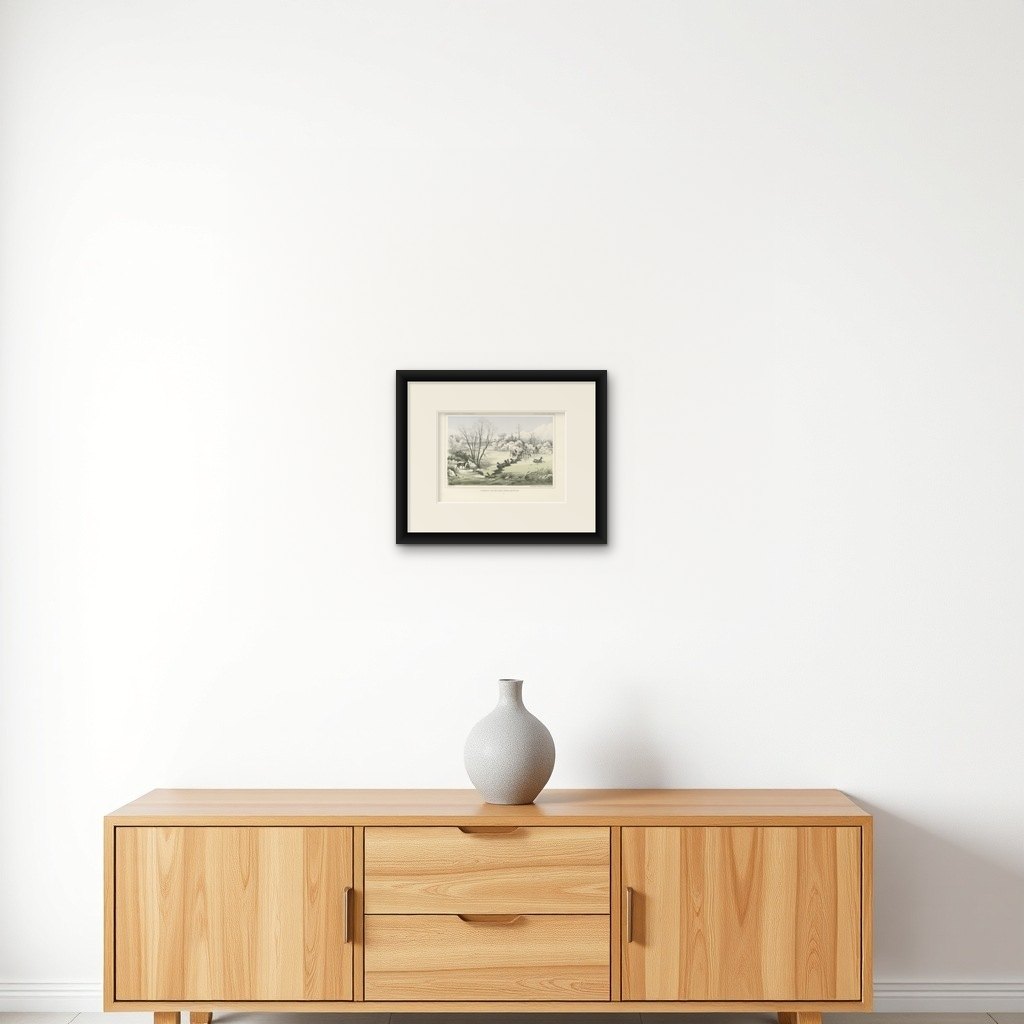
Crossing the Hellgate River in Winter, Montana - Historic 19th-Century Litho
€ 220
Original antique · The actual sheet photographed · Certificate of authenticity on request · Sold unframed · Worldwide shipping from € 15 (rates)
Sheet size
20.7 × 28.3 cm (8.1 × 11.1 in)
Reference
BG-14038-27
What the condition grades mean
Excellent
Bright and clean, with no faults worth mentioning.
Very good
Only light signs of age, such as faint toning.
Good
Normal signs of age for a sheet of this period: toning, some foxing, small marks or neat old repairs.
Fair
Clear faults such as staining, tears or repairs, priced to match.
Every fault we see is written in the condition note, and the whole sheet is shown uncropped in the photos.
Condition
Very good, with minimal foxing at the margins. The image is crisp, and the colors remain vivid and well-preserved.
About this sheet
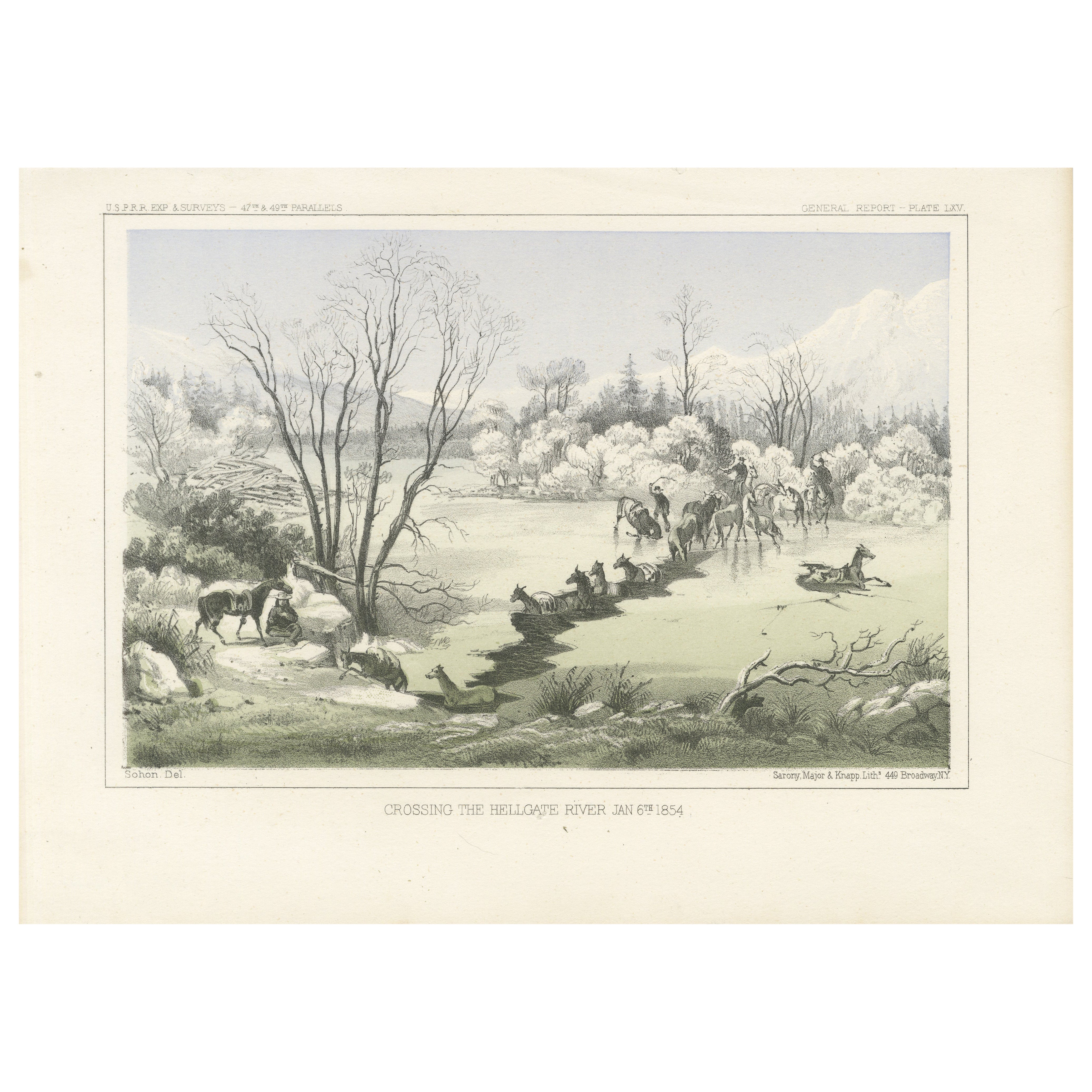
This lithograph, "Crossing the Hellgate River, January 6th, 1854," captures a moment of adventure and perseverance during mid-19th-century exploration in the American West. The scene depicts a group of travelers and their pack animals navigating the icy waters of the Hellgate River, surrounded by a winter landscape of barren trees and snow-covered terrain.
The artwork is part of the Pacific Railroad Survey reports, General Report – Plate LXV, published in 1856. Created by Gustavus Sohon, a skilled artist and explorer, and lithographed by Sarony, Major & Knapp, it vividly illustrates the challenges faced by survey teams as they sought to chart the best routes for the transcontinental railroad.
The composition balances human determination with the rugged beauty of nature. The frozen river, reflective and treacherous, dominates the center, while trees and scattered rocks add depth to the image. The detail in the horses, figures, and surrounding landscape is a testament to Sohon’s artistry and the precision of 19th-century lithographic techniques.
The Hellgate River is the historical name for what is now part of the Clark Fork River in western Montana. It flows through the Hellgate Canyon, just east of the city of Missoula. The river and canyon were named "Hellgate" by early French trappers due to the area's history of being a site of conflict between Native American tribes.
The Clark Fork River is a major waterway in Montana, known for its scenic beauty and significance in the region's history, including during the westward expansion and exploration of the United States. Hellgate Canyon remains a prominent feature near Missoula, often associated with the dramatic landscapes of the Rocky Mountains.
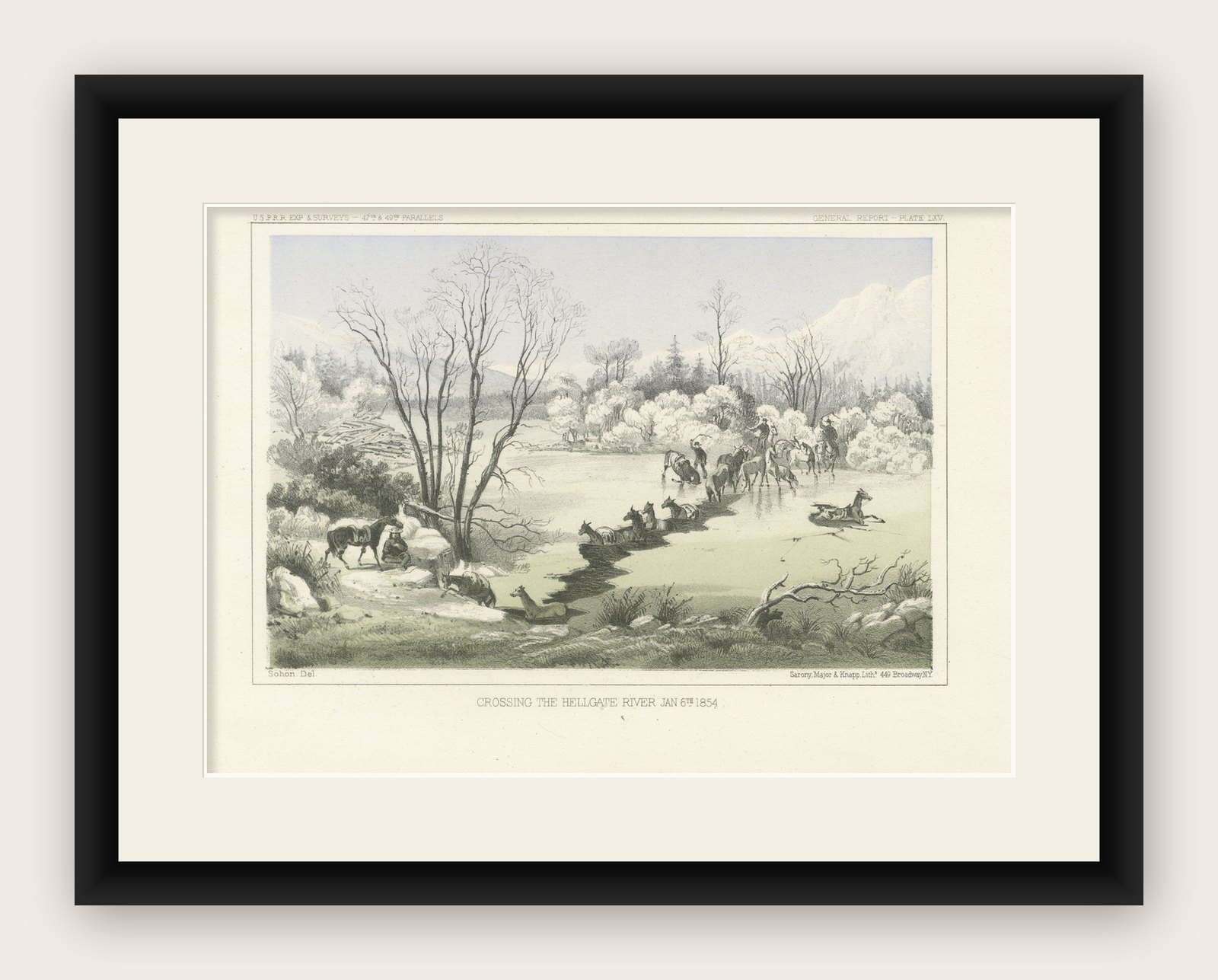
Framing Tip: Highlight the wintery tones with a white or light gray matte and a classic wooden frame. A simple, elegant presentation will emphasize the lithograph’s historical significance and artistic detail, making it a standout piece in any collection of Western Americana or exploration-themed art.