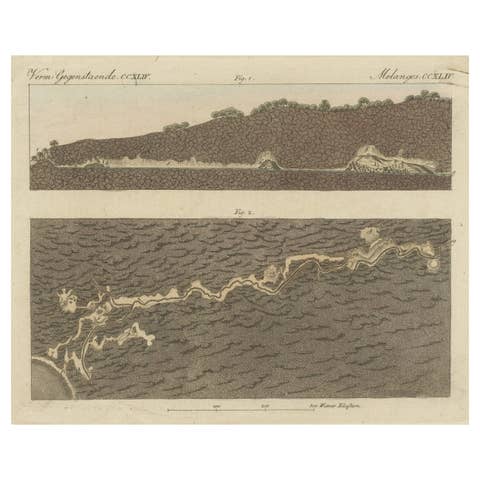
18th-Century Pastoral Engraving by Johann Jakob Kleinschmidt: Cattle and Figures
€ 340
Original antique · The actual sheet photographed · Certificate of authenticity on request · Sold unframed · Worldwide shipping from € 15 (rates)
Sheet size
27.7 × 39.5 cm (10.9 × 15.6 in)
Condition
Good
Reference
BG-12678-153
What the condition grades mean
Excellent
Bright and clean, with no faults worth mentioning.
Very good
Only light signs of age, such as faint toning.
Good
Normal signs of age for a sheet of this period: toning, some foxing, small marks or neat old repairs.
Fair
Clear faults such as staining, tears or repairs, priced to match.
Every fault we see is written in the condition note, and the whole sheet is shown uncropped in the photos.
Condition
Well-preserved 18th-century engraving by Johann Jakob Kleinschmidt with minor foxing, intact margins, and clear text; ideal for display or collection. Some soiling due to age and handling over the last 300 years.
About this sheet
Engraved by Johann Jakob Kleinschmidt (1687–1772) Designer: Initials "A.V." (specific identity unknown) Date: Circa 1720–1750 Medium: Engraving on laid paper This finely detailed engraving depicts a tranquil pastoral landscape. In the foreground, several cattle rest and graze near a group of figures engaged in conversation. The background features lush trees and a distant architectural structure, possibly a farmhouse or chapel, contributing to the serene rural setting. The composition reflects the 18th-century European appreciation for pastoral themes, emphasizing the harmony between humans and nature.
Inscriptions: - Latin Text: > Indige his laudatque boum expers at alter, Tacet, quis? Tacit sapientes animi, sapit. Desinit fatuus clamor, desipit hinc ruditas. Detracte hunc labem demat urbica gravitas.
- German Text: > Schlag ein, misch mich den Kauf, du weist, man ist gleich Schweige. Es berüchtigt das Volk ein Pfiff, um Lachs, und Sage. Der Narrent hie noch wie gut ein Languus Sieche. So bleib dem meisten Hof, Schockey Sitten sind Genüge.
Interpretation: The inscriptions juxtapose Latin and German texts, offering moral reflections on wisdom, silence, and societal behavior. The Latin verses suggest that wise individuals remain silent, avoiding foolish clamor, while urban gravity removes blemishes. The German text appears to critique deceit in trade and advocates for proper conduct, possibly contrasting rural simplicity with urban sophistication.
About Johann Jakob Kleinschmidt:
Johann Jakob Kleinschmidt (1687–1772) was a German engraver and etcher active in Augsburg during the 18th century. He is known for his detailed engravings, often reproducing works by other artists, notably Georg Philipp Rugendas I. Kleinschmidt also published his own prints, contributing to the rich tapestry of Augsburg's printmaking tradition. His works are characterized by meticulous line work and a keen eye for detail, capturing both the dynamism of battle scenes and the tranquility of pastoral landscapes. Several of his engravings are housed in prominent collections, including the British Museum and the National Portrait Gallery .