About this sheet
Antibes Washerwomen Etching – Adolphe Lalauze Depicting Rural Life, 1869
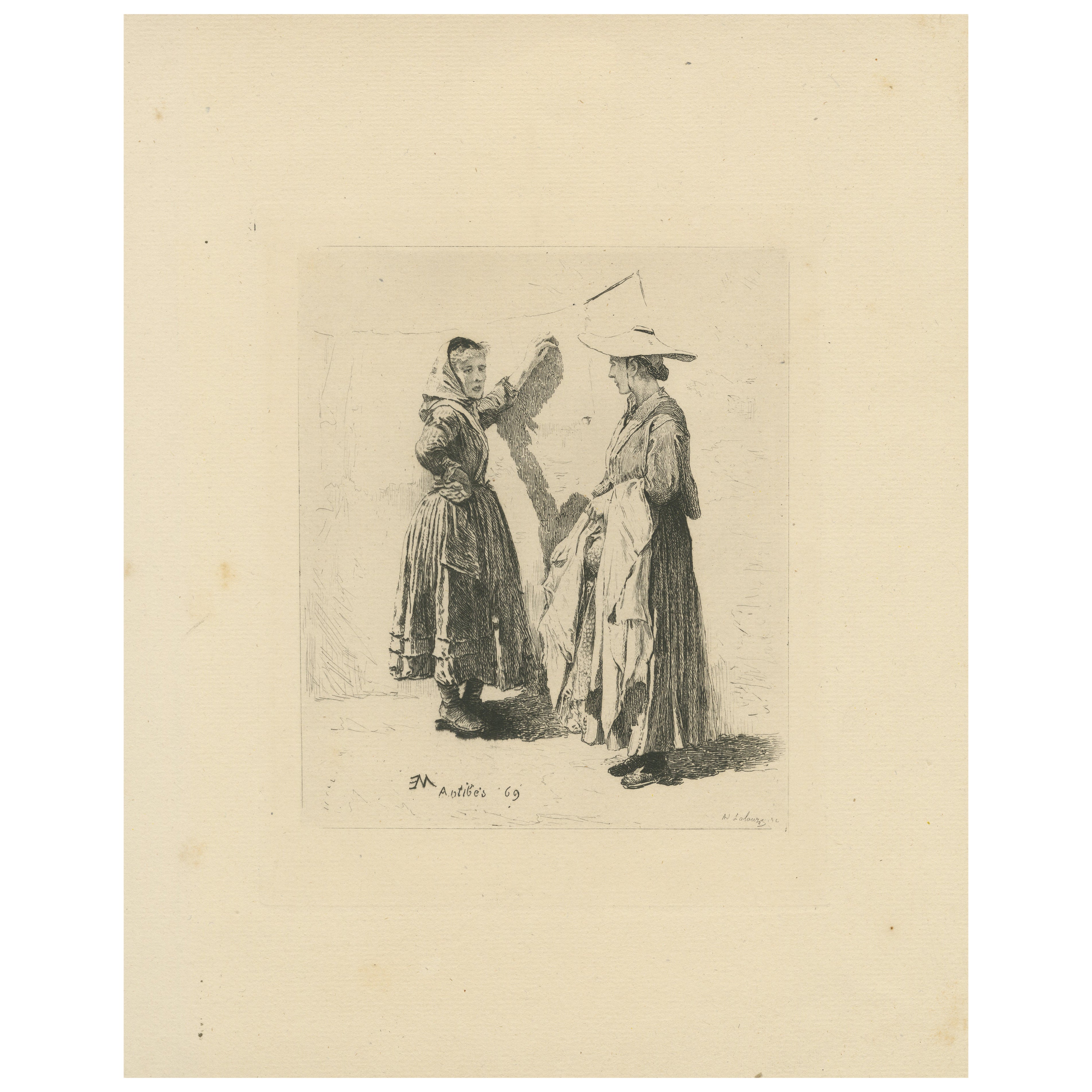
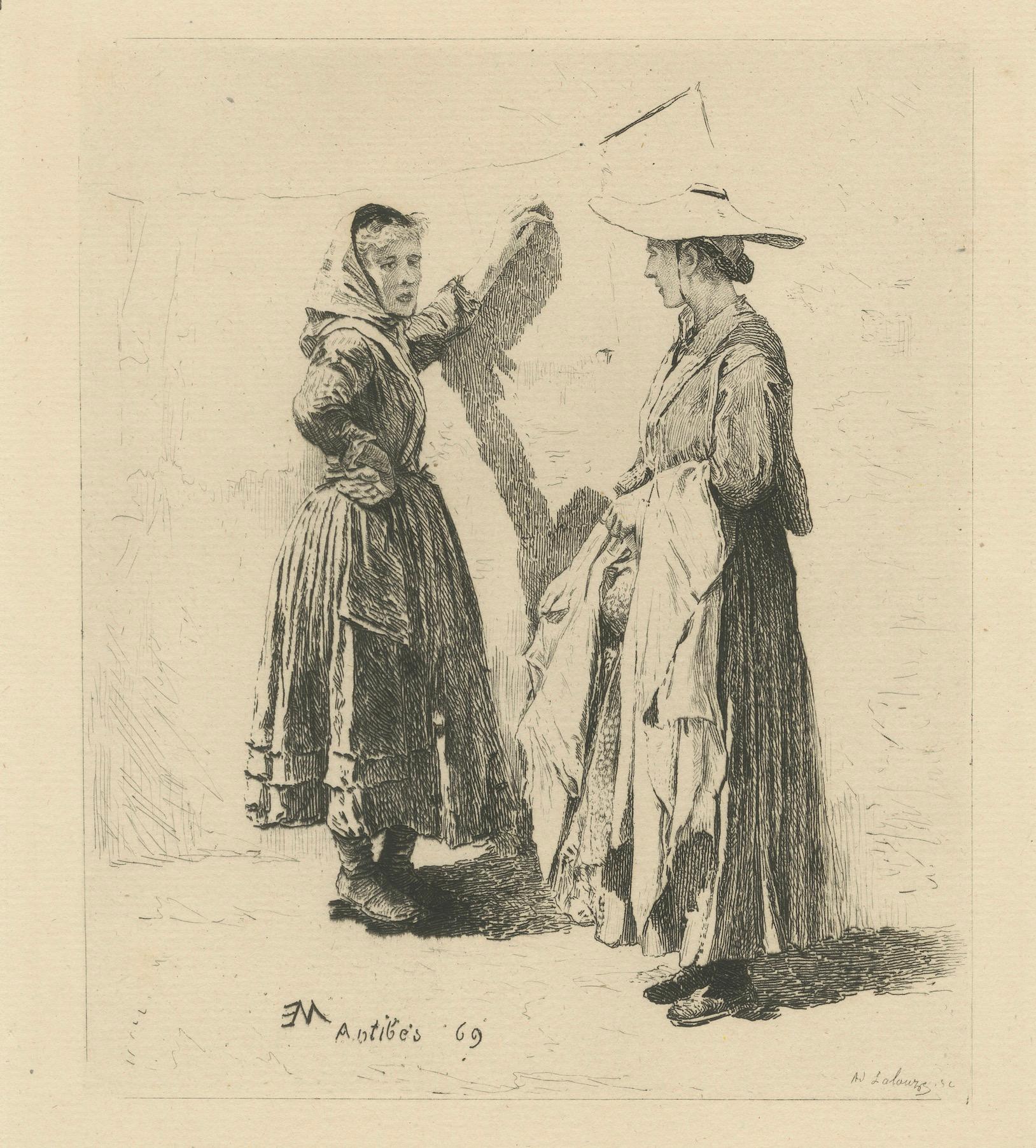
This delicate and finely rendered etching, titled Lavandières, Antibes, was created in 1869 by the French artist Adolphe Lalauze (1838–1906). The scene captures a quiet moment of daily life in the southern French coastal town of Antibes, where two washerwomen (lavandières) pause in conversation, their garments and posture reflecting both the character of the region and the simple dignity of rural labor.
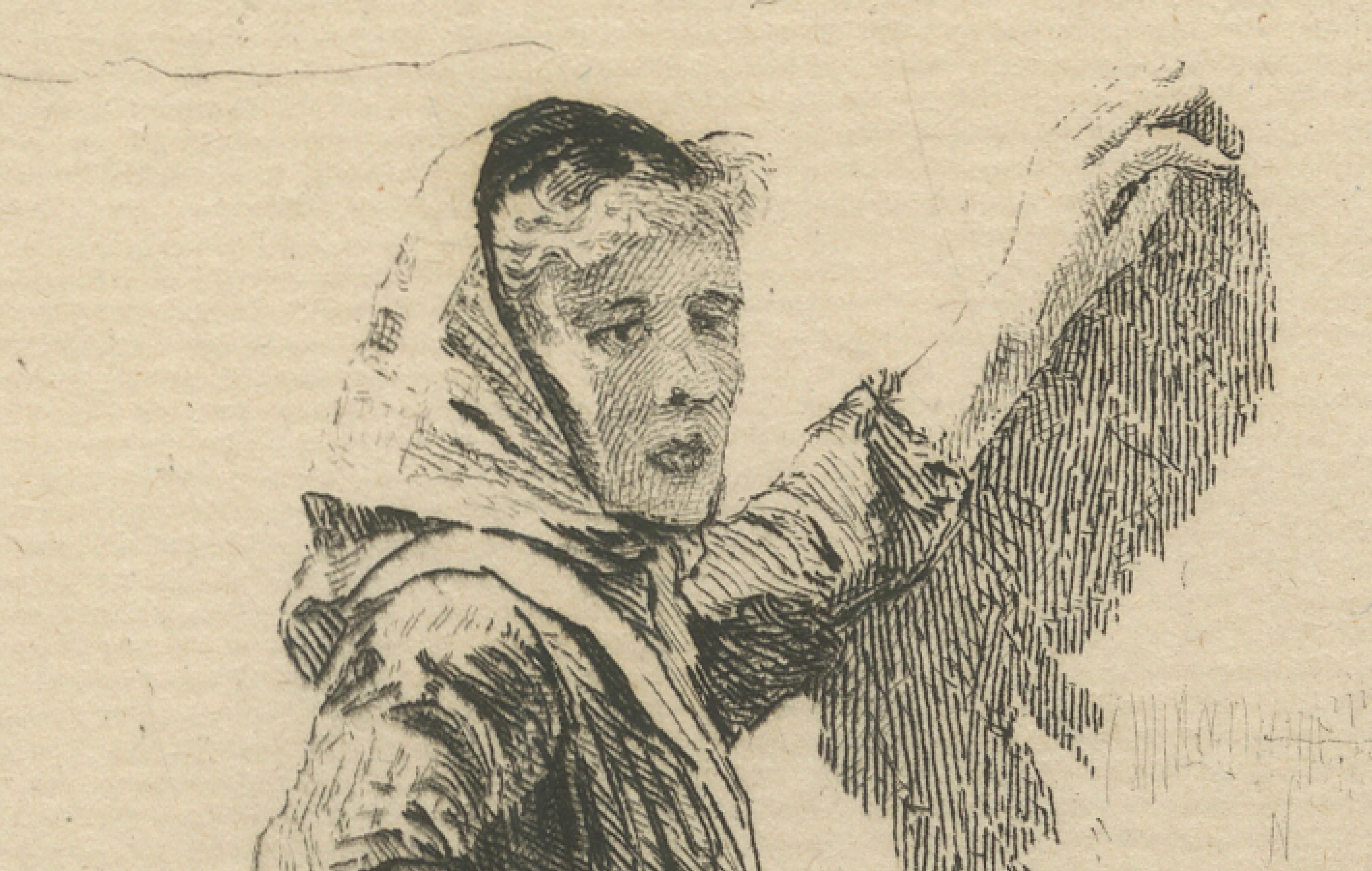
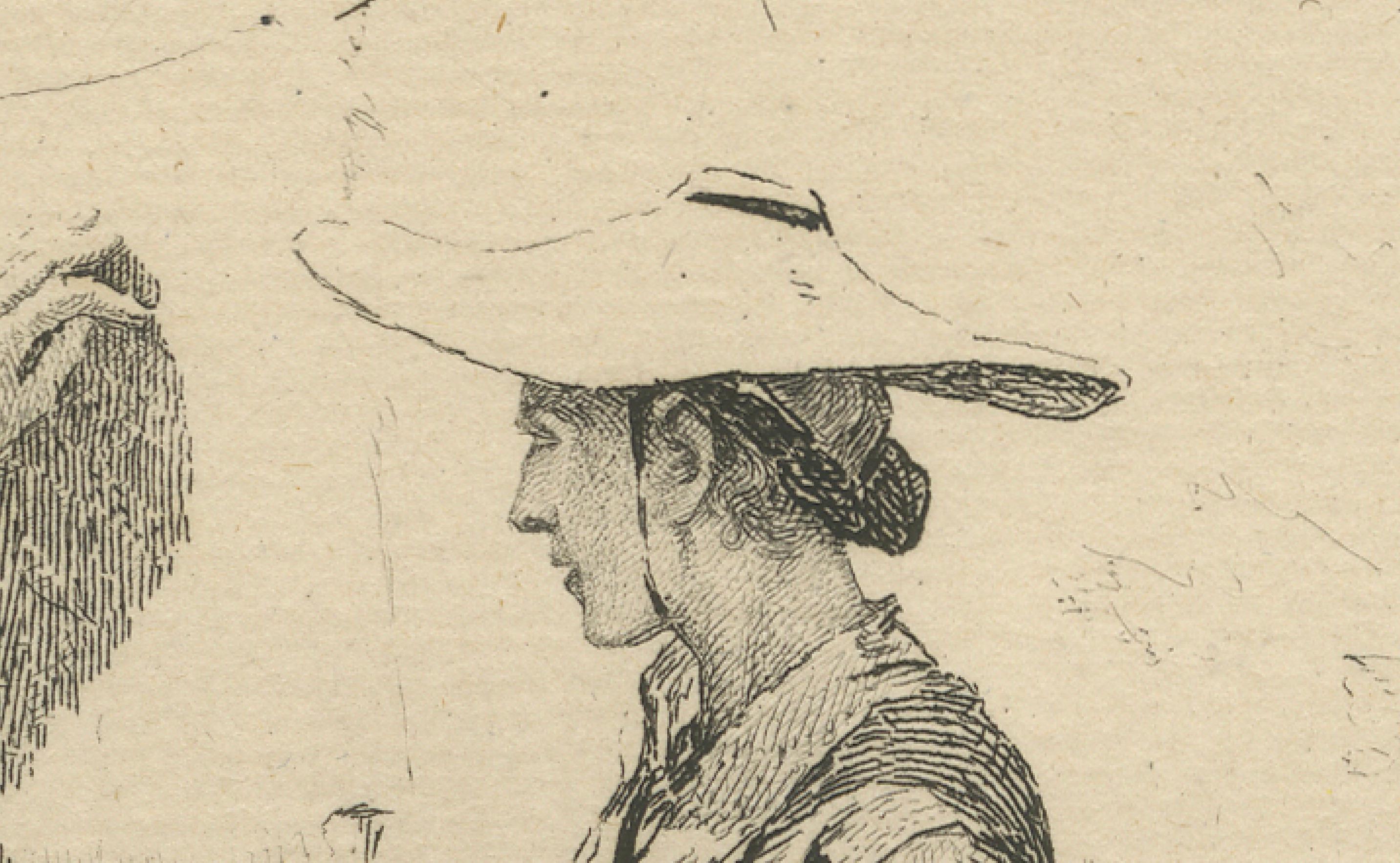
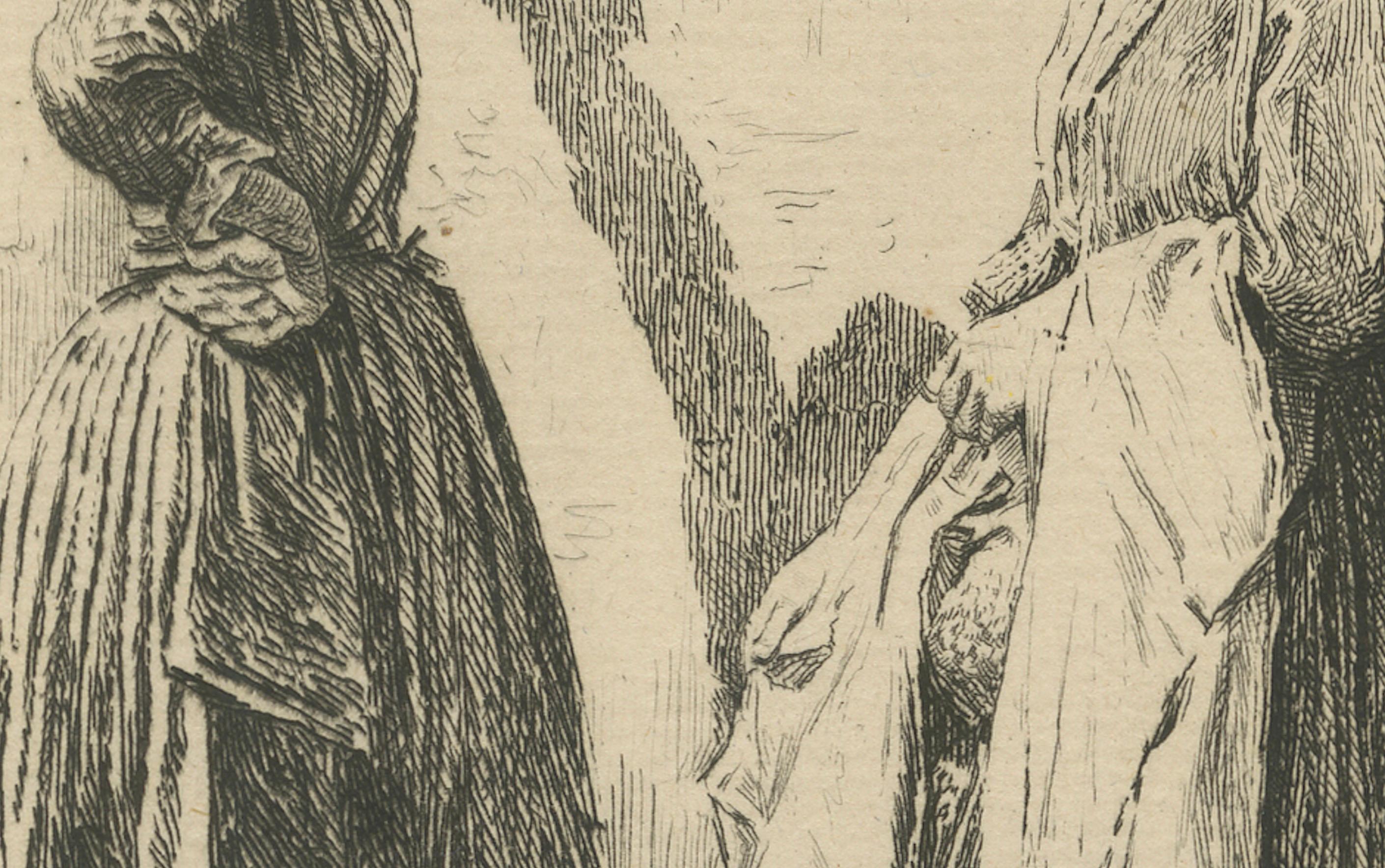
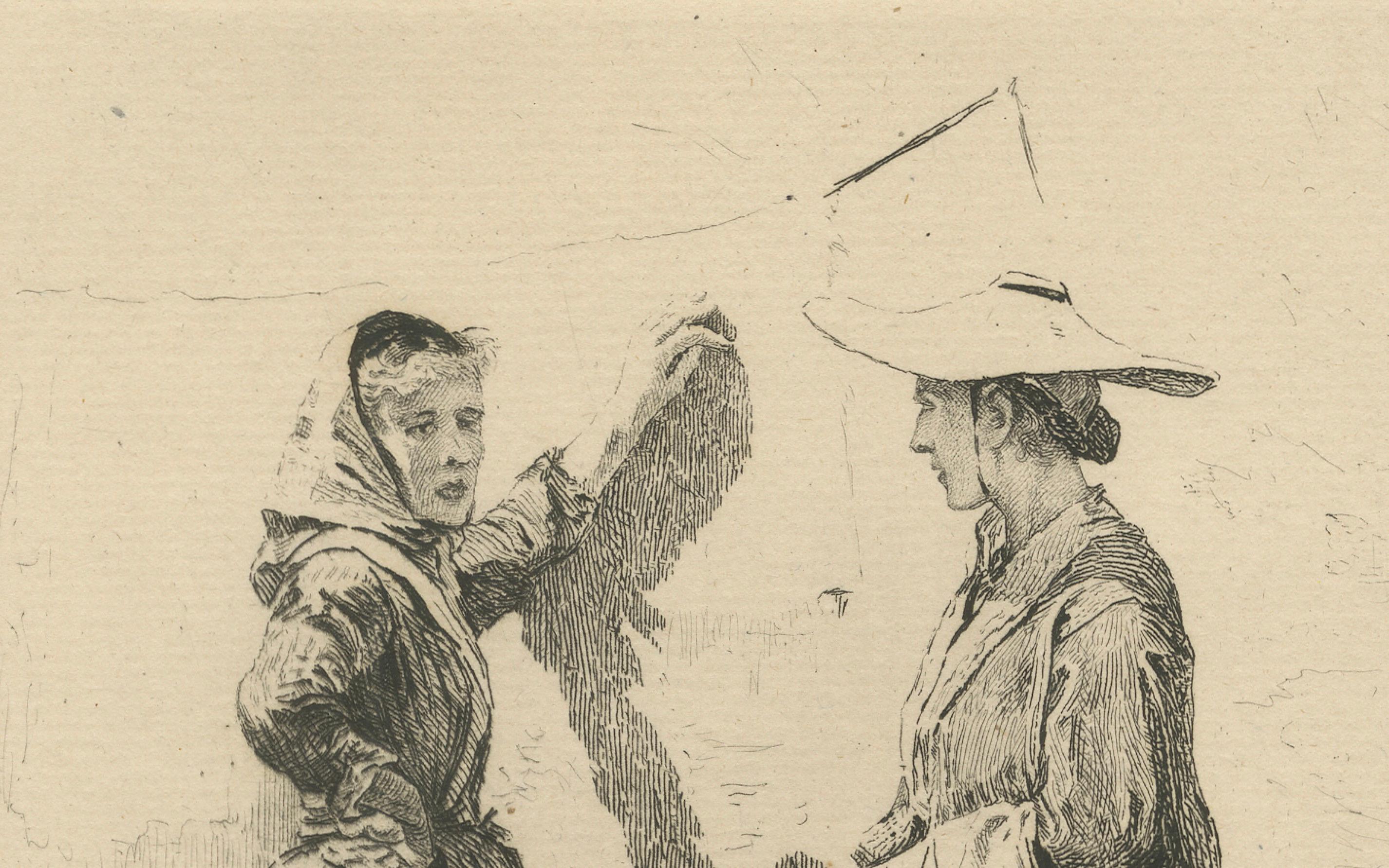
Executed in a restrained, naturalistic style, the print shows a woman in traditional regional dress leaning against a wall, while another stands before her holding a bundle of linen, wearing the distinctive broad-brimmed hat of the Midi region. The composition is intimate and unembellished, offering an honest glimpse into the lives of working women in 19th-century Provence. Lalauze, known for his detailed etchings and illustrations, here demonstrates his sensitivity to both human expression and the textures of fabric and stone.
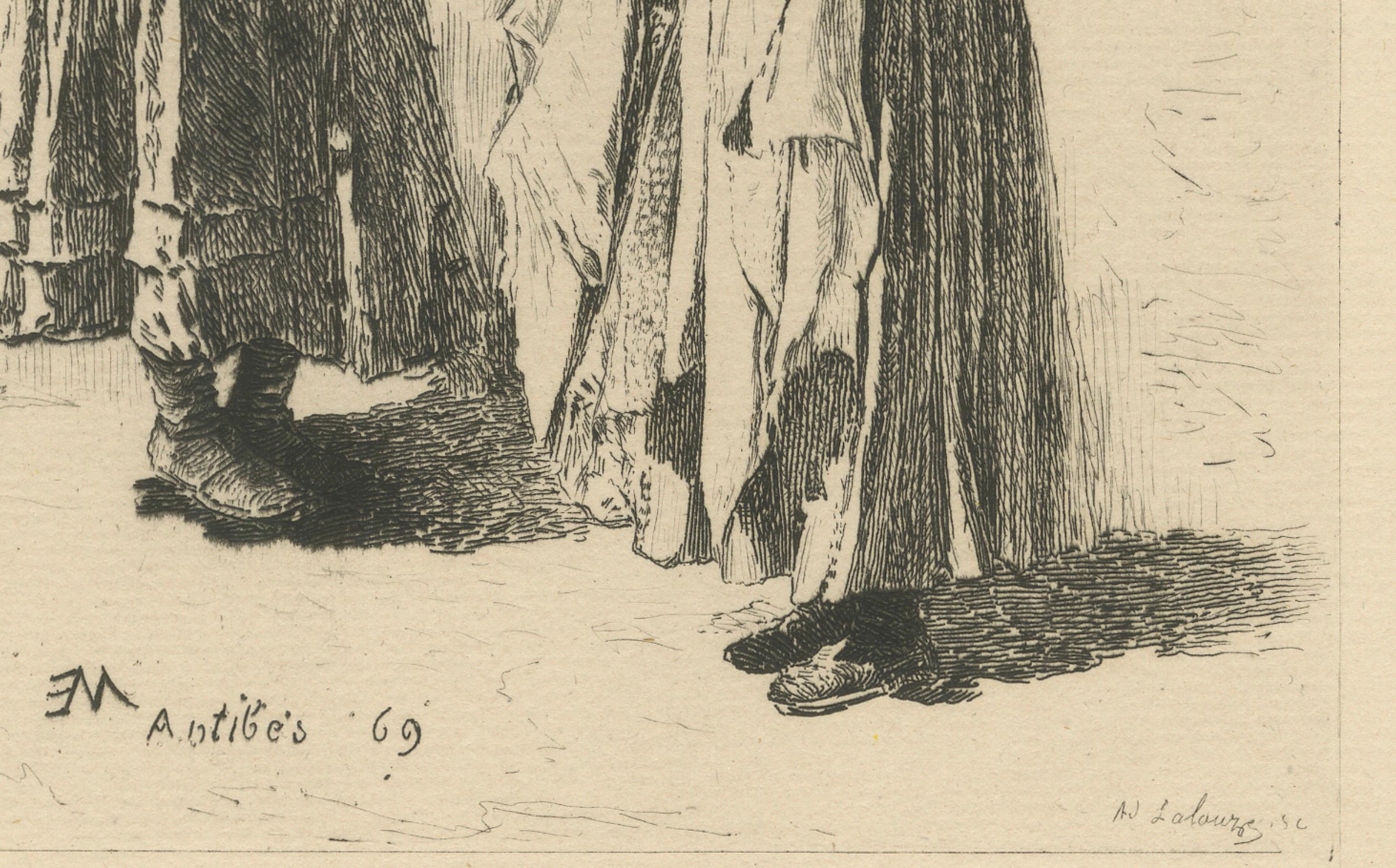
Signed in the plate "Antibes '69" along with Lalauze’s monogram, this print marks an early and authentic example of his rural genre work, created before his later fame as an illustrator of literary classics such as Balzac and Montaigne. His approach reflects the influence of contemporaries such as Ernest Meissonier, whose historical rigor and attention to everyday detail inspired Lalauze’s own interest in ordinary subjects.
Though sometimes confused with later heliogravures after Meissonier’s works, this is an original etching by Lalauze himself, made directly from life in Antibes. It serves as both a collectible print and a charming historical document of French village life in the 19th century.
Condition report:
Etching printed on laid paper with wide margins. Plate impression clearly visible. Minor age-related foxing in the margins, away from the image. No tears or restoration observed. Excellent impression of the plate.
Framing tips:
To preserve the gentle tonal values, this piece would benefit from a simple oak or walnut frame with a soft cream or off-white mat, ideally under UV-protective glass. This will accentuate the rustic atmosphere and the quiet charm of the figures without overpowering them.
Technique: Etching
Maker: Adolphe Lalauze, France, 1869