Original Italian Frontispiece with Classic Elegance Engravings, 1757
€ 240
One of a kind: this is the sheet in the photographs. Ships from Langweer, the Netherlands.
Date
1757
Sheet size
50.5 × 38 cm (19.9 × 15.0 in)
Condition
Good
Reference
BG-13675-92
Condition
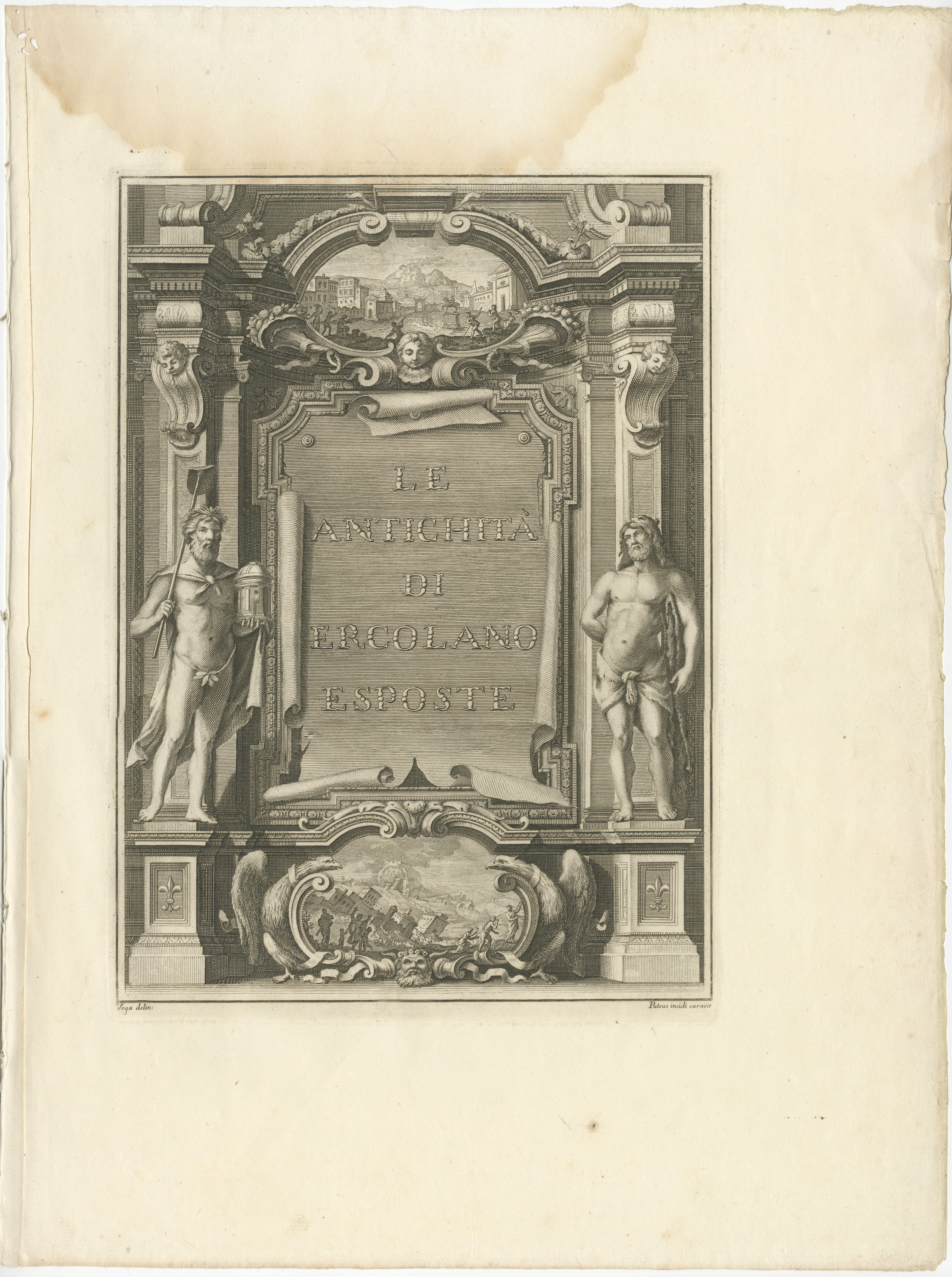
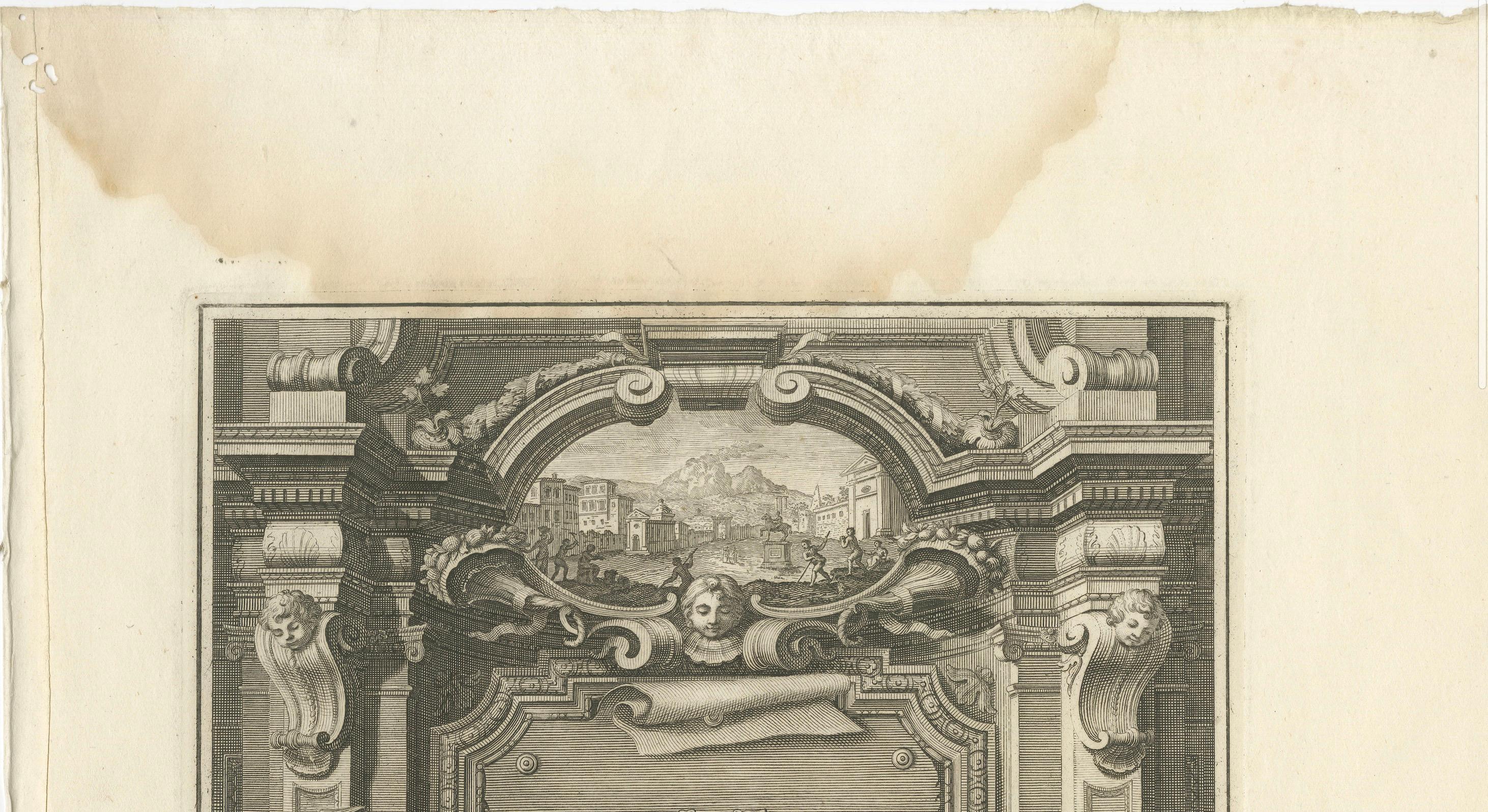
Good. A large damp stain in top, otherwise mostly fine. Minor foxing and soiling, mostly outside the image or platemark. Wide margins with rough edges with imperfections. Three wormholes in the uttermost top left corner. Study the images carefully.
About this sheet
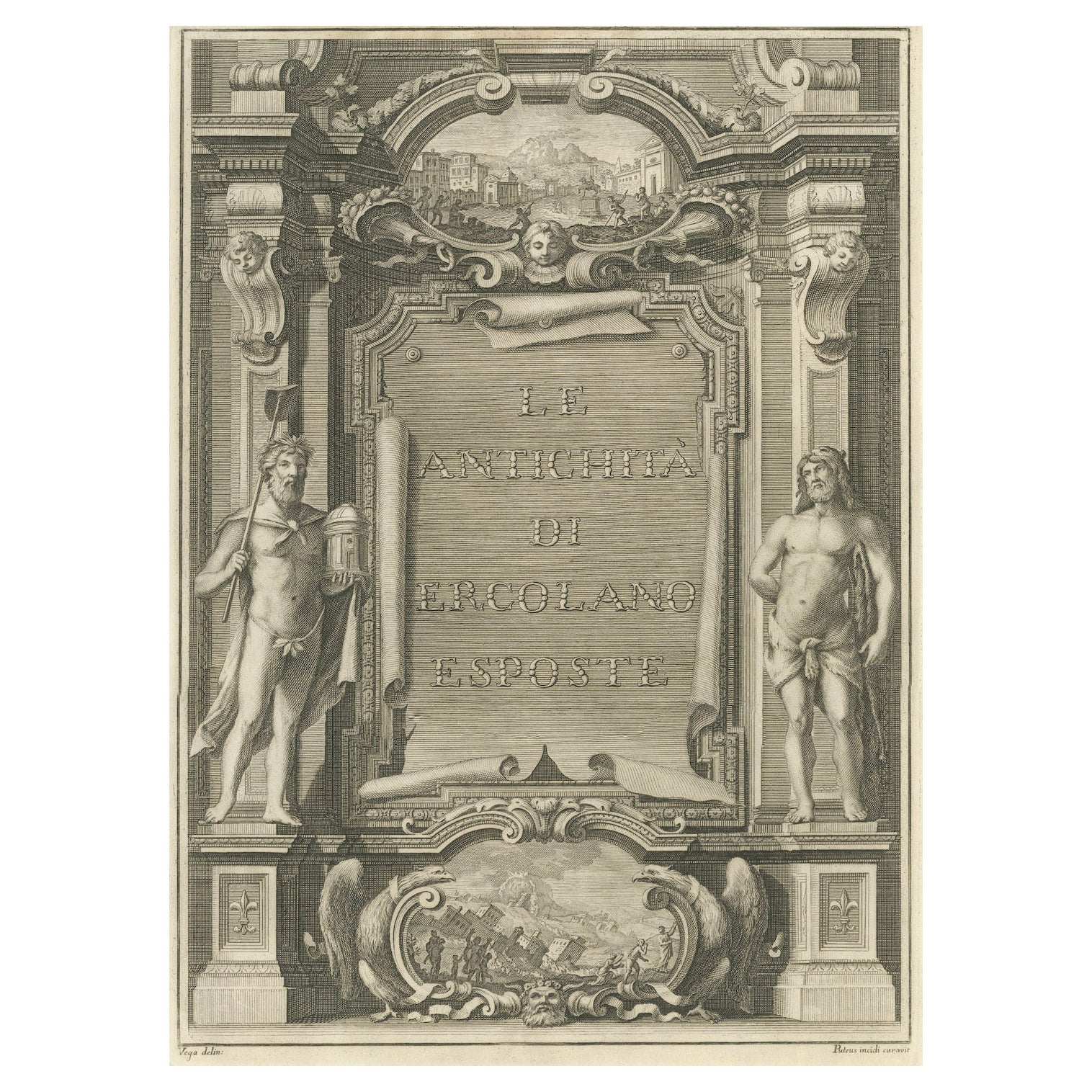
This is the frontispiece of the first volume of "Delle antichità di Ercolano" (The Antiquities of Herculaneum), published in 1757 by the Royal Printing House of Naples, Italy.
The book, part of a larger work, is titled "Le pitture antiche d'Ercolano e contorni incise con qualche spiegazione" (The Ancient Paintings of Herculaneum and Surroundings Engraved with Some Explanations), focusing on the Roman antiquities and mural paintings discovered in the ancient city of Herculaneum.
The subjects of the book are the Roman wall paintings and archaeological remains found in Herculaneum, providing scholarly explanations and illustrations of these findings. It covers topics like Roman painting, mural art in Italy, and the archaeological remnants of Herculaneum, all works prior to 1800.
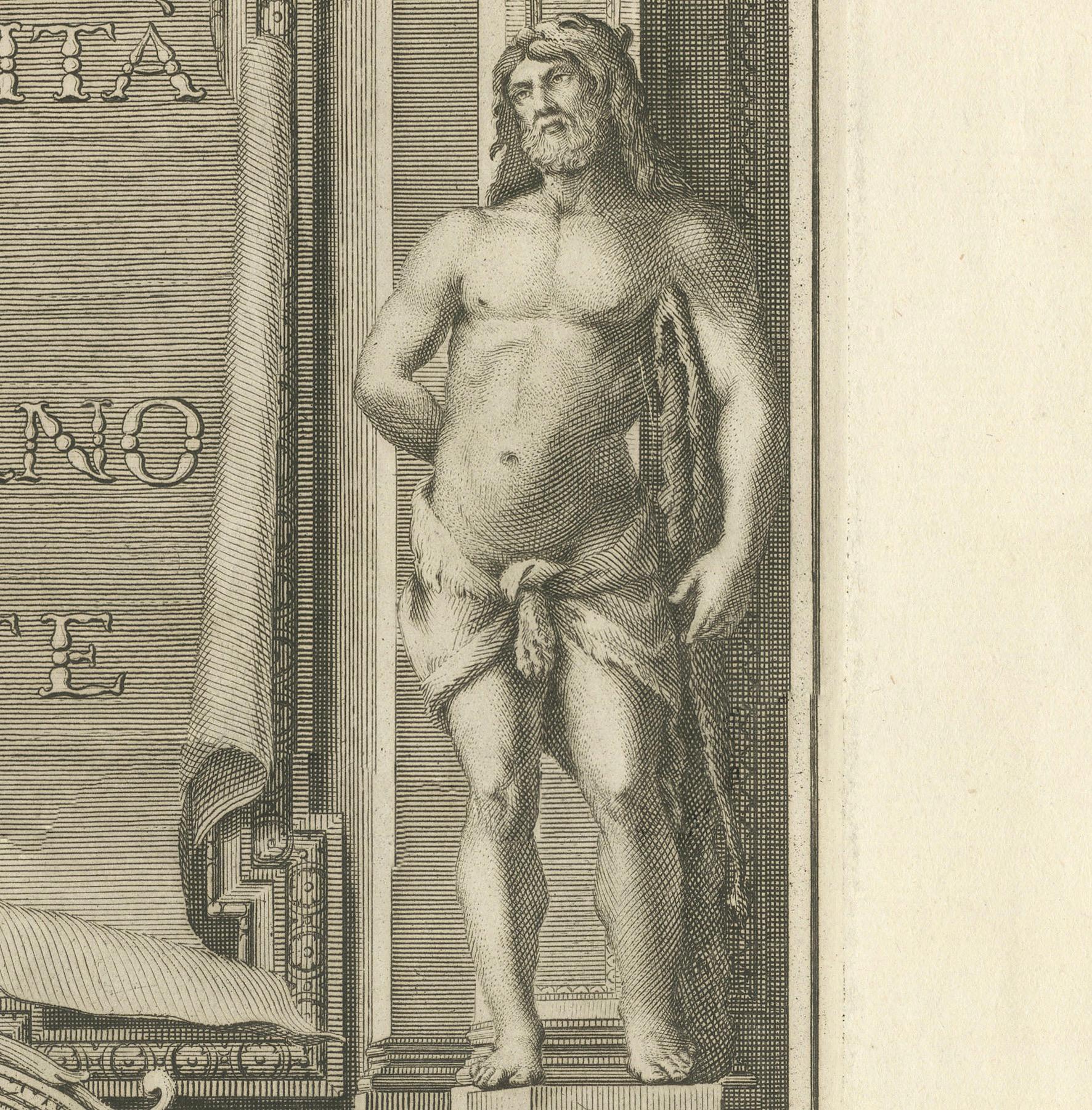
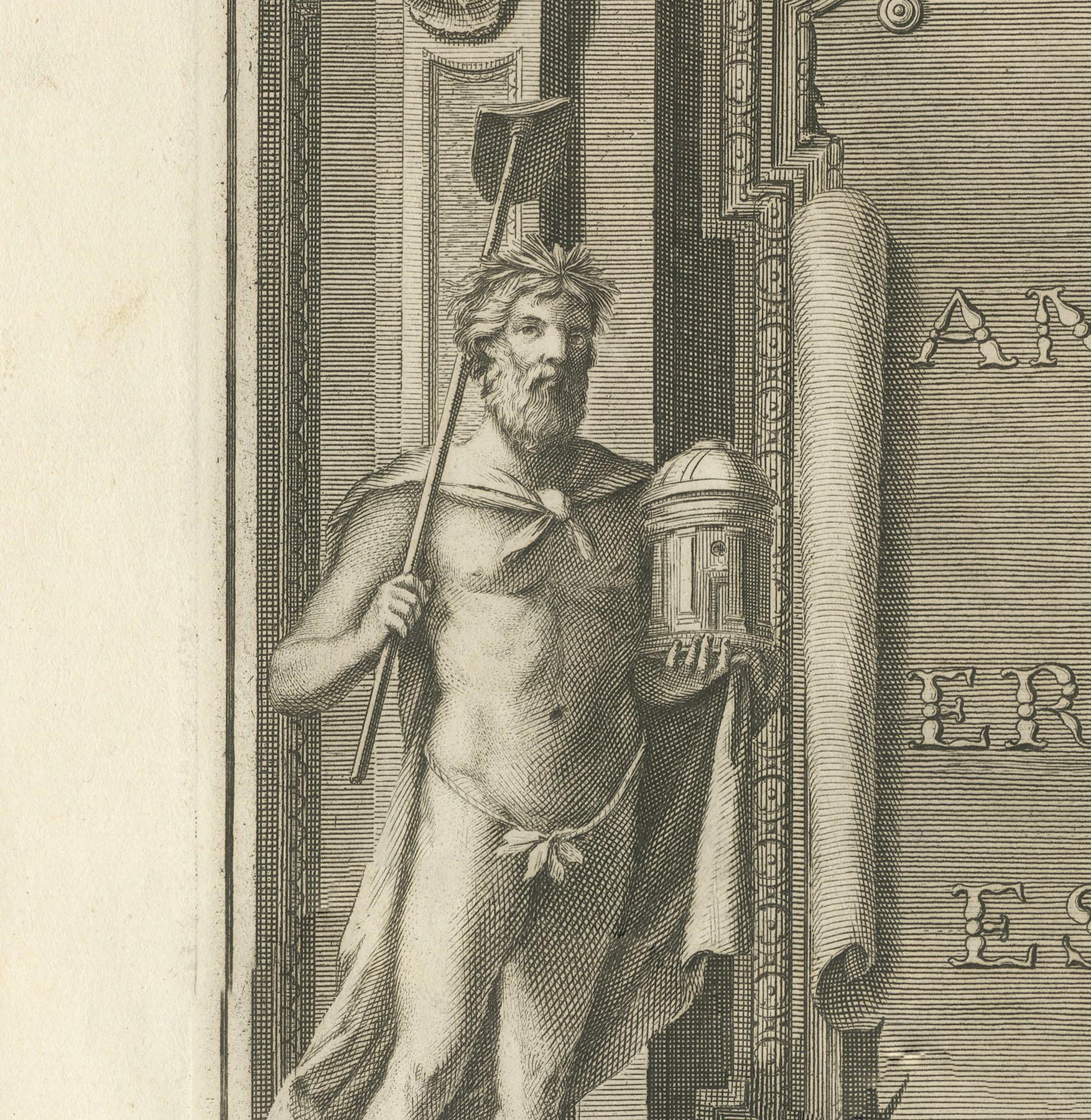
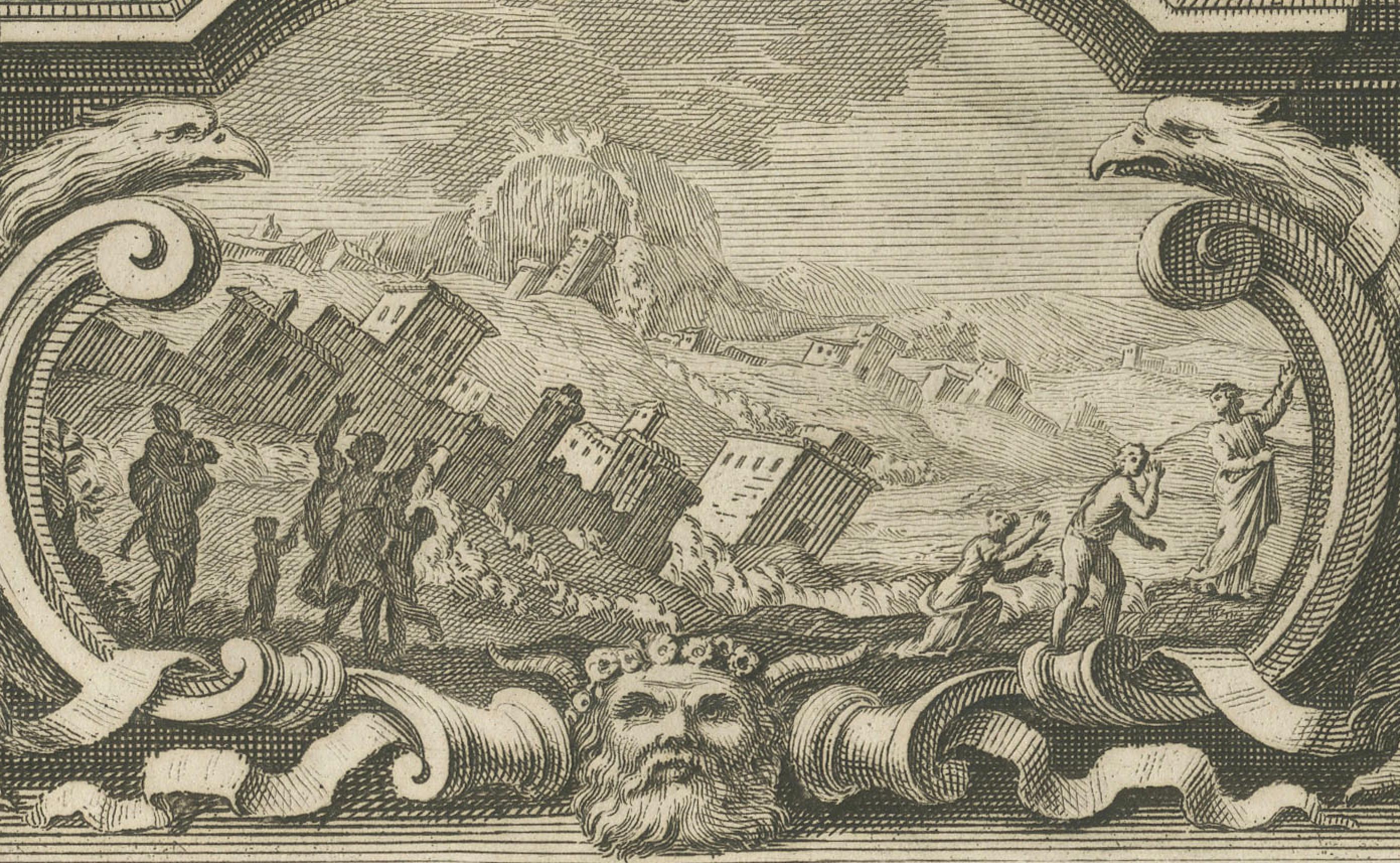
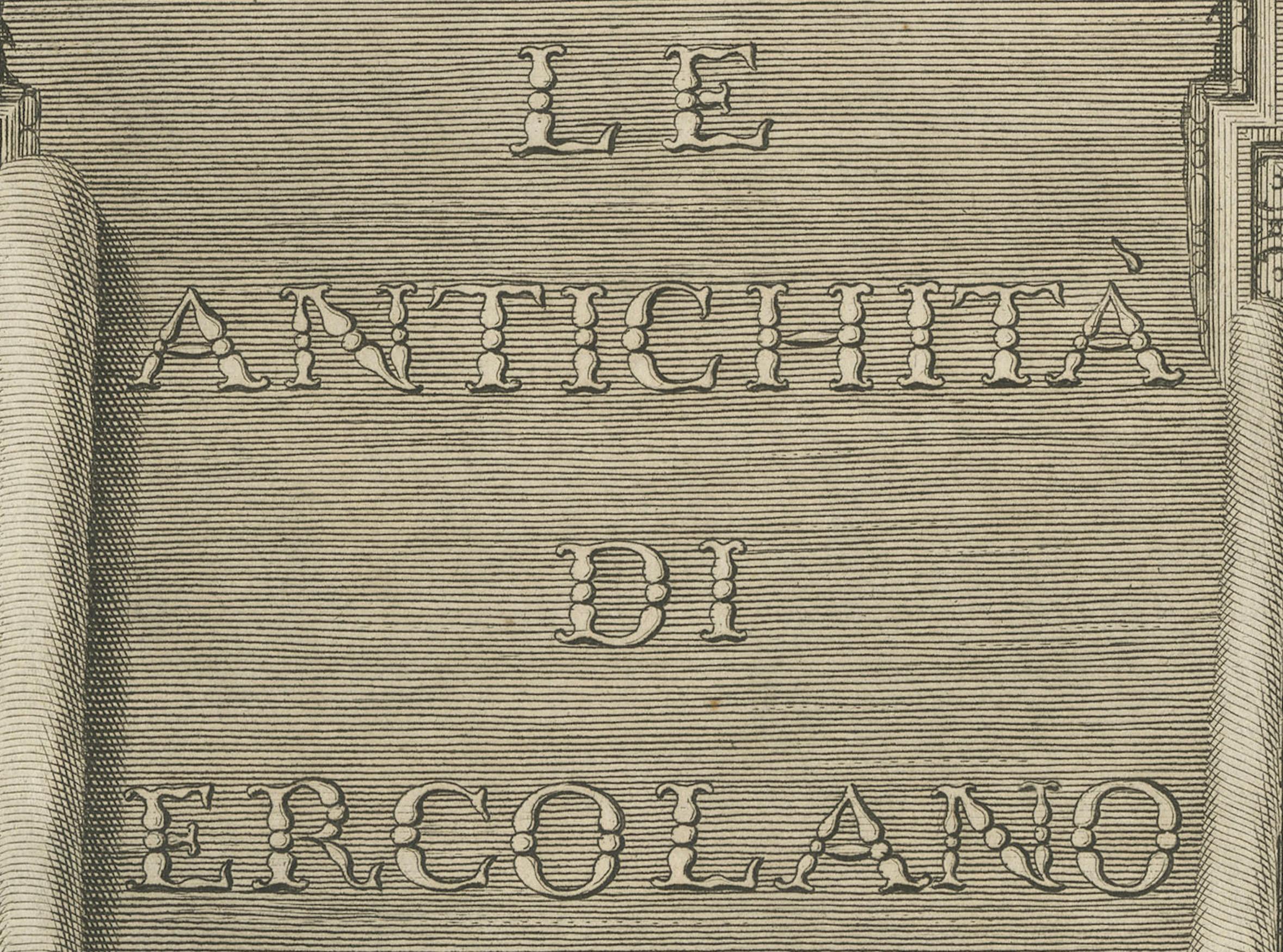
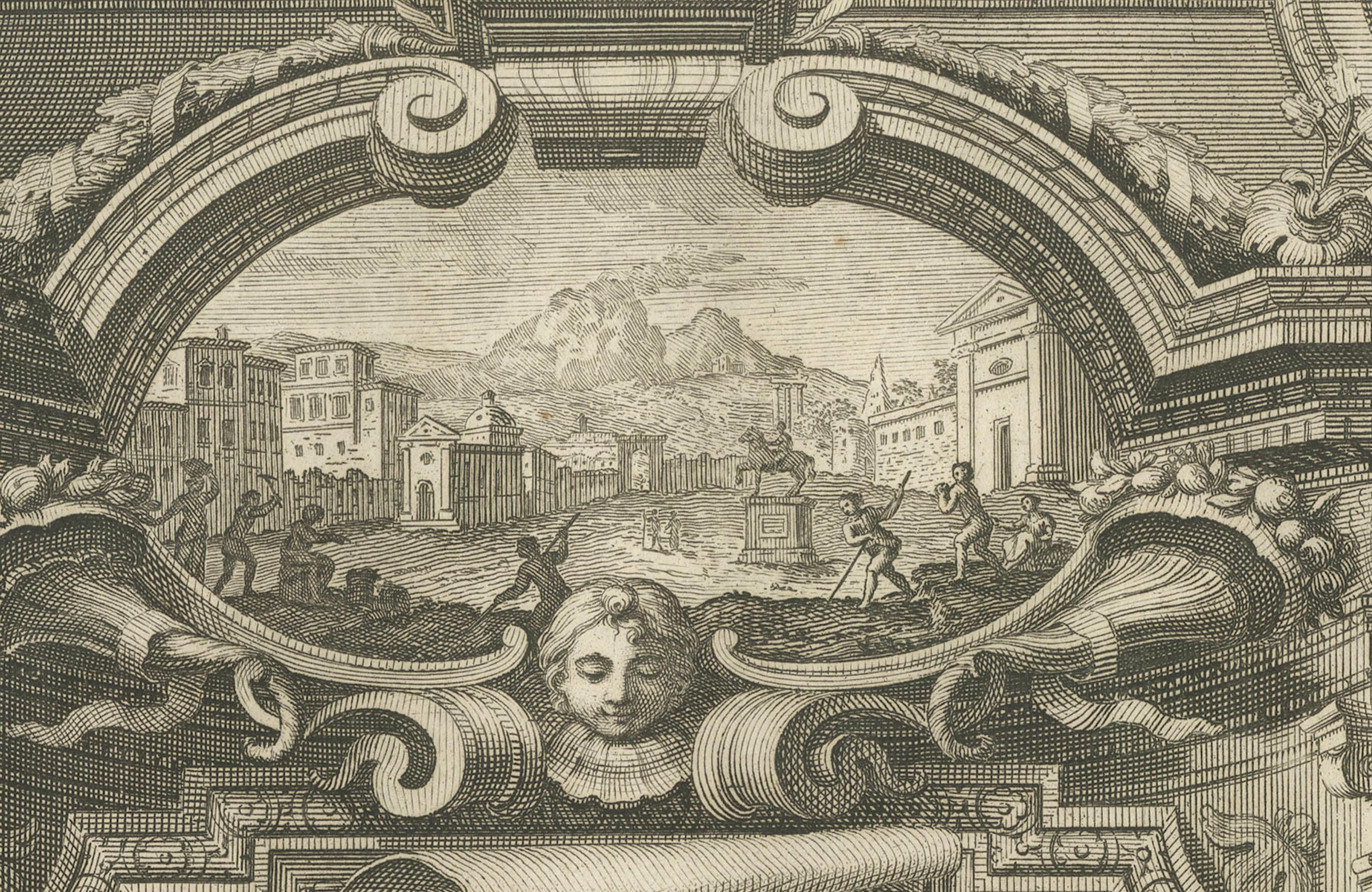
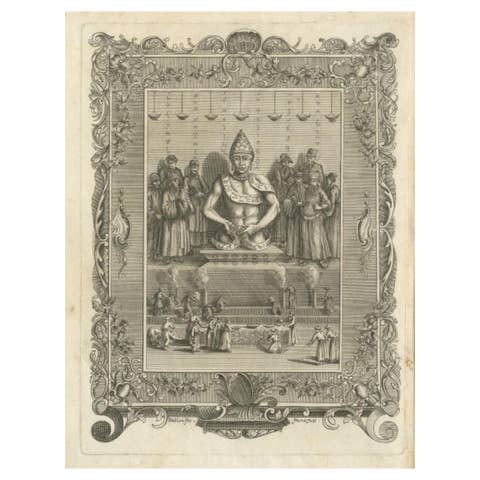
The frontispiece features an ornate and architecturally framed title, "LE ANTICHITA DI ERCOLANO ESPOSTE," which translates to "The Antiquities of Herculaneum Exposed." It is flanked by two classical figures, possibly representing figures from Roman mythology or allegories of the arts and sciences, reflecting the classical heritage that the book documents. Above the central title plaque is a scene depicting the ruins of Herculaneum as they might have appeared at the time of excavation.
The illustrators of this work were prominent artists and engravers of the time, including Ottavio Antonio Baiardi, Carlo Nolli, Giuseppe Aloja, Nicola Vanni, Francesco Cepparoli, Luigi Vanvitelli, Filippo Morghen, Francesco La Vega, Giuseppe Azzerboni, Pierre Gaultier, Camillo Paderni, and Nicola Orazi.
The book was commissioned by the Accademia Ercolanese di Archeologia (Herculaneum Academy of Archaeology), an institution dedicated to the study and promotion of archaeological discoveries from Herculaneum. The publication serves as a detailed record and celebration of the art and artifacts unearthed from the volcanic ash that preserved the ancient city after the eruption of Mount Vesuvius in AD 79.