About this sheet
Walcheren Couple in Bright Festival Dress, 1780–1870, with Parisian Elegance
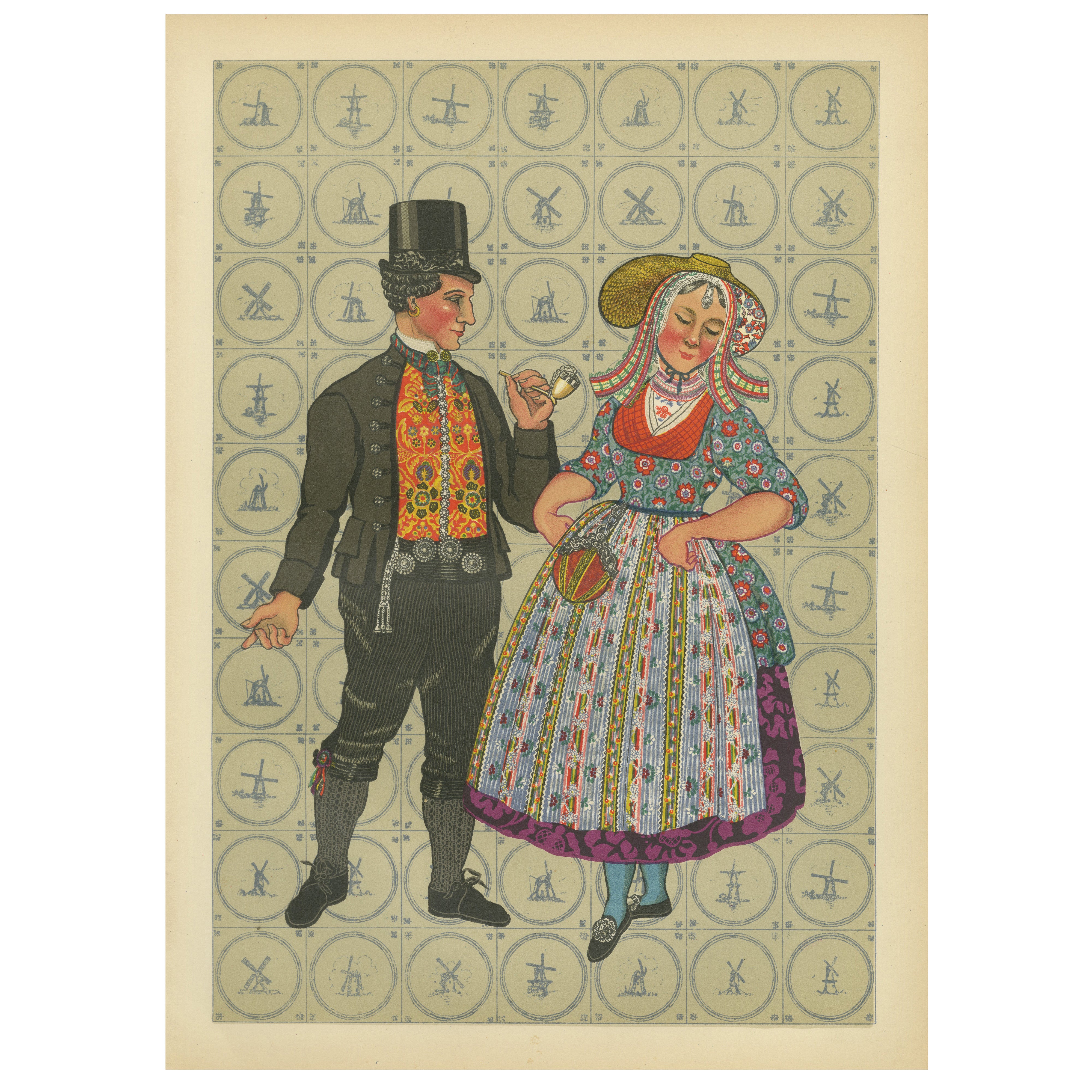
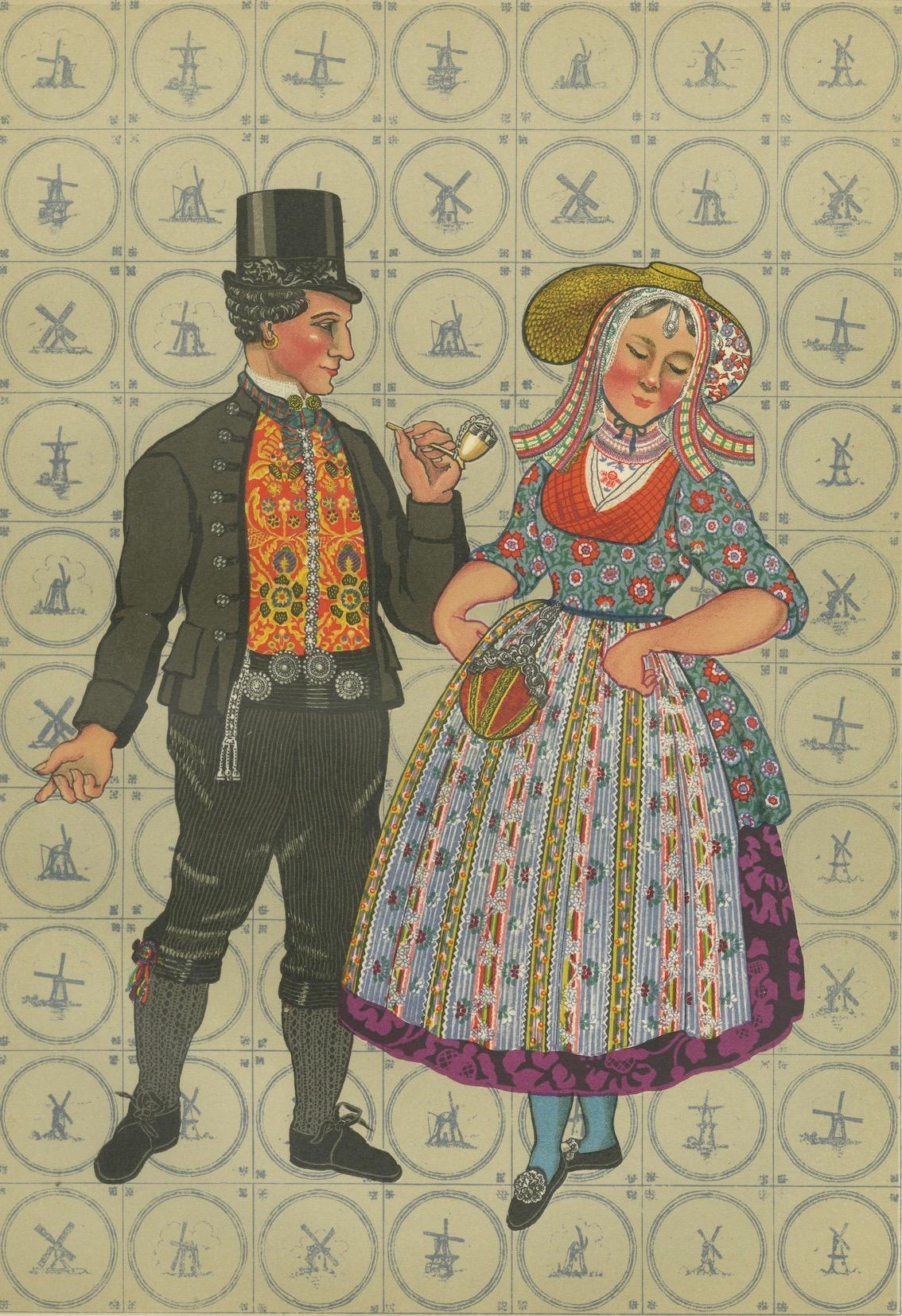
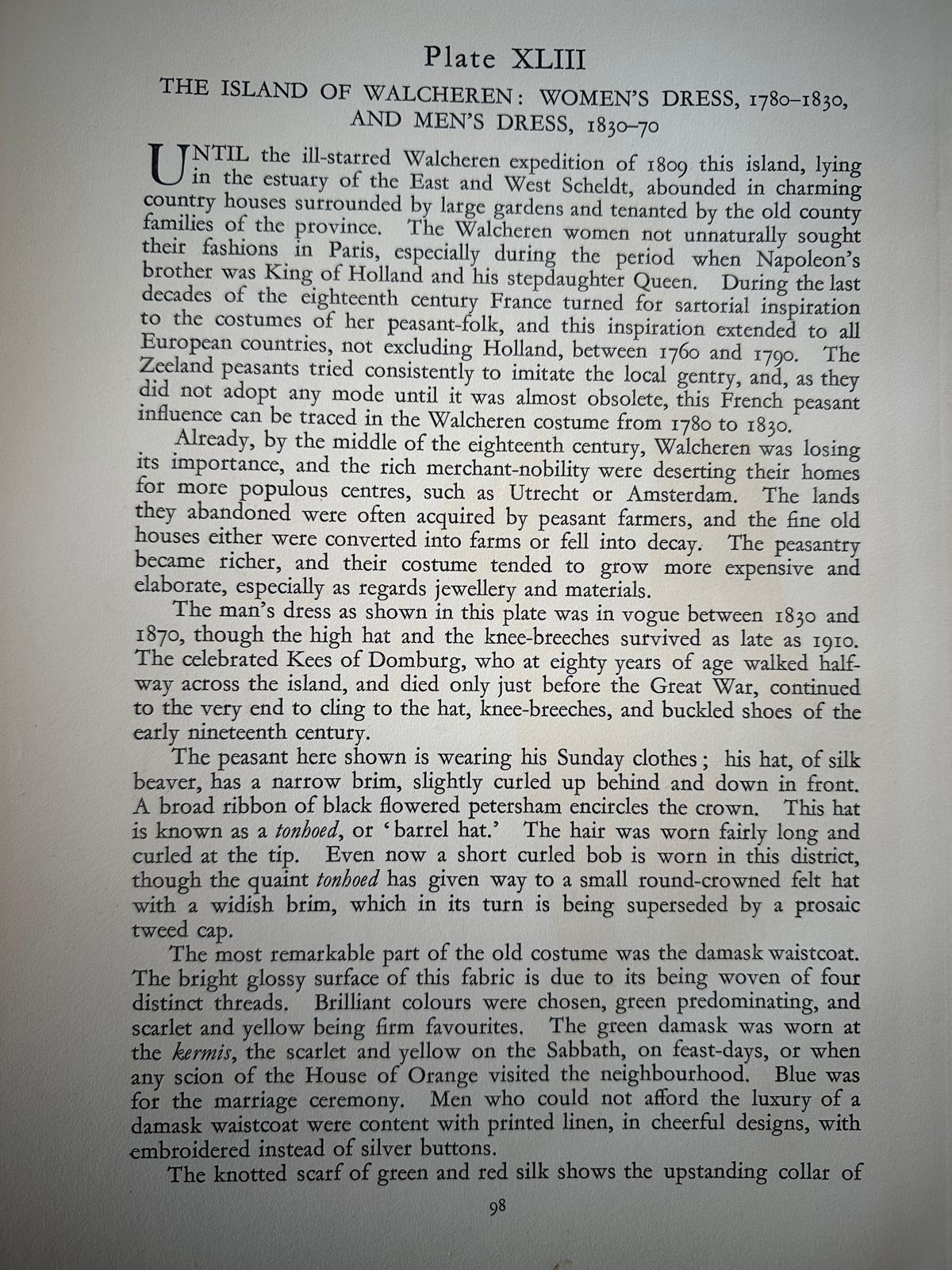
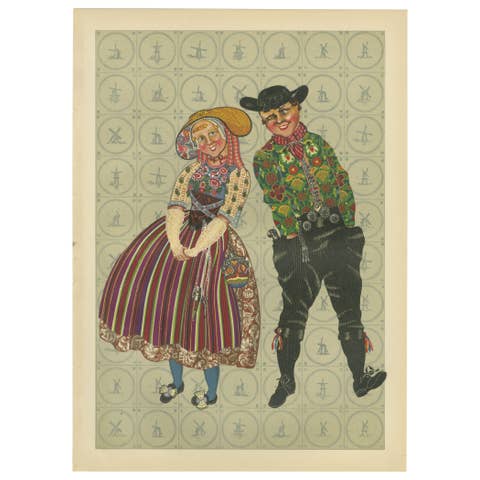
This richly detailed illustration from Plate XLIII of *The National Costumes of Holland* presents a vibrant and celebratory look at traditional dress from the island of Walcheren, in the province of Zeeland, spanning two distinct eras—women's dress from 1780–1830 and men's dress from 1830–70. Walcheren, lying in the estuary of the East and West Scheldt, was long known for its opulent country houses and its people's preference for sartorial refinement, heavily influenced by Parisian fashions. Even among the peasantry, elegance and formality were paramount, with striking textiles and elaborate trimmings reflecting an aspiration to mimic the nobility.
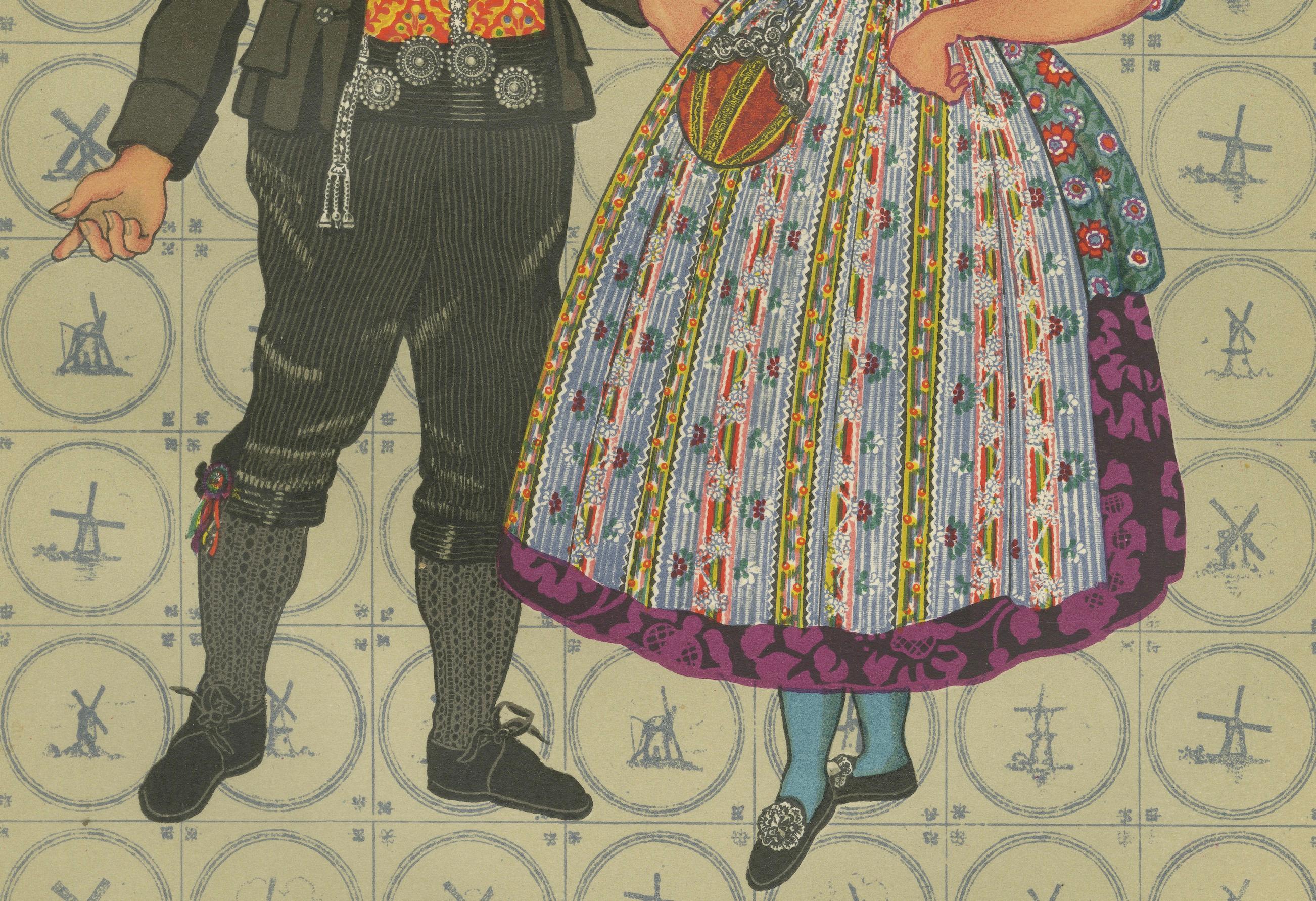
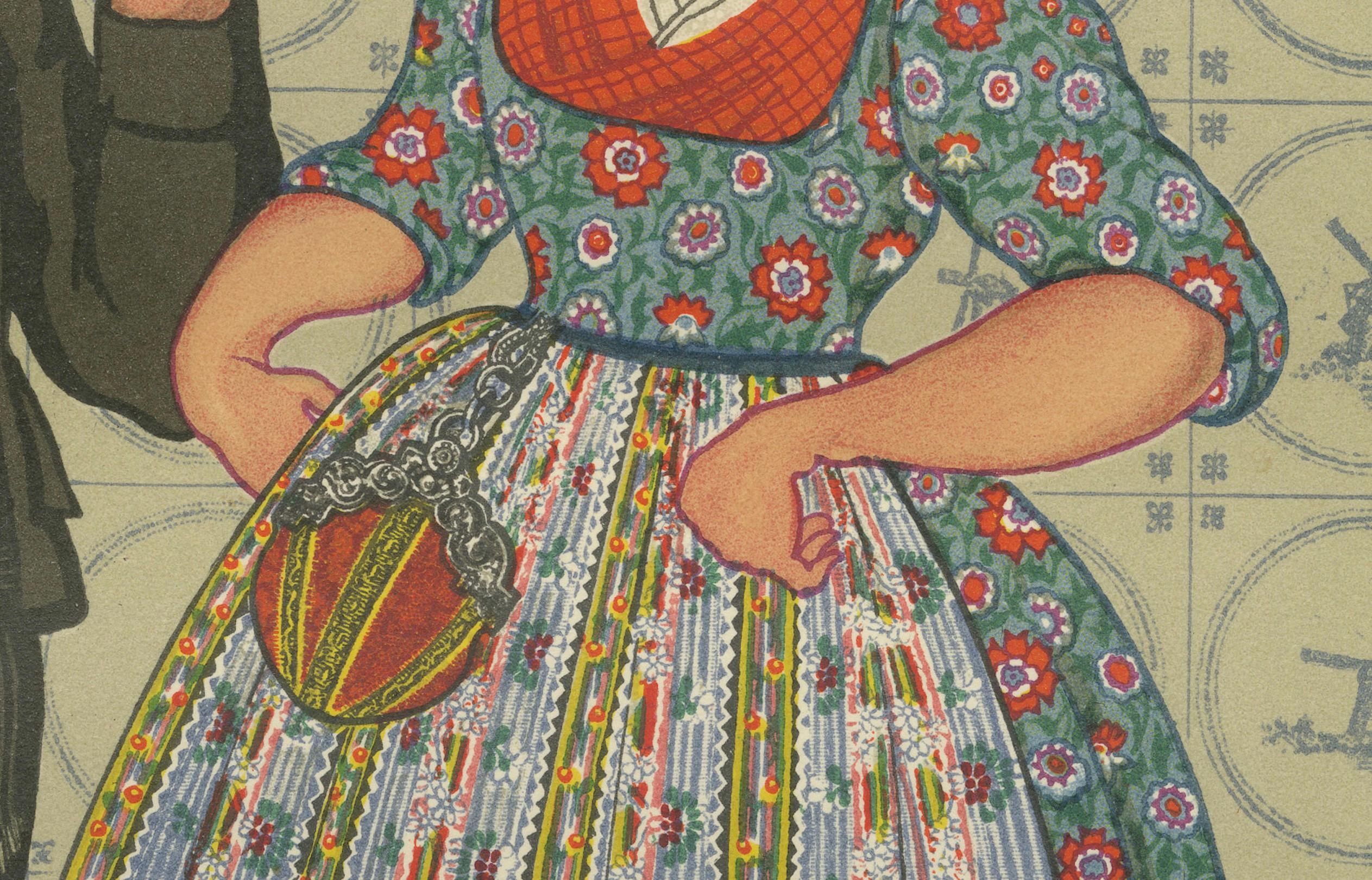
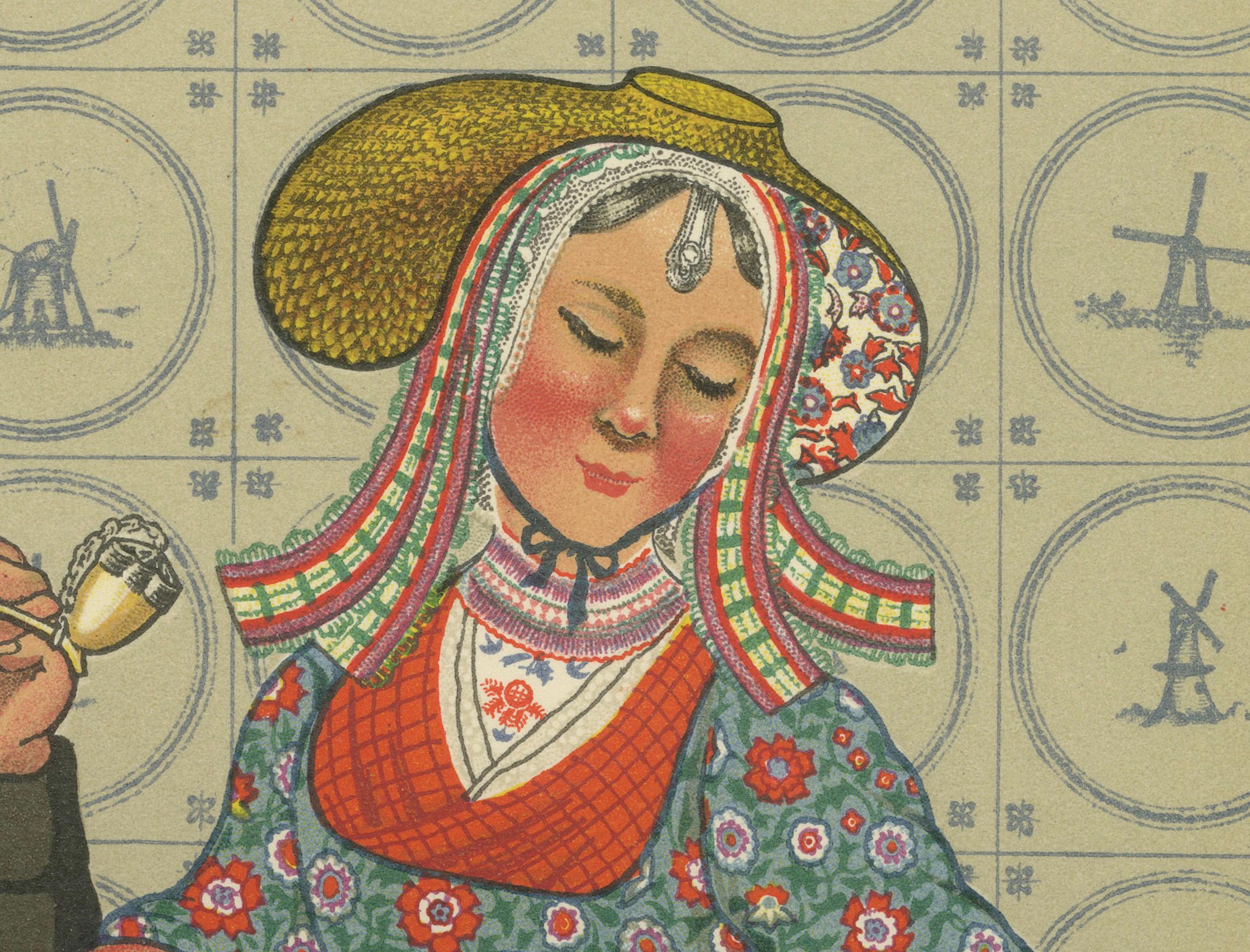
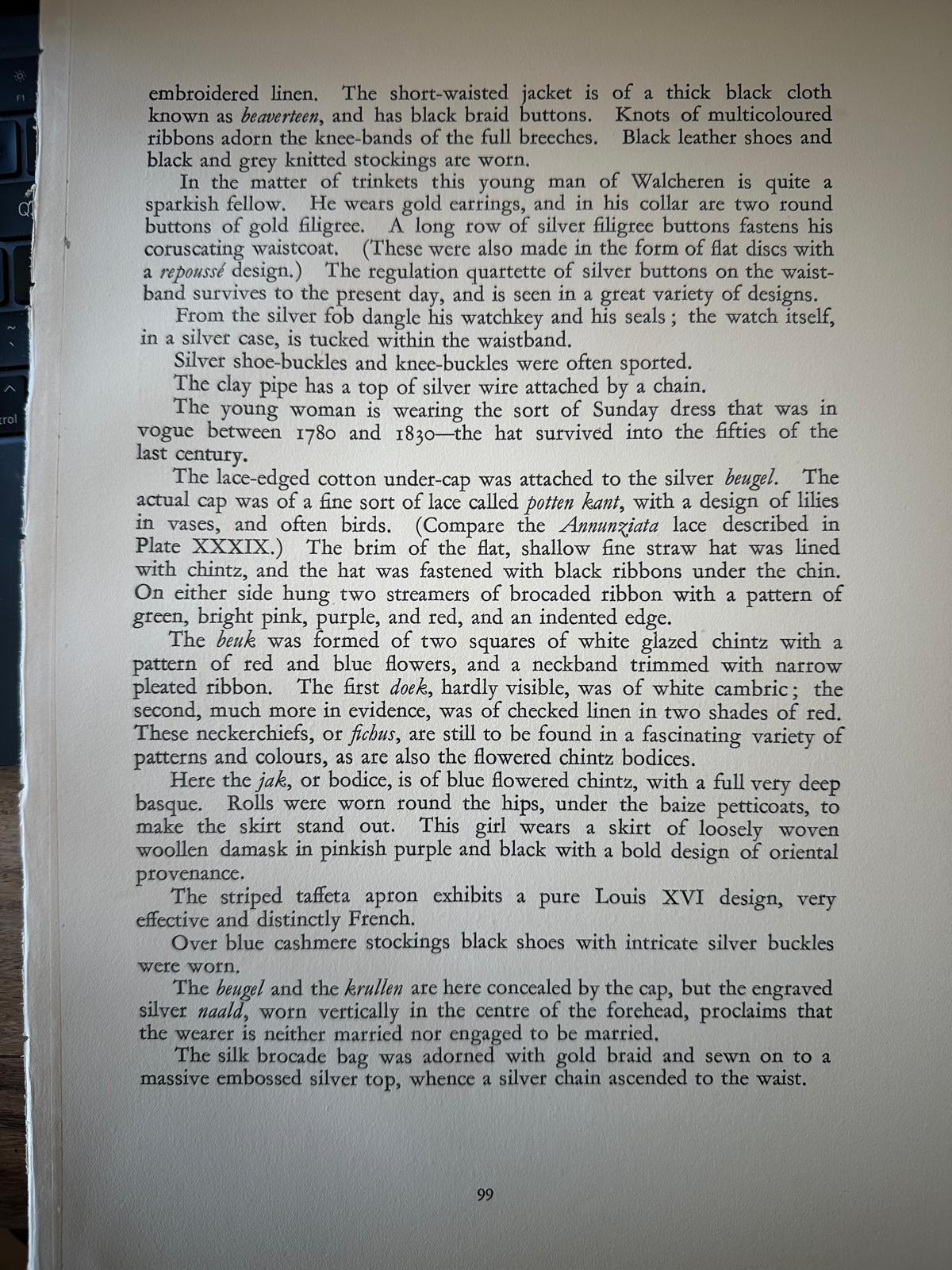
The woman’s Sunday dress, dating from the late 18th to early 19th century, is a spectacular display of French-inspired taste. She wears a stiff and structured blue floral *jak*, or bodice, with a deep basque and full sleeves. Her *beuk* is formed from two square pieces of white glazed chintz, richly adorned with red and blue floral motifs. Over this lies a *doek*, folded and pinned into a triangular scarf form. Her striped taffeta apron, a highlight of the ensemble, features a pure Louis XVI pattern, exuding distinctly French elegance. Beneath the full skirt lie blue cashmere stockings and black shoes with ornate silver buckles.
Her lace-edged cotton undercap, fastened to a silver *beugel*, lies hidden beneath a broad straw hat, the *potten kant*, trimmed with black ribbon and tied beneath her chin. This hat signals she is unmarried, a fact discreetly emphasized by the engraved silver *naald* (pin) centered at her forehead.
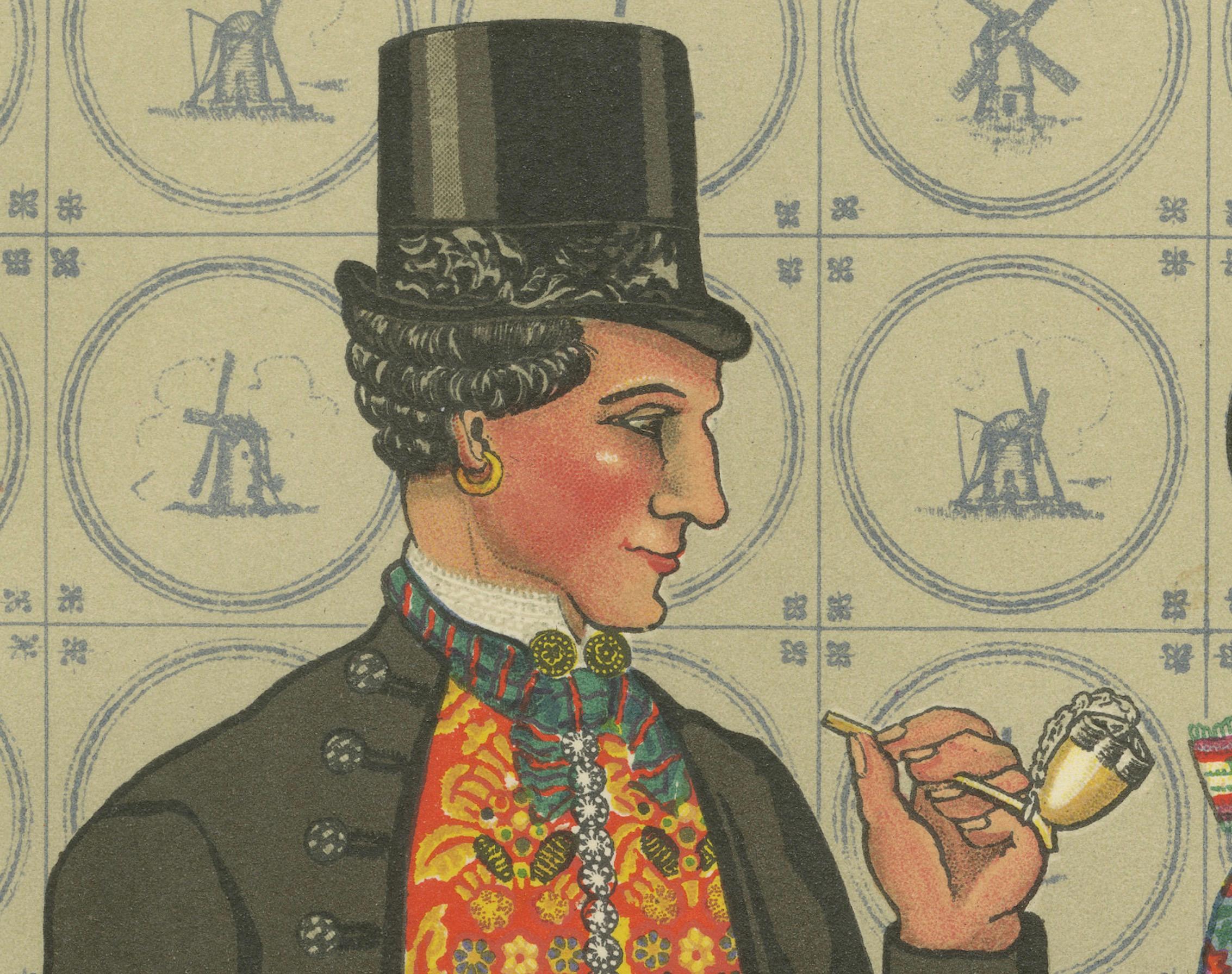
The young man of Walcheren, shown in his festival attire from the mid-19th century, wears a short-waisted black *beaverteen* jacket with red silk piping and glossy black braid buttons. His stunning damask waistcoat—woven with four types of thread in brilliant hues of green, red, and yellow—features a row of silver filigree buttons and signals wealth and occasion. A pair of full black breeches, ribbed stockings, and silver shoe-buckles complete his outfit. He wears a tall beaver top hat, known locally as a *tonhoed*, with a floral petersham ribbon band, and gold earrings.
This couple’s dress beautifully encapsulates the intersection of French refinement and Dutch rural tradition, capturing the pride and elegance that characterized Zeeland’s distinctive peasant culture.
Condition Notes:
This original print from 1932 is in very good condition, with strong, unfaded color and crisp detail throughout. The paper shows only minor age-toning at the edges, typical of prints of this vintage. There are no tears, foxing, or folds affecting the image.
Framing Suggestion:
We recommend a dark, gilt-edged frame or a walnut-stained wood frame with an ivory or pale cream mat to enhance the vivid color palette of the garments. A museum glass option will help protect the paper while preserving the vibrancy of the illustration. This piece would pair well with other Zeeland costume plates or as a standalone conversation piece in a traditional or eclectic setting.