About this sheet
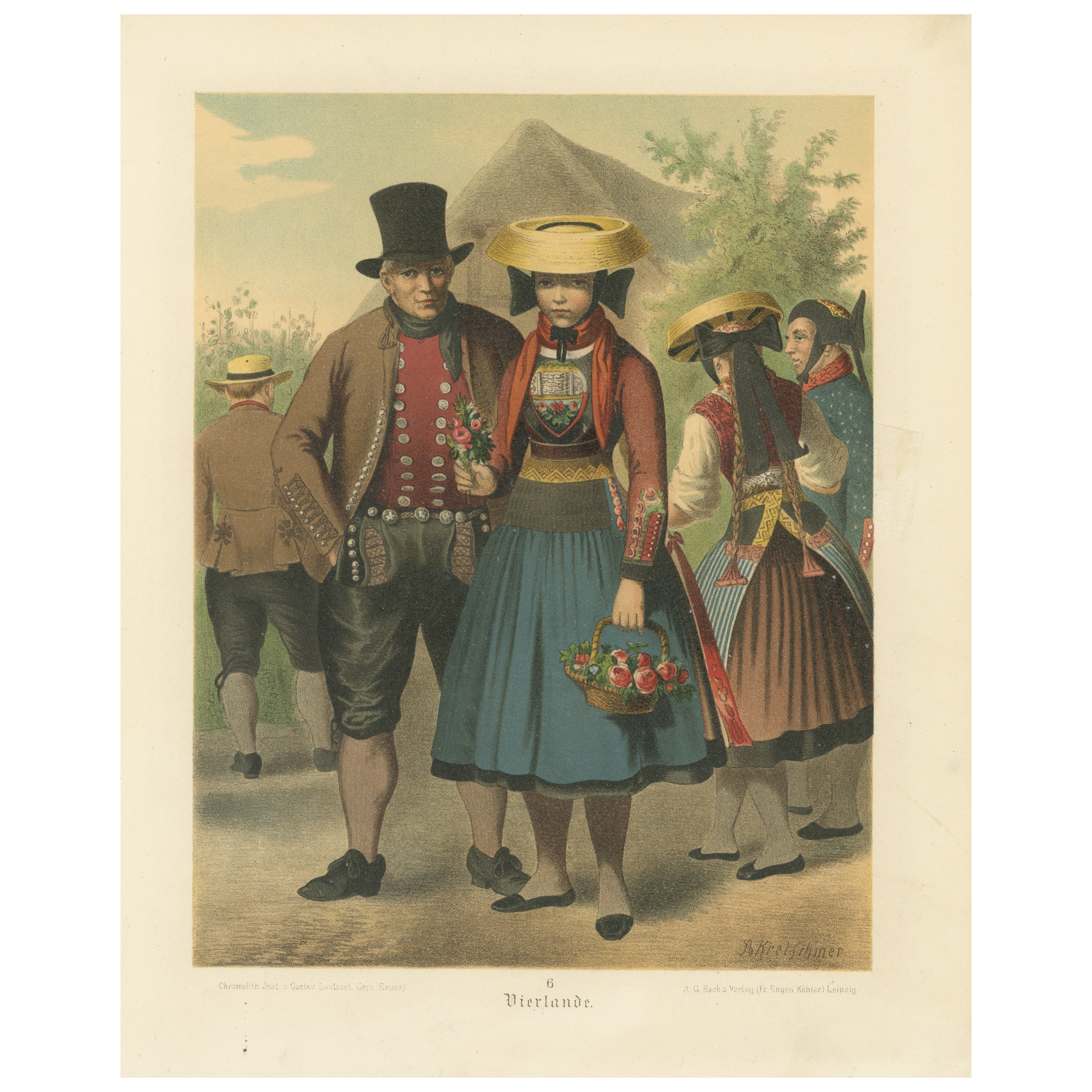
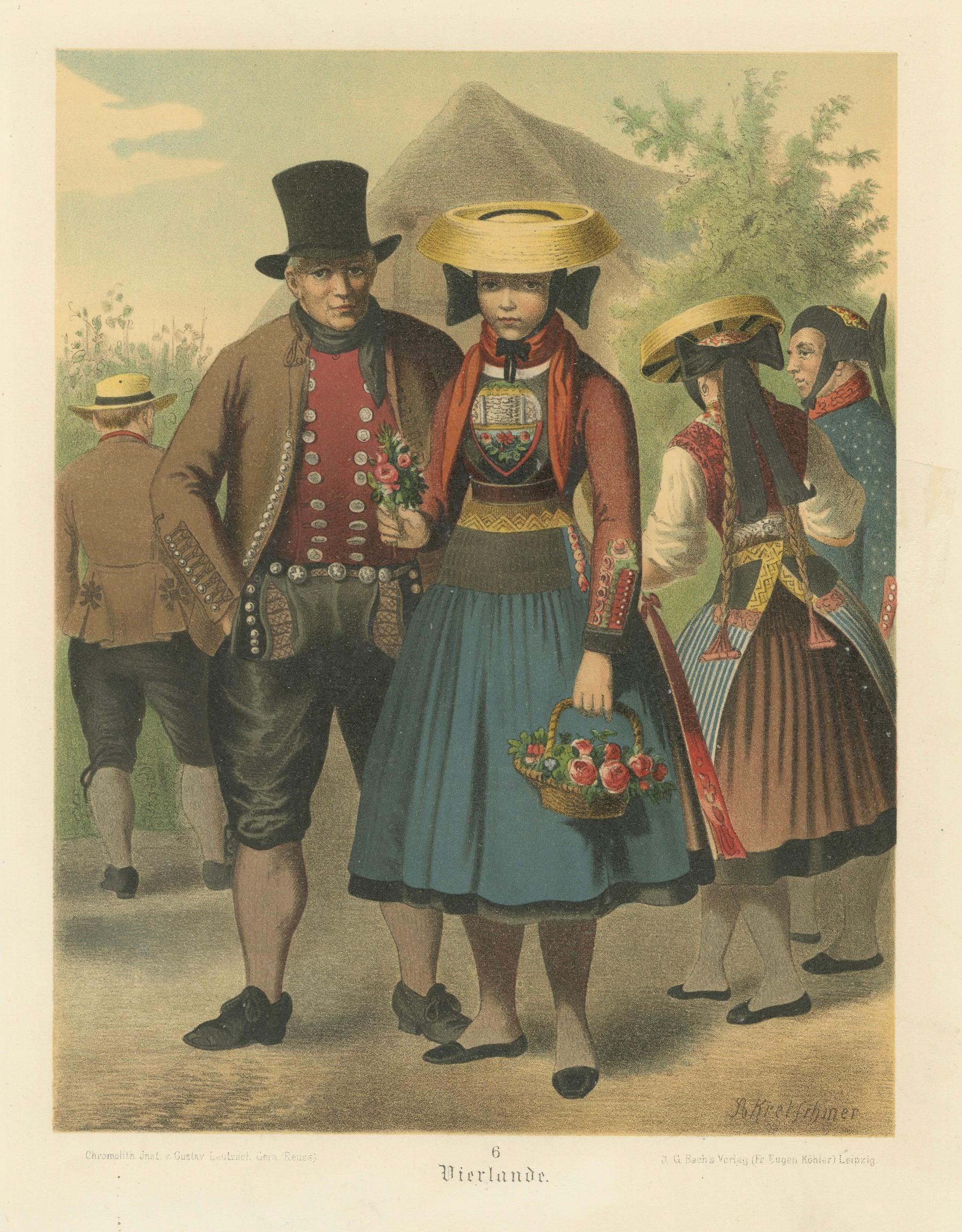
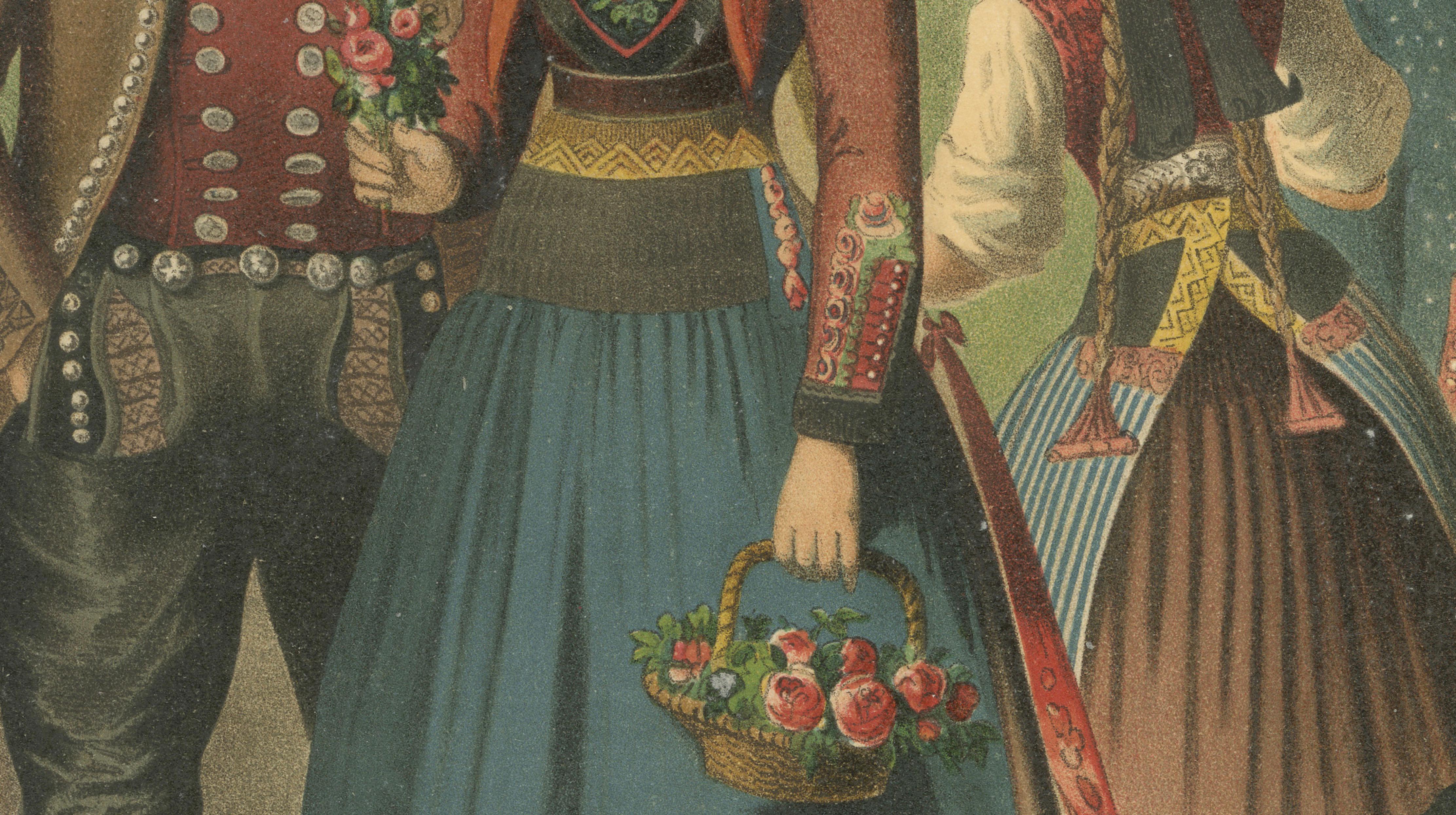
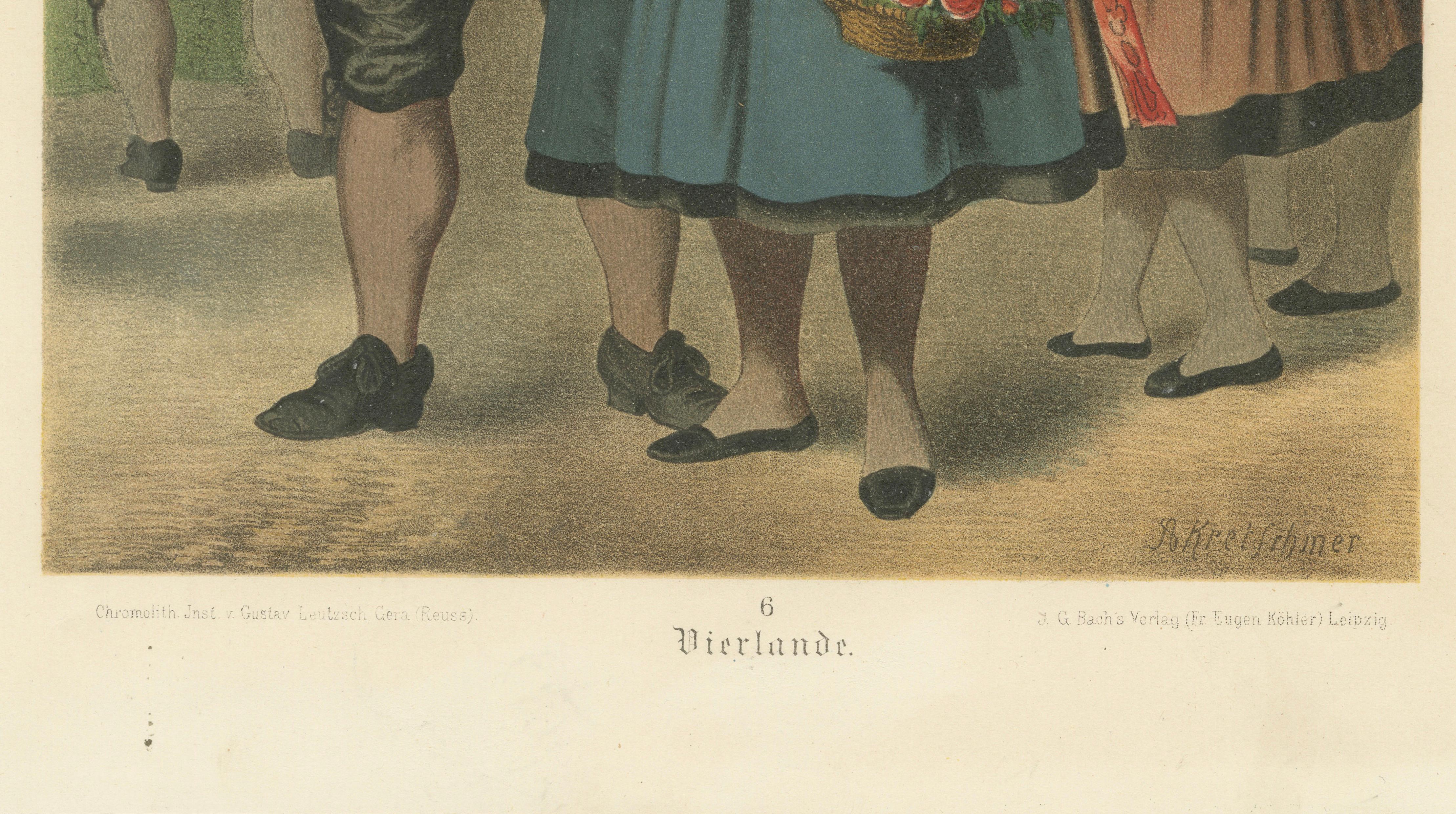
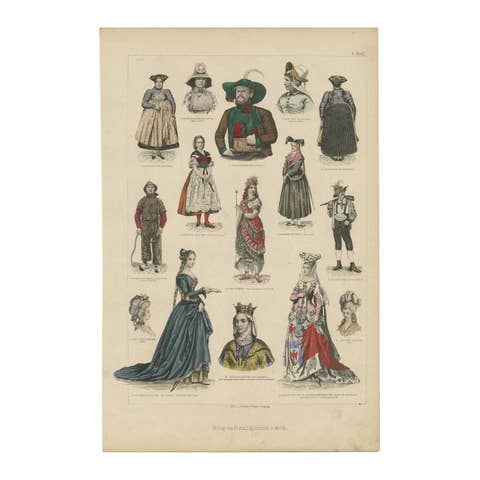
Vierlande Traditional Costume, near Hamburg, Northern Germany, c.1875
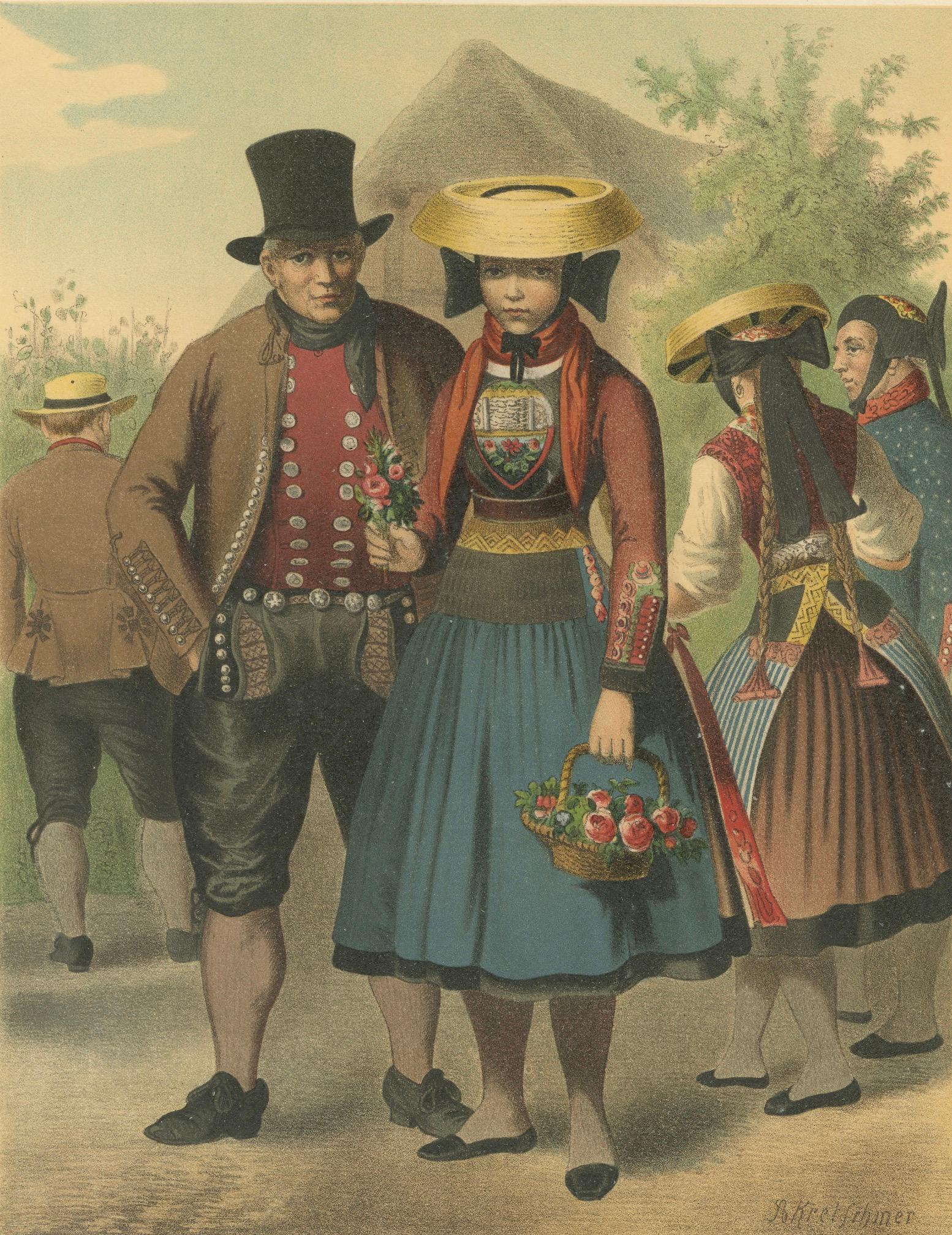
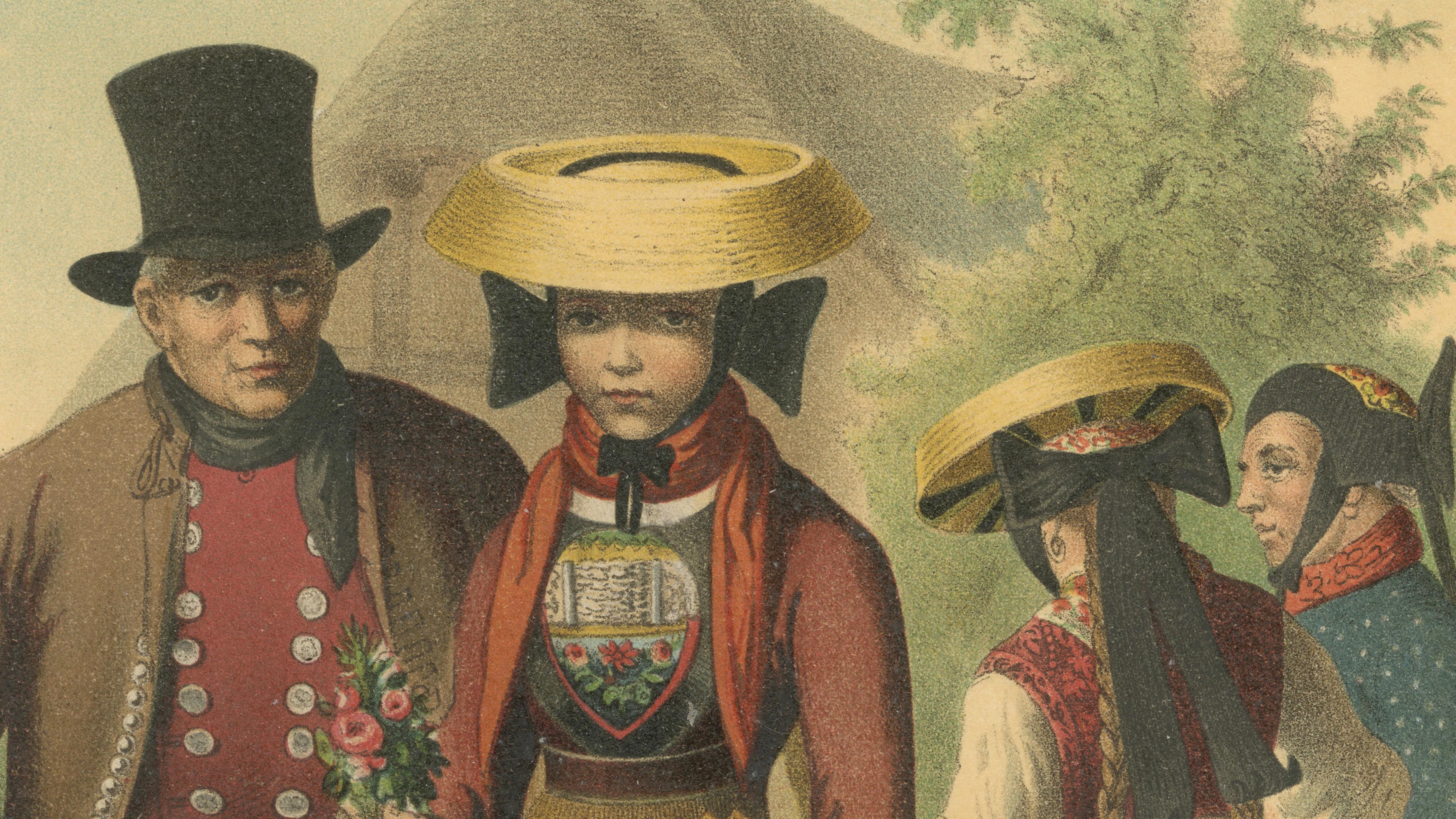
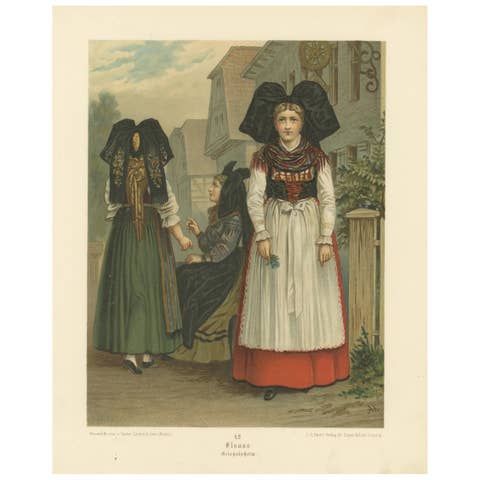
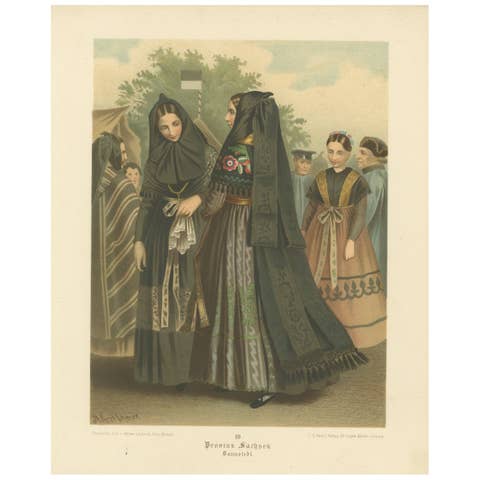
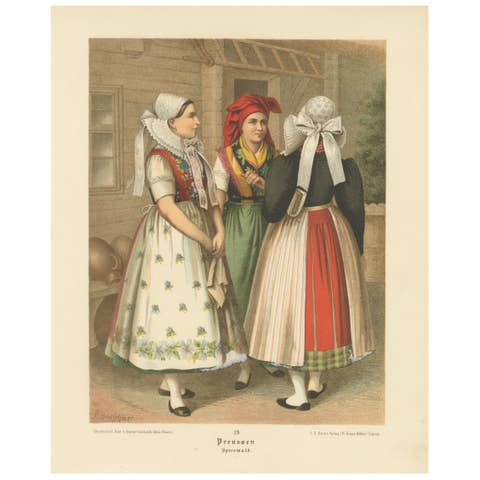
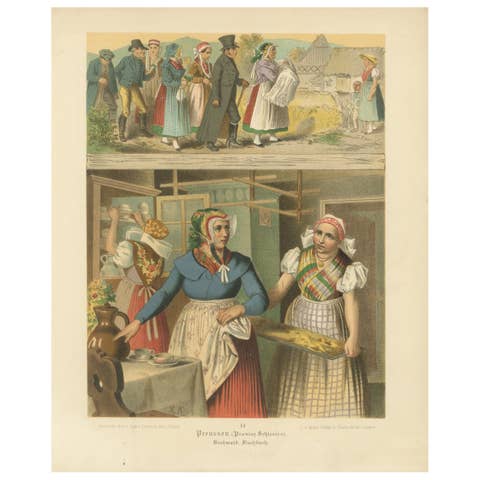
This finely coloured chromolithograph depicts traditional costume from Vierlande, a historic rural region located in the Elbe marshlands southeast of Hamburg. The figures are shown wearing the characteristic regional dress of the area, distinguished by structured bodices, aprons, and the striking white head coverings typical of Vierlande women’s costume in the 19th century.
Vierlande was known for its prosperous agricultural communities and a strong sense of local identity, which was expressed most clearly through traditional dress worn for church, festive occasions, and public life. Although visually reminiscent of Dutch regional costume, Vierlande attire is firmly rooted in Northern German tradition and should not be confused with dress from the Netherlands.
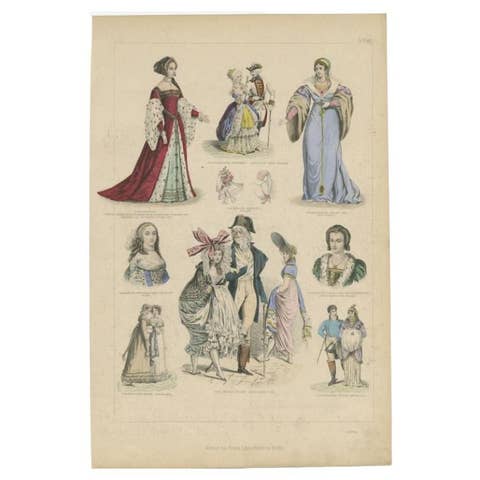
The print was produced in the mid-1870s after drawings by Albert Kretschmer and published by J. G. Bach in Leipzig as part of an influential series documenting European regional costumes. Kretschmer’s work is valued for its ethnographic accuracy as well as its refined decorative quality, making these plates highly sought after by collectors, institutions, and interior designers.
This example works particularly well as a stand-alone decorative piece, while also fitting seamlessly into collections focused on German, Northern European, or ethnographic costume history.
KEYWORDS:
Vierlande costume, Hamburg region folk dress, Elbe marshlands, Northern German traditional clothing, German regional costume, Vierlande near Hamburg, 19th century chromolithograph, ethnographic costume print, European folk costume print
CONDITION:
Very good condition. Light age toning to margins, minimal spotting, colours fresh and well preserved.
FRAMING AND MATTING SUGGESTIONS:
Dark walnut or black frame paired with an off-white or light linen museum board mat; a slightly textured mat enhances the crisp contrast of the white headwear.
Technique: Chromolithography
Maker: Albert Kretschmer (after), Leipzig, c.1875