About this sheet
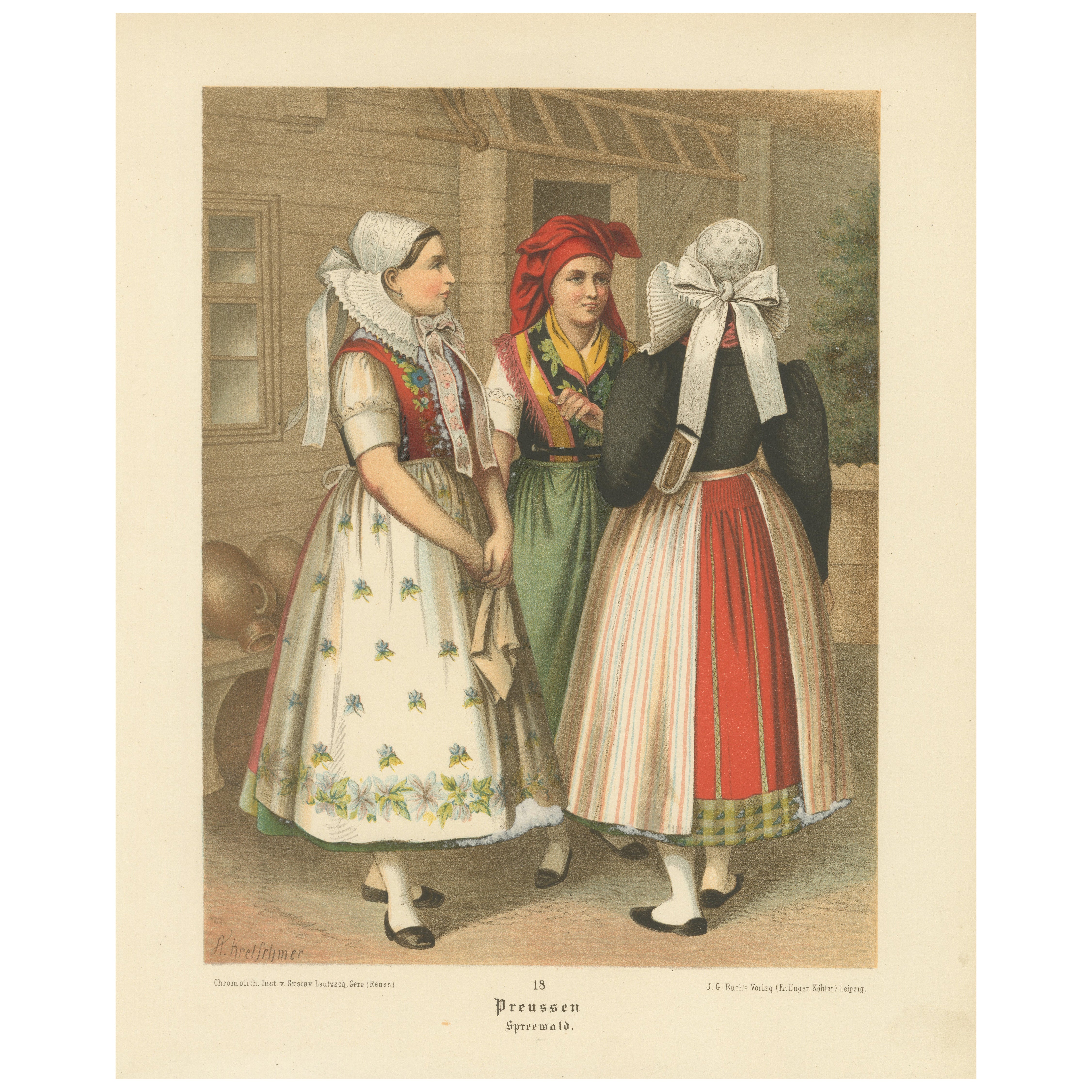
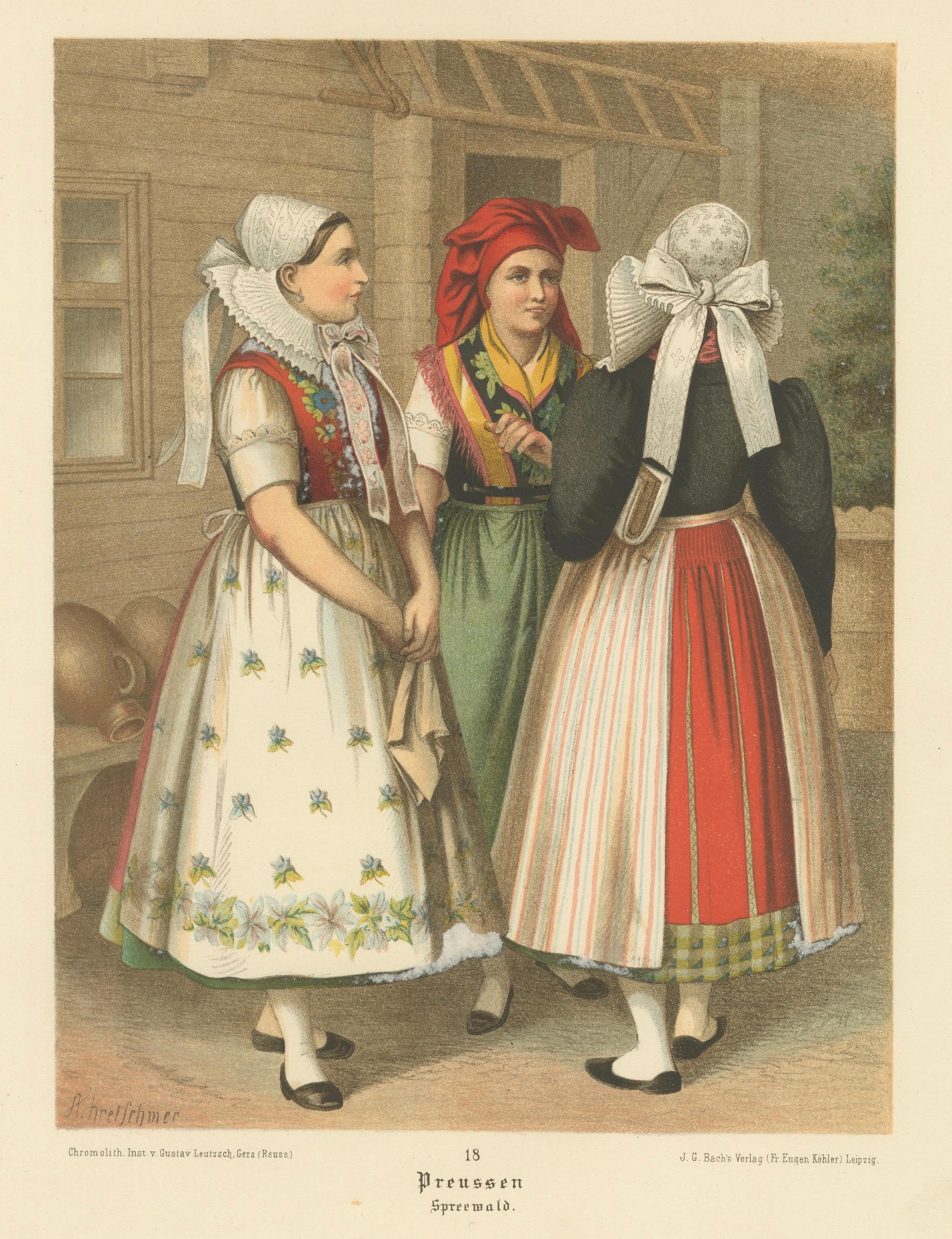
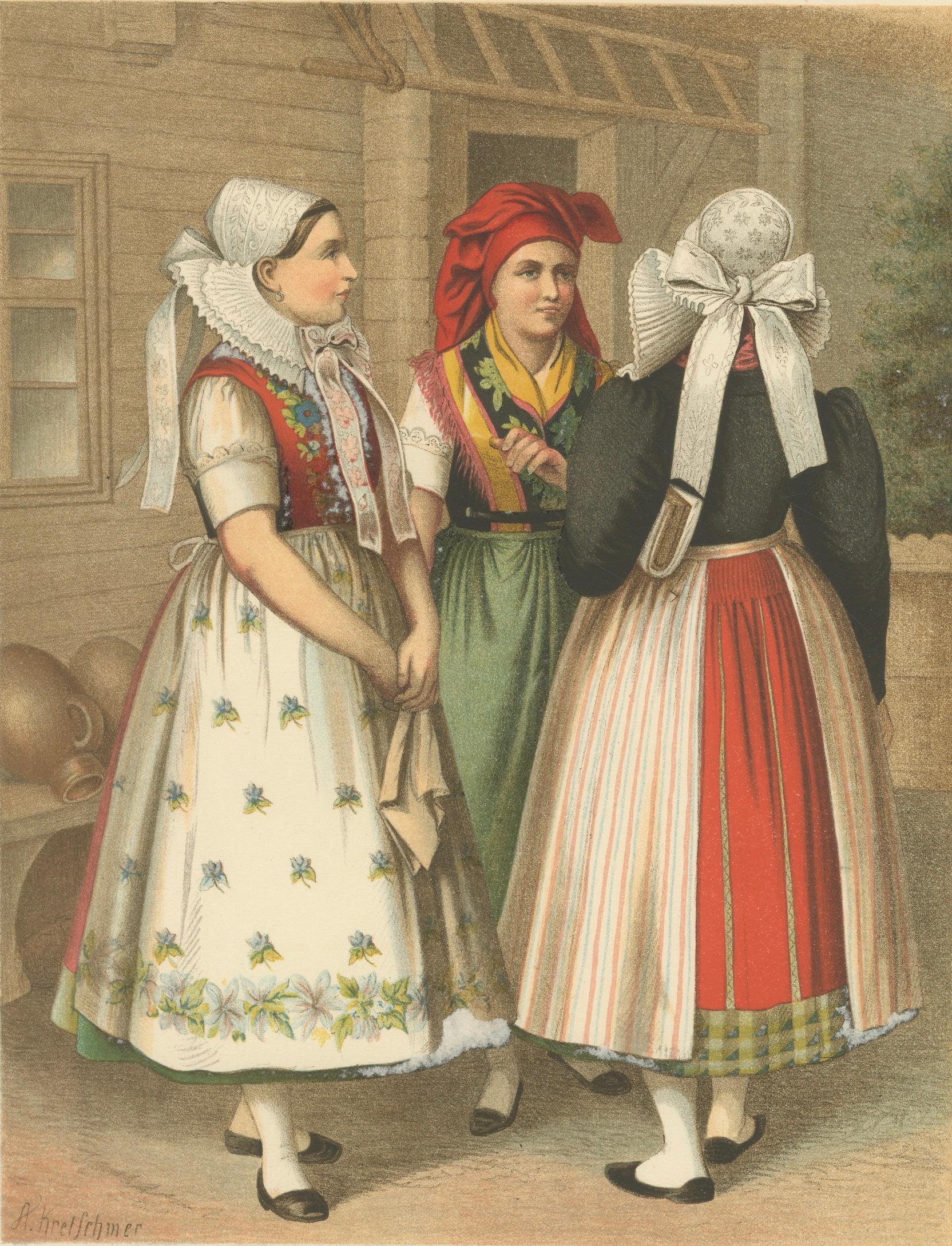
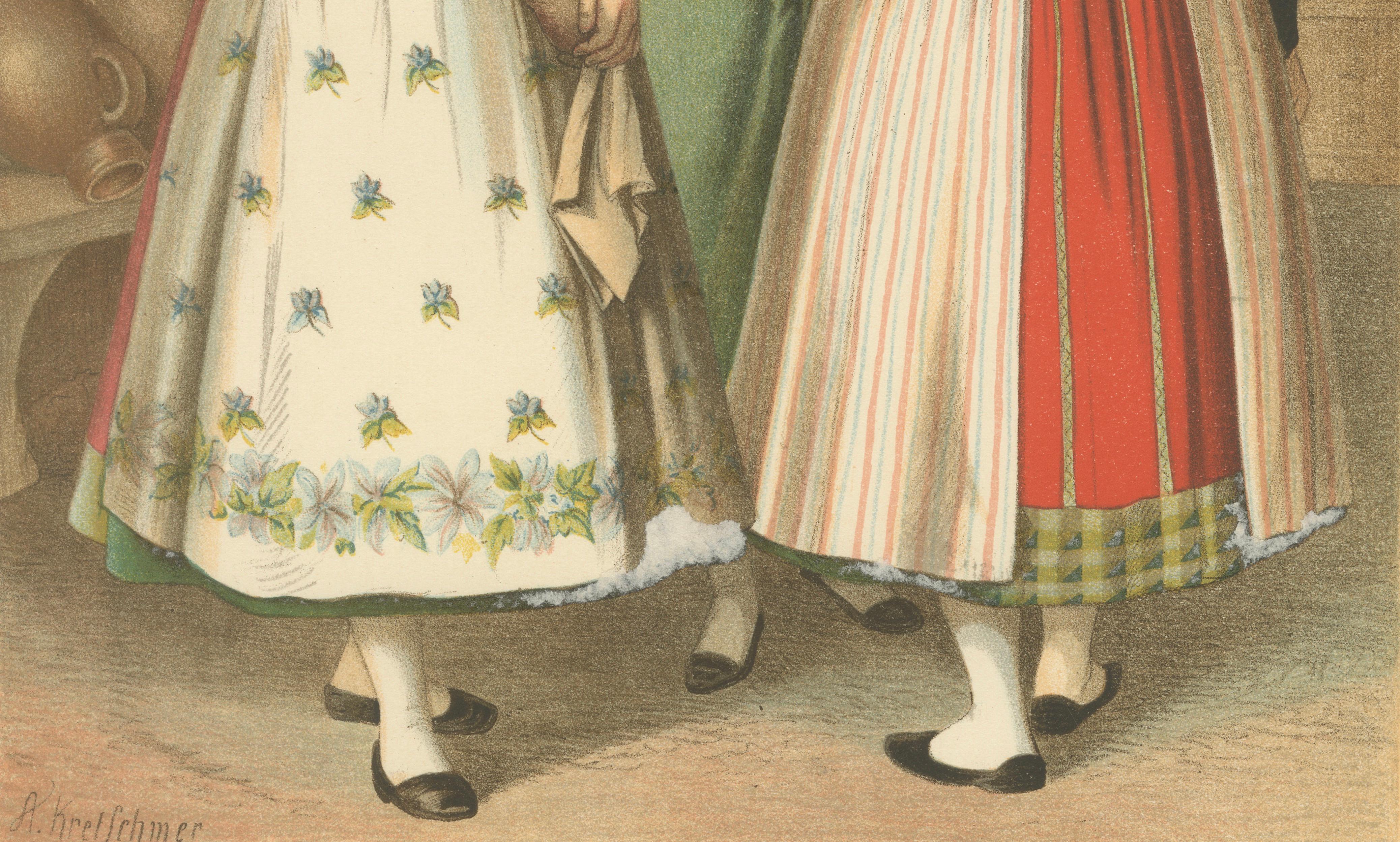
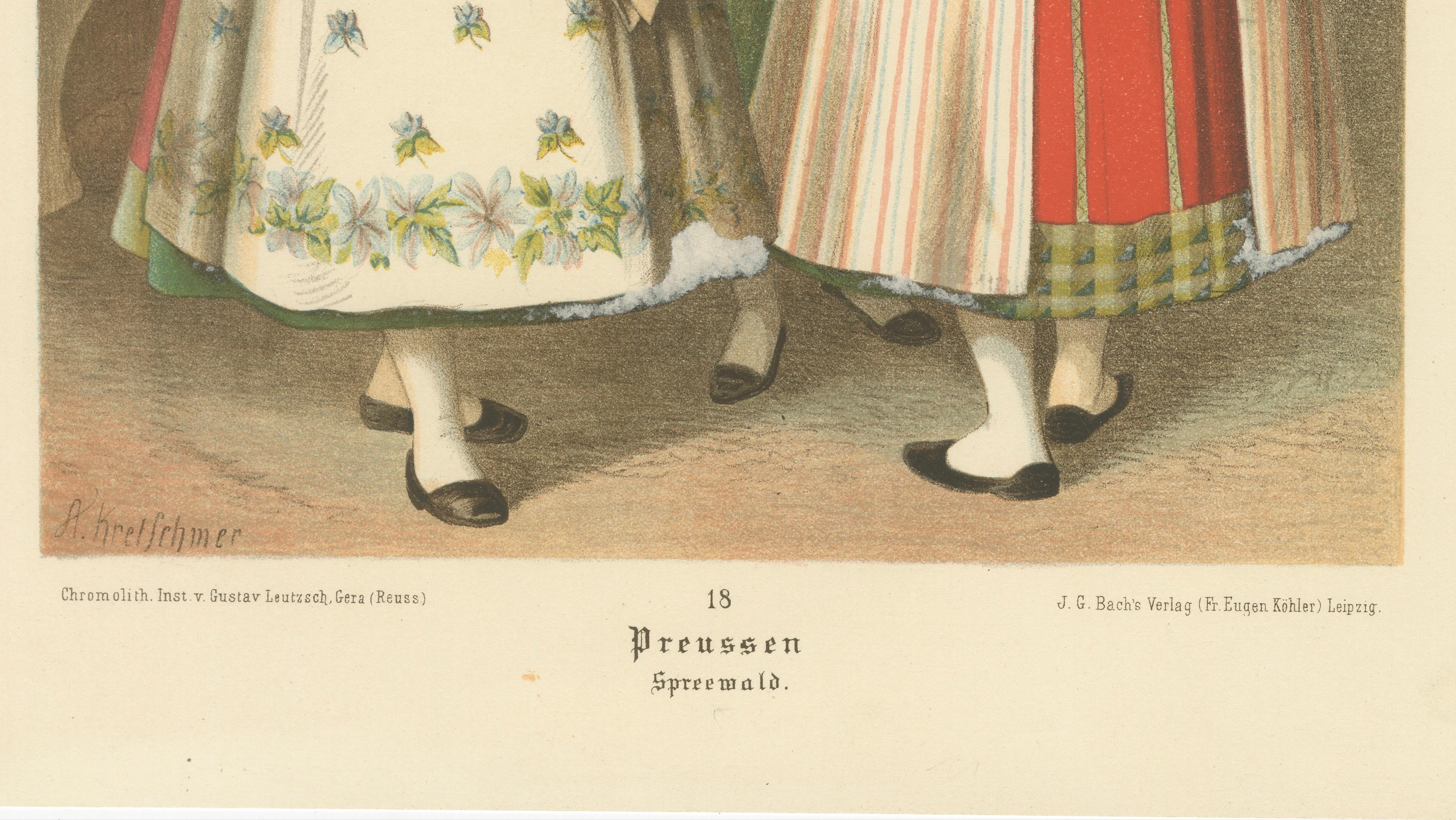
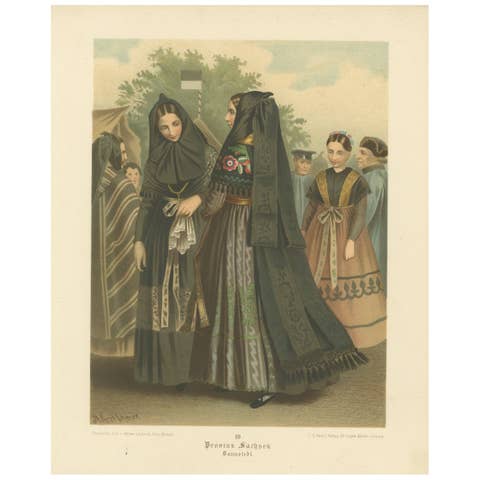
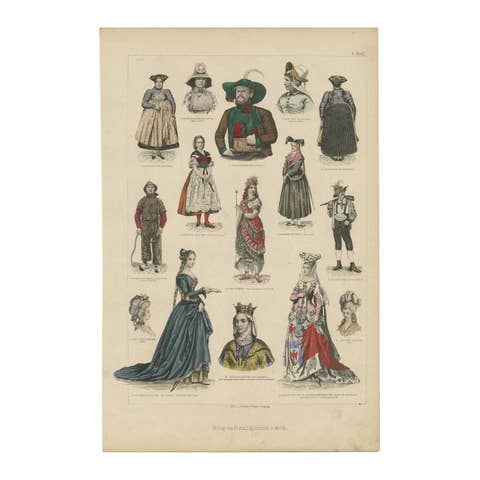
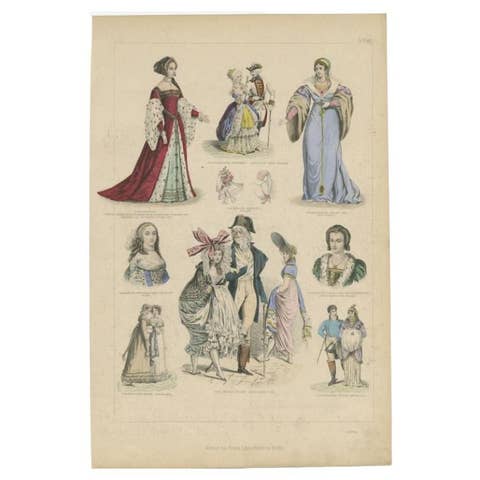
Spreewald Folk Costumes, Prussia, Women in Traditional Dress, c.1875
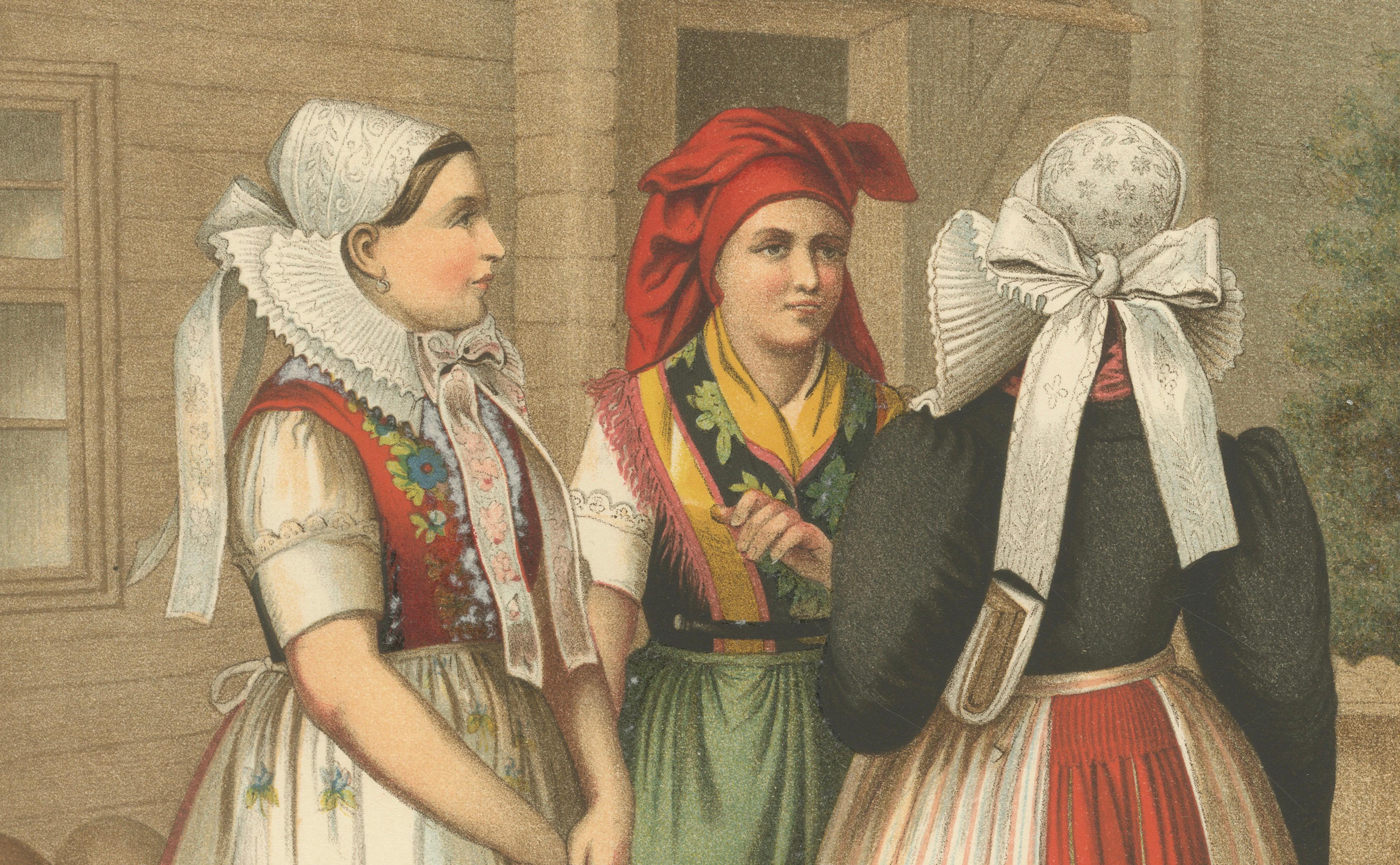
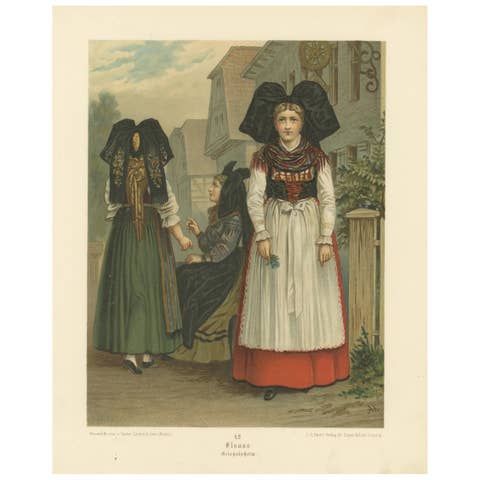
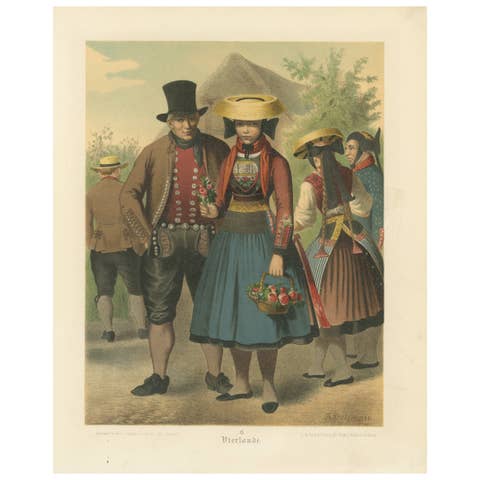
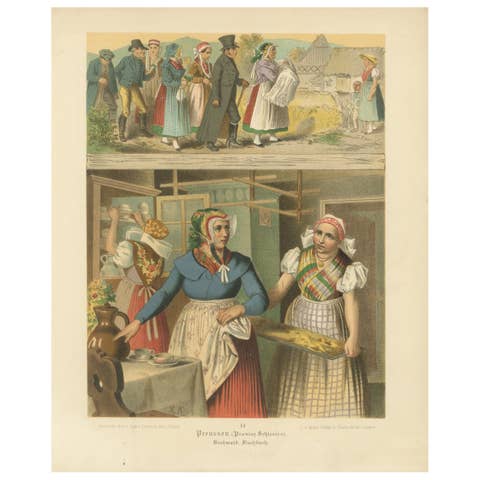
This finely coloured chromolithograph depicts three women wearing traditional folk dress from the Spreewald region in Prussia, shown engaged in conversation within a rural architectural setting. The plate offers a clear and detailed view of regional garments, including pleated skirts, embroidered bodices, lace collars, and the distinctive Sorbian head coverings for which the region is renowned.
The costume shown belongs to the Sorbian (also known as Wendish) population of the Spreewald and the wider Lusatian region in southeastern Prussia. These West Slavic communities maintained strong regional identities well into the 19th century, expressed most visibly through dress worn for daily life, church attendance, and festive occasions.
The print was produced in the mid-1870s after drawings by Albert Kretschmer and published by J. G. Bach in Leipzig as part of a landmark series documenting European regional costume. Combining ethnographic accuracy with refined decorative appeal, the series remains one of the most respected visual records of traditional dress from this period.
This plate works equally well as a stand-alone interior piece or as part of a broader collection of German and Central European costume prints.
KEYWORDS:
Spreewald costume, Lusatian folk dress, Sorbian traditional clothing, Wendish costume, Lower Lusatia, Upper Lusatia, Brandenburg folk costume, Saxony border region, Prussian regional dress, Slavic minority costume, 19th century chromolithograph, European ethnographic print, European folk costume print
CONDITION:
Good condition overall. Light age toning to margins, minor scattered spotting, colours fresh and well preserved.
FRAMING AND MATTING SUGGESTIONS:
Dark walnut or ebonised frame paired with a warm ivory or light taupe museum board mat; a slightly textured cotton or alpha-cellulose mat enhances depth without distracting from the figures.
Technique: Chromolithography
Maker: Albert Kretschmer (after), Leipzig, c.1875