About this sheet
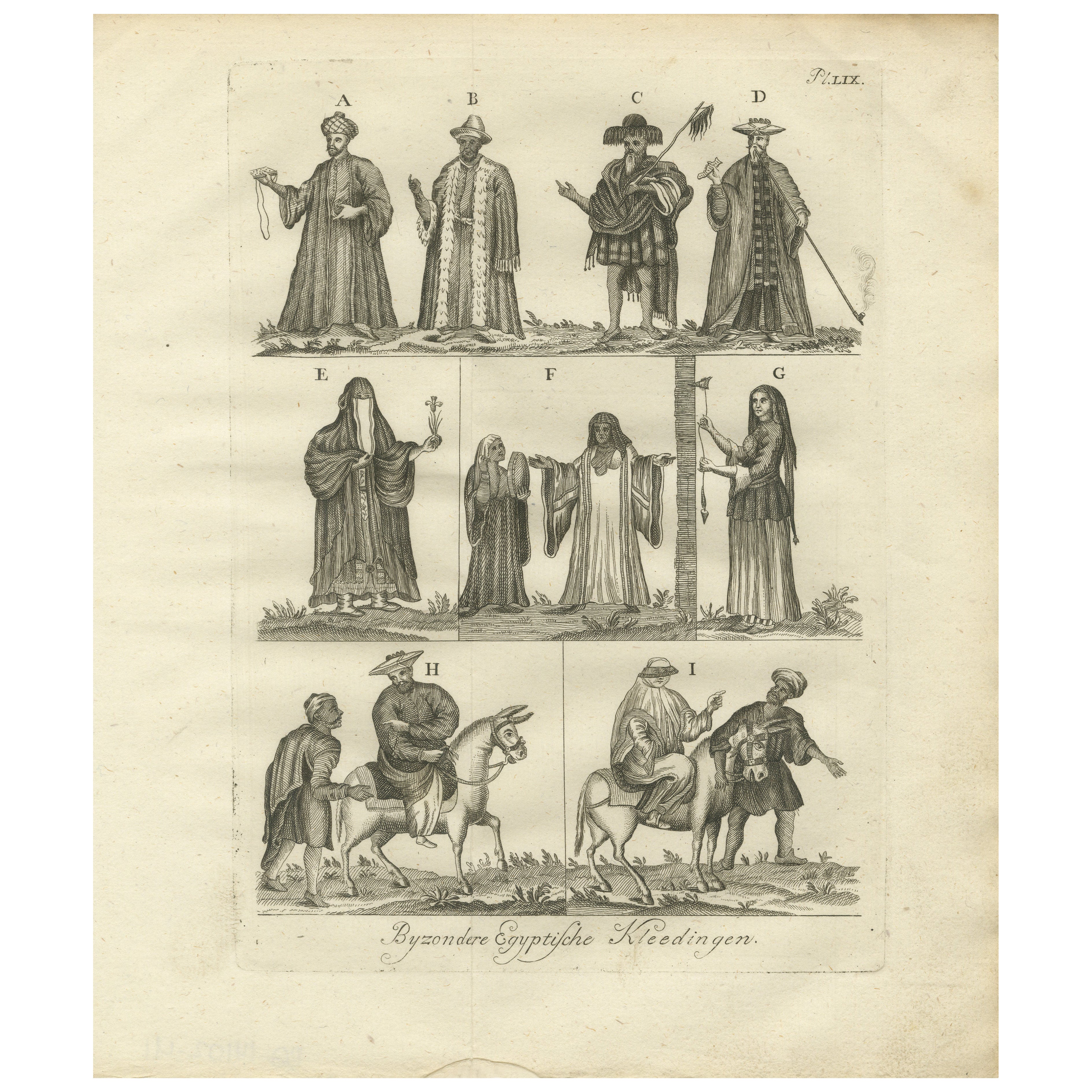
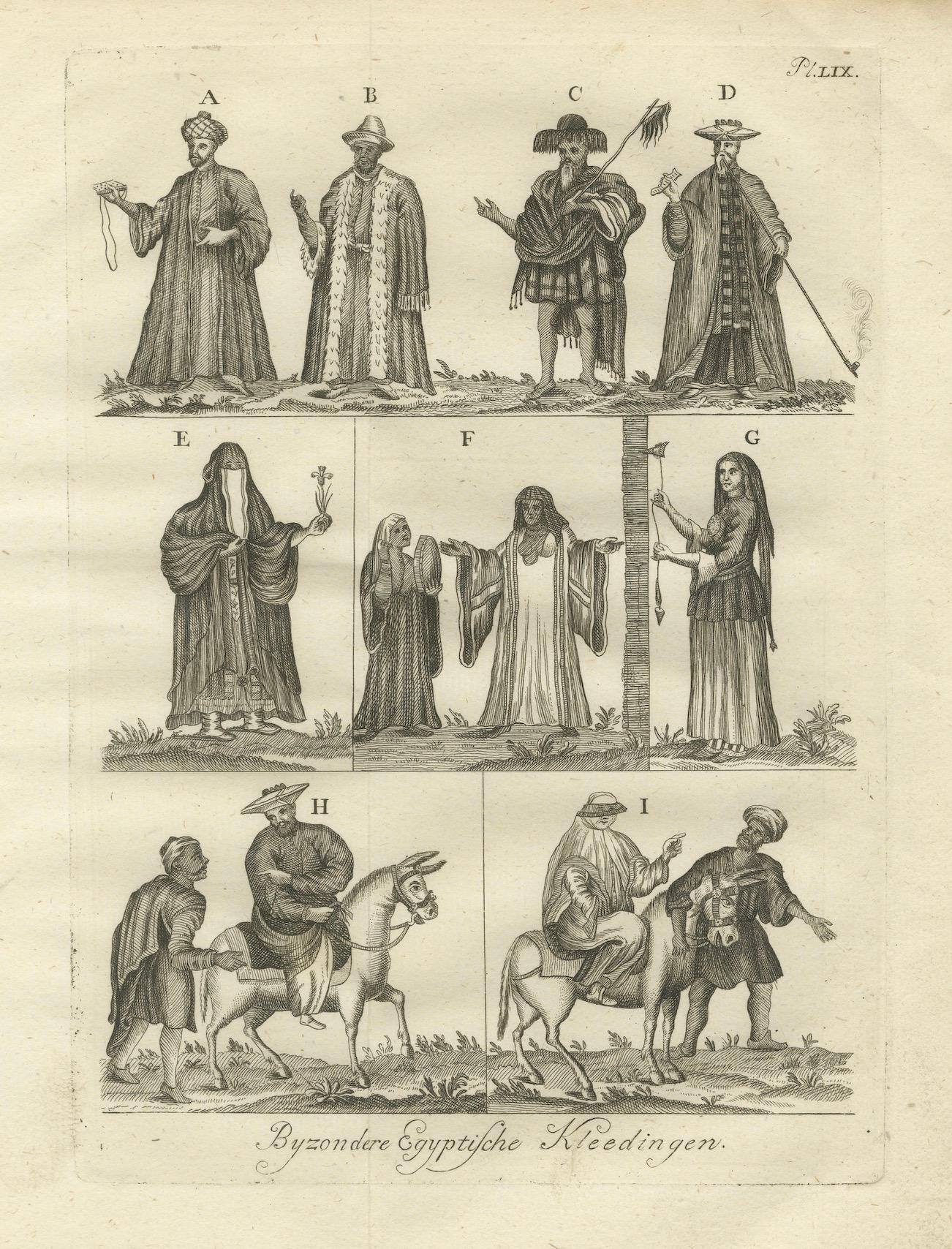
This 18th-century ethnographic engraving, titled "Byzondere Egyptische Kleedingen" (translated as "Distinctive Egyptian Costumes"), presents a compelling visual record of traditional Egyptian dress and social roles. Designated as Plate LIX, the composition is divided into three horizontal rows, each labeled with letters A through I, and features both male and female figures in a variety of costumes, including mounted individuals. It offers a rare glimpse into how Europeans in the 1700s visualised and documented the cultural attire of Egypt.
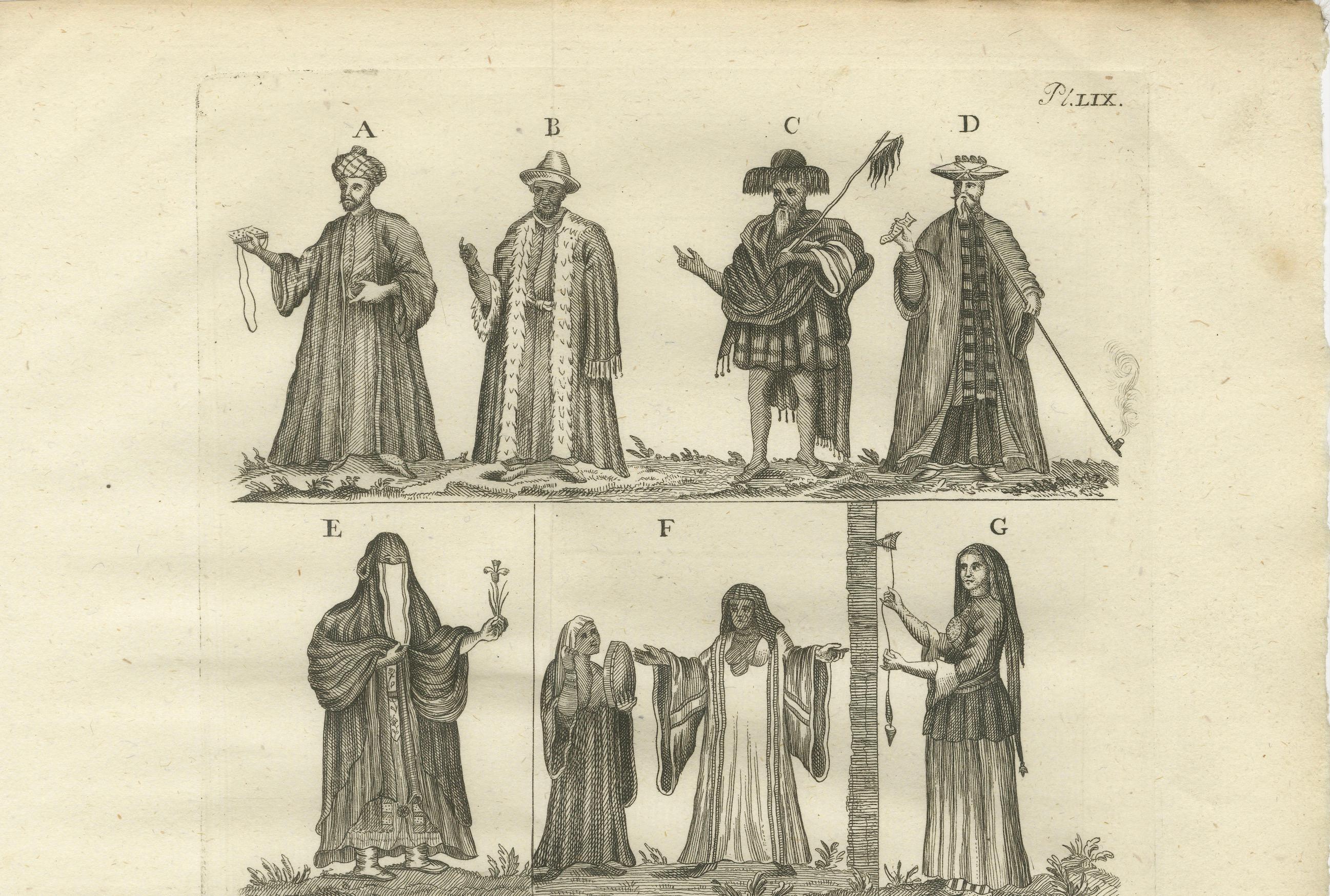
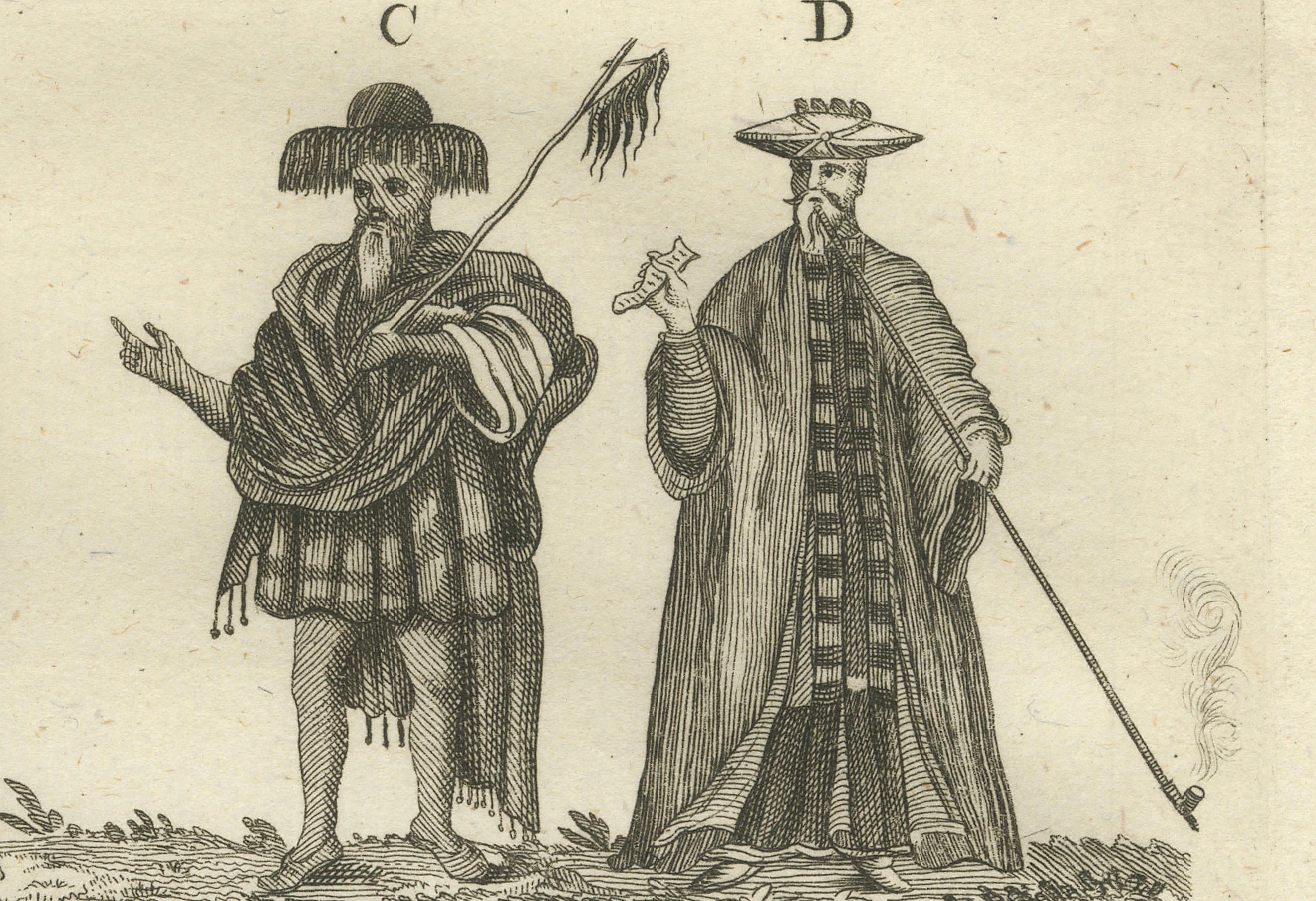
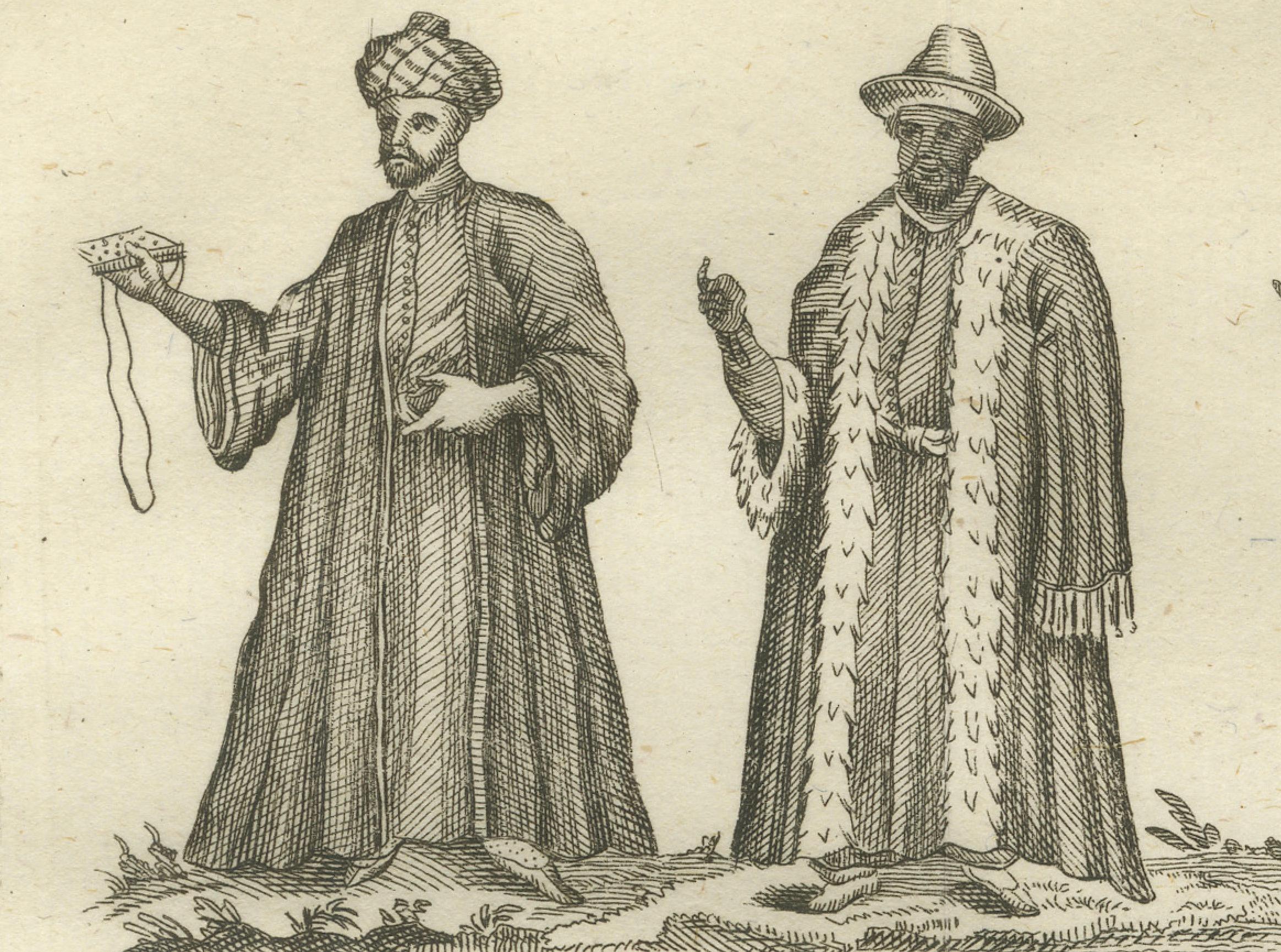
The top row (A–D) depicts four male figures in distinctive robes and headwear. Figure A appears to wear a long gown and holds a string of prayer beads, while B wears a fur-lined cloak and cap. Figure C is more stylised, dressed in a shorter, striped tunic and elaborate fan-like headdress, holding a ceremonial fly whisk. Figure D stands confidently with staff in hand and an ornamented robe, suggesting a position of authority or scholarship.
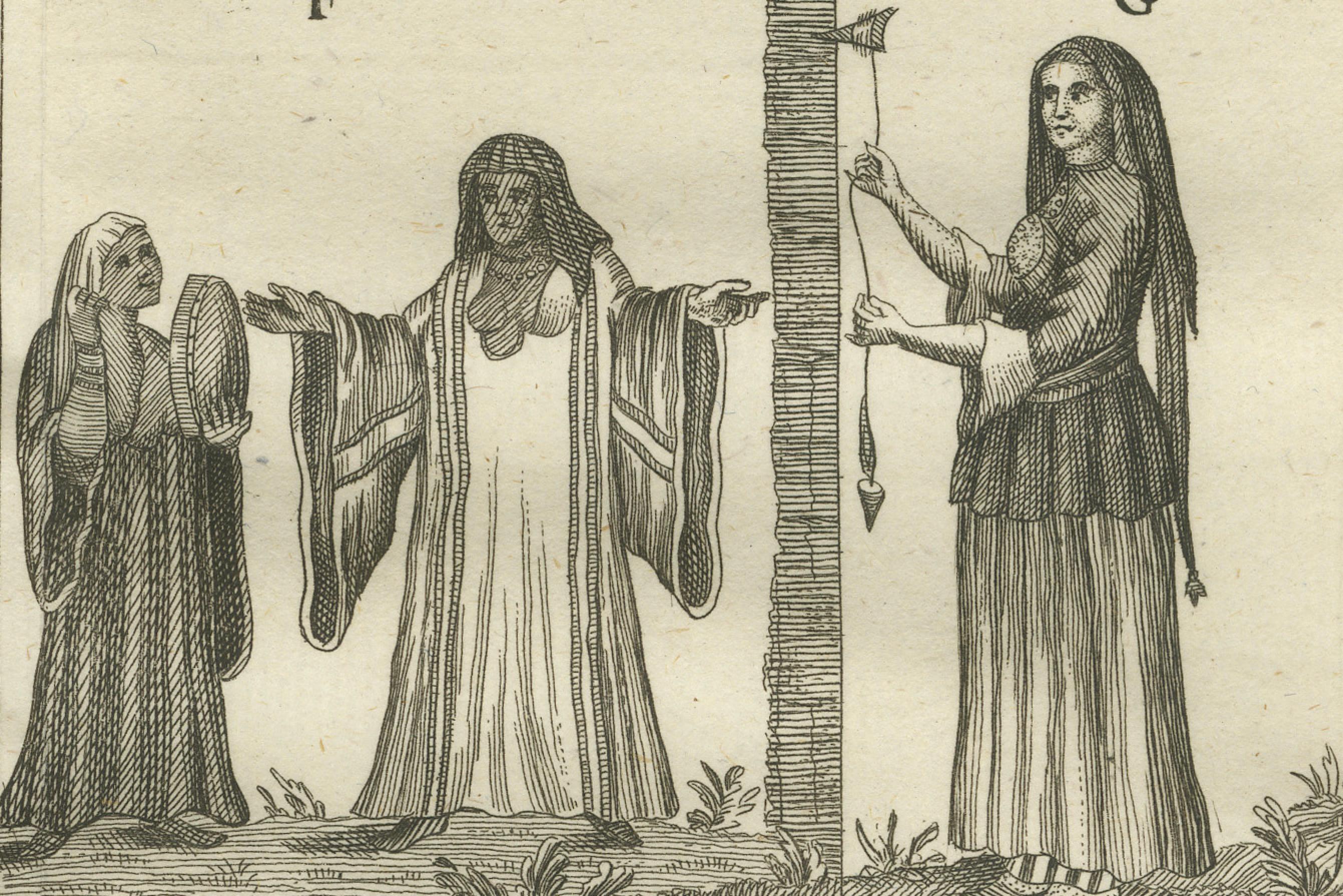
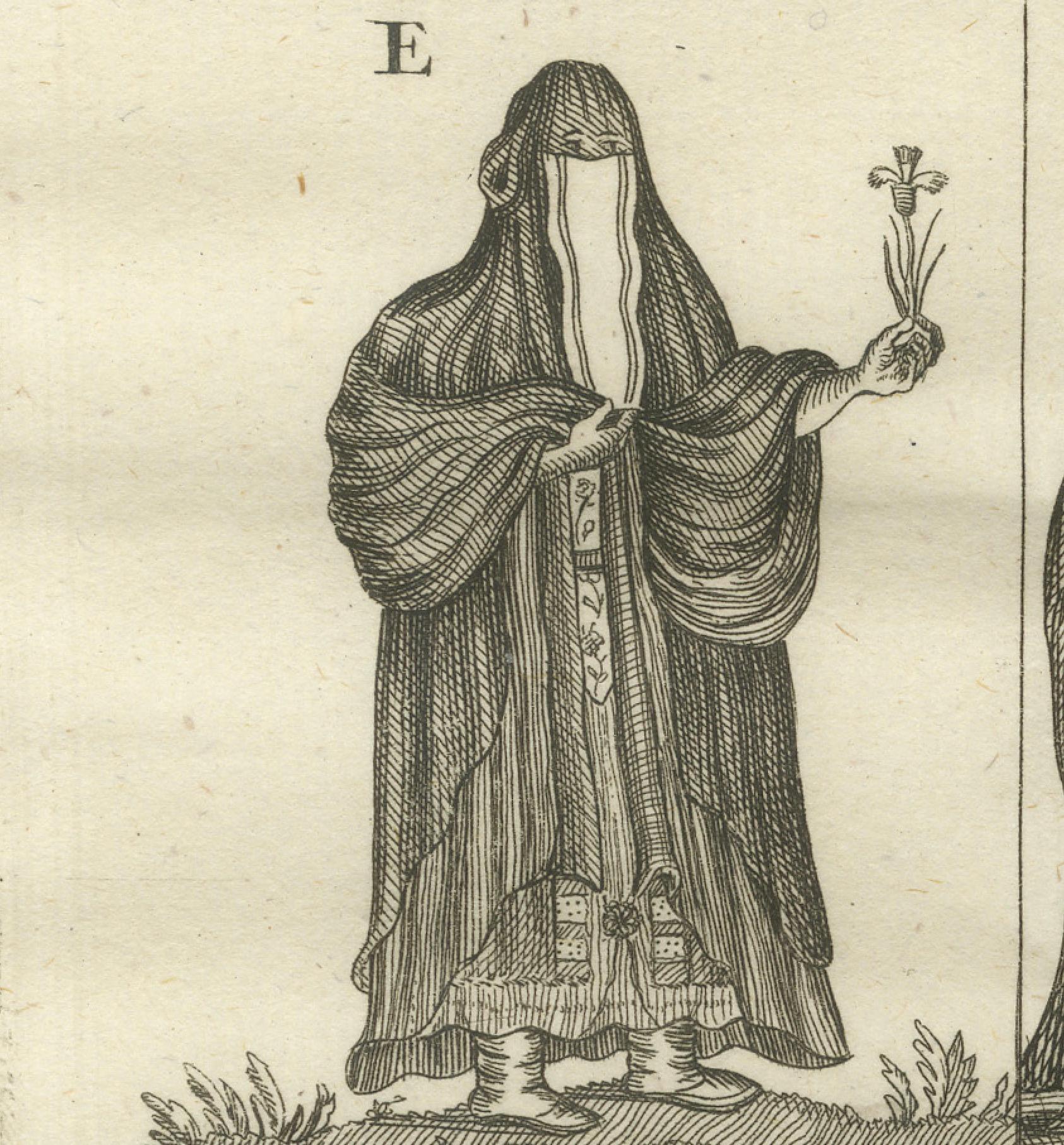
The middle row (E–G) features women in a range of dress, from fully veiled to more open ceremonial garb. Figure E is cloaked head to toe, holding a flower, a possible reference to modesty or mourning. Figure F presents two views of a woman in flowing attire, hands raised in a gesture that may suggest ritual or dance. Figure G, the most revealing of the three, holds a stick or staff and wears fitted garments, possibly representing a dancer or performer.
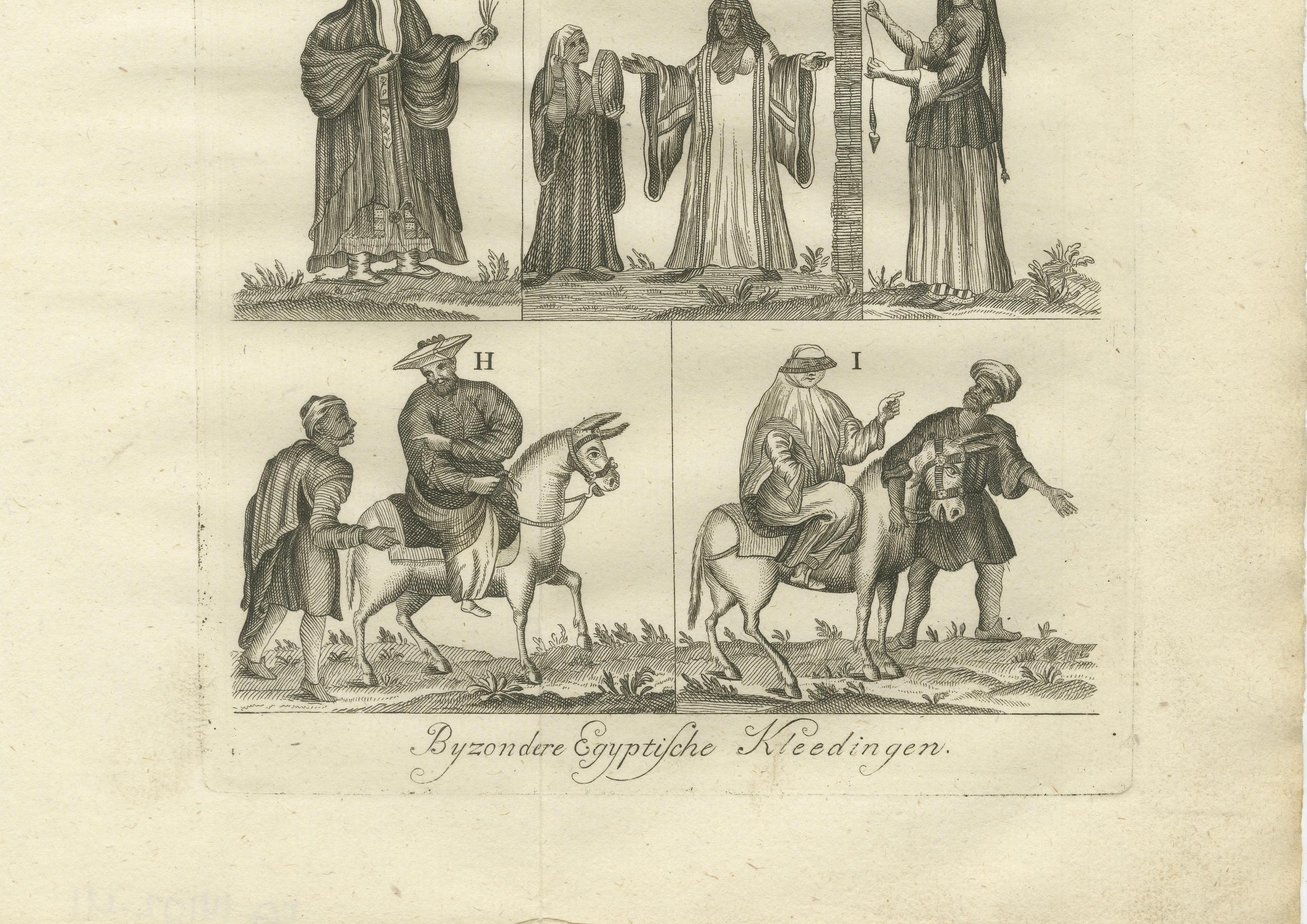
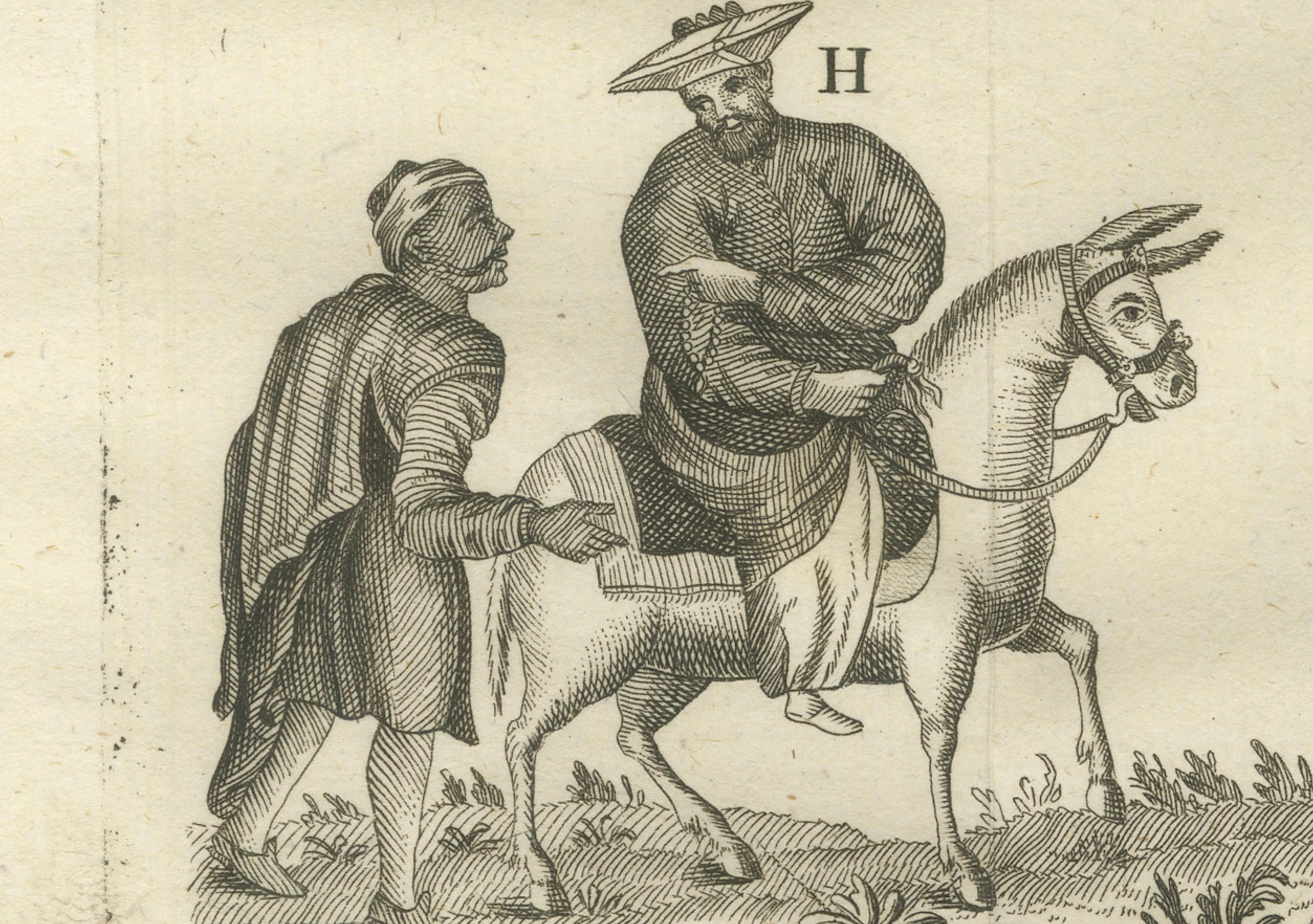
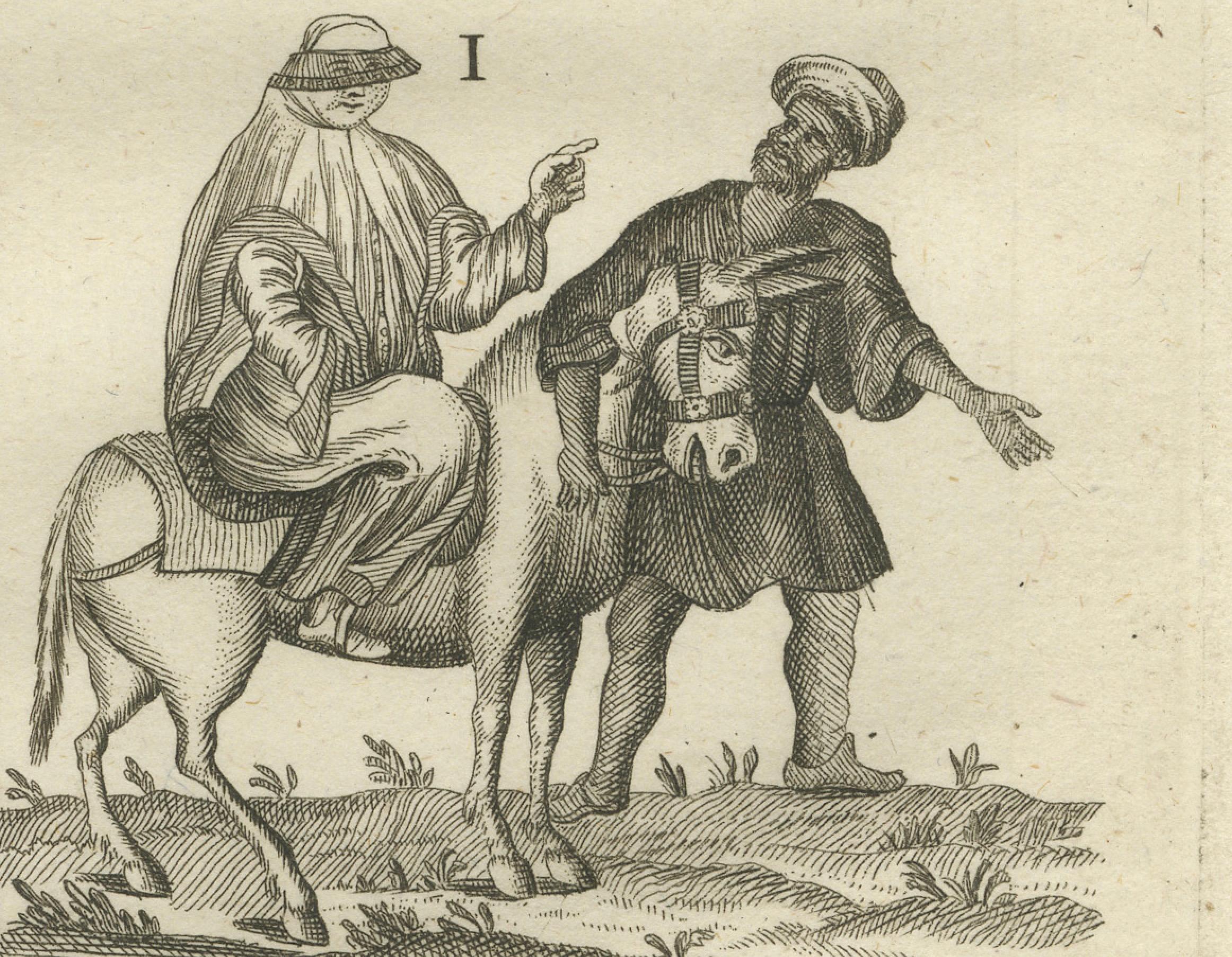
The bottom row (H–I) includes two mounted scenes. In H, a male figure assists a man riding a donkey, dressed in a large hat and thick coat. In I, a woman rides sidesaddle, completely veiled, while engaging in conversation with a standing male figure. These scenes document modes of transport and social interaction across genders, showing the etiquette and customs of Egyptian daily life in the 18th century.
This engraving is both decorative and educational, providing insight into how Egyptian life was perceived and interpreted through the lens of early European travellers and illustrators. It would make a valuable addition to any collection of orientalist prints, costume studies, or historical ethnography.
Condition report: Very good condition with strong plate impression. Light age-related toning and minor edge wear, mainly in the margins. No tears or repairs. Folding line as issued.
Framing tips: Best displayed with a cream or ivory mat and a dark wood or antique gilt frame to highlight the fine lines and historical context of the piece.
Technique: Engraving
Maker: J. van der Spyk, Netherlands, circa 1776
In more detail:
A. A man in long robes with a close-fitting cap, holding prayer beads. Likely represents a religious figure such as an imam, reflecting Islamic traditions in Egyptian society.
B. A man in a fur-lined cloak and brimmed hat, possibly a wealthy merchant, official, or Coptic Christian elder. The mix of garments suggests Levantine or European influence.
C. A man with a fan-shaped headdress and short striped tunic, holding a fly-whisk. This figure may represent a Nubian or indigenous tribesman, perhaps in ceremonial attire or dance costume.
D. A male figure with a staff and a long outer garment. Likely a judge, scholar, or court official, depicted with an air of authority and learning.
E. A woman fully veiled in a heavy robe, holding a flower. Likely a Muslim woman in seclusion or mourning, dressed in accordance with strict modesty customs.
F. Two women in flowing garments with arms raised. They may be female dancers, singers, or ceremonial figures. Their theatrical pose suggests public performance or festivity.
G. A woman in a fitted dress, standing with a staff or tool. Possibly a servant or market vendor, depicted in practical working attire, less formal than the others.
H. A man riding a donkey, assisted by a second man on foot. The rider, dressed in voluminous robes and a large hat, may be a travelling merchant or official. The assistant wears simpler clothing, indicating service or subordination.
I. A veiled woman riding sidesaddle on a donkey, conversing with a standing man who carries goods. The woman likely represents a lady of some status, while the man may be a porter or servant, indicating a scene of social interaction during travel.
These figures illustrate a variety of social roles and costumes seen in 18th-century European interpretations of Egyptian life, blending observation with romanticised detail.